By using this website, you agree to our use of cookies (needed to provide our website’s features) and our Terms of Use.
By: Andrew Forrest - February 2026
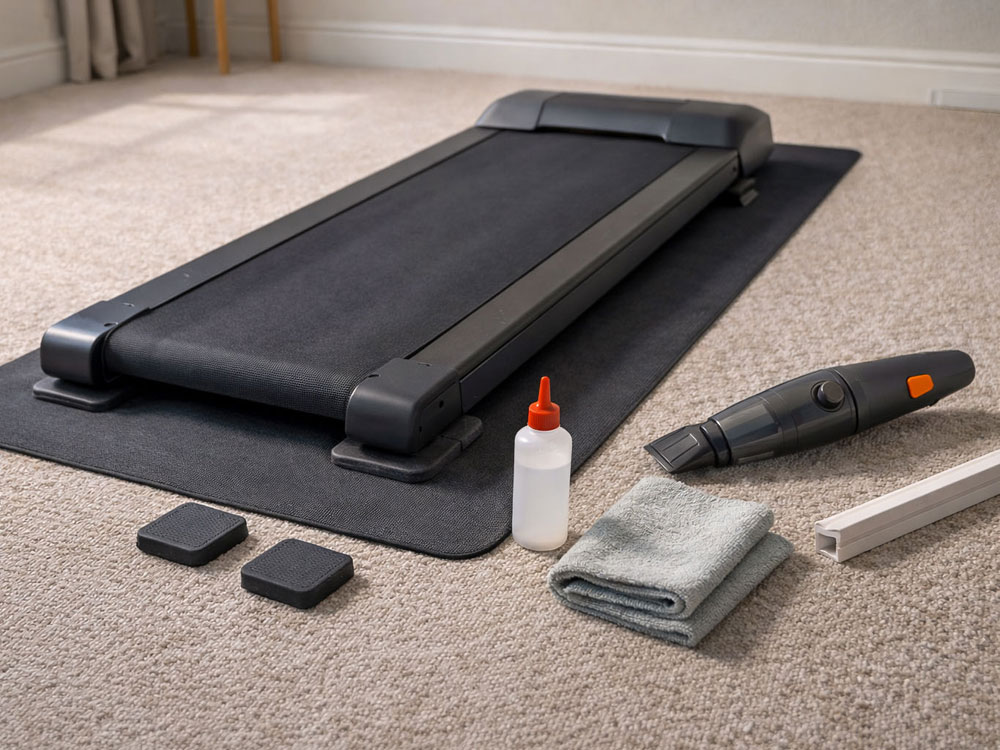
The essential walking pad and treadmill accessories for UK homes: mats, anti-vibration pads, silicone lubricant, cleaning kits and a safe cable setup.
This page contains affiliate links. If you buy products or services via these links, we may earn a small commission at no cost to you. If you are thinking of buying, please use our links, as it helps support our website and YouTube channel.
If you already own a walking pad or treadmill, or are close to buying one, the right accessories can make a real difference in reducing noise, protecting floors, improving safety, extending longevity, and enhancing ease of use.
Most people do not need lots of extras. They need a small number of the right ones, chosen for their home and how they use their walking pad. This guide focuses on practical, UK-relevant walking pad accessories that genuinely help, particularly in flats, upstairs rooms, at desks, and in shared living spaces.

A walking pad mat is the single most useful accessory for most users. Its main benefits are protecting floors, improving grip, and reducing vibration transmitted to the building's structure.
These pads, if you choose the right size, will work for walking pads, under-desk treadmills, walking treadmills, ordinary treadmills, exercise bikes and basically almost any exercise equipment that fits on them.
The walking pad mat:
A mat will not make a noisy walking pad silent. If noise comes from belt friction or poor maintenance, cleaning and lubrication usually make a bigger difference.[7] [8] [9]

Not all walking pad mats are the same. For UK homes, especially flats and rooms with laminate or engineered wood floors, the most useful mats balance floor protection, grip, and vibration control rather than extreme thickness.
When choosing a mat, we prioritise:
Below, we've highlighted some walking pads and walking treadmill mats that work well in real UK living spaces, including budget-friendly options and thicker mats better suited to upstairs rooms. Just ensure the mat is large enough for whatever you are going to put on it.

 |
 |


This is a straightforward, budget-friendly mat that focuses on floor protection and basic vibration reduction rather than heavy soundproofing. It's well-suited to ground-floor rooms or solid floors where you mainly want grip and surface protection without adding softness or instability. It can also be paired with anti-vibration feet for upstairs rooms.

|
|


The Stepwaver mat offers more coverage and thickness than basic mats, making it a better choice for flats, upstairs rooms, or larger walking pads. Its size and density help reduce vibration transfer while remaining stable enough for regular daily walking.
Rather than choosing the full-length option, you can buy individual pads that sit under each touch point on your walking pad or treadmill.
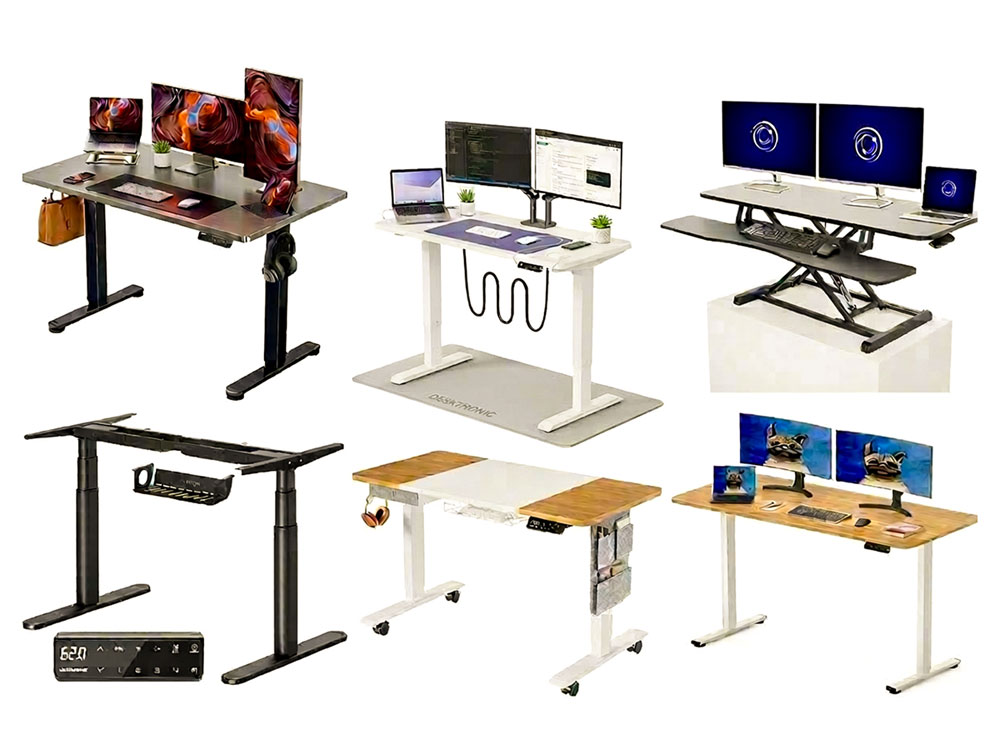
A walking pad is only half of the office setup. To use it comfortably and consistently, you need a desk that adjusts smoothly to the right height as you move. A good standing desk allows you to keep your screen, keyboard, and mouse in ergonomic positions, so that walking doesn't cause neck, shoulder, or wrist strain.
Most modern standing desks use electric motors to raise and lower the desktop at the touch of a button, making it easy to switch between sitting, standing and walking. When paired with a walking pad, this flexibility makes desk walking practical for longer work sessions rather than something you only manage for a few minutes at a time.
When choosing a standing desk for use with a walking pad, we prioritise:
Below are two standing desks that work well with most walking pads. They both rise and lower electronically to use while standing or sitting.
Just check that the lowest and highest heights work for you, and that the gap between the legs fits your walking pad.

|
|


This Desktronic desk is a strong choice if you want a solid, stable electric standing desk that pairs well with daily use of a walking pad. The motorised height adjustment is smooth and precise, and the frame feels reassuringly rigid, which matters when you're typing or using a mouse while walking.
It's particularly well-suited to long desk-walking sessions, where stability and fine height control make the experience more comfortable and less fatiguing over time. Available in various sizes and colours.

|
|


The ErGear desk offers a more affordable entry point into desk walking while still providing electric height adjustment and a practical working surface. It's a good option if you're trying desk walking for the first time or setting up a home office on a tighter budget.
While it didn't feel as heavy-duty as the Desktronic, it's perfectly adequate for light to moderate walking and provides the essential height flexibility needed to use a walking pad properly. The desk top comes in two pieces, whereas the Desktronic is a single piece. Available in various sizes and colours.
Anti-vibration pads are most useful when you are concerned about noise or vibration reaching neighbours below. From an engineering perspective, these pads reduce vibration transmission between the walking pad and the supporting structure.[4] [5] [6]

Very soft pads can increase movement and instability. This trade-off between isolation and stability is well described in vibration isolation research.[4]

Anti-vibration pads are not essential for everyone, but they can be very helpful in flats, upstairs rooms, or older buildings where vibration travels easily through the structure.
The pads we recommend share a few key traits:
The pads mainly go directly under the walking pad on top pf the mat, but you can try them the other way around as well, so sitting under the mat. Personally, I've always found them to work better sat on top of the mat.


|
|


These are individual anti-vibration pads designed to sit under a walking pad's feet or contact points rather than a full mat. They're most useful when you want targeted vibration reduction, especially in flats. I found that the heavy equipment I placed on them didn't wobble, but I preferred the whole-floor coverage of a full mat to the coverage at just the contact points.
Whilst these rubber feet are marketed mainly for washing machines, they work just as well under the walking pad's feet - just check the size.
Lubrication is often overlooked, yet friction is a common source of noise, wear and poor belt feel. Tribology research shows that silicone-based lubricants reduce friction and wear in sliding systems, which is directly relevant to the contact between the treadmill belt and deck.[7] [8] [9].

Always follow the manufacturer's guidance. Some walking pads are marketed as maintenance-free and should not be lubricated unless the manufacturer advises otherwise.
If your walking pad requires lubrication, the type you use matters. Household oils and general sprays are not designed for treadmill belts and can attract dust or degrade materials over time.
Check what the manufacturer of your walking pad recommends. If none is stated, then we would recommend using:
The option listed below is widely used, easy to apply, and suitable for light daily walking, which is how most people use walking pads at home. This is the option I use on my walking pad and treadmill.

| 200ml | |
|
|
| 500ml | |
|
|


Prounol is a straightforward 100% silicone treadmill lubricant that's ideal if your walking pad or treadmill manual recommends lubrication, helping to reduce belt-deck friction and supporting smoother, quieter operation over time.
The main choice is size: 200ml suits occasional home use and is easy to store, while 500ml offers better value for daily walking, shared households, or anyone who wants fewer reorders.
Dust, grit and pet hair increase friction and can contribute to noise and premature wear. Basic cleaning routines are widely recommended in treadmill maintenance guidance. Always follow the manufacturer's guidance for cleaning their walking pads and treadmills.

This normally includes:
You do not need a specialist 'treadmill cleaning kit', but having the right basic tools makes it far more likely you'll keep your walking pad clean and running smoothly.
The cleaning items we recommend are:
Walking pads are used in living spaces, not gyms. Poor cable routing is a genuine trip hazard. Using cable protectors over cables or cable covers to route power leads along skirting boards significantly reduces this risk.

Power cables are among the most overlooked hazards on walking pads. Because walking treadmills and under-desk treadmills are used in living spaces rather than gyms, poor cable routing can quickly become a trip hazard.
The cable safety products we recommend:

|
|


This flexible cable management sleeve is a good choice if you want a quick, reversible way to tidy a walking pad power cable without fixing anything to walls or skirting boards. It's especially useful in rented homes or shared spaces where you want to reduce trip risk while still being able to move the setup easily.
It works best for short cable runs and for setups that move regularly, but it doesn't offer the same level of protection or neatness as fixed trunking for long-term use.

|
|


D-Line trunking is a better option when you want a more permanent, tidy solution, especially for daily desk-walking setups. The self-adhesive backing lets you route cables neatly along skirting boards, keeping them fully enclosed and out of walkways.
This is the option we prefer for long-term walking pad setups where the walking pad won't move day-to-day, as it offers better protection, a cleaner finish, and a lower ongoing trip risk than loose sleeves or clips.
Most walking pads rely on a small remote, and losing it or not having it available while using the pad can be frustrating.

Simple storage solutions make daily use easier:

|
|


This organiser is a neat, low-profile way to keep a walking pad remote visible and in the same place, solving one of the most common day-to-day annoyances with under-desk treadmills. The multiple compartments make it easy to store a walking pad remote alongside other small desk or TV controls without cluttering the workspace.
It works particularly well for desk walking and living-room setups, where you want quick access without permanently mounting anything to furniture or walls. While it doesn't secure the remote as firmly as a magnetic holder, it's a good option if you prefer a movable, non-fixed solution that keeps everything organised and within easy reach.
Most owners of walking pads and treadmills need only a small set of accessories: a mat, sensible cable management, basic cleaning tools, and (where appropriate) anti-vibration pads and lubricant.
Used together, these improve safety, reduce vibration transmission, protect floors, and help walking pads run more smoothly and quietly.
Happy walking, and enjoy a quieter, more comfortable setup!
Yes, ideally. A mat helps protect floors, improves grip, and can reduce vibration transmission, especially on laminate or wooden flooring.
Sometimes, but not always. A mat can reduce floor vibration, but belt noise usually needs cleaning or lubrication to improve.
Yes, often. Anti-vibration pads can help reduce vibration transmitted to neighbours below, particularly in upstairs rooms and older buildings.
Usually under the walking pad's feet. This targets vibration at the contact points, but placing them under the mat can work better if stability is an issue.
No. Some walking pads are designed to be maintenance-free, so always consult the manufacturer's guidance before lubricating.
Use only 100% silicone treadmill lubricant. Household oils and sprays are not designed for treadmill belts and can attract dirt or cause damage.
Light cleaning should be frequent. A quick wipe after use and a more thorough clean once a week help reduce noise, friction, and wear.
Usually no. Many manufacturers advise plugging directly into a wall socket, as extension leads can increase the risk of electrical hazards and tripping, and may cause a voltage drop. If it is a multi-socket extension lead, it may also exceed the maximum allowable wattage.
Yes, at low speeds, but with caution. Socks-only walking can be fine for gentle use, but footwear offers better grip and stability for longer or faster sessions. I would always recommend wearing training or walking shoes, as socks can easily slip.
Start with the basics. Use a mat, check for vibration, clean regularly, and lubricate the belt if your model requires it.
February 2026