User | Login

Best head torches for hiking 2025: Lighting up the great outdoors

By: Andrew Forrest - Updated November 2025
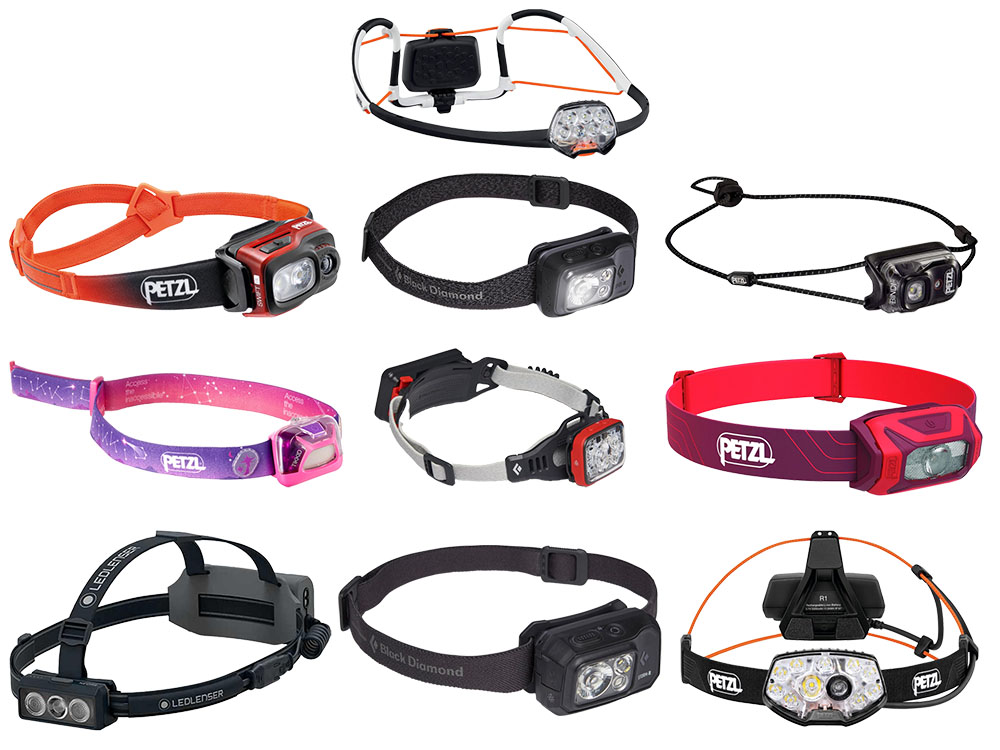
Best head torches

This comprehensive buyer's guide covers the top head torches of 2025 and highlights all the key features you should consider. Our goal is to help you compare options and find the perfect head torch for your adventures, whether you're a casual dog walker or an experienced night hiker.

A quality head torch is your guiding light after dark. It boosts your safety and confidence by offering reliable, hands-free illumination. These versatile devices are invaluable whether you're hiking in the hills, trekking through dim forest trails, running along roads and paths, setting up camp after sunset, or simply walking your dog or heading to the pub on a winter evening.

However, with so many models on the market, finding the right one can be difficult. Different activities require different features in a head torch - the brightness needed for an overnight hike isn't the same as what's needed for an evening jog or a walk with your dog.

Table of contents 

This page contains affiliate links. If you buy products or services via these links, we may earn a small commission at no cost to you. If you are thinking of buying, please use our links, as it helps support our website and YouTube channel.

What we will cover in this best head torches guide

  • The best head torches of 2025: Our top choices across different categories (overall performance, trail running, waterproofness, budget, sustainability, brightness, and ultralight weight).
  • Brightness and lumens explained: How bright your head torch should be for various activities, and what exactly lumens measure.
  • Waterproofing levels (IPX ratings): Understanding weather resistance from light rain to full submersion, and what those IP/IPX numbers signify.
  • Battery life and power options: considerations for burn time, rechargeable versus replaceable batteries, regulated output, and balancing brightness with battery longevity.
  • Comfort and design features: Why comfort matters - weight distribution, head straps, tilt angle, and how beam type (spot vs flood) can impact your experience.
  • Special modes and features: Useful extras like red/green lights for night vision, lock functions to prevent accidental switching on, reactive light sensors, and more.
  • Maintenance tips: How to care for your head torch to ensure it lasts longer - from proper storage to cleaning and battery care.
  • FAQs: Answers to common questions about head torches, including lumens, battery choices, waterproofing, and more.

Best head torches for 2025

Best head torches: At a glance

  • Best overall head torch: Petzl Swift RL (Updated v2) - A powerful, lightweight all-rounder (up to 1,100 lumens) suitable for most activities.
  • Best head torch for comfort: Petzl Iko Core - Unique ergonomic band and lightweight design offer excellent long-term comfort.
  • Best head torch for trail running: Petzl Nao RL - High-performance (1,500 lumens) with reactive lighting and a rear battery for balance.
  • Best waterproof head torch: Black Diamond Storm 500-R - Rugged IP67-rated torch that can handle very wet conditions.
  • Best budget head torch: Petzl Tikkina - Simple, affordable and reliable for everyday use (300 lumens).
  • Best head torch for brightness: Black Diamond Distance 1500 - Delivers intense 1,500-lumen output with a balanced, wide beam and rear safety light.
  • Best ultralight head torch: Petzl Bindi - Featherlight (35g) for minimalists, ideal as a backup or for short uses.
  • Best head torch for road running: Ledlenser NEO9R - Bright and secure with rear red light for added visibility on dark pavements.
  • Best head torch for children: Petzl Tikkid - Kid-friendly design with low brightness and built-in safety features.
  • Best sustainable/eco head torch: Black Diamond Spot 400-R - Rechargeable, durable, and built with sustainability in mind.
  • Best head torch for dog walking: Ledlenser NEO5R - Lightweight and bright with rear red flasher for visibility on early or late walks.

When it comes to head torches, there is no one-size-fits-all answer. The best head torch for you depends on its purpose and your personal preferences. Some people, like me, own multiple head torches for different situations. Regardless of the scenario, I always ensure at least one head torch is in my rucksack whenever I go out, no matter the season - you never know when it might be useful.

Choosing a head torch often involves compromises. There's always a balance between brightness and battery life, weight and power, and cost and features. As you read through our guide and consider how you'll be using your head torch, keep those balances in mind. Once you understand your intended use and the key features (which we explain in the buyer's guide sections below), you'll be able to decide which head torch is truly the best for you.

Our recommendations below have been carefully chosen based on performance, comfort, waterproofness, durability, value and features.

Best overall head torch: Petzl Swift RL (Updated - V2)

The updated Petzl Swift RL is a compact yet powerful head torch that combines high brightness with intelligent light-sensing technology. It features Petzl's advanced Reactive Lighting system, which automatically adjusts the beam's intensity based on your surroundings.

This means the Swift RL can smoothly adjust its 1,100-lumen beam by dimming or boosting as needed, providing you with optimal illumination without constant manual adjustment. Weighing just over 100 g, it falls in the middle of the weight and price range but delivers top-tier performance for various nighttime activities.

Petzl Swift RL V2 - Orange
Orange
Buy Now
Petzl Swift RL V2 - underneath and power cord attachment
Petzl Swift RL V2 - Black
Black
Buy Now
Petzl Swift RL V2 - front

Specs:

  • Brightness: 10-1,100 lumens (reactive beam reaching up to 155 m)
  • Battery: 2,350 mAh rechargeable Li-ion (via micro-USB)
  • Battery life: 2 - 100 hours (varies with mode; up to 70 hours in energy-saving reactive mode)
  • Weight: 103 g (including battery)
  • Water resistance: IPX4 (weather-resistant)

Key features:

  • Reactive lighting: Automatically adjusts brightness and beam pattern according to where you look. This provides hands-free convenience and helps prolong battery life by avoiding unnecessary over-illumination.
  • Standard mode: Offers an option to switch to continuous lighting with three brightness levels for consistent output when needed.
  • Single button control: intuitive one-button operation cycles through modes (reactive, standard, red light) and locks the torch to prevent accidental activation.
  • Red Light Mode: Preserves night vision for reading maps or using around camp without dazzling others.
  • Comfortable strap: split elastic headband with reflective accents, offering a secure fit for running or hiking, and featuring an easy adjustment system.

Pros:

  • Adaptive brightness: Reactive lighting instantly adjusts beam output for optimal performance.
  • Extremely bright maximum setting: 1,100 lumen blasts the trail when you need full power.
  • Good battery life: Efficient power usage delivers up to 70 hours in low-reactive mode.
  • Mid-weight versatility: Not too heavy nor too minimal - a well-balanced all-rounder.

Cons:

  • Premium price point: More expensive than basic head torches.
  • Small power/mode button: The power/mode button is very small, making it awkward to operate with gloves on.
  • Waterproofness: Others have significantly higher IP ratings than this.

Why it's best overall: The updated Swift RL offers an exceptional all-around package of brightness, technology, and usability. Petzl pioneered reactive head torches, and with this latest Swift RL, they have improved the reactive lighting transitions and increased the light output and battery life compared to the previous model. The result is a head torch that naturally adapts to your gaze, dimming when you look at a map and instantly ramping up to 1,100 lumens when facing into the dark distance.

In practice, this means you rarely need to manually adjust the brightness, which is a real advantage when hiking or running; you can simply focus on the trail ahead without fiddling with buttons. Of course, you still have the standard mode with three fixed levels if you prefer, but after a few outings with it, I found that reactive mode became my default.

Apart from its smart lighting, the Swift RL achieves an ideal balance between build quality and comfort. Weighing around 100 g, it is light enough for running and mountaineering, yet it feels sturdy and well-constructed. The battery pack is integrated into the front unit, keeping the design simple (no separate wires or rear packs) while ensuring good balance on the head.

Petzl's headband is wide and adjustable, gripping securely without bouncing. The torch is also weather-resistant for use in typical British conditions - it'll shrug off drizzle and splashes easily (rated IPX4). Still, if waterproofing is a concern, there are more waterproof head torches on this list. All these factors combined mean the Swift RL performs superbly in almost any scenario: from fast-paced trail runs to multi-day treks, from winter pre-dawn starts to summer camping trips.

Overall, there may be torches that excel in one particular aspect (for example, the Black Diamond Storm 500-R is more waterproof, or the Petzl Nao RL is brighter for running), but as a lightweight all-rounder offering impressive brightness, long burn time, and solid weather resistance, the Petzl Swift RL is hard to beat as our top choice.


Best head torch for comfort: Petzl Iko Core

The Petzl Iko Core's innovative AirFit headband offers excellent comfort by evenly distributing weight and easing pressure points. This ultra-light head torch (79-105 g) features a semi-rigid, ergonomic strap that almost feels like wearing nothing at all.

The lamp unit is slim and positioned at the front, while the rechargeable battery pack is tucked behind your head - a balanced setup that reduces the forward 'drag' typical of traditional torches. The outcome is a head torch so comfortable and stable that you hardly notice you're wearing it, even during long hikes or runs.

Petzl Iko Core
Buy Now
Petzl Iko Core - beam patterns
Petzl Iko Core - battery choices
Petzl Iko Core - flexible design

Specs:

  • Brightness: 6 - 500 lumens (3 brightness levels: low, standard, maximum)
  • Battery: 1,250 mAh Petzl CORE Li-ion (removable) - also compatible with 3× AAA batteries for backup
  • Battery life: approximately 7 hours at maximum output (500 lumens), over 100 hours on the lowest settings (manufacturer's rating 7 - 350 hours)
  • Weight: approx. 105 g (including CORE battery)
  • Water resistance: IPX4 (splash-proof against rain)

Key features:

  • AirFit headband: A semi-rigid, contoured band that gently sits around the head. It's breathable and lightweight, so it doesn't absorb sweat like thicker fabric bands and feels comfortable on the skin. Once adjusted for a proper fit, it remains secure without a top strap.
  • Front & back balance: Uniquely positions the slim LED array on the forehead and the battery at the back of the head. This balanced design prevents the torch from bouncing and removes the front-heavy feeling. It also reduces bulk on your forehead.
  • Hybrid power: Comes with Petzl's CORE rechargeable batteries, but can be swapped to AAA batteries in urgent situations. This provides flexibility on longer trips - you can carry spare AAAs or an extra CORE to extend runtime.
  • Wide, even beam: The Iko Core utilises an array of multiple LEDs to produce a broad, uniform light pattern. It's ideal for close to mid-range vision (e.g., on trails or around camp) with no harsh hotspots.
  • Compact storage: Can be worn around the neck when not in use, or folded into its carrying pouch to act as an impromptu lantern, diffusing light like a hanging lamp inside a tent.

Pros:

  • Featherlight feel: Incredibly comfortable, you hardly notice it's there.
  • Excellent stability: Semi-rigid band and balanced weight prevent bouncing.
  • Flexible power choices: Operates on rechargeable CORE or standard AAA batteries.
  • High output for its weight: 500 lumens is very bright, given the minimal design.
  • Breathable and low-sweat: Thin headband material remains drier than traditional straps.

Cons:

  • Battery cover fiddly: Accessing the battery compartment to swap batteries can be somewhat awkward and stiff to pull off.
  • No red light mode: Lacks a red LED for preserving night vision or wildlife watching.
  • Premium price: Innovative design costs more than basic head torches.

Why it's best for comfort: The Petzl Iko Core redefines how a head torch should feel on your head. Traditional elastic straps can feel compressive or become sweaty over time, but the Iko's semi-rigid AirFit band disperses the load evenly and breathes well, making it far more comfortable for extended use.

I found that once it's on and adjusted for your head, you almost forget you're wearing it. I experienced no pressure points or slippage, even when running. The band's design also means there's less fabric in contact with your skin, significantly reducing the sweat-soaked headband feeling on warm nights, especially for someone like me, who sweats more than most while exercising!

Another major benefit is the stability of the Iko Core. By positioning the small LED unit at the front and the battery at the back, Petzl has achieved nearly perfect weight distribution. There's no heavy lamp swinging or bouncing on your forehead with each step; the torch stays snug and steady, which is excellent for runners.

The connecting cable between the lamp and the battery is neatly routed inside the headband, out of sight and out of mind. This thoughtful design prevents it from flapping or snagging, reducing potential annoyance during movement.

Despite its focus on comfort, the Iko Core doesn't compromise on performance. It offers 500 lumens of cool white light, more than sufficient for most night hikes and runs, and features a wide flood beam that beautifully illuminates your immediate surroundings, making it ideal for peripheral vision and obstacle avoidance.

It may not shine a long-distance beam like some heavier head torches on this list. Still for typical activities where comfort matters most - such as evening walks, trail runs, or general camping - it offers plenty of high-quality light. And because its weight is so light and the fit so secure, you can use that brightness confidently without the torch wobbling around.

The hybrid power feature further improves practicality: you're not limited to a single power source. You can charge the CORE battery via USB at home (eco-friendly and cost-effective in the long term), and also carry a few AA batteries on multi-day trips as backup. This ensures the torch stays operational in remote areas where recharging isn't possible, providing peace of mind without adding much weight.

Overall, the Petzl Iko Core excels as the most comfortable head torch because it prioritises the user experience: it's lightweight, well-balanced, and barely intrusive, allowing you to wear it for hours on end - whether you're jogging before dawn or reading in your tent - with no discomfort. It wasn't far off from being the best overall.


Best head torch for trail running: Petzl Nao RL

The Petzl Nao RL is an extremely powerful rechargeable head torch specifically designed for trail running. With a maximum output of 1,500 lumens, it surpasses most standard running head torches while remaining lightweight at about 145 grams. Similar to the Swift RL, it features Reactive Lighting that automatically adjusts brightness, making it perfect for navigating various lighting conditions on night trails.

Petzl Nao RL - front
Buy Now
Buy Now
Buy Now
Petzl Nao RL - charging
Petzl Nao RL - headband and back light
Petzl Nao RL - Petzl Nao RL - bag that can double as a lantern

Specs:

  • Max lumens: 1,500 (with a minimum output of 10 lumens)
  • Beam distance: ~200 metres on high setting (10 metres on low)
  • Burn time: ~2 hours at maximum brightness, up to 80 hours on low
  • Battery: Rechargeable 3,200 mAh lithium-ion (included, removable)
  • Charging: USB-C port (around 3.5 hours for a full charge)
  • Water resistance: IPX4 (resistant to rain and splashes)
  • Weight: 145 g (including battery)

Key features:

  • Multiple lighting modes: white light in reactive or standard modes, plus a red light (continuous or strobe).
  • Three preset brightness levels (Max Burn Time, Standard, Max Power) for quick selection.
  • Wide flood beam for close visibility and a mixed flood/spot beam for viewing both nearby terrain and distant areas.
  • Rear-mounted battery pack with a red safety light at the back (can be set to steady or flashing) - ideal for being visible from behind to traffic or other runners.
  • Detachable top strap for added stability during running (the headband is reflective and adjustable).
  • Five-level battery gauge, and the battery pack can also serve as a power bank to charge other devices when needed.
  • Lock function to prevent accidental activation.

Pros:

  • Extremely bright, long-range beam; ideal for rapid activities.
  • Good weight distribution - the rear battery balances the weight, providing a secure feel while in use.
  • Comfortable fit; the optional top strap offers extra security if needed (though it feels stable even without it).
  • USB-C charging (quicker and more convenient than micro-USB).
  • Includes a storage pouch that can serve as a small lantern.

Cons:

  • Premium price tag (it's one of the more expensive head torches, but you get top-of-the-line performance).
  • Being so high-powered, it's overkill for casual use; it is best suited for serious night runners or those requiring high performance.

Why it's ideal for trail running: On dark trails, you need a light that is bright, steady on your head, and durable. The Petzl Nao RL meets all these needs. During night runs, the 1,500-lumen brightness lit the trail well ahead, boosting my confidence as I ran.

I find that the combination of a wide and focused beam is especially useful: the floodlight illuminates the ground at your feet and surroundings, while the spot beam projects into the distance so you can see upcoming turns or obstacles.

The rear battery pack is a clever feature for runners - it not only balances the torch (I barely noticed the weight, and there was no annoying bouncing), but also contains a red LED that makes you visible from behind to cars or fellow runners. The headband features a textured grip, along with the optional over-the-head strap, which keep it secure even on technical terrain. I personally found the over-the-head strap unnecessary for my runs, but it's there if you need extra stability.

Battery life is good for this brightness, and you can replace the rechargeable pack with a spare (or even use standard AAA batteries with Petzl's adapter) if you're doing an ultra-distance run without a chance to recharge.

I appreciate that Petzl switched to USB-C for this model - it charges quicker, and it reduces the number of cable types to carry. Also, features like the lock function to prevent accidental activation and the battery indicator are useful, practical additions.

Overall, if you often run trails or fell runs at night, the Nao RL's brightness, beam adjustability, and secure fit will be very useful. It's also ideal for hiking, but its strengths are most noticeable in faster-paced activities where that extra brightness and stable fit make a real difference.


Best waterproof head torch: Black Diamond Storm 500-R

If you need a head torch that can withstand very wet conditions, the Black Diamond Storm 500-R is an excellent choice. It's a lightweight yet durable head torch with an IP67 waterproof rating.

In simple terms, that means it's tested to work even if submerged in up to 1 metre of water for 30 minutes - more than enough waterproofing for any rainstorm you might encounter while hiking or camping. Despite its toughness, it weighs just about 100 g and provides a maximum output of 500 lumens.

Black Diamond Storm 500-R
Buy Now
Buy Now
Buy Now
Buy Now
Black Diamond Storm 500-R-features
Black Diamond Storm 500-R-optics and waterproofing
Black Diamond Storm 500-R- PowerTap technology

Specs:

  • Max lumens: 500 (minimum setting of 6 lumens)
  • Beam distance: ~120 metres on high (12 m on low)
  • Burn time: ~7 hours at maximum brightness, and an impressive 350 hours on the lowest setting
  • Battery: Rechargeable 2,400 mAh lithium-ion (built-in)
  • Charging: Micro-USB (around 3 hours for a full charge)
  • Water and dust resistance: IP67 (waterproof to 1m depth for up to 30 minutes, and dustproof)
  • Weight: 100 g

Key features:

  • Multiple LED colours: In addition to the white beam, it offers red, green, and blue LED modes (helpful for preserving night vision, reading maps, or avoiding disturbance to wildlife).
  • Dimmable white light with PowerTap™ technology: tap the side of the torch to switch instantly between full brightness and your preferred dimmed setting.
  • Three brightness levels for white light (low, medium, high), plus strobe mode.
  • Beam settings feature a proximity (wide) beam and a distance (spot) beam; you can switch between them or use a combination.
  • Two-button interface (one for power/light levels, and another for cycling through colours and modes) - includes a lock mode to prevent accidental activation.
  • Adjustable, comfortable headband (crafted from recycled materials, a nice eco-friendly feature).

Pros:

  • Excellent waterproof and dustproof durability - designed to endure harsh weather and conditions.
  • Provides good brightness for most uses and a reasonable beam range.
  • Relatively lightweight given its durability.
  • Versatile lighting modes (white plus red, green, and blue) for various situations.
  • Simple operation once you master the button sequences.

Cons:

  • Uses Micro-USB for charging (again, not USB-C).
  • The control interface can be somewhat confusing initially - it takes a while to memorise the button combinations for different modes.
  • The PowerTap™ feature, while convenient, can be overly sensitive; on a few occasions, I accidentally activated it when adjusting the torch.

Why it's ideal for wet conditions: The main selling point of the Storm 500-R is its ability to withstand water. I've used this torch in torrential rain and even accidentally dropped it in a stream, and it kept working perfectly. That peace of mind is invaluable if you're out in remote areas or on multi-day camping trips where bad weather is likely.

Even with that sturdy waterproof casing, Black Diamond kept the weight reasonable - it's only about 20-30 grams heavier than some ultralight models, which is impressive considering the battery and build.

With 500 lumens, it's bright enough for night hiking and general camping use. During testing, the high mode (500 lumens) produced a powerful beam reaching over 100 metres for several hours. For everyday tasks such as cooking at camp or reading in your tent, the medium setting (~250 lumens) was more than sufficient and lasted around 18-19 hours on a full charge. This torch's battery life is excellent at lower settings, which is useful if you're conserving power on a long trip.

The two-button system allows you to cycle through white, red, green, blue, and strobe modes. Admittedly, the manual wasn't very clear, but after a few minutes of tinkering, I figured out that a short tap versus a long press takes you to the desired mode. The PowerTap™ feature on the side is handy: you can set a dimmed level (say around 100 lumens for camp chores) and then tap the housing to instantly reach full brightness when needed, such as checking something in the distance, then tap again to return to your dimmed setting. Just be careful not to knock it by accident if you don't intend to switch.

Overall, the Black Diamond Storm 500-R is a superb all-round head torch that is virtually waterproof and dustproof. It also offers enough versatility in lighting modes to suit many situations.


Best budget head torch: Petzl Tikkina

The Petzl Tikkina is a simple, lightweight, and very affordable head torch that offers excellent value. It's a handy 'grab-and-go' torch to keep in your car or backpack as a spare, or for everyday tasks like walking the dog at night or camping.

Although it lacks the intense brightness and fancy features of pricier models, it offers up to 300 lumens of light - perfectly sufficient for everyday use - and is very easy to operate.

Petzl Tikkina
Buy Now
Buy Now
Buy Now
Buy Now
Petzl Tikkina - headband
Petzl Tikkina - features

Specs:

  • Max lumens: 300 (with a low output of 7 lumens)
  • Beam distance: approximately 65 metres on high, 10 metres on low
  • Burn time: around 3 hours on the highest setting, up to 120 hours on the lowest
  • Battery: 3 × AAA batteries (included); also compatible with Petzl's CORE rechargeable battery (sold separately)
  • Water resistance: IPX4 (weather-resistant against splashes and rain)
  • Weight: 92 g (including batteries)

Key features:

  • Three white lighting modes: low, medium, and high. No red LED or strobe functions on this basic model.
  • Simple single-button control - press to cycle through the three brightness levels.
  • Tiltable lamp housing to adjust the beam angle downward (so you don't blind people when talking to them).
  • Detachable, washable headband.
  • Hybrid power compatibility: can use standard AAAs or Petzl's rechargeable CORE battery for convenience.

Pros:

  • Very budget-friendly without feeling flimsy - it's well-made for the price.
  • Lightweight and comfortable, you can wear it for hours without trouble.
  • Easy to use - perfect for children or anyone seeking straightforward functionality.
  • Weather-resistant enough for everyday use.
  • Good battery life on low and medium settings.

Cons:

  • Less bright than pricier models - 300 lumens are modest, so I'd say it's not suitable for navigating unfamiliar, rugged trails in total darkness.
  • Limited features: lacks red light, lock function, and has only three brightness levels.
  • The highest setting drains batteries quickly, and since 300 lumens is the maximum, you may find yourself using high mode frequently, which means you'll need spare batteries for longer outings.

Why it's great value: The Petzl Tikkina is one of those pieces of kit that you almost forget about - until you need it, and then you're glad it's there. I keep one permanently in my car and often toss it into my rucksack as a backup head torch. At its price point, I don't mind if it bumps around in the glove compartment or in my backpack.

In use, it's straightforward and easy. One button controls three brightness levels. It doesn't include a red light mode for conserving night vision, but if I'm using the Tikkina, it's usually for short tasks where that's not a concern.

The 300-lumen output is more than enough for walking on roads, around a campsite, or doing chores in the dark. I wouldn't depend on it for serious night navigation in unfamiliar wilderness, but for established trails that you know, or simply having it ready in case of power cuts at home, it's perfect.

The absence of a lock means you should be cautious when packing it. As a workaround, I slightly twist the battery compartment open when storing mine long-term, to prevent accidental activation and battery drain.

The good news is that Petzl has improved the Tikkina's brightness in recent versions - older models were around 250 lumens, so ensure you get the current 300-lumen model when purchasing new.

Overall, the Tikkina demonstrates Petzl's reliability in a simple package. It's affordable, cheerful, and gets the job done. For anyone on a tight budget or simply needing a spare head torch, this is a top choice.


Best head torch for brightness: Black Diamond Distance 1500

The Black Diamond Distance 1500 is a performance powerhouse built to turn night into day. Delivering a blazing 1,500 lumens at full power, this head torch is designed for scenarios where maximum brightness is essential - think overnight trail runs, ultra-distance races, or alpine climbs in total darkness.

It's one of the most powerful head torches on the market, given its weight, and Black Diamond has combined that performance with a sturdy design and features geared towards serious users. The Distance 1500 does weigh more (around 210-216 g, including its hefty battery pack), but that's the trade-off for its exceptional light output and all-night runtime.

Black Diamond Distance 1500
Buy Now
Black Diamond Distance 1500 - light
Black Diamond Distance 1500 - buttons
Black Diamond Distance 1500 - tilt

Specs:

  • Brightness: Up to 1,500 lumens (in Boost mode); High: approximately 800 lumens; Medium: approximately 300 lumens. Boost mode provides 1,500 lumens for brief bursts of about 10 seconds, ideal for long-distance spotting.
  • Beam distance: approximately 117 m at maximum power (Boost) and 95 m in high continuous mode. The beam pattern combines spot and flood, with a slightly warm tint to enhance depth perception on terrain.
  • Battery: Proprietary rechargeable Li-ion pack (11.1 Wh capacity) - magnetically attaches and is swappable with one hand for quick battery changes during races. Charges via USB-C.
  • Battery life: approximately 4-5 hours at high brightness (~600-800 lumens); around 40 hours on low (manufacturer's specifications). In testing, albeit on a cooler night, I found I got about 3.5 hours on high brightness.
  • Weight: ~212 g (7.5 oz) including battery. The 'Comfort Cradle™' headband system with top strap helps distribute this weight for a secure fit.
  • Water resistance: IP67 (completely waterproof and dustproof - able to withstand heavy rain).
  • Durability: Crafted with a tough housing and rated to endure the impacts of ultrarunning and mountaineering.

Key features:

  • PowerTap™ technology: A touch-sensitive feature that allows you to instantly switch between a dimmed setting and maximum output by tapping the side of the head torch. This is handy for quickly illuminating the trail ahead or reading a sign, then returning to your previous brightness without cycling through modes.
  • One-handed battery swap: The battery pack is held in place magnetically, enabling it to be easily pulled off and replaced with a fresh one without removing the head torch from your head. For ultra-distance events, carrying a spare battery pack lets you quickly recharge your power at a checkpoint. The battery pack also includes an integrated red rear safety light for visibility from behind.
  • Comfort Cradle™ fit: Instead of just a simple elastic band, the Distance 1500 features a contoured headband with an optional top strap. This cradle design distributes the weight more evenly and practically eliminates bouncing - essential for running. The strap system is also helmet-compatible for climbers or cyclists.
  • Constant output programming: The head torch is set to keep a consistent brightness as long as the battery lasts. It won't gradually dim as the power diminishes; instead, it maintains a steady light and then shifts to a reserve mode, letting you know when it's time to replace the batteries.
  • Multi-faceted lens: A specially engineered lens design combines a wide flood and a focused spot beam, providing an excellent spread of light at your feet plus a piercing beam ahead.

Pros:

  • Incredibly bright: 1,500 lumens at your fingertips - transforms the darkest trails into daylight.
  • Long battery life: Can last through an ultra-distance night with strategic use (swappable packs extend it further).
  • Swappable battery pack: Quick-change batteries prevent downtime during endurance events.
  • Robust and weatherproof: Designed to withstand heavy use and harsh conditions (IP67 waterproof).
  • Secure, comfortable fit: Bounce-free headband system keeps it stable during high-intensity activities.

Cons:

  • Relatively heavy: At approximately 210-216 g, it's more than twice the weight of standard head torches - you'll notice it on long runs (though the design helps reduce this).
  • Very expensive: A premium price tag reflecting its ultra-performance niche.
  • Warm light tint: The slightly warm beam doesn't display ground contrasts as sharply as cooler lights, but some people prefer this.
  • Proprietary battery: Requires BD's own battery packs; you cannot simply use AA/AAA batteries as a temporary solution.

Why it's the brightest and best: When it comes to powerful illumination, the Black Diamond Distance 1500 leads the way. I found this torch can spot things hundreds of feet ahead - a true game-changer for moving swiftly at night. Whilst I classed this as the 'best brightest head torch', it was close run by Ledlenser H15R Core, which had been my previous pick for the brightest head torch.

Ledlenser does manufacture even brighter head torches (they have a model that reaches up to 4,000 lumens), but those become bulkier and more expensive. We previously selected the H15R Core as our 'brightest' recommendation because it provides an incredible amount of light while remaining (relatively) affordable and including useful features like a focusing wheel. It's a kind of sweet spot in the 'ridiculously bright' category!

For mountain athletes and explorers requiring this level of brightness, the Distance 1500's design addresses many common challenges. The battery life at high power is notable - about 4-5 hours at 600-800 lumens - meaning it can cover the critical overnight hours of an ultra run or summit push. And if you do need that full 1500-lumen burst, you have it, though with a concession in runtime.

Black Diamond cleverly included the one-handed magnetic battery swap, so you can carry a spare battery pack and effectively double your runtime without ever removing the torch. For an ultrarunner or climber on a tight schedule, this is invaluable: you can swap batteries at an aid station or on a belay ledge in seconds and continue.

Durability and weather resistance are crucial for a high-quality device like this. The Distance 1500 is IP67-rated, so heavy rain or even dropping it in mud won't stop it from working. It's clearly designed to endure the rigours of adventure racing and mountain use, and I found it very robust. This sturdiness provides confidence that the lamp will last through the long night, regardless of the environment.

The wide, cushioned Comfort Cradle™ headband and optional top strap kept the relatively heavy lamp secure and comfortable during movement. While you definitely feel the weight compared to a tiny head torch, it distributes well - importantly, there's no irritating bounce, which would be unbearable over hours. As a result, the Distance 1500 is actually suitable for trail running (especially for those who value brightness over minimalism), as well as for climbing and skiing, where a secure fit on a helmet is essential.

In brief, the Distance 1500 is an excellent option when maximum brightness is your main priority. It may be excessive for a casual evening walk with your dog, but it excels at illuminating ultra-distance trails or overnight mountain routes.


Best ultralight head torch: Petzl Bindi

The Petzl Bindi is an ultra-compact, lightweight head torch that can easily fit in the palm of your hand. Weighing only 35 grams, it's designed for those 'every gram counts' situations - whether that's ultra-running races, minimalist backpacking, or simply as an emergency light you can always carry with you.

Despite its small size, the Bindi still provides a respectable 200 lumens on its highest setting and is USB-rechargeable.

Petzl Bindi
Buy Now
Buy Now
Buy Now
Petzl Bindi - features
Petzl Bindi - on a ladies head

Specs:

  • Max lumens: 200 (with a very low 6-lumen mode for maximum burn time)
  • Beam distance: approximately 36 metres on maximum power (about 6 m on the ultra-low mode)
  • Burn time: approximately 2 hours at maximum setting (200 lumens), up to 50 hours on the lowest setting (6 lumens)
  • Battery: built-in rechargeable 680 mAh lithium-ion.
  • Charging: Micro-USB port (approximately 4 hours for a full charge)
  • Water resistance: IPX4 (weatherproof against splashes)
  • Weight: 35 g

Key features:

  • Multiple lighting modes: white light (three settings - Max Burn Time, Standard, Max Power) and red light (to preserve night vision).
  • Lock function: enables the prevention of accidental activation (essential, as it could easily get bumped in a pocket).
  • Tiltable body: even with its minimalist strap, the Bindi's lamp can tilt downward to adjust the beam angle.
  • Adjustable headband cord: thin and minimalist, it's small enough to wear around your neck if you wish.
  • Red strobe mode: Petzl states it is visible up to 400 m and can operate for an extended period (around 200 hours) in an emergency.

Pros:

  • Incredibly lightweight and compact - you'll hardly notice it's there.
  • Surprising brightness for its size - 200 lumens is sufficient for walking along a dark road or a gentle trail.
  • Rechargeable via standard micro-USB - convenient to top up from a power bank or car charger.
  • Great as a backup or emergency head torch; also adequate for short tasks like an evening run or a 'just in case' light.
  • The red light and lock function improve convenience for camping and secure storage.

Cons:

  • The headband is simply a thin cord - while that reduces weight, it's not very comfortable for extended use, and it may slip if you move quickly.
  • Limited battery life on high - about 2 hours at 200 lumens means it's not suitable for all-night use unless on lower modes.
  • Not as sturdy-feeling as larger head torches. It held up reasonably well, but it feels tiny and requires careful handling.
  • Lacks the advanced features or high output of larger torches (no reactive sensor, relatively short beam reach).

Why ultralight enthusiasts love it: The Petzl Bindi is truly excellent for its purpose: delivering enough light in the lightest possible form. I took the Bindi to a mountain marathon, and it served perfectly as a small camp light and emergency backup - I barely noticed it in my pack. In fact, if necessary, I could even hide it in the tiny key pocket of my hiking shorts; it's that discreet.

Using the Bindi, you need to accept its limitations. At 200 lumens maximum, it's suitable for looking around camp, walking an easy trail you know well, or for emergency use. For serious night navigation or running technical trails at speed, it wouldn't be my first choice because the beam isn't as strong or far-reaching.

During one overnight camp, I relied on it to navigate the campsite and handle small tasks, and it performed really well. However, when hiking in the early-morning darkness, I switched to my larger head torch for better visibility.

The battery life is another compromise. Due to its small size, using maximum brightness will drain it in a couple of hours. The Standard mode (around 100 lumens) offers approximately 3 hours of use, which is usually sufficient for a short run or some night walking. If you plan to use it for more extended periods or overnight, you'll need to carry a small power bank to recharge it or stick to the low 6-lumen mode whenever possible.

Comfort-wise, Petzl designed the strap to be as minimal as possible. It's essentially a thin bungee cord. On the plus side, it can be easily worn around your neck if you need a quick light without dazzling someone by looking into their eyes. On the minus side, there's no padding or wide surface to distribute weight, although the unit is so light that it mostly doesn't matter; after a while, you might find the cord digging in or slight bouncing if you run hard (tightening it, I found, helps in this case).

Overall, the Bindi is excellent for runners, fast-packers, or anyone who needs a reliable emergency light. I often carry it as a backup, even when I have a primary head torch, because it takes up almost no space or weight. Just remember that its strength lies in portability, not power.


Best head torch for road running: Ledlenser NEO9R

The Ledlenser NEO9R is a head torch crafted specifically for runners, excelling on night-time roads and trails where power and safety are essential. This model is the flagship of Ledlenser's NEO running range, offering a maximum output of 1,200 lumens and a design optimised for high-speed movement in the dark.

It's packed with features that road runners will appreciate: a comfortable, well-balanced fit (preventing bounce), an easy-tilt lamp for quick beam adjustments, and a rear red light on the battery pack to increase visibility to traffic from behind. If you're running along unlit streets or country lanes, the NEO9R provides both the illumination needed to see and the visibility required to be seen.

Ledlenser NEO9R
Buy Now
Ledlenser NEO9R - red light on the back
Ledlenser NEO9R - button
Ledlenser NEO9R - charging connections

Specs:

  • Brightness: ranges from 20 to 1,200 lumens, with three constant modes plus a 10-second boost that reaches up to 1,200 lumens. Standard high mode is around 600 lumens, mid is approximately 200 lumens, and low is 20 lumens. The beam pattern combines a wide-angle flood for close terrain and a focused spot that extends about 150-200 metres on boost. The light has a warm tint, which many runners find enhances depth perception and provides a more natural view of the ground.
  • Battery: 7.4 V 4,800 mAh Li-ion pack (proprietary) - provides approximately 5 hours at 600 lumens, about 12 hours on mid (200 lumens), and an impressive 120 hours on low (20 lumens). It can be recharged with a magnetic USB cable. The battery pack is located at the back of the headband and features a built-in red LED 'safety tail-light'.
  • Weight: approximately 198 g (including battery). It's on the heavier side, but the weight is well balanced (front lamp around 50 g, rear battery approximately 150 g). An optional top strap is included; however, I didn't need it because the band provided a secure fit. There is also a chest strap in the kit if you prefer to wear the lamp on your chest instead, which is helpful for slower-paced activities.
  • Water resistance: IP54 (resistant to rain or splashes - suitable for all-weather running but not capable of being submerged).
  • Other Features: reflective headband design for 360° visibility; four-level battery

Key features:

  • Runner-optimised beam: The NEO9R's optics produce a dual beam: a wide floodlight to cover the ground directly in front and to the sides, combined with a focused spotlight to illuminate further ahead on the path. This enables you to see trip hazards at your feet clearly while also spotting reflective signs or bends in the distance early. I found that on dark roads, this beam setup is excellent for maintaining awareness of both immediate and upcoming terrain.
  • Rear safety light: A significant benefit for road running is that the battery pack includes an integrated red LED that can flash or remain on, serving as a rear bicycle light on the back of your head. This greatly improves your visibility to vehicles approaching from behind. Paired with the reflective headband, it provides 360° visibility, which is essential on roads. It's a notable safety feature that many purely trail-focused head torches lack.
  • Balanced, no-bounce fit: The front light unit is relatively lightweight, and the battery is positioned at the back, ensuring the load is evenly balanced on your head. The headband is wide and adjustable, with an optional over-the-top strap for those who seek extra security. Thanks to the padding and clever design, there is minimal to no bouncing, even when running or over uneven terrain.
  • Long battery life with smart modes: At the highest continuous setting (around 600 lumens), you get roughly 4-5 hours of runtime - enough for a marathon in darkness or a couple of long training runs. If you dial it to the medium or low setting (100-200 lumens), it lasts much longer (a full night). There's also a low-power 'Transportation Lock' to prevent accidental turn-on in your bag and a backup mode that reserves a bit of power, so you're not suddenly plunged into complete darkness. It will step down to a lower brightness to eke out some extra time when the battery is critically low.
  • Chest strap option: Recognising that some runners prefer chest-mounted lights, which can cast ground shadows differently, Ledlenser offers a strap to wear the lamp around your chest. I'm sure some people will like or use it, but the chest strap wasn't for me.

Pros:

  • High-powered beam: Very bright (up to 1200 lumens) with a wide, even spread, ideal for running in the dark.
  • Runner safety features: A rear flashing red light and a reflective band ensure high visibility to vehicles.
  • Stable and comfortable: Well-balanced design with no noticeable bouncing during runs.
  • Long battery life: approximately 5 hours at maximum brightness (600 lumen) - ideal for long training sessions or races.
  • Durable and weather-resistant: Built to withstand rain and sweat (IP54), making year-round road running effortless.

Cons:

  • Heavier than average: at roughly 200 g, it's not the lightest - you notice this initially, but the balance compensates for it when running.
  • Bulky battery pack: The rear battery is quite bulky; on longer journeys, you'll notice it, but it also functions as a rear light.
  • Proprietary charger: Uses a magnetic charging cable that is easy to use, but you must use that specific cable; you cannot simply connect a micro-USB or USB-C cable directly.
  • Pricey: Sits at the top end of the price range for running head torches, but you are paying for high output and quality.

Why it's best for road running: Running on roads in the dark presents a unique set of challenges: you need enough light to avoid potholes or debris, a beam that won't blind oncoming traffic, but will alert them to your presence, and gear that keeps you visible from all sides.

The Ledlenser NEO9R ticks all these boxes confidently. First, its impressive brightness and beam pattern boost confidence. On a pitch-black lane, the NEO9R at full power illuminates both the pavement ahead and the surroundings; you won't miss that stray branch or uneven pavement slab.

During testing, I rarely needed to use maximum power; the medium setting (around 200 lumens) is typically sufficient for road running under starlight or streetlights, and at that level, the battery lasts long enough to cover several nights of running. However, having the option to emit over 600 lumens when facing a particularly dark stretch or needing to see far ahead is excellent.

Safety is where the NEO9R genuinely excels compared to many other head torches. The red rear light is a real benefit. When running on roads without pavements, it significantly increases your visibility to drivers behind you. Its bright flashing mode quickly grabs attention, which is exactly what you need.

With reflective strips on the band, you become much more visible. Many standard head torches lack rear lights, focusing only on the front beam, but Ledlenser recognised that runners often need visibility from all sides for safety, and they delivered.

Another reason the NEO9R performs well for road running is its comfort during high-impact activity. Many powerful head torches are designed for hiking or climbing and can bounce annoyingly when running. The NEO9R, by contrast, doesn't: the weight distribution, band design, and even the lamp unit's slight curvature all contribute to a secure fit.

For long road runs and walks, comfort is essential, and although I initially noticed the NEO9R's weight, the lack of movement means you quickly get used to it and forget about it as you cover the miles.

Ledlenser also included thoughtful features for the dedicated runner in the NEO9R including a magnetic charging system that is very convenient. After a run, you simply snap the charger onto the back of the lamp without fussing over ports, and it begins charging. That said, I am a strong advocate of everything switching to USB-C, so that our one charger can charge everything... one day, that will happen!

The battery indicator on the front shows you how much charge remains, so you won't be caught out mid-ride if you're attentive. And if you do run the battery down close to empty, the lamp will switch to a low-power mode instead of failing suddenly, providing some emergency lighting to help you get home safely.

Overall, the Ledlenser NEO9R was clearly designed for runners. It combines the brightness and build quality of an ultra-focused head torch with the practical safety features needed by urban and road runners. It is slightly heavier than some might be used to. Still for the benefit of excellent lighting and increased safety, many road runners find it well worth the extra weight, especially those training through winter or those like me, who live in areas without streetlights.


Best head torch for children: Petzl Tikkid

The Petzl Tikkid is a child-friendly head torch designed with young adventurers' safety and ease of use in mind. This is Petzl's first head torch made specifically for children (ages 3+), and it clearly demonstrates that every feature prioritises children.

It's compact, simple, and limited to a maximum output of 20 lumens, which is bright enough for a child to read, explore the campsite, or find their favourite toy in the dark. It is intentionally not powerful enough to harm sensitive young eyes or to blind parents when shone in their faces! The Tikkid features fun aesthetics, available in bright colours and graphics, along with a lightweight design, making it a perfect first head torch for little ones.

Petzl Tikkid
Girls
Buy Now
Boys
Buy Now
Petzl Tikkid - features
Petzl Tikkid - light and button
Petzl Tikkid - in its packaging

Specs:

  • Brightness: 4 lumens (low mode) / 20 lumens (high mode). The beam offers a wide flood pattern, is gentle on the eyes and illuminates a close-range area (approximately 7 m at high).
  • Battery: 3 × AAA batteries (alkaline or rechargeable NiMH). Petzl includes AAA batteries to get started, and the design is part of Petzl's Hybrid Concept - it's also compatible with Petzl's CORE rechargeable pack if you later decide to use a Li-ion battery. The battery compartment is secured with a screw to prevent children from easily accessing it.
  • Battery life: Very long - up to 110 hours on low (4 lumen) and 61 hours on high (20 lumen). Essentially, on the lower setting, it will last many evenings of use before needing a battery change, which is ideal for forgetful little ones.
  • Weight: 80 g (including batteries). It is pretty lightweight, and the adjustable elastic headband is designed for children's heads and even features a breakaway safety buckle. It will release if caught or pulled too hard, preventing accidents.
  • Water resistance: IPX4 (weather-resistant - can withstand splashes or light rain, which is generally enough for children's use).

Key features:

  • Child-safe lighting: The Tikkid's output is intentionally limited to 20 lumens on high. This prevents any risk of eye damage or discomfort, even if a child looks directly into the light or shines it at someone else (a common situation with curious children). The beam is a gentle flood, which is easy on the eyes and ideal for reading or illuminating a tent without glare. It's sufficient for short-range tasks and exploration, but not so bright as to startle or blind.
  • Simple one-button operation: There's a large button that cycles through the modes (low, high, and white strobe). It's easy for children to use independently. One press turns it on low (for close-up activities like reading), a second press switches to high, and a third press activates a fun blinking strobe mode. Another press then switches it off. This simplicity helps children quickly learn to operate it and feel proud to handle 'their own torch'.
  • Automatic shut-off: A thoughtful feature is that the Tikkid automatically switches off after one hour of use. This helps conserve battery life and adds a safety measure (if a child falls asleep with it on, it won't remain on all night). It effectively acts as a night-light that turns off automatically, which parents will find useful. Children often fall asleep reading or playing with a torch, so this feature ensures the batteries aren't drained by morning, and the room isn't lit all night.
  • Protected battery compartment: To prevent young children from accessing the batteries and potentially swallowing or losing them, the battery compartment is secured with a flat-head screw that requires a tool (or coin) to open. This adult-secured access allows parents to control when the batteries are replaced and keeps children safe from battery-related hazards.
  • Breakaway headband: The headband can be adjusted to fit small heads and, importantly, features a built-in safety release. If the strap gets snagged or a child catches it, it will open under tension. This prevents any risk of strangulation or choking. Petzl has clearly considered worst-case scenarios and taken steps to prevent them. The band is also decorated with child-friendly designs, such as stars, animals, or space motifs, depending on the colour, making it more attractive to children.

Pros:

  • Kid-friendly design: Light output and features are tailored for children's use and safety (no glaring brightness, fun blinking mode).
  • Long battery life: Parents won't need to replace batteries often, even with regular use (over 60 hours on high, 100+ hours on low).
  • Easy to operate: straightforward one-button control that children can master, with an automatic shut-off after 60 minutes to conserve batteries.
  • Safety features: Breakaway headband, secure battery compartment, and low maximum brightness offer peace of mind when children use it.
  • Light and comfortable: its small size and soft strap make it a good fit for young children, without weighing them down or causing discomfort.

Cons:

  • Limited brightness: only 20 lumens maximum, intentionally chosen for safety, but it means the Tikkid is not suitable for seeing at long distances or for older children who might want something brighter as they grow.
  • No red LED: it only emits white light (steady or strobe). Adding a red light option could have been helpful for gentle night lighting, but the low lumens somewhat address this need.
  • Not fully waterproof: IPX4 is suitable for spills or light rain, but it isn't intended for submersion or for use in heavy rain for extended periods. This is usually acceptable since children are unlikely to be outdoors in torrential conditions for long.

Why it's best for children: The Petzl Tikkid is essentially the ideal 'first head torch' for a child. Petzl has used its expertise in designing tough, dependable head torches to meet the specific needs and habits of children. One main reason it stands out for kids is its safety when used independently.

Unlike ordinary torches, parents don't have to worry about issues like whether it's too bright and could hurt their child's eyes. Will they accidentally leave it on, wasting the batteries? What if the headband catches on something? The Tikkid addresses all these concerns.

Another aspect that makes the Tikkid excellent for children is that it is empowering and enjoyable for them. It is designed to be easy and fun to use. The single-button operation means that even a young child can quickly learn how to turn on 'their light' and switch modes. The strobe mode, while potentially useful for visibility, is also merely a fun feature.

Overall, the Petzl Tikkid is the ideal head torch for young children, combining a cute, comfy design with child-proof safety features and a gentle light output. It allows kids to explore the dark and play or read at night safely and enjoyably - truly inspiring their sense of adventure without causing any parental worries.


Best sustainable/eco head torch: Black Diamond Spot 400-R

The Black Diamond Spot 400-R is an eco-friendly update of a classic head torch, providing excellent performance while minimising environmental impact. It's essentially Black Diamond's popular Spot head torch redesigned with a built-in rechargeable battery and sustainable materials.

For outdoor enthusiasts wanting to lessen waste, the Spot 400-R is the perfect choice. No more disposable AAA batteries and support for items made from recycled materials. It is also a reliable all-round head torch: providing 400 lumens of maximum brightness, with a waterproof casing, and a compact, lightweight design ideal for hiking, camping, and everyday use.

Black Diamond Spot 400-R
Buy Now
Black Diamond Spot 400-R - waterproofing and optics
Black Diamond Spot 400-R - features
Black Diamond Spot 400-R - PowerTap technology

Specs:

  • Brightness: 400 lumens maximum (in 'TriplePower' LED spot mode). It also features a dimmable range on both the main spot and a softer flood LED, plus a red LED for night vision. High (400 lumens) mode illuminates about 100 metres; Medium (~200 lumens) at approximately 60 metres; Low can be reduced to just 6 lumens for close tasks or conserving batteries.
  • Battery: BD 1500 Li-ion rechargeable battery (1,500 mAh) - charges via micro-USB port. This is BD's customised battery pack, approximately the size of three AAA cells. The head torch can also operate on standard AAAs as a backup if necessary, but the included rechargeable is the primary power source.
  • Battery life: around 2.5 hours on high (400 lumens), about 5 hours on medium (200 lumens), and an extremely long duration on low (the spec exceeds 200 hours on the dimmest setting) - plus a 180-hour strobe runtime. In practical use, with adjustable dimming as needed, you can expect several nights of typical camping from a single charge. An LED indicator shows the remaining battery level.
  • Weight: 73 g (2.6 oz) including the rechargeable battery. It's very lightweight - you hardly notice it in a pack or on your head.
  • Water/dust resistance: IP67, meaning it's fully waterproof and dustproof. It can be submerged up to 1 metre for 30 minutes. In other words, heavy rain and dropping it in a puddle are no problem. This durability is ideal for a light marketed as eco-friendly, as it suggests it's built to last (longevity is also an eco trait!).
  • Materials: Elastic headband made from Repreve® recycled fibres. Black Diamond states that the headband is sustainably produced, with plastic bottles recycled into polyester yarn. The packaging is also minimal and recycled.

Key features:

  • Rechargeable & hybrid power: The Spot 400-R's main feature is its USB-rechargeable battery. This means no more single-use batteries - better for the environment and your wallet over time. You simply plug in the lamp with a micro-USB cable to charge. If you ever find yourself without a charging option, you can swap in 3 AAA alkalines in a pinch, making it a versatile hybrid system. But day to day, the idea is to avoid disposables.
  • Multiple Lighting Modes: Despite its compact size, it is packed with features, including a bright spotlight for long distances, a softer, diffused flood for close work, and a red LED for maintaining night vision or being considerate around camp. You can smoothly dim the white LEDs to any level (not just fixed low/medium/high - you simply hold the button and release at your desired brightness).

    It also features a strobe mode. Black Diamond's PowerTap™ technology is included: a quick tap on the side of the casing switches between your dimmed setting and full brightness, which is useful when you need maximum light for a short period. Lock mode prevents it from turning on inside your pack.
  • Compact, low-profile design: The lamp features a slim housing that sits close to the forehead, improving balance and comfort. It's small enough to easily slip into a pocket. There's a small secondary button for switching between red and white modes. The single strap is easily adjustable. The lightweight design lets joggers or climbers use it without it bouncing, and both children and adults will find it comfortable.
  • Eco-friendly materials: The use of Repreve® recycled elastic in the headband demonstrates a commitment to sustainability. It does not compromise the functionality (the band remains comfortable and stretchy as usual), but it is a responsible manufacturing choice. Furthermore, having an integrated rechargeable battery significantly reduces battery waste. A typical head torch user might go through dozens of AAA batteries over the lifetime of a lamp. With the Spot 400-R, you eliminate that waste stream (unless you use the AAA backup occasionally).
  • Robust and Reliable: The IP67 rating is significant, as many similar head torches are only IPX4 or IPX8 at best. IP67 indicates that this unit is fully sealed against dust and can withstand submersion. This implies high-quality seals and construction - it's less likely to fail due to water ingress or dirt when outdoors. It also supports the eco theme: you won't need to replace it often because it's built to last.

Pros:

  • Environmentally friendly: Rechargeable battery = no disposable batteries ending up in landfills; headband made from recycled materials - this applies to any rechargeable head torch.
  • Reasonable brightness and versatile: Ip to 400 lumens with full dimmability, plus red light - suitable for camp chores, trail finding, and emergencies.
  • Ultralight and comfortable: Very lightweight (73 g) and low-profile - easy to wear for long periods or toss into a pack without noticing.
  • Waterproof and durable: The IP67 rating means it's built for adventures and is likely to last a long time.
  • Feature-packed: PowerTap™ for quick brightness toggle, lockout mode, battery indicator - provides high-end features at a moderate price.

Cons:

  • Micro-USB charging: Uses an older Micro-USB port instead of USB-C.
  • Modest runtime at maximum: Pushing 400 lumens will deplete the battery in a few hours, but this is typical for this class. Suitable for regular use, but ultra-long activities might need a midday recharge or lower settings.
  • Button sequence learning curve: With multiple modes (white, red, dimming, strobe), it takes some practice to remember all the button presses, which is typical for modern head torches, but worth noting.
  • Not the absolute brightest: 400 lumens are sufficient for most general uses, but some larger head torches outperform it. It's a trade-off between weight and size, and as an eco-generalist, it doesn't aim to deliver the highest output.

Why it's best Eco choice: The Black Diamond Spot 400-R demonstrates that you can be environmentally conscious without sacrificing performance or convenience. Its primary feature is a built-in rechargeable battery, which is essential for making any head torch environmentally friendly during regular use. By choosing the Spot 400-R, an average user could prevent dozens of batteries from becoming hazardous waste each year. Additionally, since the battery is easily recharged via USB (just like a phone), it promotes a change in habits: charging after trips or periodically, rather than purchasing new batteries.

Black Diamond has also thoughtfully blended sustainability with durability and functionality. The recycled headband is a nice detail, as it shows that Black Diamond considers the product as a whole.

In use, the Spot 400-R performs well in various situations, which is important because an eco-friendly product is most effective when it's used consistently. For night hikes or climbs, 400 lumens provide a reasonably strong beam for navigation, though I would generally prefer a more powerful head torch.

Whether around camp or for reading, the dimming feature allows you to adjust the brightness to the perfect level, conserving power and preventing disturbance to others. The red LED is ideal for star-gazing nights or discreet wildlife observation.

Another factor is longevity. Eco-friendliness isn't just about materials and batteries, but also about how long the product lasts (to avoid replacements). The Spot 400-R's solid build and waterproofing make it well suited to a demanding environment and likely serve for many years. Black Diamond is known for sturdy outdoor gear.

Overall, the Spot 400-R is a win-win for outdoor enthusiasts, providing reliable light in a compact, waterproof case while being gentler on the planet. For campers, hikers, or anyone aiming to make their kit more sustainable, this rechargeable, recycled-fabric head torch is the best choice, demonstrating that eco-friendly gear can be just as effective and convenient as its counterparts.


Best head torch for dog walking - Ledlenser NEO5R

The Ledlenser NEO5R is a compact, lightweight rechargeable head torch designed for fast-paced activities, yet it is equally suitable for everyday use with your canine companion.

While most of these head torches can be used for walking your dog, the Ledlenser NEO5R offers up to 600 lumens in a balanced design. It includes clever safety features, such as a rear red flashing light and a reflective headband, for 360° visibility, which is perfect for staying visible during evening dog walks.

Ledlenser NEO5R
Buy Now
Ledlenser NEO5R - red light on the back
Ledlenser NEO5R - button
Ledlenser NEO5R - charging connections

Specs:

  • Max brightness: 600 lumens (boost mode; 300 lumens high mode)
  • Beam distance: Up to 100 m (in boost mode)
  • Battery: 1,800 mAh Li-ion (built-in, USB magnetic rechargeable in approximately 4 hours)
  • Maximum runtime: 35 hours (on low power setting)
  • Weight: approximately 104 g (including battery)
  • Water resistance: IP54 (rain and splash resistant)
  • Extras: Rear red safety light (flashing), reflective elastic headband, 45° tilting lamp, chest strap included

Key features:

  • Dual-beam optics: Separate spot and flood LEDs work together to create a wide and long-range light pattern, illuminating both nearby and distant areas simultaneously. This 'fusion beam' is ideal for nighttime movement, helping you see the path ahead and your surroundings clearly, and for checking on your dog if it's off the lead.
  • All-round visibility: A red flashing rear light integrated into the slim battery pack and reflective headband details offer 360° visibility, ensuring you can be seen from behind and the sides in the dark. This is particularly beneficial for dog walkers near roads or traffic.
  • Comfortable and balanced design: The battery is rear-mounted, which distributes weight evenly and prevents the head torch from bouncing. The low-profile front lamp and ergonomic band, with optional silicone padding, make it easy to forget you're even wearing it.
  • Magnetic charging and indicators: The NEO5R has a magnetic USB charging system, allowing you to simply snap the cable on without fiddling with ports. An LED indicator shows the battery level (green/yellow/red), and low-battery warnings are included so you won't be caught out mid-walk.
  • User-friendly features: A single top button controls all modes, including a 10-second 600 lumen boost activated by double-click. The lamp tilts 45° downward to direct light where needed, and a lockout feature prevents accidental activation in your bag or pocket. There's even a chest strap for wearing it on your chest if preferred, which helps avoid dazzling others during group dog walks.

Pros:

  • Powerful for its size - 600 lumen boost and 100 m beam provide excellent visibility when needed.
  • The rear red safety light and reflective band make you visible from all sides in the dark.
  • Lightweight (~104 g) and well-balanced; extremely comfortable with no bouncing during walks or runs.
  • Long battery life (up to 35 hours on low power) means fewer recharges, and the convenient magnetic charging is quick and straightforward.
  • Simple one-button operation and 45° tilt adjustment for hassle-free use (no overly complicated modes).

Cons:

  • I would have preferred the rear safety LED to be brighter.
  • The proprietary magnetic charging cable is easy to use, but you'll need that specific cable - not a standard USB-C port on the head torch.
  • The elastic headband isn't very breathable, so it can get a bit sweaty during intense activity or warm evenings.
  • Only IP54 water-resistant - handles rain and splashes well, but not fully waterproof or submersible like some higher-end head torches.

Why it's best for dog walking: For dog walkers, the NEO5R hits a sweet spot of safety, comfort and performance. One of its standout benefits is the built-in rear red light and reflective head strap, which together ensure you're visible to drivers and cyclists approaching from behind. This added peace of mind is invaluable when walking near roads or in dimly lit parks.

The red LED automatically lights up in sync with the white light modes, so you don't have to remember to switch on a safety light. It's a thoughtful feature for those early morning or late-night dog walks, but personally, I think the red light could be brighter.

Meanwhile, the comfortable, low-profile design allows you to wear it daily; its well-balanced weight means you almost forget you're wearing it. That's great news for longer walks or active dogs, as you won't constantly need to readjust a slipping or bouncing torch.

Regarding lighting performance, the NEO5R easily handles an after-dark walk. Its 300-lumen high setting is bright enough to light up footpaths, woodland, or fields, helping you identify obstacles (or where the dog has wandered off to) without difficulty.

The beam pattern combines a wide flood with a concentrated spot, making it perfect for dog walking - you get a broad view of your immediate surroundings along with long-distance reach. If you need extra power, a quick double-click activates the 600-lumen boost for a 10-second burst, ideal for inspecting further down a dark trail or spotting your dog from afar.

The 45-degree tilting head is also useful: you can angle the light downwards for closer tasks, such as tidying up after your dog or avoiding puddles, without dazzling nearby people or pets. And because the rear battery pack keeps it stable, the light remains focused where you aim it, even if you quicken your pace - helpful if your dog suddenly pulls.

Another aspect where the NEO5R excels for dog owners is its battery reliability and ease of use. With up to 8 hours of runtime on the medium setting and 35 hours on low, this torch easily covers a week's worth of nightly walks on a single charge. Even on full power (about 4 hours of runtime), it provides enough for several outings before needing to recharge.

It will blink to warn you when the battery is running low, then automatically switch to a reserve mode, providing roughly an hour of light to get home safely. The head torch is built for real outdoor use too, with durable construction that survives drops up to 2 m and an IP54 rating that shrugs off heavy rain and mud splashes.

In short, you can trust it to handle the rough-and-tumble of dog walking - from romps through wet fields to accidental knocks, while keeping you and your pet safely illuminated.


What to consider when choosing a head torch

There is no single solution that suits everyone when choosing the best head torch. The ideal option for you depends on the specific activities you undertake, your personal preferences, and your budget. It is an essential part of any hiking kit.

Consider your intended use first. Someone doing occasional evening dog walks on pavements will have different needs than someone trail running through mountains or camping for a week in wet weather. Once you know how you'll use it, you can choose the brightness you require. As well as brightness and burn time, think about comfort (will it feel good on your head for hours?) and how waterproof or durable it needs to be. We'll also explore other features head torches offer in the buyer's guide below.

One word of advice is to be cautious of very cheap, no-name head torches flooding the market. As LED technology has become more affordable, many inexpensive, plasticky head torches have appeared online. I've tried a few as backups or to leave in the car 'just in case', and almost all stopped working, fell apart quite quickly or had IP ratings that didn't hold up in the rain!

I recommend spending a little more on a reputable brand (such as Petzl, Black Diamond, Silva, Ledlenser, etc.), especially if you'll rely on it in the dark on the hills. Quality can significantly enhance reliability.

Let's break down the key factors to consider:

How to choose the best brightness (lumens) for your head torch

Manufacturers often advertise a head torch's brightness in lumens. Lumens measure how bright a light source is (i.e. the total amount of visible light it emits). In simple terms, the higher the lumen count, the brighter the light.

However, brighter isn't always better, as you need to balance brightness with battery life and your actual needs. A head torch's battery (whether rechargeable or disposable) has limited energy capacity. Running at a high lumen output will drain it faster. Therefore, there's often a trade-off: do you want a super-bright light for a shorter period, or a moderate light that lasts longer?

Consider what you need the head torch for:

  • Close-up tasks (such as reading a map, cooking at camp, or searching for something in your tent) usually need less light.
  • Navigating trails or terrain in the dark (especially unfamiliar or uneven ground) usually requires more light to see further ahead and achieve better depth perception.

Matching lumens to activities is helpful. For example, 50-100 lumens might be enough for around the campsite or on urban footpaths; however, for hiking on unlit paths and trails, you might prefer 250+ lumens, and for trail running at night, 400+ lumens to provide ample reaction time and a broader field of view.

Walking in the dark with a head torch is an entirely different experience from walking in daylight. If you are new to walking in the hills in the dark, I would suggest starting with a route you are very familiar with and have walked many times. Even on a route that you know so well, you will notice how different it looks in the dark.

Guide to the lumens required for various activities

We've provided a rough guide in the image below on the lumens needed for various activities.

Guide to the range of lumens needed for various activities

Guide to the range of lumens needed for various activities

Remember, these figures are only a rough guide. Personal preference and eyesight also come into play - some people feel comfortable with less light, while others prefer the confidence of a very bright beam. It's usually better to have a head torch with multiple modes, so you can adjust brightness as needed instead of always using the maximum.

Besides raw lumen output, think about these brightness-related features:

Brightness modes and light sensors

Most quality head torches feature multiple brightness modes (such as low, medium, high), allowing you to adjust the light output to suit your needs and save battery life when full brightness isn't needed. For example, you might hike mostly on a medium setting and switch to high when looking into the distance or navigating tricky terrain.

An infographic showing the brightness modes and light sensors available on head torches

Some of the best head torches also feature a light sensor mode (often marketed under names like Reactive Lighting, Auto Adjust, etc.). This mode automatically adjusts brightness based on the environment. Point your torch at something close (like a map or your feet), and it will dim; look up into the dark distance, and it will brighten. The advantage is efficient battery use without having to manually fiddle with settings.

Many head torches also feature a strobe or flashing mode, which can serve as an emergency signal or to attract attention if necessary. For instance, if you were injured or stranded in the dark, a flashing light is more visible over long distances and can signal distress.

Having different modes, including an auto-sensor option, offers flexibility to adjust the light according to the situation, which can greatly prolong your battery life.

Brightness memory

Some head torches feature a brightness memory function. This means the torch remembers the last mode or brightness level you used and resumes in that setting when turned on again. It's a small convenience, but quite helpful, especially if you have a preferred setting.

For example, if you always set your torch to medium, it won't switch through low and high modes each time you turn it on; it will just default to medium.

Not all models have this, but if you find yourself often using one setting, it might be worth looking for.

Beam distance and type (spot vs flood)

Brightness (lumens) isn't the only factor in how well you can see. Beam distance, how far the light reaches, is also essential, and it's influenced by the torch's optics (reflector and lens) as well as brightness.

There are generally two beam patterns:

  • Flood (wide) beam: This distributes light across a broad area, illuminating your immediate surroundings. It's perfect for close-up tasks like cooking, setting up a tent, or walking along a simple path, because it provides a wide field of view.
  • Spot (focused) beam: This is a narrow, concentrated beam that extends further into the distance. It's useful for observing distant objects, spotting trail markers far ahead, or any situation where a long reach is required.

An image showing a wide flood beam and a spot narrower beam, which reaches further coming from two people wearing head torches

Many of the top head torches provide both options, either via multiple LEDs or adjustable focus.

  • Some models feature separate LEDs or lenses for flood and spot lighting, allowing you to switch between them or even operate both simultaneously, often referred to as a mixed beam.
  • Others feature a single adjustable beam you can focus or defocus (more on that soon).

For example, when hiking in the dark, I usually prefer using a medium floodlight combined with a medium spotlight: the floodlight lights up the ground and immediate surroundings, while the spotlight projects farther ahead so I can see upcoming turns or obstacles.

If I need to check something at a distance, such as a reflective trail marker or the shape of the path ahead, I might briefly turn the spot to high. Conversely, when I'm trail running, I tend to use a high floodlight combined with a medium spot because I'm moving faster and want as much of the immediate trail illuminated as possible, while still keeping an eye on the terrain ahead.

Finding the right beam pattern might take some trial and error. The key is, when choosing head torches, don't just focus on lumens - also consider how the light is shaped and projected.

Focus adjustability

Instead of having separate spot and flood LEDs, some head torches use a single light source with a focus adjuster (often a rotating bezel or lever), enabling you to manually adjust the beam width. You twist or slide a mechanism to switch from a wide beam to a narrow one.

This gives you control over choosing the beam width you need: narrow for longer-range viewing and wide for broad, close-up illumination. It's essentially a zoom lens for your head torch.

For example, if you're searching for a trail sign in the distance, you might narrow the beam to focus the light ahead. When you consult your map, you'd widen the beam to illuminate the entire map area without making any one spot overly bright.

Adjustable focus is a handy feature for versatility. Brands like Ledlenser are recognised for this (the H15R Core, for example, has a focus wheel for smooth adjustment). One point to note: focus adjustability generally makes designs slightly heavier or more intricate due to the moving lens parts.

If you favour simplicity, opt for a multi-beam headlamp (with separate flood and spot LEDs) instead of a mechanical focus. Both methods are effective; it simply depends on whether you prefer fine-tuning your beam or switching between preset patterns continuously.

Multiple LED colours (red, green, blue lights)

Many head torches feature additional LED colours, most commonly a red light mode, and occasionally green or blue options as well.

An infographic showing the light colours available and their uses, when using a head torch

  • Red light: This is very useful for preserving night vision. When your eyes have adapted to darkness (for example, after walking under starlight for a while or engaging in astronomy), switching on a bright white light can be startling and make it harder to see in the dark immediately afterwards.

    A red light, however, enables you to see nearby objects (such as a map or your kit) without significantly disrupting your eyes' dark adaptation. Red light is also less likely to disturb wildlife and is considerate when camping - for example, it won't blind your friends if you turn towards them.
  • Green light: Green offers good contrast for reading maps, and some people find it gentler on the eyes than red for specific tasks. It is also used in hunting or wildlife observation because many animals are less likely to be spooked by green.
  • Blue light: This is less commonly required for general hiking. It can enhance certain colours.

Additionally, head torches with a rear battery pack often feature a red safety light at the back. This is excellent for visibility when walking or running on roads -approaching cars will see a red light, similar to a bicycle taillight. It is also helpful during group hikes: people behind you can easily keep track of you without staring into the glare of your headlight.

If you plan to do a lot of night navigation, group activities, or mixed camping (where others are around), having a red light mode is almost essential. It's a feature worth having and is common on mid-range and high-end models.

Button design and ease of use

The design of the buttons or switches on a head torch can significantly affect your user experience. If you are wearing gloves, having buttons that are usable without taking your gloves off is a big plus.

An infographic showing what makes a head torch easier to use

Key things to consider:

  • Button size and feel: Large, easy-to-press buttons are ideal, especially if you'll operate the torch with gloves on or when you're tired. Some head torches have small, flush buttons that can be difficult to locate by touch. Others feature large rubberised buttons or even a lever. Consider conditions - in winter or at night, fine motor skills and patience decrease, so simple controls are advantageous.
  • Number of buttons: Some torches have one button that manages everything (short presses, long presses, multiple clicks to change modes). Others feature two or three buttons, each dedicated to specific functions such as colour mode or brightness. There's no right or wrong - a single button can be simpler, but if it has too many functions, it may become confusing. Multiple buttons allow direct access (e.g., one button for red light to prevent accidental activation of white), though more buttons usually mean a slightly larger or heavier torch.
  • User interface: Take a moment to understand how your torch's User Interface works before heading into the dark. For instance, some Petzl models require you to hold down the button for 2 seconds to turn off (to prevent accidental shutdowns), whereas Black Diamond often uses a tap feature to jump to maximum brightness. Knowing these quirks at home reduces frustration outdoors.

A particularly useful feature is a lock mode (which we'll discuss in detail later). Often, activating the lock requires a specific button sequence, such as holding a button for 4 seconds. Make sure you know how to lock and unlock your torch. The last thing you want is to accidentally lock your torch and then be unable to turn it on in the dark!

In summary, a well-designed head torch will have controls that are easy for you to use. Can you easily find the button without looking? Do you know which way to press it to change modes? These small details can make a difference in how much you enjoy using the torch.

Burn time and battery life

'Burn time' refers to how long a head torch will last on a single charge or set of batteries. It is a crucial specification because even the most powerful head torch is useless if it runs out after just an hour on your hike when you need it most.

As mentioned earlier, brightness and burn time are two sides of the same coin.

  • A higher brightness (lumens) uses more power and shortens burn time.
  • Using lower brightness can significantly increase burn time.

Manufacturers usually give estimates of burn time for each mode (e.g., 2 hours on high, 5 hours on medium, 50 hours on low). These figures are generally ideal (sometimes measured down to 10% of their original brightness, which might make you think it's 'dead' earlier than its specifications). If you are out in the cold, I have found that these quoted times can drop significantly.

Consider your use case:

  • If you mostly go for short evening walks, a few hours of battery life will be enough.
  • If you're doing overnight hikes or walks in the dark, you'll need something that can last all night or a plan to swap batteries or recharge.
  • Multi-day treks without charging opportunities might require either carrying spare batteries, using a solar charger or a power pack, or choosing a torch that uses standard batteries available for replacement.

There's also the physical aspect: bigger batteries = heavier torch. So again, it's a balancing act.

  • Small, lightweight head torches often have shorter burn times or lower lumens.
  • Larger head torches can hold bigger batteries and multiple cells to deliver longer burn times, even at higher lumens, but they tend to be heavier.

Another factor to consider is how the light output decreases as the battery drains.

  • Some head torches are unregulated, meaning they begin bright and then gradually fade as the battery discharges.
  • Others are regulated, which means they keep a steady brightness until the battery is nearly drained, then often drop suddenly or switch to a low 'reserve' mode.

Each approach has advantages and disadvantages (we'll explore those further below). Unregulated options dim as a warning; regulated ones offer consistent light but may fail more suddenly.

The main point is to think about burn times in relation to how you plan to use the torch. If a spec sheet states '80 hours', that might be in a very dim setting that's barely useful for anything except perhaps as a marker light. Always check the fine print for the brightness level associated with those runtime figures.

Rechargeable vs. replaceable batteries: pros and cons

When evaluating head torches, you will notice two main power options:

  • Rechargeable batteries are usually built-in lithium-ion or a removable proprietary pack.
  • Replaceable batteries, typically AA or AAA alkaline or lithium batteries, or occasionally larger 18650 lithium cells for high-powered lights.

Rechargeable head torches have become extremely common.

An infographic showing the pros and cons of rechargeable head torches

Pros:

  • Convenience: Plug it into a USB port at home, in your car, or use a portable power bank. You don't have to keep buying batteries.
  • Long-term cost saving: Although the torch might cost more initially, avoiding disposable batteries saves money over time.
  • Performance: Many rechargeables are designed to provide high output currents (for bright LEDs) that 3×AAA setups cannot quite match.
  • Eco-friendly: Generates less waste since you don't need to replace batteries as often.

Cons of rechargeables:

  • Remember to charge your head torch: There's nothing worse than grabbing it for a trip and realising it's dead because you forgot to charge it. You can't just “refill” it instantly unless you carry a power bank.
  • Limited backup: If the battery dies and you have no power source, you're out of luck unless you carry a second charged battery (for models with removable packs).
  • Cold-weather concerns: Lithium-ion batteries can lose efficiency in low temperatures. You may notice that a rechargeable battery drains quicker during winter conditions.
  • Lifespan: Rechargeable batteries deteriorate over time - after a few years or hundreds of cycles, they hold less charge. In some head torches, you can replace the battery (e.g., Petzl's CORE packs or spare batteries for models like the Nao RL), but in others, it might be built-in and not user-replaceable.

Replaceable battery head torches (AA/AAA):

An infographic showing the pros and cons of replaceable battery head torches

Pros:

  • Easy to 'refuel': Carry spare batteries so you can swap in fresh power within seconds. Ideal for long journeys or emergencies.
  • Availability: AA and AAA batteries are available in shops worldwide. If you run out, you can buy more almost anywhere.
  • No waiting: You don't need to wait for recharging; simply insert new ones, and you're at full power.
  • Device cost: These torches are often slightly cheaper because you don't pay for a built-in battery and charging circuit.
  • Option to use rechargeable AAs/AAAs: You can still be eco-friendly by choosing NiMH rechargeable AAs if you prefer - enjoying the benefits of both, but you will need to supply the charger.

Cons:

  • Ongoing cost: If you frequently use disposable batteries, the costs can add up and aren't environmentally friendly. Quality AAAs for a bright head torch can also become costly over time.
  • Power output: A cluster of AAAs may struggle to produce very high lumens over a long period. That's why ultra-bright head torches often use lithium packs - they can supply higher current. Alkaline batteries also perform poorly under heavy loads (they experience voltage sag), which means a high-drain device will cause them to output less and potentially leak if overstressed.
  • The weight of spares: carrying several spare AAs can be heavier than a single lithium pack and a small power bank.
  • Potential for leakage: Leaving alkaline batteries in a device for an extended period may cause leaks and damage. Tip: Remove the batteries if storing the device for extended periods.

Some modern head torches feature a hybrid system; for example, Petzl's HYBRID concept allows its small head torches to operate on three AAAs or its rechargeable CORE battery. Silva and others share similar ideas. This provides great flexibility as you can use rechargeables most of the time, but if you're going on a long trip, you can pack a few AAAs as emergency backups.

Personally, I prefer rechargeable batteries because I often use my head torch and carry power banks on multi-day hikes for my phone anyway. However, if I were going on a week-long expedition with no access to charging, a head torch that uses AAs and a set of lithium AA batteries would be very reassuring.

Regulated vs unregulated light output

As briefly mentioned, head torches handle power in different ways:

  • Unregulated output: The light will gradually dim as the battery drains. It's a simple system (in essence, the LED brightness is connected to battery voltage).
  • Regulated output: The head torch uses electronics (a driver circuit) to keep the LED output at a constant level until the battery can no longer support it. At that point, the output may suddenly drop, the light might turn off, or it might enter a low-power safety mode.

An image showing two graphs - one for a regulated light output and one for an unregulated light output

Unregulated: Imagine starting at 100% brightness with fresh batteries, then gradually decreasing to 90%, 80%, and 50%, eventually becoming very dim. You will notice the decline, especially as the batteries weaken. The advantage is that you receive a warning when your batteries are running low, allowing you to utilise every bit of energy (the LED will appear dimmer until the batteries are completely drained). The disadvantage is that you don't have full brightness for most of that time - the final hour of light might be too faint to be useful.

Regulated: You start at (say) 100% brightness, and it remains close to that level most of the time until it suddenly drops to around 10% or flashes to signal it's nearly finished. The advantage is that you get steady, strong illumination without dimming, which can be safer and more comfortable.

The disadvantage is that it might switch off abruptly with little warning - going from bright to dark quickly. Some regulated lights mitigate this by switching to a very low mode for a short time after the main output can no longer be maintained, giving you a chance to change batteries (for example, they might do a final 5-lumen 'moonlight' for 20 minutes as a reserve).

Most high-quality modern head torches are regulated to some extent because LEDs and circuits have advanced enough to enable it. Petzl, Black Diamond, Silva, etc., typically offer fairly consistent brightness. Often, the specification charts will display something like 'constant lighting' for X hours, then switch to 'reserve' mode.

As a user, if you prefer consistent performance, opt for regulated lights - but always carry spare batteries or a backup torch because the change can be sudden.

For me, I prefer regulated torches for critical use (I want my 300 lumens to actually be 300 lumens while I hike, not gradually drop to 50 lumens). I monitor the time and replace batteries or charge beforehand.

Rear vs front battery pack

Head torches are available in two standard configurations: all-in-one (with the battery at the front) or split (with the battery at the back and a cable to the front LED unit).

An image showing the head of a person wearing a head torch with a rear battery pack and another with a front battery pack

  • Front battery (all-in-one): The entire head torch - LED, electronics, and battery - is integrated into the unit on your forehead. This design is simpler (no cables, one piece) and usually lighter overall. Most compact and mid-sized head torches use this setup (e.g., Petzl Swift RL, Tikkina, Black Diamond Spot). The limitation is that you can only fit a battery of a certain size on the front before it becomes bulky or heavy.
  • Rear battery pack: This design locates the batteries in a case at the back of your head, connected by a wire to the front light. This helps balance the weight distribution (front and back) and allows for a larger battery capacity without making the front heavy. You'll often see this in high-output or long-distance running head torches (like the Petzl Nao RL) and in some older Petzl models (e.g., the Petzl Duo for caving).

The benefits of a rear pack:

  • Improved weight distribution, especially noticeable when running or moving quickly - the torch doesn't flop down on your forehead because the weight is properly balanced.
  • Can accommodate more batteries (including AA packs or large lithium packs) for longer runtime.
  • Sometimes includes space for an integrated rear red light on the battery case (a bonus safety feature for road running or group hiking).

The downsides:

  • A bit more fiddly - you have a cable and possibly an extra strap on top. More potential wear points (the cable) or failure points (though issues are rare if well-made).
  • Does not fit well with helmets or certain hats if the battery pack obstructs the fit.
  • It's more awkward to wear around your neck because some people, when they don't need to wear the light on their head, will carry an all-in-one head torch like a necklace, complete with a rear pack and cable.

If you mainly run, a rear battery can be very comfortable. If you mostly walk or camp, an all-in-one option is usually quite suitable and simpler. Also, for short trips, the weight difference may not be significant, but for more extended wear, spreading the weight can reduce strain on your neck.

Some models allow conversion - for example, certain Ledlenser or army headlamps let you remove the battery and carry it in a pocket with an extension cord. However, this is mainly for cold weather (to keep the battery warm) or to reduce head weight. If you use this method and need to keep the battery pack warmer in your pocket, you could also place it near a hand warmer.

Weight vs comfort trade-off

We've discussed weight extensively, but it's worth summarising: the heavier the head torch, the more likely it is to be uncomfortable over long periods. The weight mainly comes from the battery and, to a lesser extent, the lamp housing (larger lights with metal bodies tend to weigh more, while smaller plastic ones are lighter).

A graph showing the weight versus comfort trade off involved when buying and using a head torch

  • Lightweight head torches (around 50-100 g): these hardly feel noticeable when worn. They usually have smaller batteries, resulting in shorter burn times or lower lumens. Perfect for quick trips, running, or situations where keeping weight to a minimum is important (such as expeditions).
  • Mid-weight (100-200 g): Most general-purpose good head torches fall into this category. With proper straps, they're comfortable for hiking and everyday use. You get a balance of decent battery life and brightness without too much bulk.
  • Heavy (200 g and up): These are high-performance models equipped with large batteries (or multiple AAs, etc.). They may feel comfortable at first, but after a few hours, you might find yourself adjusting them, or they could leave a mark on your forehead. Using an overhead strap helps distribute the weight of these.

One trick if you need a long runtime but don't want to carry the extra weight on your head: some people, as just mentioned, use a separate battery pack in a pocket, connected to the head torch with a cord (as mentioned). That way, the heavy batteries sit in your jacket or pack, and only a light cable and LED are on your head. Not many head torches come this way by default (mostly caving or professional ones), but it's worth considering if you really need that setup.

Generally, it's best to choose the lightest head torch that still meets your brightness and runtime needs. There's no point carrying 300 g if a 100 g one would suffice. Your neck will thank you.

If you do get a heavier head torch for extended use, adjust the straps properly: make sure the band is snug (to reduce bouncing) but not too tight to cause a headache, and use an overhead strap if provided to stop it slipping.

Storage lock function

Have you ever pulled out your torch and found it was already on (maybe dimly), only for the battery to be nearly dead? That's what the lock function aims to prevent. It's a feature that disables the on/off switch until you deliberately unlock it, thereby stopping the torch from accidentally turning on in your pack or pocket.

An image showing the three main different ways of activating the storage lock function, which is included on many head torches

How torches implement lock varies:

  • Some require a long press of the button to lock/unlock.
  • Some have a physical slider or secondary switch.
  • Others may employ a series of presses.

Regardless of the method, it's handy. When I store my head torch in my backpack, I always activate the lock. This way, anything bumping against it in my bag won't turn it on.

For torches without an electronic lock, a manual trick is to slightly unscrew the battery cap or remove one battery so the circuit isn't complete. However, that can be a bit of a hassle, and you might forget you did it, then think the torch is broken when it won't turn on until after you re-tighten it!

Most mid- to high-end head torches now include a lock feature because it's a common issue. Be sure to utilise it. And as mentioned earlier, remember how to unlock it when needed. Keep that in mind or make a note, because in an emergency, you don't want to struggle to figure out why your torch won't turn on.

Comfort and fit

When wearing a head torch for long periods, comfort is essential. An uncomfortable torch can lead to headaches, pressure marks, or become an ongoing annoyance. Here are the main comfort factors:

An infographic showing the main factors that contribute to comfort and fit while wearing a head torch

  • Headband design: Is it a single band or does it also include an over-head strap? Is the band wide or narrow? Does it have any silicone grip? Wider bands tend to be more comfortable (they distribute pressure) but can feel warmer on your head. Overhead straps add stability for running or bouncy activities.
  • Adjustability: Almost all headbands are adjustable, but some offer more range than others. If you have a very large or small head, or plan to wear it over a thick beanie or helmet, ensure it can adjust to fit correctly.
  • Padding: Some heavier head torches feature a foam or rubber pad on the part that rests against your forehead, which can enhance comfort. Lighter models usually depend on the plastic being smooth.
  • Tilt mechanism: Being able to angle the light downwards helps you keep your neck in a neutral position instead of constantly bowing your head to see the ground. It's also polite - you can tilt it down when talking to others so you're not shining it in their face!
  • Bouncing: If you plan to run, a torch that bounces is not only annoying but can also be distracting and even affect your balance. Bouncing usually results from a not snug fit or a too-heavy front. Solutions include tightening the strap, using an overhead strap, or choosing a model with better weight distribution (such as a rear battery design).
  • Glasses compatibility: If you wear glasses, be aware that head torches can sometimes cause glare on your glasses. Choosing a model that protrudes slightly (rather than sitting flat on your brow) might reduce reflection on your specs. Additionally, the strap should comfortably fit over or under your glasses.

Let's look at a couple of these in more detail:

Headbands and straps

Most standard head torches have an elastic band that goes around the sides and back of your head. You stretch it over your head, and it keeps the lamp securely on your forehead.

Some have an extra strap over the top of the head (front-to-back). This is more common on heavier or running-focused models because it prevents downward slippage.

  • Single strap only: Easier to put on and generally suitable for walking, camping, and light activities. If the torch is light and you aren't jostling much, a single strap is usually sufficient.
  • Single + top strap: Offers a more secure fit during vigorous movement (running, scrambling) or when using heavier setups. The top strap can usually be removed if deemed unnecessary, and you find it stable and comfortable enough without it.

The straps are usually made of soft elastic. Over time (years), they may lose some stretch, but they are often replaceable, or you can tighten them further. If you have very sensitive skin, you might notice the material, but generally, they're designed to be worn on bare skin or over a thin hat.

Some straps have anti-slip silicone strips on the inside. This enhances grip, especially when worn on a helmet or a smooth fabric hat. Runners appreciate this because, as you sweat, the silicone helps stop the band from slipping.

One thing I've learnt is that a wider strap (some are about 2.5-3 cm wide) can be more comfortable than a very thin one because it distributes the pressure more evenly. However, wider straps might also trap more heat and sweat. Most head torches usually find a middle ground.

Tilt and angle adjustment

Nearly all head torches have a tilting mechanism for adjusting the light. This usually consists of a pivoting hinge that connects the lamp to the headband bracket. It allows you to direct the beam downwards (or sometimes upwards, although upward adjustment is seldom necessary since you can tilt your head up).

This is important:

  • When walking, you often prefer the light to be directed slightly downwards so it illuminates the ground ahead rather than pointing straight out (which could waste light into the empty distance).
  • When reading or speaking to someone nearby, tilt it downwards to prevent blinding them or reflecting light directly into your eyes.
  • If you look at something very closely (checking a compass, tying boots), tilting stops the beam from simply shooting over the top of what you're trying to see.

A good tilt mechanism will:

  • Hold its position firmly (prevents it from flopping down on its own).
  • Have enough detents (stopping angles) to provide a useful range of angles.
  • Be strong enough to withstand wear and breakage from repeated use.

Some cheaper torches with plastic hinges can wear out, causing them to no longer stay tilted up, as the lamp might droop downward due to gravity. This can be frustrating because you'll constantly need to readjust it.

If you intend to use the head torch for different tasks (sometimes in your hand as a torch, sometimes on your head, etc.), check how far it tilts. A full 90-degree downward tilt lets you hold it like a lantern or put it on a table, shining forward, for example.

Weight and balance

We've talked about weight above, but when it comes to comfort, it's not just the total weight but also how it's distributed. A 150 g head torch that sits solely on your forehead might feel more awkward than a 200 g one that's spread between the front and back.

  • If you find head pressure uncomfortable, a lighter torch or one with a top strap might be better.
  • If you feel neck strain, try lighter options or ones that allow you to put the battery in your pocket.
  • Remember that any head-torch will feel heavier as the hours pass, so if you're planning on an ultra event or all-night hike, opt for the lighter option if possible.

Another small tip: if you wear a beanie or buff, it can cushion the head torch slightly, which some find more comfortable, and it can also help absorb sweat on a hot night or keep the plastic off your skin on a cold one.

Waterproofing and durability of the head torch

Waterproofing and durability are paramount when choosing a head torch for various outdoor conditions. If you only wander out walking the dog on dry nights, your needs will be much different than nighttime hiking in bad weather. A head torch with durable construction and decent battery life will provide reliable performance in challenging conditions.

How waterproof a head torch is, is shown by its 'IP' rating, so this is the number to look out for when buying your head torch.

What is an IP or IPX Rating, and what do they mean?

As electric and electronic equipment can malfunction, the International Electrotechnical Commission (IEC) developed what is known as Ingress Protection (IP) ratings, which grade the resistance of an enclosure, your head torch in this case, against dust or liquids getting into it.

IP ratings consist of two numbers. The first number shows how well a device is protected against solid objects on a scale of 0-6, with 0 meaning no protection and 6 meaning even dust cannot get in.

The second number relates to how well a device is protected from liquids, so generally rain in the case of head torches, on a scale of 0 to 9, with 0 being no protection and 9 meaning it is protected from high-pressure hot water from different angles.

We've listed all the IP grades in the image below.

Ingress Protection (IP) Ratings Guide

Ingress Protection (IP) Ratings Guide

Quite a few head torches are tested for water ingress, but not solids/dust ingress. If that is the case, the first number is unknown, so it is replaced by an 'X'. This gives us IPX ratings. So, you will see ratings such as IPX4, which indicates protection against splashing water from any direction. Whilst it doesn't have a solids ingress rating, it is safe to assume small solid objects won't get into it either.

For most general use, you'll need a head torch between IPX4 (splashproof (rain) from any angle) and IPX8 (protected against water immersion for a short period).

Durability also includes impact resistance. You might drop your head torch onto rocks, or it could bounce around in a pack. Higher-end head torches often use tougher plastics or even aluminium bodies to protect the LED and battery. Budget models might crack, or the battery door might pop open on impact.

Innovative extras and technology

Head torches have been around for a long time, and the basic idea remains the same. However, technology has gradually evolved.

The innovative technology that is being incorporated into some new head torches

Here are some of the more modern or advanced features you might encounter:

  • Bluetooth/App connectivity: Some high-end models, such as specific Petzl Reactik models, support Bluetooth connectivity. This allows you to pair the head torch with your smartphone and use an app to adjust settings. For example, Petzl's app lets you set custom brightness levels, check battery percentage, and even turn the lamp on and off remotely. While this is a niche feature - most users will be satisfied using the button on the lamp - it can be appealing to tech enthusiasts. It can also be useful if you want to program the head torch for a specific activity, such as limiting its maximum output to conserve battery power.
  • Programmable modes: Even without an app, some lamps let you customise behaviour - such as setting a 'favourite' brightness you can quickly switch to or rearranging the modes. This can make using the lamp more convenient if the default mode cycle doesn't suit you.
  • Reactive/Adaptive lighting: We discussed this as a central feature (light sensor). This marks a significant advancement over the past decade - your lamp automatically adjusts its brightness. Now, multiple brands offer similar technology, not just Petzl.
  • Solar integration: While the head torch itself isn't solar-powered (which would require a large panel!), some are sold with compatible solar chargers or cases. For example, BioLite offered a headlamp with an optional solar panel case for charging during the day. Again, you can always carry a generic solar charger if needed.
  • Advanced battery technology: A few headlamps can charge other devices by using their batteries as power banks, and the Petzl Nao RL can do so. Others might have swappable battery packs with smart features, such as charging one while using another.
  • Sensors other than light: Some concept head torches have experimented with accelerometers (to detect if you're running versus stationary and adjust the beam), or ambient temperature sensors to regulate output so they don't overheat.
  • Headband technology: It's not just electronics - some innovation is also built into the bands, such as sweat-wicking designs, reflective threads for visibility, or quick-release mechanisms for washing and swapping the band.

While these innovative extras are nice, I see them as the finishing touch. The main priorities remain brightness, battery life, comfort, and reliability. A highly technological head torch that falls short on these fundamentals won't serve you well.

One interesting trend: some head torches, like specific Black Diamond models, feature touch-sensitive housings that you can swipe to adjust brightness. They call it 'PowerTap™' in the Storm series and related products. It's not Bluetooth, but it feels high-tech because you simply tap the lamp's side to reach maximum brightness, and tap again to return instantly. I've tried it, and it's useful when you quickly need a burst of light.

USB-C charging is a welcome modern feature, offering faster charging and a universal cable compared to older micro-USB. It's good to see newer models adopting USB-C, as we all gradually transition to it - even Apple now has on its newer phones... albeit with a bit of persuasion!

Tips for maintaining and extending the life of your head torch

A head torch doesn't need much maintenance, but a little care goes a long way to keeping it working well when you need it and ensuring it lasts through many adventures.

Tips for maintaining your head torch

  • Storage: When you're not using your head torch, keep it in a cool, dry place. Avoid leaving it in direct sunlight (like on a car dashboard) or in a hot car, as heat can damage batteries and plastics. Likewise, very cold storage (such as in a shed during winter) isn't ideal for batteries either.
  • Remove batteries before long-term storage: If you won't be using the device for several weeks or more, consider removing the batteries (if they are disposable) or partially unscrewing the cap on devices that use alkaline cells. This helps prevent slow drainage and, importantly, prevents damage from potential leaks. For rechargeable batteries, it's less of an issue, but you might want to store them at about half charge if storing them for months (lithium batteries last longest when stored around 40-60% charge).
  • Regular recharging: If your head torch is rechargeable and you don't use it for a while, try to top it up every 4-6 months. Lithium batteries self-discharge gradually, but they also dislike being at 0% for extended periods. If left too long, you might lose the ability to recharge it. Therefore, periodic top-ups are beneficial.
  • Keep it tidy: After using your head torch in muddy or sandy conditions, wipe it clean. Dirt can enter the hinge mechanism or button areas. A damp cloth or an old toothbrush can help clean crevices. Ensure the charging port cover (if fitted) is free of mud so it can seal properly.
  • Wash the headband: The elastic band can become sweaty and dirty, which, over time, could cause it to smell or lose its elasticity more quickly. Most headbands can be slipped off the head torch and hand-washed with mild soap (or even washed in a washing machine on a gentle cycle). Allow it to air dry. I do this periodically if I've been running a lot with a head torch.
  • Battery contacts: regularly inspect them, especially for AA/AAA batteries. If you observe any corrosion (white/green deposits), carefully clean them using a cotton bud dipped in a vinegar or baking soda solution, assuming the manufacturer's instructions allow, then wipe dry. Ensure no residue remains. Clean contacts help maintain efficient power transfer.
  • Keep it warm during use if it's very cold, as batteries perform poorly in cold conditions. When winter camping and not using the headlamp, store it in an inner pocket to keep it warm. In very cold weather, you'll notice reduced burn time - this is somewhat unavoidable, but using lithium batteries (which handle cold better than alkalines) and keeping spares warm on your body can help.
  • Avoid dropping or crushing: Treat your head torch like the electronic device it is. It's designed for outdoor use, so it can withstand some knocks, but try not to hurl your pack down with the lamp inside or step on it. If you do drop it in dirt or water, check that it's still sealed (no dirt in the O-ring area, etc.) and ensure it's working properly afterwards.
  • Battery care (for rechargeables): Follow the manufacturer's guidelines. Generally, it's not advisable to run lithium-ion batteries completely flat every time - their lifespan can be extended by recharging when it gets reasonably low, but before it's entirely dead. Also, use the supplied charger or cable, and avoid leaving it charging unattended for too long (modern devices stop charging at full, but it's a safe practice).
  • Have a backup: This is more about reliability than maintenance - carry a small backup light or at least spare batteries. Even with good maintenance, things can fail. A tiny keychain torch, the mentioned Petzl Bindi, or even just a set of fresh batteries can save the day if your main head torch encounters an issue.

If your rechargeable battery or other components of your headtorch stop working, instead of replacing the entire headtorch, you might be able to purchase the necessary rechargeable battery or part. Brands like Petzl, Black Diamond, Ledlenser, and others offer additional batteries and accessories.

By following these simple steps, your head torch will stay a dependable companion for years. I still have a much-used, decade-old Petzl that works perfectly thanks to regular care. It's equipment that often goes unnoticed until you desperately need it, so give it some TLC in between adventures!

Summary

Selecting the appropriate head torch depends on how and where you plan to use it. Casual users might prefer something simple, lightweight, and easy to operate. In contrast, more demanding activities such as trail running, overnight hikes, or mountain walks require higher brightness, longer battery life, and reliable waterproofing. It all comes down to balancing brightness, comfort, battery type, and budget to meet your needs.

With the guidance and tips in this article, you'll be able to find a head torch that suits your adventures - whether you're walking the dog or exploring remote trails in the dark. Pair it with other essentials like sturdy hiking boots and trekking poles, and you'll be prepared to explore safely and confidently after sunset.

Happy walking, and may your path always be brightly lit!

Frequently Asked Questions (FAQs) about head torches

How many lumens do I need for a head torch?

For most outdoor activities, 100 to 500 lumens are sufficient.

  • ~100+ lumens - Ideal for close-up tasks like camping chores, reading, or walking around a campsite.
  • ~300+ lumens - Ideal for night-time hiking on trails or general outdoor activities in low light.
  • Over 500 lumens - Ideal for fast-paced activities or very dark, open spaces where a long beam is necessary.

Are more lumens always better?

Not necessarily. While a higher lumen count indicates a brighter light, it also drains the battery faster and can cause glare or be too harsh for close-up tasks. It's best to select a head torch with sufficient brightness for your needs, but not so bright that it wastes energy or blinds you unnecessarily.

How long will my head torch battery last?

It depends on the head torch model and its settings. Most last a few hours at maximum brightness and significantly longer at lower settings. For example, you might get 2-5 hours on high power, but 10-20+ hours on a low or eco mode. Always refer to the manufacturer's specifications for burn time.

Should I get a rechargeable head torch or one with disposable batteries?

Both have their benefits:

  • Rechargeable - Practical, cost-effective, and more environmentally friendly in the long term.
  • Disposable batteries - Easy to replace during long trips without mains power, but they raise costs and generate more waste.

Rechargeables are ideal for frequent use, while disposables are better suited for multi-day or backup situations.

Are head torches waterproof?

Most head torches are water-resistant rather than fully waterproof. Look for an IPX rating: IPX4 protects against rain and splashes, while IPX7 means it can withstand brief submersion. Most are suitable in UK wet weather, but you shouldn't submerge them unless rated explicitly for it.

Why do head torches have red lights (and other colours)?

Red light preserves your night vision and doesn't blind others. It's ideal for map reading, camping, or wildlife watching. Some torches also feature green or blue modes for specialised tasks, but red remains the most common for night-friendly illumination.

What is reactive lighting on a head torch?

Reactive lighting automatically adjusts brightness based on your environment.

  • Dims when viewing something up close.
  • Brightens as you gaze into the distance.

This conserves battery and prevents fiddling with buttons. Some torches enable you to switch between reactive and manual modes.

What is the difference between spot and flood beams?

These relate to the beam's shape.

  • Spot beam - A focused, narrow light used for long-range visibility.
  • Flood beam - A broad, short-range light ideal for close-up tasks or campsite illumination.

Many head torches offer both modes or let you switch between them depending on your activity.

How can I extend the battery life of my head torch?

  • Use lower brightness whenever possible
  • Turn it off when not in use
  • Keep batteries warm during cold weather
  • Start with a full charge or fresh batteries
  • Carry spares or a power bank for longer trips

Managing brightness and backups helps ensure you don't get caught out.

Which brands make the best head torches?

Well-known, trusted brands include Petzl, Black Diamond, Silva, Ledlenser, and Fenix. These offer reliable build quality, good beam patterns, and useful features. Sticking with recognised names usually means better performance and durability.

Can I use a head torch for running or cycling?

Yes. For running, choose a lightweight, stable torch with at least 300 lumens and a comfortable strap. For cycling, a head torch works well alongside a proper bike-mounted light, helping you look around corners and read signs. Always check the fit and beam stability.

Can I use my phone's flashlight instead of a head torch?

A phone torch is useful in emergencies but not ideal. Head torches are hands-free, much more powerful, and won't drain your phone's battery. They're also easier to operate in the dark, in bad weather, or when your hands are full.

Are expensive head torches worth it compared to cheap ones?

Often yes, especially for regular or demanding use. You get better build quality, more features, accurate specifications, and longer-lasting performance. Budget torches can be suitable for casual use, but they aren't always as reliable or durable in the long term. Safety is crucial out in the hills, so I always buy and use trusted brands.

Is a head torch the same as a headlamp?

Yes - it's simply a matter of terminology. In the UK, we call it a 'head torch', whereas in the US, it's a 'headlamp'. Both terms describe a hands-free light worn on your head.

How should I clean and maintain my head torch?

  • Wipe down with a damp cloth after use.
  • Wash the headband if it becomes sweaty or dirty.
  • Dry thoroughly after rain.
  • Remove batteries when storing for the long term.
  • Inspect battery contacts for corrosion.
  • Store in a cool, dry place.

These straightforward steps will help your torch last longer and remain dependable.

November 2025


Related reading: