By using this website, you agree to our use of cookies (needed to provide our website’s features) and our Terms of Use.
By: Andrew Forrest - June 2026
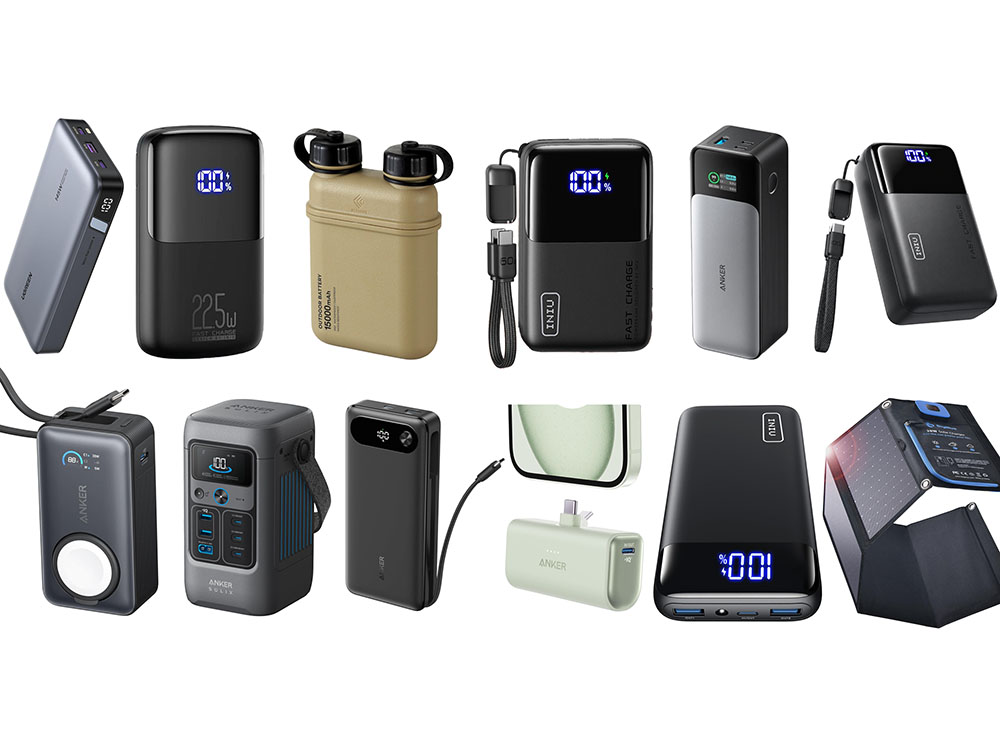
Find the best power banks in the UK for 2026, including compact phone chargers, 20,000mAh models, laptop power banks, waterproof outdoor options, solar chargers and travel-safe picks for hiking, camping and everyday use.
This page contains affiliate links. As an Amazon Associate, we earn from qualifying Amazon purchases at no additional cost to you. We may also earn commissions from other retailers, again at no additional cost to you.
For most walkers and travellers, the best power bank is the one that suits your device and trip length: 10,000mAh for day walks, 20,000mAh for camping weekends, and 25,000mAh or 100W+ USB-C models for laptops, tablets and small drone charging hubs. The Anker 737 is our best overall pick, the INIU 20,000mAh is the best phone-focused option, and the ELECOM NESTOUT is the best choice for a dedicated wet-weather walking power bank. Avoid choosing by mAh alone - output wattage, USB-C support, weight and waterproofing matter just as much.
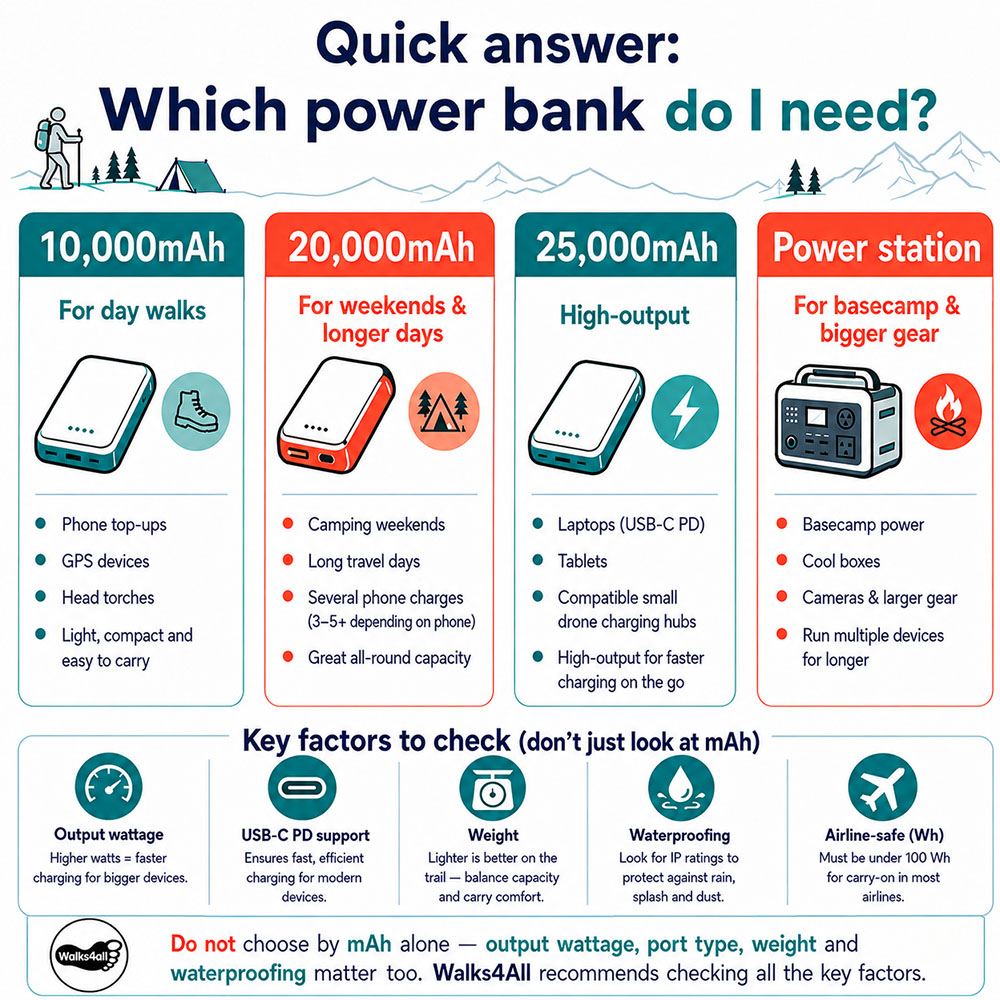
This quick-answer power bank guide compares 10,000mAh, 20,000mAh, 25,000mAh and power station options for day walks, weekends, laptops, small drone hubs and basecamp use. It also highlights output wattage, USB-C PD, weight, waterproofing and airline-safe watt-hours as key buying factors.
Key takeaways
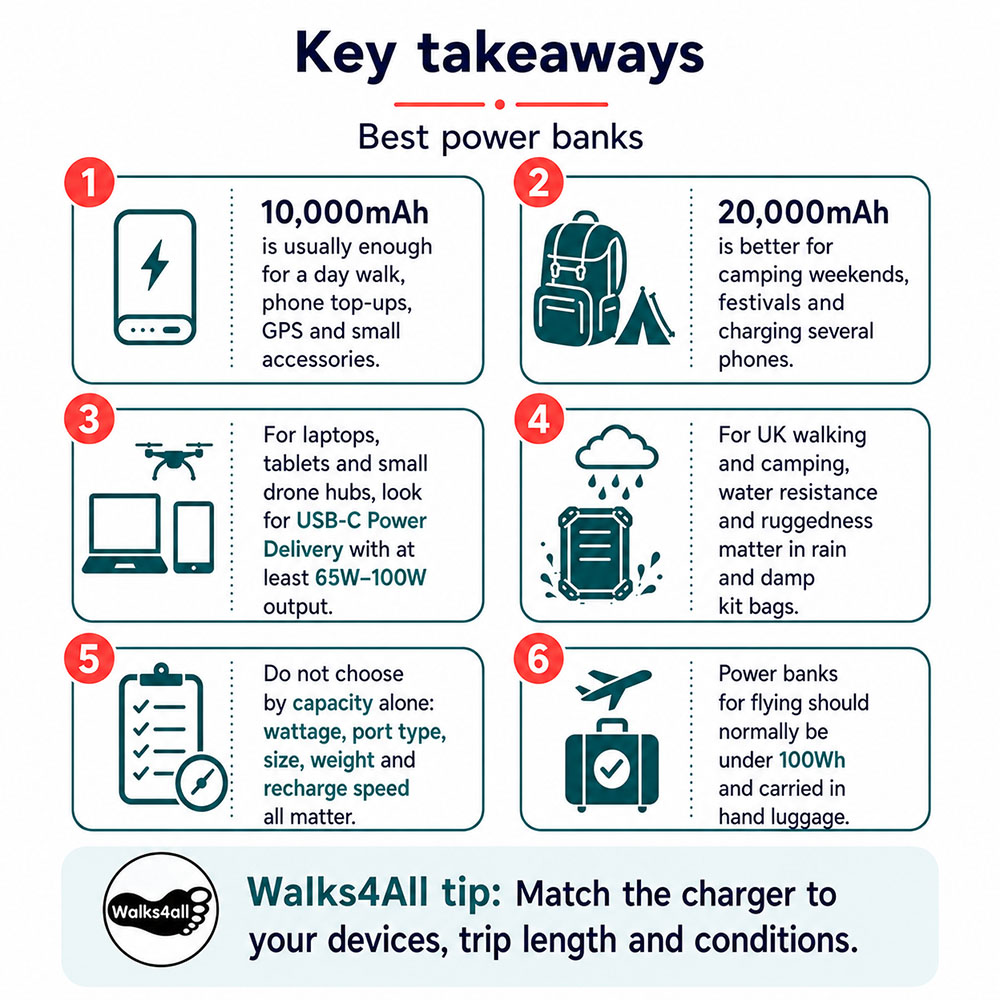
Key power bank takeaways cover capacity, USB-C PD output, waterproofing, flight limits and why wattage, weight and port type matter as much as mAh.
This Walks4all guide was compiled from a mix of product specification checks, manufacturer information, in-the-field testing, battery safety research, official flight guidance, and practical walking and camping use cases. We prioritised power banks that are useful in real outdoor situations: keeping a phone alive for navigation, charging a GPS or head torch, powering a tablet or laptop while travelling, topping up drone batteries via a USB-C hub, and coping with wet UK weather.
As there are not many dedicated waterproof power banks, most of those chosen are not waterproof and should be stored or used in a dry bag on wet days while on the hills. There are many cheap power banks available on Amazon, but for this guide I've stuck to tried-and-tested brands, as I have had overheating issues with cheaper ones in the past.
When we discuss technical specifications such as capacity, wattage, USB-C Power Delivery, waterproofing, or airline watt-hour limits, these are based on visible product information or official guidance. When we give buying recommendations, we also consider practical Walks4all factors such as weight in a rucksack, likely trip length, cable convenience, ruggedness, and whether a product is overkill for typical walking use.
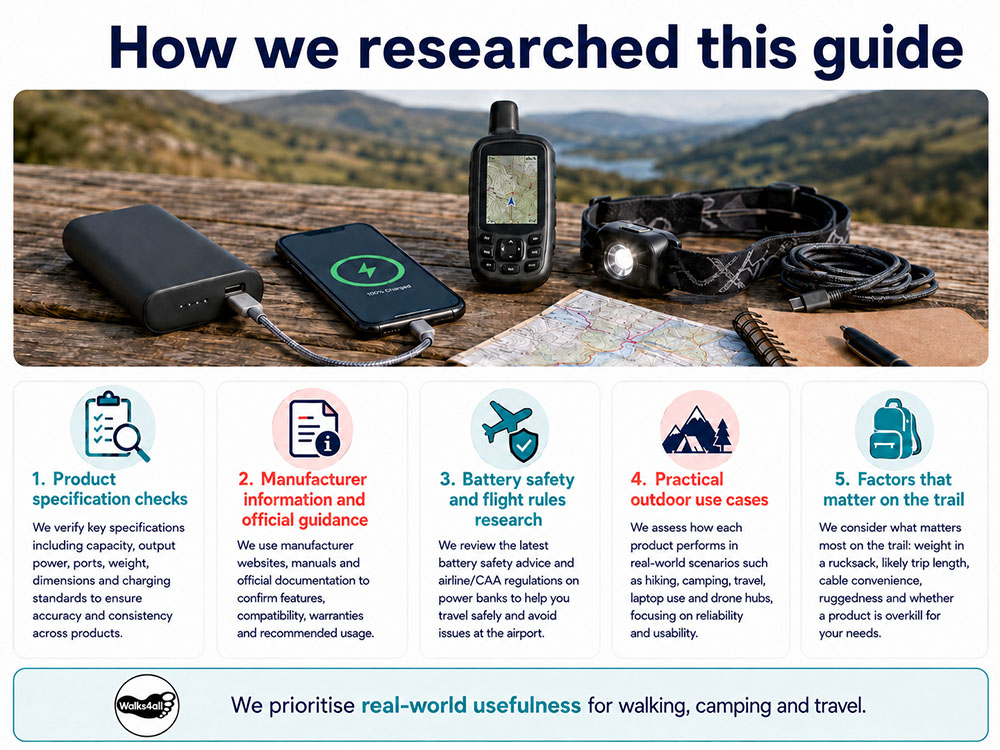
The guide's recommendations are based on specification checks, official safety guidance, battery rules and practical walking, camping and travel use cases.
In today's always-connected world, keeping your devices charged wherever you go is essential. Whether you're out hiking in the Dales, camping off-grid, travelling abroad or commuting between meetings, a reliable power bank ensures your phone, GPS, camera, tablet or laptop never lets you down. From compact pocket chargers to high-capacity power stations, modern power banks provide fast, safe charging even when you're miles from a power socket.
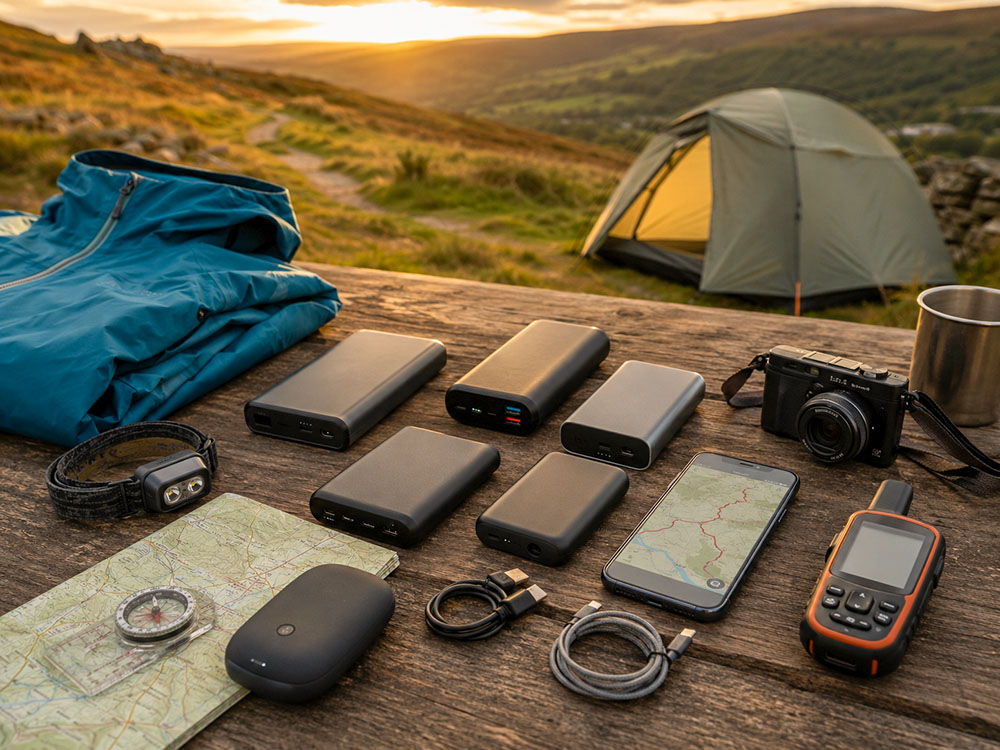
Portable power banks power phones, GPS units, cameras, head torches and other walking electronics that many hikers now carry on day walks and camping trips.
In this guide, we'll explore the best power banks available in the UK for 2026, covering options for every situation, from lightweight models for day hikes to heavy-duty units that can power laptops, small drones and camping electronics. You'll learn why a power bank is a must-have, how to choose the right capacity and output for your devices, and what features to look for, including USB-C Power Delivery, waterproofing, solar charging, digital displays and airline-safe watt-hour ratings.
This guide is for walkers, hikers, campers, travellers and everyday Powerbank users who need reliable portable power. It covers small phone chargers for day walks, larger 20,000mAh models for camping weekends, waterproof options for inclement weather, laptop-grade USB-C power banks for work travel, and solar charging for longer off-grid trips.
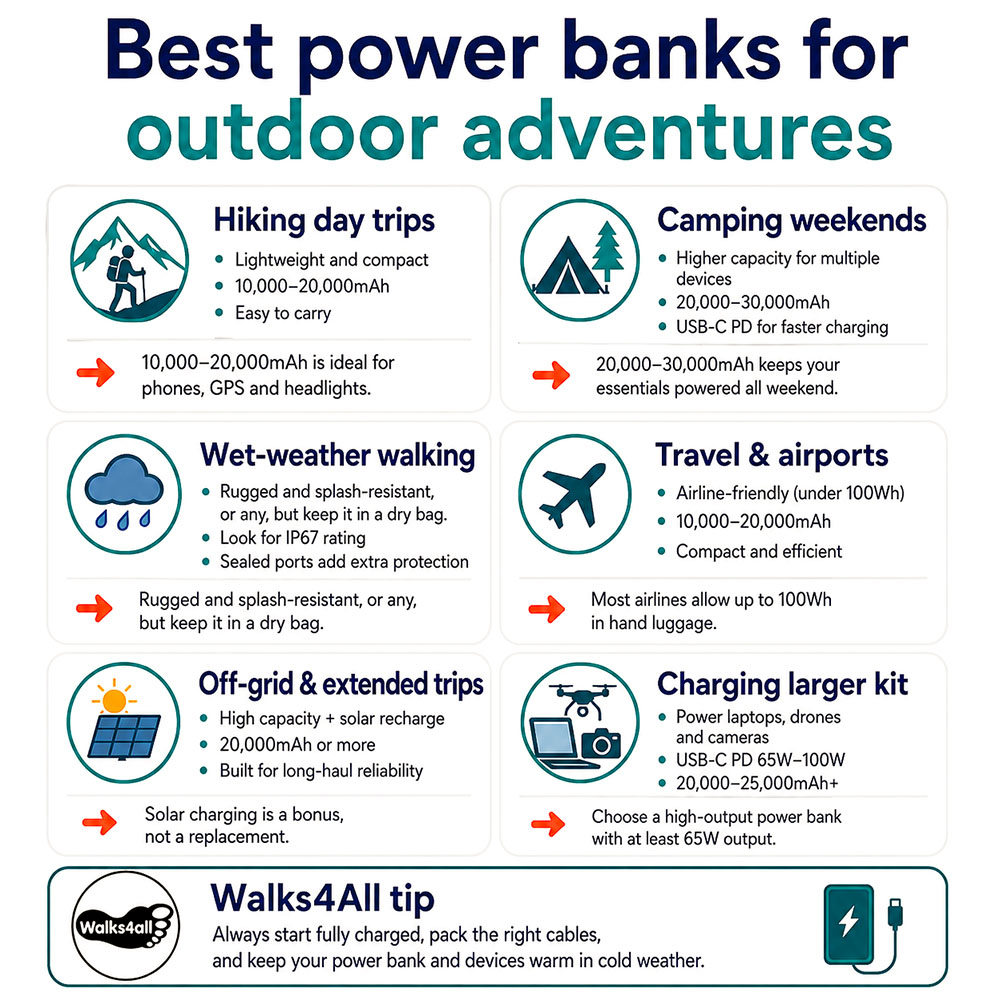
This outdoor power bank guide matches common walking and camping scenarios with the right capacity and features, from compact 5,000-10,000mAh day-walk chargers to 20,000-25,000mAh options for multi-day trips and heavier kit. For wet weather, it highlights rugged or splash-resistant designs, or keeping a standard power bank protected in a dry bag.
At Walks4all, we've reviewed a wide range of power banks, rating them on real-world charging performance, capacity and efficiency, portability, build quality, durability, and overall value for money.
| Category | Recommended power bank | Capacity / output | Best for |
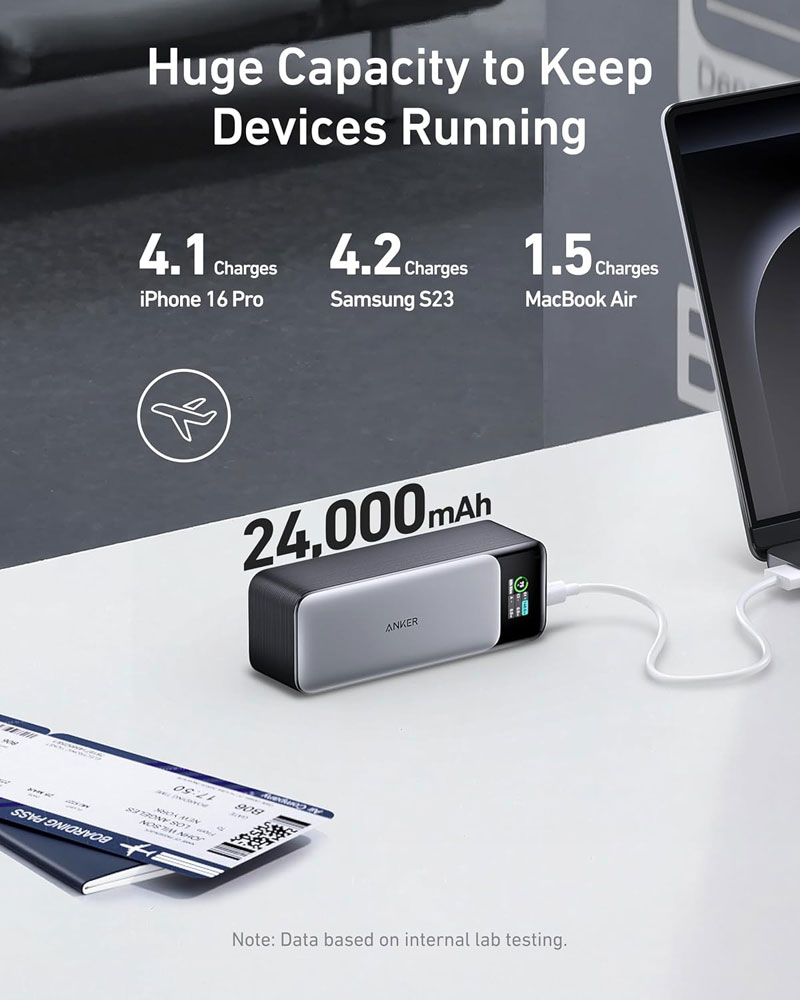
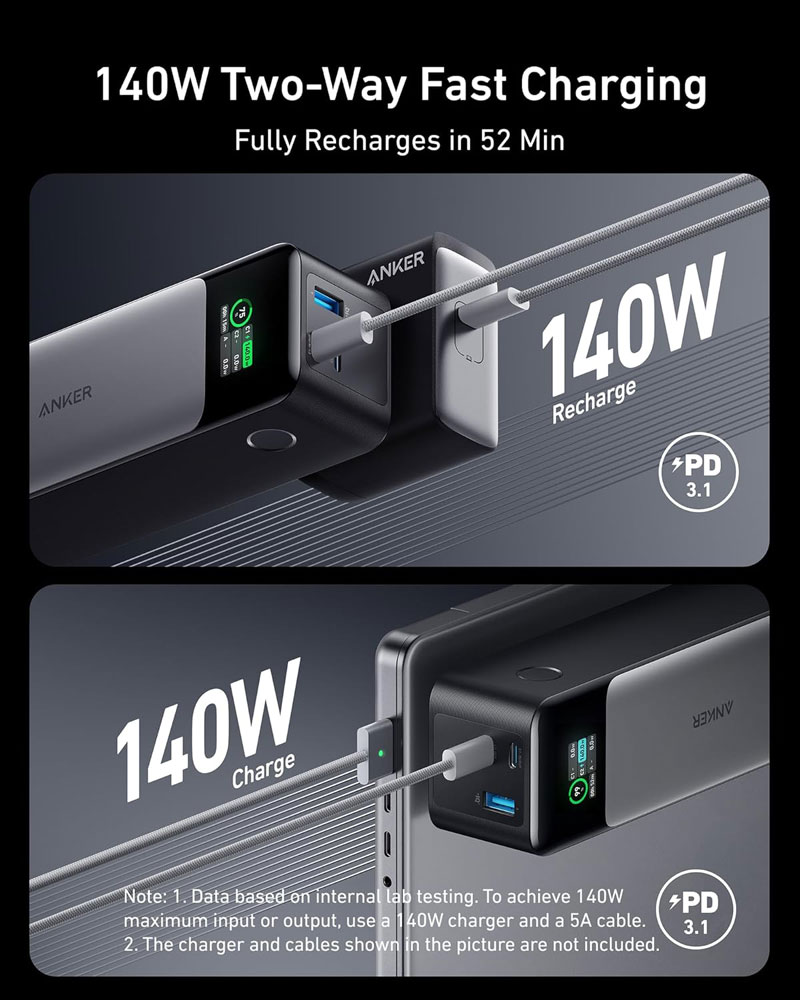
| Best overall power bank | Anker 737 PowerCore 24K | 24,000mAh / 140W | Laptops, tablets and heavy multi-device use |
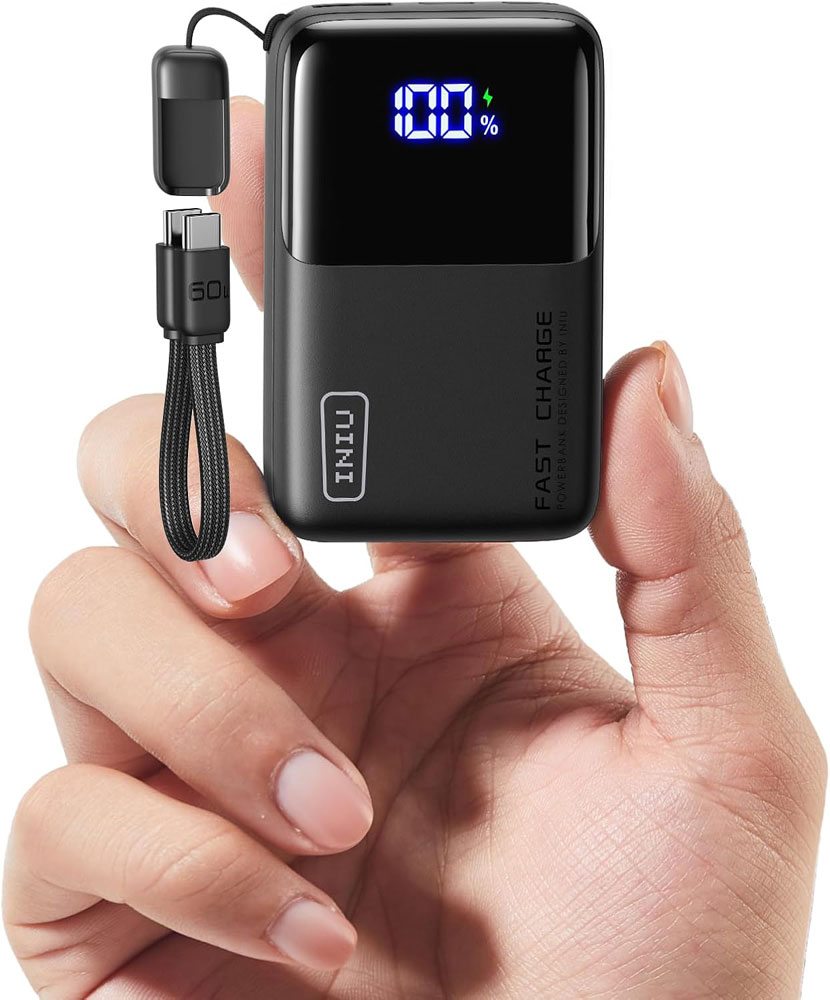
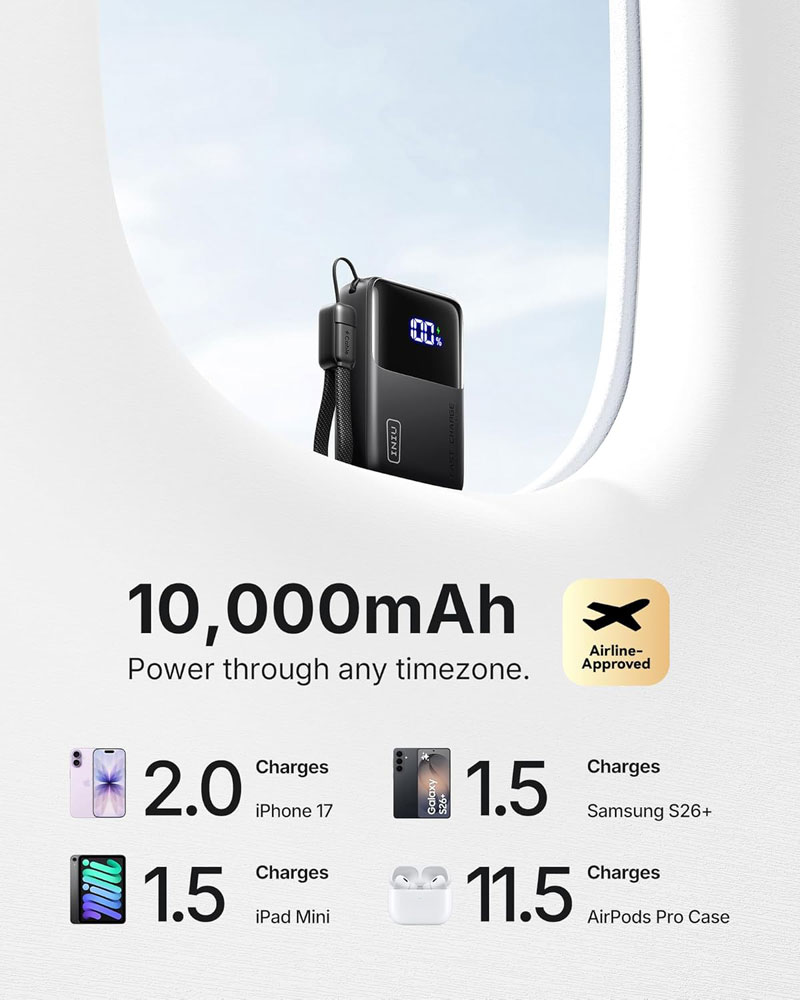
| Best 10,000mAh power bank | INIU Pocket Rocket P50 | 10,000mAh / 45W | Fast compact charging for phones, tablets and travel |
| Best 20,000mAh power bank | Anker 20,000mAh 87W Power Bank | 20,000mAh / 87W shared | Camping weekends, travel and light laptop use |
| Best power bank for small drones | INIU 100W 25,000mAh | 25,000mAh / 100W | USB-C drone hubs, tablets and field photography kit |
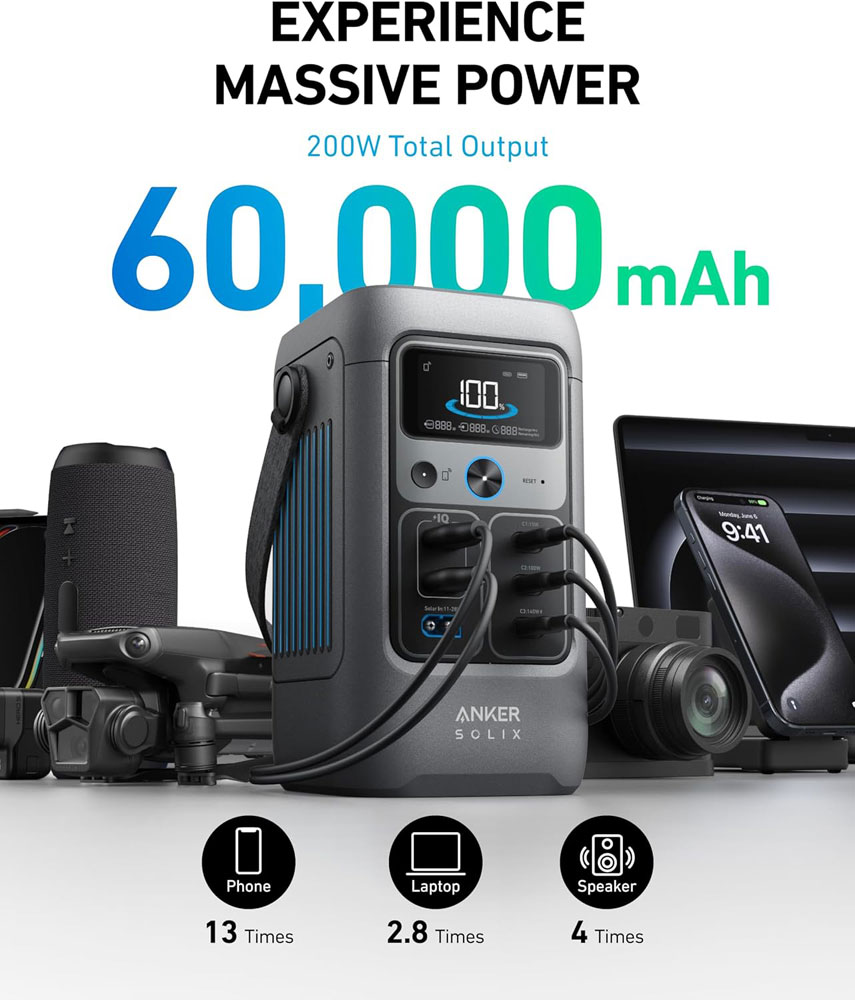
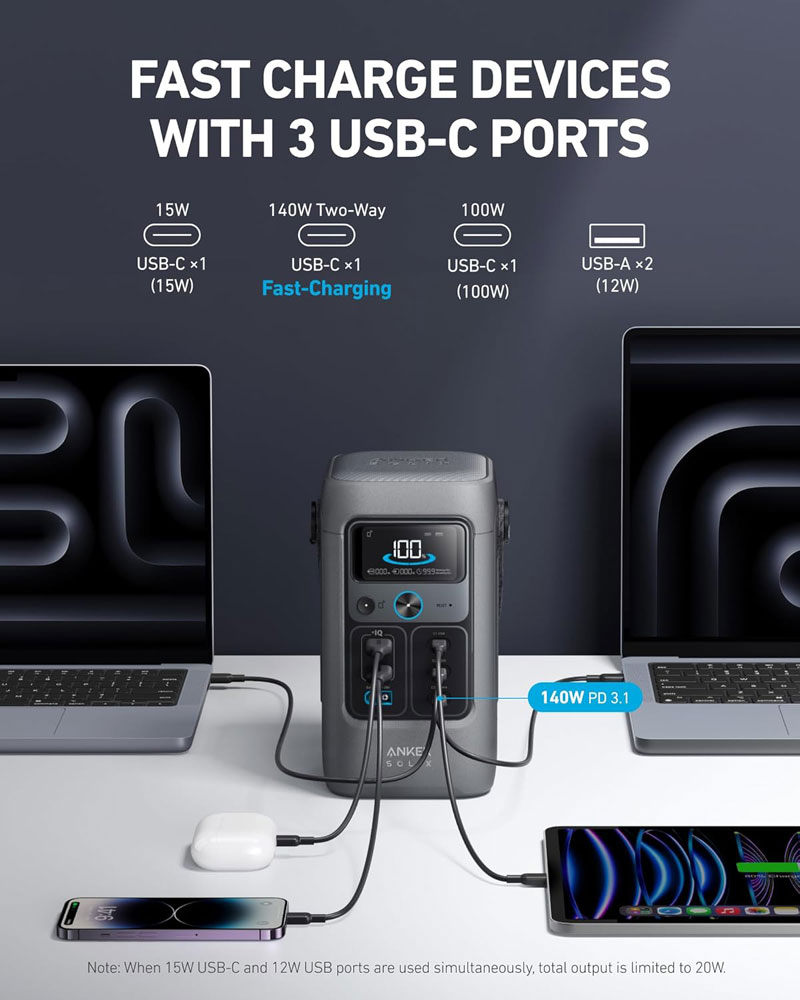
| Best power bank station | Anker SOLIX C200 | 192Wh / 200W | Basecamp, car camping and emergency backup |
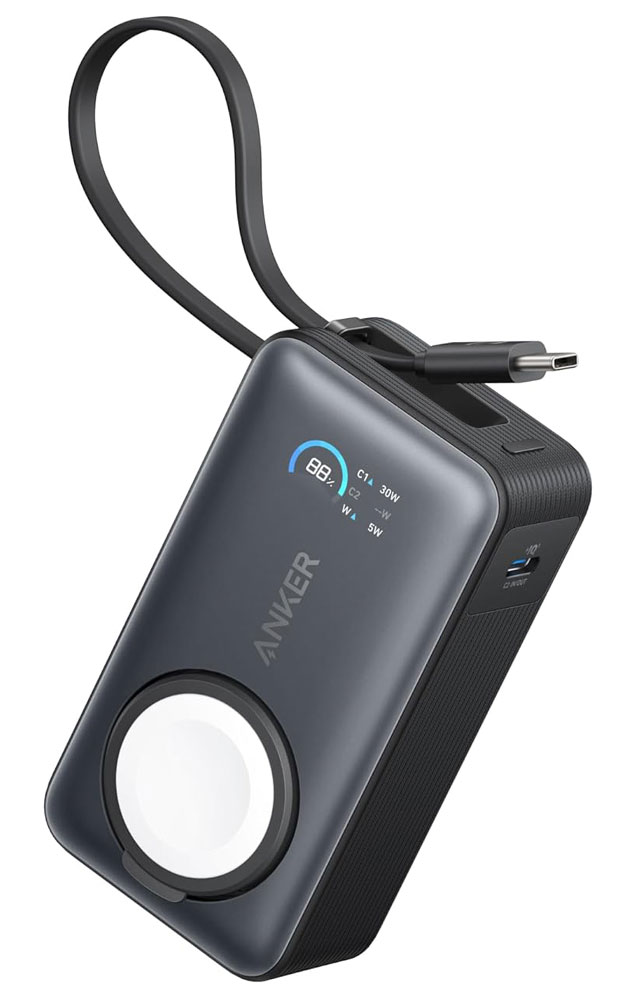
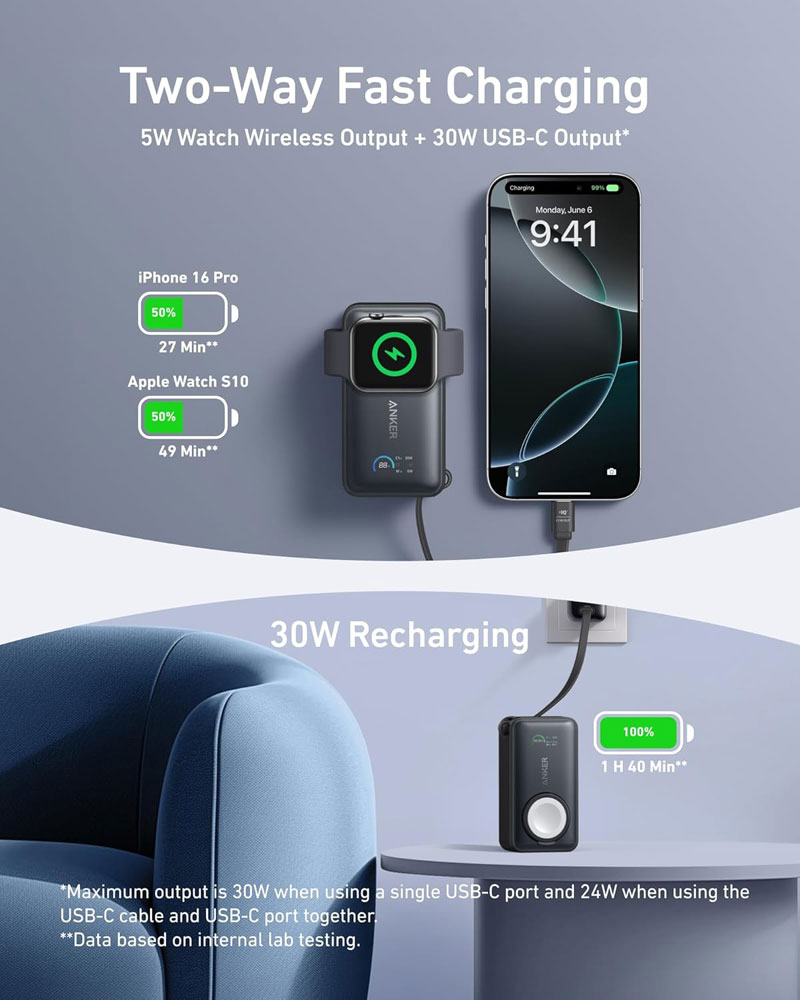
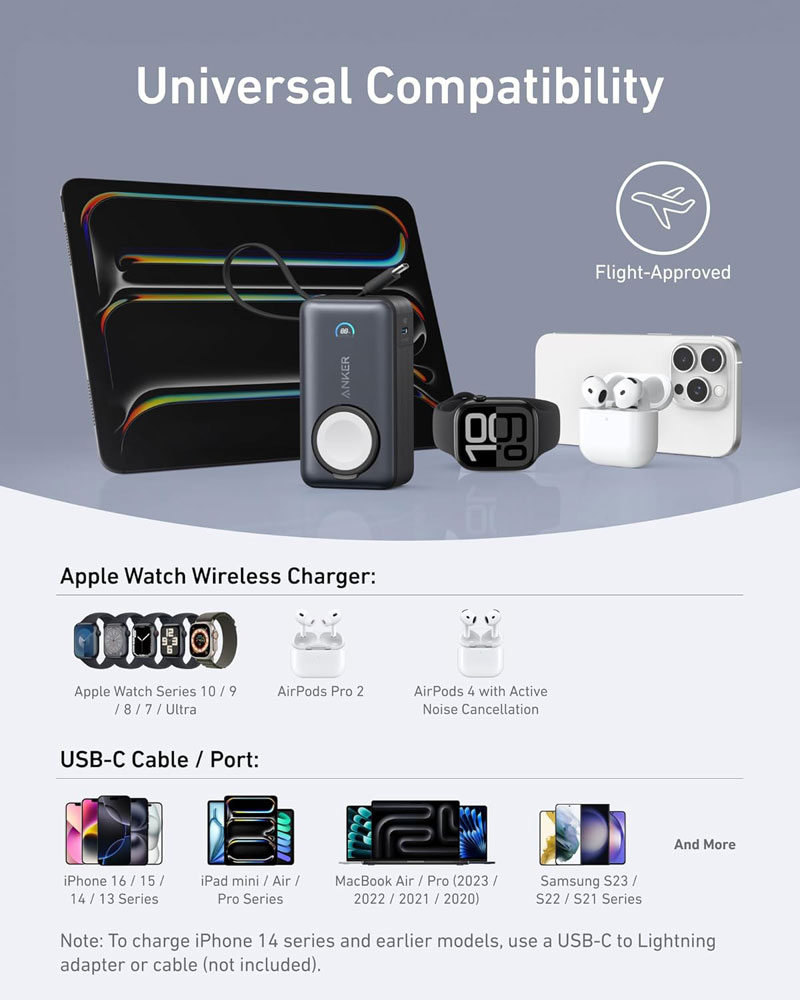
| Best power bank for Apple devices | Anker MagGo 10K Watch Edition | 10,000mAh / 35W total | Charging iPhone and Apple Watch from one compact unit |
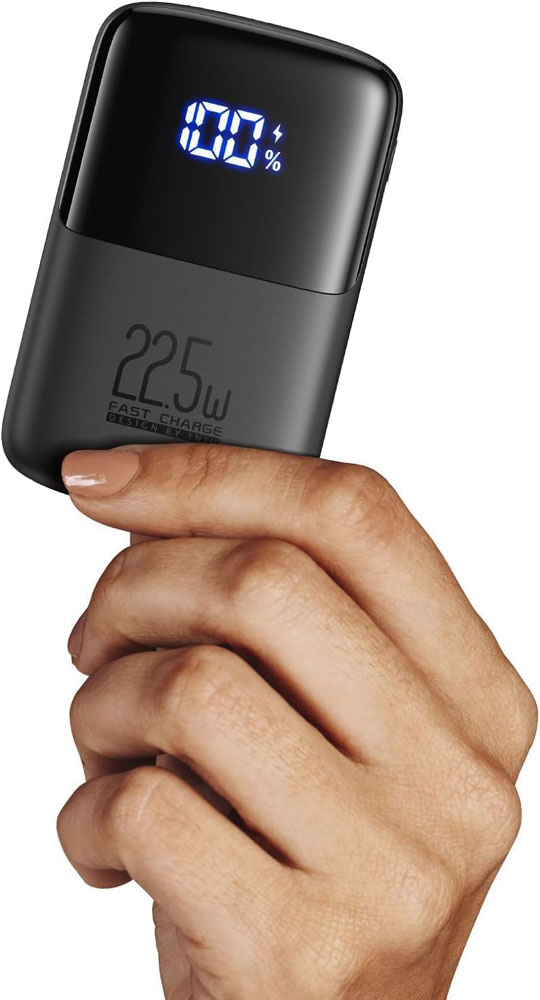
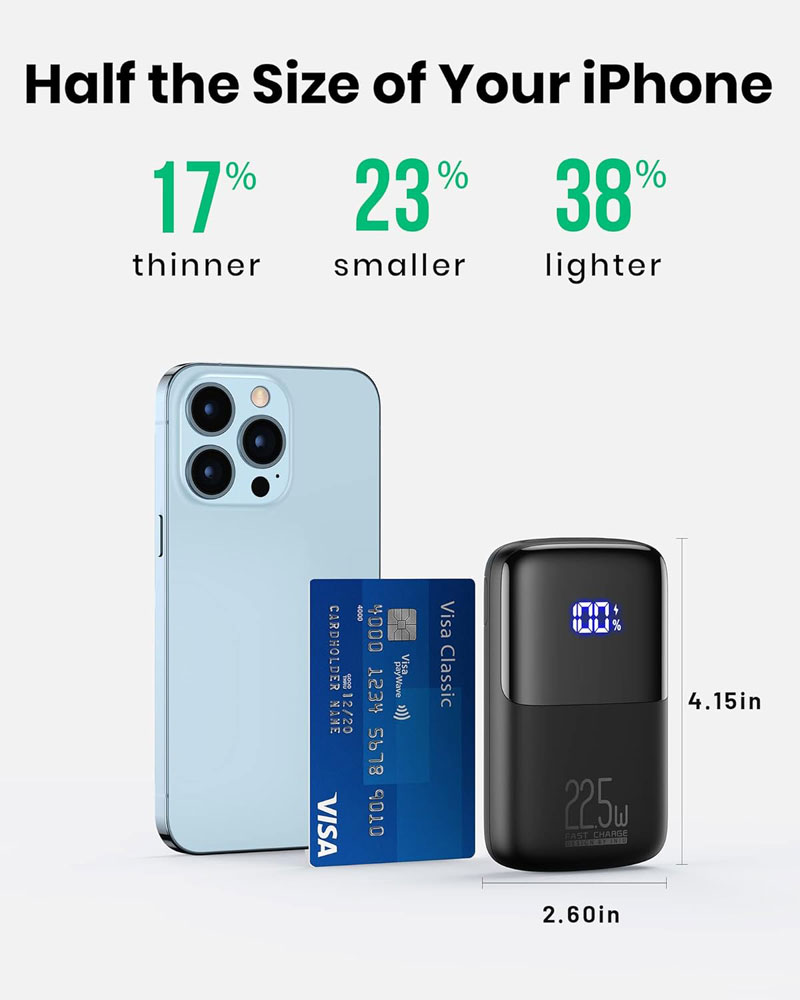
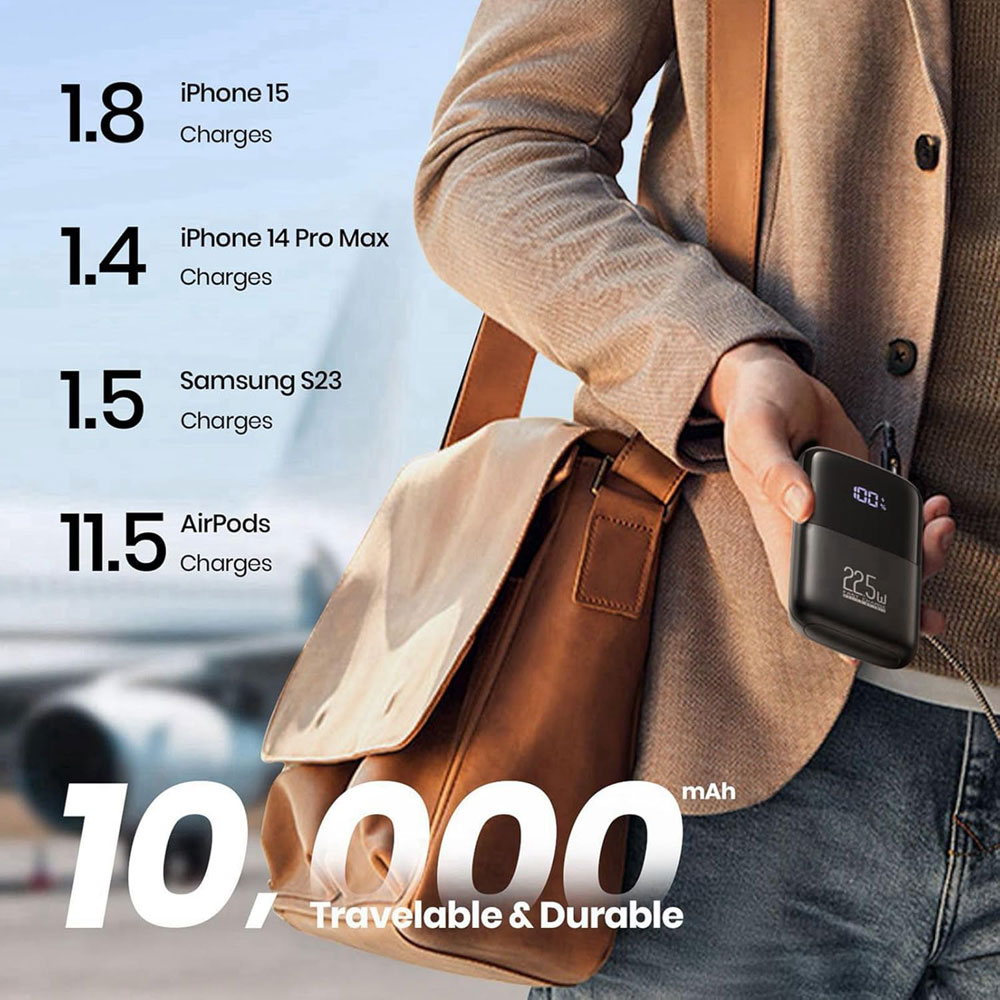
| Best budget power bank | INIU 10,000mAh Mini 22.5W | 10,000mAh / 22.5W | Low-cost USB-C charging for phones and small devices |
| Best compact power bank | Anker Nano Power Bank 5K | 5,000mAh / 22.5W | Cable-free emergency phone top-ups |
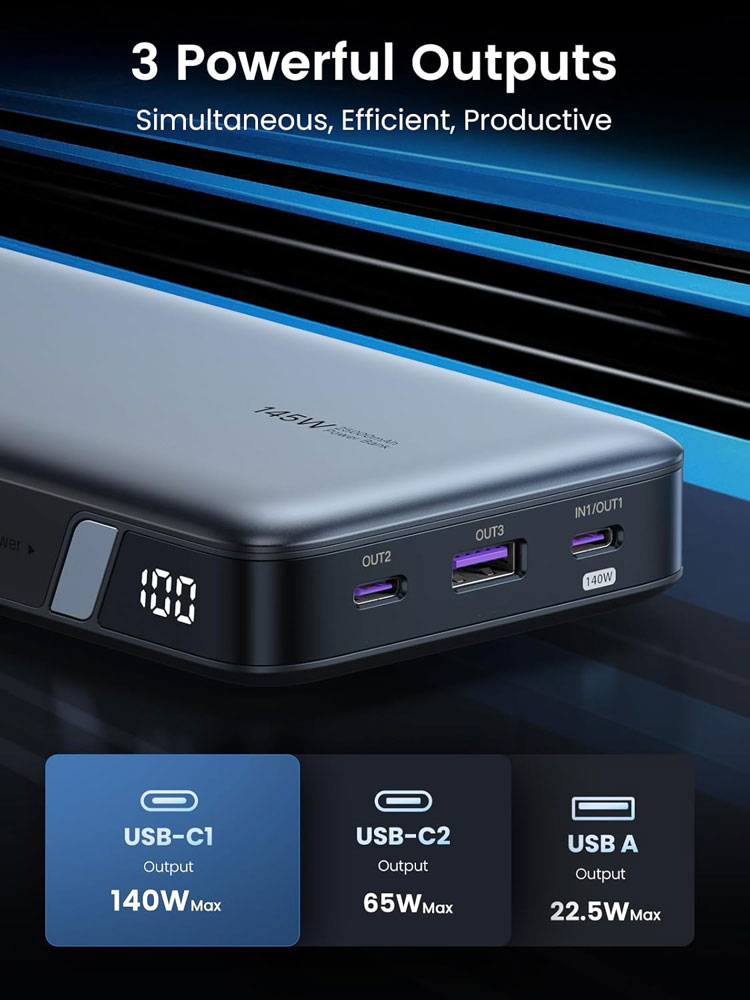
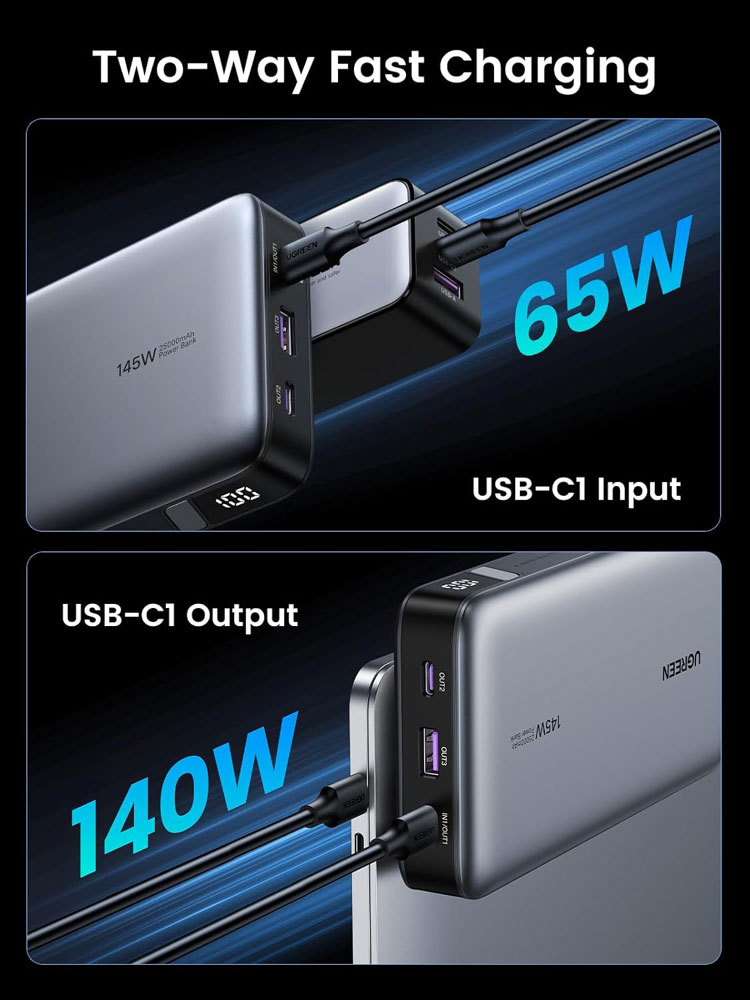
| Best power bank for laptops | UGREEN Nexode 145W 25,000mAh | 25,000mAh / 140W class | MacBooks, Windows laptops and high-output USB-C charging |
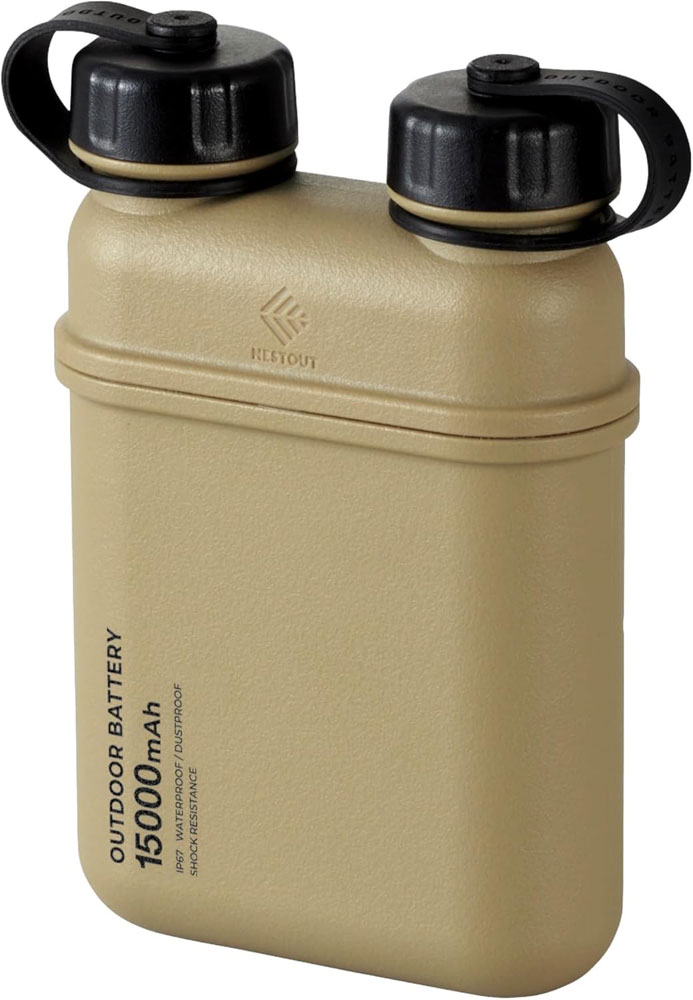
| Best waterproof power bank | ELECOM NESTOUT 15,000mAh | 15,000mAh / 32W | Wet-weather walking, camping and rough outdoor use |
| Best power bank for phones | INIU 20,000mAh Fast Charge | 20,000mAh / 22.5W | Several phone recharges on trips and weekends away |
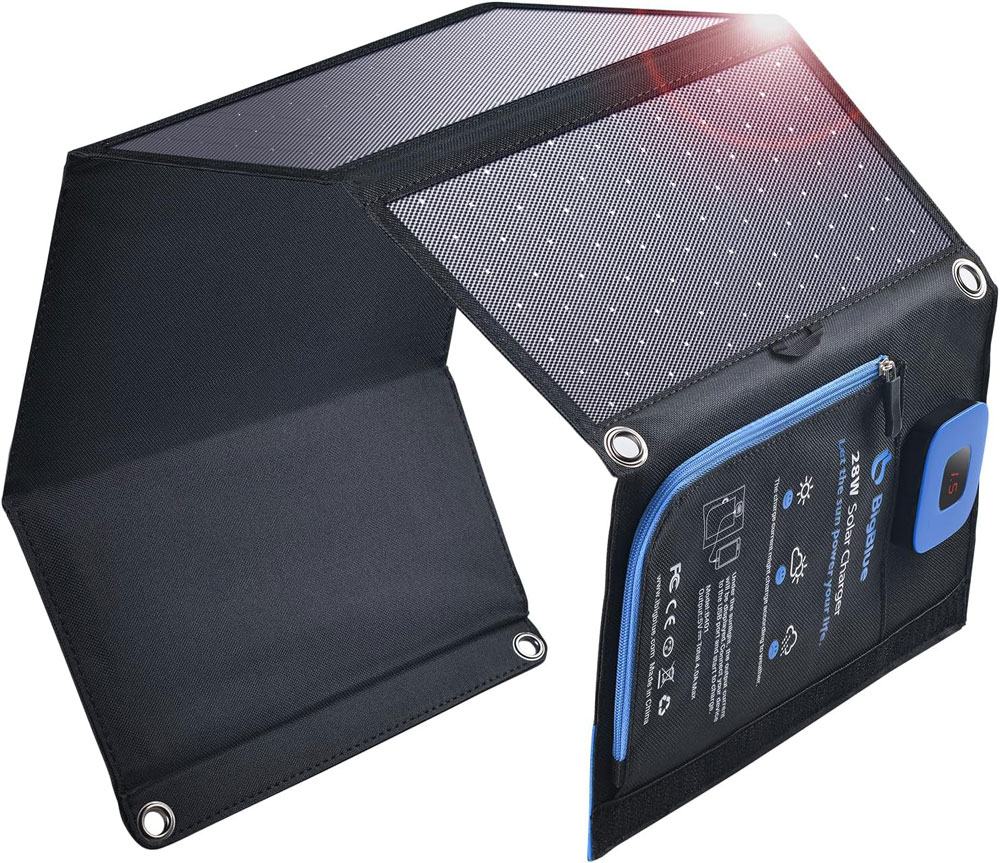
| Best solar charger for power banks | BigBlue 28W Solar Charger | 28W solar panel | Topping up a power bank off-grid in sunlight |
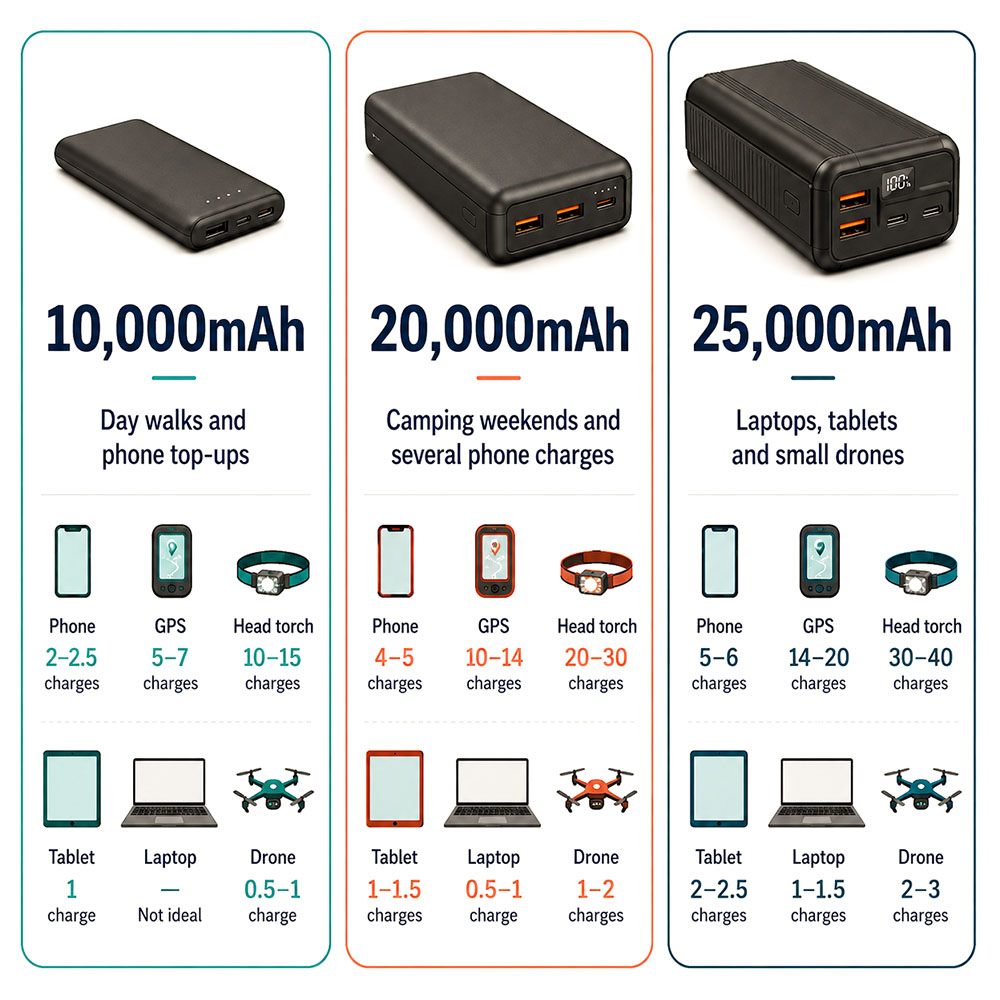
10,000mAh, 20,000mAh and 25,000mAh power banks suit different jobs, from day-walk phone top-ups to camping weekends, tablets, laptops and small drone hubs.
| You need to charge... | Choose this type |
| One phone for a day | 5,000–10,000mAh compact bank |
| Phone + GPS + head torch | 10,000–15,000mAh |
| Several phones over a weekend | 20,000mAh |
| Tablet or iPad | 20,000–25,000mAh, 30W+ |
| USB-C laptop | 65W–140W USB-C PD bank |
| Small drone batteries | 65W–100W USB-C PD bank |
| Wet-weather walking kit | IP67 rugged power bank |
| Multi-day basecamp | Power station or solar panel + bank |
Before choosing a power bank, use the Walks4all POWER Check. It is a simple five-step guide to matching the charger to your walking, camping, travel or everyday charging needs.
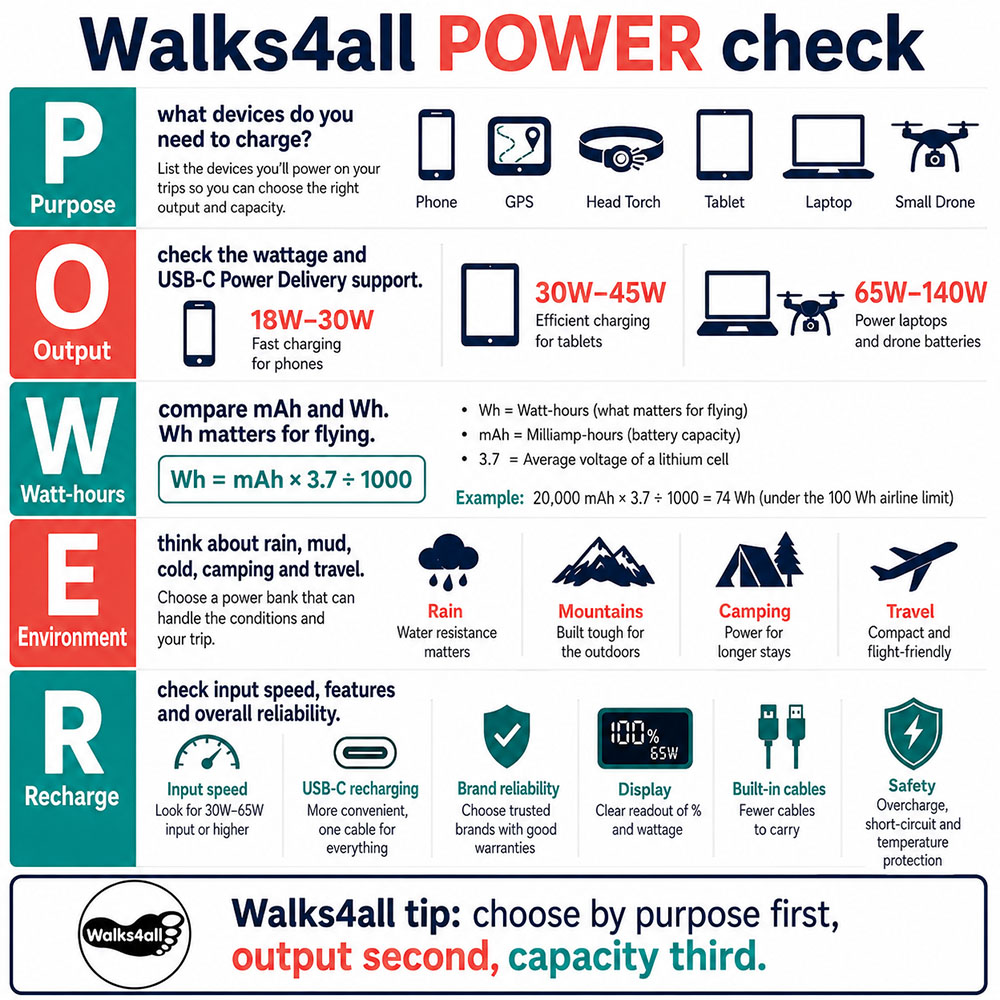
The Walks4All POWER Check is a simple buying framework that covers purpose, output, watt-hours, environment, and recharge reliability before choosing a power bank.
In simple terms: choose by purpose first, output second, capacity third. A compact 10,000mAh power bank is ideal for day walks and phone top-ups; a 20,000mAh model is better for camping weekends; and a 25,000mAh high-output USB-C model is better suited to laptops, tablets, and compatible small-drone charging hubs.
 |
 |
Features and specs:
Pros:
Cons:
Avoid if: you need only a small phone charger for day walks; the Anker 737 is deliberately more powerful and heavier than required.
Why we chose:
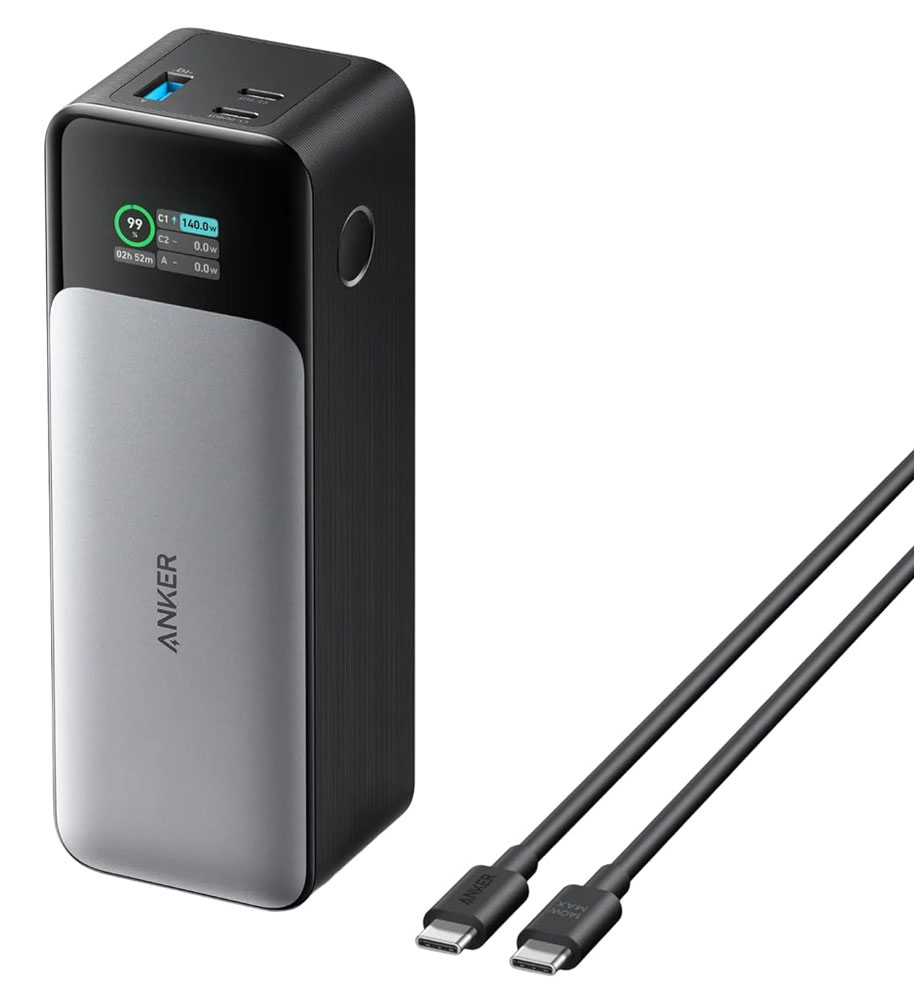
I chose the Anker 737 as the overall winner because it covers the widest range of real-world uses. For phones and tablets it has far more output than you will normally need, but the big advantage is that 140W USB-C Power Delivery makes it genuinely useful for many laptops rather than just a slow emergency top-up.
For me, this is the model that makes most sense if you travel with several devices, work from a laptop, or take camera and drone kit on walking trips. At 510 g, it is too heavy for minimalist day walks, but as a serious travel, camping or laptop-bag power bank, it is hard to ignore.
The Anker 737 is the best all-round power bank for users who need serious charging power for phones, tablets and laptops.
|
|
Features and specs:
Pros:
Cons:
Avoid if: you need several days of camping power or a true laptop charger; this remains a compact 10,000mAh model.
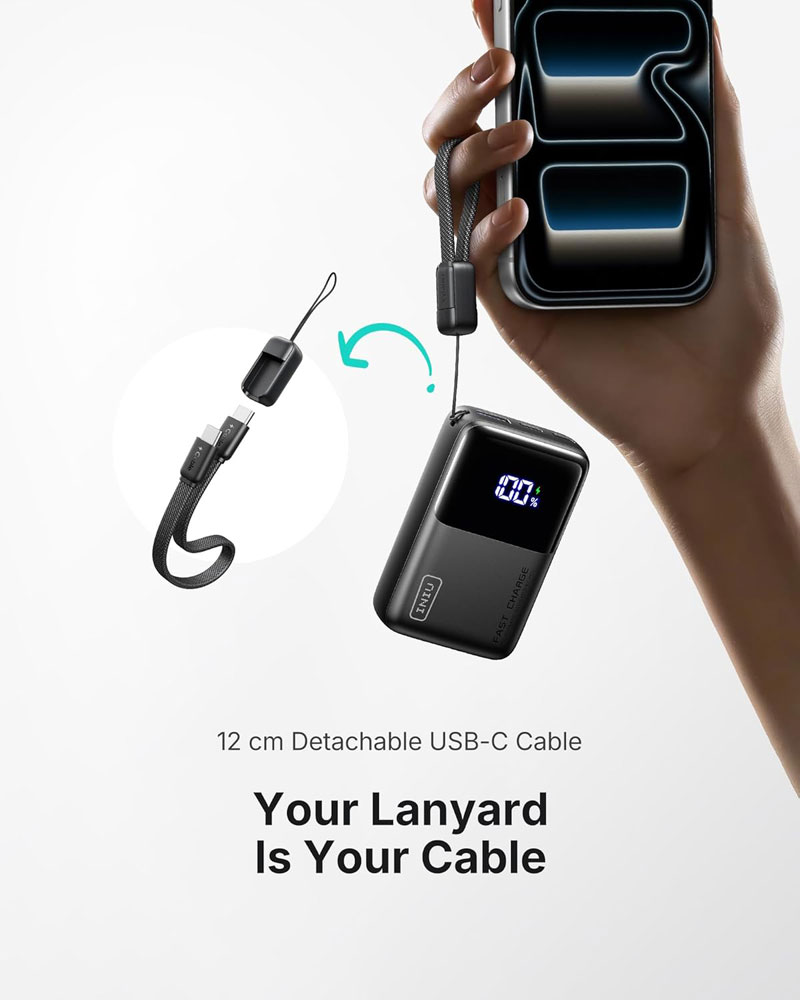
Why we chose:
I chose the INIU Pocket Rocket P50 because a modern 10,000mAh power bank should offer more than basic phone charging. The 45W output gives it a real advantage over older 10K models, especially if you want to charge a tablet, a larger phone, or a USB-C device quickly without carrying a heavy 20,000mAh pack.
This is the kind of charger I would keep in a daypack for walks where I know I will be using maps, photos and GPS heavily. At just 160 g, it is compact enough for everyday travel, and its extra wattage gives it more flexibility than many budget 10K banks. INUI offer a 3-year warranty, which is a lot more than most, but that said, I've never had any warranty issues with INUI devices within 3 years of buying one of their power banks.
The INIU Pocket Rocket P50 is a compact 10,000mAh power bank that delivers faster USB-C charging without the weight of a larger model.
|
|
Features and specs:
Pros:
Cons:
Avoid if: you want ultralight pocket carry; 20,000mAh capacity adds noticeable weight compared with a 5,000mAh or 10,000mAh bank.
Why we chose:
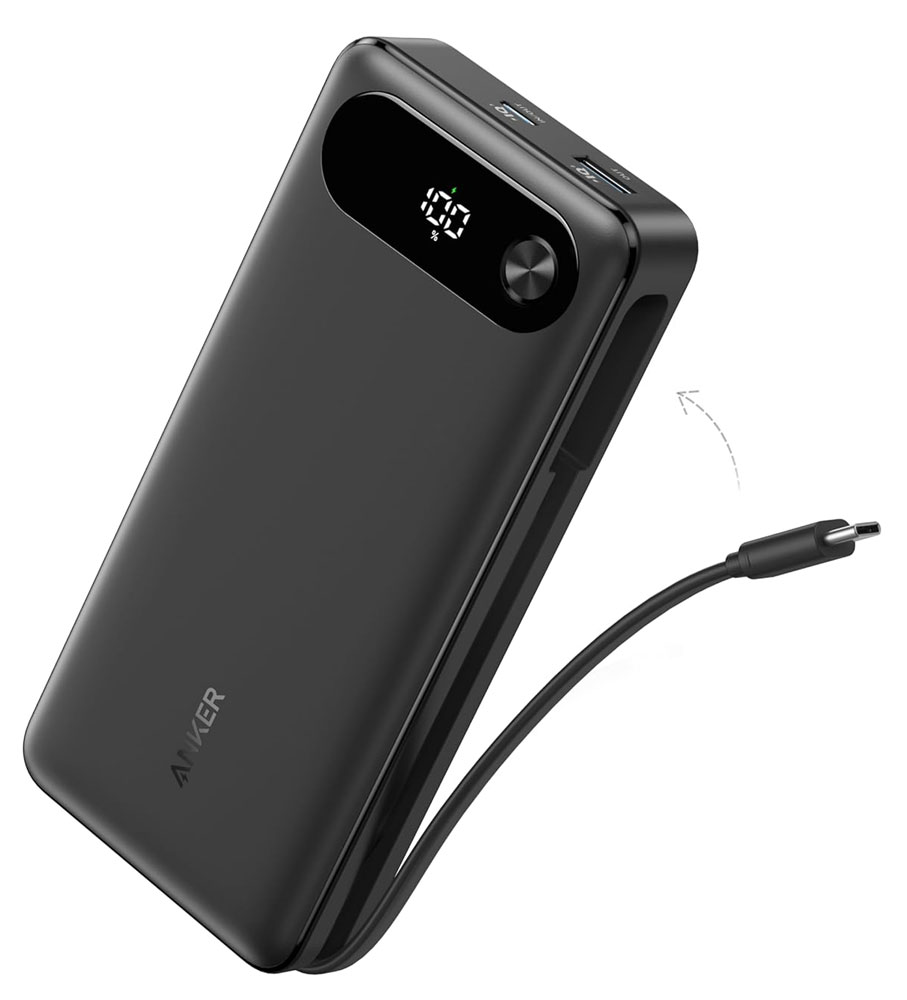
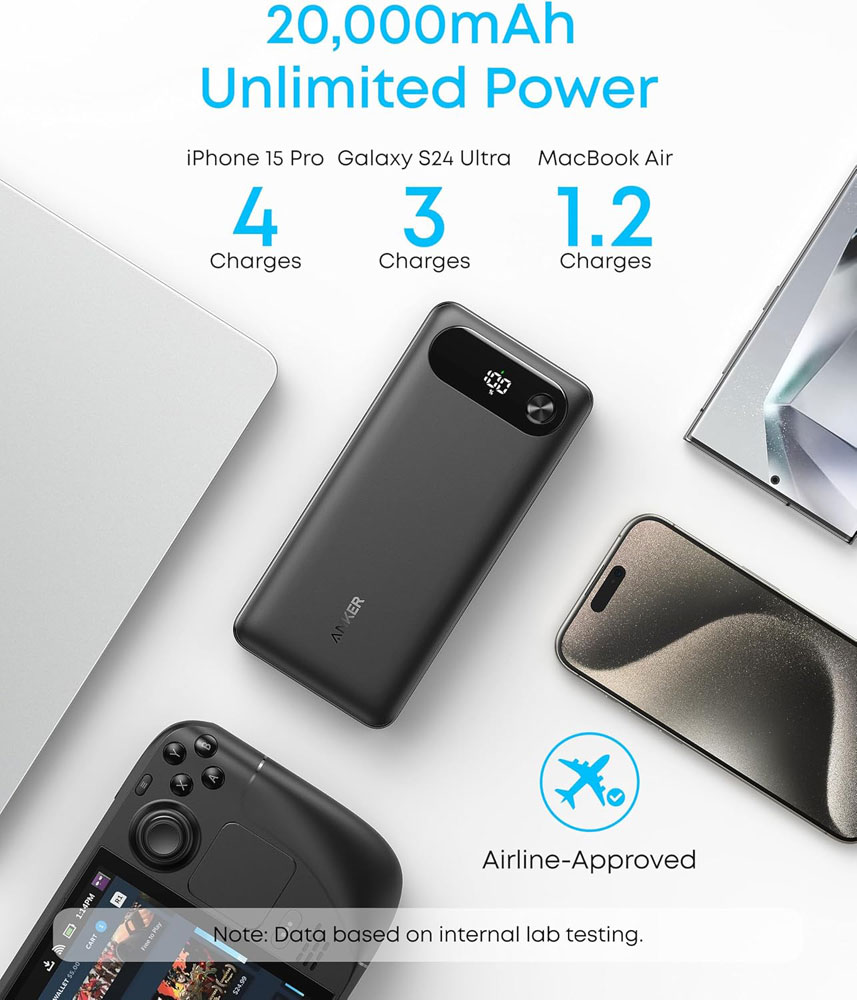
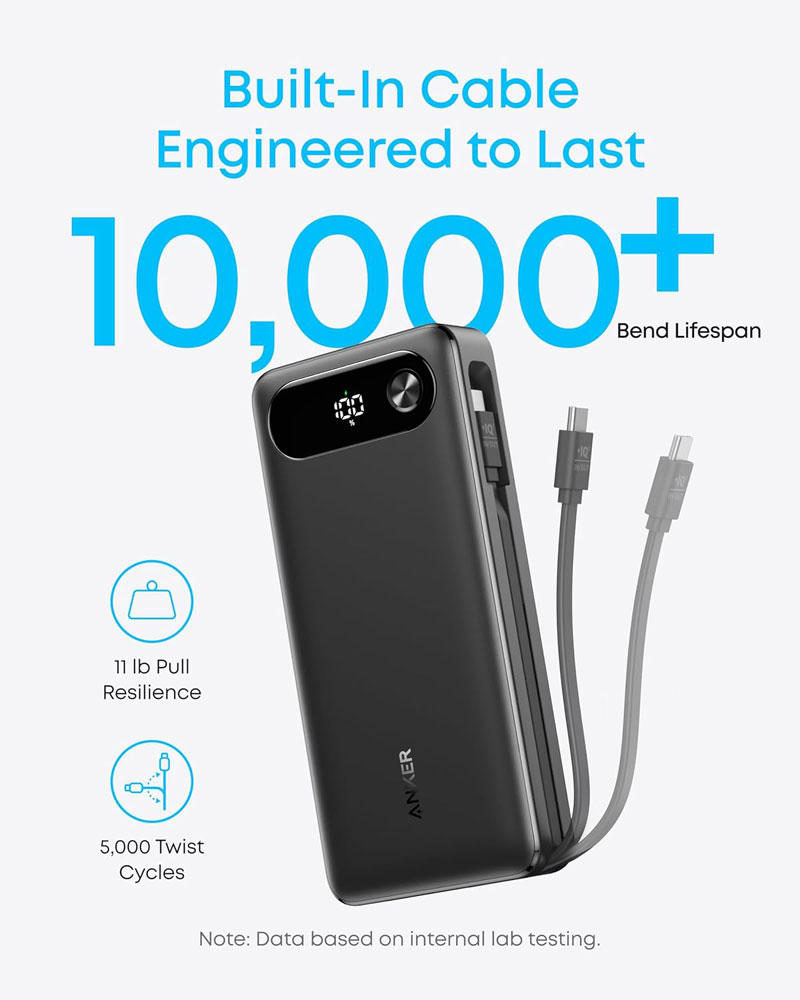
I replaced my older Anker 325 with this newer Anker 20,000mAh 87W model because it is a much better fit for walking when I've my GoPro, phone and head torch with me on an overnight camp. The built-in USB-C cable, higher output, and digital display make it feel more useful for modern travel than a basic 20K power bank that focuses solely on capacity.
For me, 20,000 mAh is the most practical capacity for camping weekends, long travel days, and repeated phone charging. This Anker provides sufficient output for tablets and light laptop use without being as large as a 25,000 mAh laptop-class brick.
The Anker 20,000mAh 87W power bank is the best 20K option for those seeking greater capacity, faster charging and a built-in cable, all in a single travel-friendly unit.
|
|
Features and specs:
Pros:
Cons:
Avoid if: your drone hub does not support USB-C Power Delivery, you need AC charging for larger drone batteries, or you just need a lightweight charger for your phone.
Why we chose:
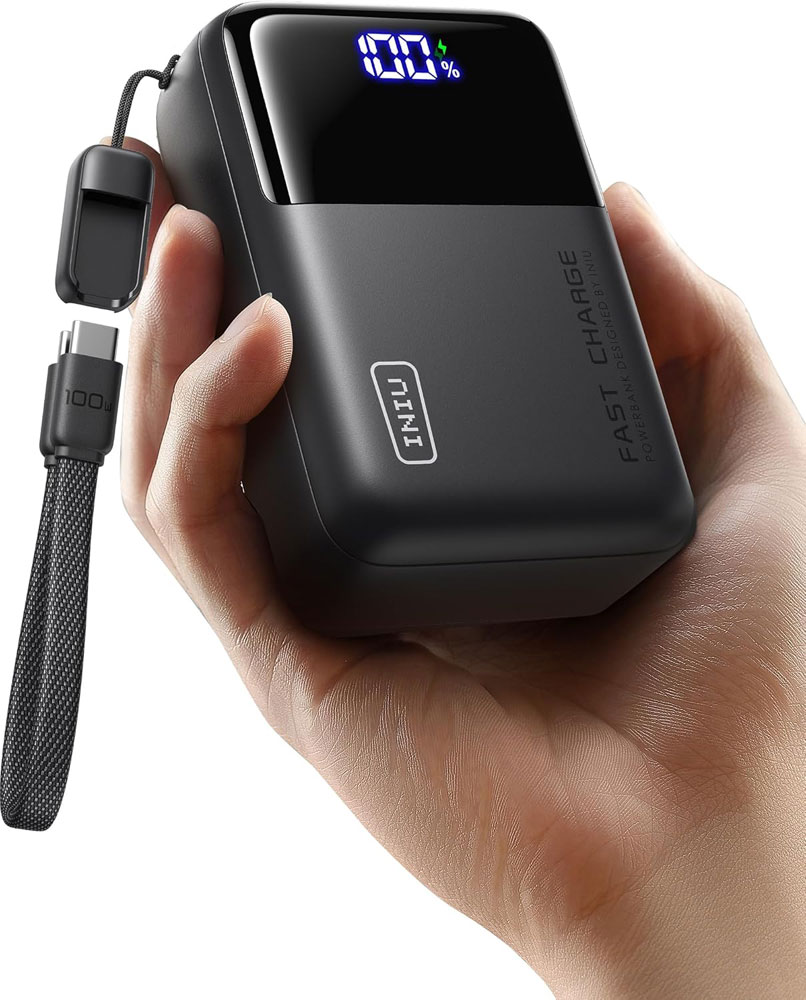
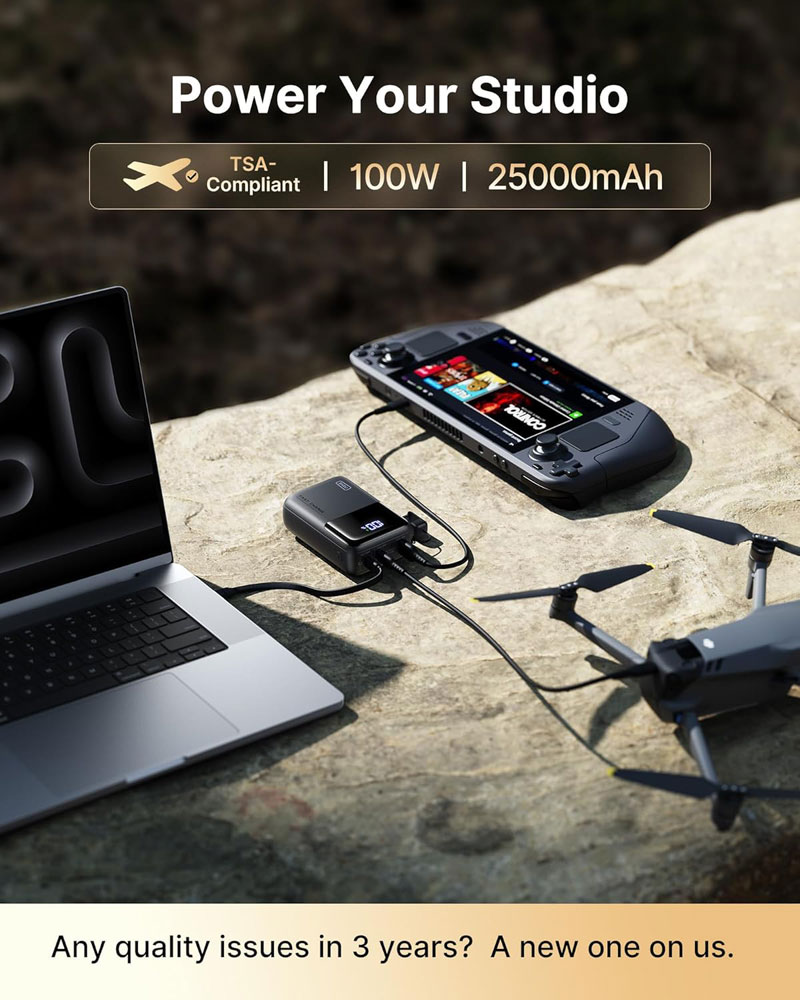
I chose this INIU 100W model for small drones because it delivers what drone users need: high USB-C output and ample storage capacity. Many compact drone charging hubs now support USB-C Power Delivery, and a 100W bank is far more useful in the field than a standard phone-only charger.
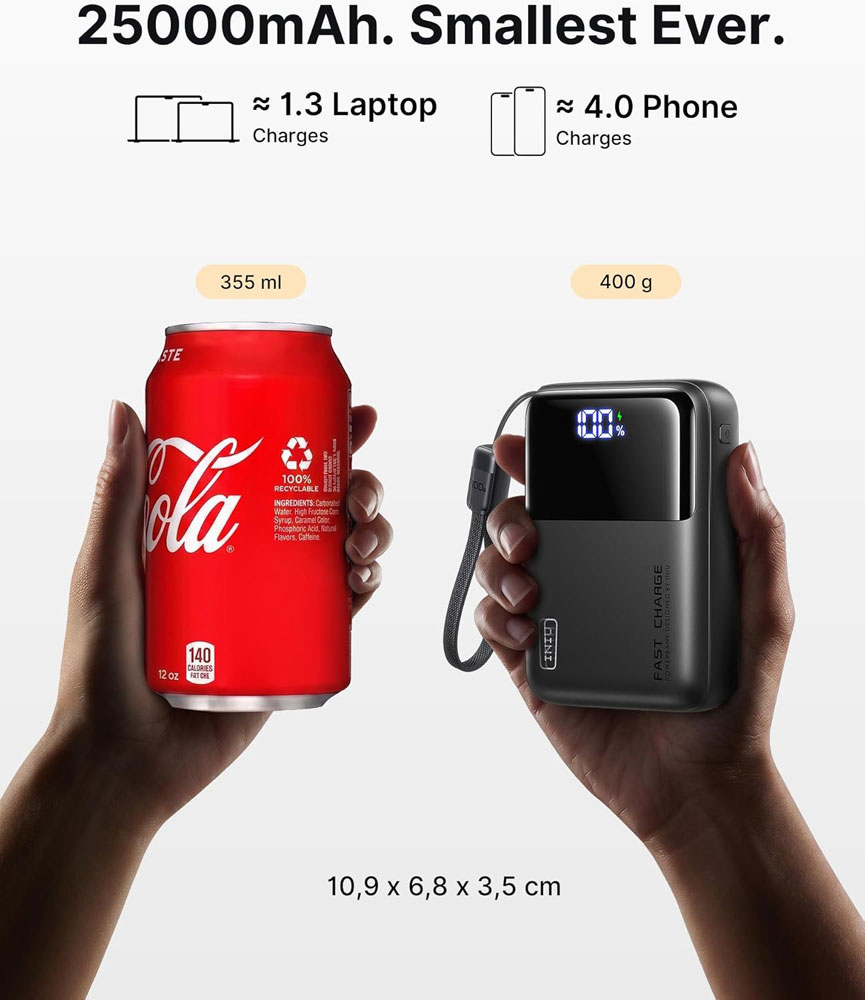
It also works well as a crossover option for people carrying cameras, tablets or a USB-C laptop on walking trips. It is not waterproof and heavier than a simple power bank, but if you are carrying drone kit anyway, the extra charging capacity is worth it. It is the smallest power bank I've come across that offers this level of power output.
The INIU 100W 25,000mAh is the best option for small-drone users needing a powerful USB-C battery for field charging.
|
|
Features and specs:
Pros:
Cons:
Avoid if: you need power for flights or hikes; this is a basecamp power station, not a pocket power bank.
Why we chose:
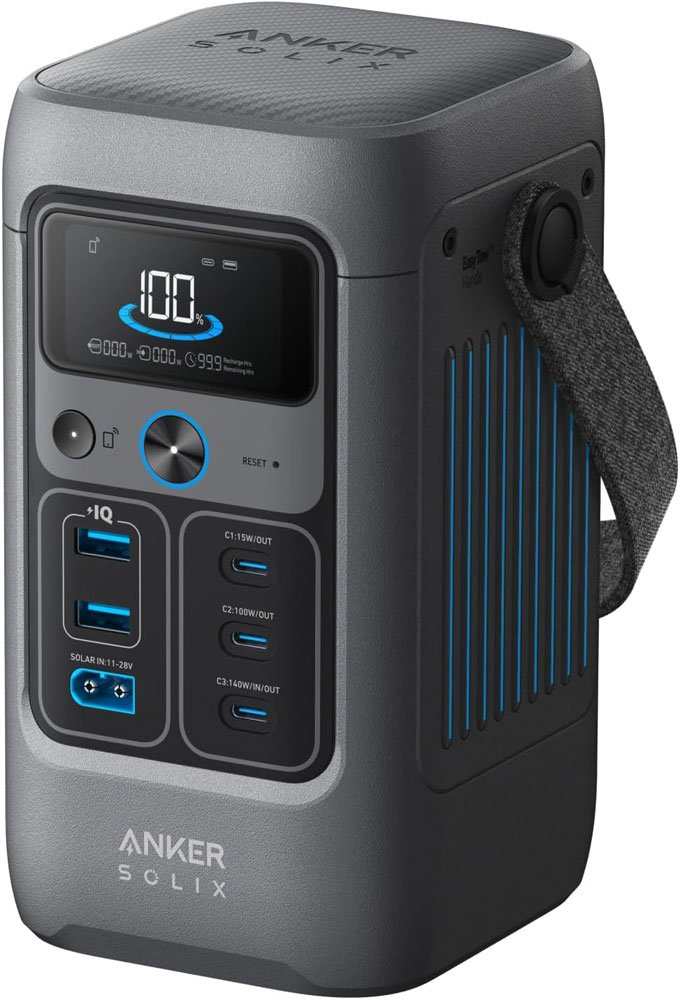
I chose the Anker SOLIX C200 because it serves a different role from a pocket power bank. This is the option I would consider for car camping, basecamp charging, campervan trips, or emergency backup when several people need to charge phones, tablets, and camp electronics over a weekend.
The LiFePO4 battery chemistry is also reassuring for long-term use because it is designed for a longer cycle life than many standard lithium-ion power banks. The trade-off is obvious: it is too large and heavy at 1.9 kg for ordinary hiking and too high in watt-hours for standard flight carry-on, but for camp power it is a very useful size.
The Anker SOLIX C200 is a compact power station for car camping, off-grid charging, base camp use, and emergency backup power.
|
|
Features and specs:
Pros:
Cons:
Avoid if: you do not use an Apple Watch; a normal USB-C power bank will usually be better value.
Why we chose:
I chose the Anker MagGo Apple Watch power bank because it solves a very specific travel problem for Apple users. This model lets you charge an Apple Watch and an iPhone-style setup from one compact device.
For weekend getaways, work travel, or camping trips where you use your watch to track walks and sleep, it is a neat solution. It is not the best value if you do not own an Apple Watch, but for Apple users it is one of the tidiest portable charging setups.
The Anker MagGo Apple Watch power bank is the best option for Apple users who want to charge their iPhone and Apple Watch from a single, compact unit.
|
|
Features and specs:
Pros:
Cons:
Avoid if: you need laptop charging or are several days away from power; this is a budget, compact bank rather than a high-capacity charger.
Why we chose:
I chose this INIU 10,000mAh Mini because it offers the features most people need without driving up the price. You still get USB-C input and output, 22.5W fast charging and a digital display, making it much more practical than many older budget power banks.
For everyday walking, commuting and travel, this is a sensible backup charger for phones, earbuds, GPS units and head torches. It does not have the power to charge laptops, but as a budget phone charger it covers the basics very well.
The INIU 10,000mAh Mini is a budget-friendly, compact power bank for fast phone charging and for carrying small essentials.
|
|
Features and specs:
Pros:
Cons:
Avoid if: you need more than one phone top-up or want to charge tablets or laptops.
Why we chose:
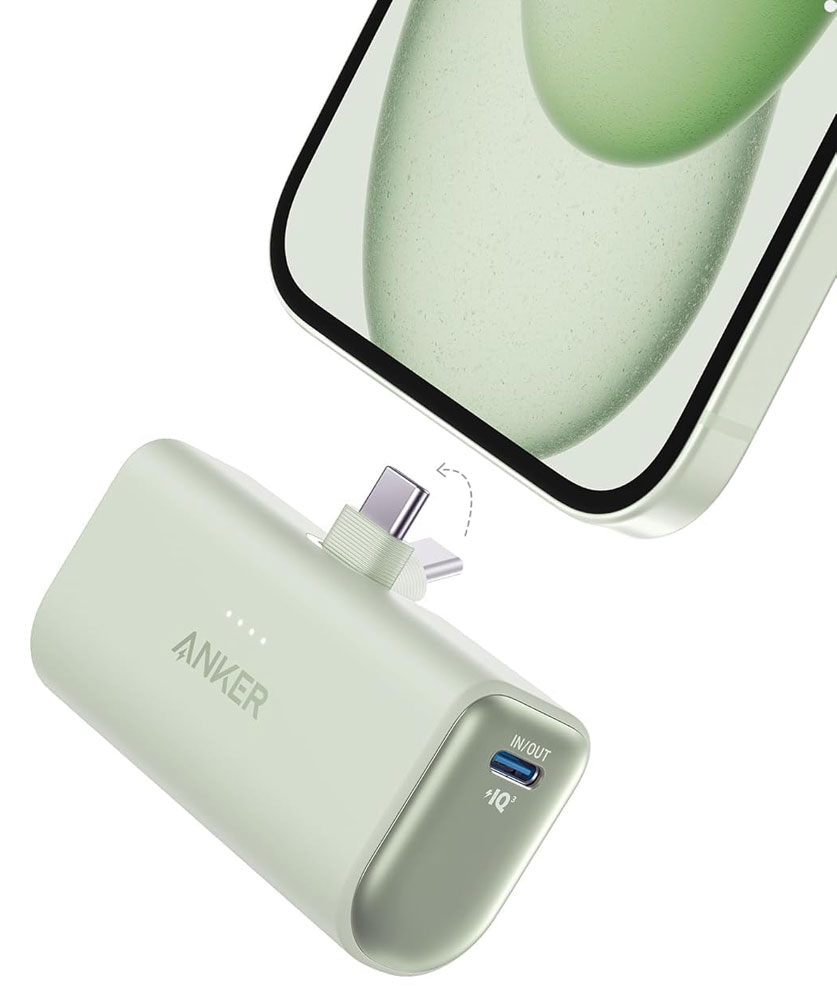
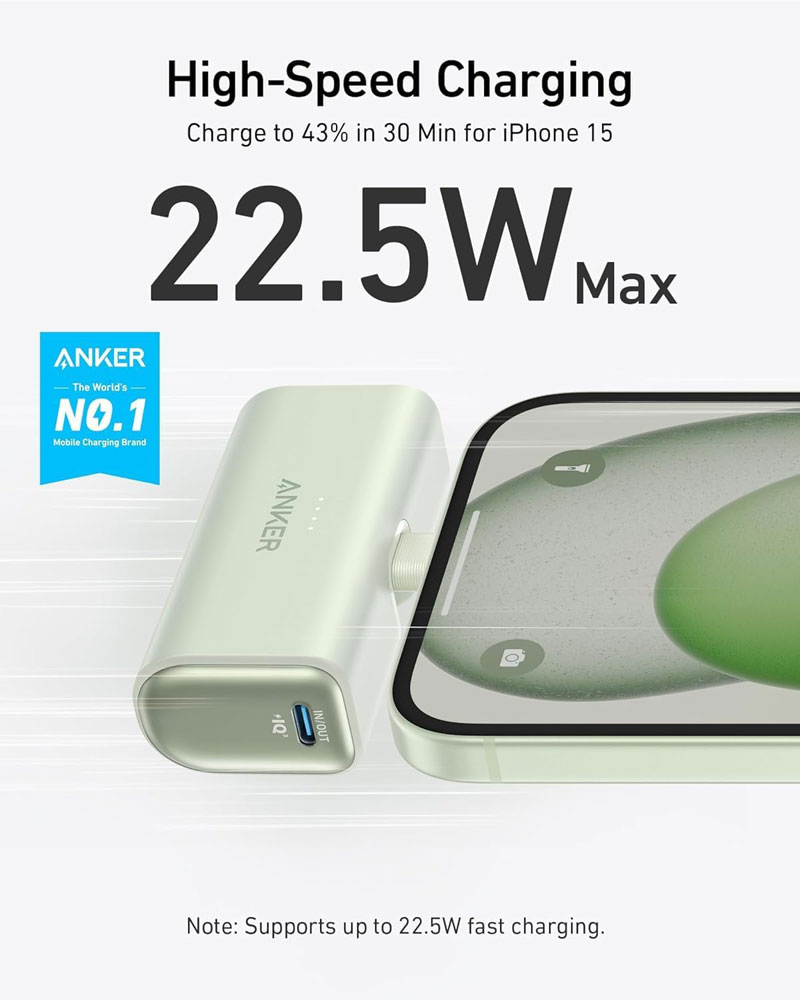
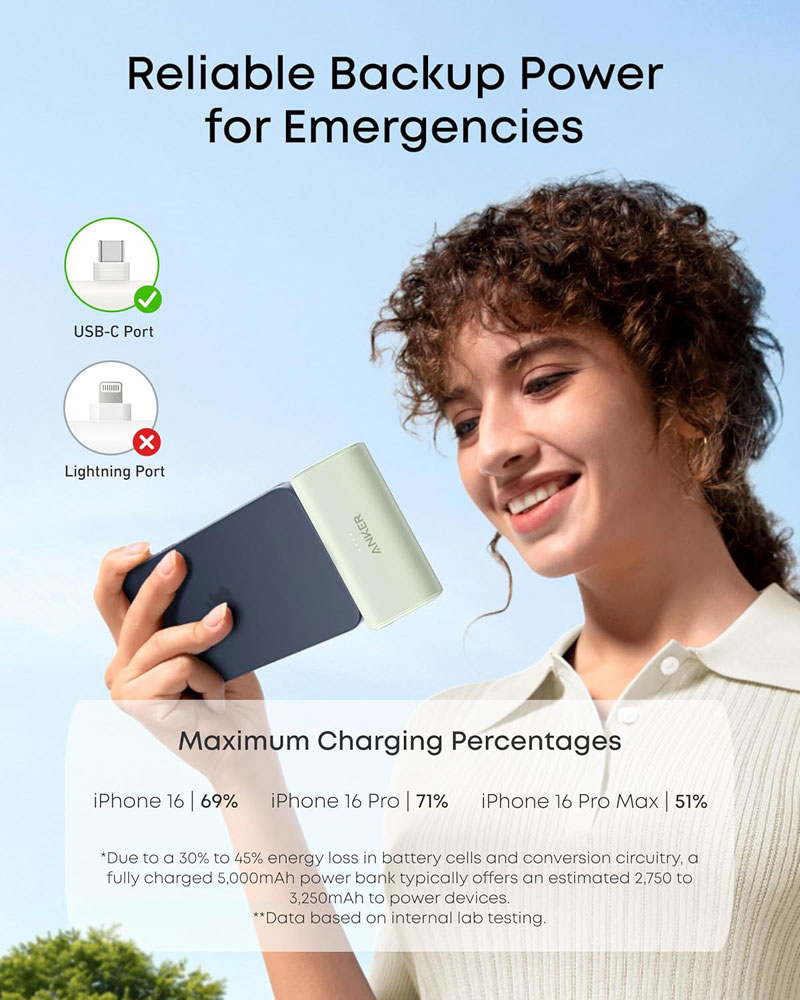
I chose the Anker Nano 5K as the compact pick because it is the power bank you are most likely to carry. The built-in foldable USB-C connector means there is no separate cable to forget, and the whole thing is small enough to fit in a pocket.
This is not the model for camping weekends or laptop charging, but it is excellent for emergency phone top-ups. It is the sort of charger I would take on a short walk, a city break, a festival, or a long travel day when I just want enough extra power to get home safely.
The Anker Nano 5K is a tiny cable-free power bank for quick USB-C phone top-ups when portability matters most.
|
|
Features and specs:
Pros:
Cons:
Avoid if: you only need to charge a phone; a smaller 10,000mAh or 20,000mAh power bank will be easier and lighter to carry.
Why we chose:
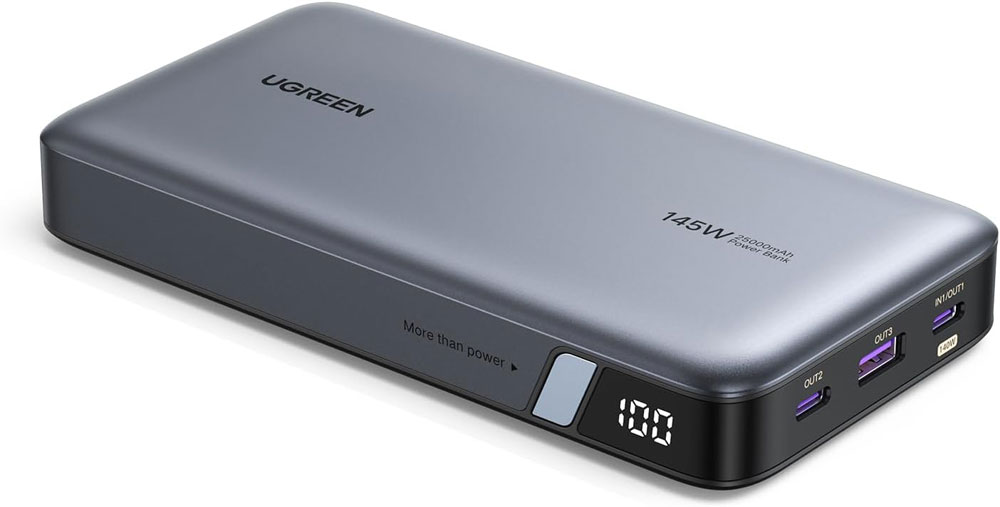
The UGREEN Nexode 140W is the best power bank for laptops because it combines high capacity with substantial USB-C output. Many smaller power banks claim to be useful for laptops, but without sufficient wattage, they charge too slowly or simply slow the rate of battery drain. This UGREEN model is designed for proper laptop use and is a strong option for remote workers, students, photographers and travellers.
For camping and hiking, it is best suited to people who need to power larger electronics from a rucksack or travel bag. It can handle laptops, tablets, phones and other USB-C kit, and it is also useful for drone pilots using compatible charging hubs. Like the Anker 737, it is not a lightweight day-hiking option, but for power-heavy trips it is excellent.
|
|
Features and specs:
Pros:
Cons:
Avoid if: you prioritise low weight or laptop charging over waterproof ruggedness.
Why we chose:
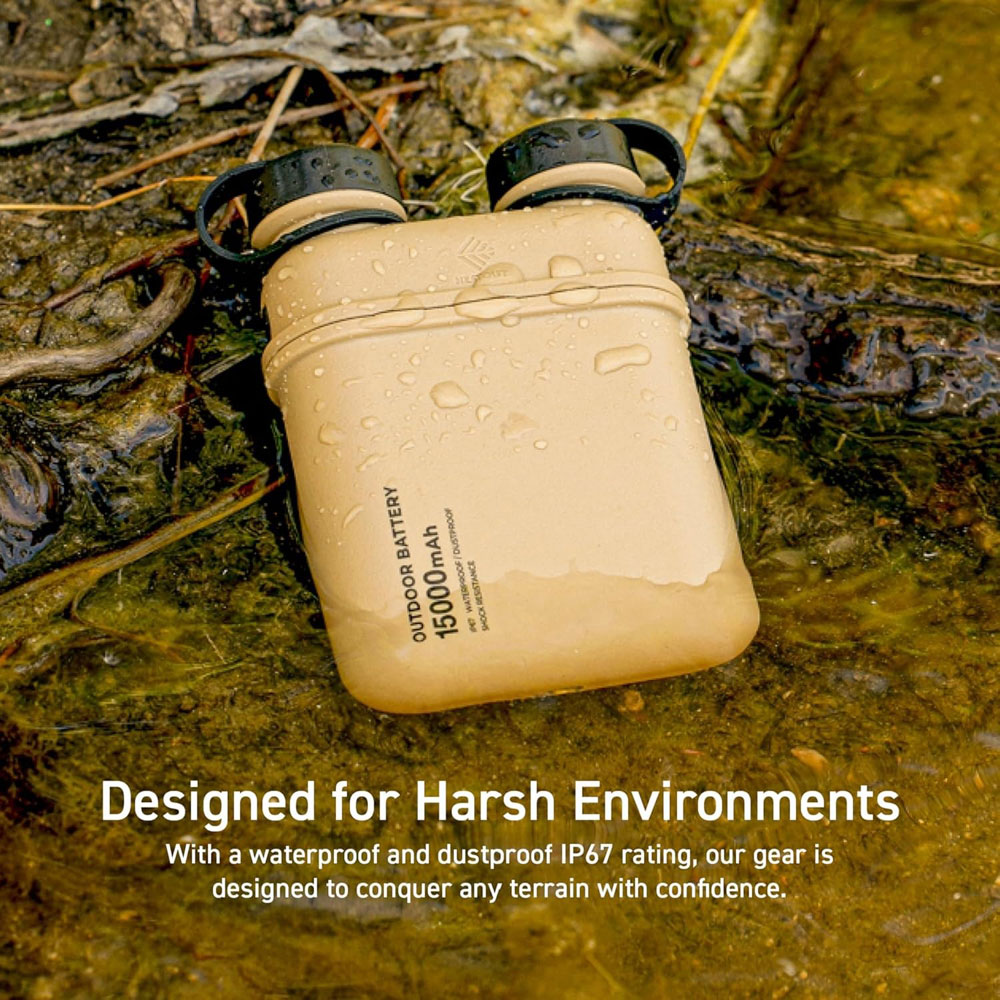
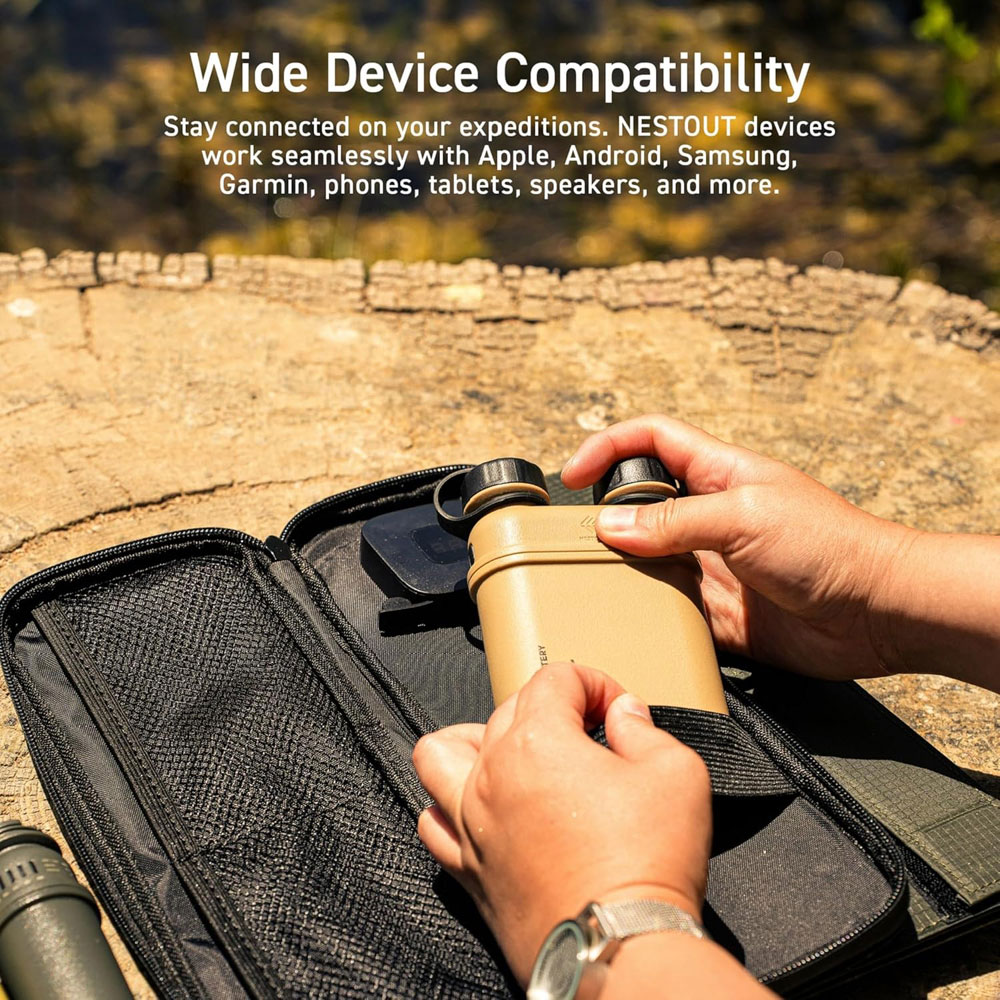
I chose the ELECOM NESTOUT because most power banks are not built for proper outdoor weather. For UK walking, that matters. Rain, mud, wet grass and damp packs are normal, so a waterproof IP67 rugged power bank is far more reassuring than a slim indoor-style charger.
That said, if you want a waterproof charger, your options are very limited. My preference is always to choose the standard power bank I want from the wide range available, and then put it in my waterproof pocket or a small dry bag to keep it dry.
The 15,000mAh capacity also feels like a practical middle ground for outdoor use: more practical than a small 5K or 10K bank, but not as heavy as the big laptop models. It is not the fastest or most powerful charger here, but it is the one I would trust most in wet, rough conditions, if you want a dedicated waterproof charger.
The ELECOM NESTOUT is the best rugged, dedicated waterproof power bank for wet walks, camping and outdoor charging.
|
|
Features and specs:
Pros:
Cons:
Avoid if: you need laptop-class output or waterproofing; this is a phone-focused 20,000mAh power bank.
Why we chose:
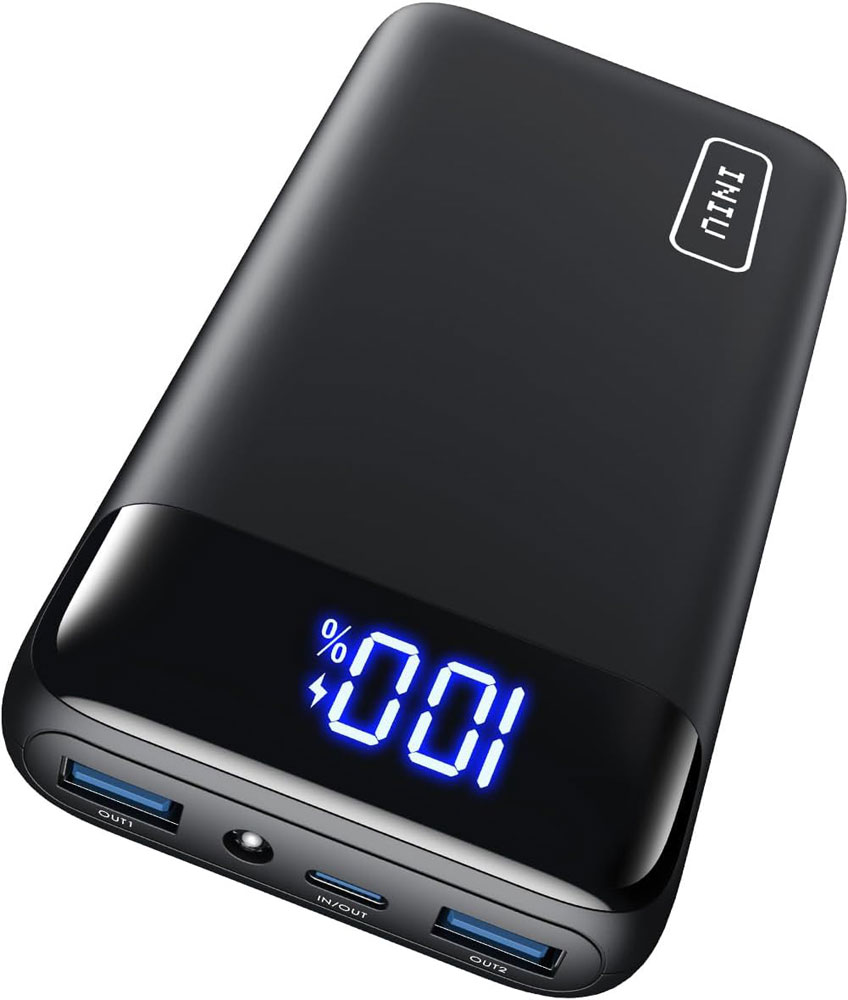
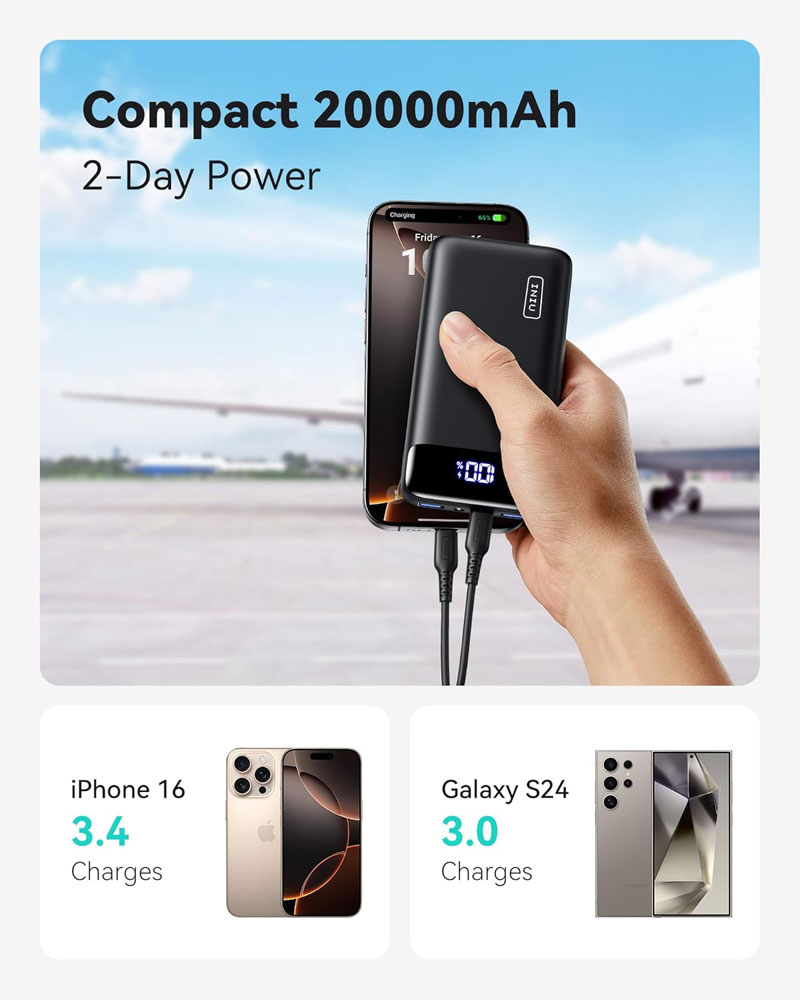
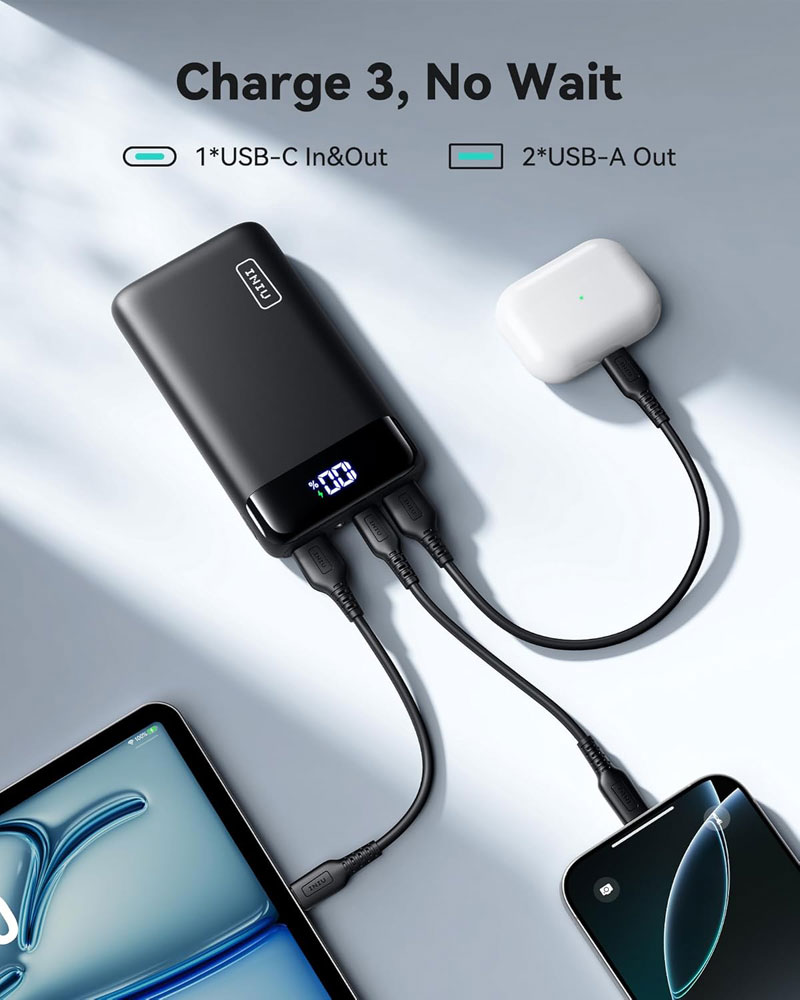
I chose the INIU 20,000mAh as the best phone-focused power bank because it offers most people the most useful kind of backup power: several full phone charges in a sensible size and at a sensible price. For walking holidays, festivals, campsites and long weekends, that is often more useful than extreme laptop-level wattage.
The 22.5W output is fast enough for most phones, and the larger capacity means you don't have to constantly worry about the power bank running flat. It is not a laptop charger, but for phones and small outdoor electronics it is a strong all-rounder.
The INIU 20,000mAh Fast Charge is a great phone-focused power bank with enough capacity for several full recharges.
|
|
Features and specs:
Pros:
Cons:
Avoid if: you need stored power without sunlight; this is a solar charger, not a battery bank.
Why we chose:
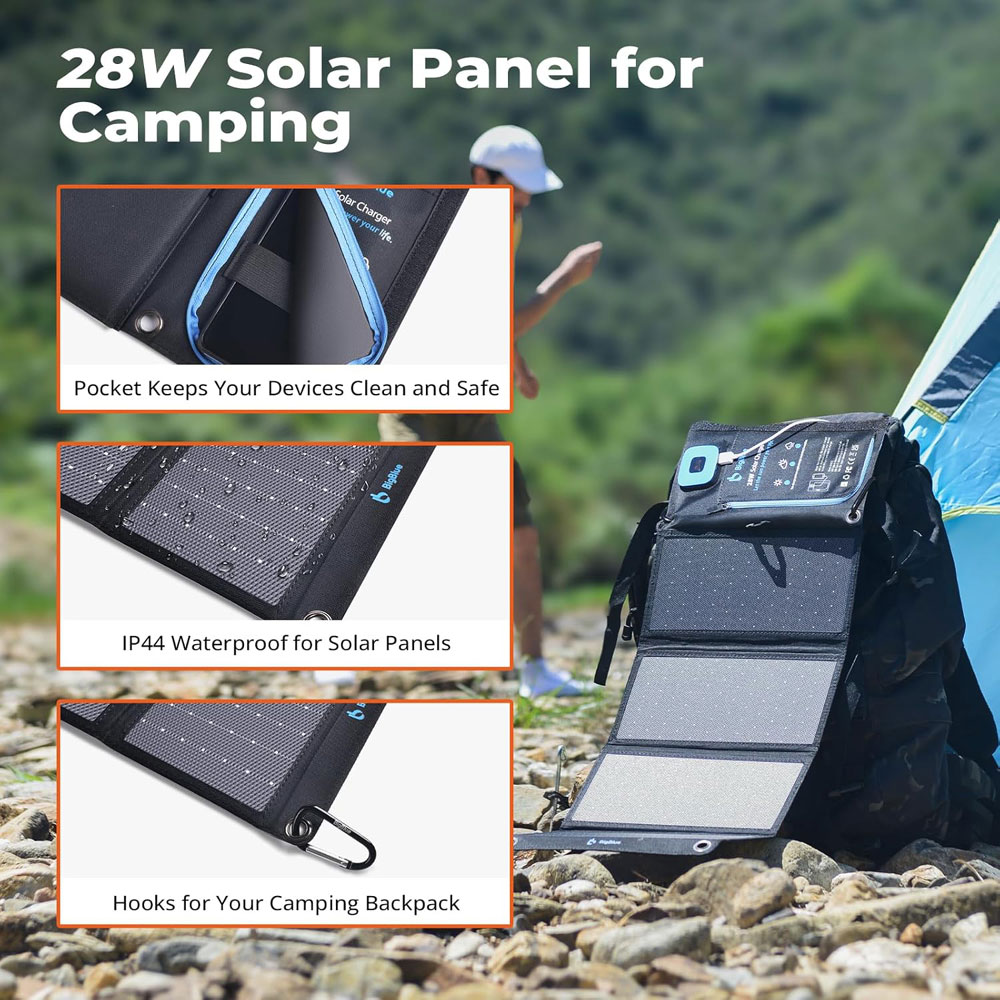
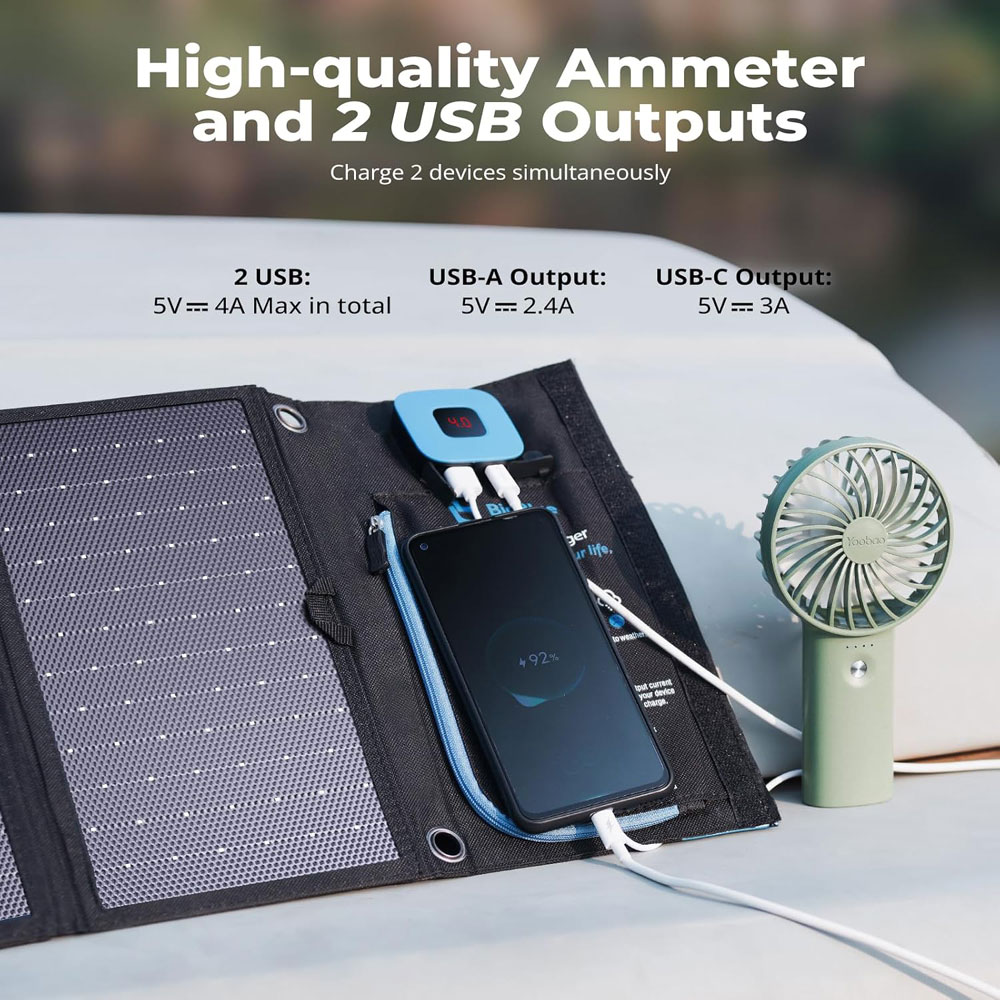
I chose the BigBlue 28W because it is a proper foldable solar charger rather than a token solar panel stuck on a power bank. Tiny built-in solar panels on cheap power banks often charge too slowly to be useful, whereas a separate panel gives you a much better chance of topping up power outdoors.
This is best used to charge a power bank during the day, then use the stored power to charge your phone, GPS or head torch later. In cloudy UK weather, it will not replace a plug socket, but for summer camping, longer off-grid trips and emergency backup, it adds genuine value.
The BigBlue 28W Solar Charger is the best option for generating off-grid power when paired with a separate power bank.
Choosing the best power bank is not just about picking the highest mAh figure. Capacity matters, but so do wattage, charging efficiency, port types, weight, durability, safety features, and how quickly the power bank recharges. A 20,000mAh power bank with a slow 15W output may be fine for phones but poor for laptops, while a smaller 10,000mAh model with 45W USB-C may charge tablets and phones much faster.
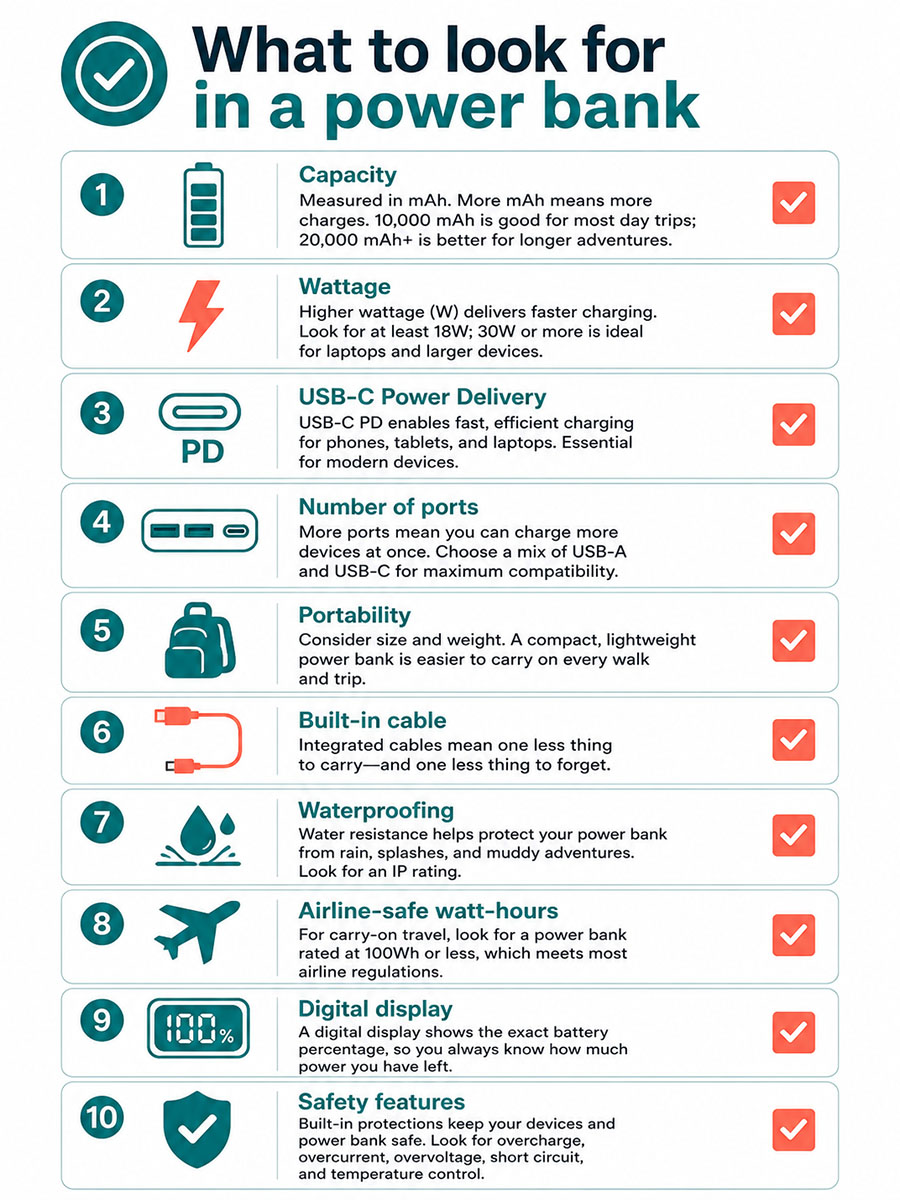
A good power bank should match capacity, output, USB-C support, port choice, portability, waterproofing, airline limits and safety features to the trip.
The right choice depends on what you want to charge. For a day-long walk, a compact 5,000-mAh or 10,000-mAh power bank may be enough. For a camping weekend, 20,000mAh is usually more useful. For laptops, tablets or small drone charging hubs, wattage becomes just as important as capacity. The more power and speed you want, the larger and heavier the power bank normally becomes, so there is always a trade-off between performance and portability.
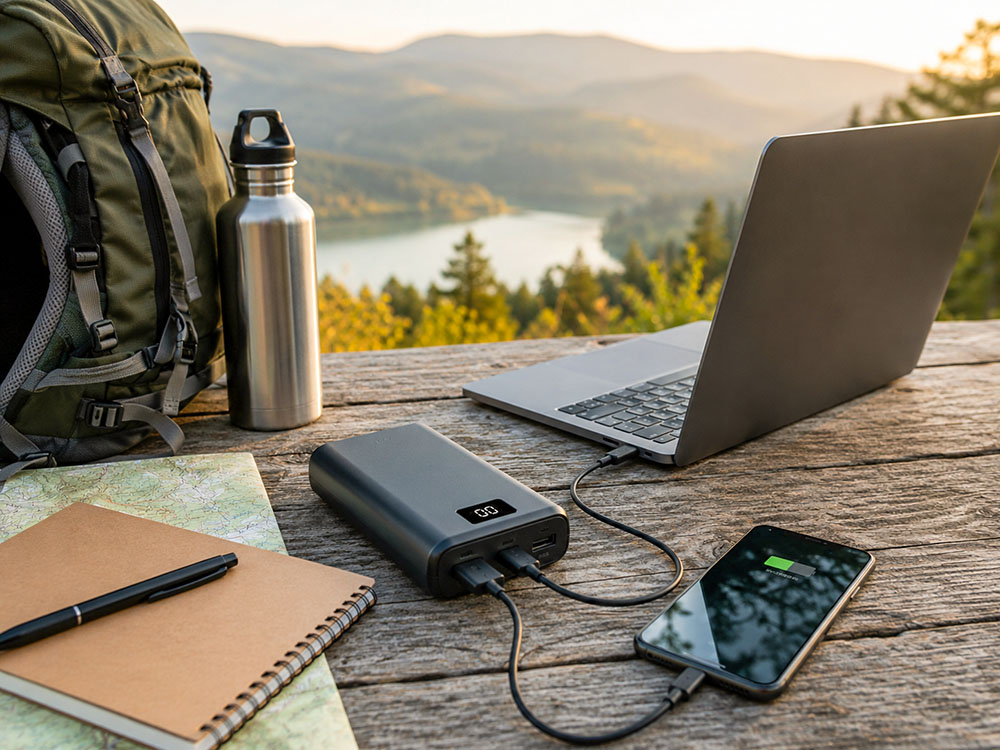
A high-capacity USB-C power bank can charge both a phone and laptop away from mains power when output wattage and cable choice are matched to the devices.
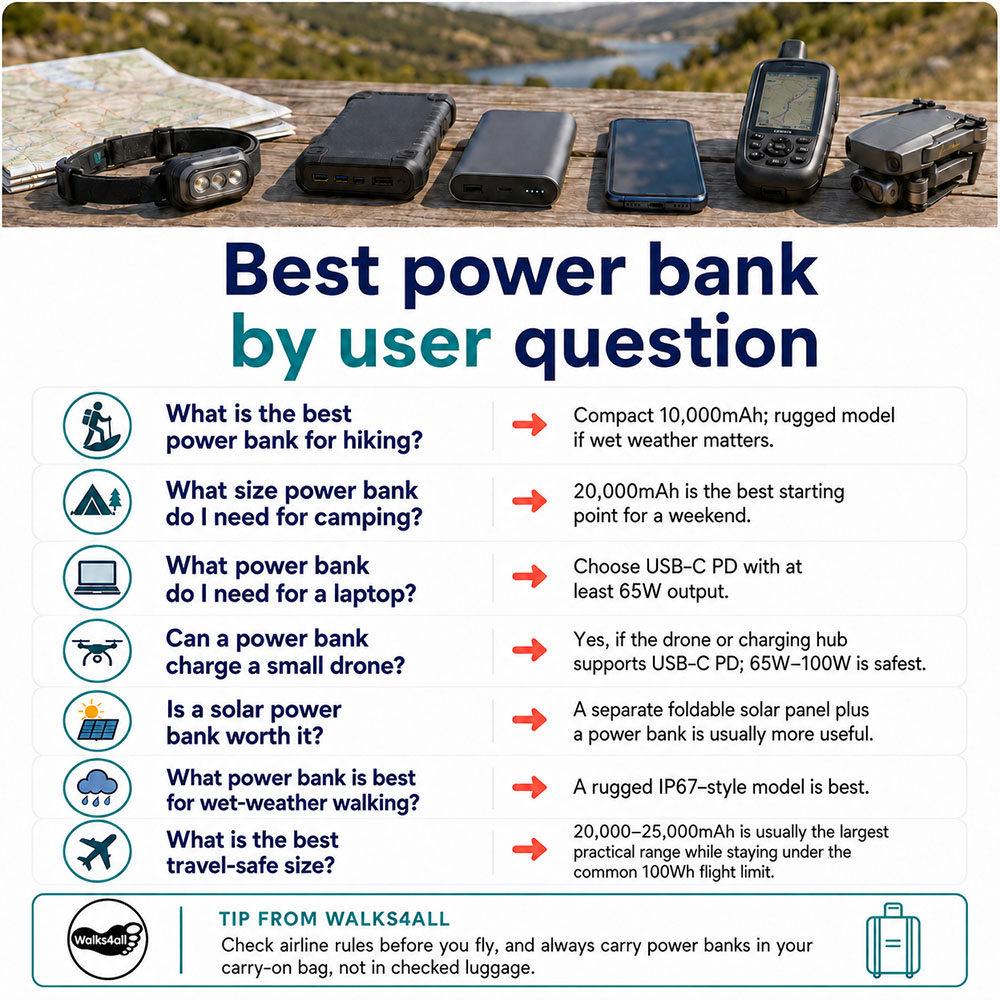
A power bank selector gives answer-ready recommendations for hiking, camping, laptops, drones, solar charging, wet-weather walking and travel-safe capacity.
| Reader question | Best answer |
| What is the best power bank for hiking? | A compact 10,000mAh model is usually best for day hikes; choose a rugged model, or any standard model kept in a dry bag, if taking it out in wet weather. |
| What size power bank do I need for camping? | 20,000mAh is the best starting point for a weekend, especially if charging phones, head torches and GPS devices. |
| What power bank do I need for a laptop? | Choose a USB-C Power Delivery model with at least 65W output; 100W-140W is better for larger laptops. |
| Can a power bank charge a small drone? | Yes, if the drone or charging hub supports USB-C PD; a 65W-100W power bank is the safest choice. |
| Is a solar power bank worth it? | A separate foldable solar panel plus a power bank is usually more useful than a tiny solar panel built into a battery pack. |
| What power bank is best for wet-weather walking? | A rugged IP67 model is best because standard power banks should be kept dry. There are not many of those, so I generally use a standard non waterproof power bank and keep it in a dry bag. |
| What is the best travel-safe power bank size? | 20,000-25,000mAh is usually the largest practical range while staying under the common 100Wh flight limit. |
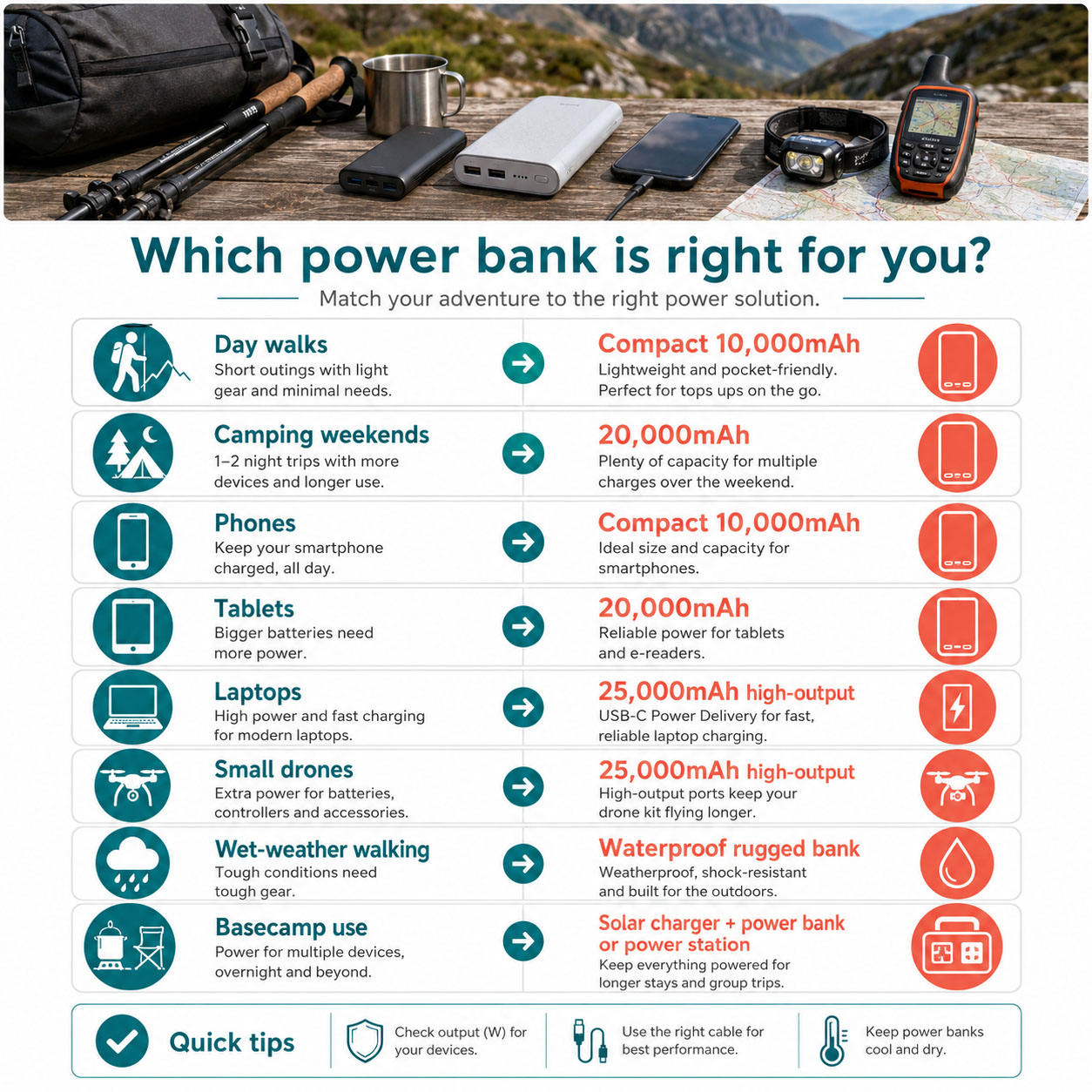
A power bank selector helps match each use case - day walk, camping, laptop, drone, wet weather or basecamp - to the right capacity and output.
mAh stands for milliamp hours and describes how much charge a battery can store. A higher mAh rating usually indicates greater charging capacity. For example, a 10,000mAh power bank may charge a smartphone about 2 times, while a 20,000mAh model may charge it several times.
However, you do not get the full labelled capacity in real use. Some energy is lost to voltage conversion, heat, and charging inefficiency, and real-world output varies by device, cable, temperature, and charging speed. This is one reason real-world capacity estimates are usually lower than the number printed on the casing. You'll notice that more in winter when the temperature is cooler.
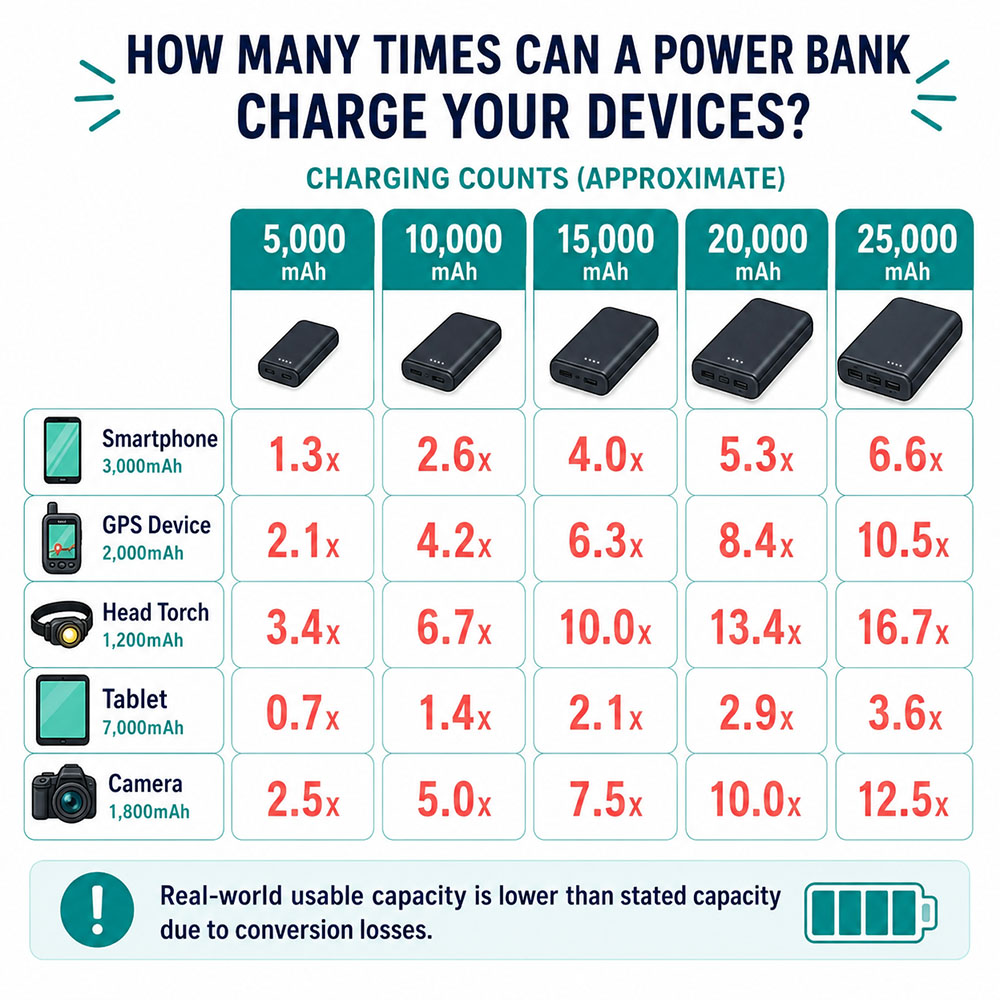
Real-world charging capacity varies by device size, cable, temperature and conversion loss, so usable capacity is lower than the headline mAh rating.
Use these as rough estimates
| Power bank size | Phone charging estimate | Best use |
| 5,000mAh | Around 1 phone top-up | Emergency pocket charging |
| 10,000mAh | Around 1.5-2 phone charges | Day walks, commuting, travel |
| 15,000mAh | Around 2.5-3 phone charges | Hiking weekends, camera/GPS use |
| 20,000mAh | Around 3-4+ phone charges | Camping, festivals, longer trips |
| 24,000–25,000mAh | Around 4-5+ phone charges | Laptops, tablets, drones, travel |
| 192Wh station | Many phone/tablet charges | Basecamp and emergency power |
These are estimates because device battery size, charging cable, temperature, charging speed and wireless efficiency all affect actual performance.
Wattage indicates how quickly a power bank can deliver power. A phone may only need 18W–30W for fast charging, but a laptop may need 65W, 100W, or 140W. This is why the Anker Nano 5K is great for phone top-ups, while the Anker 737, INIU 100W and UGREEN Nexode are better suited to laptops, tablets and drones.
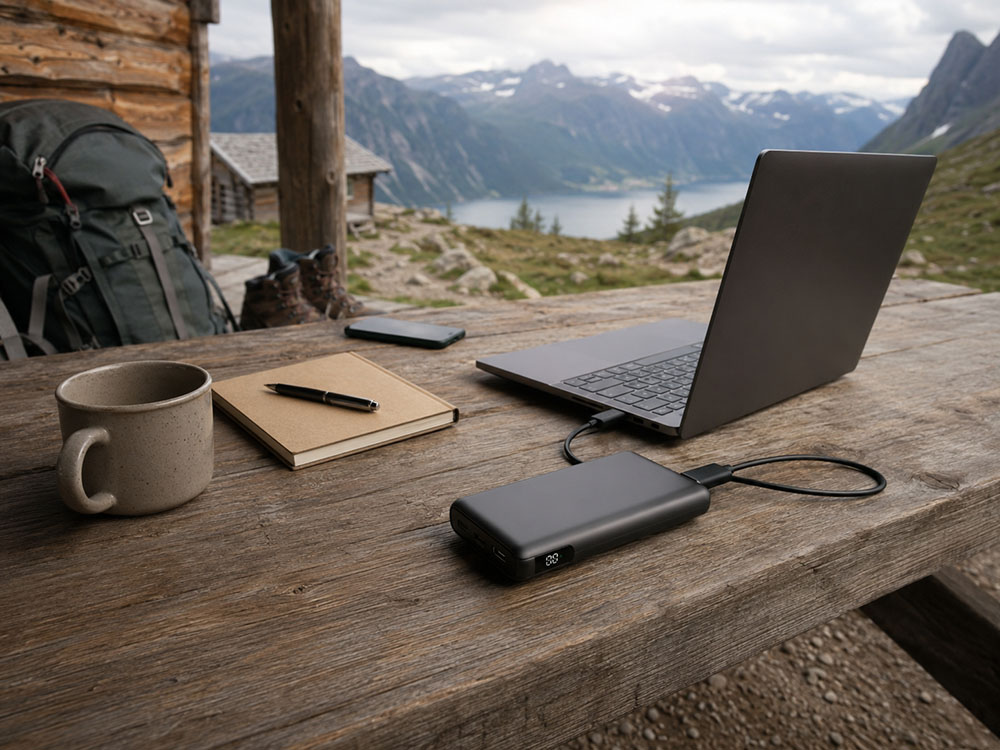
Laptop charging from a power bank depends on USB-C Power Delivery and sufficient wattage, not just a large battery capacity rating.
USB-C Power Delivery, often shortened to PD, is the key fast-charging standard to look for. It allows compatible devices to safely receive more power via USB-C, making it important for iPhones, Android phones, tablets, laptops and drone charging hubs.
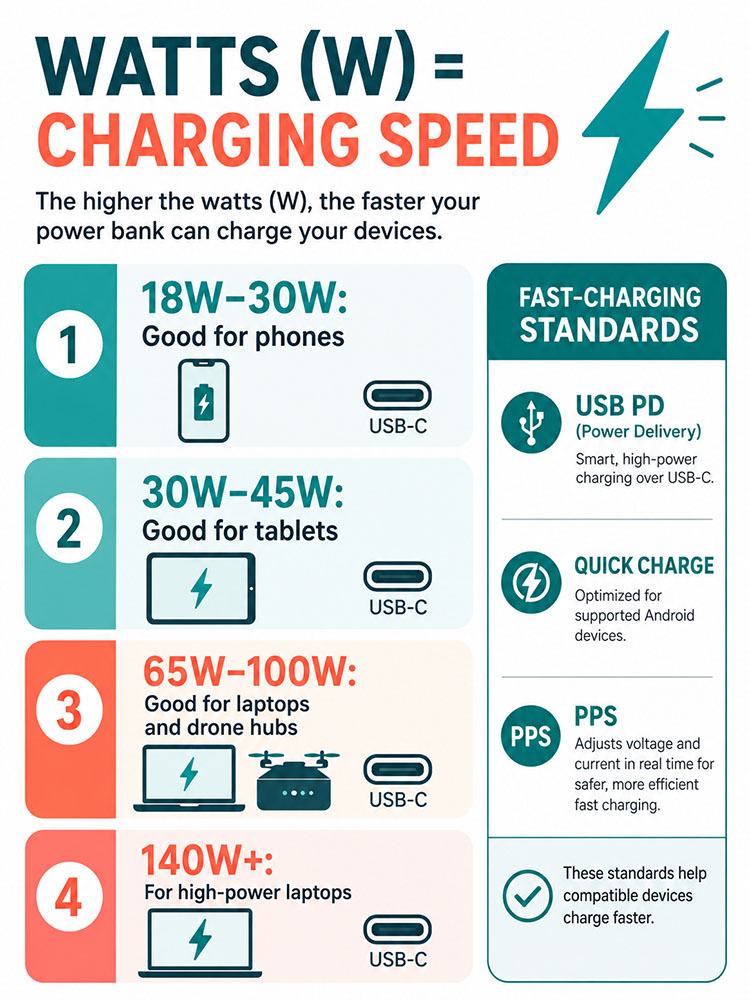
Power bank wattage determines charging speed: phones need less output than tablets, laptops and compatible small-drone charging hubs.
Quick Charge, often abbreviated to QC, is another fast-charging technology commonly found in Android phones and accessories. Many modern power banks support both PD and QC, improving compatibility.
PPS, or Programmable Power Supply, is a more advanced USB-C PD feature that allows more precise adjustment of voltage and current. This is particularly useful for some Samsung Galaxy and Google Pixel phones, as it helps them charge faster and more efficiently.
Besides focusing on how quickly a power bank charges your phone, you should also check how quickly it recharges. A 20,000mAh power bank with slow input can take most of a day to recharge, whereas a higher-output USB-C model may recharge in a couple of hours.
If you are travelling, fast input matters because you may have only a short time at a hotel, café, campsite facility or train station socket.
For walking and hiking, the power-to-weight ratio is important. A heavy 25,000mAh power bank may offer plenty of charge, but it can feel excessive on a short walk. A 10,000mAh model is usually the sweet spot for day hikes, while 15,000-20,000mAh is better for multi-day camping.
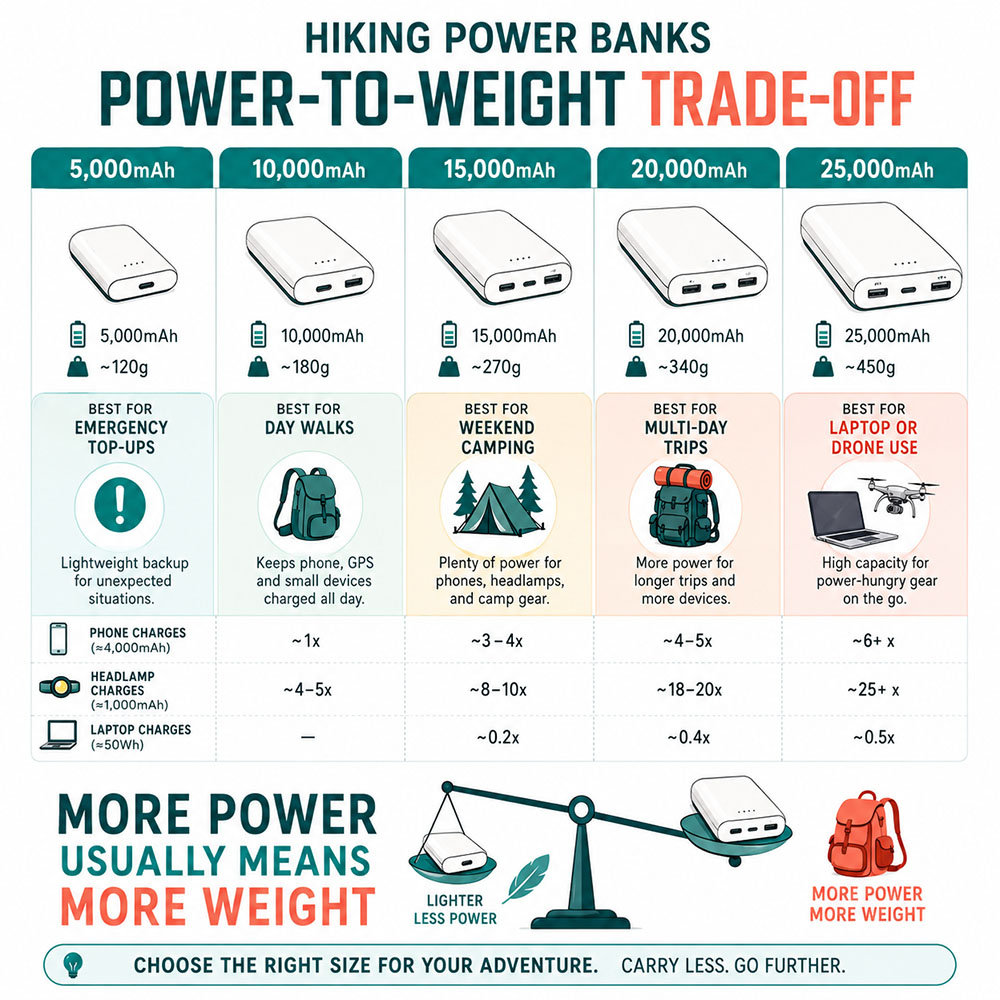
Power-to-weight matters for hiking: larger batteries offer more charging capacity but can become unnecessary load on short walks.
USB-A is the older rectangular port. It remains useful for head torches, GPS units, older cables and accessories, but it is usually slower than USB-C.
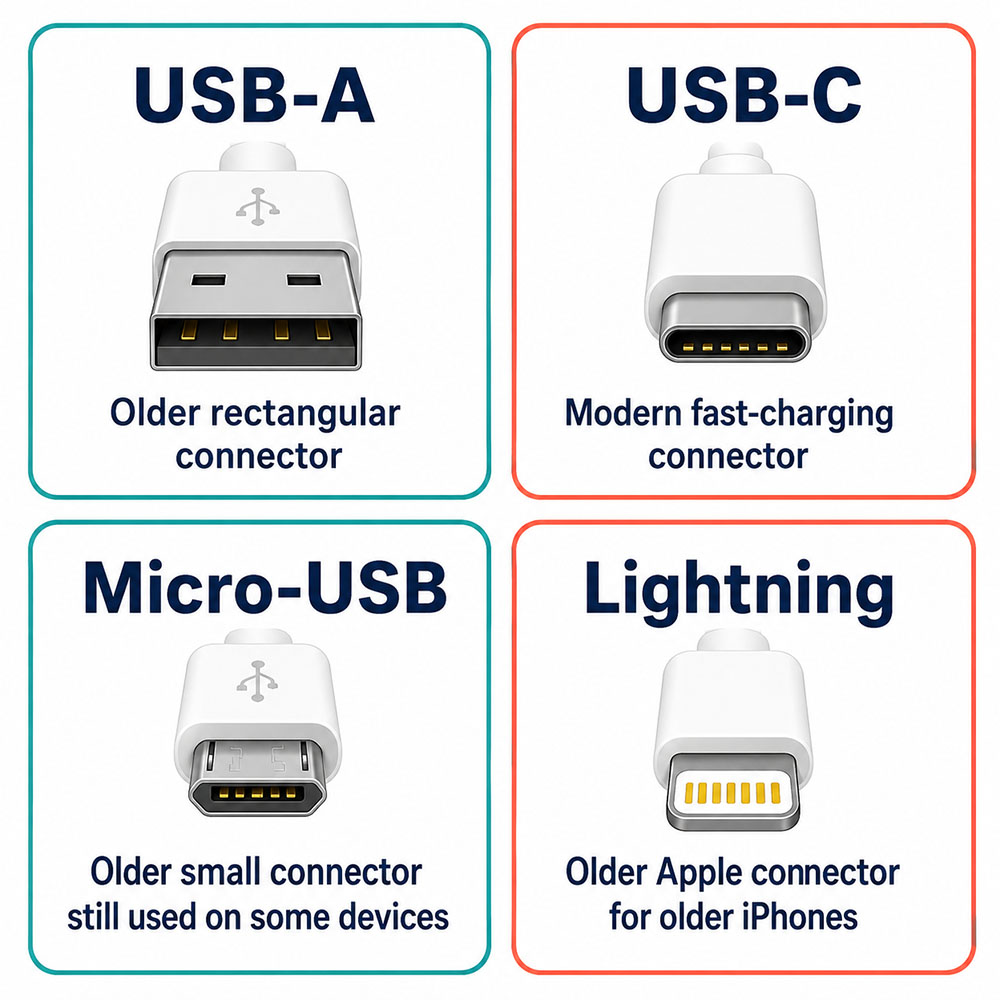
USB-C is now the most future-proof connector for power banks, while USB-A, micro-USB and Lightning still matter for some older accessories.
USB-C is the modern standard and the most important port to look for. It supports faster charging, can often serve as both an input and an output, and is used by newer iPhones, Android phones, iPads, laptops, and drone hubs.
Micro-USB is an older connector still found on some lights, GPS units and older power banks. It works, but it is slower and less convenient than USB-C.
Lightning is Apple's older iPhone connector. If you use an older iPhone, you may still need a USB-C-to-Lightning cable. Newer iPhones use USB-C instead.
The move towards USB-C is one reason to prioritise USB-C power banks in 2026. The EU common charger rules require many portable devices placed on the EU market to use USB Type-C, with phones, tablets, digital cameras, headphones, portable speakers, handheld game consoles, e-readers, earbuds, keyboards, mice and portable navigation systems covered from 28 December 2024, and laptops from 28 April 2026.[7]
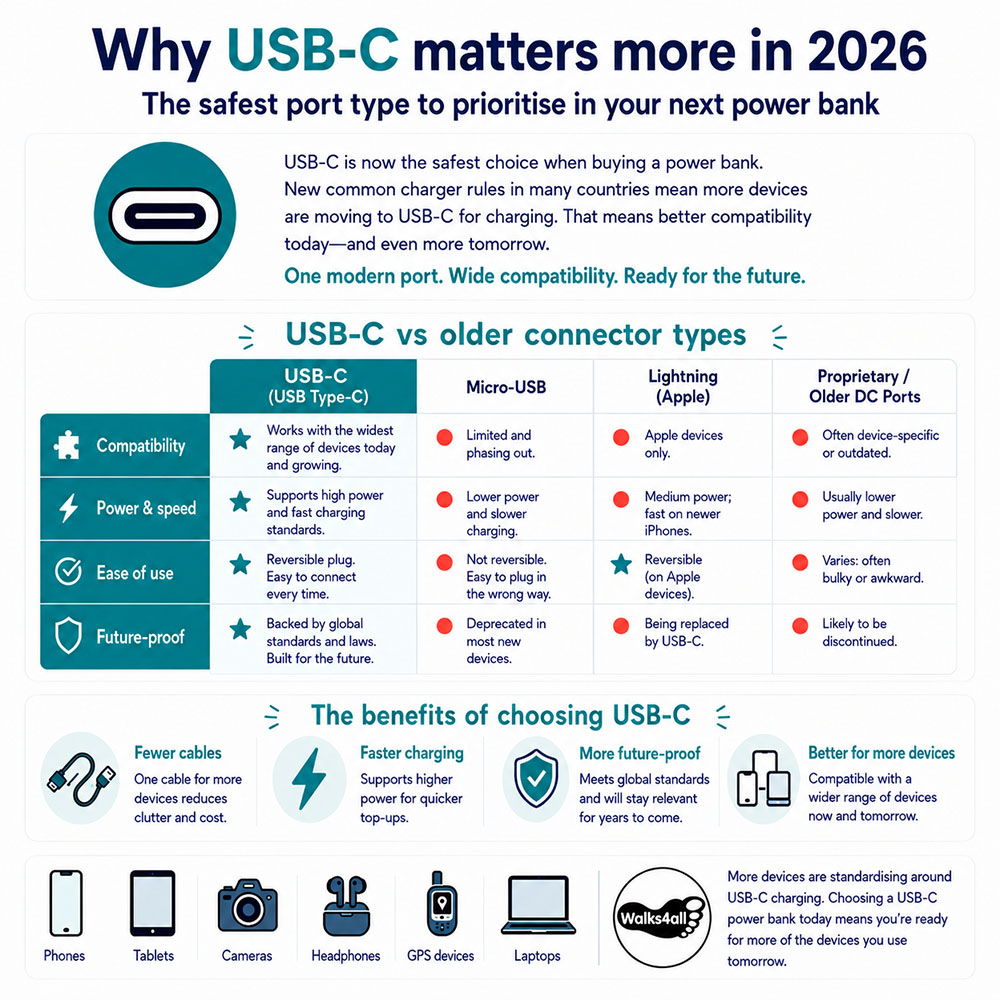
USB-C is the most future-proof power bank connection as more phones, tablets, cameras, GPS devices and laptops standardise around USB-C charging.
The UK has also considered a common-charger approach through a government call for evidence, although the position is not identical to the EU's rules. For UK buyers, the practical point remains clear: USB-C is becoming the dominant charging standard, so choosing a USB-C PD power bank offers better compatibility with newer phones, tablets, laptops, cameras and accessories.[8]
Built-in cables are increasingly common and useful. They reduce the risk of forgetting your charging cable, which is especially helpful for travel, camping and commuting. The Anker 20,000mAh 87W model is a good example, as it includes a built-in USB-C cable and a digital display.
Digital displays are also useful. A display showing the exact battery percentage or input/output wattage gives you better control than four LED dots, each covering a 25% range. This is particularly useful with laptop-class power banks, as it shows whether a device is actually drawing 20W, 65W or 100W.
Wireless power banks are convenient, especially for iPhones, but they are usually less efficient than wired charging. As a result, more of the power bank's stored energy is lost as heat. MagSafe and Qi2-style magnetic chargers are useful for travel because they hold the phone in place, but for maximum efficiency and speed, USB-C cable charging is still better.
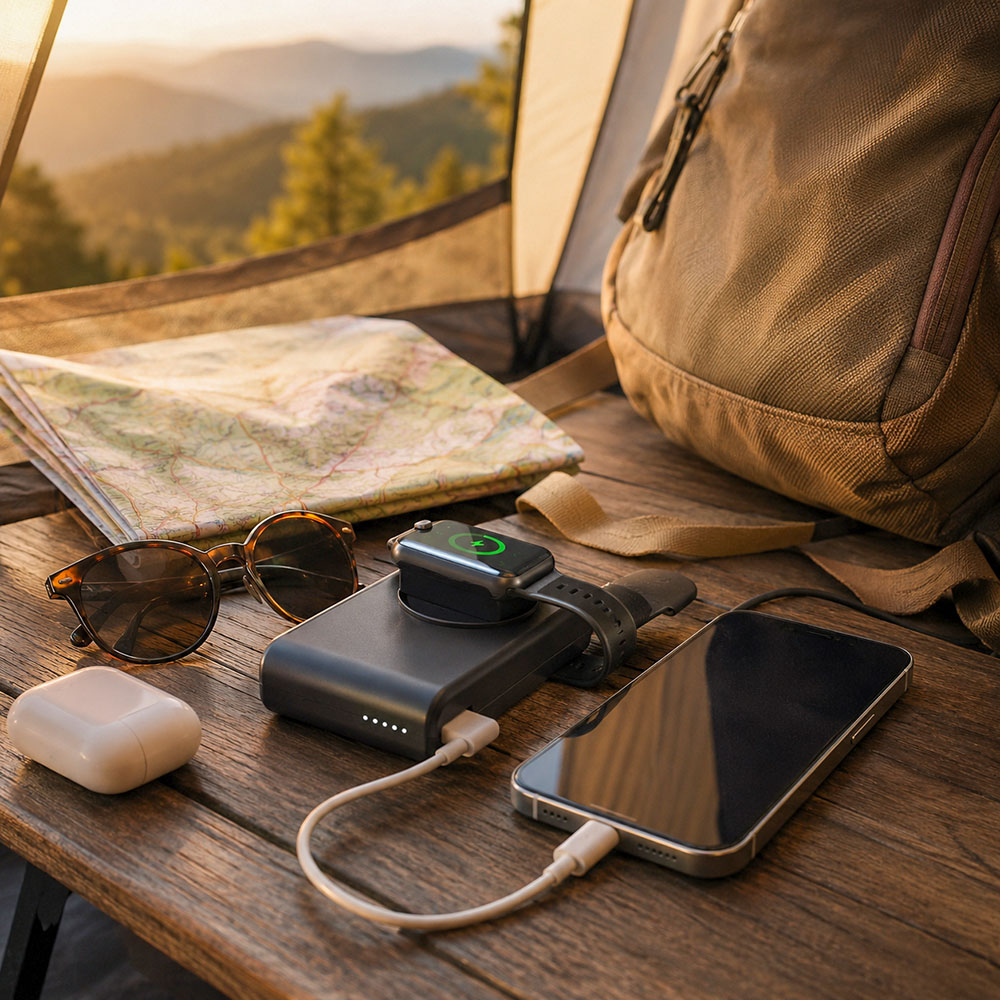
A compact travel power bank can reduce cable clutter by charging a phone, smartwatch and smaller accessories from a single portable setup.
For Apple users, the Anker MagGo Apple Watch model is useful because it solves a specific travel problem: charging both the iPhone and the Apple Watch without carrying a separate Apple Watch charging puck.
If you are using a power bank outdoors, check whether it has an IP rating. IP ratings indicate protection against dust and water. A standard power bank should be kept dry, whereas an IP67 model such as the ELECOM NESTOUT is designed for use in rain, dust and short-term submersion.
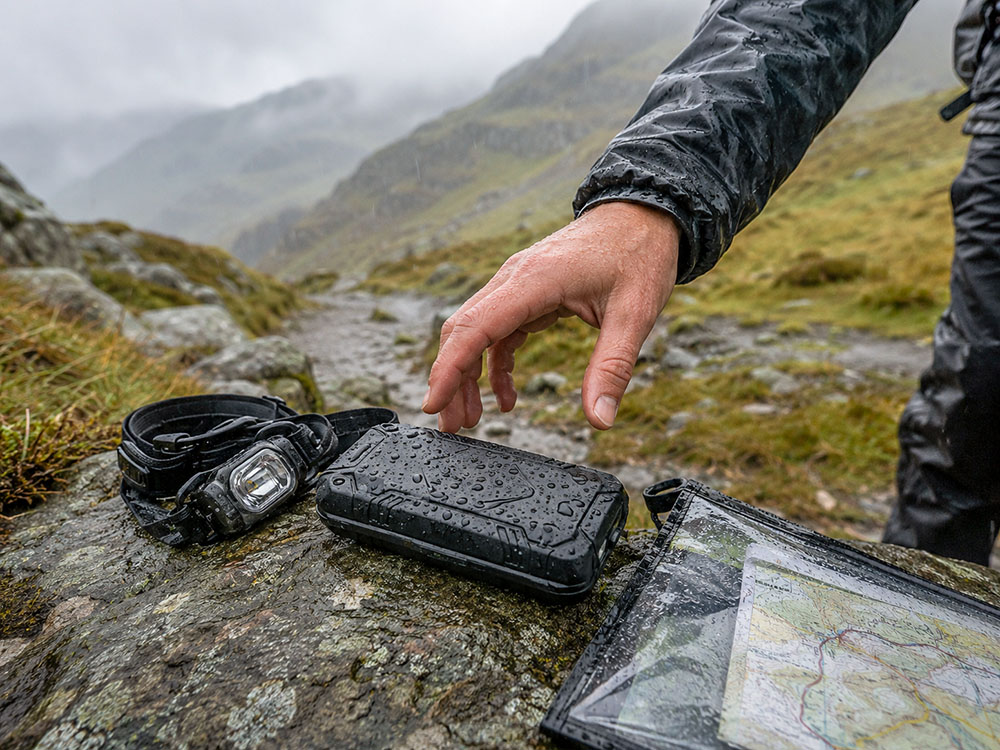
Wet-weather walking calls for either an IP-rated rugged power bank or a standard model protected inside a dry bag to keep ports and cells safe.
For hiking, camping, fishing, paddling or winter walking, ruggedness may matter more than maximum wattage. The NESTOUT sacrifices some laptop-level output for durability, shock resistance and weather protection.
But, as I've said above, you have very limited choice if you want a dedicated waterproof power bank. I've found it better to choose a non-waterproof power bank from the wide range available, and then put it in my waterproof pocket or a dry bag in my backpack to keep it dry.
A solar charger is useful for off-grid trips, but it is important to understand the difference between a solar panel and a solar power bank. Most small power banks with a tiny solar panel charge very slowly. A separate foldable solar panel, such as the BigBlue 28W, is much more practical, but it is a charger, not a power bank.
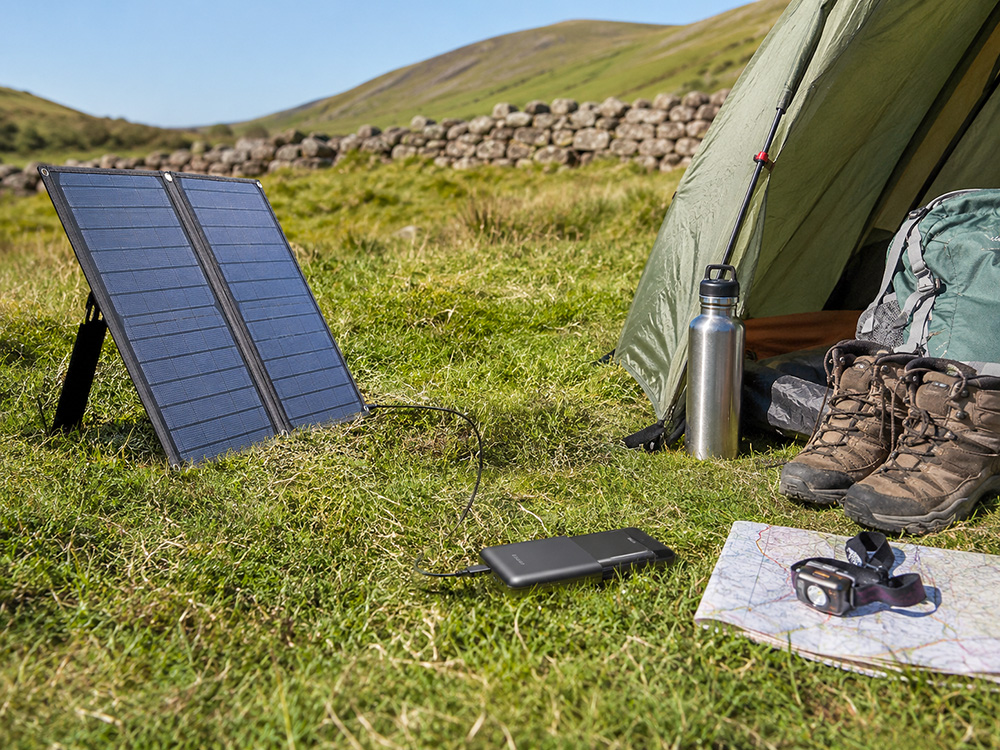
A foldable solar panel can top up a power bank during daylight, giving walkers and campers a practical off-grid charging option in good conditions.
The BigBlue 28W is best used to charge a power bank in daylight, then use the power bank to charge your phone, GPS or head torch later. Solar performance will vary with cloud cover, season and panel angle, so it should be seen as a useful off-grid extra rather than a guaranteed wall-plug replacement.
For flights, airlines use watt-hours (Wh) rather than mAh. The UK Civil Aviation Authority states that power banks up to 100Wh are permitted without operator approval, while those over 100Wh and up to 160Wh require operator approval.[6]
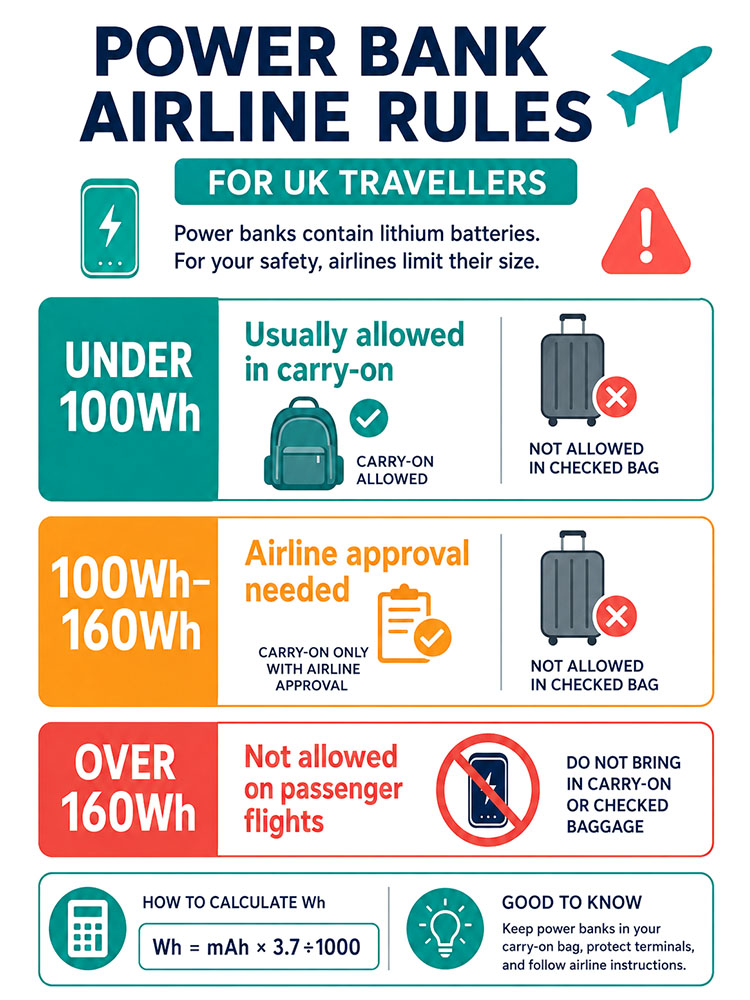
Airline power bank rules are based on watt-hours, with most travel-safe models staying below 100Wh and carried in hand luggage.
To estimate watt-hours: Wh = mAh × 3.7 ÷ 1000.
The Anker SOLIX C200 is excellent for camping and home backup, but because it has a capacity of 192Wh, it should not be considered a flight-safe travel power bank.
Power banks contain lithium batteries, so brand quality matters. Choose reputable brands with proper safety features, including overcharge protection, short-circuit protection, temperature control and clear product labelling.
Avoid unbranded power banks with unrealistic capacity claims. A very cheap '50,000mAh' or '80,000mAh' model may be heavier, slower, less efficient, or less clearly safety-tested than a proper branded unit. For walking and camping, reliability is more important than a suspiciously high number on the box.
I've kept our recommended list to well-known, trusted brands I've used. When I first started taking power banks on my walks, I had a couple of cheap ones that ran very hot and failed within 6 months, so I've stuck to brands I've trusted since then.
| Device | Best power bank size/type | Notes |
| Phone | 5,000-20,000mAh, 18W-30W | 10K for day use, 20K for several charges |
| GPS unit | 5,000-10,000mAh | Low power draw; any USB bank works |
| Head torch | 5,000-10,000mAh | Use low-current/trickle mode if needed |
| Hand warmer | 10,000-20,000mAh | Heat uses more power than earbuds or torches |
| Tablet/iPad | 20,000-25,000mAh, 30W+ | More capacity and wattage recommended |
| Laptop | 20,000-25,000mAh, 65W-140W | Requires USB-C PD and enough wattage |
| Small drone | 20,000-25,000mAh, 65W-100W | Best via compatible USB-C charging hub |
| Camera/action cam | 10,000-20,000mAh | Great for GoPros, mirrorless cameras and battery chargers |
| Basecamp electronics | Power station or 25,000mAh+ | Use larger units for multi-device charging |
Power banks are useful because most modern walking, camping and travel electronics now charge via USB. The key is matching the power bank's capacity and wattage to the device you want to charge.
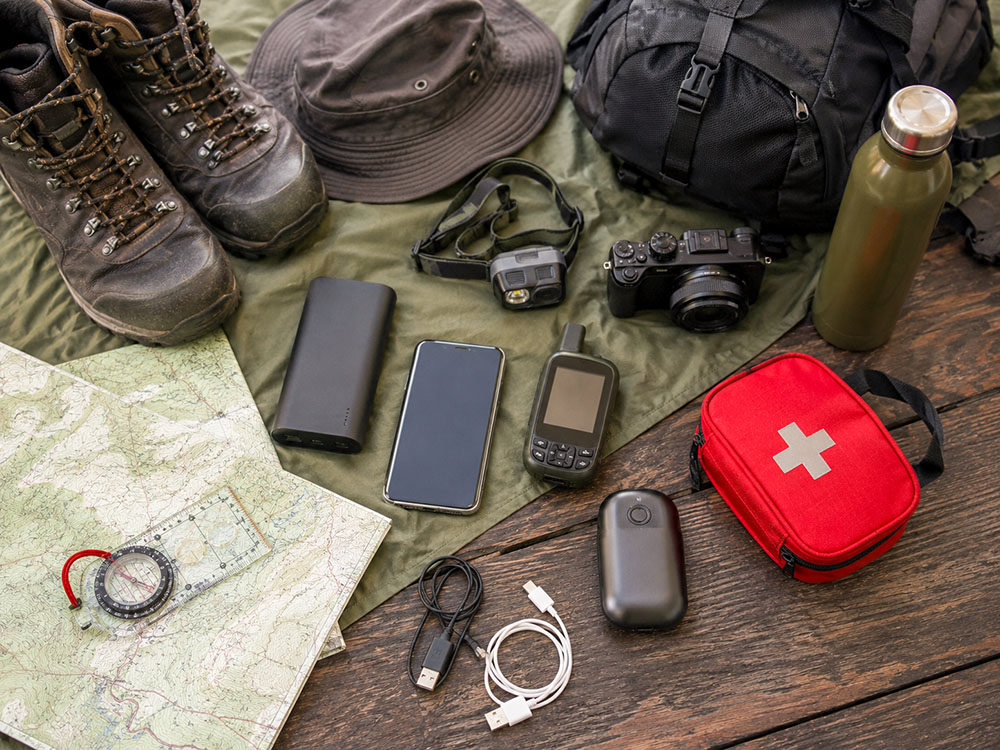
Common walking and camping electronics - phones, GPS units, head torches, cameras and hand warmers - can all be topped up from the right power bank.
All the power banks in this guide can charge phones. For most people, a 10,000mAh bank is sufficient for a day out, while a 20,000mAh bank is better for holidays, festivals or camping. Phones usually benefit from 18W-30W charging, so you do not need a 100W model unless you also charge larger devices.
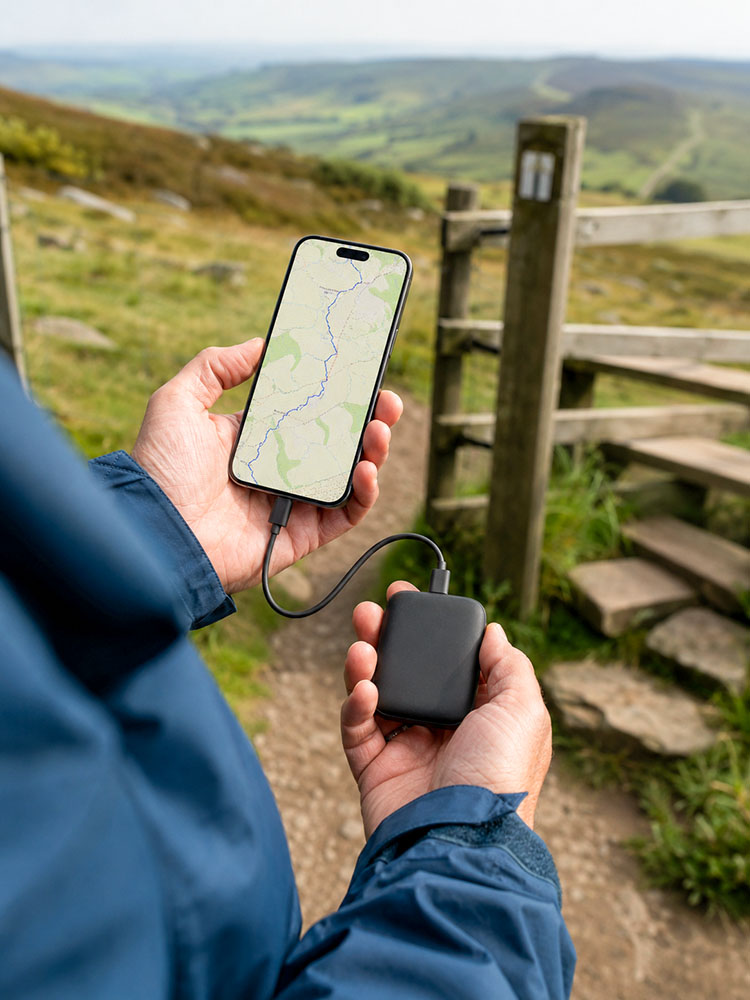
A compact power bank is ideal for phone navigation on day walks, giving enough backup charge without adding much weight to a pocket or rucksack.
Tablets have larger batteries than phones, so 20,000mAh or 25,000mAh power banks are more suitable. A 10,000mAh bank may provide a partial or single charge for a tablet, while a larger bank is better for iPads, Android tablets and e-readers on longer trips.
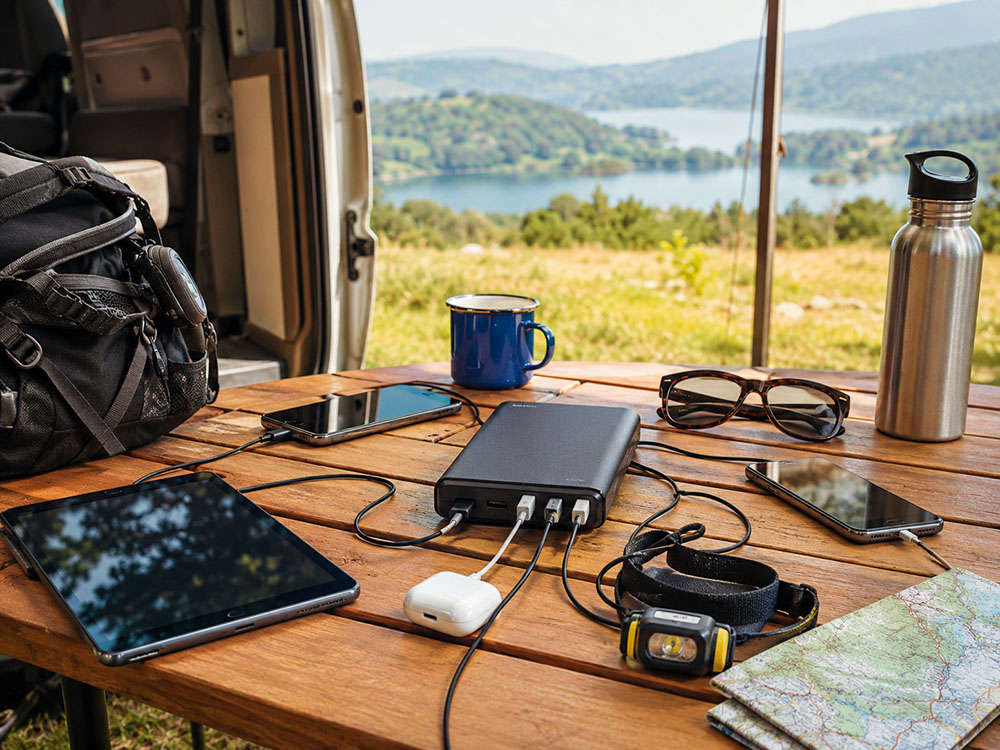
A larger multi-port power bank is useful for group trips, camping weekends and travel days when several phones, tablets and lights need charging.
Laptops require high-output USB-C power banks. Look for at least 65W for smaller laptops and 100W-140W for more demanding models. The Anker 737 and UGREEN Nexode are the best options in this guide for charging USB-C laptops.
Many small drones can be charged via USB-C hubs. A 100W power bank, such as the INIU 25,000mAh, is a good option for field charging. Larger drones may require dedicated AC power stations or manufacturer-specific chargers.
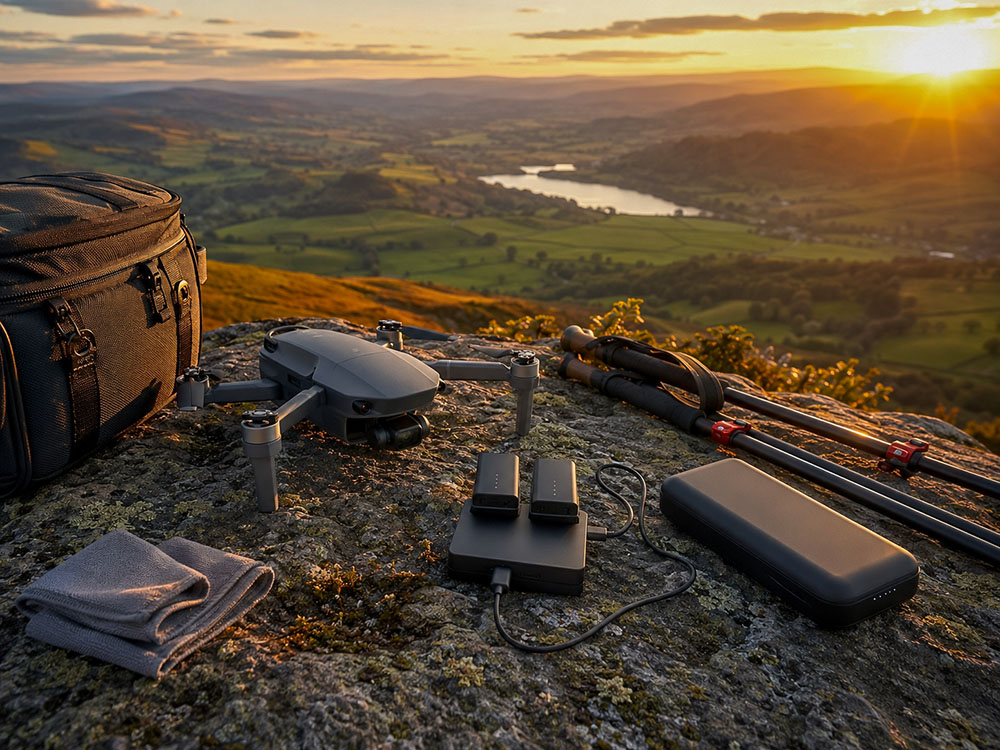
Small drone charging usually needs a compatible USB-C PD hub and enough output, often 65W to 100W, for reliable top-ups between flights.
GPS devices are usually low-power and easy to charge from any USB power bank. A 10,000mAh charger is usually enough for a weekend, while a 20,000mAh bank offers more reassurance on longer trips.
Rechargeable head torches usually need only a small amount of power. A 10,000mAh power bank can recharge most head torches several times. If your power bank has it, use low-power or trickle-charge mode, as some small devices draw very little current.
Rechargeable hand warmers usually charge via USB-A or USB-C. They can be topped up from any standard power bank, but they may draw more power than headphones or head torches because they generate heat. A 20,000mAh bank is better if you use hand warmers regularly on winter walks.
Action cameras, such as my GoPro and many modern mirrorless cameras, can be charged via USB. A 10,000mAh power bank is suitable for occasional top-ups, whereas a 20,000mAh or 25,000mAh bank is better for video-heavy trips, photography days, or when using a drone and camera together.
Power banks are generally safe when used correctly, but they contain lithium batteries, so care is important. Battery ageing studies show that the storage state of charge, temperature and charge/discharge cycling all affect capacity loss and resistance growth over time.[1] [2] [3]
-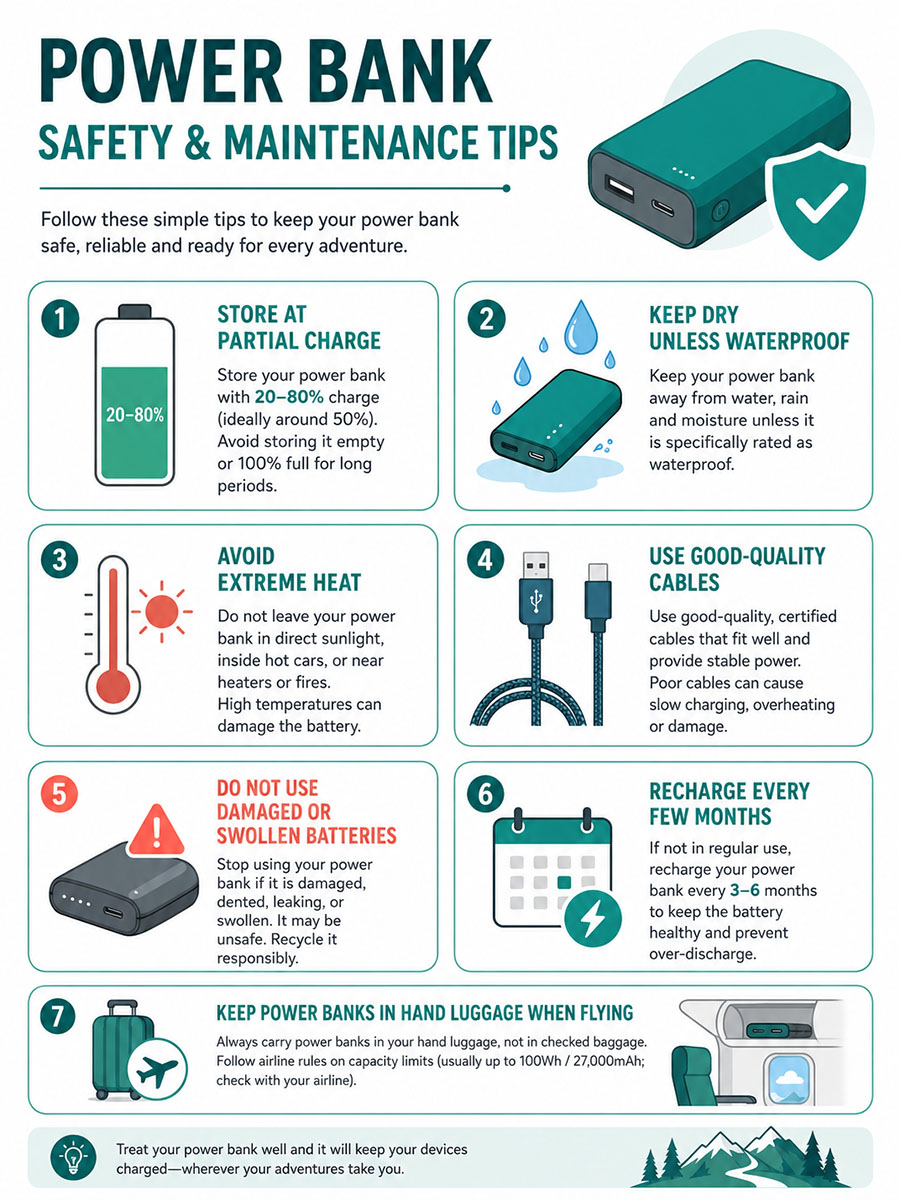
Power bank care is simple but important: store partly charged, avoid heat and moisture, use reliable cables and recycle damaged batteries safely.
Keep your power bank away from extreme heat, direct sunlight and very cold conditions. On hot days, I always have mine buried in the middle of my backpack to keep it cooler. In winter, keeping the power pack in your backpack or in an inside pocket next to your body helps keep it warmer. Experimental work has found that higher temperatures accelerate lithium-ion capacity fade and impedance rise, while low-temperature studies report reduced capacity and shorter cycle life below 0°C.[2] [4]
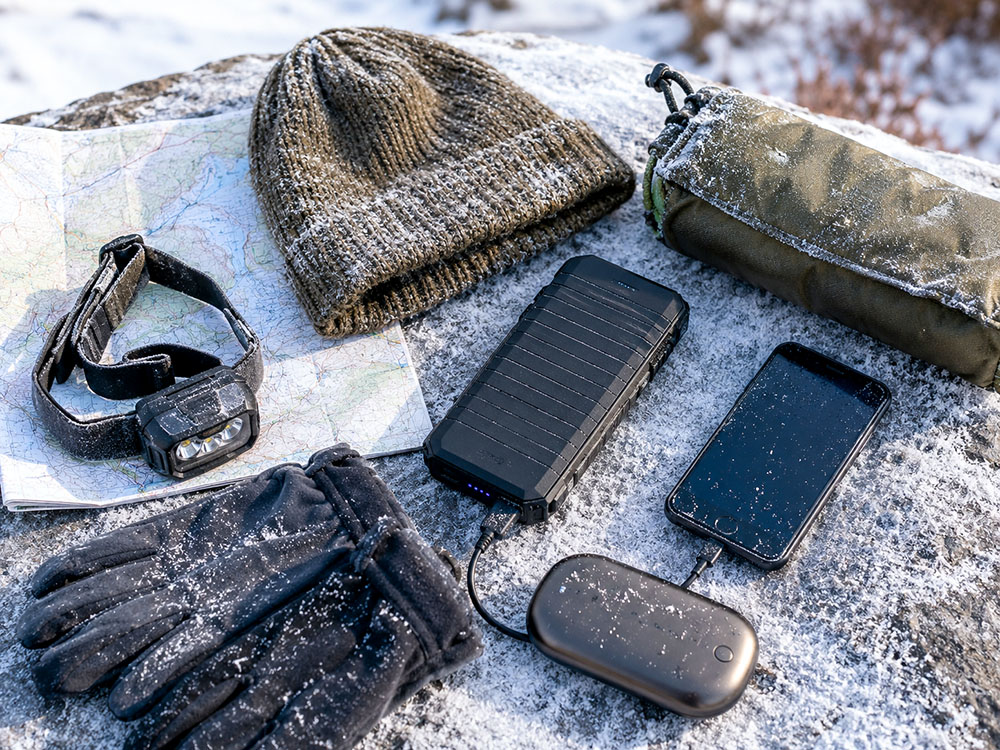
Cold weather can reduce battery performance, so winter walkers should keep power banks warm, dry, and protected when carrying a backup power source.
For long-term storage, keep the power bank partially charged rather than fully charged or fully discharged. Research on calendar ageing and partial state-of-charge cycling supports avoiding long-term storage at 100% and repeated full 0-100% cycles where possible.[1] [2] [3] [5]
Do not put a power bank in checked luggage when flying. The UK Civil Aviation Authority states that power banks must be carried as carry-on baggage. Power banks up to 100Wh are allowed without operator approval, and those between 100Wh and 160Wh require operator approval.[6]
The research I found is not specifically about consumer power banks, but most portable chargers use lithium-ion or lithium-polymer cells, so the same broad principles apply. Treat these points as sensible battery-care habits rather than exact guarantees, as cell chemistry, battery management systems and usage patterns vary between brands.
The best power bank for you depends on what you carry, how long you are away from power, and how much weight you are prepared to add to your bag. For everyday use and short walks, a compact 5,000 mAh or 10,000 mAh model is usually enough. For camping, travel and multi-day walking, a 20,000mAh bank provides more reassurance.
For laptops, drones and heavier electronics, consider high-output USB-C models such as the Anker 737, INIU 100W or UGREEN Nexode. For wet-weather walking and outdoor reliability, the ELECOM NESTOUT is the better fit, or any in this guide kept inside a dry bag. For longer off-grid trips, pairing a power bank with the BigBlue 28W solar charger lets you generate power for several days away from mains sockets.
Shop the Walks4all Amazon kit list
We've grouped some of the products mentioned in this article into our Amazon Storefront for convenience. As an Amazon Associate, we earn from qualifying purchases at no additional cost to you.
Yes, but only in hand luggage. The UK Civil Aviation Authority allows power banks up to 100Wh without operator approval, while those between 100Wh and 160Wh require operator approval (6). Most standard power banks in this guide are under 100Wh, but the Anker SOLIX C200 is not.
Most quality power banks retain a useful charge for several months, but they slowly self-discharge. Recharge them every few months to prevent deep discharge. Store them in a cool, dry place, ideally at around half charge, for the longest life.
Only if they are designed for it. A waterproof model, such as the ELECOM NESTOUT IP67, is suitable for wet outdoor use, but standard power banks should be kept dry. Even with waterproof models, ensure the ports are sealed before exposing them to rain.
Yes, if the solar panel has a suitable USB output. A foldable panel such as the BigBlue 28W can top up a power bank during the day. For best results, charge the power bank in sunlight first, then use the stored power to charge devices later.
Phones usually fast-charge to around 70-80%, then slow down to protect the battery. If charging seems slow, it may be in the trickle stage. Also check your cable, charger output, and whether you are using the phone heavily while charging.
Yes, with a high-quality power bank and charger. Modern models include overcharge protection and stop drawing significant current when fully charged. For best battery health, unplug once fully charged when practical.
No. Standard USB power banks cannot provide the high current required to start a vehicle. Use a dedicated car jump-start battery pack instead.
Yes, gradually. Lithium-ion power banks lose capacity due to storage ageing and charge/discharge cycling. Studies show that high temperatures, high storage state of charge, and deeper cycling can all accelerate degradation, so avoid heat, deep discharge, and long-term storage at 0% or 100% where possible.[1] [2] [3]
Yes, if it is a proper USB-C PD charger. The power bank will only draw the amount of power it can safely handle. A higher-rated charger will not force extra power into the bank.
Yes, mild warmth is normal, especially during fast charging. Heat is generated during voltage conversion. If the power bank becomes hot to the touch, disconnect it and let it cool before using it again.
June 2026