By using this website, you agree to our use of cookies (needed to provide our website’s features) and our Terms of Use.
By: Andrew Forrest - May 2026
Find the best camping lantern for UK camping, hiking, wild camping, family tents and power cuts, with practical picks for brightness, battery life, waterproofing and backup lighting 2026.
Whether you are camping in the Lake District, sitting outside a family tent in Cornwall, setting up a campervan awning, or preparing an emergency light kit at home, a good camping lantern can transform how you spend your evenings outdoors. A head torch is excellent for walking and hands-free tasks, but a lantern provides a wider, more comfortable pool of light for cooking, sorting kit, reading, playing cards, or simply relaxing after a day on the hills.
These are our Walks4all choices, selected for how people actually camp in the UK: wet weather, mixed family and solo trips, limited charging opportunities, small tents, larger pitches, and the need for lighting that is safe, simple and dependable. We have prioritised LED efficiency, realistic runtimes, ease of use, sensible waterproofing, packability and value for money.
This page contains affiliate links. As an Amazon Associate, we earn from qualifying Amazon purchases at no additional cost to you. We may also earn commissions from other retailers, again at no additional cost to you.
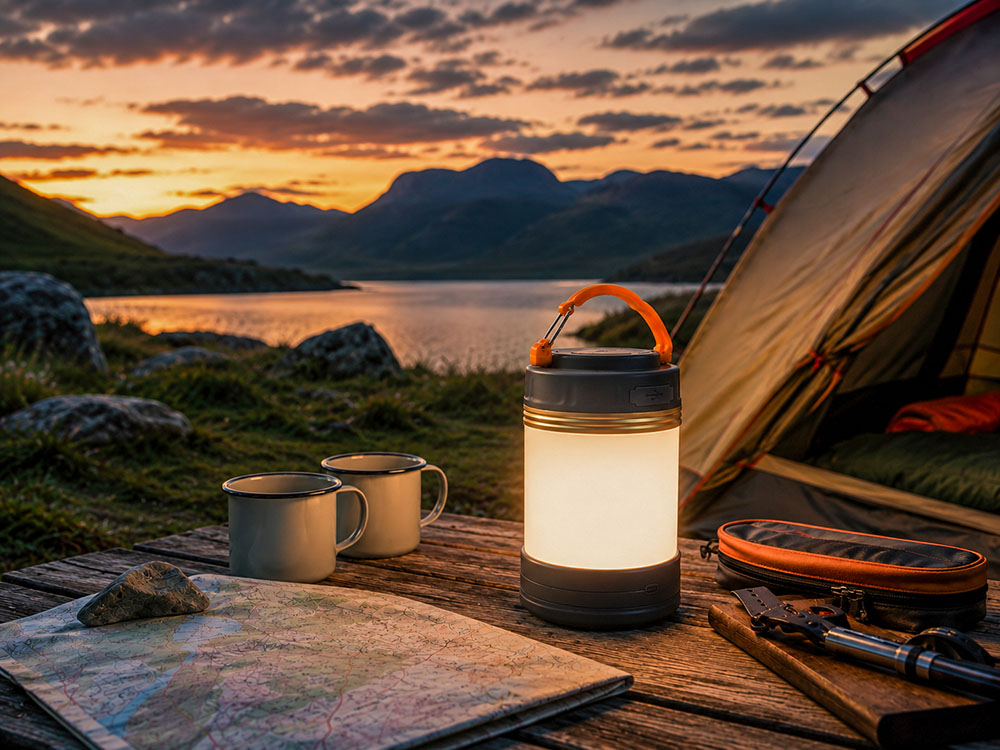
Rechargeable LED lanterns give wide, comfortable light for tents, campsite tables and evening kit checks after dark.
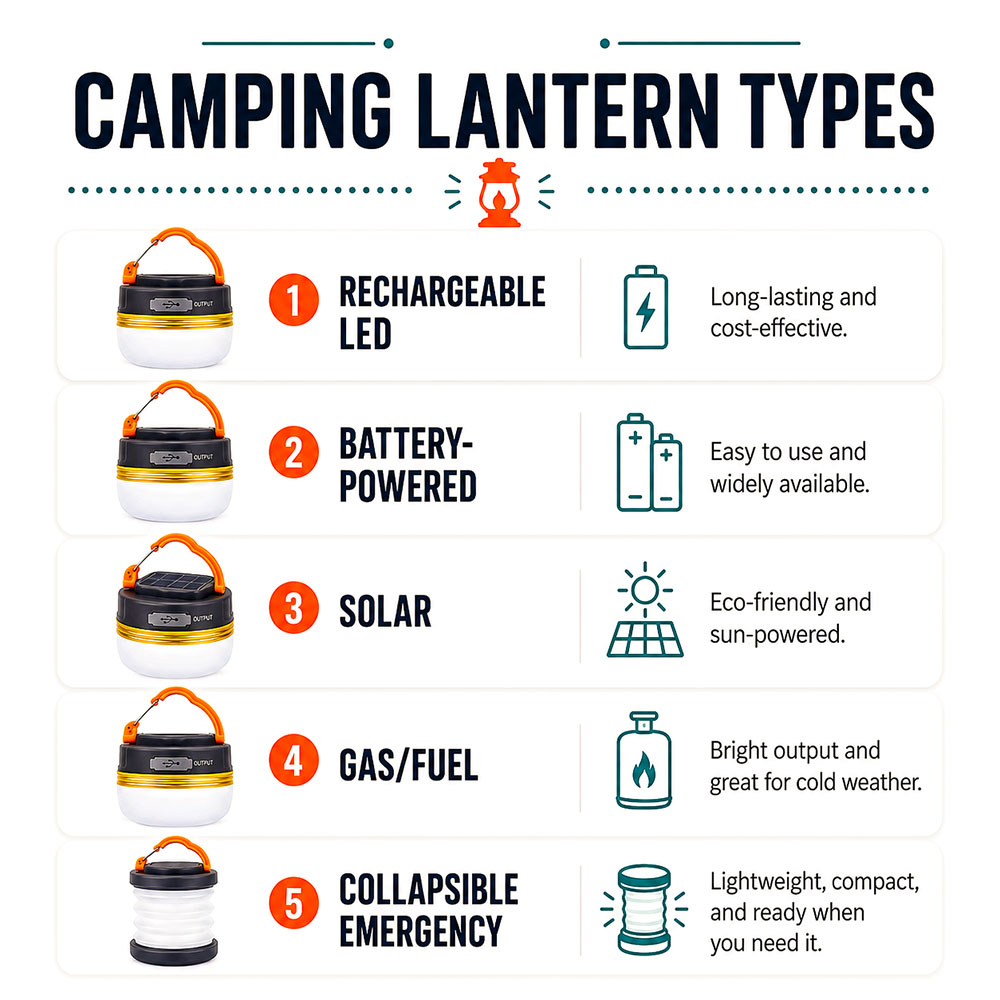
Match the lantern type to the trip: rechargeable for regular camping, batteries or crank lights for backup.
Key takeaways:
Choose the Ledlenser ML6 if you want a dependable main camping lantern. Choose the Black Diamond Moji R+ or Ledlenser ML4 Mini if you are backpacking or wild camping. Choose the Lepro 3-in-1 if you are camping as a family and want separate torches as well as a main lantern. Choose the Glocusent Survival Camping Light if weather resistance is most important. Choose the Mesqool CL1000 as a backup lantern for power cuts, emergency kits and occasional off-grid use.
If you are unsure, start with how you camp. A small tent needs a compact hanging light, a family campsite needs a stable table lantern, and an emergency kit needs something simple, charged, and easy to find in the dark.
| Category | Recommended lantern | Power type and max brightness | Best for |
| Best overall camping lantern | Ledlenser ML6 Rechargeable Lantern | Rechargeable USB power bank, up to 750 lumens | Most regular campers who want one dependable main lantern. |
| Best high-output rechargeable camping lantern | Lepro 1300LM Rechargeable Camping Lantern | Rechargeable USB power bank, 1,300 lumens | Bright campsite, cooking and group lighting. |
| Best lightweight camping lantern | Black Diamond Moji R+ | Rechargeable USB-C, up to 200 lumens | Backpacking, wild camping and small tents. |
| Best budget camping lantern | LE 1000LM Rechargeable Camping Lantern | Rechargeable USB power bank, 1,000 lumens | Budget-friendly family camping, tent porches and backup lighting. |
| Best family camping lantern | Lepro 3 in 1 Rechargeable Camping Lantern with 2 Torches | Rechargeable lantern plus detachable torches, up to 1,000 lumens | Family tents, kids, campsite tables and night-time trips across camp. |
| Best backup camping lantern | Mesqool CL1000 Solar Hand Crank Camping Lantern | USB, solar and hand crank, 200-lumen lantern / 350-lumen torch | Emergency backup lighting, power cuts and off-grid top-ups. |
| Best waterproof camping lantern | Glocusent Survival Camping Light | Rechargeable, up to 1,200 lumens | Wet-weather camping, exposed pitches and emergency use. |
| Best value bright rechargeable camping lantern | Blukar K9107 2000 Lumen Camping Lantern | Rechargeable, listed as 2,000 lumens | Strong, flexible lighting at a very accessible price. |
| Best compact bright rechargeable camping lantern | Blukar K9156 2000 Lumen Adjustable Camping Lantern | Rechargeable, listed as 2,000 lumens | Compact tent, porch and power-cut lighting with adjustable panels. |
| Best mini rechargeable tent lantern | Ledlenser ML4 Mini Lantern | Rechargeable 14500 battery, up to 300 lumens | Small tents, short trips and compact rechargeable lighting. |
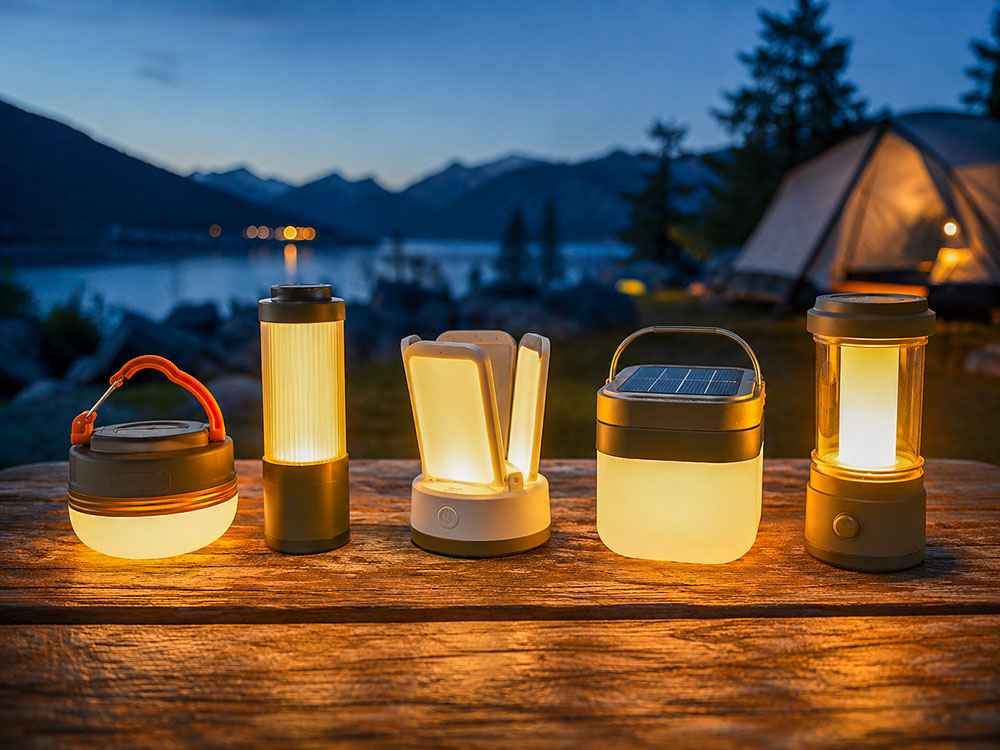
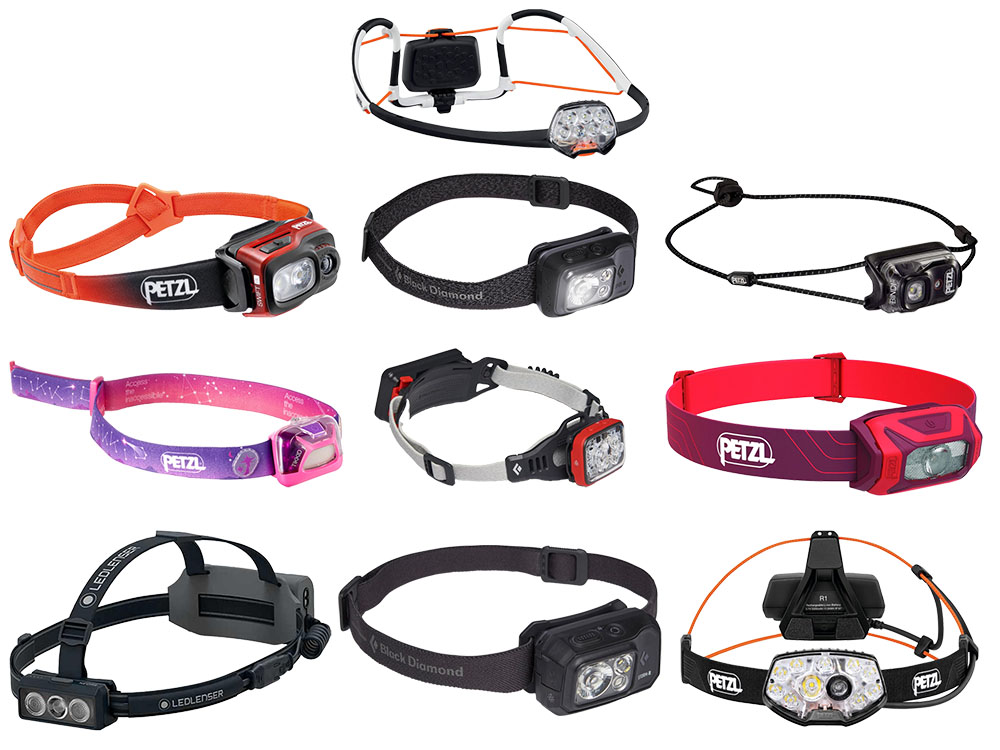
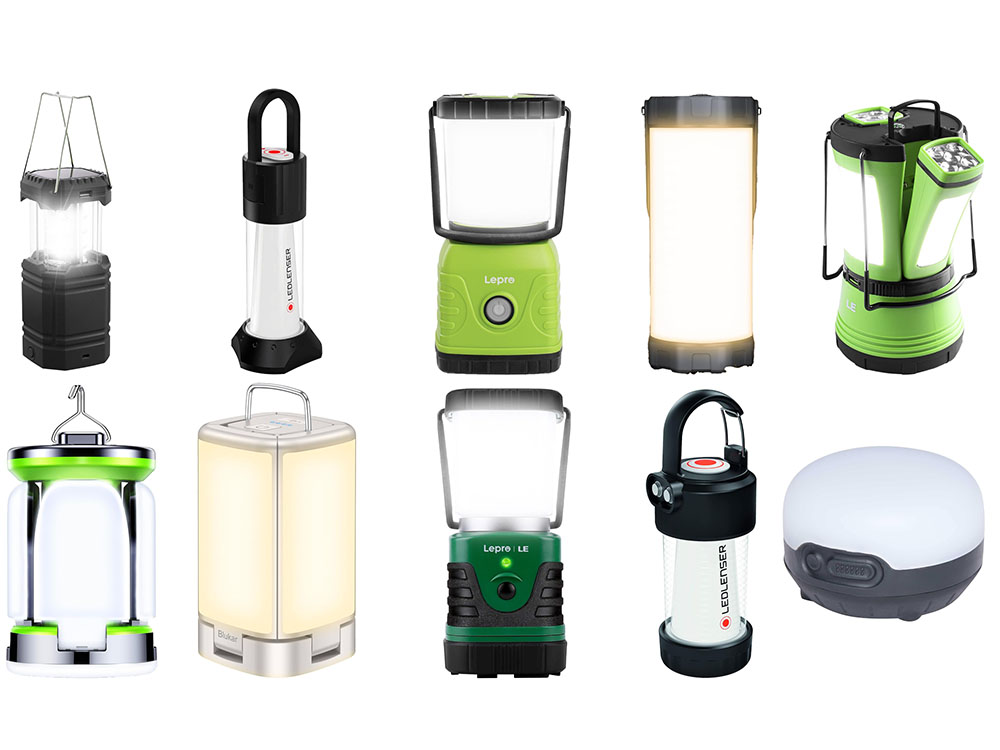
Modern lanterns vary in shape, brightness and runtime, so match the design to your tent, table or trail kit.
Quick answer best camping lanterns: For most UK campers, the best camping lantern is a rechargeable LED lantern with adjustable brightness, comfortable diffused light, enough runtime for a full evening, and at least splash resistance for damp tent porches and wet campsites. The Ledlenser ML6 is our best overall pick, but backpackers should choose a smaller tent lantern, family campers may prefer a brighter table lantern, and emergency kits should include a backup light with simple charging or replaceable battery options.
 |
 |
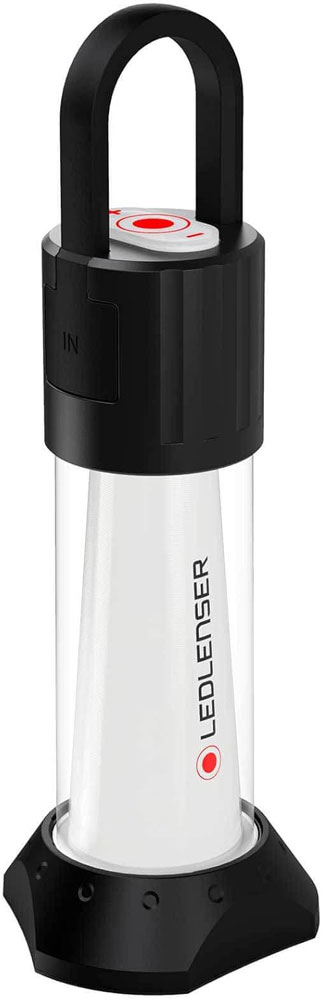
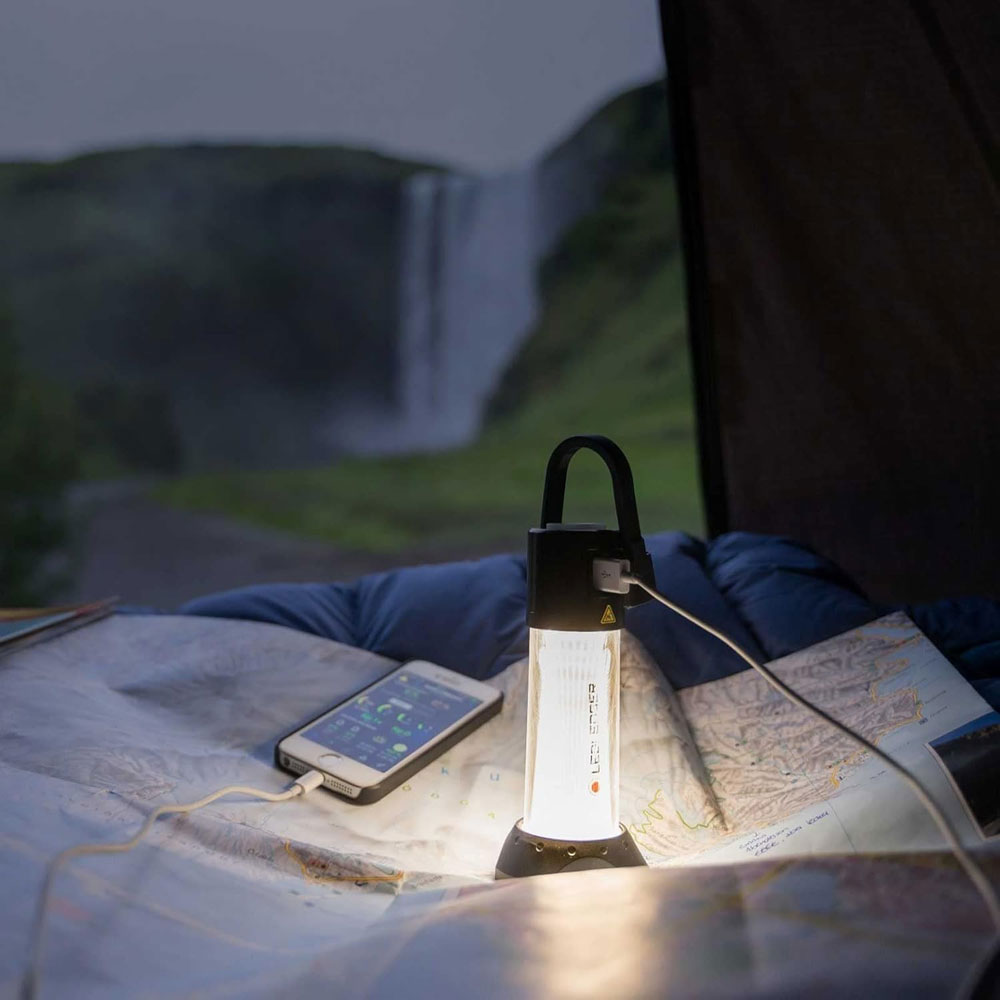
A premium rechargeable lantern with strong output, comfortable, diffused light and enough versatility to serve as a main camp light for most trips.
Best for: Car camping, campervan trips, family tents, campsite tables, longer weekends, and anyone who wants one robust rechargeable lantern rather than several cheaper lights.
Key specifications:
Key features:
Why we chose
For me, the Ledlenser ML6 feels like the best main camp lantern in this guide because the light is strong without being harsh. At higher settings, it is bright enough for a tent porch, a cooking table, or a campervan awning, but I would most often use the dimmed settings once everyone has settled down.
I found the mounting options to be a real advantage. It can stand on a table, hang from a tent loop, clip to a branch, or attach to suitable metal surfaces, making it much easier to put the light where you need it.
It is not the cheapest option and is probably just a little too heavy for ultralight backpacking. But as a dependable main lantern for regular UK camping, it feels robust, flexible and well thought out. I would pack it for family camps, campervan weekends, longer stays where light quality matters, and in my rucksack for overnight camps when not going ultralight.
Best used for
Pros:
Cons:
Avoid if: you want the lightest possible lantern for long-distance backpacking or a very cheap backup light.
|
|
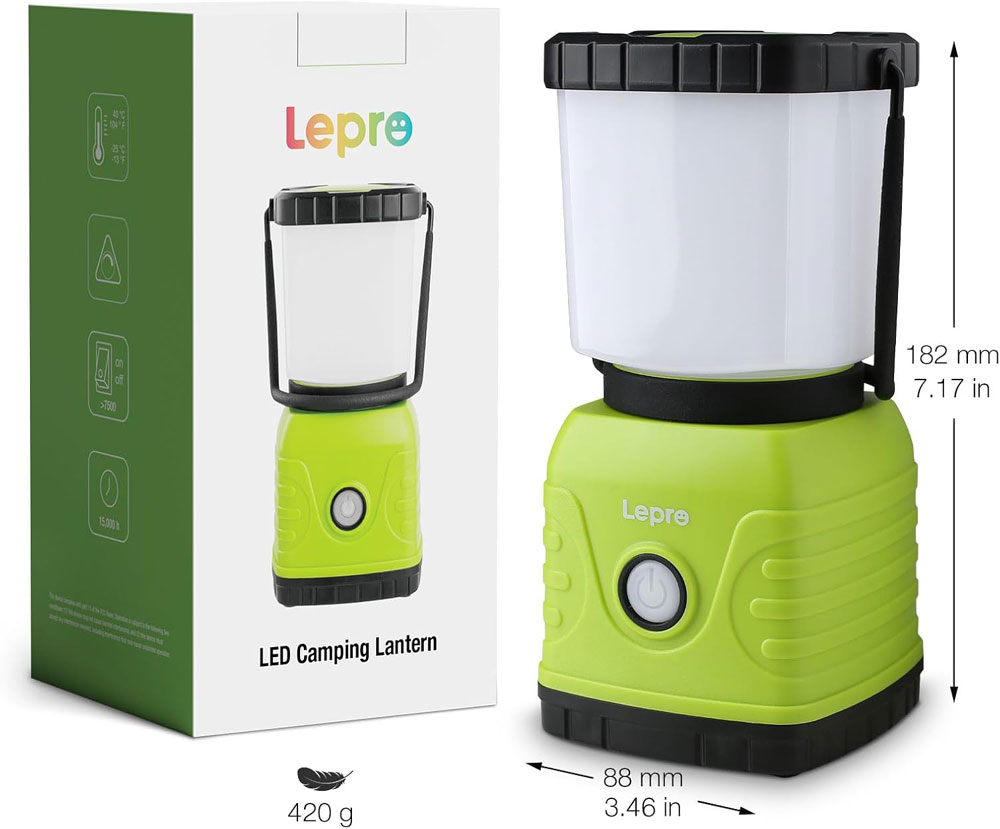
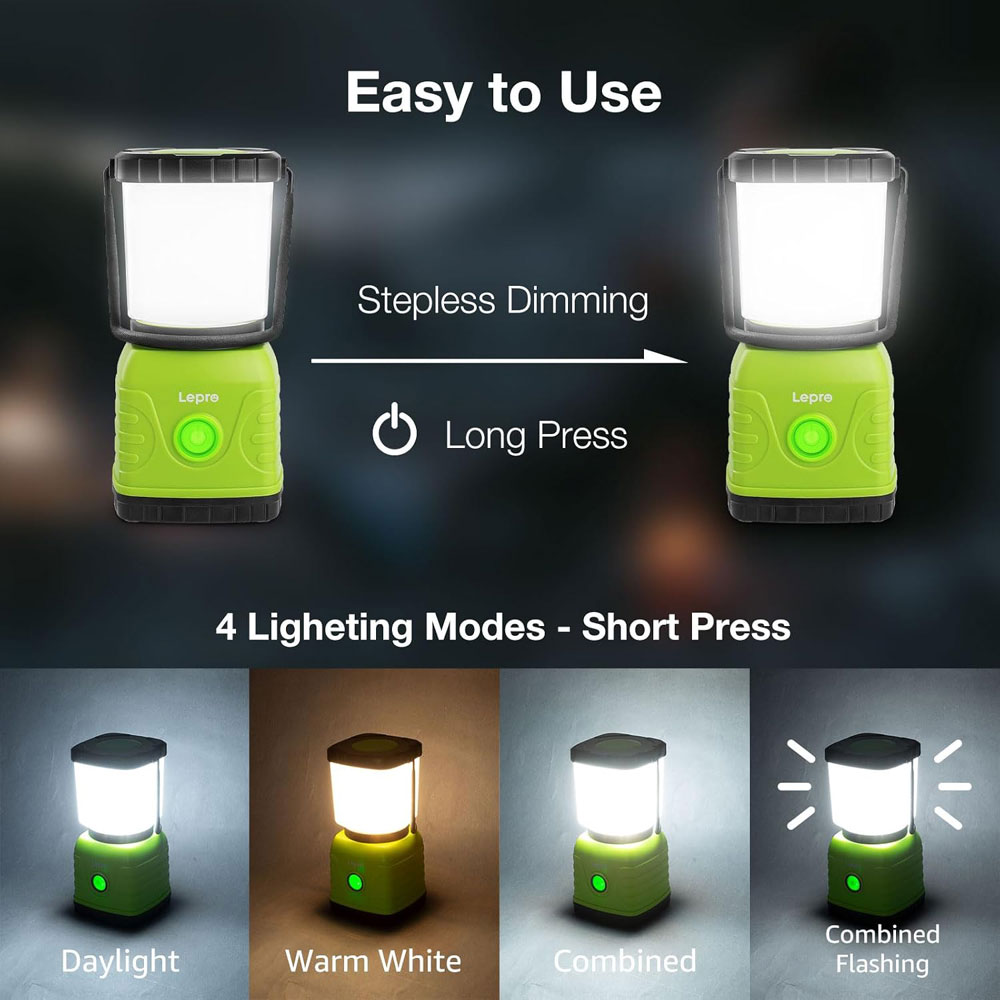
A very bright, good-value, rechargeable LED lantern for campers who want strong campsite illumination without carrying fuel or large replaceable batteries.
Best for: Family tents, cooking areas, group pitches, emergency lighting, and campers who want high output at a reasonable price.
Key specifications:
Key features:
Why we chose
For me, the Lepro 1300LM is the lantern for campers who want plenty of light at the campsite. It throws out enough light for cooking after dark, organising kit outside the tent, and illuminating a larger table. The wide lantern-style spread is far more useful around camp than a narrow torch beam.
I found the lower settings just as important as the headline brightness. Full power is useful for short jobs, but it is too bright inside a tent and quickly drains the battery; when turned down, it becomes a more usable family-camping lantern. The rechargeable battery and USB output also make sense when paired with a separate power bank on weekend trips.
The compromise is refinement. It does not have the same premium feel as the Ledlenser ML6, and it is not the light I would put in a small backpack for a long walk-in camp. Used as a bright campsite and emergency lantern, though, it provides a lot of practical light for its size.
Best used for
Pros:
Cons:
Avoid if: you mainly camp in small tents and only need a soft low-level light.
|
|
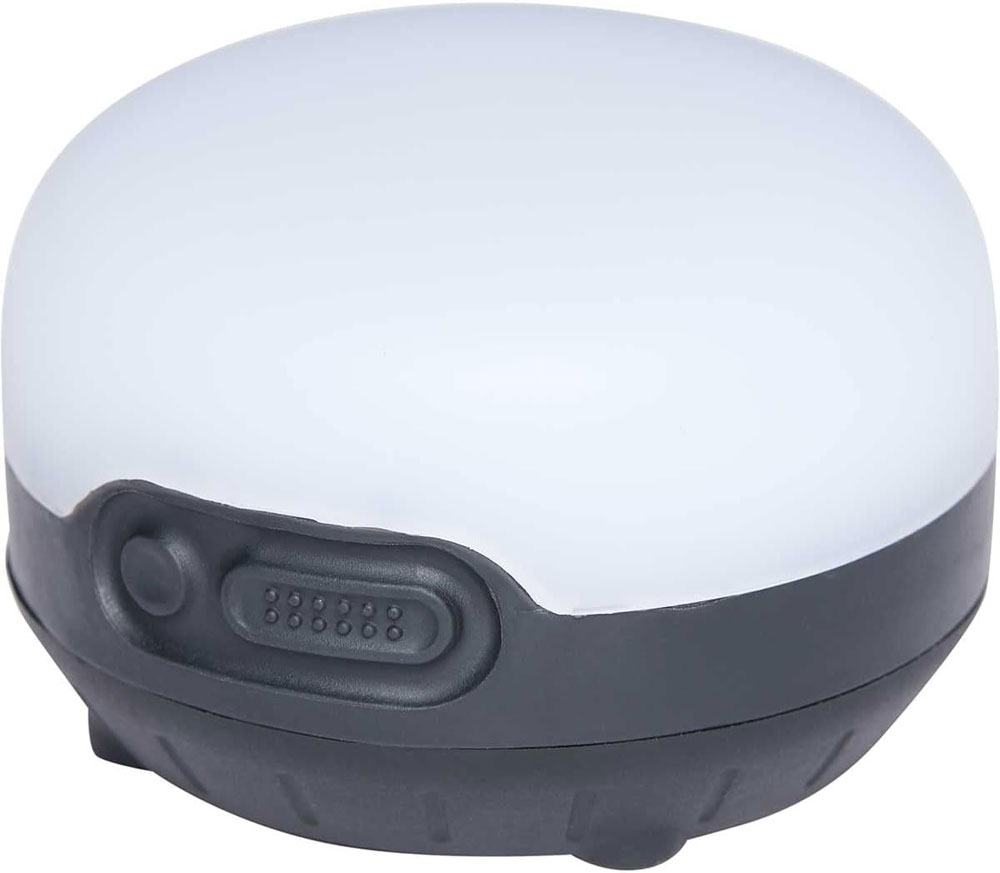
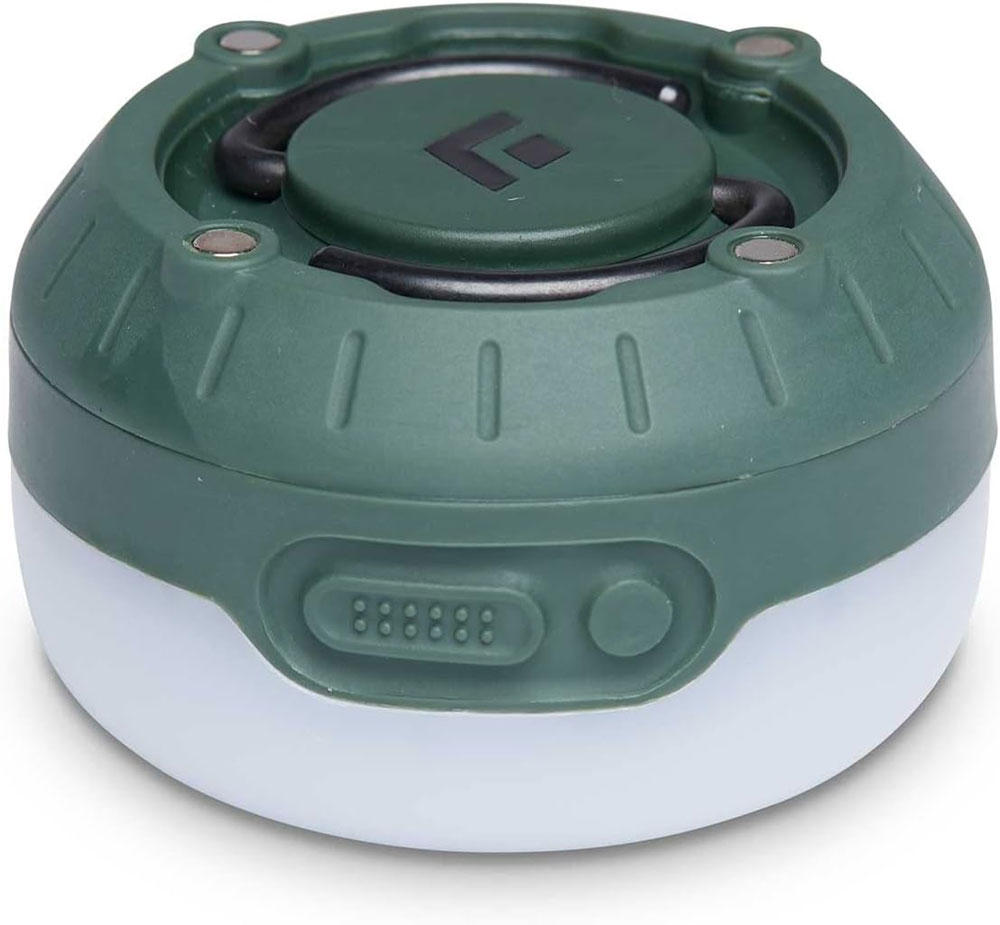
A compact rechargeable lantern for backpackers and wild campers who want enough tent light without carrying a bulky campsite lamp.
Best for: Backpacking, wild camping, solo camping, two-person tents and walkers who already carry a head torch but want shared tent light.
Key specifications:
Key features:
Why we chose
For me, the Black Diamond Moji R+ is the pick for walkers who want a tent lantern without lugging a bulky camp light. Inside a one- or two-person tent, the 200-lumen output is plenty for changing, reading, finding dry socks and sorting your essential kit.
I found the small puck shape sits easily in a rucksack lid pocket, side pouch or small backpack pocket, and it is light enough to justify packing even when you already have a head torch. The rechargeable USB-C battery also fits neatly into the same charging setup as many phones, head torches and power banks.
It is not designed to light a whole family pitch, and the colour modes are a nice extra rather than the main reason to buy it.
Best used for
Pros:
Cons:
Avoid if: you need a lantern to light a family pitch, cooking area, or large-group table.
|
|

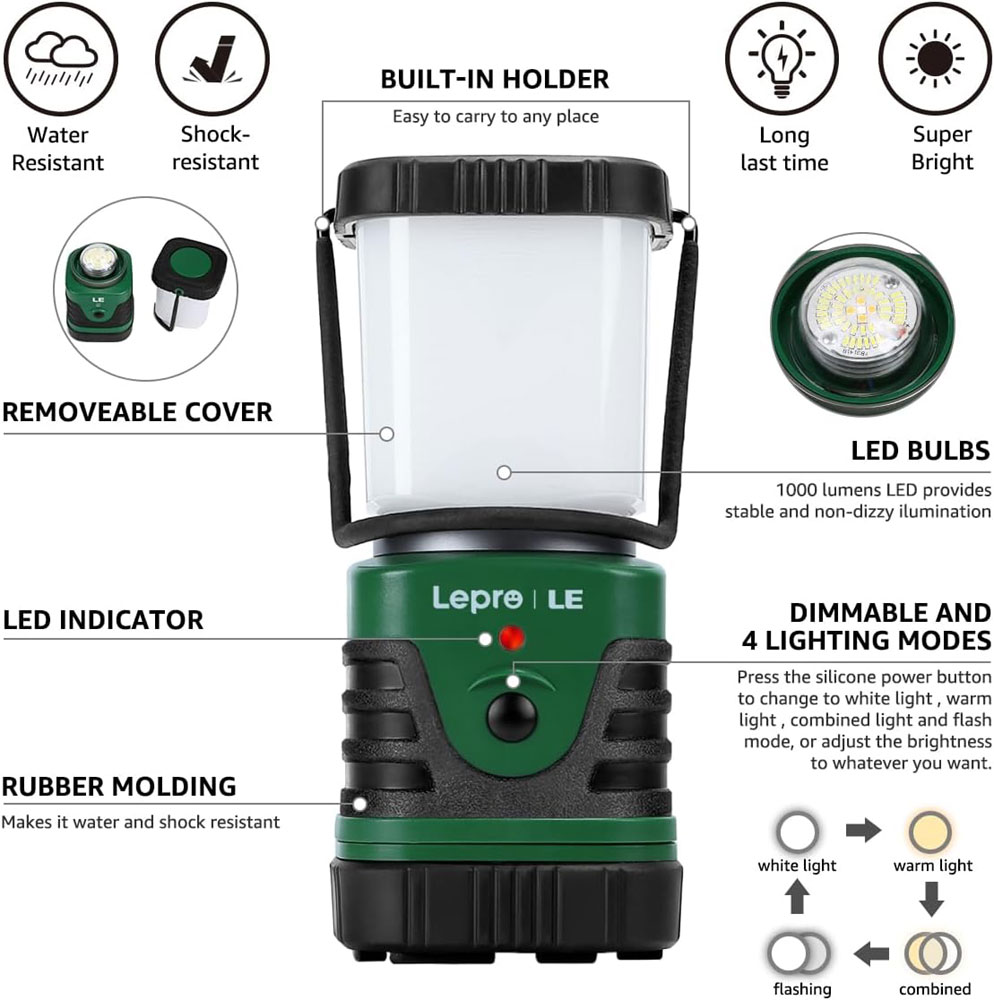
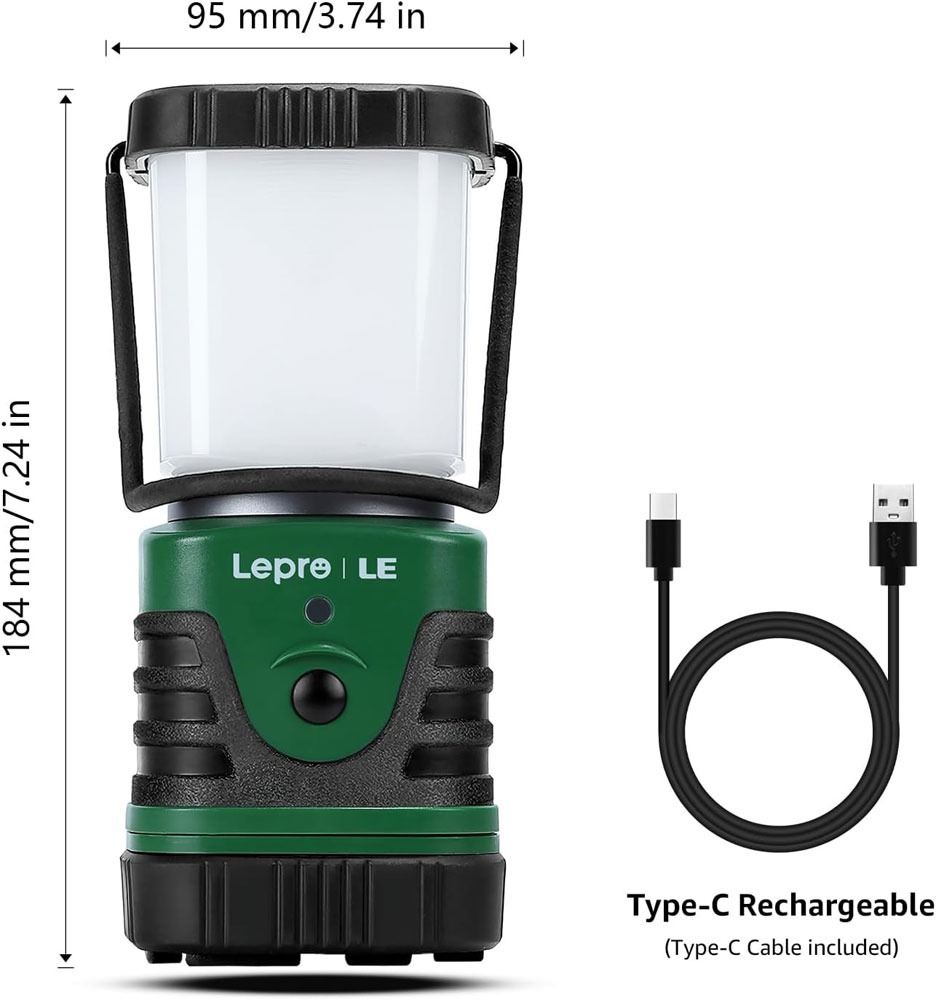
A bright, rechargeable lantern that gives sensible campsite performance without moving into premium-lantern pricing.
Best for: Budget-conscious campers, family tents, tent porches, power cuts and general campsite lighting.
Key specifications:
Key features:
Why we chose
For me, the LE 1000LM is a great fit for the budget slot because it delivers a lot of practical light for the money. It is not a tiny backpacking lantern, but it works well as a main light for a tent porch, a camp table or a small family setup.
I found the mix of warm, cool and full-power modes useful. The full 1,000-lumen mode is handy for cooking or packing away after dark, while the warmer, lower setting is much more comfortable inside a tent. That flexibility is important because a lantern that is only very bright can quickly become tiring to sit beside.
At around 550 g, this is a car-camping or short walk-in campsite lantern rather than something I would carry deep in a rucksack. For a family camping box, campervan, dry bag, emergency kit, or first-aid kit at home, though, it is a practical and affordable rechargeable option.
Best used for
Pros:
Cons:
Avoid if: you want a very small lantern for a long walk-in camp or a premium-feeling main light.
|
|
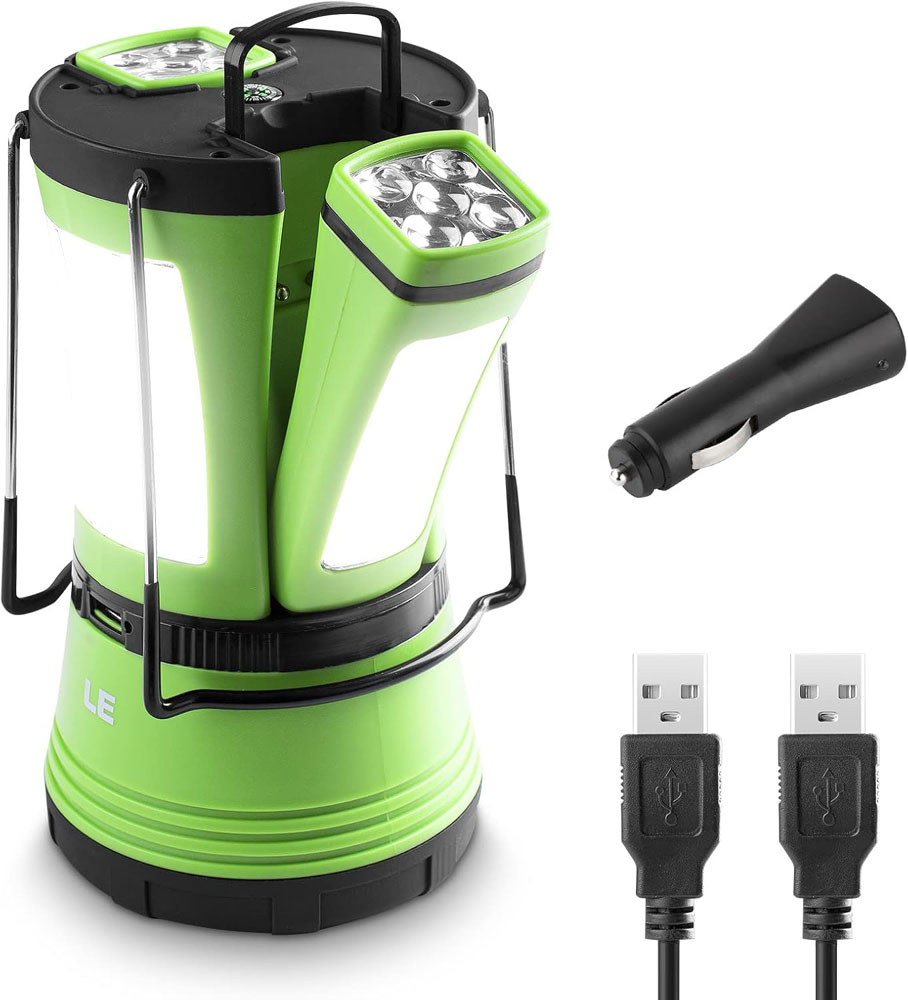
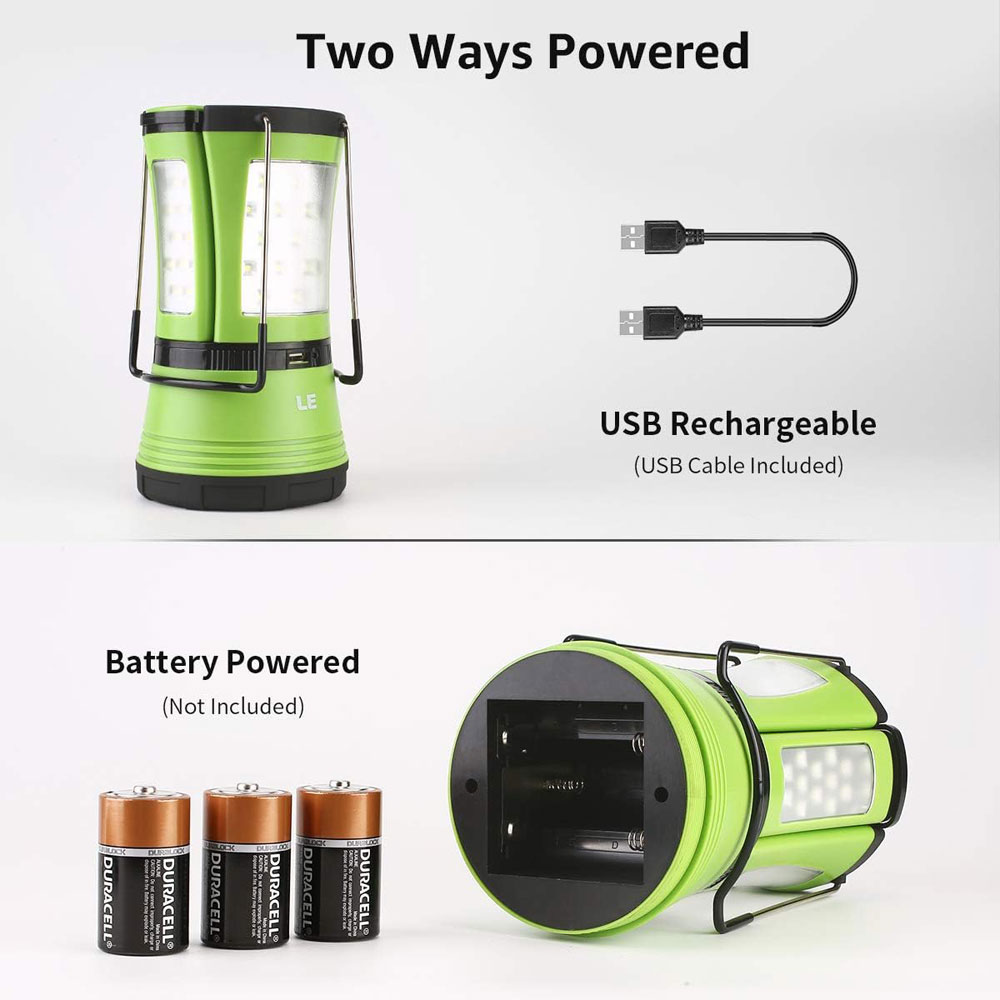
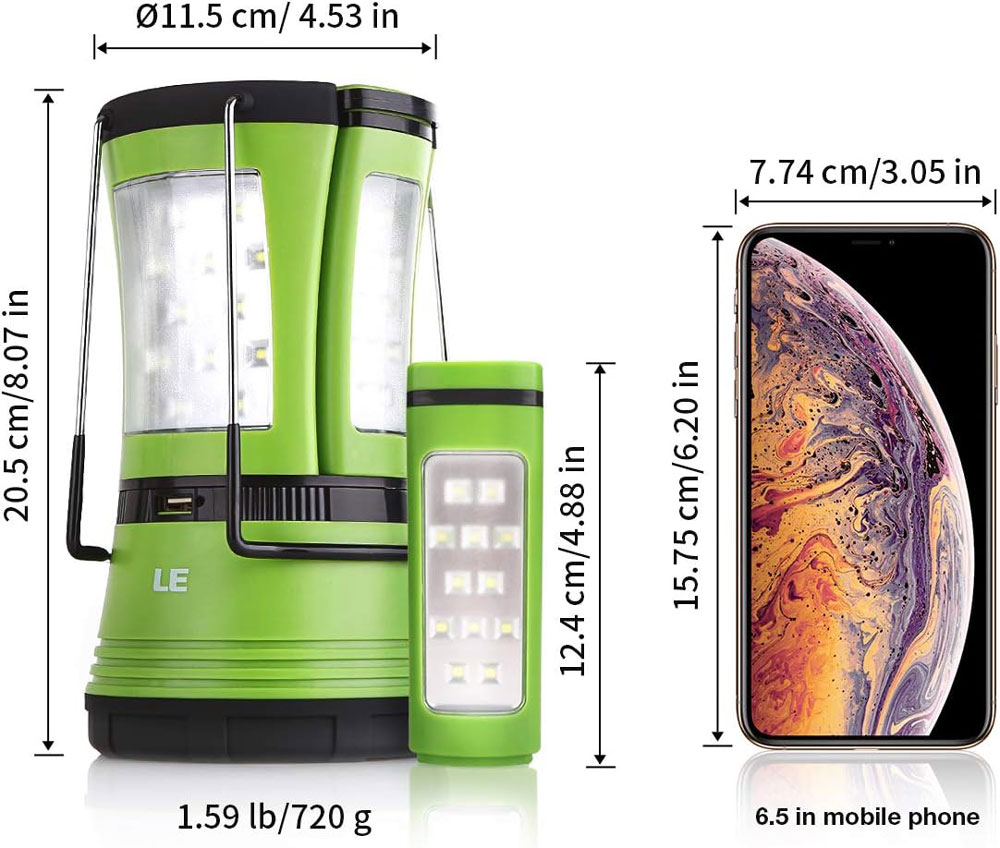
A family-friendly campsite lantern with two detachable torches, making it especially useful when several people need light simultaneously.
Best for: Families, groups, campsite tables, evening games, toilet-block trips, and situations where a single lantern is insufficient.
Key specifications:
Key features:
Why we chose
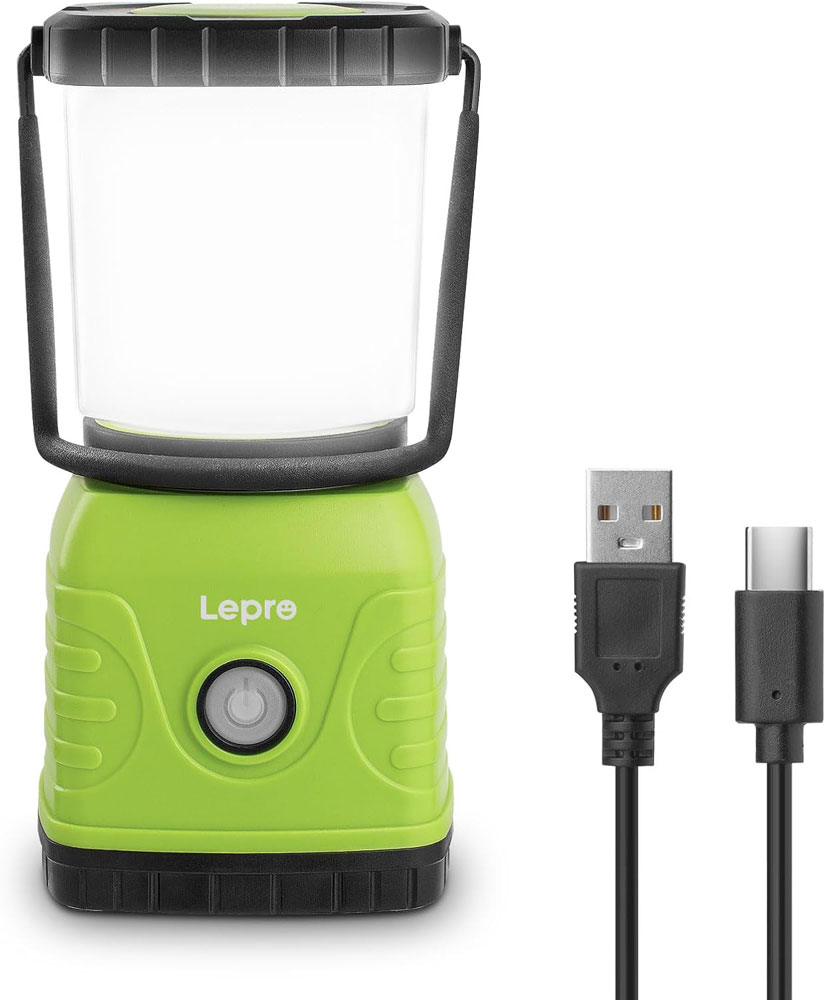
For me, the Lepro 3-in-1 is a practical family lantern because it solves a real campsite problem: everyone needs light at once. One person can leave the main lantern on the table while someone else takes a detachable torch to the toilet block or back to the car.
I found the removable torches more useful than they seem on paper. They keep the main camp light from going out whenever someone walks away, and they are handy for children or group trips, where several small lights are better than one big one. That said, if I leave the tent, I generally wear my head torch.
It is too bulky for backpacking and has more parts to keep track of, so it is not the neatest option for minimalist campers. For family tents, festivals, car camping and home emergency use, the lantern-plus-torches design is genuinely useful.
Best used for
Pros:
Cons:
Avoid if: you prefer a simple single lantern with fewer parts to charge and keep track of.
|
|
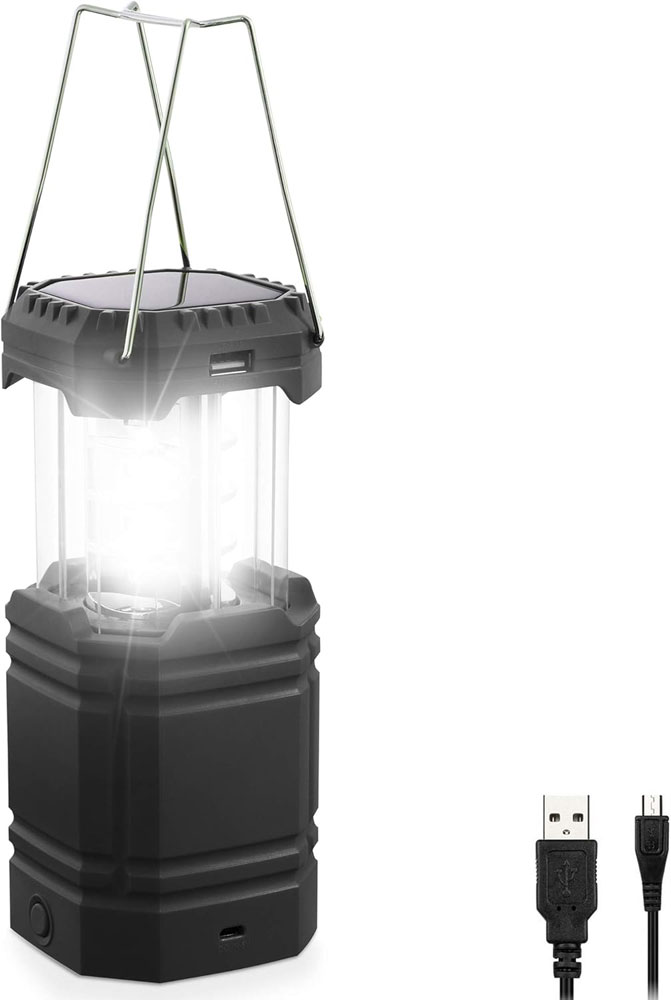
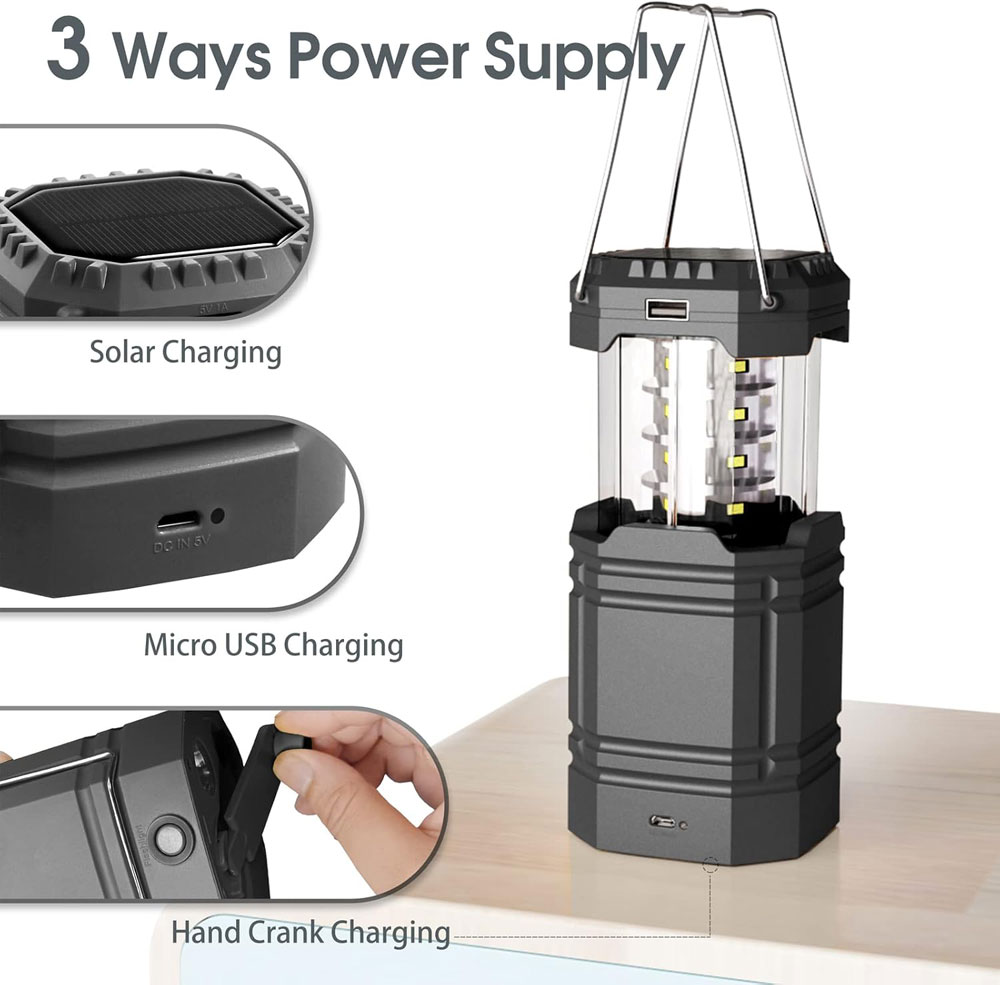
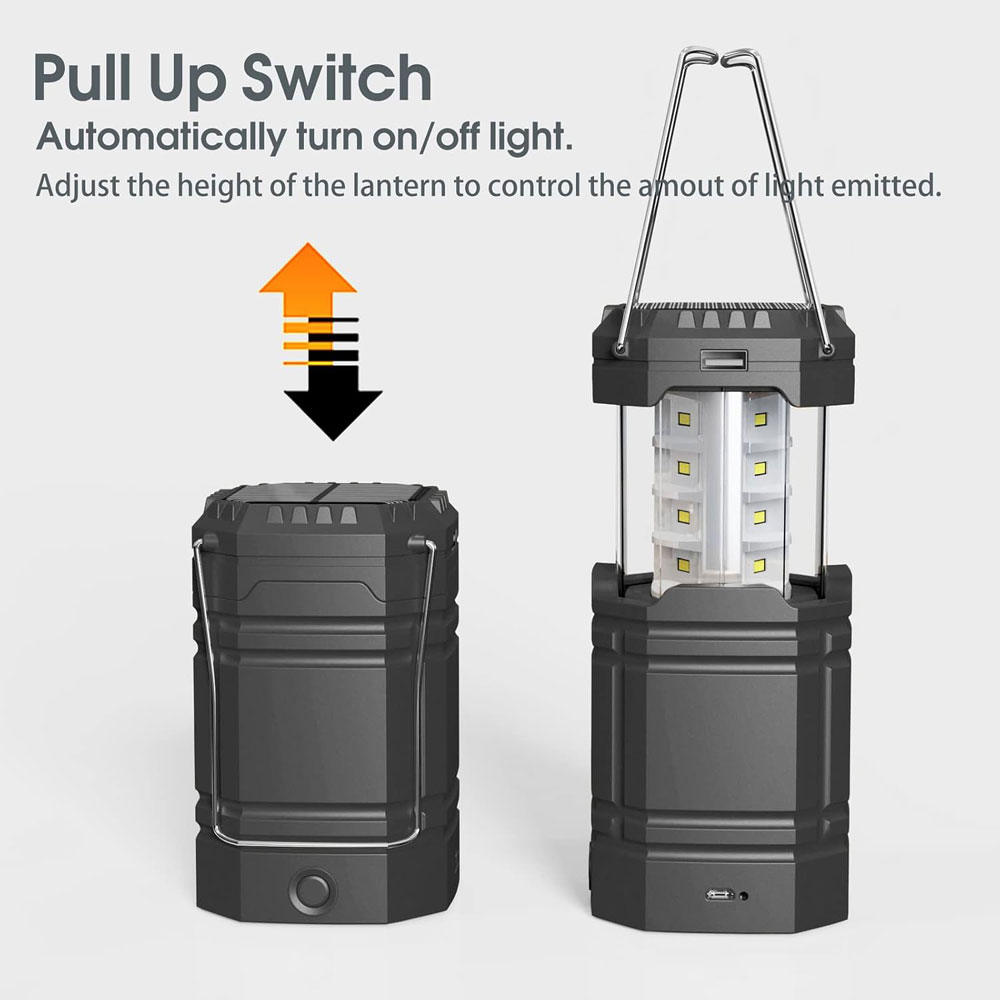
A compact backup lantern with USB charging, solar top-up, hand-crank charging and a built-in torch for emergencies.
Best for: Emergency kits, power cuts, backup campsite lighting, car camping, and occasional off-grid use.
Key specifications:
Key features:
Why we chose
For me, the Mesqool CL1000 works best as a backup lantern rather than the main light for every trip. I would use the USB charging day to day, while the solar panel and hand crank are there as emergency safeguards if the battery runs low at the wrong moment. I let the battery run out and then tried the crank handle. It took about 7 minutes of continuous cranking the handle, but that gave me quite a few hours' worth of light.
I found the design particularly useful for the kind of kit that sits in a car, campervan, family camping box or emergency dry bag. It is small enough to store alongside a first-aid kit and other hiking essentials, and the collapsible body makes it less awkward than many traditional lanterns.
The important thing is not to overestimate the solar and hand-crank charging. They are useful for backup, not for turning it into a limitless power source. Treat it as a sensible emergency lantern with multiple ways to get a little more light. It does fall into my bugbear of charging connectors – it is micro-USB rather than USB-C... I'm sure one day it'll change!
Best used for
Pros:
Cons:
Avoid if: you expect solar or hand-crank charging to replace proper USB charging on longer trips.
|
|
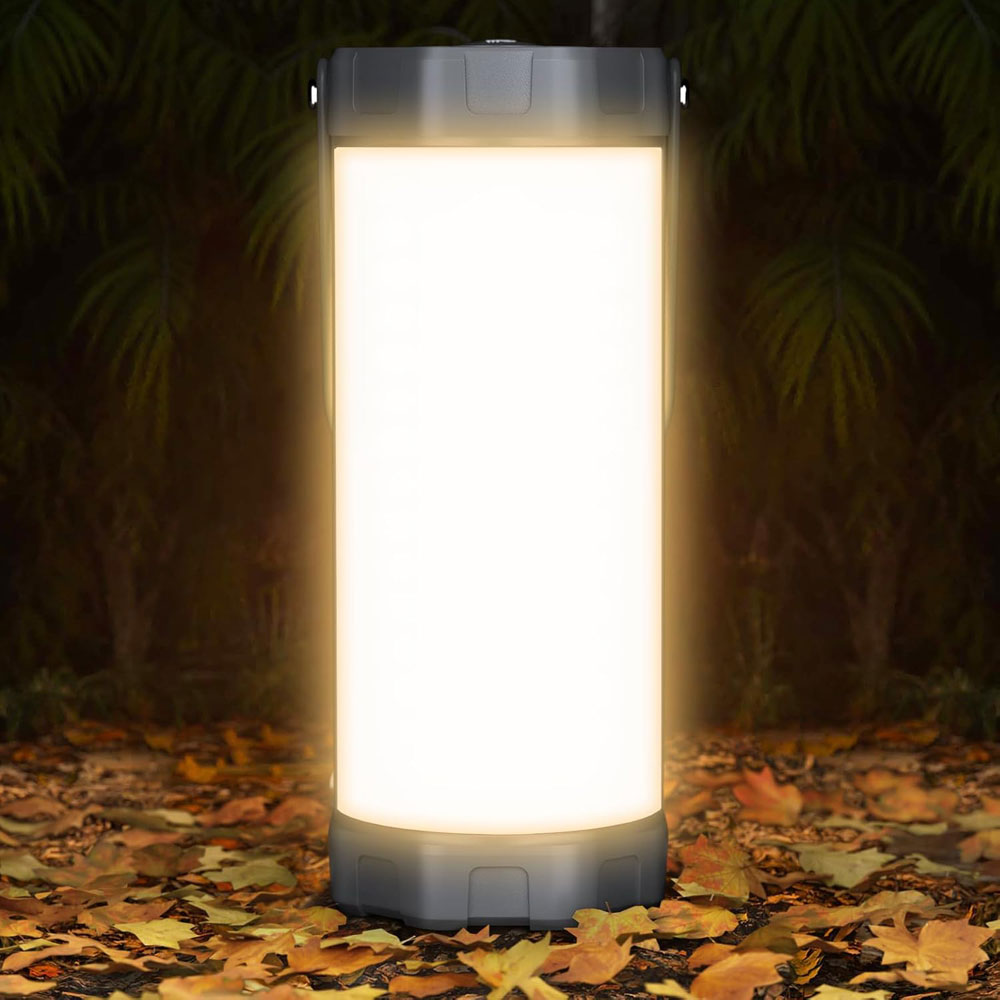
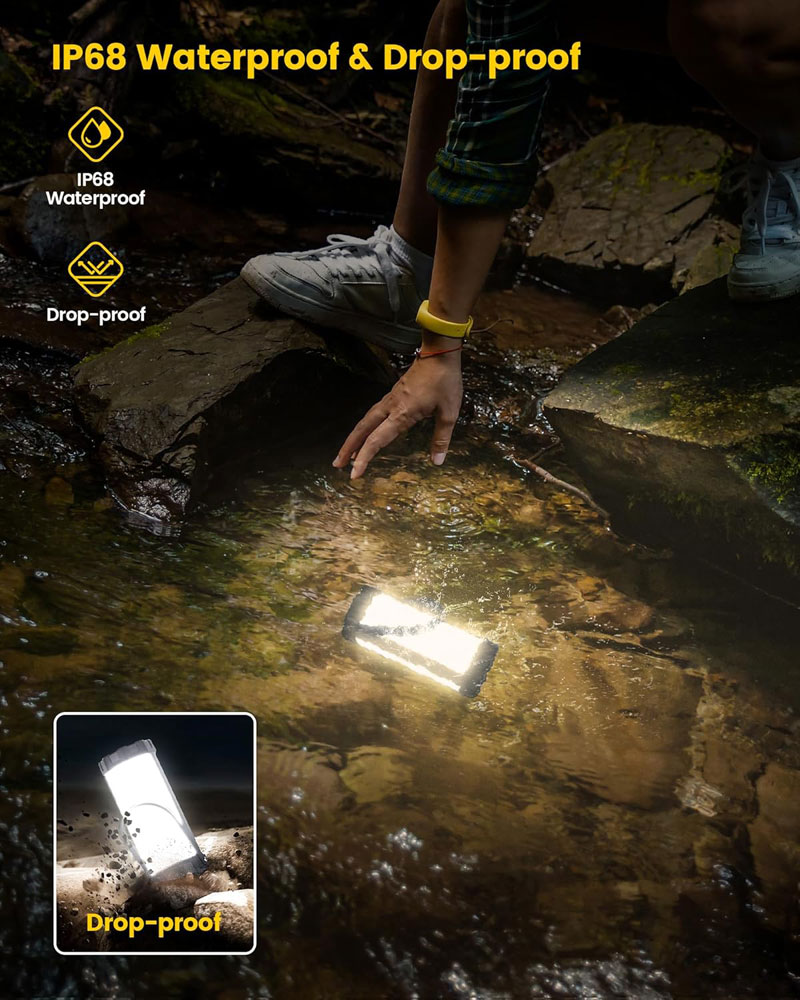
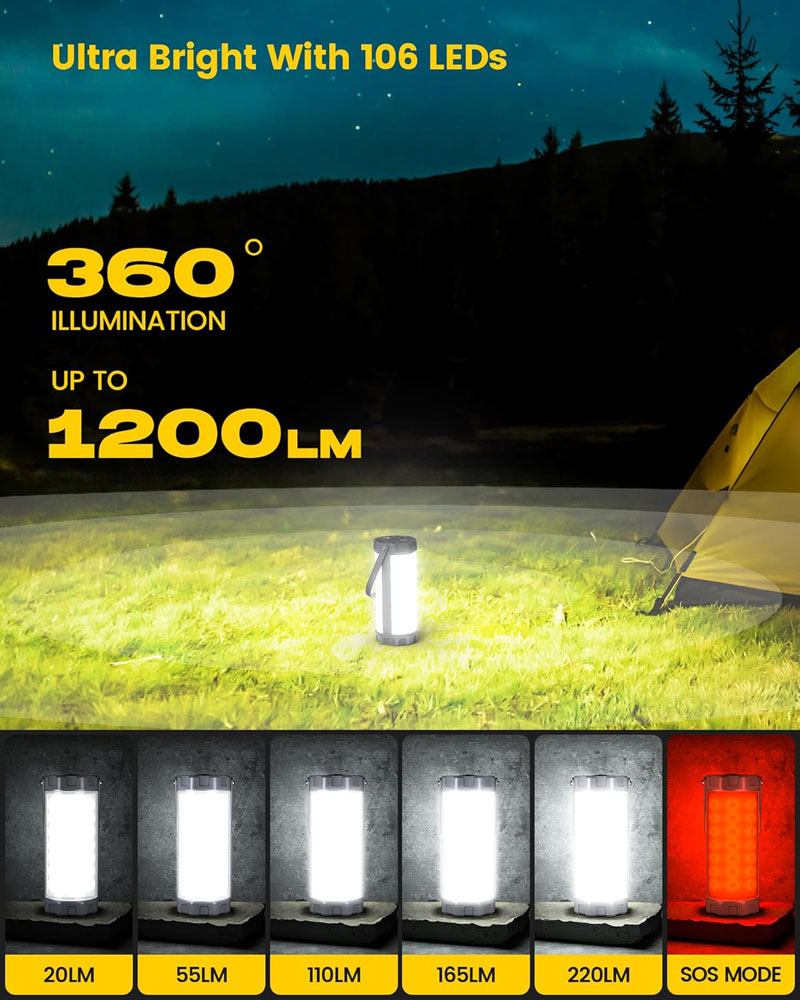
A compact, high-output rechargeable lantern with an IP68 rating, SOS mode and robust weather protection for wet camps.
Best for: Wet-weather camping, exposed tent porches, emergency kits, power cuts, and trips where weather resistance matters.
Key specifications:
Key features:
Why we chose
For me, the Glocusent Survival Camping Light is the waterproof pick because it feels built for harsh conditions, not just dry summer evenings. The IP68 rating is the standout feature, especially for UK camping, where wet grass, drizzle and condensation are normal rather than unusual. Well, they usually are for me!
I found the shape practical because it is compact for the output. It can sit on a table, fit into a backpack side pocket, or be packed in a dry bag with waterproofs and other essential kit. The brighter modes are useful for short jobs, while the lower modes are better suited to longer evenings.
Even with a strong water-resistance rating, I would still handle it carefully and avoid leaving any rechargeable light outside unnecessarily. But if you often camp in damp conditions or want a good-value lantern that feels more reassuring in bad weather, this is the one I would choose.
Best used for
Pros:
Cons:
Avoid if: you want a warm, decorative campsite lantern rather than a functional waterproof light.
|
|
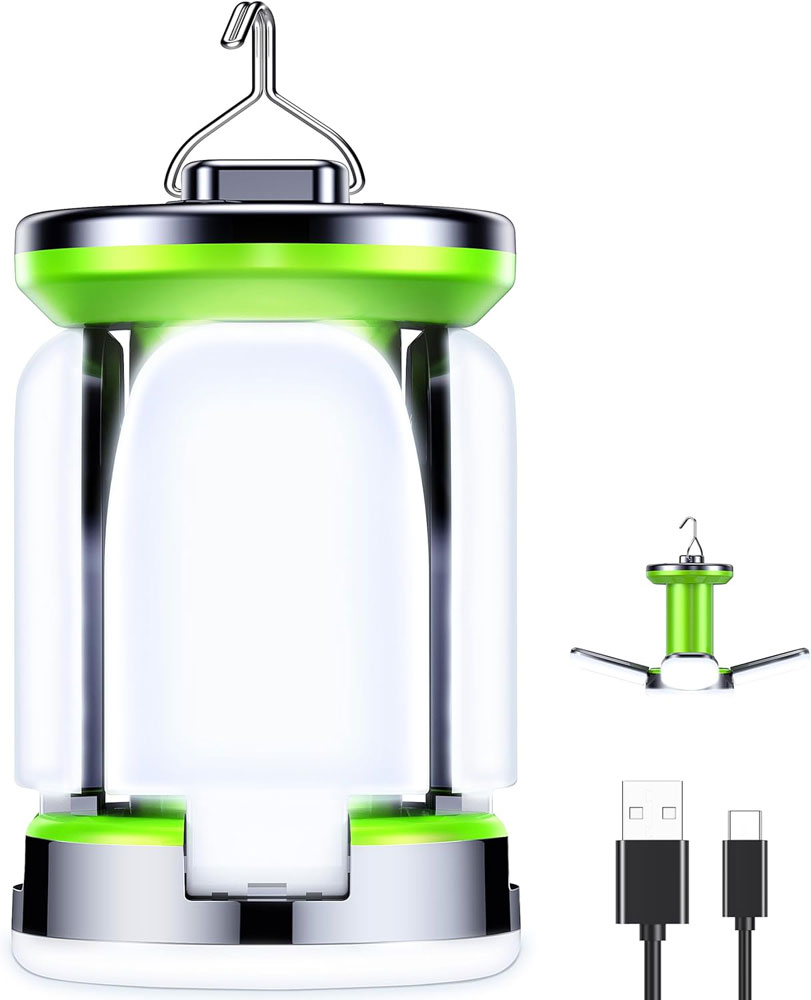
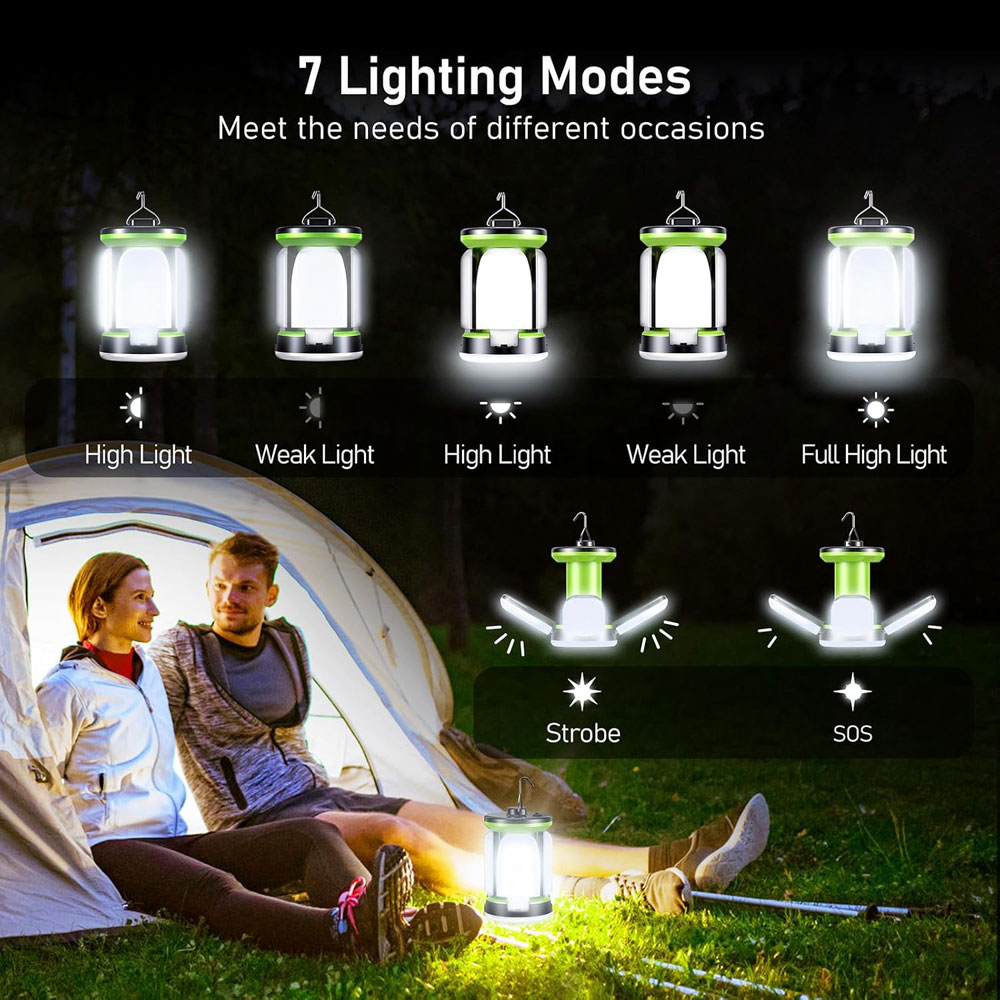
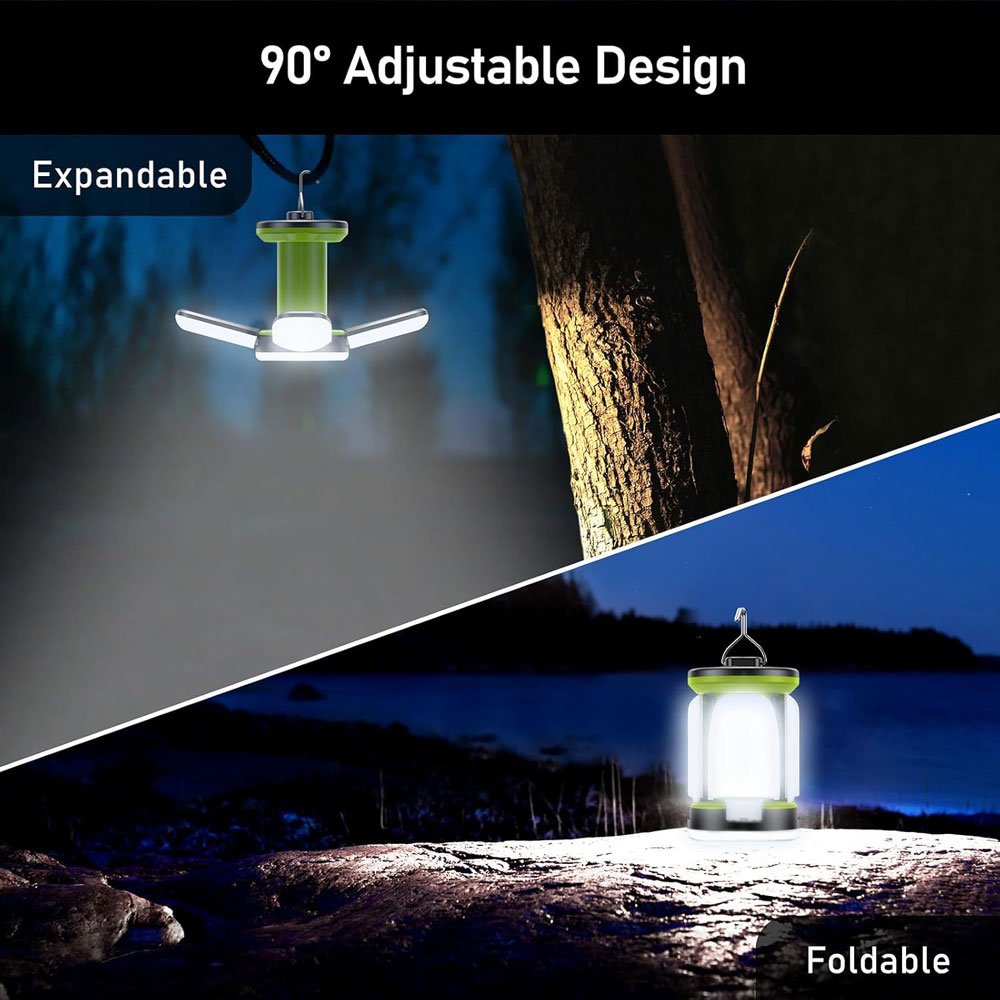
A bright, fold-out rechargeable lantern with seven lighting modes and a practical hanging design for tents, gazebos and always useful at home for power cuts.
Best for: Campers who want plenty of usable light, flexible hanging options and strong value for a rechargeable lantern.
Key specifications:
Key features:
Why we chose
For me, the Blukar K9107 is the value pick because it offers a lot of brightness and flexibility for the money. The fold-out side lights make it more useful than a basic cylinder lantern for lighting a tent ceiling, a gazebo or a small campsite cooking area.
I found the seven modes helpful, but I would not expect to use them all equally. In practice, the lower and medium settings are the ones that matter most for sitting around camp to keep the battery lasting, while the brighter and SOS settings are for short jobs or emergencies.
The main limitation is its lack of weather protection. There is no rating on it, and for me, the charging port cover doesn't seal well enough to be water-resistant. This is a good, budget-friendly rechargeable light for tents, porches and sheltered camp areas, but it is not the one I would leave out in heavy rain. If it is going in a rucksack, I would pack it in a dry bag with the rest of your electrical kit.
Best suited for sheltered campsite lighting, tents, gazebos and campervan awnings, power cuts and household backup lighting, and campers who want brightness and value rather than premium materials.
Pros:
Cons:
Avoid if: you need a rugged lantern for exposed rain, as this is better kept under cover.
|
|
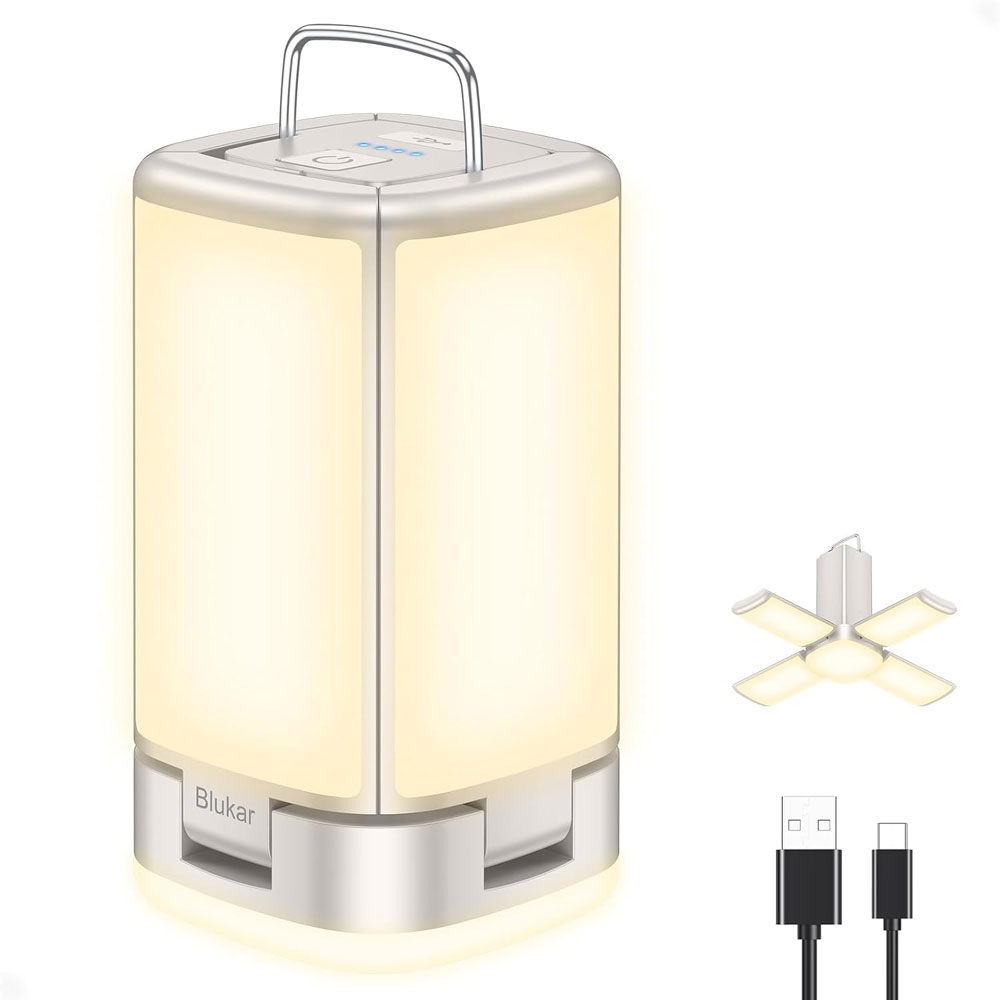
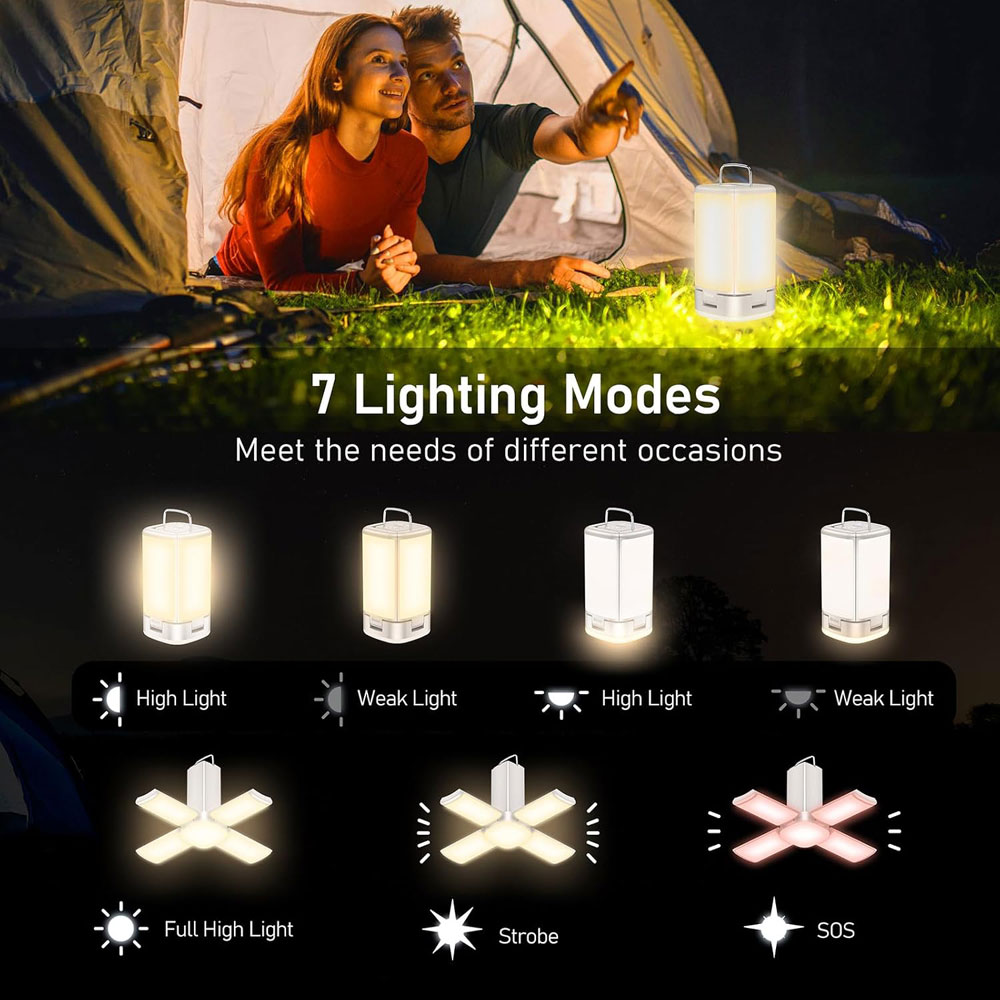
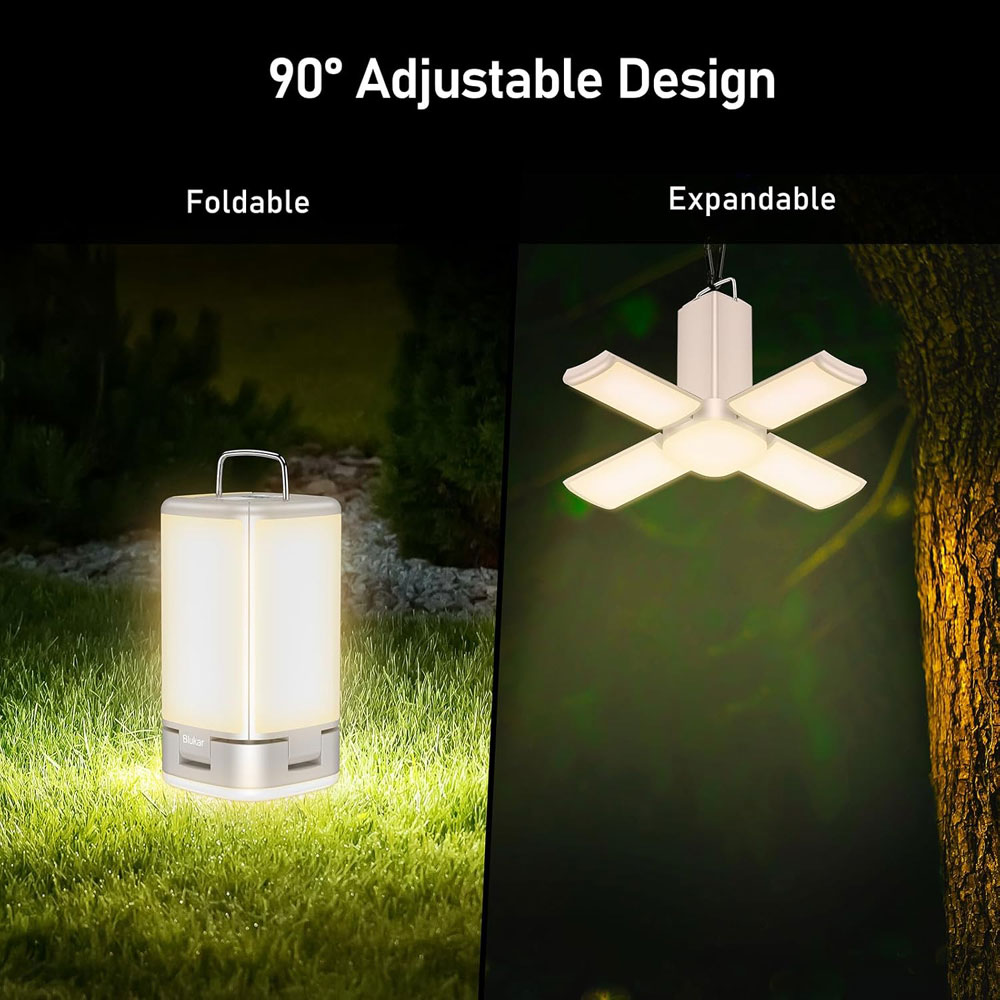
A compact, rechargeable lantern with adjustable panels, seven light modes and a 4,800 mAh battery, ideal for tents and power cuts.
Best for: Campers who want a compact, rechargeable lantern with adjustable light direction and useful emergency modes.
Key specifications:
Key features:
Why we chose
For me, the Blukar K9156 is the lantern if you want something compact yet very bright. The adjustable panels are useful because you can spread the light around a tent or angle it towards a table, rather than relying on a fixed lantern diffuser.
I found this style of light particularly useful for organising kit and sharing the light in the tent. It is bright enough to find clothing, check a map, sort a backpack, or use a first-aid kit after dark, but it can also be dimmed for more comfortable tent lighting.
I would treat it as a sheltered camping lantern rather than a weatherproof hill-camp light. Keep it inside the tent, awning, or dry bag when the weather turns, and it provides a useful balance of brightness, battery capacity, and packability.
Best used for
Pros:
Cons:
Avoid if: you want very simple one-dial controls or a lantern for wet, exposed campsites.
|
|
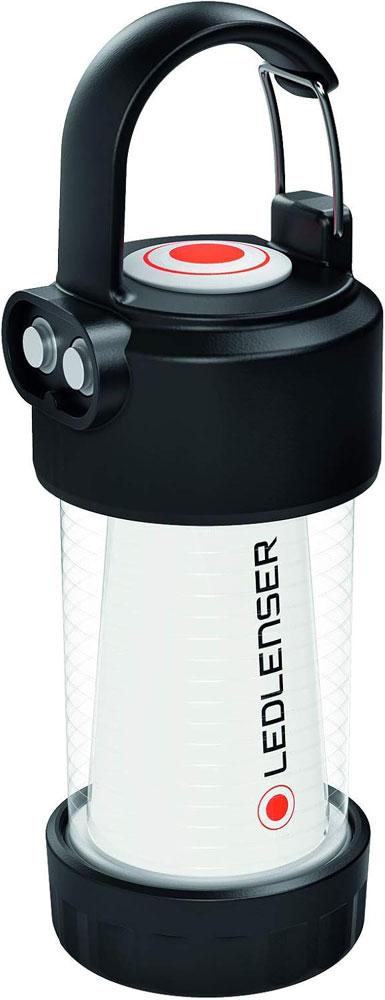
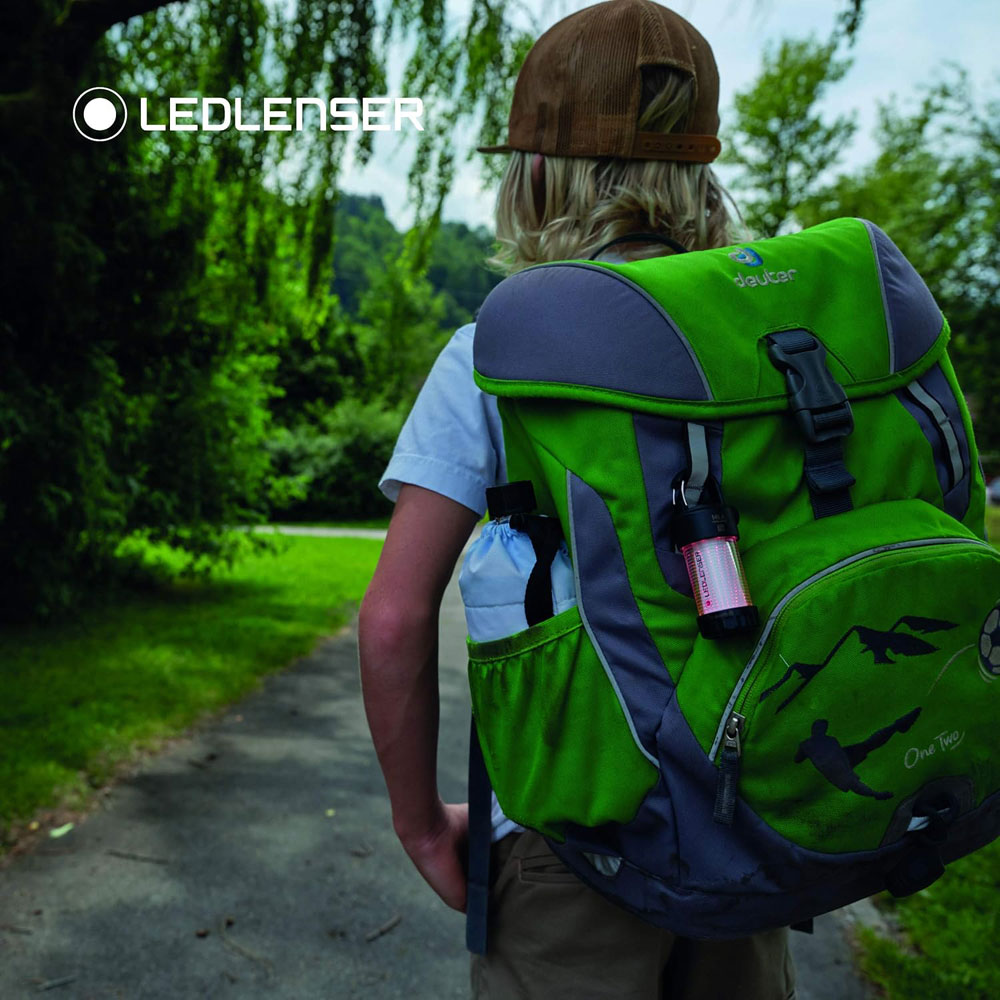
A compact yet capable rechargeable lantern for walkers who want a proper tent light without the bulk of a full-size campsite lantern.
Best for: Solo walkers, wild campers, small tents, emergency backup lighting, and anyone who wants a compact light with better build quality than a cheap keyring lantern.
Key specifications:
Key features:
Why we chose
For me, the Ledlenser ML4 is the compact lantern that feels most like proper outdoor kit. It is tiny, but the boost output is surprisingly useful for short tasks, while the lower settings are better for reading, changing and moving around inside a small tent.
I found the carabiner-style loop very handy. It clips easily inside a tent, onto a rucksack strap, or onto a dry bag handle when organising kit in the evening. The IP66 rating is also reassuring in damp UK camps, where everything ends up slightly wet.
The limitation is battery capacity. Use the 300-lumen boost for moments, not for whole evenings. Used mostly on lower settings, it is a very good mini lantern for walkers who want something compact and lightweight.
Best used for: small tents and solo camps; backpacking and wild camping; backup lighting in a backpack and campers who want a tiny but robust rechargeable lantern.
Pros:
Cons:
Avoid if: you need a main table lantern for family camping or long all-evening high-output use.
This guide was put together using the Walks4all hiking and camping experience, product specification checks, availability checks, practical campsite use cases, and comparisons against the features that matter most for UK camping: usable brightness, runtime, battery type, weather resistance, hanging options, light quality, packability, and safety.
We considered how each lantern would work in real situations, including a small backpacking tent, a damp tent porch, a family camping table, a campervan awning, a power-cut kit and a rucksack or dry bag on a short wild-camping trip. Where a feature is based on a manufacturer figure, such as lumens, battery capacity or IP rating, we treat it as a guide rather than a guarantee of real-world performance.
When choosing a camping lantern, we use the Walks4all CAMP light check:
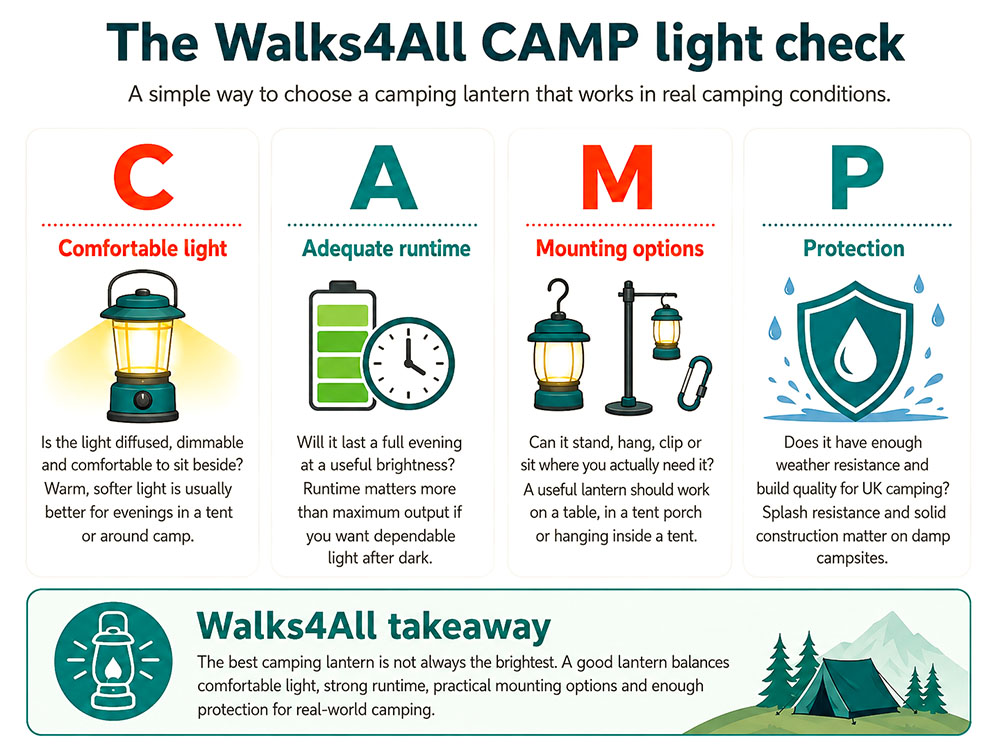
The Walks4All CAMP light check compares comfort, runtime, mounting and protection before choosing a camping lantern.
A lantern that performs well across all four points is usually more useful than one that only has a very high lumen number.
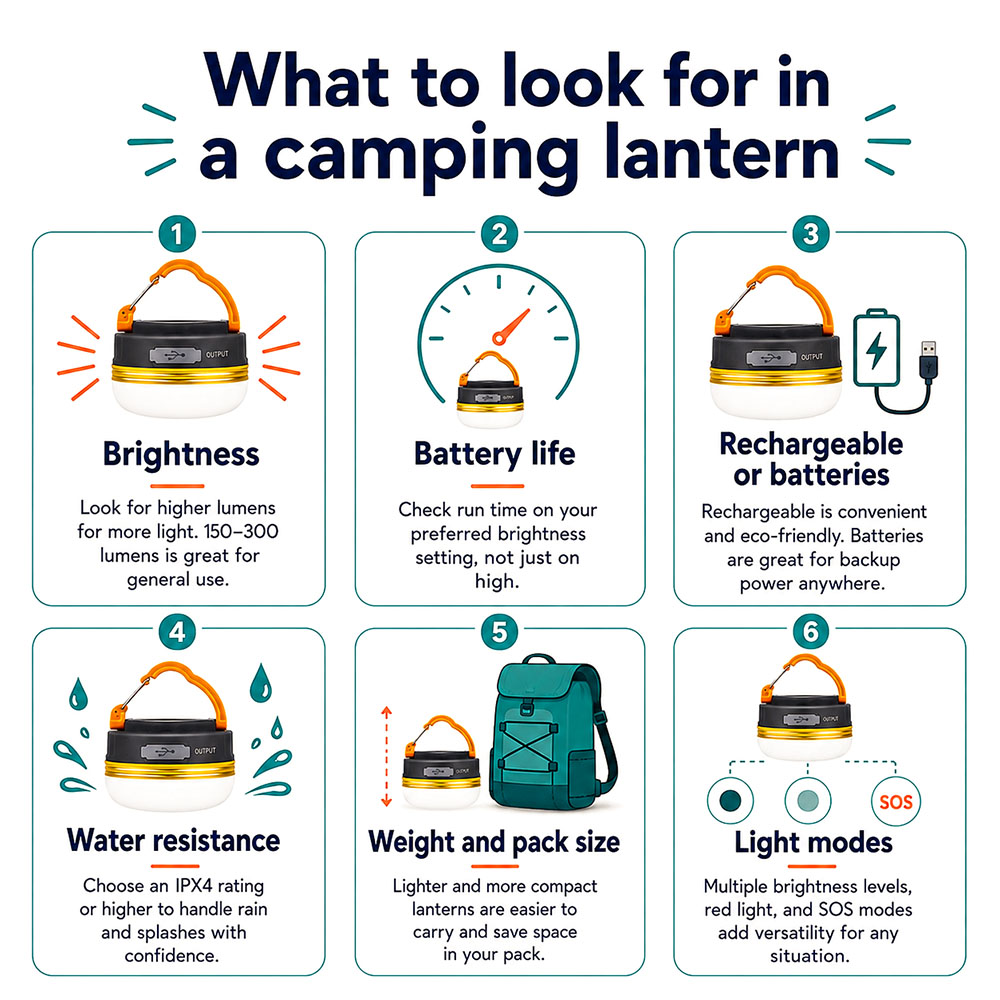
Choose a lantern by brightness, runtime, power source, water resistance, pack size and useful light modes.
The best camping lantern for one person may not suit another. A family on an electric hook-up pitch has different needs from a backpacker walking the West Highland Way, and both have different needs from someone building a household power-cut kit. Use the sections below to decide which features matter most for your camping style.
A good camping lantern is not just the brightest on paper. We considered how each lantern performs under normal camping conditions: how easy it is to carry, hang, charge, dim, protect from rain, use on a tent porch, and store between trips. We also considered whether the lantern makes sense for UK campers, rather than focusing solely on ideal laboratory specifications.
Walks4all takeaway: choose the lantern for the job, not just the highest number on the box. A compact light belongs in a rucksack for wild camping, while a brighter table lantern belongs in the family camping box.
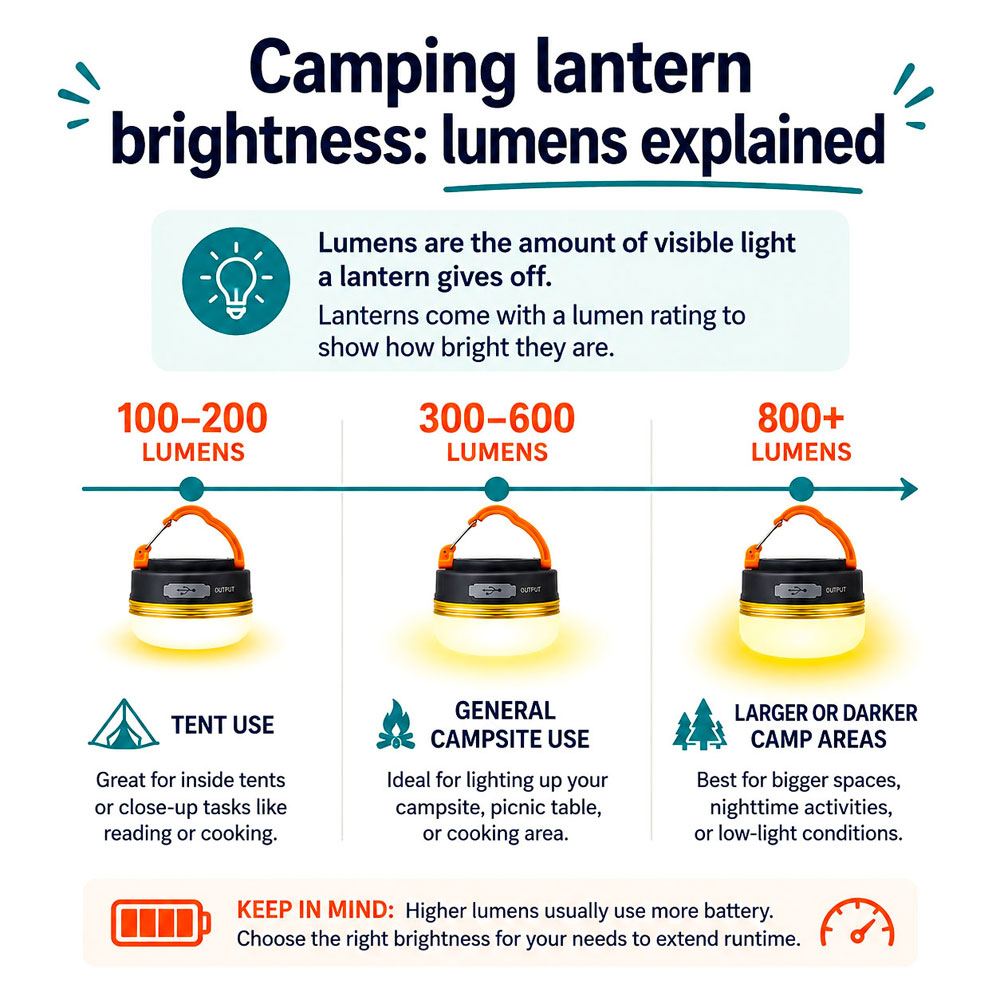
Lumens compare brightness, but runtime, diffusion and light spread decide how useful a lantern feels.
Most camping lanterns include a lumen rating on the packaging or product page. A lumen is a unit that measures the total amount of visible light emitted by a lamp. In simple terms, more lumens usually mean a brighter lantern. If one lantern is rated at 100 lumens and another at 1,000 lumens, the 1,000-lumen lantern can produce far more light at its maximum setting.[1] [2]
However, lumens are only part of the story. Lumens tell you how much light the lantern emits overall, not how pleasant that light feels, how far it reaches, how evenly it spreads, or how quickly it drains the battery. A well-diffused 300-lumen lantern can feel more useful around a tent than a harsh 600-lumen lantern that shines directly into people's eyes.
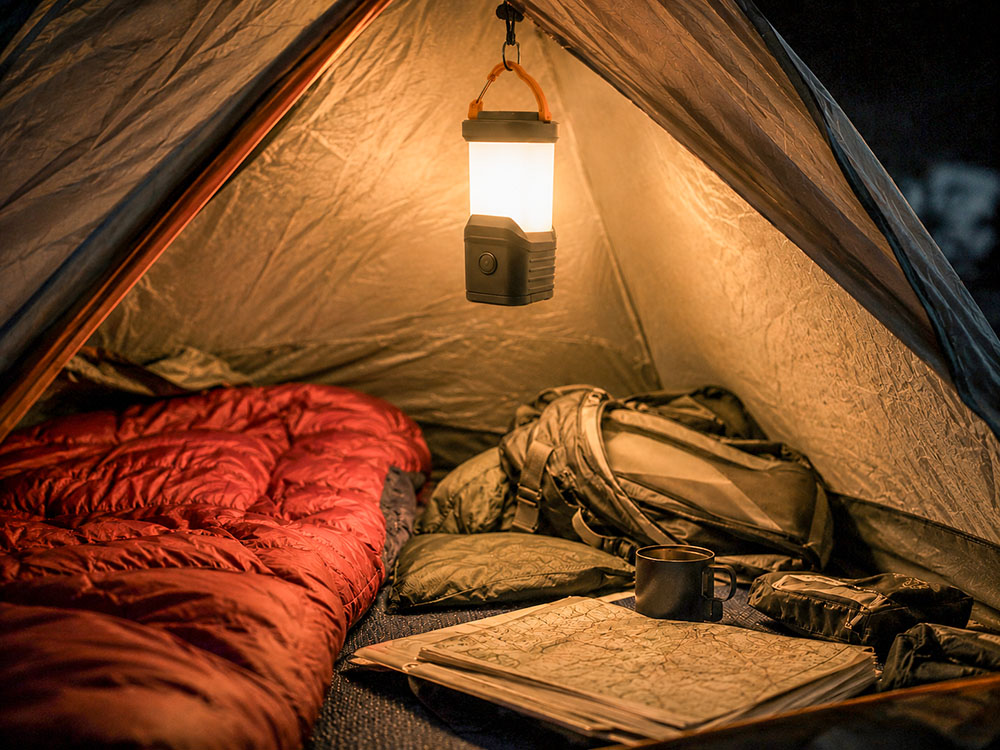
Inside tents, hang a compact LED lantern overhead for soft light around your rucksack and sleeping kit.
It also helps to understand the difference between lumens, lux and watts. Lumens measure total visible light. Lux measures how much light falls on a surface, which depends on distance and beam spread. Watts measure power consumption, not brightness. Older shoppers sometimes used watts as a shortcut for brightness because incandescent bulbs were predictable, but with LED lanterns you should look at lumens and runtime instead.[3]
| Use case | Suggested lumen range | Why this range works |
| Low-level night light inside a tent | 5-50 lumens | Enough to find a zip, bottle or phone without waking everyone. |
| Small tent interior | 100-200 lumens | Good for changing clothes, reading and organising kit. |
| Solo or two-person camp area | 200-400 lumens/td> | Useful for cooking nearby and general camp jobs. |
| Family tent porch or camp table | 400-600 lumens | A strong balance of brightness and battery life. |
| Larger group pitch or cooking area | 800-1,000 lumens | Useful for bigger areas, though runtime will drop on high. |
| Large outdoor base camp | 1,500+ lumens | Best for wide-area lighting, usually from fuel lanterns or larger powered LEDs. |
For most UK campers, 300-600 lumens is the sweet spot for a main rechargeable LED lantern. Backpackers can usually manage with 60-200 lumens, especially if they also carry a head torch. Family and group campers may want a brighter lantern plus smaller personal lights.
Lantern runtime is usually quoted at the lowest brightness setting, because that gives the longest and most impressive figure. A lantern advertised as lasting 100 or 200 hours may only achieve that in a very dim mode. On high, the same lantern may last a few hours.
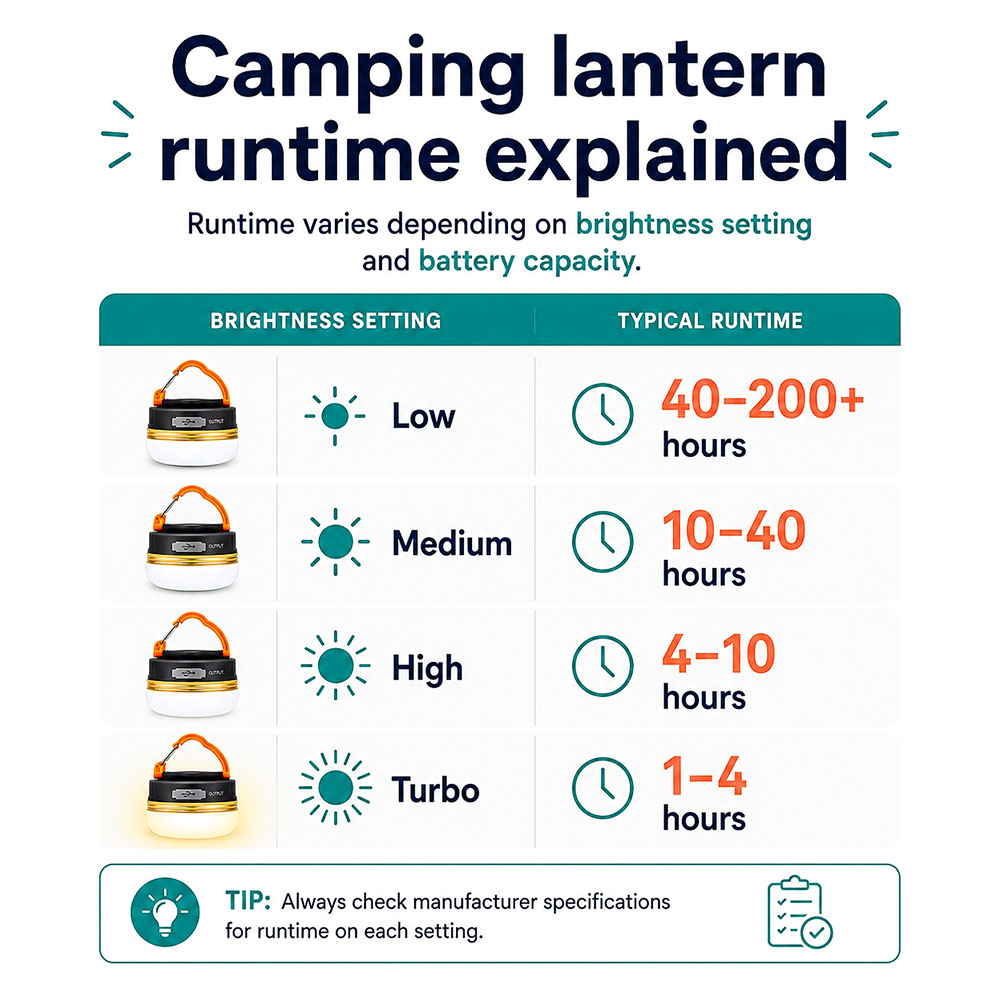
Runtime drops as brightness rises, so compare low, medium and high settings before relying on one lantern all evening.
When comparing lanterns, look for mode-by-mode runtimes. A useful product page should show high, medium and low output figures. Medium output is often the most realistic setting for a normal evening at camp. High output is useful for cooking, pitching late, finding lost items or dealing with emergencies, but it is rarely the setting you will use all night.
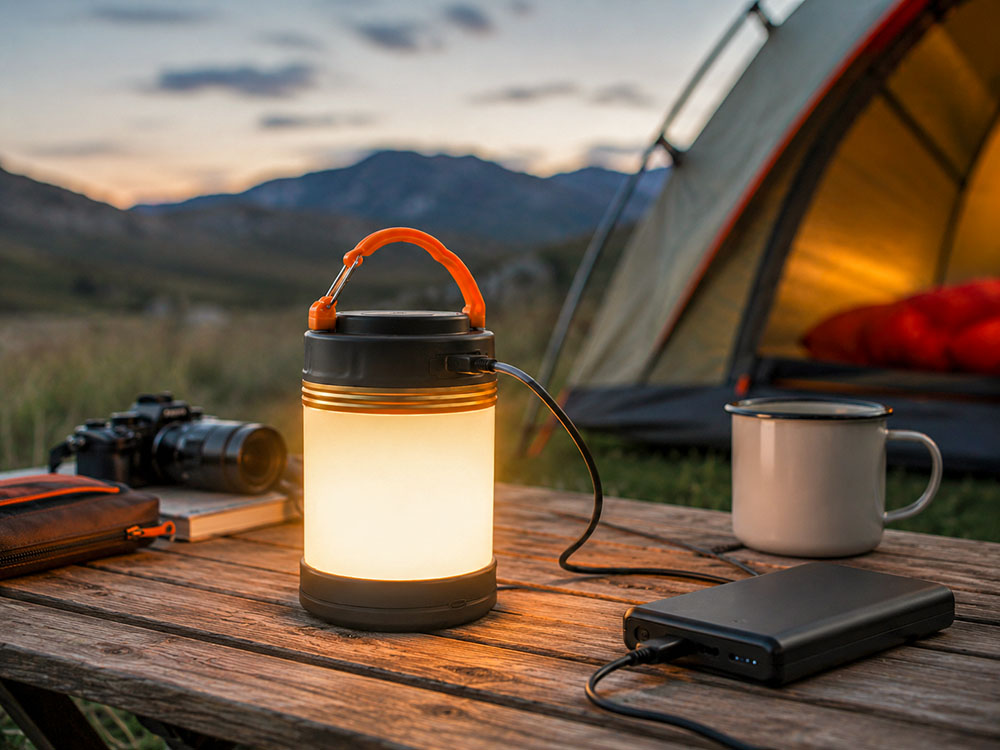
A rechargeable lantern and power bank can keep lights, phones and head torches topped up on longer camps.
Cold weather, older batteries, repeated charging cycles, and using a lantern as a power bank can all reduce usable runtime. For a weekend trip, a main lantern should ideally provide at least one full evening of useful light without needing a recharge. For longer trips, plan for a power bank, a solar panel, spare batteries, or access to mains charging.
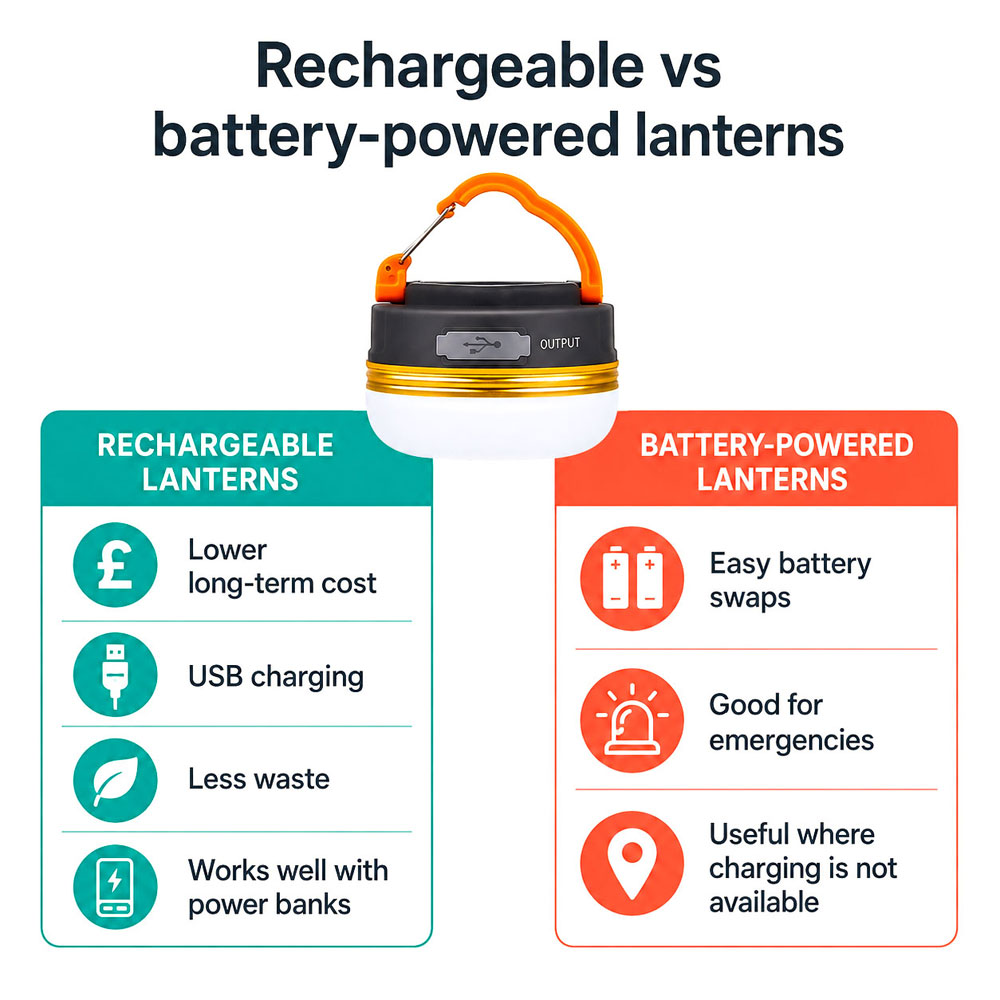
Rechargeable lanterns suit repeat trips; battery-powered models remain useful where quick swaps matter.
The power source is one of the most important buying decisions. It affects weight, reliability, long-term cost, environmental impact and how easy the lantern is to use on longer trips.
| Power type | Best for | Main advantages | Main drawbacks |
| USB rechargeable LED | Most campers and walkers | Convenient, lower waste, works with power banks and car chargers | Needs charging discipline; battery eventually ages |
| AA/AAA/D battery LED | Emergency kits and occasional camping | Instant battery swaps; easy to store spares | Ongoing battery cost and waste unless using rechargeable cells |
| Solar rechargeable | Backup and longer sunny trips | Can top up away from mains | Slow and weather-dependent in the UK |
| Hand-crank backup | Emergency situations | Useful if battery is flat | Hard work for small amounts of charge |
| Gas or liquid fuel | Large outdoor areas and experienced campers | Very bright; independent from USB charging | Hot, heavy, fuel required, not for enclosed tent use |
| Plug-in/mains lantern | Caravan awnings, campsites with electric hook-up and home use | Unlimited runtime while plugged in | Not useful off-grid and less flexible outdoors |
Walks4all takeaway: for regular UK camping, a rechargeable LED lantern is the best default choice. It pairs well with a USB power bank, reduces battery waste, and is safer to use inside tents than a fuel lantern. Replaceable-battery lanterns still make sense for emergency cupboards because spare batteries can be stored separately and swapped quickly. Fuel lanterns remain useful for very bright outdoor base-camp lighting, but they require more care.
Rechargeable lanterns usually use lithium-ion or lithium-polymer batteries. They are convenient because you can top them up using a wall charger, a car USB socket, a portable power station or a power bank. Lanterns and power banks work well together on longer trips: a small lantern may need only a modest top-up, while a large campsite lantern can draw much more power from your battery pack.
USB-C is now the most convenient charging standard because many phones, head torches and power banks use the same cable. Some good lanterns still use older micro-USB or proprietary charging leads, so check the cable type before you travel and avoid forcing damaged connectors.
If a lantern can also act as a power bank, remember that the energy has to come from somewhere. Charging a phone from your lantern reduces the lantern's runtime. This is useful in an emergency, but on longer trips a dedicated power bank is usually better for phones, cameras, GPS devices and rechargeable head torches.
Replaceable-battery lanterns remain useful, especially for emergency lighting. AA batteries are easy to buy, store and replace. D-cell lanterns can provide long runtimes but are bulkier and heavier. AAA lanterns are compact but usually have lower capacity.
For regular campers, rechargeable AA batteries can reduce waste and running costs. For emergency storage, high-quality alkaline or lithium batteries have longer shelf lives, but they should still be checked periodically. Never leave old batteries in a lantern for months or years without checking them, as leaking cells can corrode the contacts and ruin the lantern.
LED lanterns are now the best choice for most people. They are efficient, cool-running, compact, and safe to use around tents when used sensibly. They are also available with dimming, warm light, red light, and rechargeable batteries. They work well in family environments because there is no open flame and no fuel handling.[4]
Gas and liquid-fuel lanterns still have a place. They can be extremely bright and effective for outdoor base camps, fishing sessions, and large-group areas. They also have a traditional camping feel that some people love. The downsides include weight, heat, fuel costs, mantles, glass globes, and safety requirements. They must be used with ventilation and should not be used inside sleeping areas or enclosed tents.
Walks4all takeaway: choose LED unless you specifically need fuel-lantern brightness and know how to use a fuel lantern safely. For use inside tents, children's camping, backpacking and emergency home use, LED is always the better choice.
UK camping often means damp grass, drizzle, condensation and the occasional downpour. A camping lantern does not always need to be fully waterproof, but it should withstand normal campsite moisture. Look for an IP rating on the product page. IP stands for Ingress Protection and indicates resistance to dust and water entering an electrical enclosure.[5]
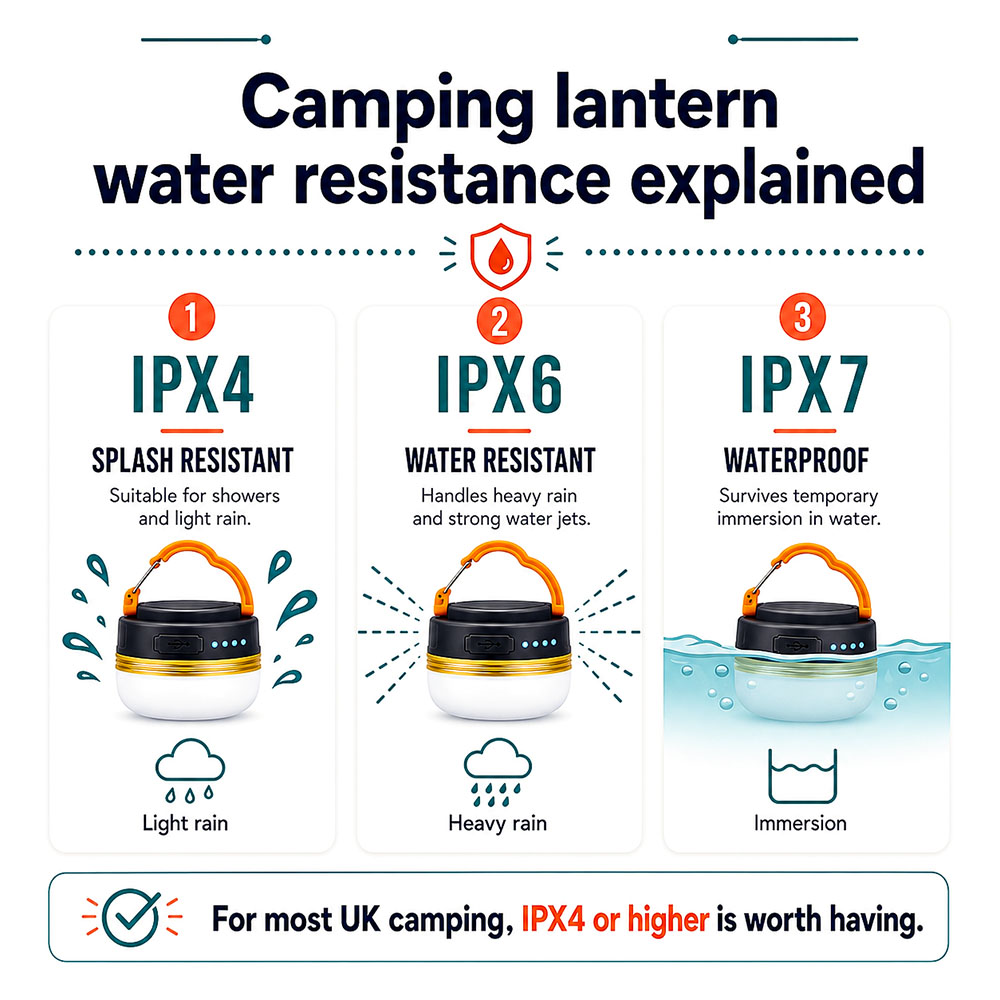
IPX ratings show water resistance: IPX4 handles splashes, while higher ratings suit heavier rain or very wet trips.
An IP rating may look like IPX4, IP65 or IP67. The first number indicates dust protection. The second number indicates water protection. If the first digit is replaced with X, it simply means the product has not been formally rated for dust protection. For example, IPX4 means the lantern has a splash-proof rating but no stated dust rating.
| Rating | Plain-English meaning | Camping relevance |
| IPX4 | Splash resistant from any direction | Good minimum for normal UK camping and damp tent porches. |
| IPX5 | Protected against water jets | Better for exposed wet camps and rougher use. |
| IPX6 | Protected against powerful water jets | Heavy rain resistance, though not necessarily submersible. |
| IPX7 | Can survive temporary immersion under specified conditions | Useful for canoeing, kayaking or very wet trips. |
| IP65 | Dust-tight and water-jet resistant | Good for dusty campsites, beaches and wet outdoor use. |
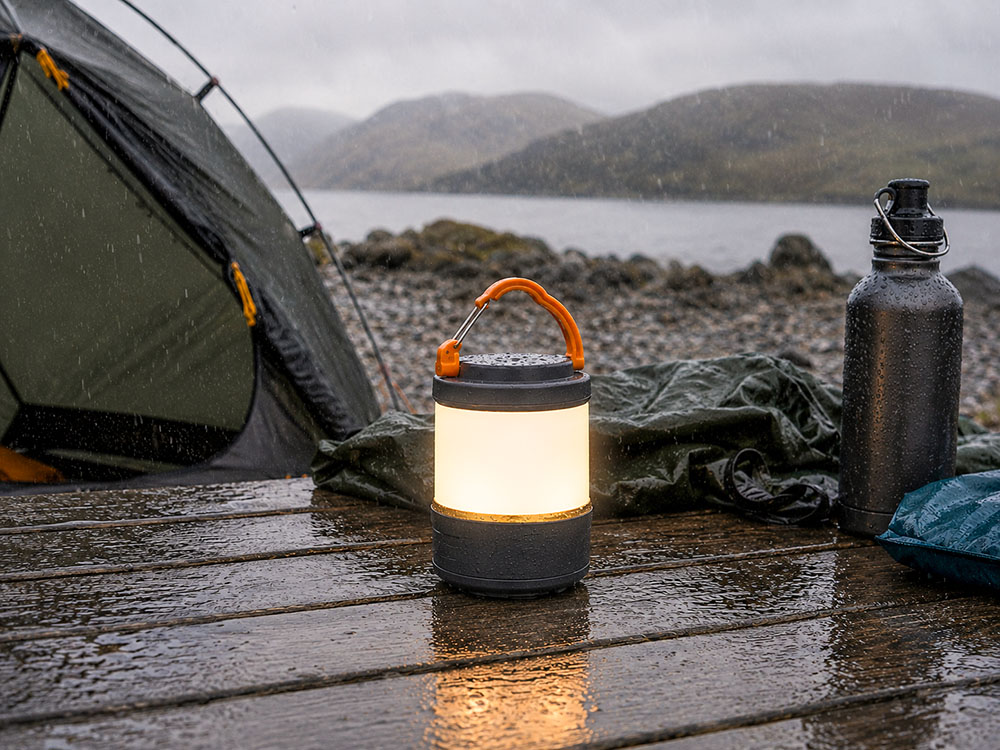
For UK camping, splash resistance helps protect lanterns from wet tables, condensation, drizzle and damp tent porches.
Water-resistant does not mean indestructible. Charging ports, battery doors and rubber seals must be closed properly. If a lantern gets soaked, dry it fully before charging. Never plug in a wet USB connector.
Light quality is one of the biggest differences between a cheap lantern and a good one. A very cool white LED can look bright but also feel harsh and uncomfortable around a tent. Warm white light is usually more relaxing in the evening and creates a more pleasant campsite atmosphere.[7] [8] [9]
Colour temperature is measured in kelvin (K). Lower numbers appear warmer and more amber; higher numbers appear cooler and more blue-white. Around 2,700K-3,000K is warm and comfortable. Around 4,000K-5,000K appears brighter and more clinical. Cooler light can be useful for cooking or repairs, while warmer light is better for sitting, reading and winding down.
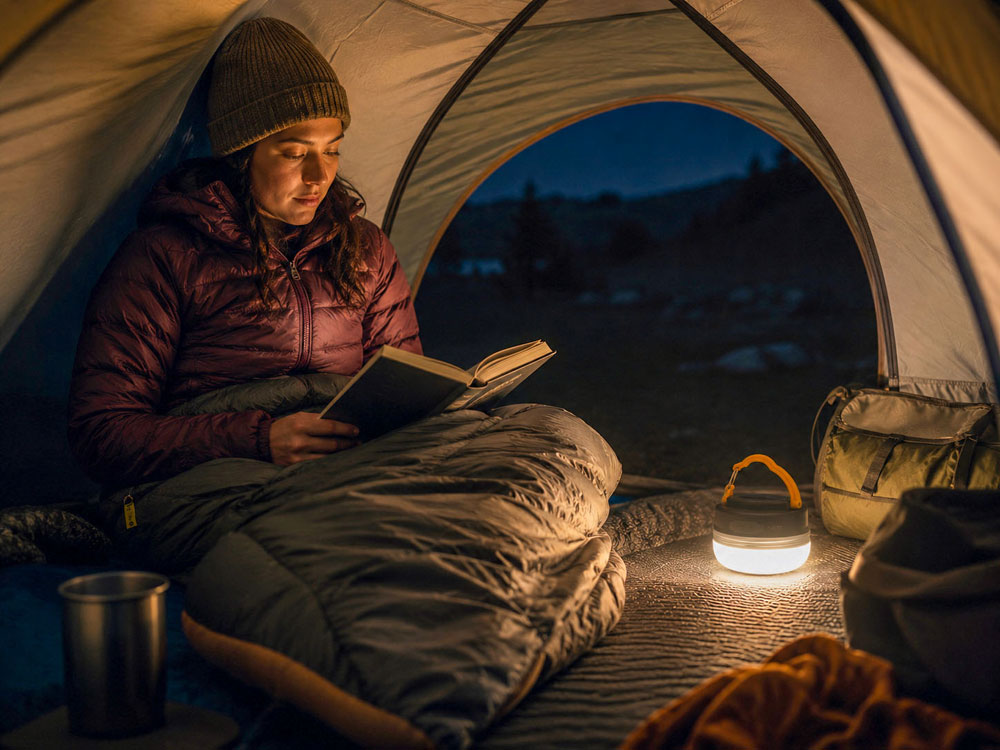
Warm lantern light is comfortable for reading and relaxing inside a tent without the glare of a head torch.
Red light modes can be useful at camp because they are less dazzling and help preserve night vision. They are especially handy for late-night toilet trips, map checks, astronomy, wildlife watching, and moving around a shared tent without waking everyone. They are not a replacement for a bright white task light when cooking or pitching.
Lanterns differ from torches in that they are designed to spread light rather than project it in a narrow beam. A good camping lantern uses a diffuser or lantern body to distribute light evenly. This matters because a very bright LED without adequate diffusion can be unpleasant to look at and can create harsh shadows.
For tent interiors, look for soft, 360-degree lighting or a lantern that can be hung overhead. For cooking, a slightly brighter lantern with good diffusion is helpful, as it illuminates the stove, table and nearby kit without creating harsh glare.
Weight matters differently depending on how you camp. A 500 g lantern is perfectly reasonable for a car-camping box but much too heavy for many backpacking trips. Backpackers should think in terms of grams, packed size, and whether the lantern adds enough comfort to justify its place alongside a head torch.
| Camping style | What to prioritise |
| Backpacking and wild camping | Under 200 g, compact body, rechargeable battery, simple hanging loop. |
| Family camping | Higher brightness, stable base, long runtime, multiple lights if possible. |
| Campervan and car camping | Rechargeable lantern with power bank function and good table light. |
| Emergency home kit | Long shelf life, replaceable batteries or reliable recharge schedule. |
| Group/base camp | High output, rugged build, stable placement and safe power source. |
A lantern is only useful if you can direct the light where you need it. Consider the hanging and mounting options before buying. A top loop or hook is useful inside tents, while a stable base is better for tables. Magnets can be excellent in vans, cars and workshops, but they are less useful in fabric tents.
Simple controls matter when it is dark, cold or raining. Some lanterns use a single button with short presses, long presses and shake controls. Others use a pull-up body or a rotary dial. The best option depends on your patience and use case. Families and emergency kits benefit from simplicity; regular campers may appreciate more modes.
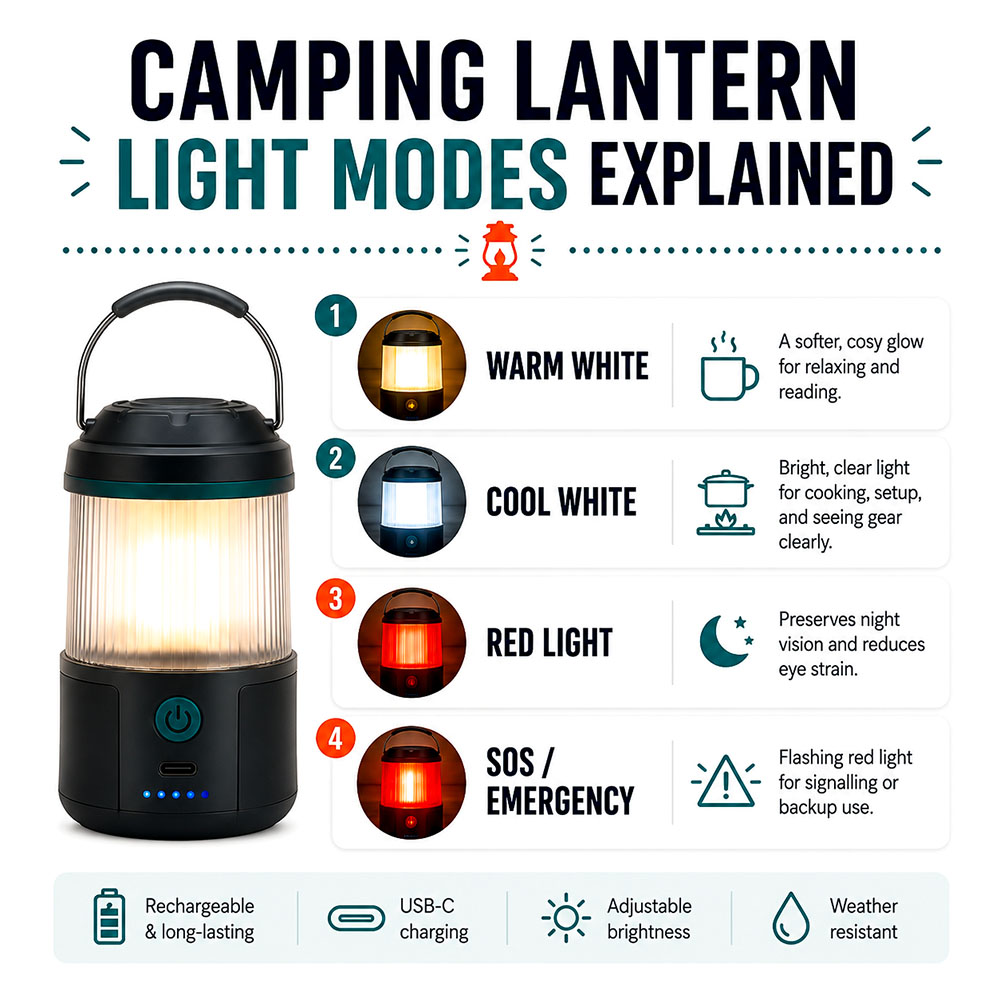
Warm white, cool white, red and SOS modes suit different camp tasks, from cooking to low-disturbance night use.
Dimming is more important than many people realise. A lantern with only one bright setting can be annoying in a tent. A good dimmable lantern lets you use high output for tasks and a low glow for relaxing or sleeping. Memory modes can be helpful if the lantern turns on at the previous setting rather than blasting at full brightness at midnight.
LED lanterns are generally safe when used responsibly, but they still contain batteries, charging ports and electronics. Keep them dry while charging, use reputable charging cables, avoid covering them with bedding or clothing, and do not leave damaged rechargeable devices unattended.
Fuel lanterns require much more care. They can produce heat, use combustible fuel and require proper ventilation. They should never be used inside a sleeping tent, near tent fabric, in a closed vehicle, or anywhere carbon monoxide and fumes could build up. Keep them stable, keep children away from hot surfaces, and allow them to cool before packing.[6]
The cheapest lantern is not always the best value. A budget lantern may be perfect for a power-cut cupboard or an occasional camping trip, but frequent campers will often get better value from a rechargeable lantern with a stronger build, better light control and a longer usable life.
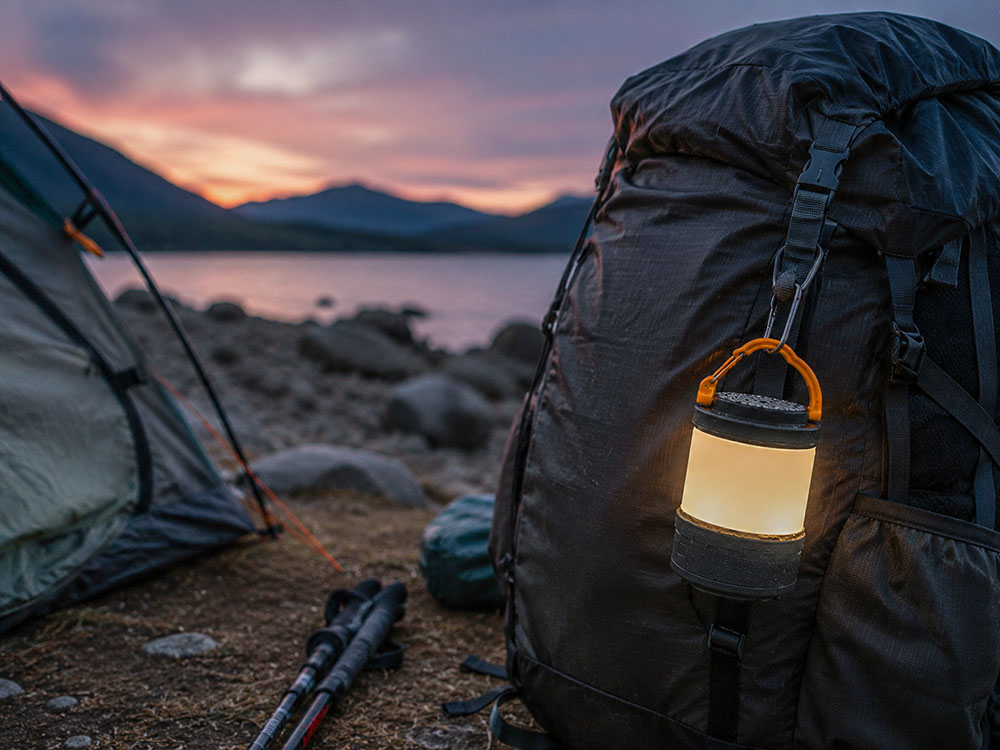
For backpacking, choose a compact lantern that clips to a rucksack and packs safely in a dry bag.
Think about the cost per trip. If you camp once a year, a simple battery lantern or a multi-pack may be enough. If you camp every month, a better rechargeable lantern will usually pay for itself through convenience, battery savings and reliability. Also consider whether you need one excellent lantern or several cheaper lights spread around a family tent.
Walks4all takeaway: do not buy on brightness alone. A lantern that is easy to dim, easy to hang, and reliable in damp weather is often better value than a cheaper light that only looks good on paper.
| Camper type | Suggested setup |
| Solo backpacker | Head torch plus a compact lantern such as the Black Diamond Moji R+ or Ledlenser ML4 Mini. |
| Couple on weekend camps | One compact rechargeable lantern for the tent plus head torches for walking around camp. |
| Family camping | One main lantern such as the Lepro 3 in 1 or LE 1000LM, plus smaller backup lights for bedrooms and night-time trips across camp. |
| Campervan or car camper | A rechargeable lantern with USB output such as the Ledlenser ML6, LE 1000LM or Lepro 1300LM. |
| Emergency home kit | A backup lantern such as the Mesqool CL1000, plus a charged rechargeable lantern and spare cables. |
| Large group or fishing camp | A brighter rechargeable lantern such as the Lepro 1300LM, with a second lower-level light for inside the tent. |
Camping lanterns last longer when they are cleaned, dried and stored properly. The end of a trip is often when people throw a damp lantern into a box and forget about it. That is when corrosion, battery leakage and charging port problems begin. A few minutes of care after each trip can keep a lantern reliable for years.
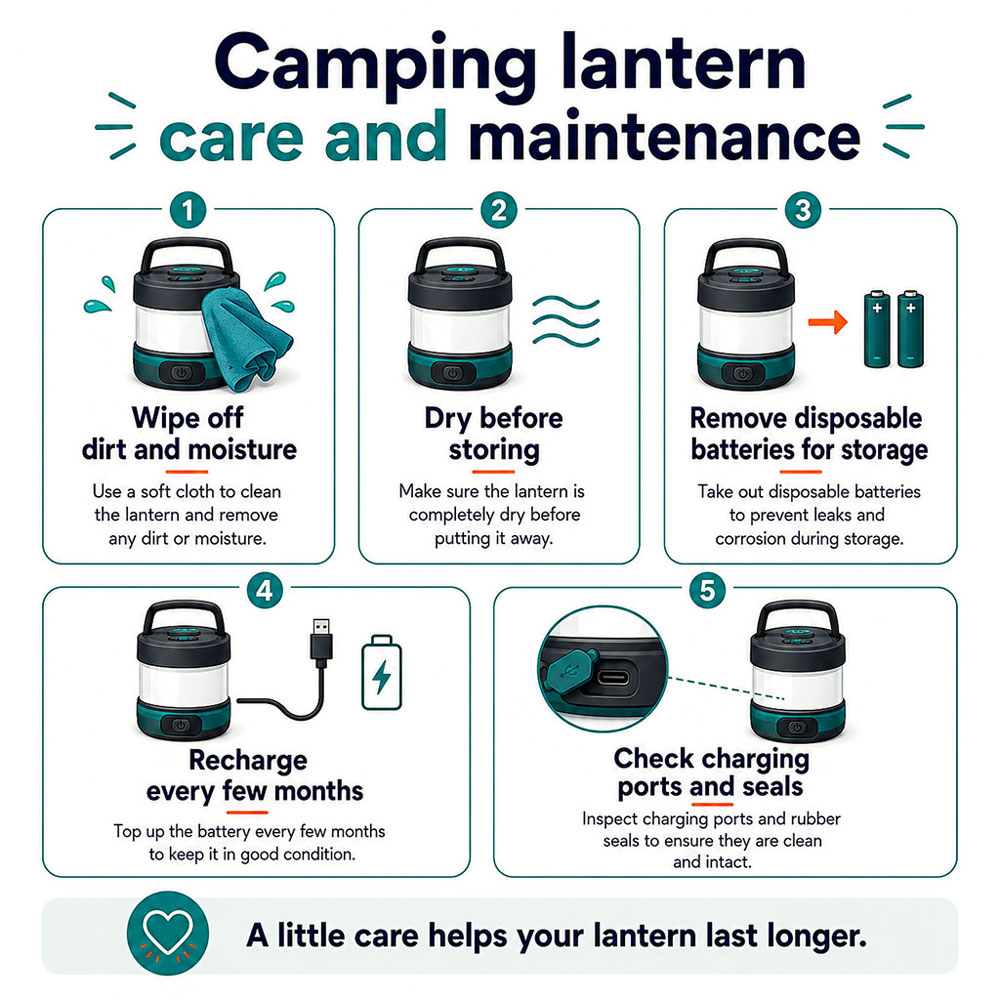
Clean, dry and recharge camping lanterns after trips, and remove disposable batteries before long-term storage.
Rechargeable lanterns are convenient, but they depend on healthy batteries and clean charging ports. Use a suitable-quality cable and charger, avoid charging in wet conditions, and do not force a damaged connector. If the lantern has a rubber port cover, ensure it is properly closed before taking the light outside.
For longer trips, pair your lantern with a power bank. A power bank can recharge a lantern, phone, GPS device or head torch, but capacity should be planned carefully. A small power bank may be sufficient for a compact lantern; family camps and multi-day trips may require a larger power bank or a portable power station.
Fuel lanterns require extra attention. Before each trip, check mantles, seals, fuel levels and the glass globe. Carry spare mantles if the lantern uses them. Store fuel separately and follow the manufacturer's instructions. After use, allow the lantern to cool completely before packing it away.
The right camping lantern depends on how you camp. Backpackers and wild campers usually need something compact, lightweight and easy to hang inside a tent, while family campers benefit from a brighter lantern with a stable base, long runtime and simple controls. Car campers and campervan users can carry more weight, so power-bank functions, higher output and larger batteries become more useful.
Walks4all takeaway: for most campers, the best lantern is a rechargeable LED model with adjustable brightness, a comfortable warm-white light, reliable runtime and sufficient water resistance for damp UK conditions. My overall pick remains the Ledlenser ML6 because it combines brightness, control, build quality and practical mounting options. But the best choice is the one that suits your trip: a small lantern for the rucksack, a brighter light for the family table, and a dependable backup in the essential kit.
For most UK campers, the best choice is a rechargeable LED lantern with around 300-600 lumens, dimming controls, decent runtime and at least splash resistance. The Ledlenser ML6 is our top all-round recommendation because it works well as a main camp lantern without being harsh or awkward to position, although it is not the cheapest.
A small tent may only need 100-200 lumens. A family table or porch is better with 400-600 lumens. Larger group areas may need 800-1,000 lumens or more, but high output uses battery power quickly.
Rechargeable lanterns are usually better for regular camping because they are convenient and reduce battery waste. Lanterns with replaceable batteries are still useful for emergency kits because you can store spare batteries separately and swap them instantly.
LED camping lanterns are generally the safest option for use inside tents when used sensibly. Do not use gas, propane, or liquid-fuel lanterns inside sleeping tents or other enclosed spaces because of the risks of heat, fumes, and fire.
IPX4 means the lantern is resistant to splashing water from any direction. It is a suitable minimum rating for typical UK camping, but it does not mean the lantern can be submerged.
A head torch is best for walking, pitching and hands-free tasks. A lantern is better for shared light around a tent, table or cooking area. Many campers use both.
Bright white light can attract insects, especially in warm weather. Warmer light, lower brightness and careful placement away from the tent door can help reduce annoyance.
Some rechargeable lanterns include a USB port and can charge phones or other small devices. This is useful in an emergency, but a dedicated power bank is better for regular phone charging.
LED is better for most campers because it is safer, lighter, cooler-running and easier to recharge. Gas and liquid-fuel lanterns are useful when you need very bright outdoor lighting and are comfortable handling fuel safely.
Clean and dry the lantern, remove disposable batteries, top up rechargeable models periodically, and store it in a cool, dry place. Check it before every trip rather than discovering a flat battery at camp.
The best camping lantern for wild camping is a compact, rechargeable model weighing around 200 g, with a simple hanging loop, dimming, and enough light for a small tent. The Black Diamond Moji R+ and Ledlenser ML4 Mini are better suited to wild camping than larger family lanterns.
A family tent is best served by one main rechargeable lantern for the table or porch, plus smaller lights or torches for bedrooms and night-time trips around camp. A lantern with detachable torches is especially useful for families.
You should not buy a camping lantern based on maximum brightness alone. Very bright lanterns drain batteries quickly and can feel harsh inside a tent. Dimming, beam spread, runtime and water resistance are usually more important.
A rechargeable LED lantern is the safest option because it does not use a flame or fuel. Fuel lanterns should be kept outside tents and campervans and well-ventilated.
Avoid lanterns without dimming, without clear runtime information, with poor hanging options, with weak weather protection, or with a charging port that does not close properly.
A lantern with USB output is worth it as an emergency backup, but it should not replace a dedicated power bank on longer trips, as charging a phone reduces the lantern's runtime.
The technical advice in this guide is supported by official lighting, safety, and environmental resources. NIST and the US Department of Energy support the explanations of lumens, candela, and LED efficiency. IEC guidance provides information on IP ratings. GOV.UK outdoor fire-safety guidance advises against using fuel lanterns in tents and other enclosed spaces. DarkSky International and sleep-lighting research support the preference for warmer, lower-intensity lighting in the evening.
Product recommendations are Walks4all's judgements based on practical camping use, product specifications and suitability for UK conditions. The references support the technical and safety guidance; they do not replace real-world product judgement.
Shop the Walks4all Amazon kit list
We've grouped some of the products mentioned in this article into our Amazon Storefront for convenience. As an Amazon Associate, we earn from qualifying purchases at no additional cost to you.
May 2026