By using this website, you agree to our use of cookies (needed to provide our website’s features) and our Terms of Use.
By: Andrew Forrest - July 2026
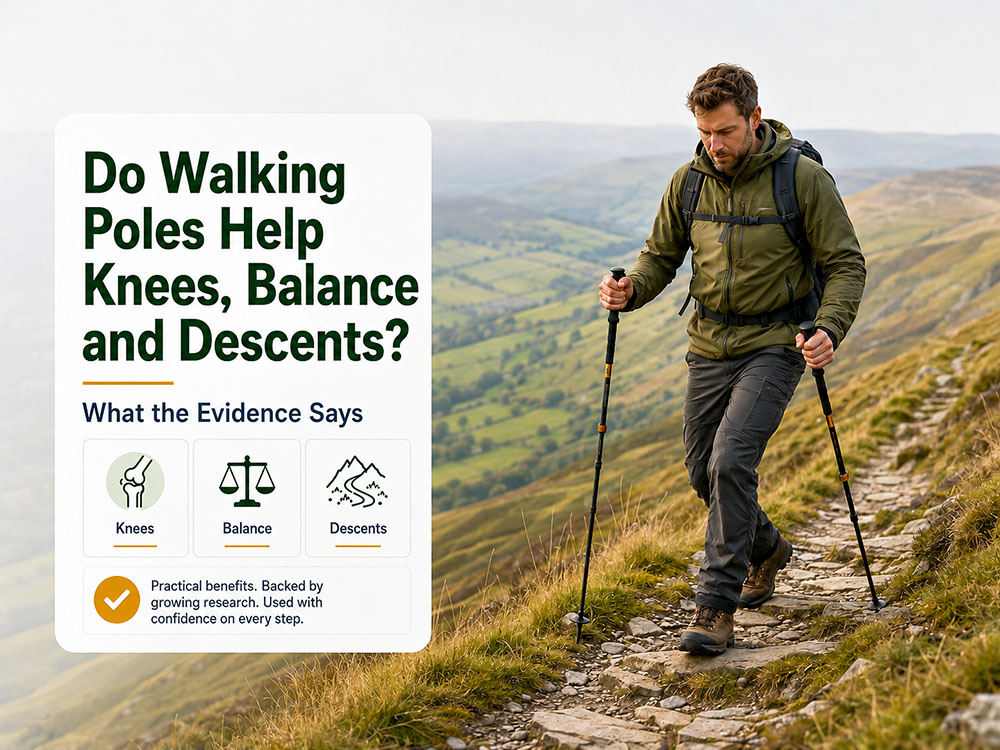
Walking poles may help some walkers share load, improve balance and feel more confident on descents, but they are not a cure for knee pain. Here is what the evidence suggests.
This page contains affiliate links. As an Amazon Associate, we earn from qualifying Amazon purchases at no additional cost to you. We may also earn commissions from other retailers, again at no additional cost to you.
Walking poles are often recommended for sore knees, slippery paths and steep descents. The truth is more useful but also more nuanced: poles may help some walkers by adding extra contact points, improving rhythm and reducing lower-limb loading in certain situations, especially on descents or when carrying a rucksack. They are not a cure for knee pain, nor do they guarantee pain relief. Good technique, suitable footwear, sensible pacing, fitness, route choice and appropriate medical advice still matter.[1]
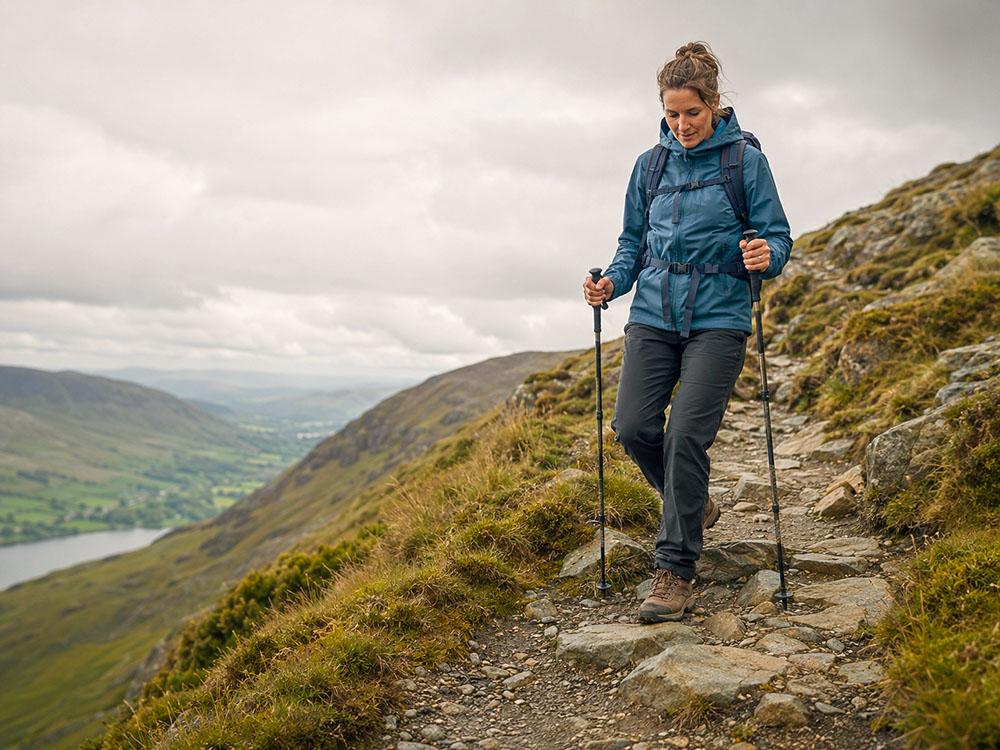
Walking poles are often most useful on descents, where short steps, controlled speed and good technique matter.
Walking poles may help some walkers by adding extra contact points, improving rhythm, and sharing some of the workload with the arms and upper body. They are most likely to be useful on descents, on uneven ground, and on longer walks with a daypack or rucksack.
The strongest case for poles is not 'walking poles fix bad knees'. It is more specific: poles can share some of the workload with your arms and upper body, provide extra points of contact, and may reduce certain knee or lower-limb loads in some downhill and load-carrying situations.[2] [3] [4]
For walkers seeking walking or hiking poles for bad knees, the practical takeaway is cautious but useful: poles are worth considering as a comfort and stability aid, especially for descents, uneven paths and longer walks with a pack, but persistent or worsening knee pain should not be ignored.
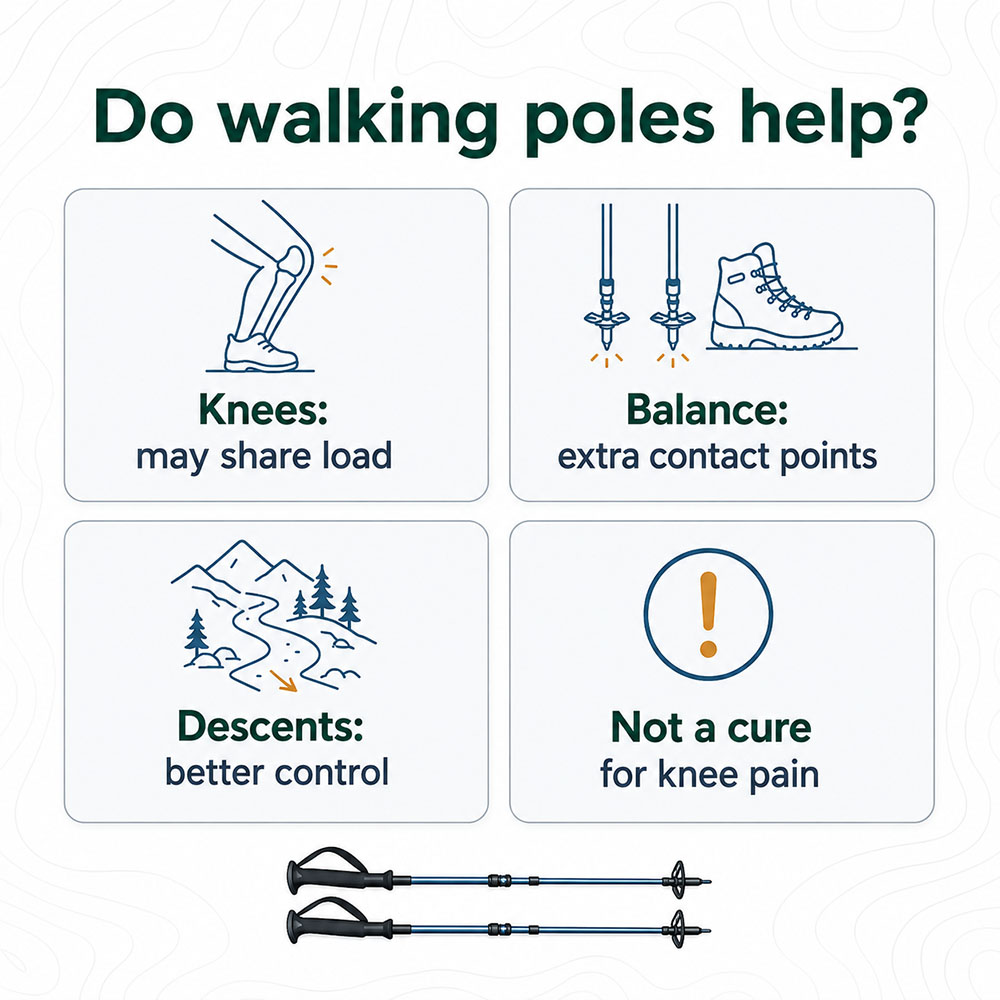
A quick answer graphic summarising what walking poles can help with and where claims should stay cautious.
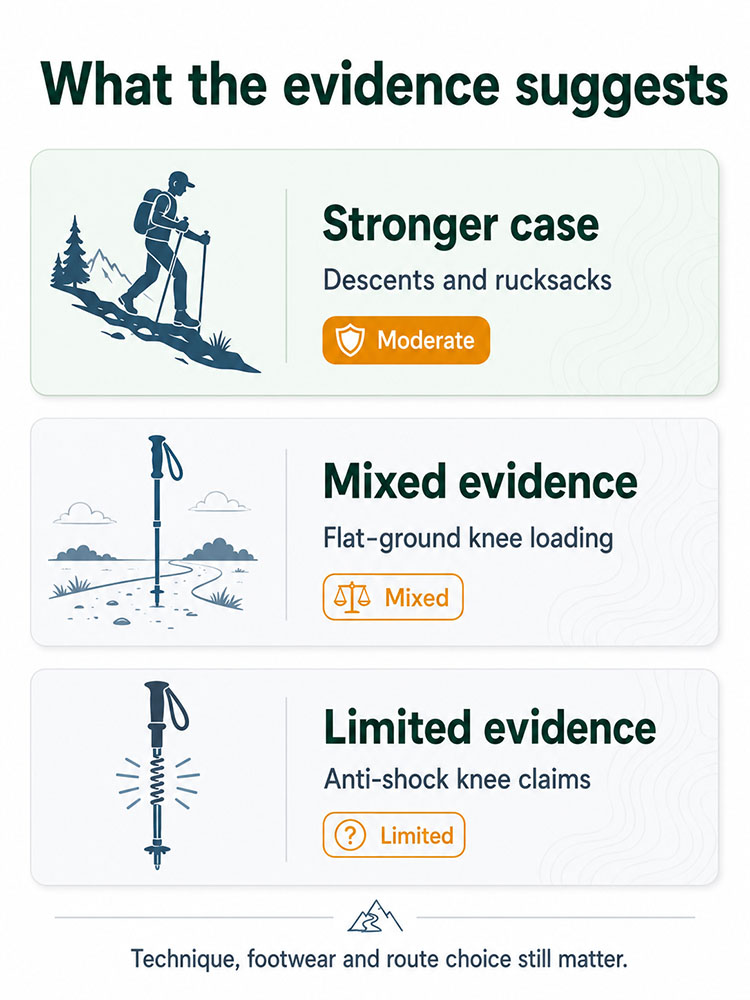
The evidence is strongest for descents and load-carrying, more mixed on flat ground and limited for anti-shock knee claims.
Walking poles are best thought of as a load-sharing and stability aid, not a medical treatment. Used well, they can help in four main ways.
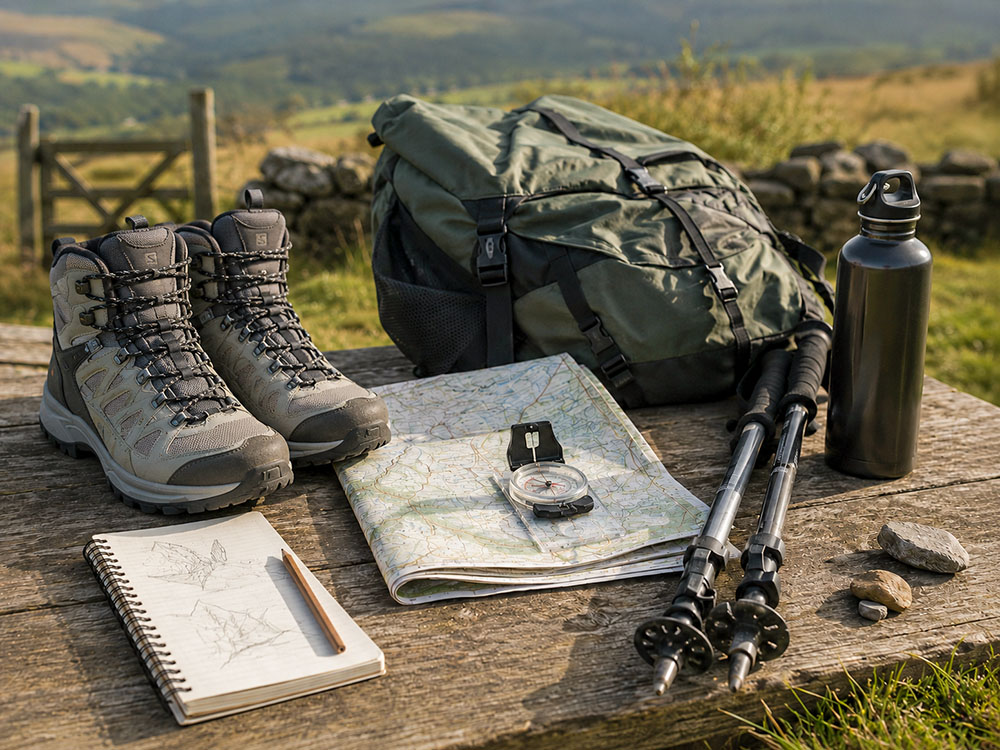
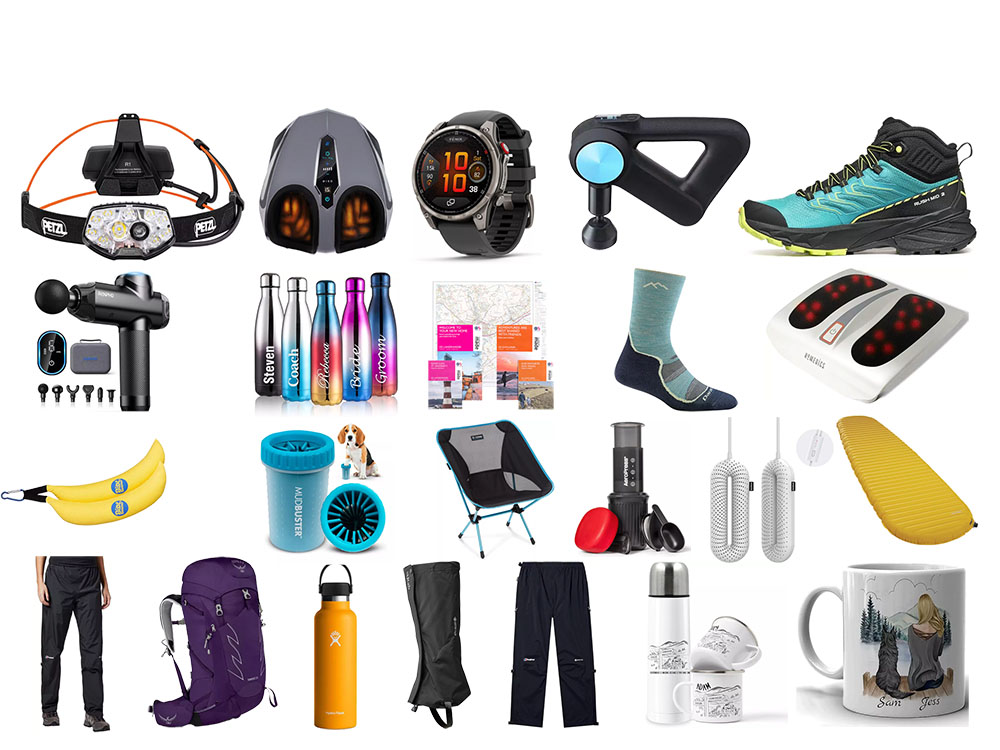
Comfort starts with the full walking setup: poles, footwear, navigation, pack weight and preparation.
With two poles, you often have three or four points of contact with the ground rather than one or two. That can make rough tracks, muddy fields, loose gravel, wet slabs and shallow stream crossings feel more stable.
This is where walking poles for balance make the most sense. You are not relying solely on your feet to sense and manage the ground. The poles can probe, brace and steady you, especially when visibility is poor or the surface is unpredictable.
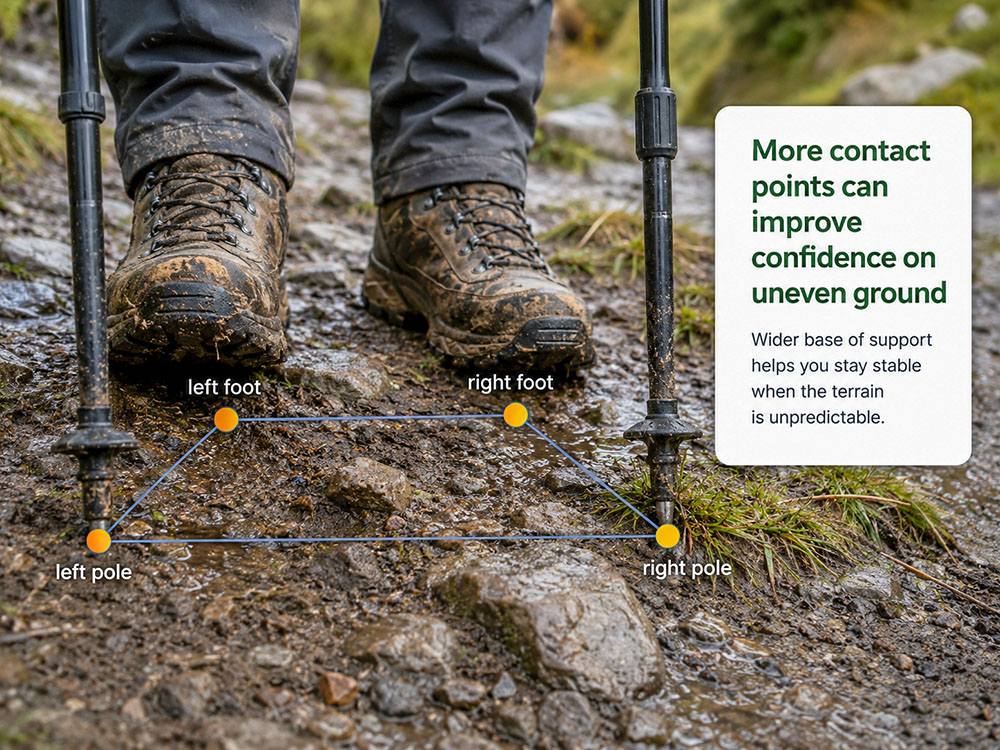
Two poles can widen your base of support and add confidence when the ground is wet, loose or uneven.
Poles allow your arms and shoulders to contribute to movement. This does not entirely remove body weight from your legs, but it can transfer some force through the poles into the ground. Instrumented-knee research suggests that using hiking poles can reduce knee contact forces, partly by transferring some ground reaction force through the arms rather than solely through the legs.[8] [9]
Basically, the poles can act a bit like handrails you carry with you, but only when you actively use them rather than just tapping them on the ground.
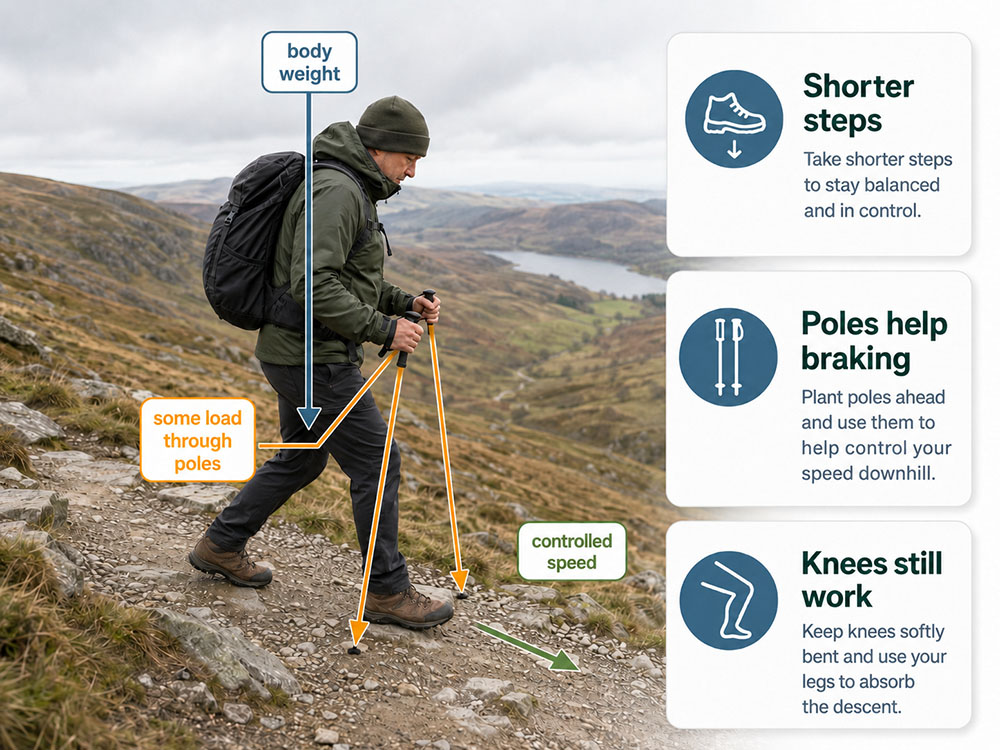
Poles can share some of the upper-body work on descents, but knees, footwear and technique still matter.
Many walkers find that poles help them settle into a steady rhythm, especially on long climbs, rolling paths and descents. That rhythm can reduce the stop-start, overstriding style that often leaves knees and thighs feeling more battered by the end of a walk.
The benefit of rhythm is hard to measure in a simple lab test, but it matters in practice. A smoother stride, shorter downhill steps and improved pacing can make a walk feel more controlled.
The evidence is most favourable when poles are used downhill or when carrying a load. Downhill walking increases braking forces and eccentric work in the quadriceps. A rucksack adds to the total load. Studies of downhill walking and load carriage suggest that poles can reduce certain lower-extremity forces and moments when used correctly.[2] [3] [4] [19] [20]
That does not mean every walker with knee pain will feel better immediately. It does mean that walking poles are among the clearest use cases for walking downhill.
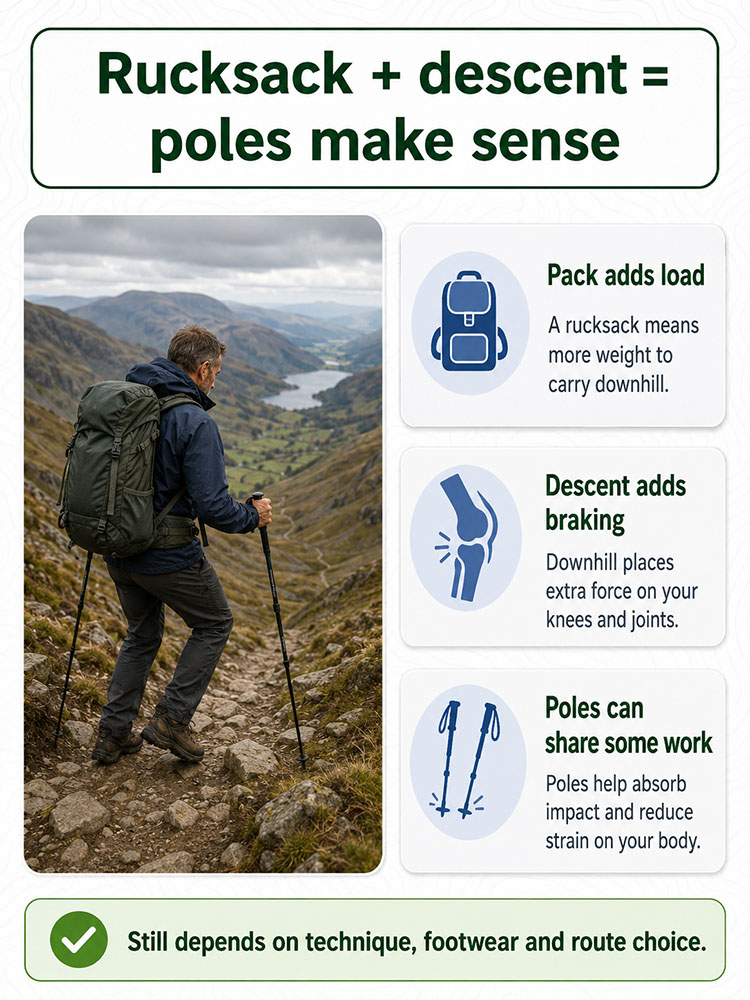
A pack adds load, and descents add braking demand, making walking poles especially useful when technique is sound.
Walking poles cannot guarantee relief from knee pain, injury prevention, or fall prevention. They are a tool, and their effectiveness depends on terrain, technique, pole length, footwear, fatigue, strength, walking speed, load, and the reason your knee hurts.
They also have drawbacks. Poles occupy your hands, can snag on rocks or roots, can be awkward around stiles, gates and scrambling ground, and can make your shoulders, wrists, or elbows work harder. For some walkers, that trade-off is worth it. For others, especially on flat, easy paths, poles may feel unnecessary.
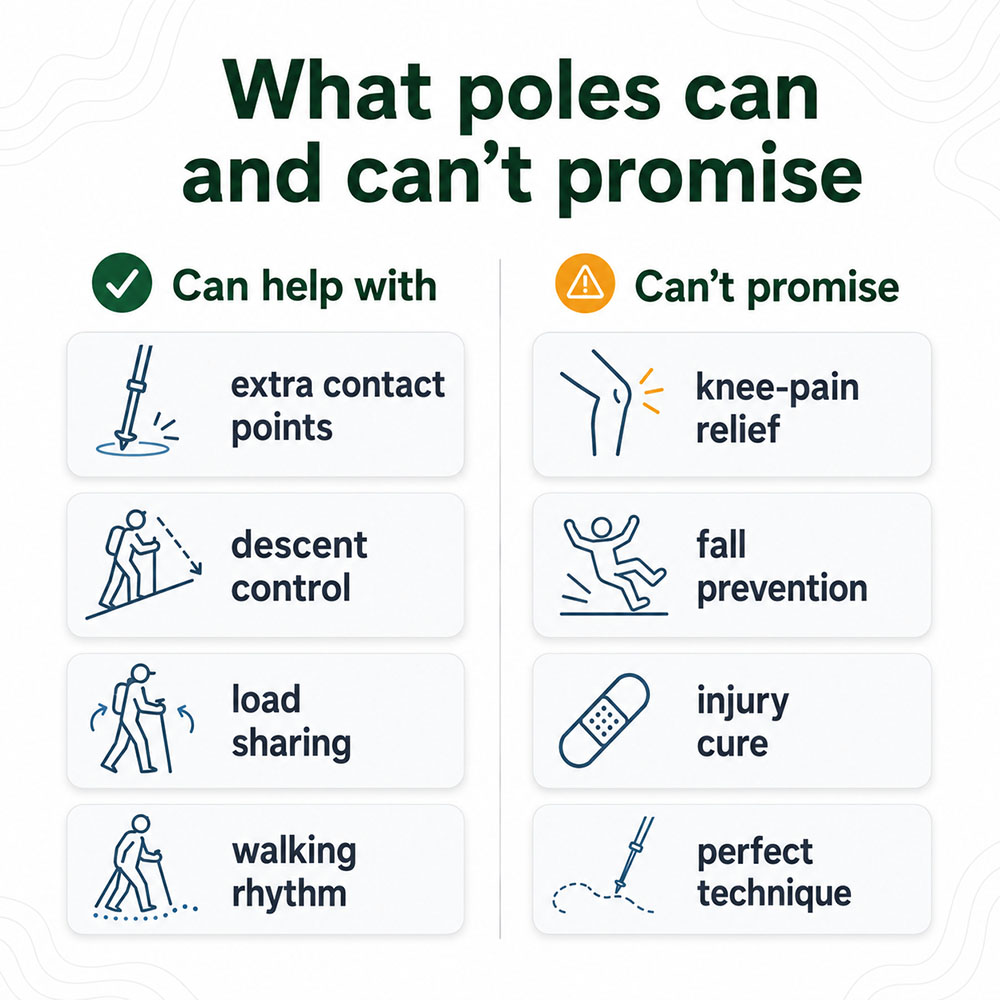
Walking poles are a practical support tool, not a guaranteed fix for knee pain, falls or injury prevention.
The most important limitation is that a reduction in a lab-measured force does not guarantee a reduction in pain. Pain is influenced by tissue sensitivity, previous injury, osteoarthritis, training load, sleep, stress, swelling, strength and many other factors. A systematic review of Nordic walking for pain and fatigue found mixed results and noted that effects may depend on the source of pain, the person's fitness level and the condition under study.[21]
Walks4all takeaway: So, 'do hiking poles help with knee pain?' They may help some people manage load and build confidence, especially when going downhill, but they should not be treated as a cure for knee pain.
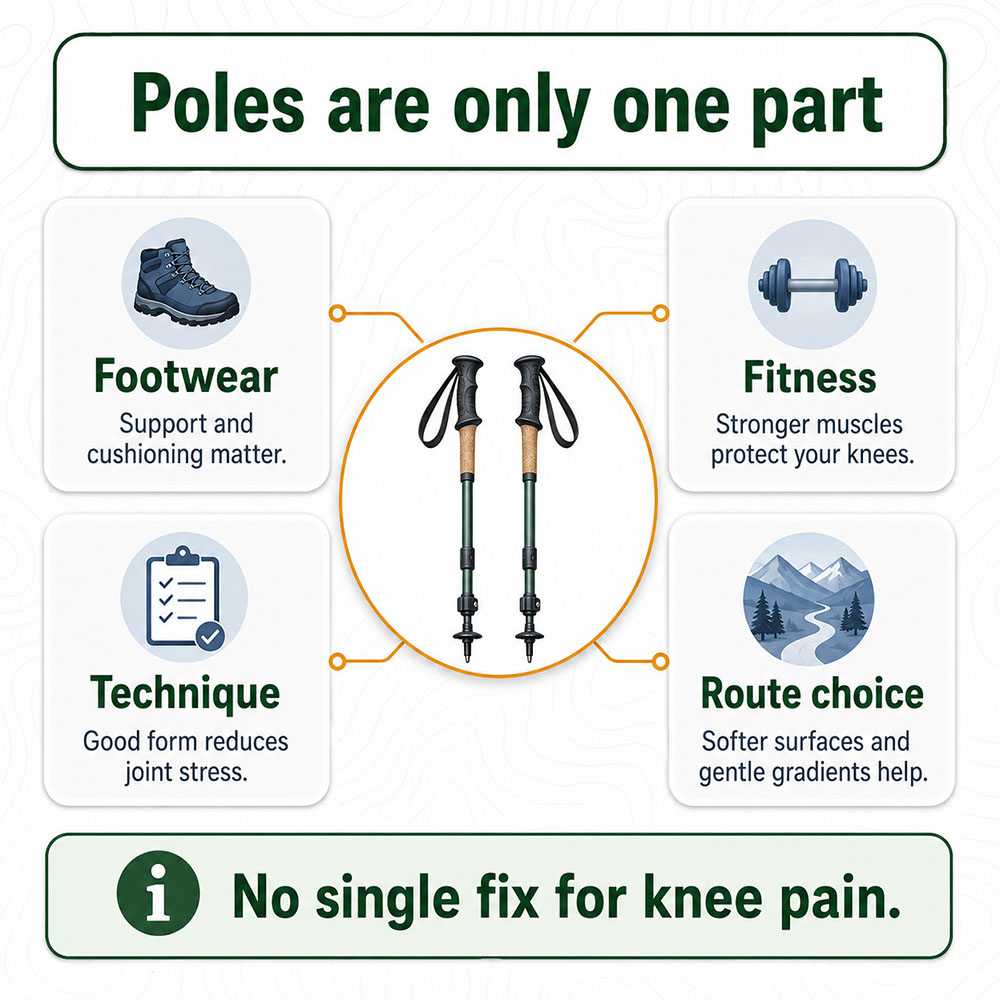
Walking poles work best as part of a wider comfort strategy that includes footwear, fitness, technique and route choice.
The evidence on knees is useful but mixed. The reason is simple: walking with poles is not a single activity. Nordic walking, hiking downhill with a rucksack, walking after knee replacement and walking with knee osteoarthritis are very different situations.
Downhill walking is where poles make the most biomechanical sense. On descents, your legs are not just propelling you forward; they are braking your body with every step. That can increase the demand on the knees and thighs.
A study on downhill walking with hiking poles examined knee joint forces and is often cited in discussions about whether trekking poles help the knees.[2] Later work on hiking downhill while carrying external loads also supports the idea that poles can reduce forces, moments and power around the lower-extremity joints.[3]
A UIAA Medical Commission recommendation on hiking sticks in the mountains highlights downhill walking, heavy backpacks, older age, excess body weight, and joint or spinal conditions as situations where adjustable hiking sticks may be advantageous, while stressing proper technique and appropriate route choice.[4]
Walks4all takeaway: poles are most useful for knees when you use them to control speed and braking on descents, rather than when you simply use them on easy ground.
Flat-ground studies are less straightforward. Some instrumented knee studies suggest that hiking-pole gait can reduce knee contact forces. One review of knee joint forces reported that hiking poles can reduce in vivo medial-compartment forces, likely because some ground reaction force is transmitted through the poles.[8] A gait-modification study also found that hiking-pole gait was effective in offloading the knee joint, although the study conditions were controlled and not equivalent to an ordinary hill walk.[9]
However, other studies are less positive. Some Nordic walking and hiking-pole studies found no clear reduction in knee compression forces on level ground.[5] [6] In one study of people with knee arthritis affecting the inner side of the knee, walking poles did not reliably reduce a key measure linked with load through that part of the joint. In plain English: for that specific group, poles did not appear to reduce pressure on the inner knee in a consistent way.[7]
This is why blanket claims should be avoided. A more accurate phrasing is: walking poles can reduce certain measures of knee or lower-limb loading in some conditions, especially when used actively, when going downhill, or when carrying a load, but findings on level ground and in clinical knee assessments are inconsistent.
Studies disagree for several practical reasons. First, pole technique affects the outcome. Pole angle, timing, pressure through the handle, stride length and walking speed all matter. A pole planted lightly behind you does not do the same job as one used actively to help brake on a descent.
Second, walking poles can alter gait. They may reduce one force while increasing another, or reduce ground reaction force during one part of stance while increasing it during another. A review of pole use in sport found that controlled studies reported reductions in some ground reaction forces, but also noted inconsistent findings across stance phases and measured variables.[10]
Third, Nordic walking and hillwalking are not identical. Nordic walking often aims to increase propulsion and upper-body exercise. Hillwalking poles are often used more for balance, braking and load sharing. These are related but not the same.
This is not a formal meta-analysis. The studies use different gradients, speeds, pole techniques, populations, and outcomes, so combining them into a single pooled number would risk giving a false sense of certainty, but they do provide practical takeaways.
| Question | What the evidence suggests | Confidence | Practical takeaway |
| Do walking poles help knees downhill? | Several biomechanical and mountain-medicine sources support load reduction or load sharing on descents, especially with correct technique. | Moderate | Most useful on long or steep descents. |
| Do walking poles help with knee pain? | Pain outcomes are less certain than loading outcomes. Some people may feel better; others may not. | Limited to moderate | Try them, but do not treat them as a cure. |
| Do poles reduce knee load on flat ground? | Mixed. Some instrumented-knee studies suggest offloading; other Nordic walking and osteoarthritis studies do not. | Mixed | Do not overclaim flat-ground knee benefits. |
| Do poles help with a rucksack? | Evidence and mountain-medicine guidance support using two poles when carrying a load. | Moderate | Two poles are usually better than one with a pack. |
| Do walking poles help balance? | Poles add contact points, and some studies show improvements in gait, stability or balance measures. Direct fall-prevention evidence is less certain. | Moderate for stability; limited for fall prevention | Useful for confidence, but not a guarantee against falls. |
| Do poles make walking easier? | Physiological effort often increases at the same rate, but perceived exertion may not increase by as much. | Moderate | Poles may feel manageable while still providing a more substantial whole-body workout. |
| Are anti-shock poles better for knees? | Direct evidence comparing anti-shock and standard poles for knee pain is weak. | Low | Choose anti-shock for comfort preference, not proven knee relief. |
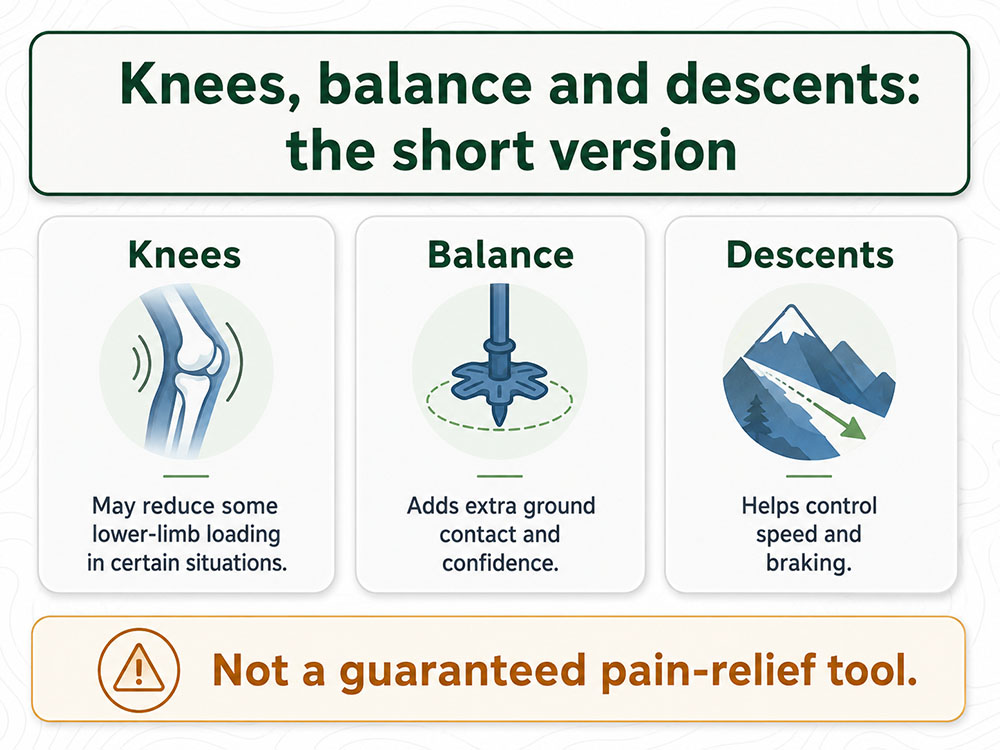
The short version: poles may help in certain situations, especially for balance and descents, but they do not guarantee relief from knee pain.
A common surprise is that poles can make walking more demanding overall, even when Nordic walking and active pole use engage the arms, shoulders, trunk and back. Studies often report higher oxygen uptake, heart rate, or energy expenditure at the same walking speed as ordinary walking.[11] [12] [13] One hiking study reported increased physiological responses when using trekking poles, but without a corresponding increase in perceived exertion.[30]
That sounds contradictory, but it makes sense. Your body may be doing more total work because more muscles are engaged, while your knees and thighs may feel less singled out. Many walkers describe this as spreading the effort.
For endurance, this can cut both ways. On the positive side, poles may help you maintain a steadier rhythm, feel more stable, and manage climbs and descents with less local leg fatigue. Reviews and trials of pole walking and Nordic walking have reported improvements in walking ability, endurance, or functional capacity in several groups, including older adults.[14] [15] [16] [24] [25]
On the downside, poles can tire the shoulders, hands and triceps, especially if you grip too tightly or use them aggressively for extended periods. They can also be inefficient if your technique is poor. The best practical advice is to start with short walks, keep your grip relaxed, and build up gradually.
Walking poles can help with balance in a simple mechanical way: they widen your base of support and give your brain more feedback about the ground.
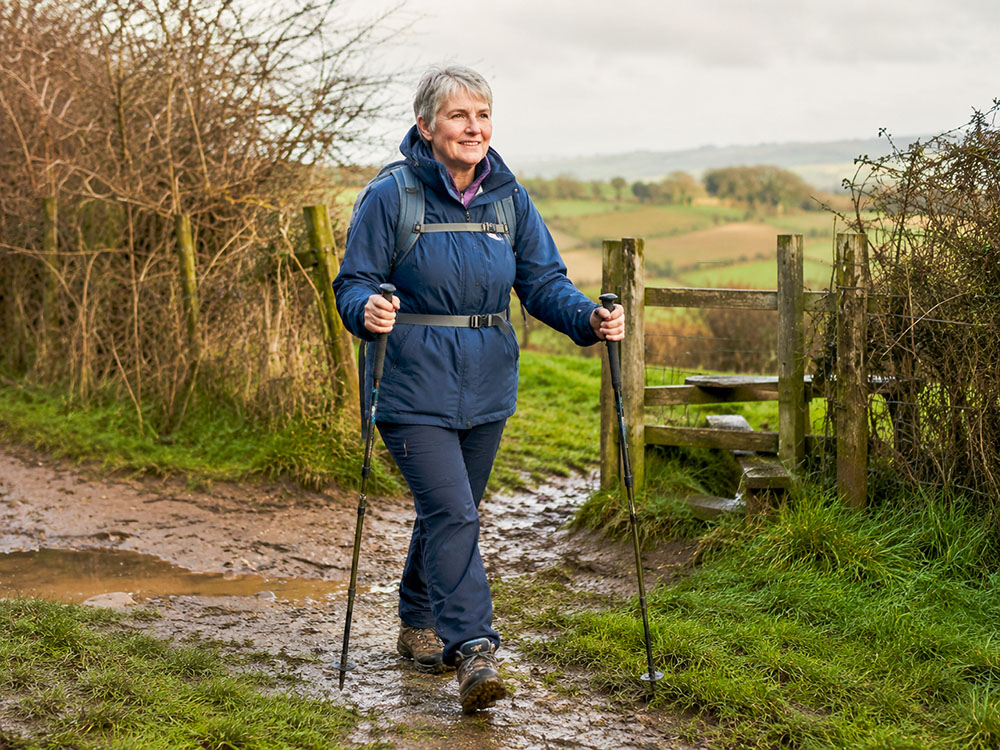
Extra contact points can make muddy, uneven or unpredictable paths feel more controlled.
That is especially useful when the surface is uneven, slippery or uncertain. Examples include wet grass, mud, loose stones, snow, shallow water, tussocky moorland, woodland roots and steep zigzags. A pole can test the ground before your foot commits to it.
There is also research supporting the effect of poles on gait and stability. Studies in older adults have reported changes in gait characteristics with Nordic walking, including altered stride and support timing, and some intervention studies suggest improvements in balance or functional capacity.[16] [17] [18]
In people with Parkinson's disease, Nordic walking has been studied for its effects on trunk stability and gait characteristics, although clinical populations require individual advice rather than generic hiking guidance.[26]
Walks4all takeaway: improved stability measures do not mean poles remove fall risk. Poles can also catch between rocks, slip on hard surfaces without rubber tips, or distract you if you are not used to them.
Walking poles can be suitable for many older walkers, especially when confidence, uneven ground, or longer descents limit enjoyment. They can provide extra contact points, encourage a steadier rhythm and make some people feel more willing to walk regularly.
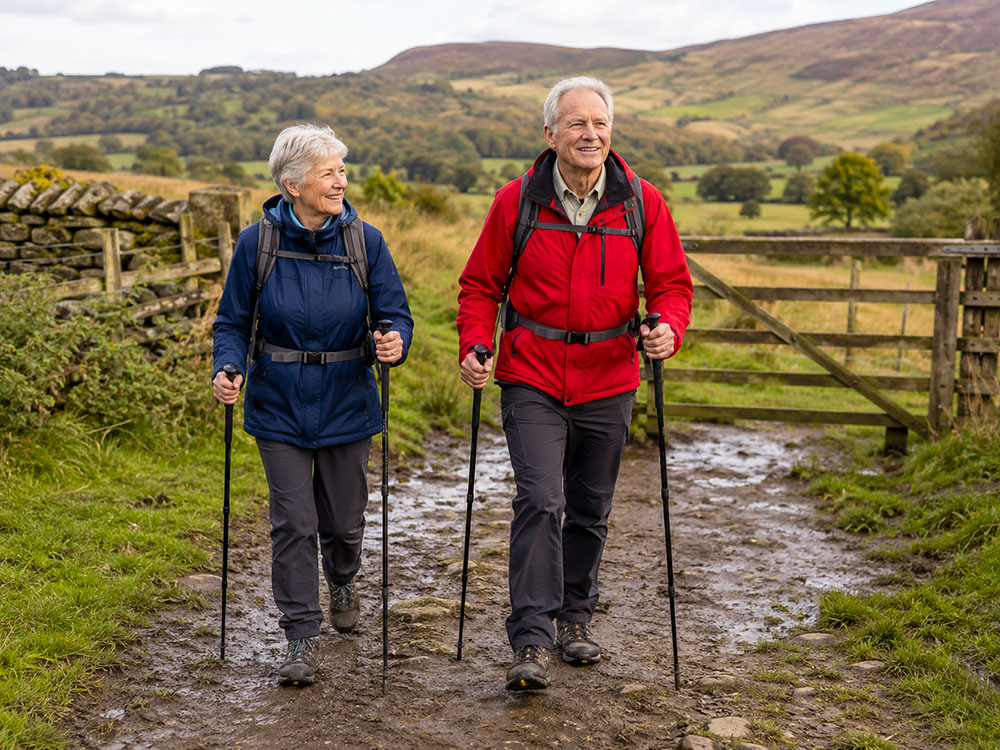
For older walkers, poles can support confidence on gentler paths when combined with good footwear, sensible routes and steady pacing.
But older walkers should keep the technique simple. Some Nordic walking techniques are more complex than ordinary hillwalking pole technique, and research protocols have noted that different pole-walking styles vary in how easy they are for older adults to learn and perform consistently.[22]
For older walkers, poles should be part of the bigger picture: comfortable footwear, good foot care, vision, strength, balance, route choice, and not rushing descents. We cover that wider foundation in our guide to why foot health matters more as you age.
Descents are where many walkers first notice their knees. This is because downhill walking repeatedly asks your legs to brake your body. Your quadriceps work eccentrically, your steps often lengthen when you are tired, and a heavy rucksack increases the force you need to control.
Walking and hiking poles can help by allowing your arms to share some of the braking effort and by encouraging shorter, more deliberate steps.[2] [3] [4]
A simple downhill technique:
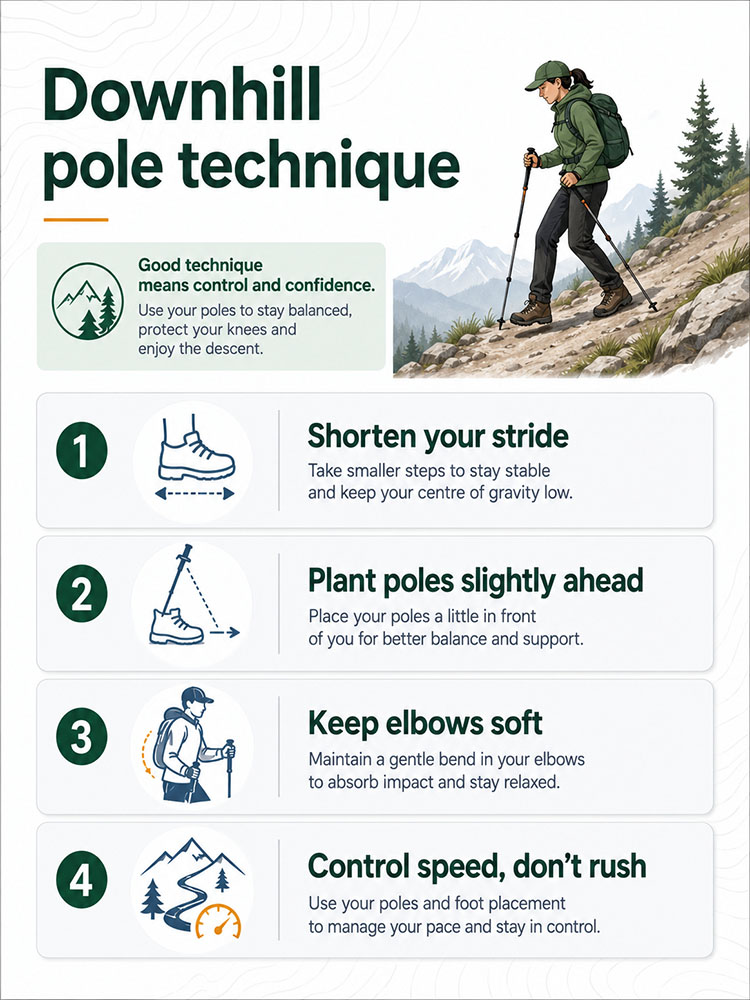
Good downhill technique keeps steps short, elbows soft, and pole plants close enough to maintain control.
This is where technique matters. Poor technique can turn poles into clutter, whereas good technique can make descents feel more controlled.
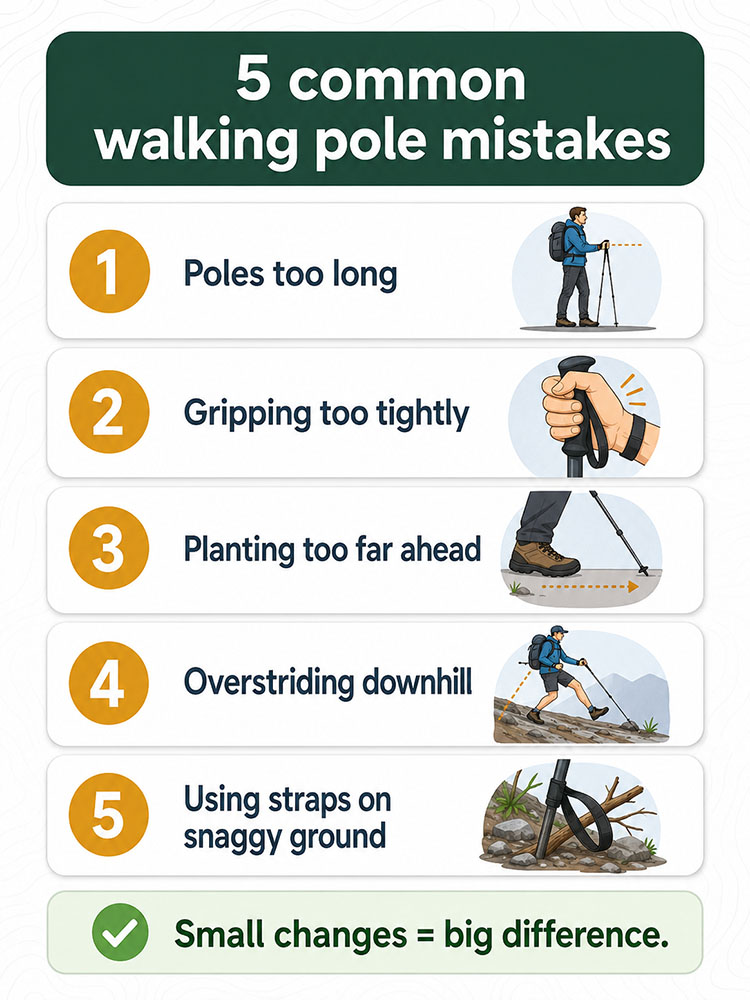
Small technique mistakes can make poles less useful, especially on descents or uneven ground.
Anti-shock walking poles have a spring or damping system designed to soften the feel of pole plants. Some walkers like them on hard tracks and long descents because they can feel less jarring through the hands and wrists.
However, the evidence for anti-shock poles specifically reducing knee pain or knee loading is not strong. In the studies reviewed for this article, the useful evidence was mostly about using poles versus not using poles, not anti-shock versus standard poles.
So the best answer is: anti-shock poles may improve comfort for some walkers, but they should not be sold as proven knee-pain relief.
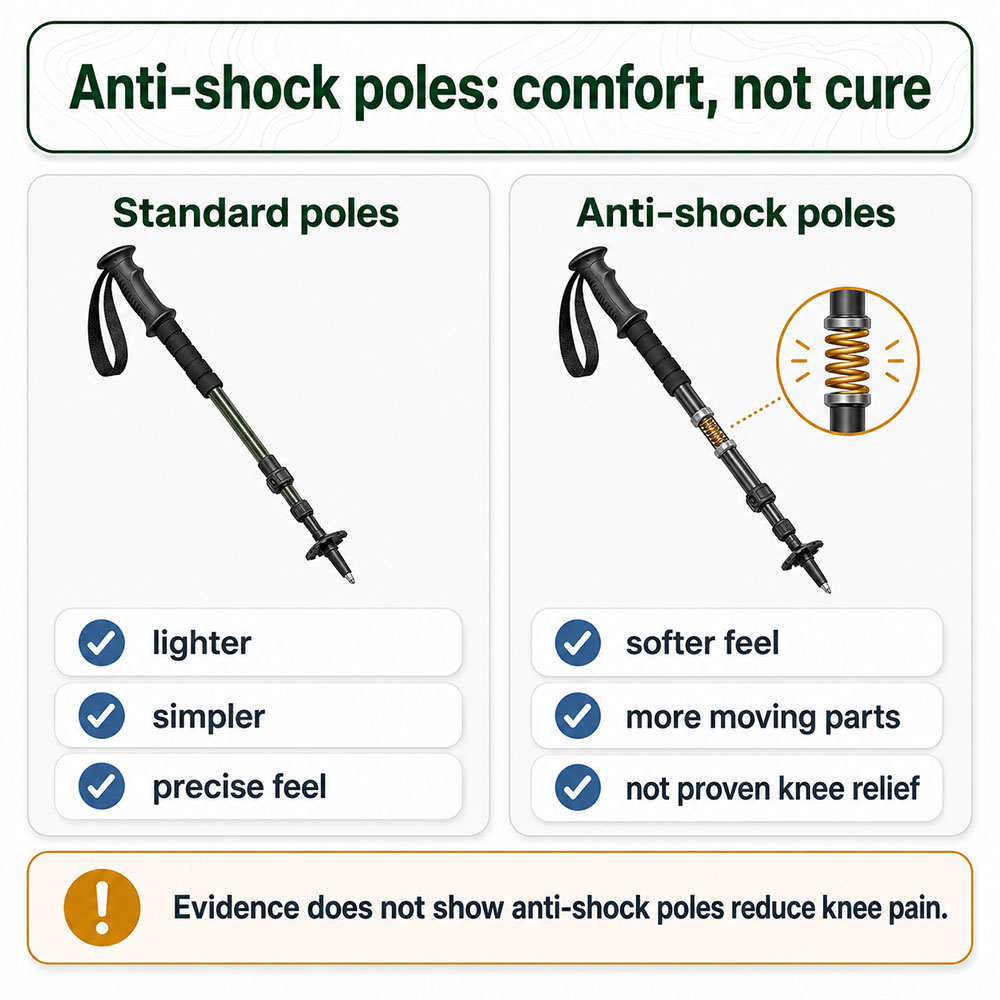
Anti-shock poles may improve feel through the hands and wrists, but they should not be presented as proven relief for knee pain.
Potential advantages include a softer feel on hard surfaces, greater comfort for some hands or wrists, and a preference for long gravel tracks or descents. Potential disadvantages include slightly increased weight, more moving parts, a bouncier or less precise feel, and limited usefulness on soft ground. If your hands do get sore, wearing a thin or padded glove may help.
For most walkers, fit, grip, comfort, secure locks, good tips and correct length matter more than anti-shock. See our guide to the best walking poles for comfort and descents for model suggestions.
This article is not medical advice. Walking and hiking poles may help you manage certain walks more comfortably, but they should not be used to push through worrying pain.
You should seek appropriate advice if knee pain is new, severe, worsening, linked to a fall or twist, associated with swelling, or stopping you from walking normally. The NHS advises seeking medical help if knee pain does not improve within a few weeks, and urgent help if the knee is very painful, badly swollen, changed shape, cannot bear weight, locks, gives way, or shows signs of infection.[28]
For walkers, it is sensible to seek advice from a GP, physiotherapist or qualified clinician if:
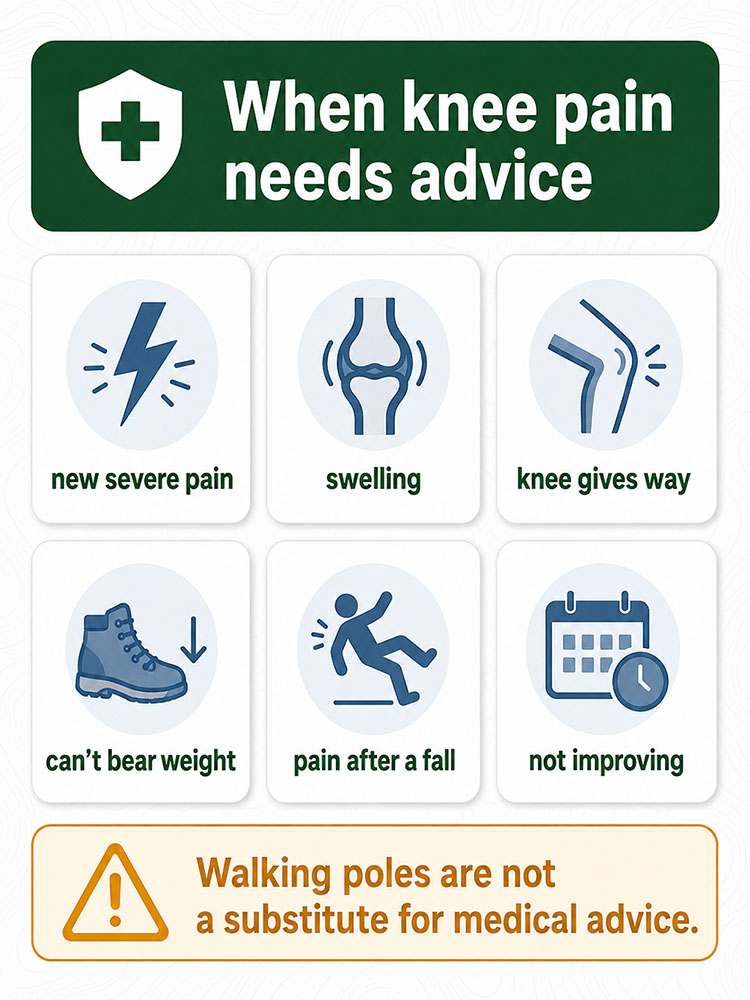
Walking poles are not a substitute for medical advice when knee pain is severe, persistent or linked to swelling, instability or a fall.
Poles may be part of a walking plan, but persistent knee pain warrants a proper assessment.
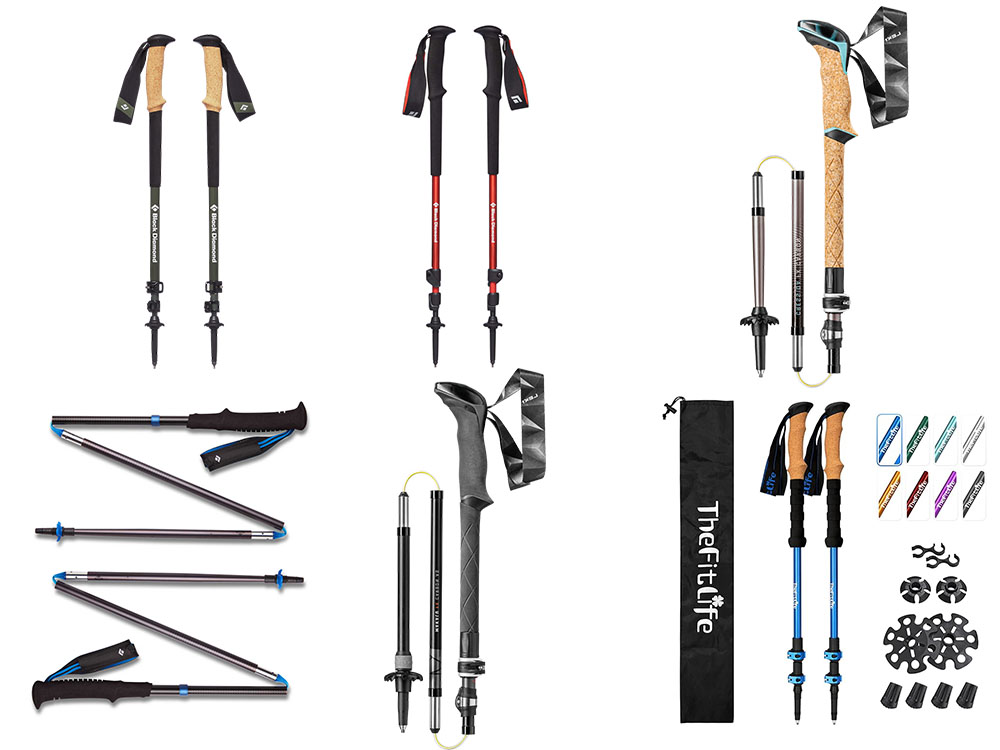
When comfort is the priority, do not buy solely by weight or price. The most comfortable pole is the one that suits your walking style, hand shape, terrain and pack.
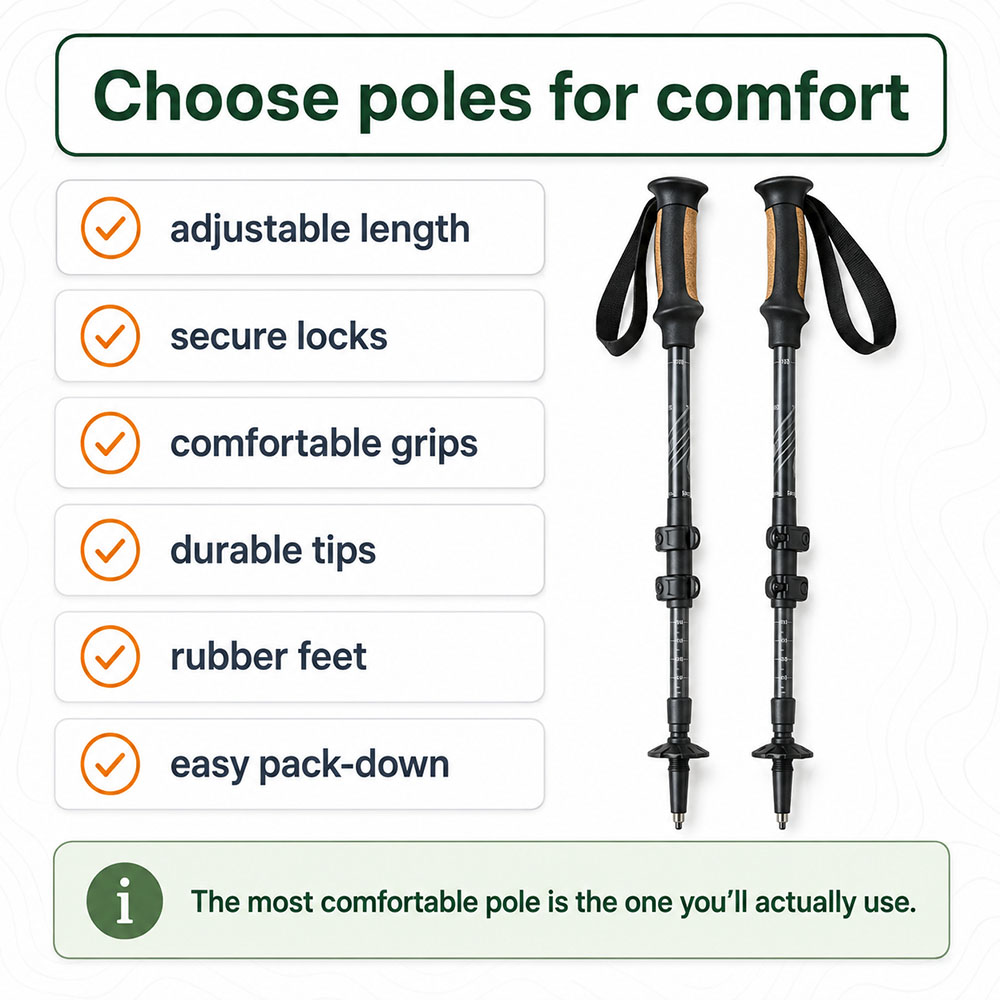
Comfort-focused walking poles should be adjustable, secure, easy to pack, and comfortable enough for regular use.
Adjustable hiking poles are the safest all-round choice for most walkers because you can shorten them on uphill sections and lengthen them on downhill sections. They are also useful if several people may use the same pair.
For general walking, a common starting point is an elbow angle of roughly 90 degrees, with the pole tip on level ground near your foot. But terrain and comfort matter, so use that as a starting point rather than a rule.
Grip comfort matters more than many people expect. Cork can feel comfortable over long distances and may manage sweat well. Foam is soft and warm, often suitable in cooler or wetter conditions. Rubber can be durable but may feel less comfortable on long, warm walks.
Look for an extended grip if you walk on rolling terrain, because it lets you lower your hand on short climbs without constantly adjusting the pole length.
For descents, locking security is a safety feature. A pole that collapses unexpectedly is more than annoying. Flick locks are easy to check and adjust; twist locks can be tidy but may be harder to inspect quickly.
Carbide tips grip dirt, grass and rough tracks. Rubber tips are useful on hard surfaces, pavements and sensitive rock. Small baskets help prevent poles from sinking into soft ground; wider baskets are for snow or very boggy terrain.
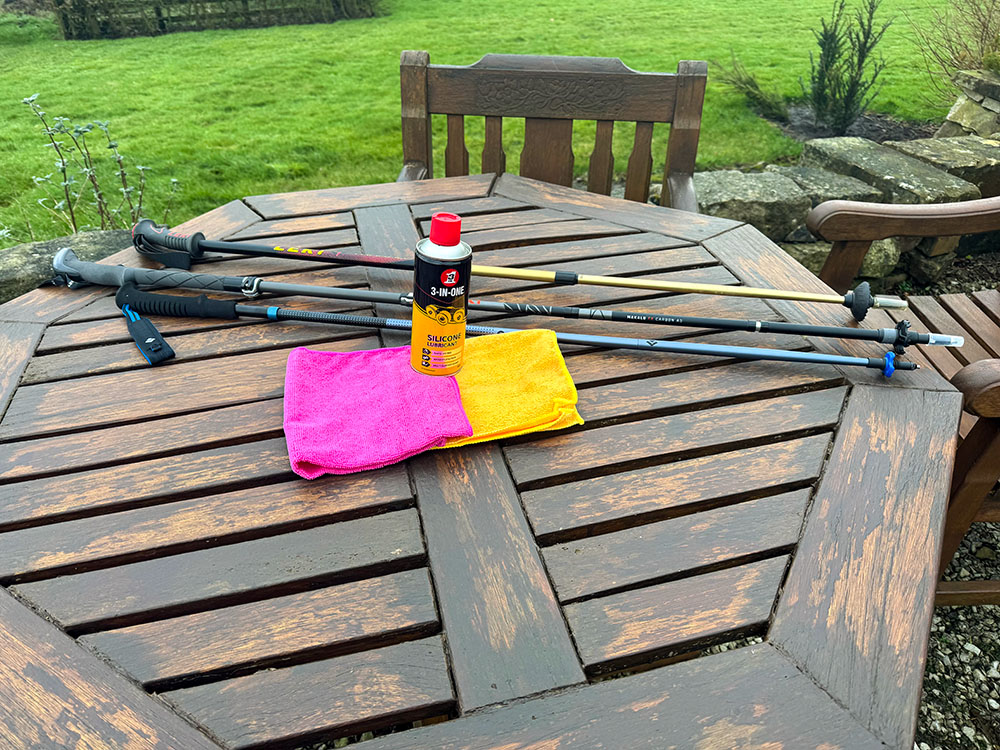
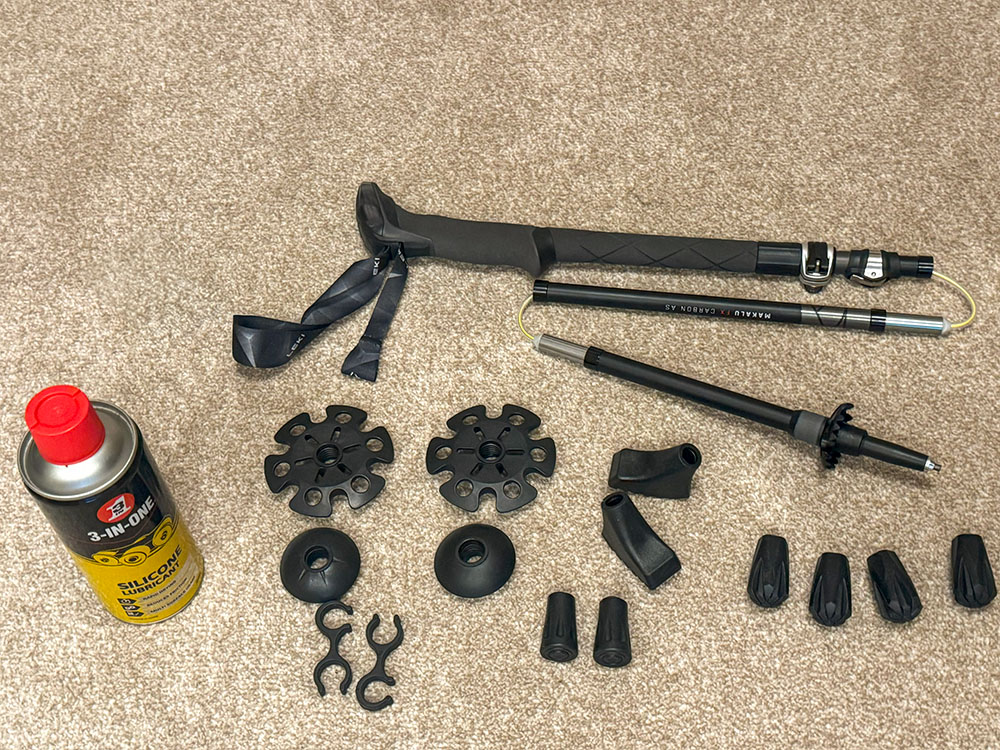
This is one place where maintenance matters. Worn tips, loose baskets and slipping locks can make poles less effective, so check them before longer walks. For spares and upkeep, see our guides to walking pole maintenance and walking pole accessories.
For knee comfort and balance, two poles usually offer the clearest benefit because they keep your movement more symmetrical and provide two extra points of contact. When walking with a load, mountain-medicine guidance notes that balance is enhanced by using two hiking sticks rather than one.[4]
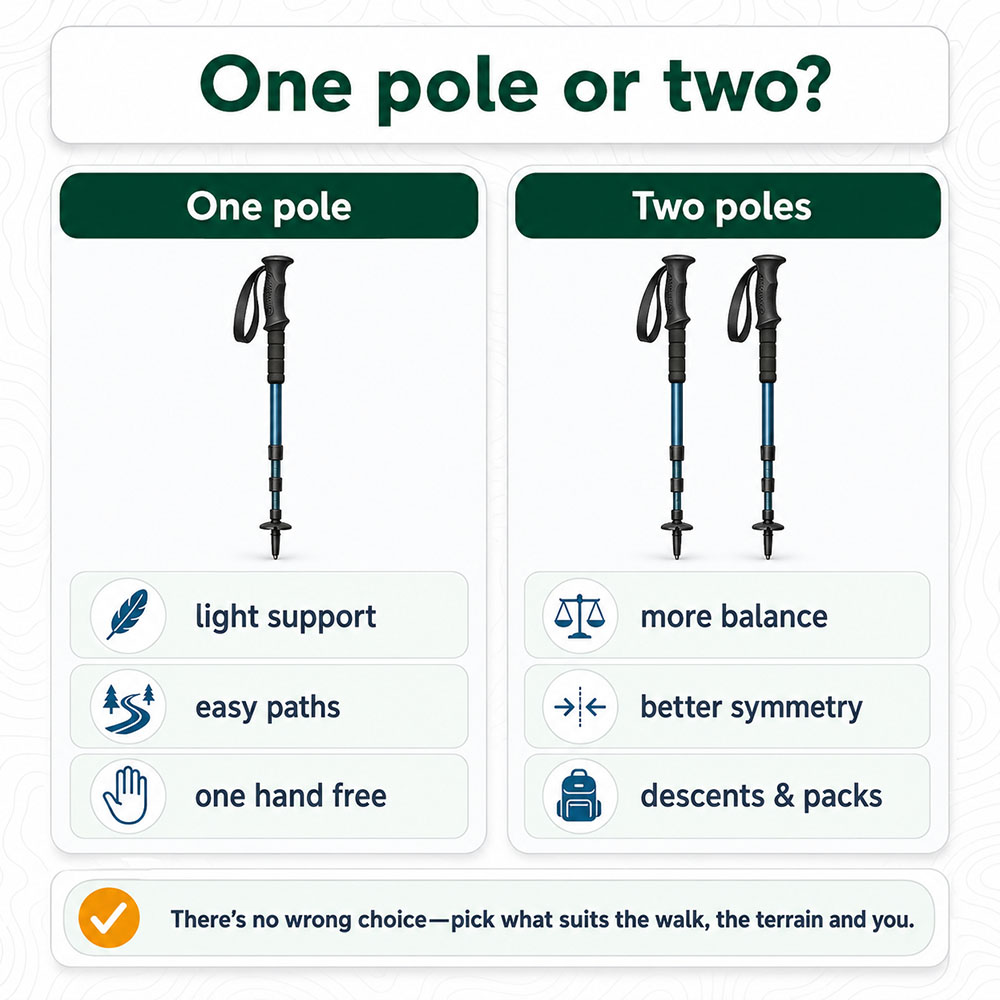
One pole can offer light support, while two poles usually provide better balance and symmetry on descents or with a rucksack.
One pole can still help on easy walks, but with a rucksack or on a long descent, two are usually better.
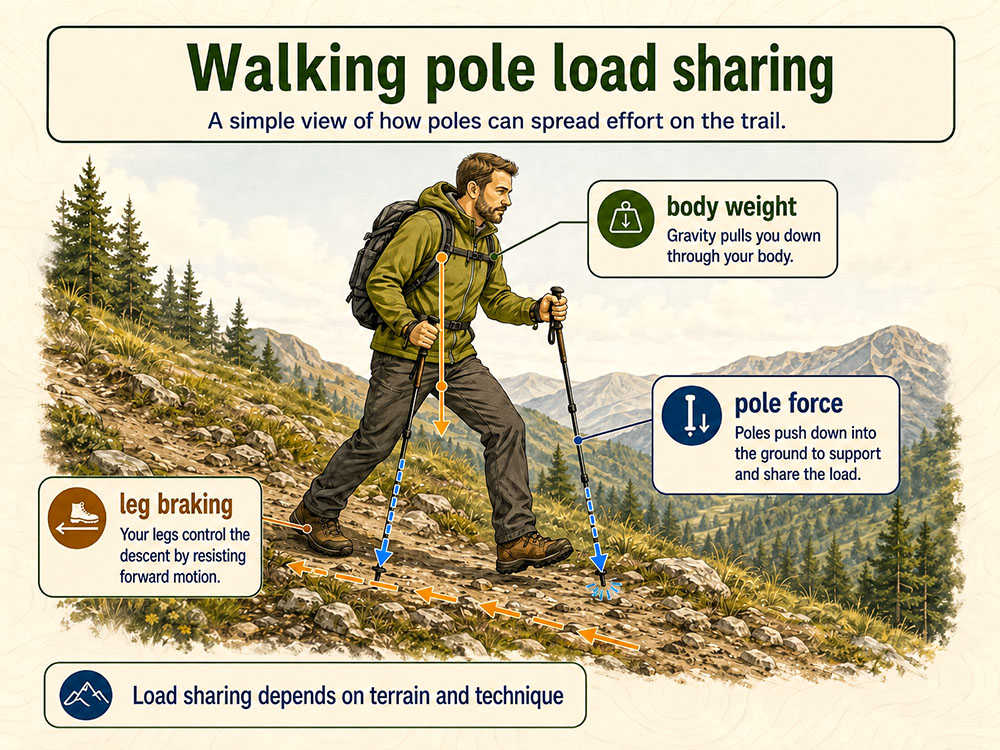
Walking poles can share some of the effort through the arms and poles, but leg braking, terrain, and technique still matter.
Walking poles are worth trying if you notice your knees most on descents, carry a daypack or rucksack, walk on uneven or muddy ground, want more confidence on wet paths, prefer a steady walking rhythm, are building up distance gradually, or want a more whole-body walking style.
They may be less useful if you mostly walk short, flat, smooth routes and dislike carrying extra kit.
The most evidence-backed answer is not 'everyone needs poles'. It is: walking poles are most worthwhile when the terrain, gradient or load makes balance and load-sharing valuable.
Walking poles can help knees, balance and descents, but not in the simplistic way often claimed.
The evidence suggests they are most useful when used actively to share the load, improve stability and control braking, especially when going downhill or when carrying a rucksack. Their effectiveness as a flat-ground intervention for knee pain is less certain, and they should not be treated as a cure.
For balance, poles can boost confidence by providing extra contact points and more feedback from the ground, especially on uneven, muddy, or slippery paths. On descents, they can help you shorten your stride, control your speed, and distribute effort between the legs and upper body.
For most walkers, the best approach is practical: choose comfortable, adjustable poles, learn a simple technique, use them on terrain where they genuinely help, and treat persistent knee pain as a reason to seek advice.
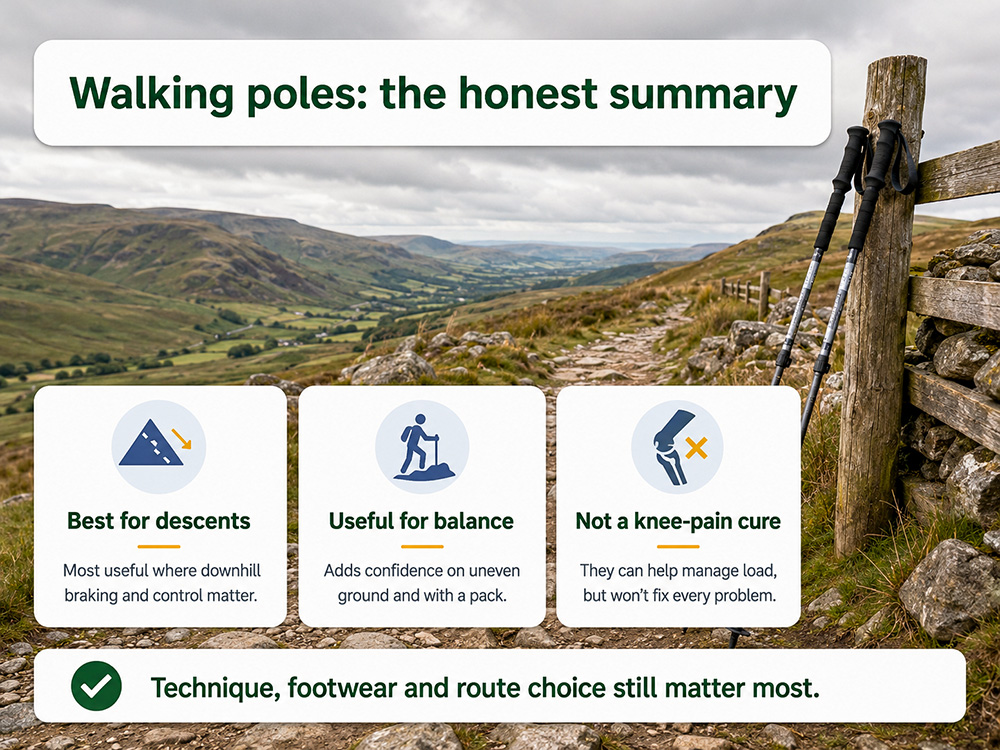
Walking poles are most useful for descents and balance, but they should not be treated as a cure for knee pain.
For product recommendations, see our guide to the best walking poles for comfort and descents.
They can be useful for some people with sensitive knees, particularly on downhill sections, but “bad knees” can mean many things. If knee pain is persistent, worsening, swollen, or affecting daily life, seek appropriate advice rather than relying on poles alone.[28]
They may help some walkers feel more comfortable by reducing the need to brake, improving rhythm, or increasing confidence. However, knee pain varies from person to person, and studies do not show that hiking poles reliably relieve it for everyone.
Two poles are usually better for balance, symmetry and load sharing, especially when carrying a rucksack or on descents. One pole may be enough for easy paths or for walkers who want light support without using both hands.[4]
There is no strong direct evidence that anti-shock poles reduce knee pain more than standard poles. They may feel more comfortable with their hands and wrists on hard ground, but fit and technique matter more.
They could, especially if they encourage you to walk farther than you are ready for, are the wrong length, or alter your stride awkwardly. Stop and reassess if the pain worsens.
On level ground, start with your elbow at roughly 90 degrees when the pole tip is near your foot. Shorten poles for climbs and lengthen them slightly for long descents if that feels more controlled.
Not exactly. Nordic walking poles are designed for a more active fitness-walking technique and often have glove-style straps. Trekking poles are usually built for hiking, rough ground, descents, carrying a pack and adjustability. Some benefits overlap, but the techniques differ.
On normal paths, straps can help you push through the pole without having to grip tightly. On technical, rocky or snag-prone ground, some walkers prefer to remove their hands from the straps so they can release the pole quickly if it catches.
July 2026