By using this website, you agree to our use of cookies (needed to provide our website’s features) and our Terms of Use.
By: Andrew Forrest - April 2026

What hydrostatic head really means and what waterproof rating you need. A simple guide to 5,000mm, 10,000mm and 20,000mm for jackets and trousers in real UK walking conditions.
This page contains affiliate links. As an Amazon Associate, we earn from qualifying Amazon purchases at no additional cost to you. We may also earn commissions from other retailers, again at no additional cost to you.
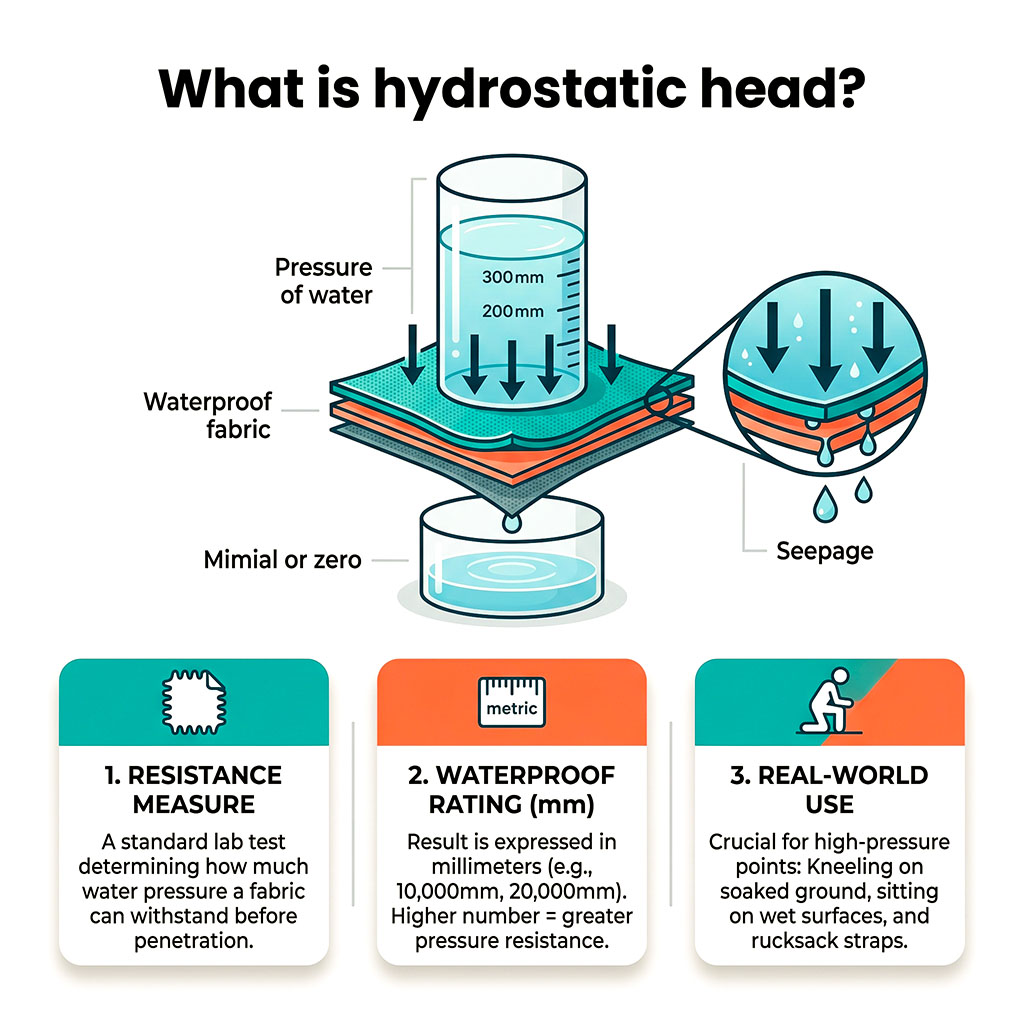
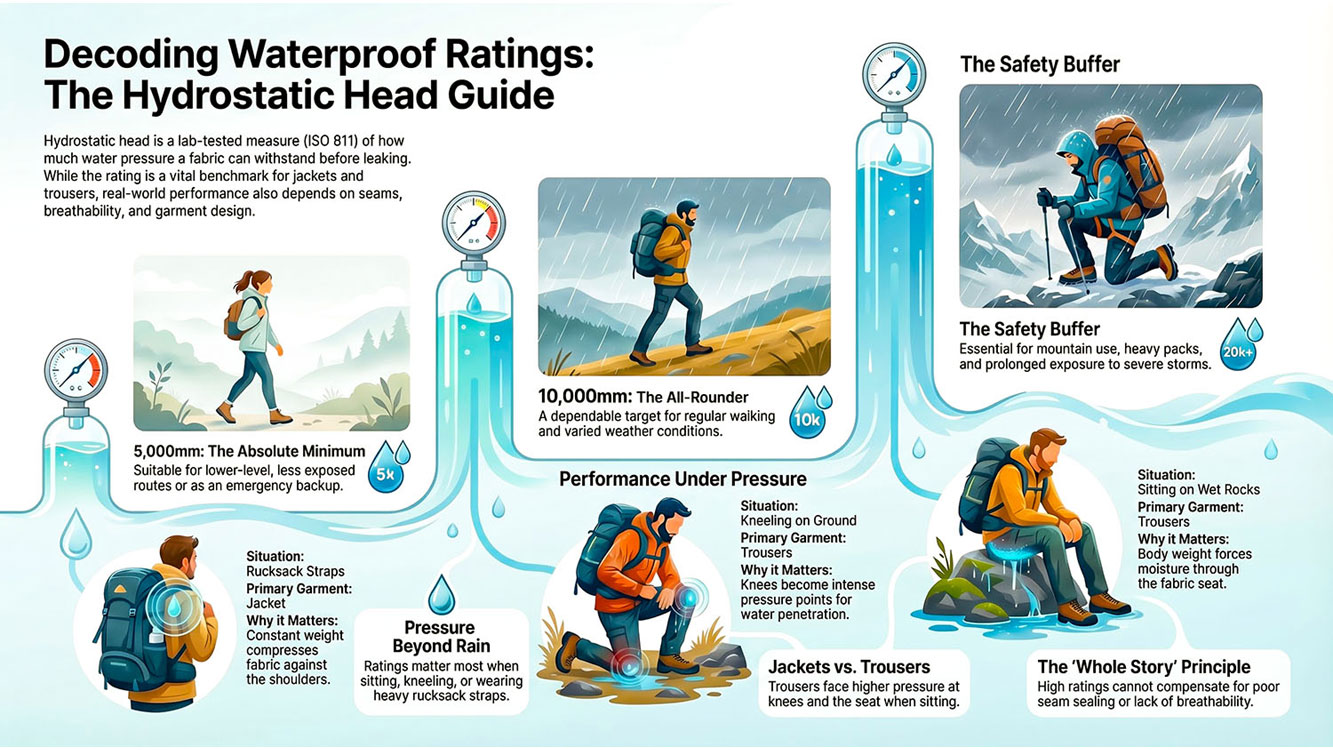
If you are comparing waterproof jackets or waterproof trousers and keep seeing figures like 5,000mm, 10,000mm, and 20,000mm, those are the hydrostatic head ratings. In simple terms, it is a lab test that shows how much water pressure a fabric can withstand before water starts to seep through.[1] The recognised test method is set out in ISO 811.
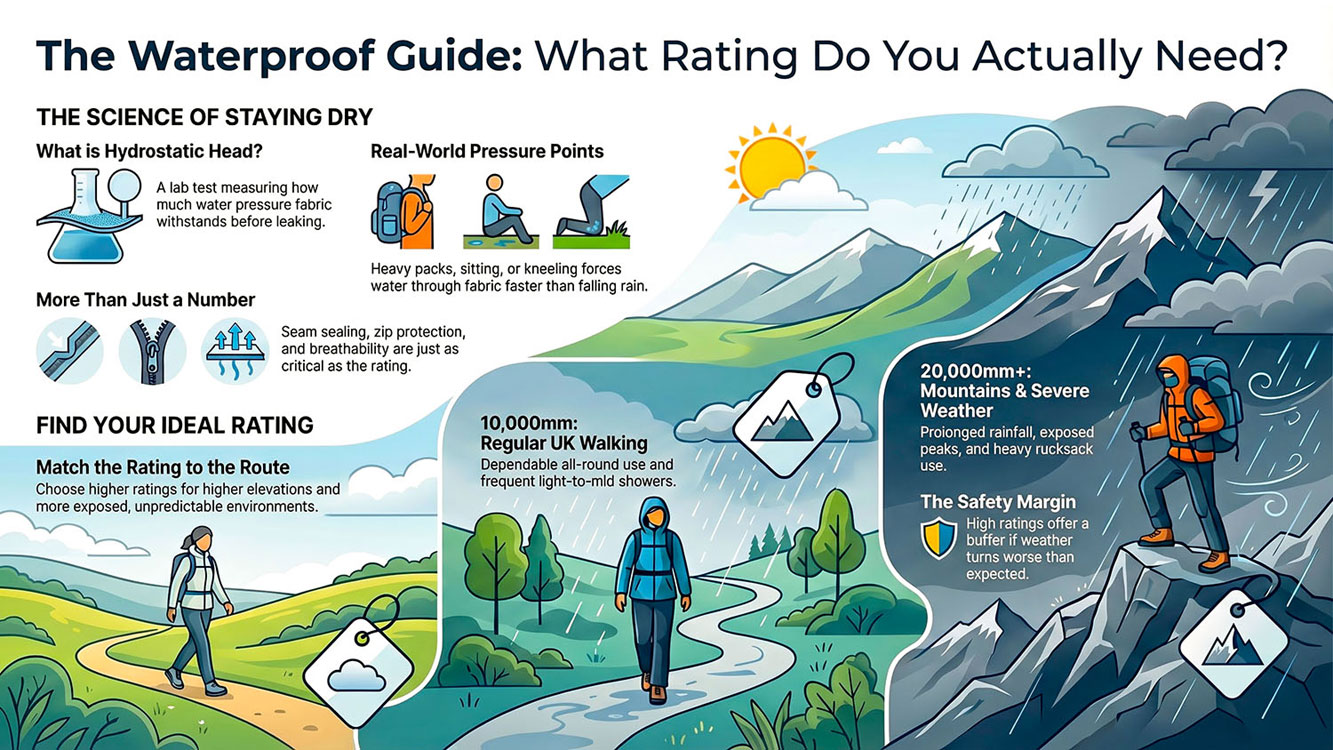
Hydrostatic head applies to both jackets and trousers. It measures a fabric's resistance to water penetration, not a trouser-only rating.[1] What differs is how pressure manifests in real-world use. Jackets are more exposed to wind-driven rain, shoulder straps and weather on the upper body, while trousers are more exposed to wet grass, sitting, kneeling and pressure on the seat and knees.[1] [2]
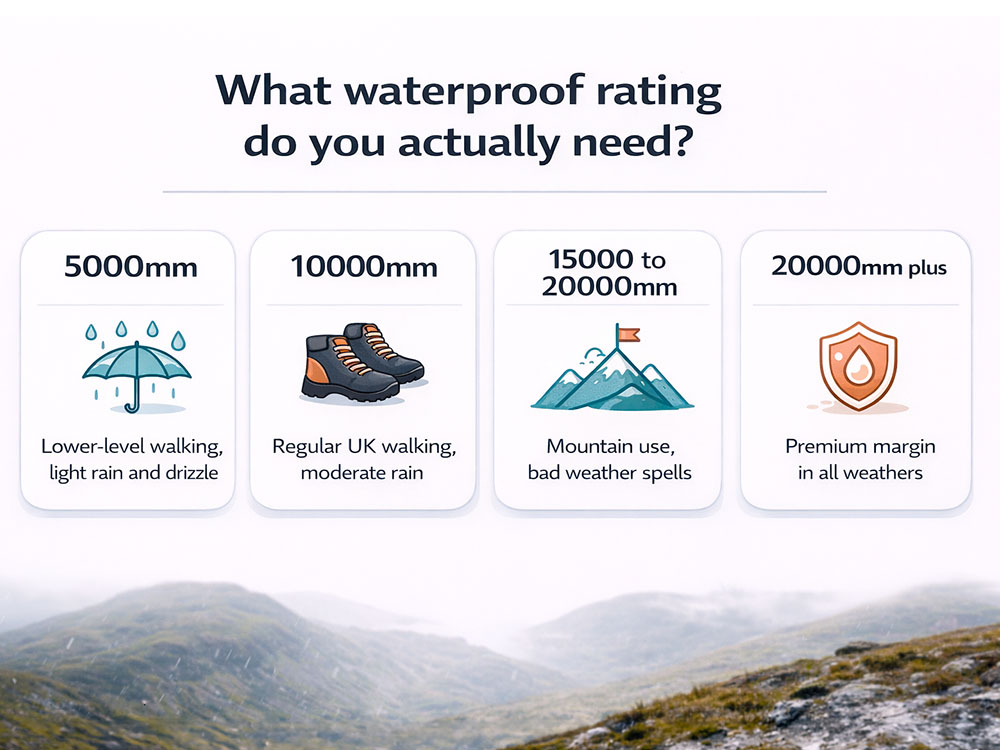
For most UK walkers, 5,000mm is the absolute minimum worth considering, 10,000mm is a stronger all-round target, and 20,000mm gives you more margin if you walk regularly, get caught in prolonged rain, carry a pack, or simply want a bigger safety buffer.[1] [2] Personally, that is why I have always tended to use a 20,000mm waterproof jacket. I walk a lot and end up in a lot of rain, and from a safety point of view, I would rather carry something with more margin than wish I had done later.
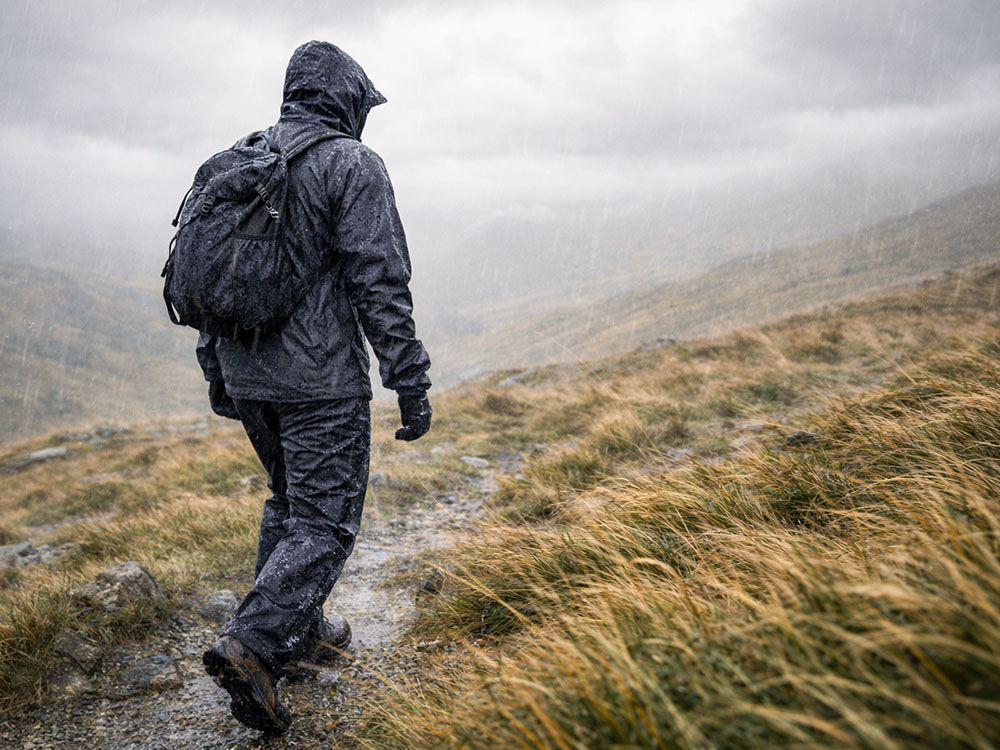
Walks4all take
Hydrostatic head is the waterproof rating of the fabric. For lower-level, less-exposed walking, 5,000mm is the absolute minimum to consider,
but for regular UK walking, a 10,000mm or 20,000mm jacket or trousers is usually the more reassuring choice, especially when weather, exposure,
pressure points or safety margins matter.[1] [2]
In this guide, we will explain:
Hydrostatic head is the standard measure of a fabric's resistance to water penetration. Under ISO 811, water pressure is gradually increased against a fabric until water penetrates it.[1]
ISO states that the method is applicable to fabrics intended to be water-resistant, whether or not they have been treated with a water-resistant or water-repellent finish.[1]
The result is expressed in millimetres, which is why you see waterproof ratings such as 5,000mm, 10,000mm and 20,000mm. The higher the number, the greater the water pressure the fabric can withstand in the test.[1]
That does not mean you will be standing under a literal 20-metre column of water. It is simply the testing terminology used to compare one fabric with another.
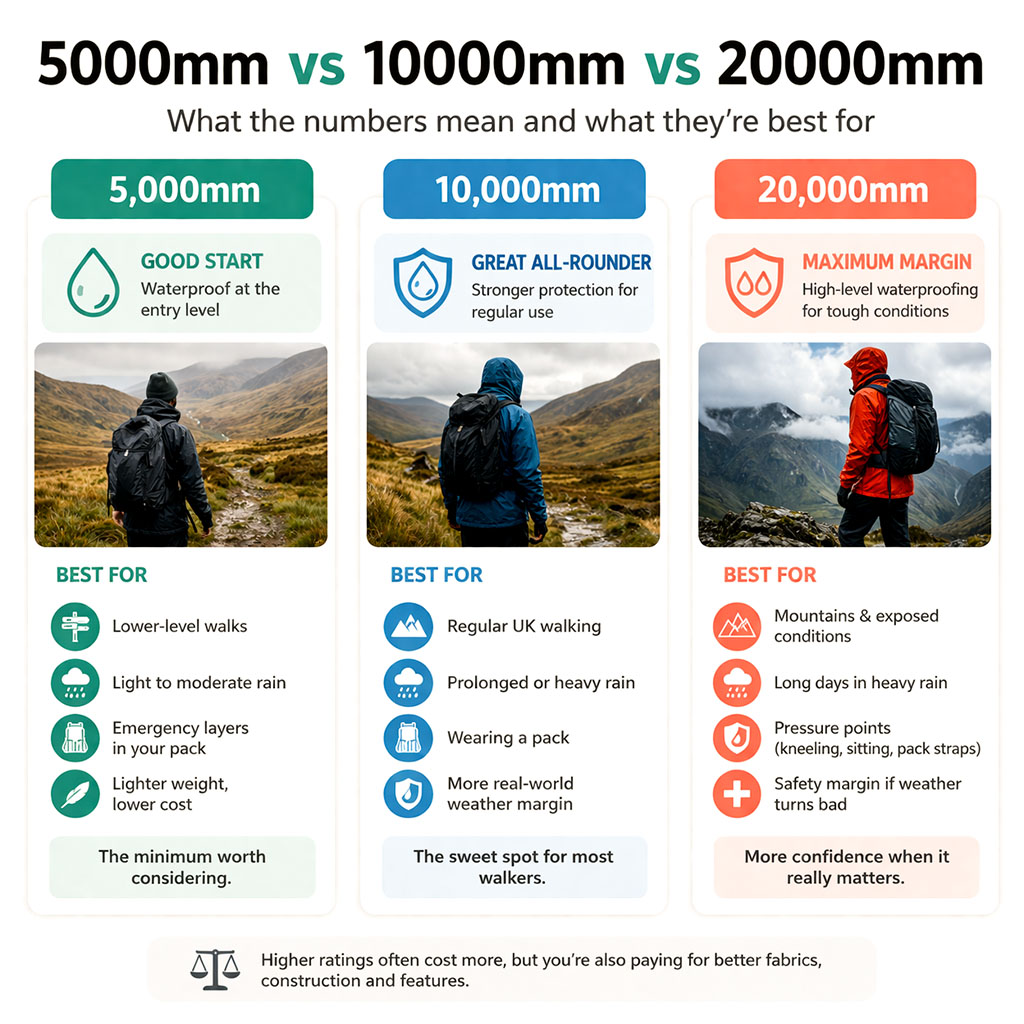
When a jacket or pair of trousers says it has a 10,000mm waterproof rating, it means the fabric passed that level in the hydrostatic pressure test before water came through.[1]
In practical terms:
That figure is useful, but it describes only one aspect of waterproof performance. Seams, face fabric, breathability, zip protection and overall garment design all matter too.[2]
Under ISO 811, the fabric is held in a test rig and subjected to steadily increasing water pressure until penetration occurs.[1]
A clear, practical explanation comes from SATRA, a long-established independent testing and research organisation that works with products including footwear, clothing and PPE. In its explanation of EN 343, the European standard for protective clothing against rain, SATRA notes that the water penetration test is carried out using a hydrostatic head machine that gradually increases pressure on the test material.[2]
That matters because rain in real life is not always just gentle water landing on relaxed fabric. Water pressure rises when:
So, the hydrostatic head is useful because it reflects resistance to water under pressure, not just resistance to a passing shower.[1] [2]
Centexbel, a textile testing and research organisation, notes that the hydrostatic pressure test is designed to simulate situations in which fabric is exposed to standing water or heavy rain, such as kneeling on wet ground or sitting on wet surfaces.[7]
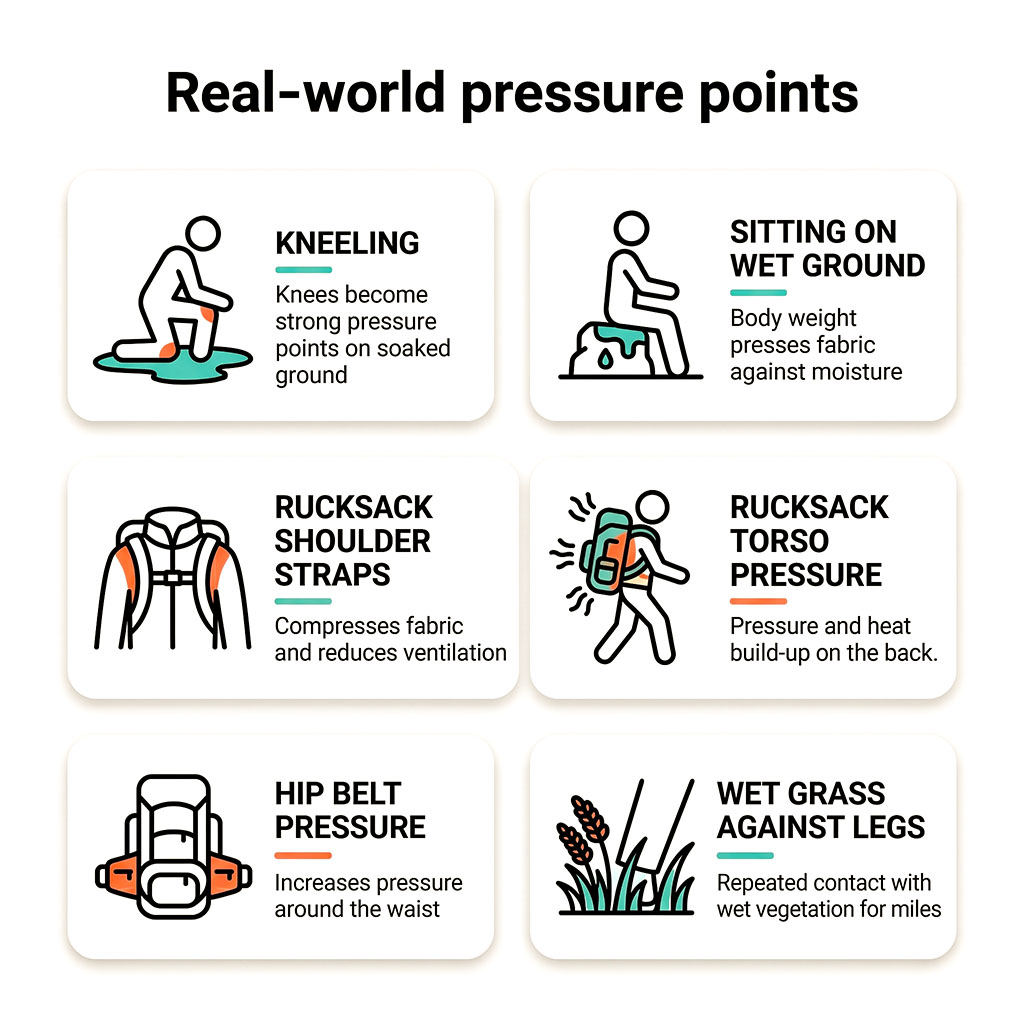
That is one of the clearest reasons hydrostatic head matters so much for waterproof trousers and overtrousers, where the knees and seat are often the real test on the hill.
Yes, but I would treat it as the absolute minimum, not the target.
A 5,000mm fabric is considered waterproof in lab terms, and for some walkers, that may be sufficient for lighter use.[1] But I would be more cautious about saying it is simply fine for 'occasional day walks', because a day walk could still involve exposed, high-level, windy, or safety-critical ground.
A better way to think about 5,000mm is this:
That is why I would not encourage anyone to treat 5,000mm as the ideal for mountain or highly exposed walking. It is the floor, not the finish line.
Walks4all take
For me, 5,000mm is a sensible minimum only. If you walk much in the UK, especially on exposed ground, I would generally feel happier with
10,000mm or 20,000mm, simply because the weather can change fast and staying dry is part of staying safe.
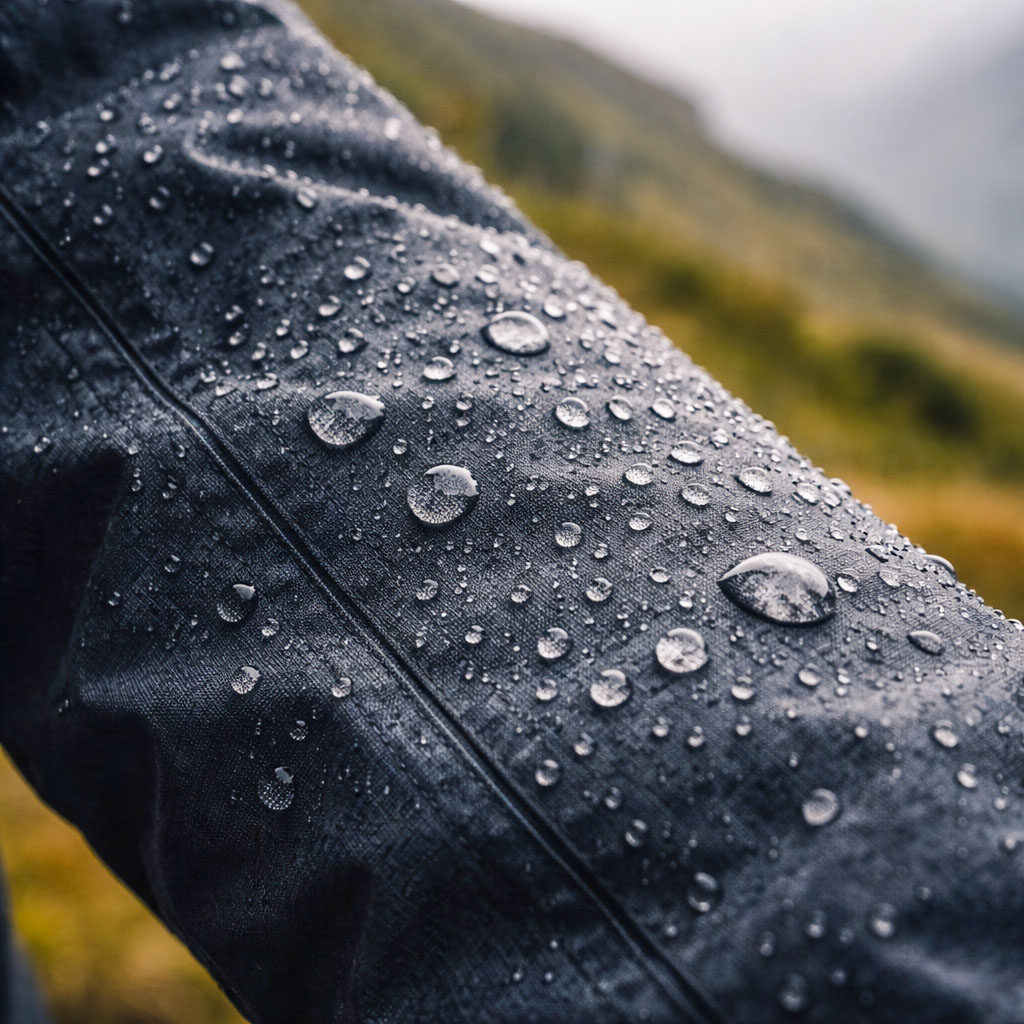
A 10,000mm fabric has withstood more water pressure in the test than a 5,000mm fabric.[1] In real use, that usually gives you a bit more confidence when:
For many walkers, 10,000mm is the better all-round starting point if the budget allows. It usually gives you more margin without automatically pushing you into the very top end of the market.
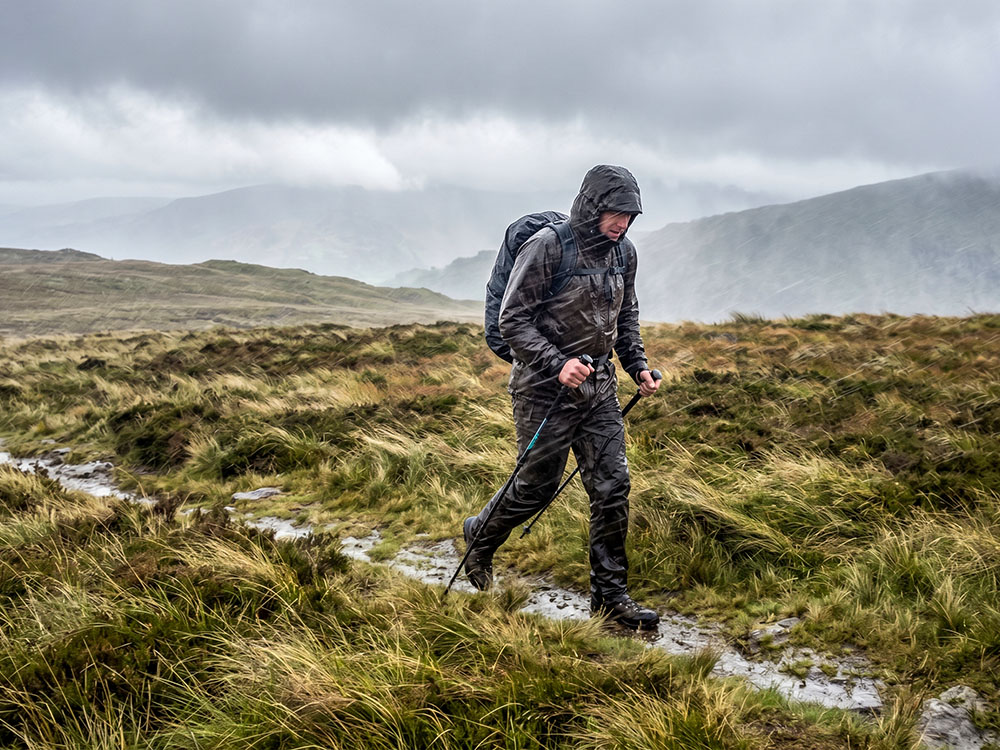
Sometimes yes, sometimes no - but there is a strong case for it if you walk a lot.
A 20,000mm rating gives you a bigger waterproof buffer than 10,000mm, which can help in:
This is also where the safety angle comes in. If you walk frequently or walk in weather that can be serious, having more margin is not just about comfort. It can be about staying warmer, drier and more functional if conditions deteriorate.
That said, a 20,000mm garment is not automatically better overall. A high number on the label does not compensate for weak seams, poor venting, poor hood design, or poorly protected zips.[2]
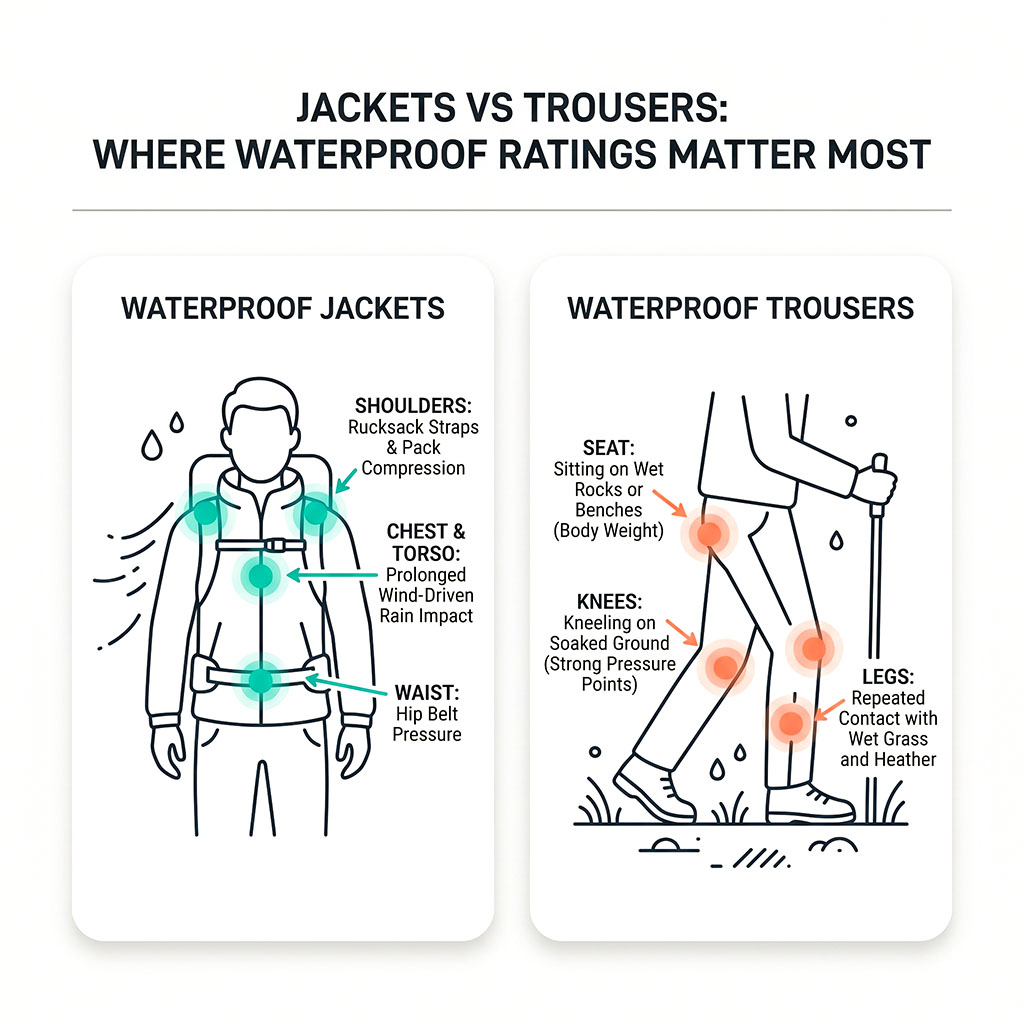
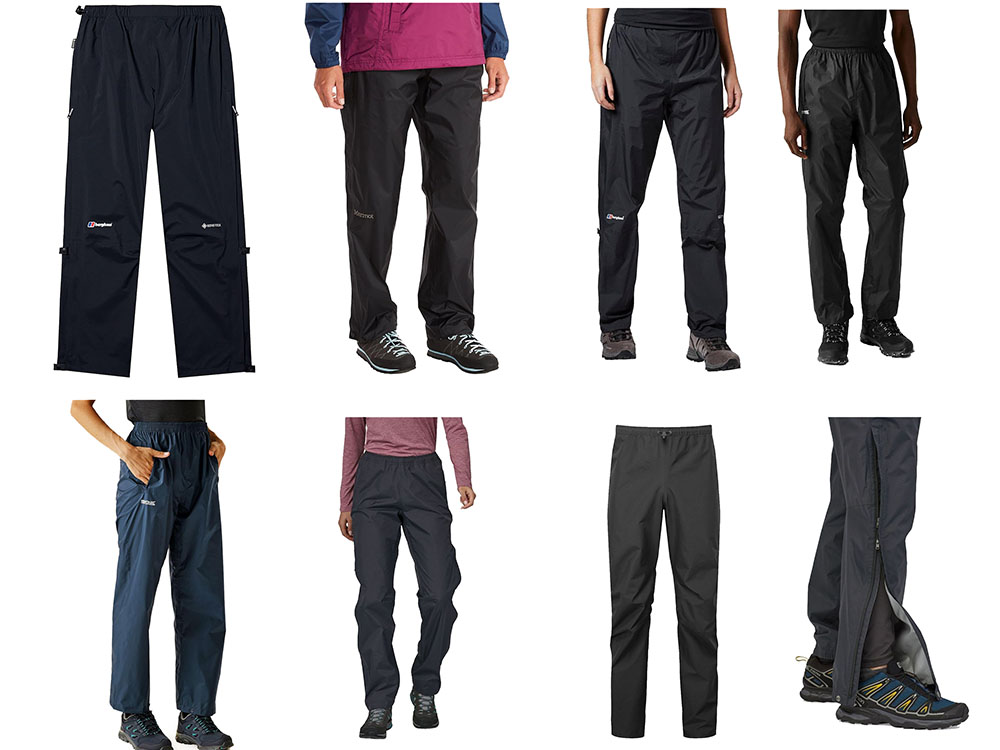
Hydrostatic head applies to both, but the pressure points differ. Both a waterproof jacket and waterproof trousers should be part of your essential hiking kit.
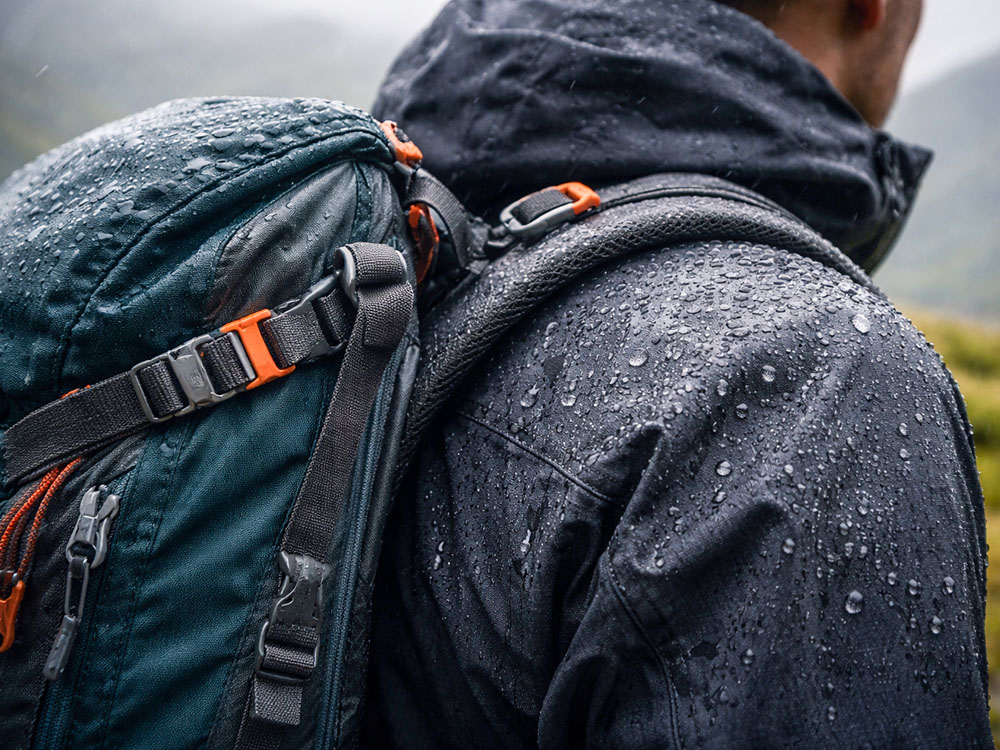
For jackets, hydrostatic head matters because of:
With jackets, you also need to pay close attention to:
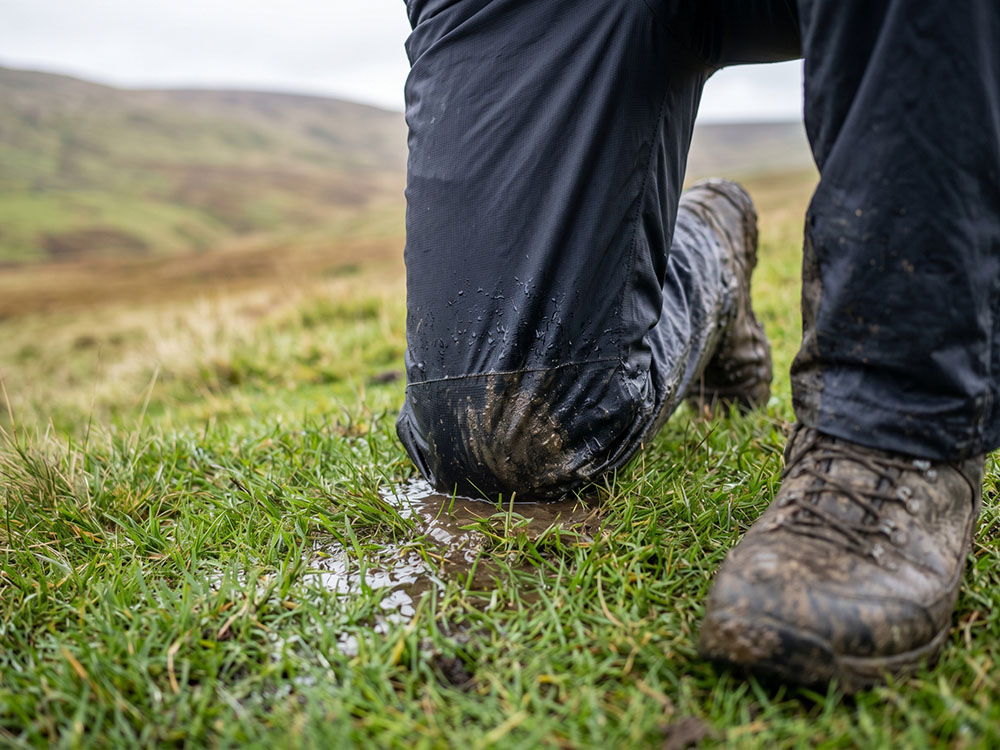
For waterproof trousers, hydrostatic head matters especially because of:
That is why pressure-related leakage worries generally come up more often with waterproof trousers than jackets.
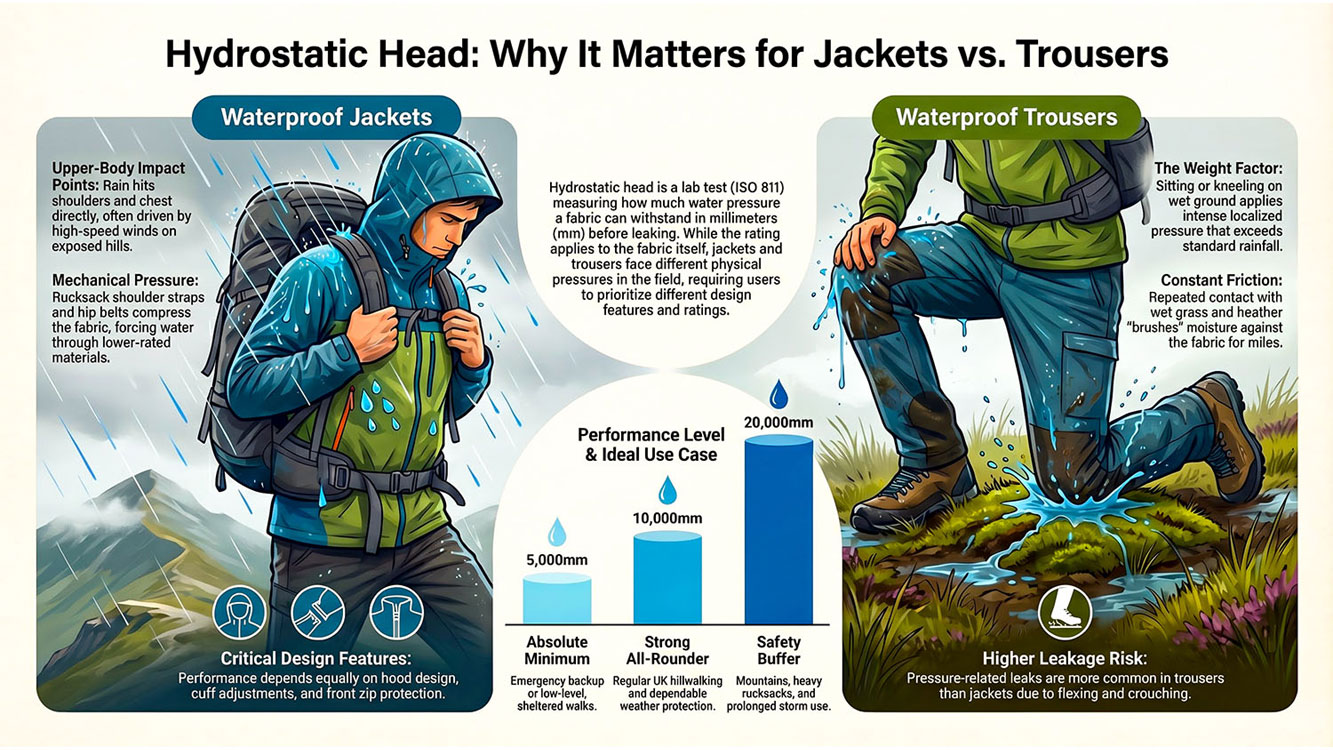
This is one of the most useful ways to understand hydrostatic head.
| Situation | Jacket or trousers? | Why it matters |
| Steady rain while walking | Both | Water pressure is lower than when the garment is compressed |
| Wind-driven rain on exposed ground | Both | The upper and lower body can both take repeated direct rain impact |
| Rucksack shoulder straps | Mostly jacket | Fabric is compressed and ventilation drops |
| Hip belt pressure | Both | Pressure rises around the waist |
| Sitting on a wet bench or rock | Mostly trousers | Body weight presses fabric into moisture |
| Kneeling on soaked ground | Mostly trousers | Knees become strong pressure points |
| Wet grass rubbing for miles | Mostly trousers | The same areas stay wet for longer |
That is why a waterproof rating matters differently depending on the garment and the kind of walking you do.
In general, higher-spec waterproofs often cost more, though not always in neat steps between 5,000mm, 10,000mm and 20,000mm. You are usually paying not just for the waterproof rating, but also for better fabrics, better construction and more features.
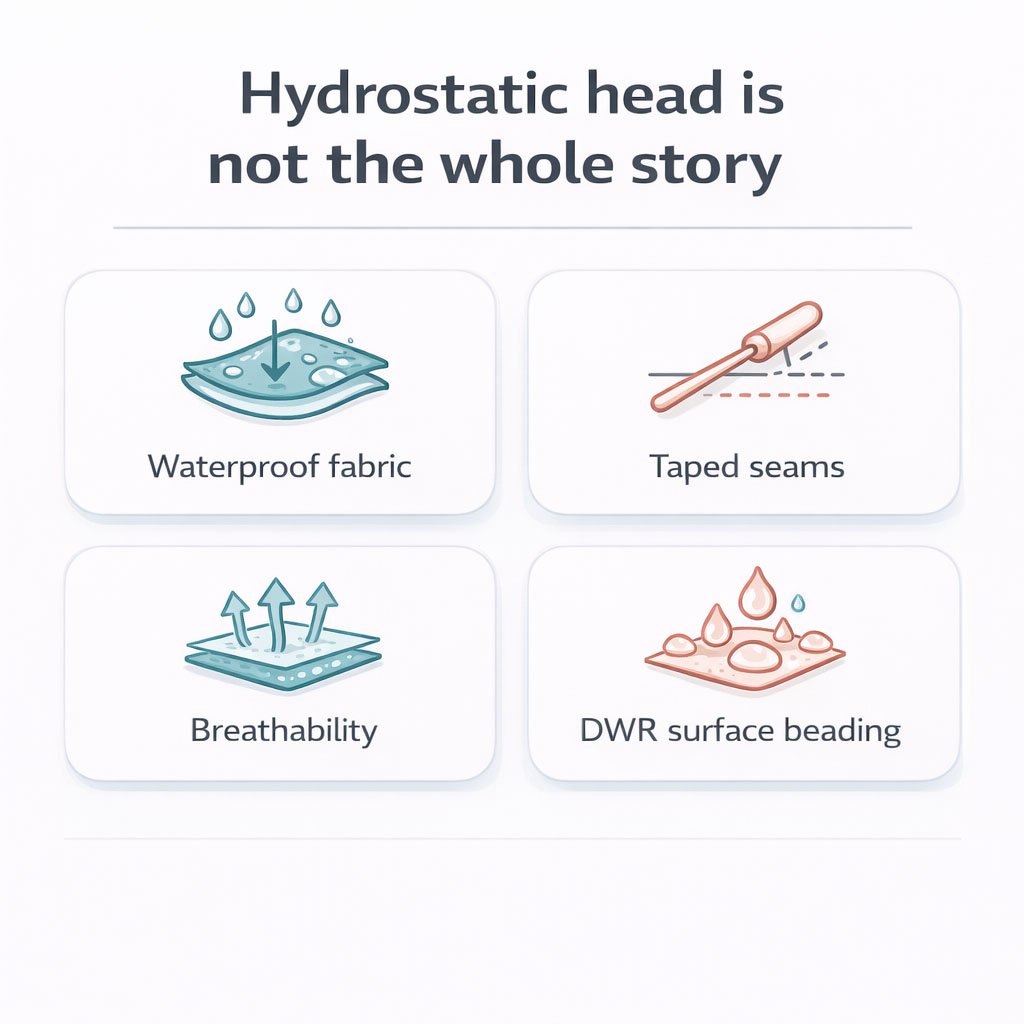
SATRA's explanation of EN 343 makes it clear that rainwear performance is not only about the fabric. Seams and garment construction are also critical.[2] A jacket or pair of trousers can have a strong waterproof fabric, but still let you down if the seam sealing is poor.
ISO 4920 assesses how well the outer fabric resists surface wetting, often described in everyday use as how well the outer fabric beads water.[3] This is different from hydrostatic head. ISO is clear that the spray test does not measure water penetration through the fabric.[3]
SGS, a global inspection, testing and certification company that works across textiles and outdoor products, also notes that hydrostatic head and spray testing assess different aspects. In simple terms, a fabric can still score well on hydrostatic head testing while the outer face fabric wets out badly, which may leave the garment feeling colder, heavier, and less comfortable, even if the waterproof barrier still resists penetration.[8]
SGS also notes that at higher pressures, the hydrostatic head test has limitations, including potential stretching of the test specimen and difficulty identifying fine water penetration at the endpoint.[8]
ISO 11092 is the recognised method for measuring how well a fabric allows heat and moisture vapour to pass through it under controlled conditions.[4]
This is one of the main ways to assess breathability.
SATRA explains that EN 343 uses this method for breathability testing, often expressed as an R_et value, which stands for resistance to moisture vapour transfer. In simple terms, lower R_et values mean moisture can escape more easily, helping to reduce the clammy feeling inside a jacket or a pair of waterproof trousers.[2] [4]
SATRA also notes that EN 343 includes an optional cloudburst test, because even when materials and seams perform well, the garment design can still fail, for example, through poor cuffs, pockets or openings that let water in.[2] That is a very useful reminder that waterproof clothing is more than a single fabric number.
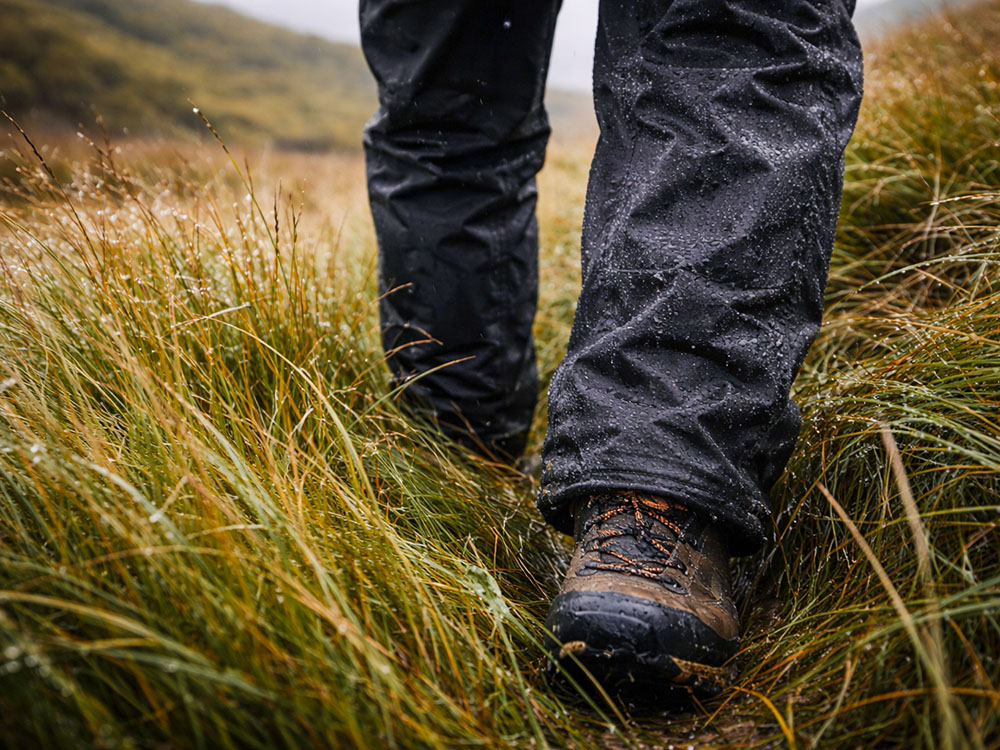
One of the biggest buying mistakes is assuming that if the inside feels damp, rain must be penetrating the fabric. Often, that is not what is happening.
A 2023 review of waterproof breathable membranes explains that these systems are designed to prevent liquid water penetration while allowing water vapour to pass through, but this is always a balancing act.[5]
A separate review of waterproof breathable sportswear makes the same point: outdoor clothing aims to keep rain out while still allowing perspiration to escape.[5]
So, if you are climbing hard in humid weather, wearing a backpack and generating a lot of heat, you can feel clammy inside even if the waterproof barrier is still doing its job.[2] [4] [5] [6]
That is why pit zips, side zips, smart layering and effective venting can make a huge difference.
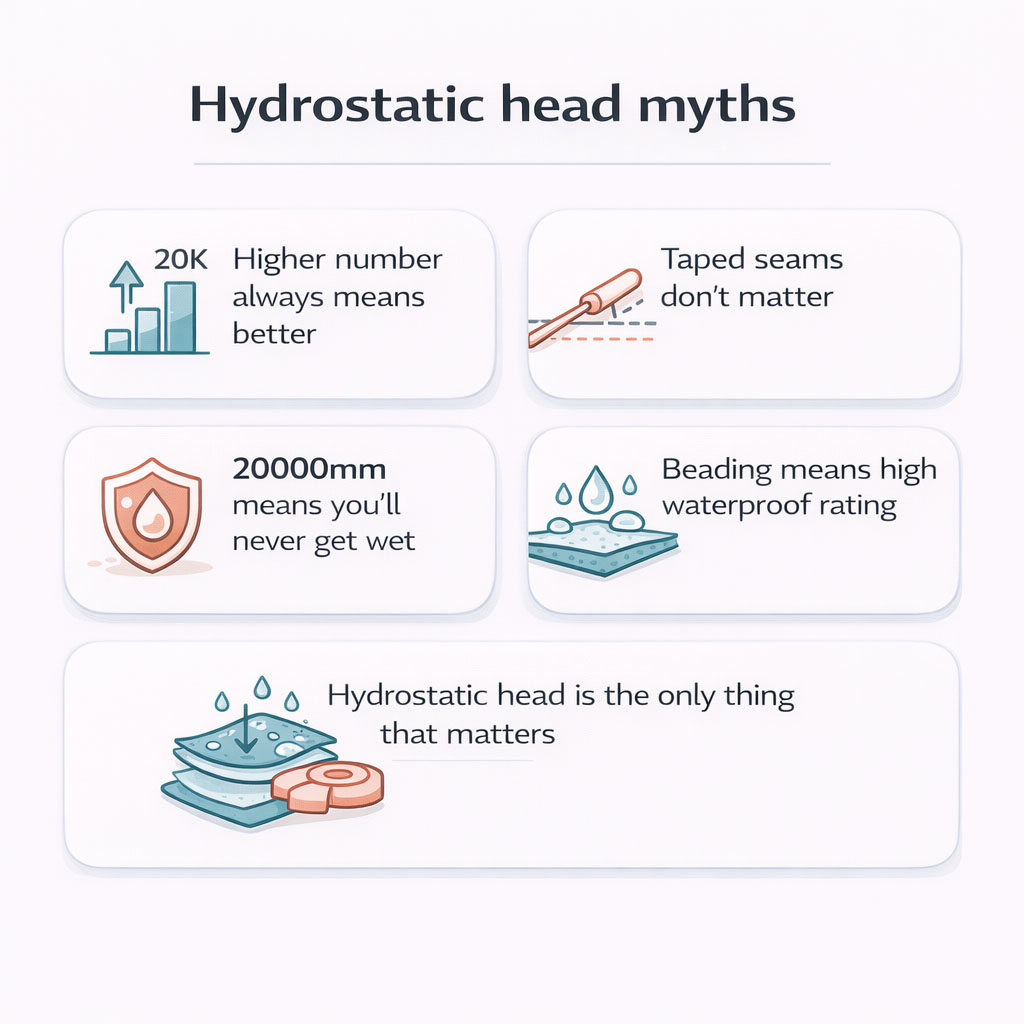
No. The best garment is the one that balances waterproofing, breathability, fit, seam quality and practicality.
No. You can still get damp from sweat, condensation, poor seam sealing, water entering through cuffs or openings, or inadequate zip protection.
Not necessarily. Water beading is more about the outer surface treatment and wetting resistance than about hydrostatic head itself.[3]
No. It matters for jackets too. It applies to any waterproof fabric being tested for water penetration resistance.[1]
Definitely not. Construction, membrane type, seam sealing, breathability, cut and overall design all affect actual performance.
The standards tell us that hydrostatic head is a valid and useful method for testing resistance to water penetration.[1]
EN 343 tells us that the performance of waterproof clothing depends on more than the fabric alone, including seams and design.[2]
ISO 4920 reminds us that surface wetting is distinct from actual penetration.[3]
ISO 11092 reminds us that breathability is another distinct performance area.[4]
The wider research literature supports the same broad conclusion. Waterproof outdoor clothing is always a balancing act between keeping rain out and allowing moisture to escape.[5] [6]
Walks4all take on the evidence
The evidence points to a practical answer rather than a dramatic one:
That is true for both jackets and trousers, even if the pressure points differ.
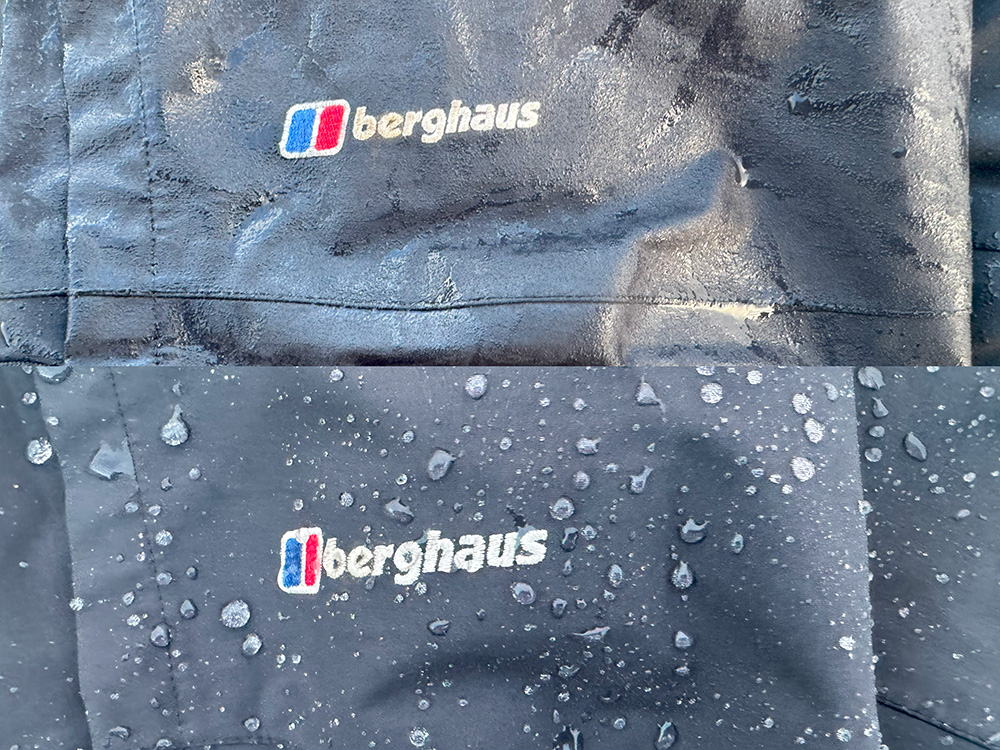
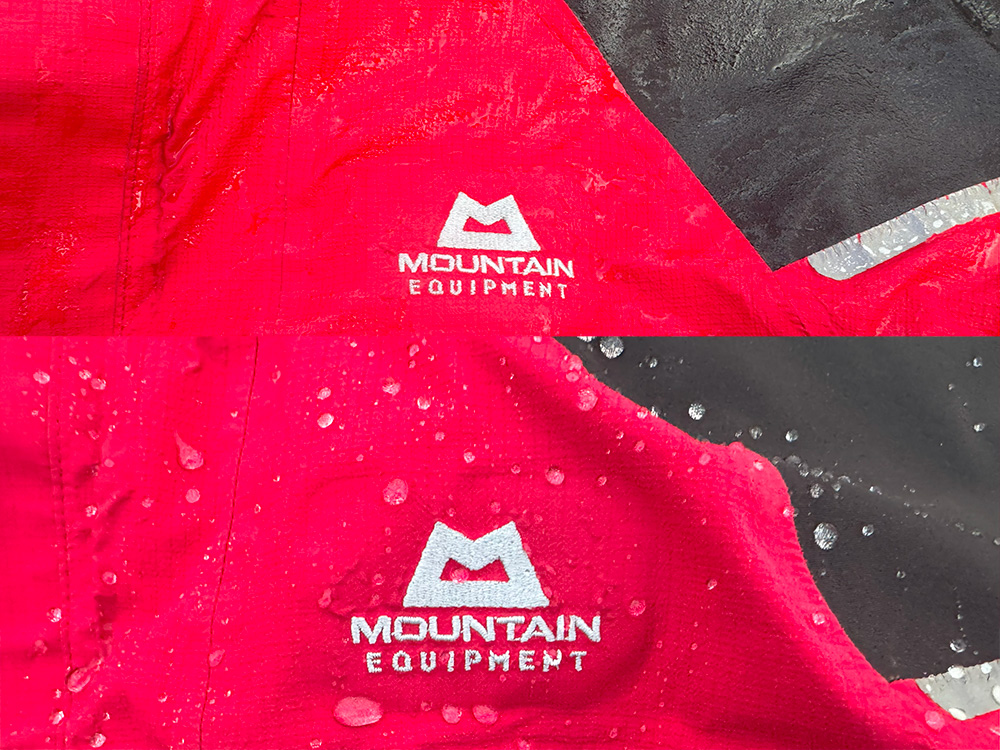
Keeping waterproof jackets and trousers clean helps them remain waterproof in real-world use. Dirt, sweat, sunscreen and everyday grime can reduce the effectiveness of the durable water repellent (DWR) finish on the outer fabric. When that happens, the fabric can 'wet out', meaning it soaks up water instead of beading it off. Even if the membrane underneath is still waterproof, this can make your gear feel colder, heavier and much less breathable.
Regular washing and occasional reproofing help restore performance. Guidance from GORE-TEX and other manufacturers indicates that cleaning removes contaminants that reduce water repellency, and that DWR treatments can be reactivated by washing and gentle heat, or reapplied when beading no longer occurs. In simple terms, if water stops beading and the fabric darkens when wet, it is usually time to clean your waterproofs first, then reproof them if needed.
For more details, check out our guides on how to wash and reproof waterproof jackets and how to wash and reproof waterproof trousers.
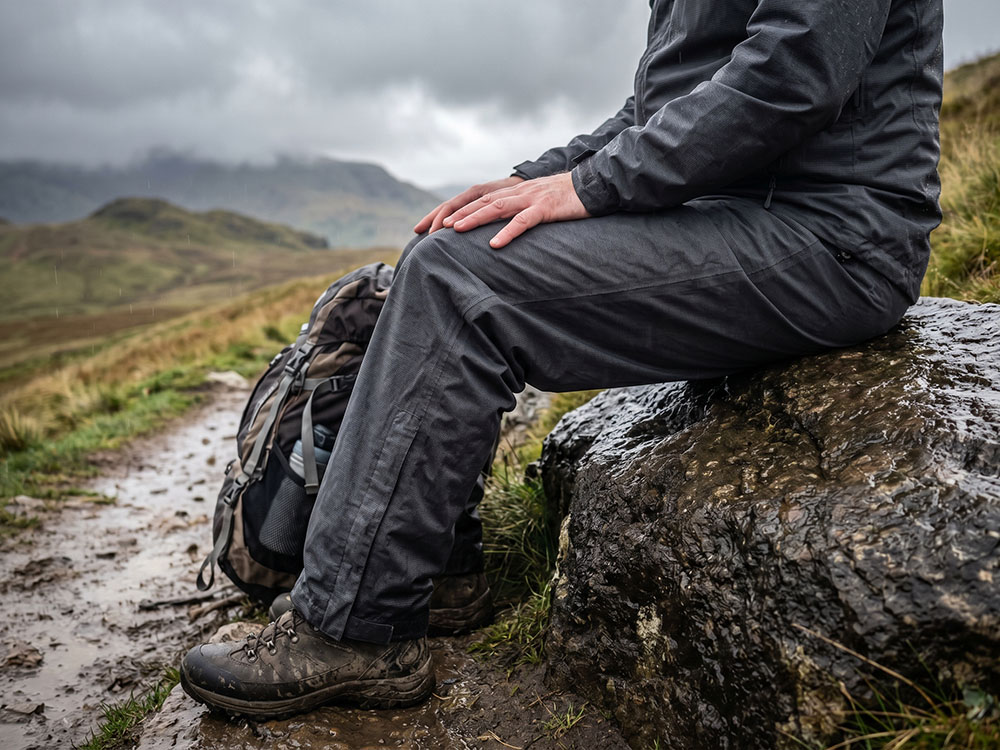
Hydrostatic head is worth understanding because it offers a much clearer way to judge waterproof jackets and trousers than vague terms such as 'weatherproof' or 'storm-ready'. It applies to both garments and provides a useful benchmark for comparing fabrics.[1]
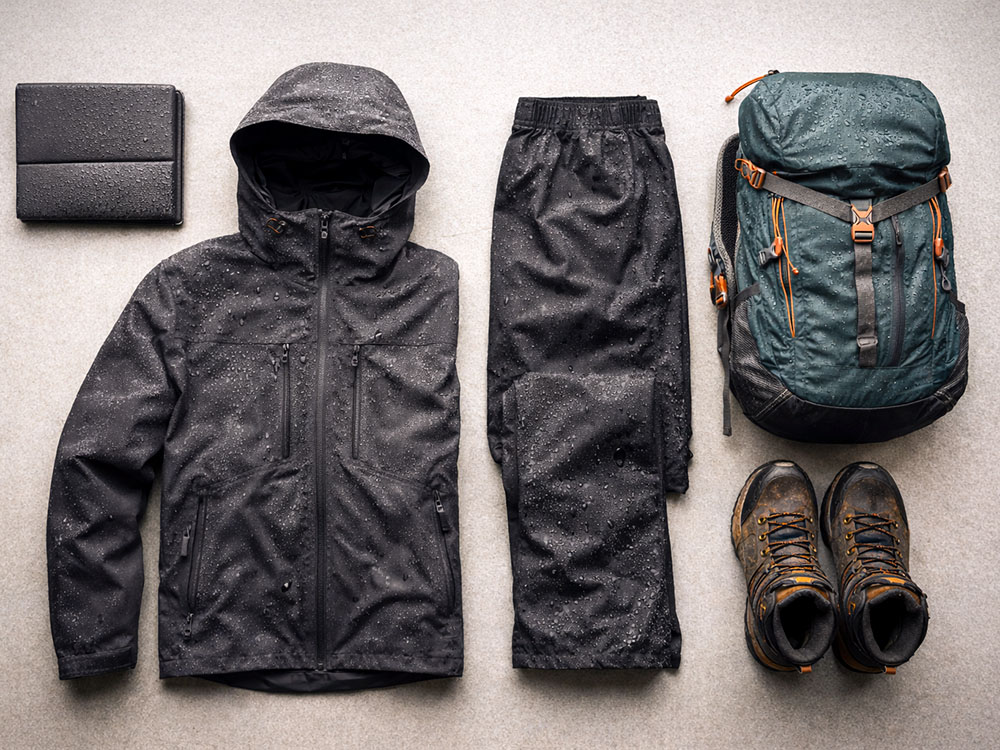
The weather does not always behave as forecast, and once you are out on the hill, especially in exposed places, having more margin is often worth it. The best waterproofs are not simply the ones with the highest rating. If all else is equal, I would much rather have a higher waterproof rating and not need it than the other way round.
Hydrostatic head is the lab-tested measure of how much water pressure a fabric can withstand before water penetrates it.[1]
It means the level reached in the hydrostatic pressure test before water penetrated the fabric, expressed in millimetres.[1]
Yes. Hydrostatic head applies to waterproof jackets, waterproof trousers and other waterproof fabrics.[1]
Yes, it is a sensible minimum, but I would treat it as the absolute minimum rather than the ideal. For regular UK walking, especially on exposed or higher ground, 10,000mm or 20,000mm is usually the safer and more reassuring option.
Yes. It provides a stronger waterproofing buffer and is often a better all-round choice for regular UK walking.
Sometimes, but not always. If you walk a lot, get caught in heavy rain, or head into exposed conditions, 20,000mm can be a sensible choice. It is my choice for any walks in the mountains.
Usually, yes, for many walkers. It is often a strong all-round rating for UK hillwalking and day walking, especially if the jacket is well designed, since waterproofing isn't the only factor to consider.
Often yes, but trousers are under more pressure at the knees and seat, so some walkers prefer higher ratings. If you often stop for breaks on wet ground, a sit mat can also help reduce pressure and limit moisture transfer to your trousers.
Not automatically, but trousers often experience greater pressure on the knees and seat, so the waterproof rating can matter more in practice.
No. Hydrostatic head measures resistance to water penetration. Breathability is measured separately, including in accordance with ISO 11092.[4]
Because those are high-pressure points. Sitting or kneeling presses the fabric more firmly into a wet surface.
No. A better jacket also needs good seam sealing, a good hood, decent zip protection, useful venting and good breathability.
No. Side zips, seam quality, cut, comfort and real-world usability matter too.
For many walkers, around 10,000mm is a very good all-round target, taking practicality and price into account. If you want more weather and safety margin, 20,000mm is a sensible step up.
April 2026