By using this website, you agree to our use of cookies (needed to provide our website’s features) and our Terms of Use.
By: Andrew Forrest - Updated June 2026
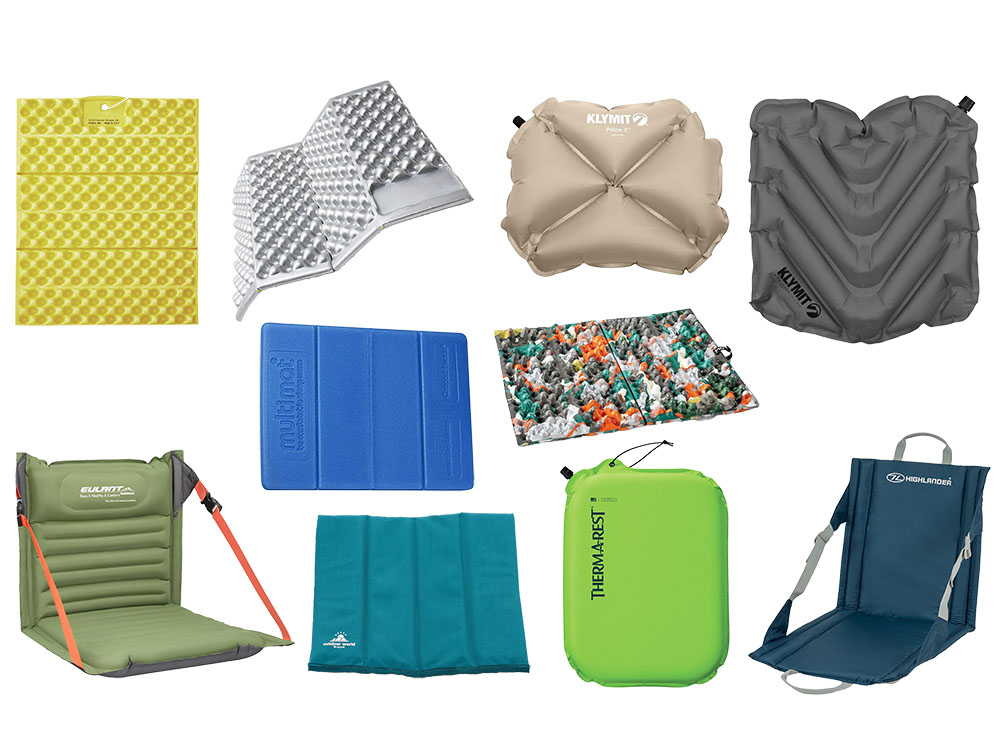
Compare the best sit mats for UK walking, hiking, camping and festivals, with practical picks for foam, inflatable, backrest and budget options.
A practical Walks4all guide to choosing a compact seat pad that keeps you warmer, drier, and more comfortable on wet grass, cold rocks, muddy paths, hard benches, and at campsites and outdoor events.
This page contains affiliate links. As an Amazon Associate, we earn from qualifying Amazon purchases at no additional cost to you. We may also earn commissions from other retailers, again at no additional cost to you.
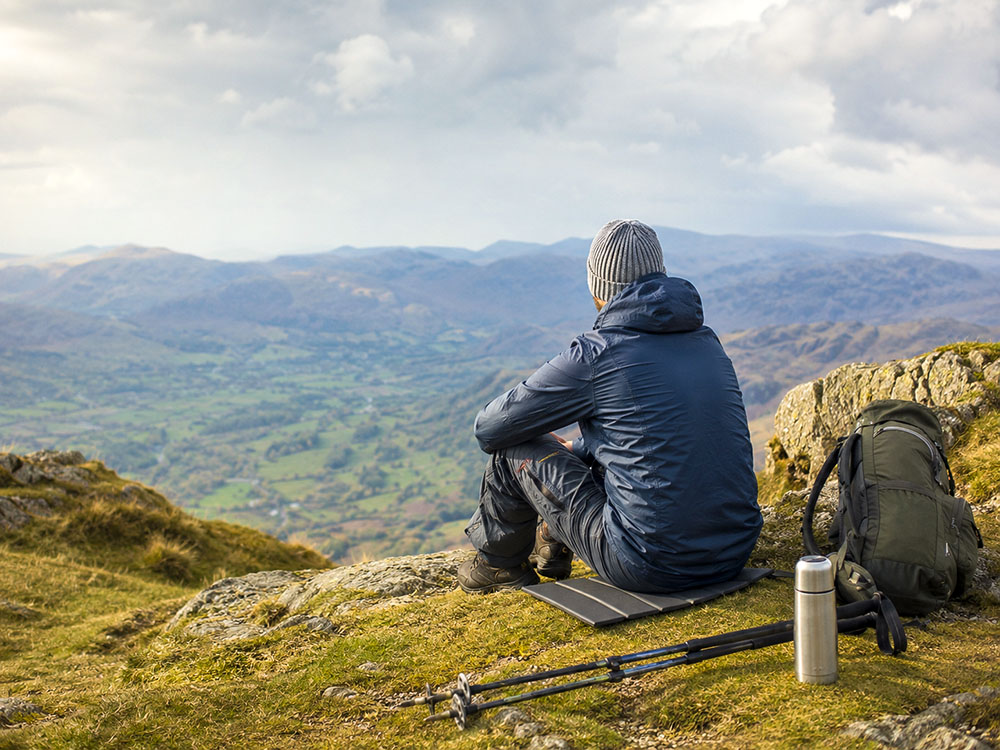
A sit mat gives UK walkers a dry, more comfortable place to stop on grass, rock or exposed ground during a walk.
For most UK walkers, the best sit mat is a tough, closed-cell foam folding pad: it is light, quick to use, water-resistant, and far less prone to damage on rough ground than an inflatable cushion. For wet grass, cold stone walls, muddy lunch stops, and rocky summits, choose a simple foam pad first.
Comfort-led walkers, campers and festival-goers may prefer a self-inflating or inflatable seat because it feels softer on longer sits. The trade-off is that air-filled designs require more care around thorns, sharp rocks and stove sparks. For me, the most useful sit mat is not always the plushest; it is the one I carry and use on ordinary walks.
Key takeaways
This guide draws on Walks4all's many years of field experience, product specification checks, manufacturer information where available, and practical UK walking judgement, with a focus on how each mat performs in real-world conditions: damp grass, cold rock, stony ground, mud, benches, packed rucksacks, longer stops, and variable weather.
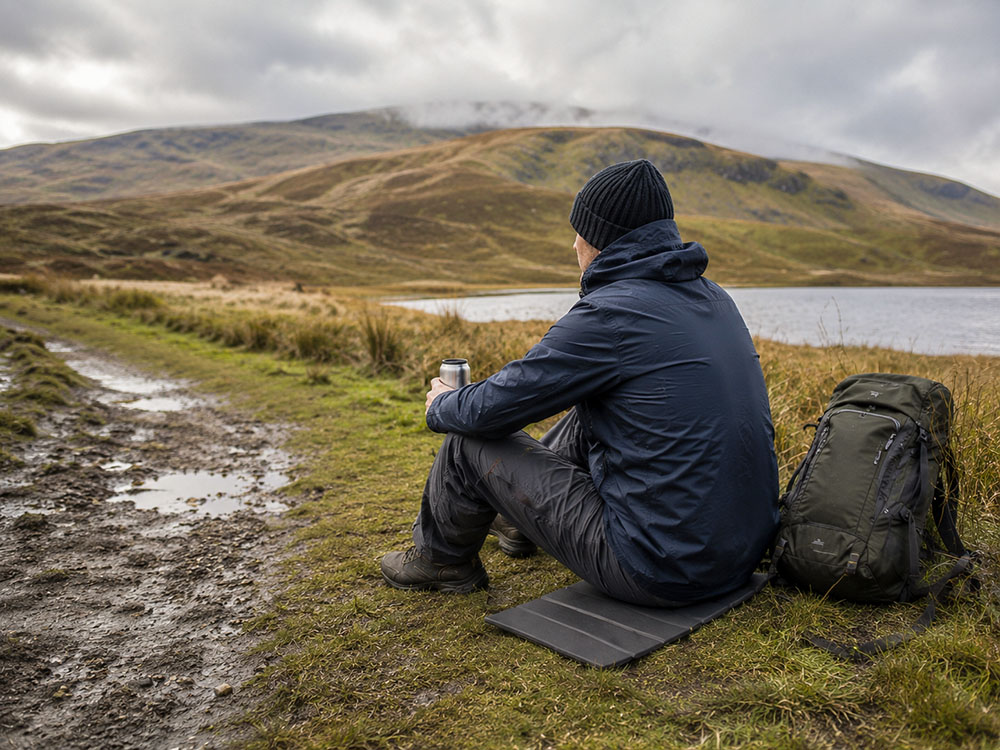
Closed-cell foam and water-resistant sit mats are especially useful when the grass, path edge or bench is wet.
Product details such as dimensions, weights, materials, and accessories can vary by colour, version, retailer, and season. Where a technical claim matters, always check the current product page before buying, especially for dimensions, weight, included accessories, colours, and stock.
A sit mat, also called a sit pad or seat cushion, is a small, portable pad that gives you a dry, warmer and more comfortable place to sit outdoors. It is the smaller sibling of a sleeping mat: not designed for a full night's sleep, but very useful when the ground is wet, cold, stony or simply uncomfortable.
Sit mats are useful on walks, hikes, picnics, beaches, fishing trips, dog walks, festivals, outdoor shows, stadium seats, campsite evenings and quick winter stops. A good one turns a damp verge, a cold rock, a snow-dusted boulder or a hard bench into somewhere you can pause for a snack, a brew or a view.
The best sit mat for you depends on how you use it. Hill walkers usually need something rugged, lightweight and easy to reach. Campers may prefer more cushioning. Festival-goers might want back support. Families may want wipe-clean practicality. Ultralight walkers may want only a thin foam barrier that weighs almost nothing.

A small sit mat can make a windy summit lunch stop warmer, drier and more enjoyable without adding much pack weight.
It is not intended for people who need a full camping chair, a medical pressure-relief cushion, or specialist mobility support. A sit mat improves comfort, warmth, and dryness, but it is not a substitute for proper seating support where needed.
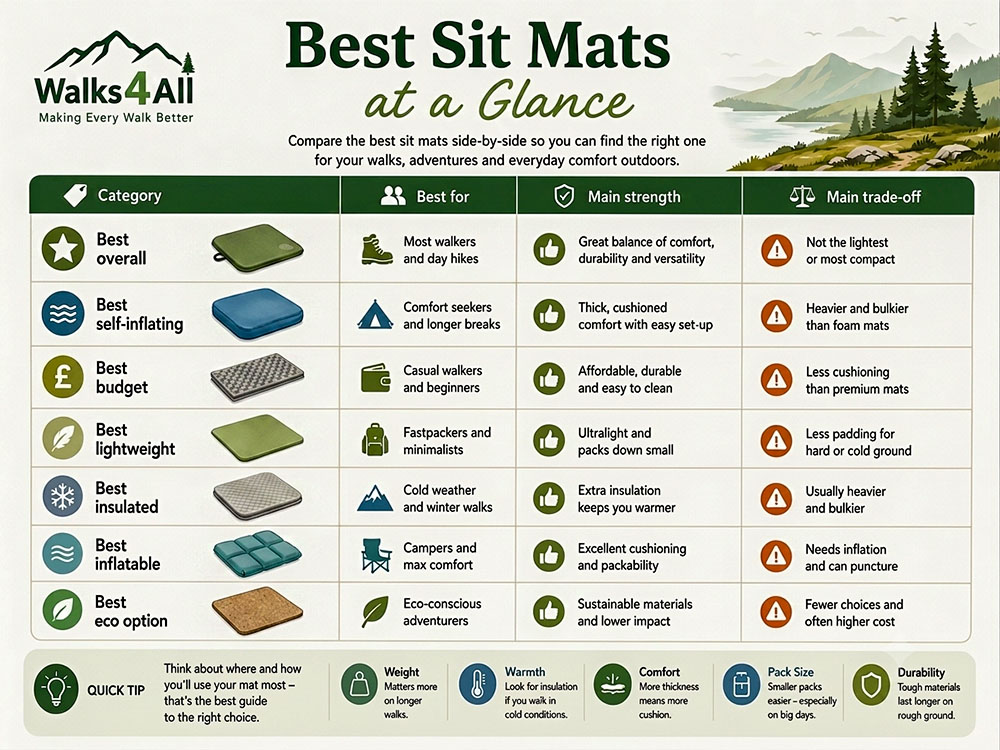
Use the at-a-glance comparison to match a sit mat to your main need: comfort, weight, insulation, budget, packability or lower-impact materials.
| Category | Recommended item | Best for |
| Best overall sit mat for most walkers | Therm-a-Rest Z Seat | Day walks, hiking, backpacking, wet grass and cold rocks |
| Best comfort/self-inflating sit mat | Therm-a-Rest Lite Seat | Longer breaks, camp comfort, festivals and hard benches |
| Best inflatable seat with backrest | EULANT Inflatable Portable Seat with Backrest | Festivals, campsites, beaches, picnics and gentler stops |
| Best eco/reclaimed foam option | NEMO Chipper | Sustainability-conscious walkers and general outdoor use |
| Best inflatable sit mat | Klymit V Seat | Compact comfort for smoother stops, benches, travel, shows and events |
| Best ultralight budget foam sit mat | Multimat Compact Kumfie | Very brief stops and always-in-the-pack use |
| Best budget reflective folding sit mat | Trinordic IXPE Folding Sit Mat | Budget walkers who want warmth and dryness |
| Best sit mat with backrest | Highlander Outdoor Sit Mat | Camping, picnics, beaches, festivals and event seating |
| Best covered folding sit mat | Outdoor World Folding Sit Mat | Wet benches, parks, family camping and general use |
| Best pillow-first dual-use option | Klymit Pillow X Base | Backpackers who want a pillow first and occasional seat second |
| You need... | Choose this type | Best match in this guide |
| A reliable sit mat for most UK walks | Closed-cell folding foam | Therm-a-Rest Z Seat |
| More cushioning for longer rests | Self-inflating foam-and-air seat | Therm-a-Rest Lite Seat |
| Inflatable comfort with back support | Inflatable seat with backrest | EULANT Inflatable Portable Seat with Backrest |
| A lower-waste foam option | Reclaimed closed-cell foam | NEMO Chipper |
| Compact inflatable comfort for smoother ground, benches and events | Inflatable air cushion | Klymit V Seat |
| The lightest, simplest mat to leave in a rucksack | Thin closed-cell foam | Multimat Compact Kumfie |
| A budget reflective folding mat | IXPE folding foam with reflective surface | Trinordic IXPE Folding Sit Mat |
| Back support for camp or events | Backrest-style sit mat | Highlander Outdoor Sit Mat |
| A covered folding seat pad | Covered foam pad | Outdoor World Folding Sit Mat |
| A pillow that can double as a seat occasionally | Inflatable pillow/seat hack | Klymit Pillow X Base |
Use the Walks4All SEAT Check when comparing sit mats: Size, Ease of carrying, Amount of insulation, and Toughness. These four factors matter more in real-world walking than a long list of marketing claims.
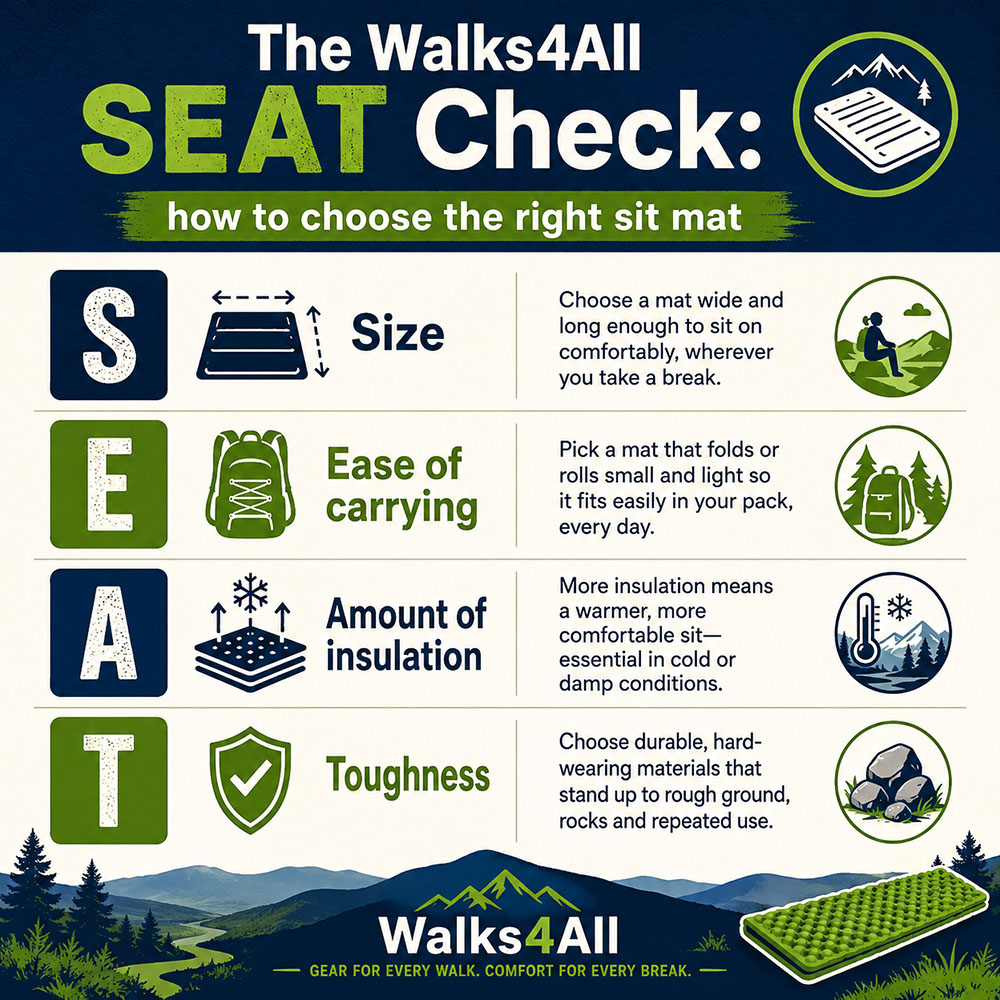
The Walks4All SEAT Check keeps the buying decision simple: size, ease of carrying, amount of insulation and toughness.
| SEAT factor | What it means | Practical rule |
| S - Size | The mat needs to be wide and long enough to sit on comfortably without sliding off. | Choose enough coverage for lunch stops, but avoid something so large that it is awkward to pack. |
| E - Ease of carrying | A useful sit mat should fit easily in or on a rucksack and be quick to access. | For hill walking, prioritise mats that fold, roll or pack flat without making the rucksack awkward. |
| A - Amount of insulation | The mat should slow heat loss into cold ground, especially on stone, wet grass and snow. | Use published R-values, but also check the material, thickness and how much the mat compresses. |
| T - Toughness | The surface should withstand rocks, heather, benches, mud and regular packing. | Foam is the safest choice for rough ground; inflatables are comfier but require more care. |
| Product | Type | Size (Open) | Size (Folded/Packed) | Weight |
| Therm-a-Rest Lite Seat | Self-inflating | 41 x 33 x 3.8 cm | 15 x 6 cm | 119 g |
| Therm-a-Rest Z Seat | Closed-cell foam | 41 x 33 x 2 cm | 30 x 6 x 7 cm | 57 g |
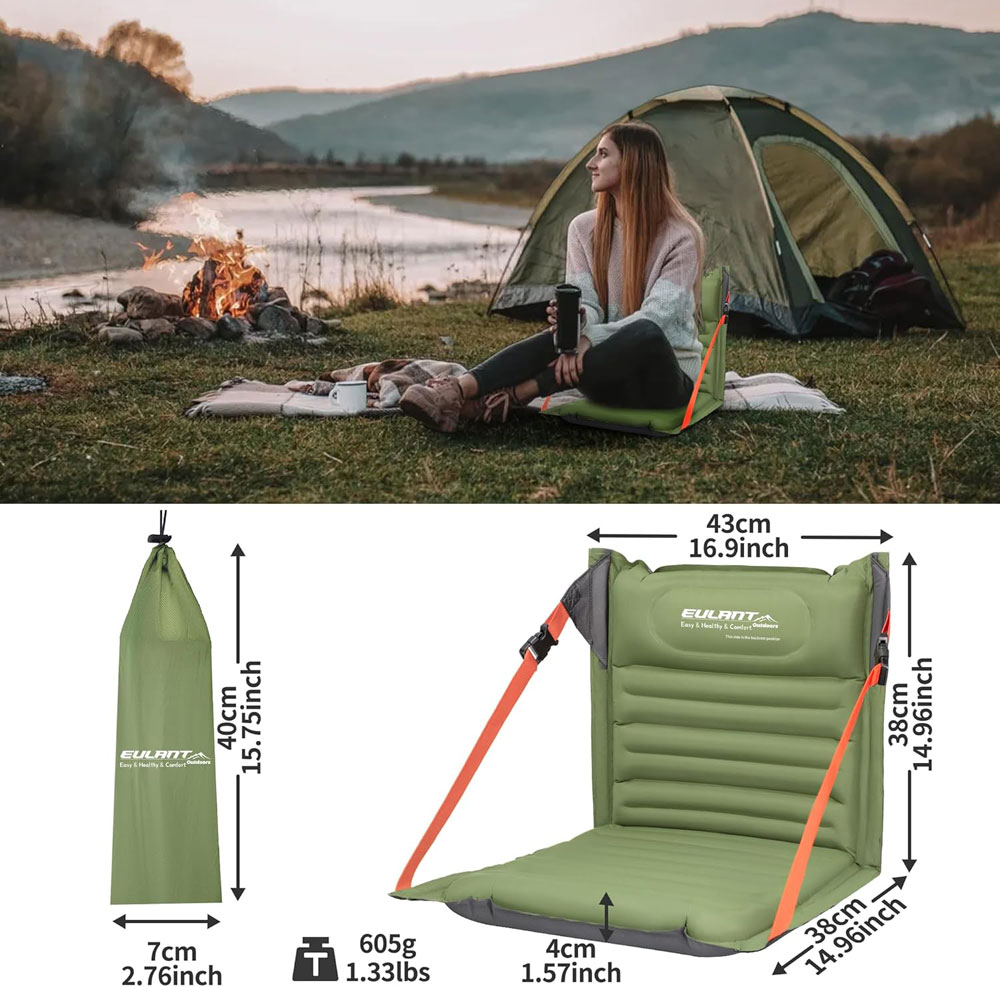
| EULANT Inflatable Portable Seat with Backrest | Inflatable seat with backrest | Seat and backrest both 43 x 38 x 4 cm | 40 x 9 x 9 cm | 605 g |
| NEMO Chipper | Reclaimed closed-cell foam | 32 x 42 x 5.7 cm | 32 x 10.5 x 5.7 cm | 126 g |
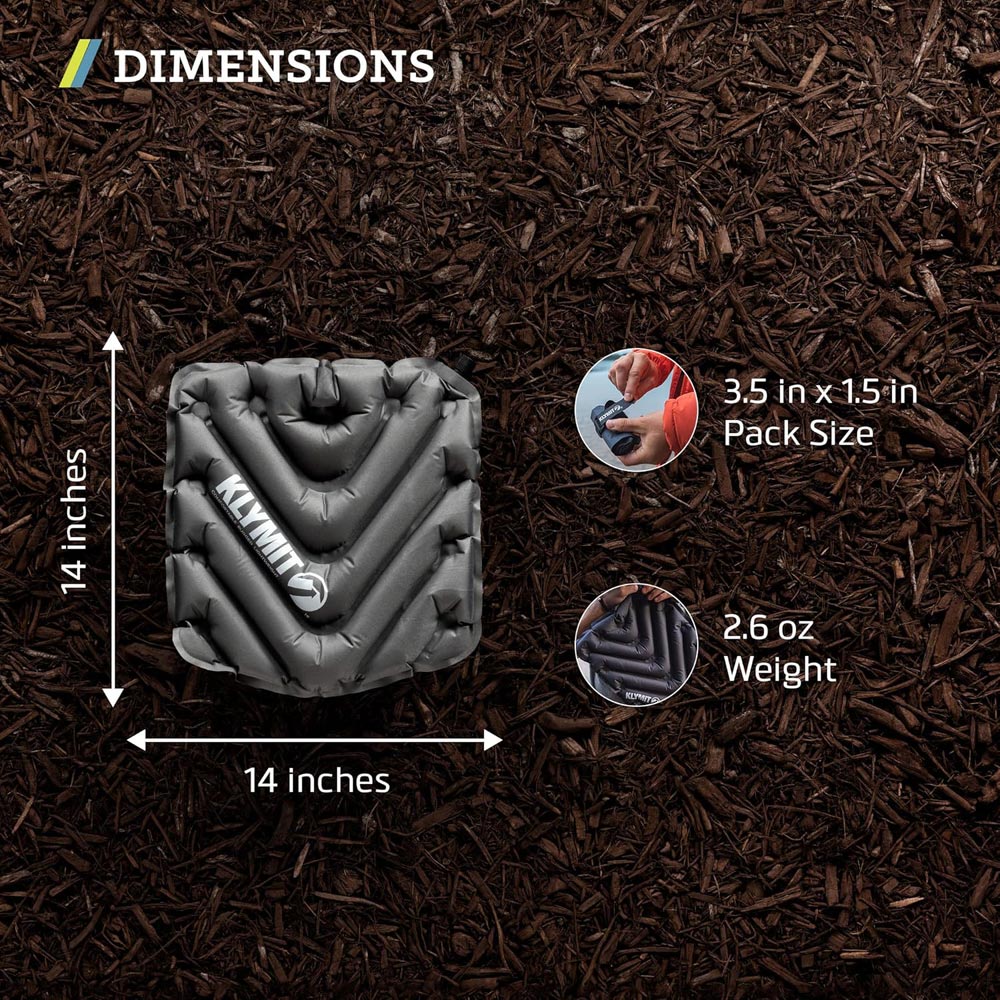
| Klymit V Seat | Inflatable cushion | 37 x 34 x 4 cm | 9 x 4 cm | 73 g |
| Multimat Compact Kumfie | Closed-cell foam | 38.5 x 29 x 0.65 cm | 29 x 9.5 x 2.5 cm | 33 g |
| Trinordic IXPE Sit Mat | Closed-cell foam | 39.5 x 30 x 1.8 cm | 30 x 9.5 x 4 cm | 42 g |
| Highlander Outdoor Sit Mat | Seat with backrest | Seat and backrest both 40 x 38 cm | 40 x 40 x 4 cm | 380 g |
| Outdoor World Folding Sit Mat | Foldable padded seat | 35 x 29.5 x 1.5 cm | 29.5 x 8.5 x 5 cm | 110 g |
| Klymit Pillow X | Inflatable | 38 x 28 x 9 cm | 11 x 6 cm | 71 g |
Quick verdict: The Therm-a-Rest Z Seat is the best sit mat for most walkers because it solves the main walking problem with almost no fuss. It is light, quick to unfold, hard to damage and useful on cold, wet or rough ground.
 |
 |
 |
|
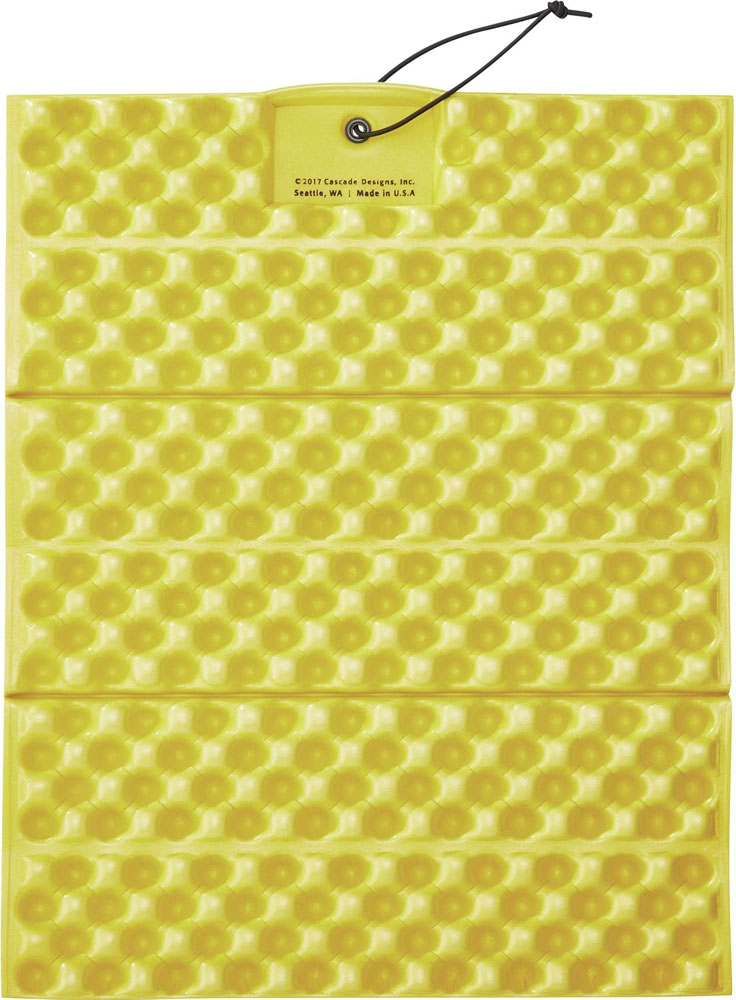
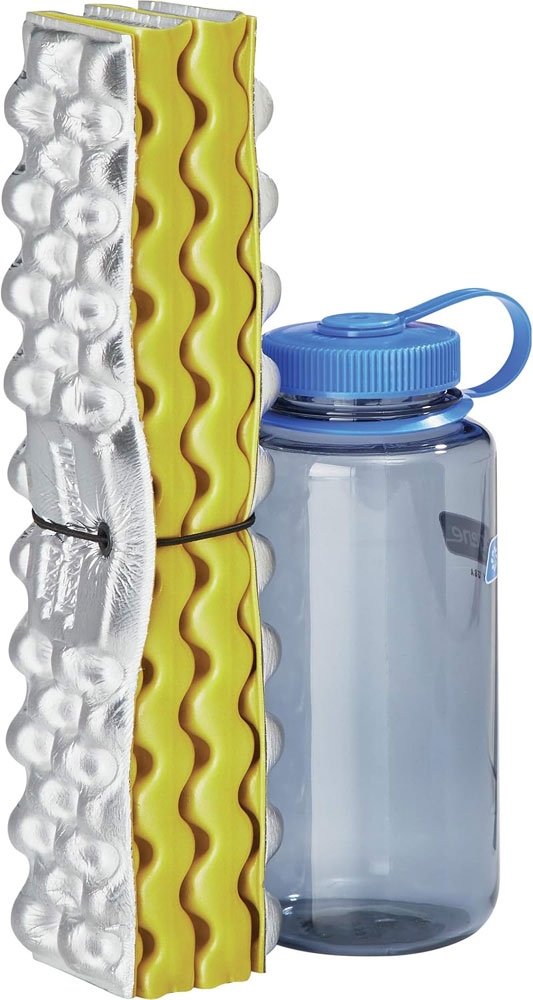
Features and specs:
Pros:
Cons:
Avoid if: you want a soft, chair-like seat for long sitting sessions or need back support at camping and festivals.
Why we chose it:
For most walkers, the Z Seat strikes the right balance. A sit mat is most useful when it is easy to bring on ordinary walks, not just big camping trips. At just under 60 g, this is the kind of pad that can stay in a rucksack without much thought.
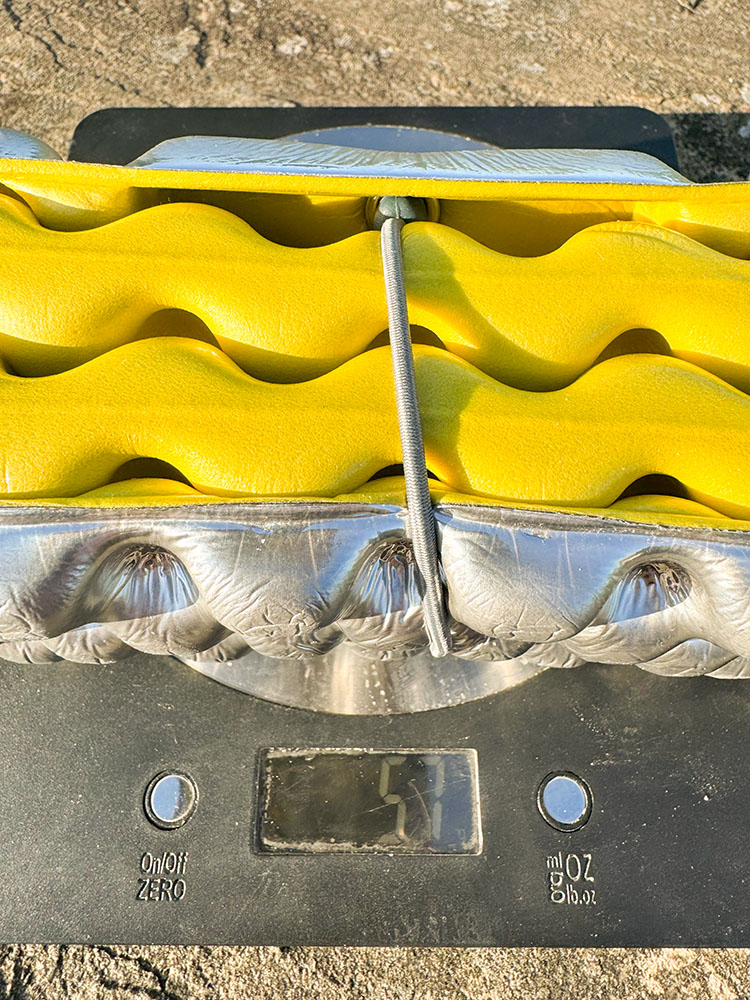
The Therm-a-Rest Z Seat weighed 57g on my scales, close to the official 60g figure.
For me, the practical advantage over inflatable pads is confidence. You can put it on a stony path, a sharp rock, a damp log or a stone wall without worrying about punctures. That matters in the UK, where a lunch stop often means making do with whatever damp or uneven surface is nearby.
In use, the Z Seat feels like a small section of a foam sleeping mat. There is a softer layer of foam on top for added comfort, a denser layer underneath for better durability, and a bungee to hold it closed.
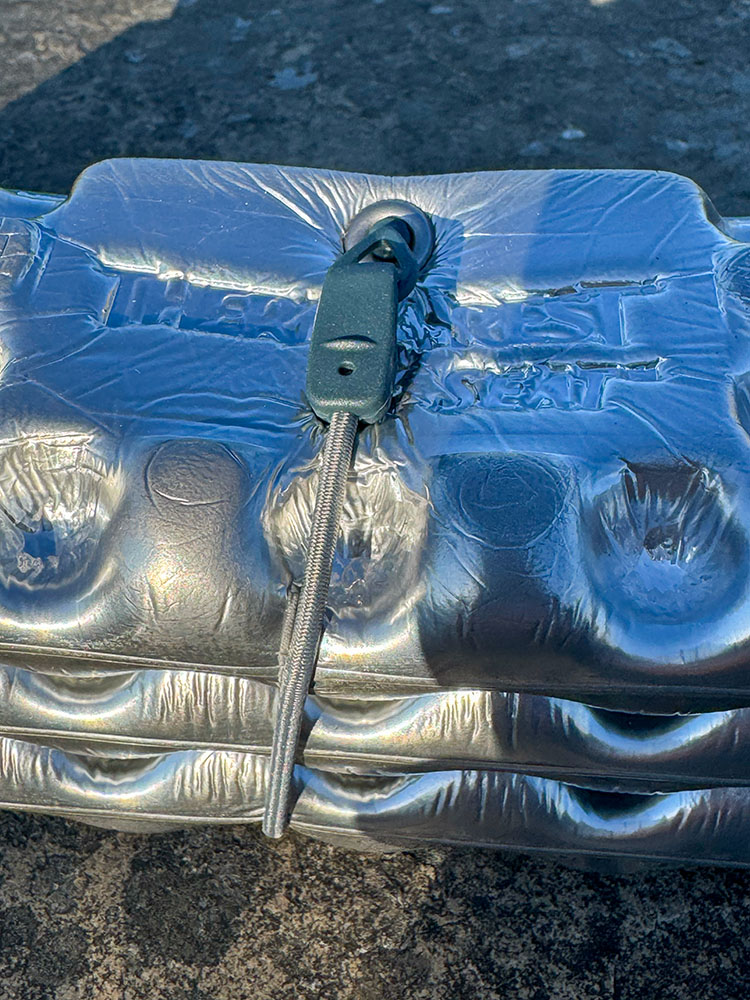
A small bungee loop keeps the folded Z Seat tidy in a pack or side pocket.
That said, it is not luxurious, and on sharper rocky ground you can still feel the surface beneath you, but it is far better than sitting directly on cold stone or wet grass. On my scales, the one I used weighed around 57 g, and is the sit mat I carry on normal hikes.
When I'm not walking or hiking, for a mat to put on a seat for additional comfort, or sitting watching shows, I do prefer the Therm-a-Rest Lite seat to this Z Seat, but for walking and rough-ground breaks, I would choose the Z Seat first because it is simpler and more robust. For shows, hard seats, or comfort-first stops, I still prefer the softer Lite Seat.
Walks4all field note: Choose the Z Seat when reliability on wet, rough and stony ground matters more than plush cushioning.
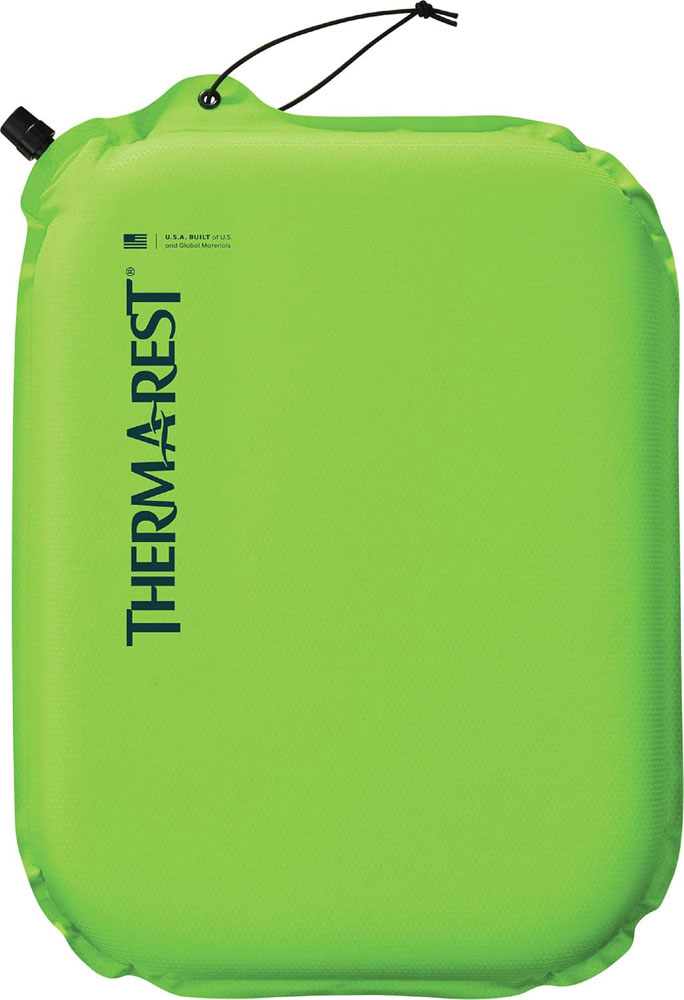
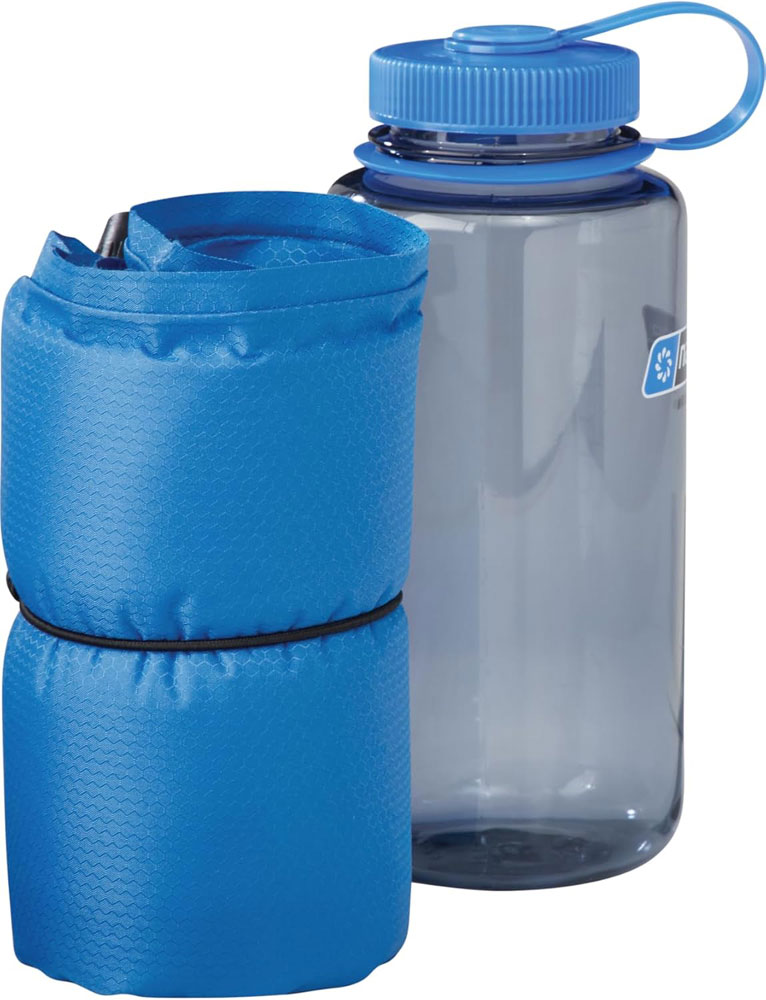
Quick verdict: The Therm-a-Rest Lite Seat is the best comfort-focused self-inflating sit mat. It is thicker and softer than most foam pads, but it requires more care and inflates a little more slowly than a simple folding mat.
|
|
Features and specs:
Pros:
Cons:
Avoid if: you want the lowest-maintenance mat for rough, muddy hill stops. A closed-cell foam pad is simpler to use.
Why we chose it:
The Lite Seat earns its place because sit mats are about more than weight. For longer lunches, sketching, birdwatching, brewing coffee, camping, fishing or festivals, extra cushioning can make the difference between using a sit mat and abandoning it after a single uncomfortable stop.
The 3.8 cm thickness is the key point. A thin foam mat mainly provides a dry barrier and minimal cushioning. A self-inflating mat distributes pressure more evenly and feels better on hard benches, stone walls, and compacted ground.
In use, I inflated it in about five breaths and deflated it quickly with the valve open. I found it warm and comfortable on cold ground, and mud or dirt wiped off easily with a cloth. The caution is that the outer fabric, while durable for normal use, is still more vulnerable than solid foam if you sit on sharp objects. It has an integrated bungee loop, which helps with packing.
For me, this is the comfort pick rather than the rough-ground default. I would take it for comfort-led days and campsite use.
Walks4all field note: Choose the Lite Seat when comfort is more important than rough-ground durability.
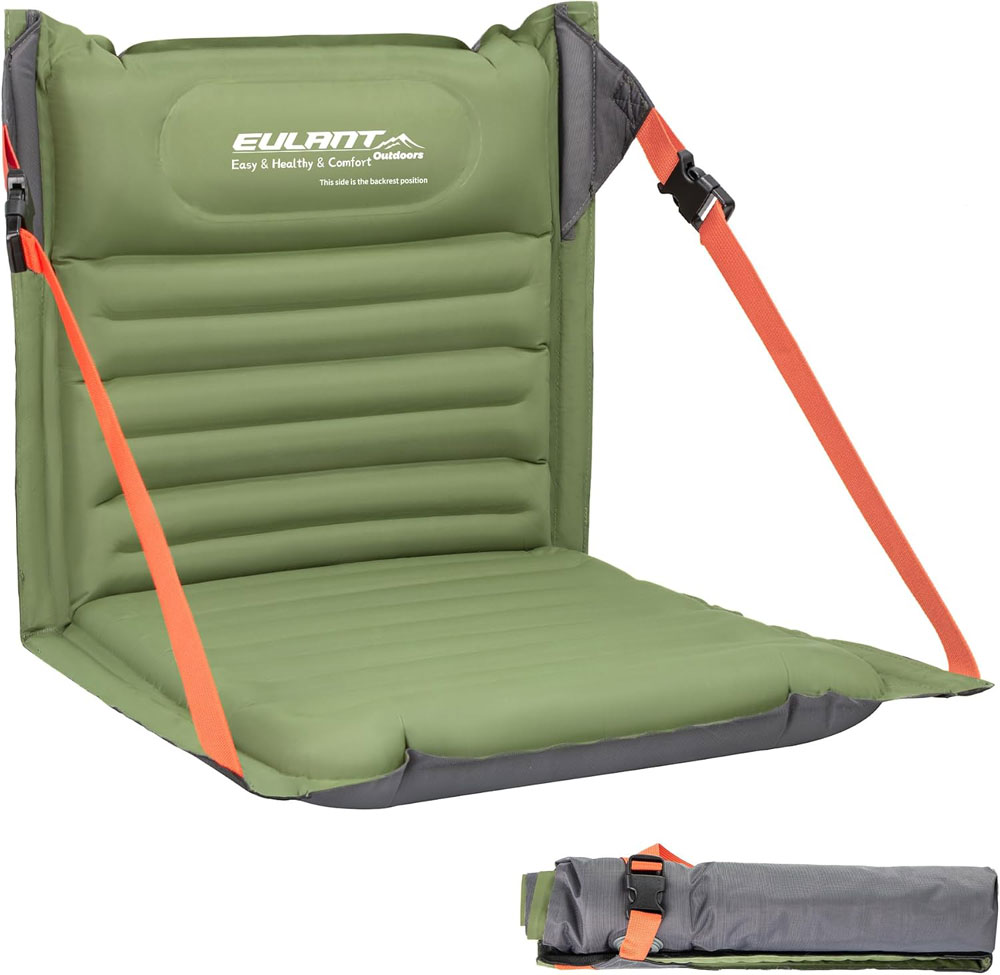
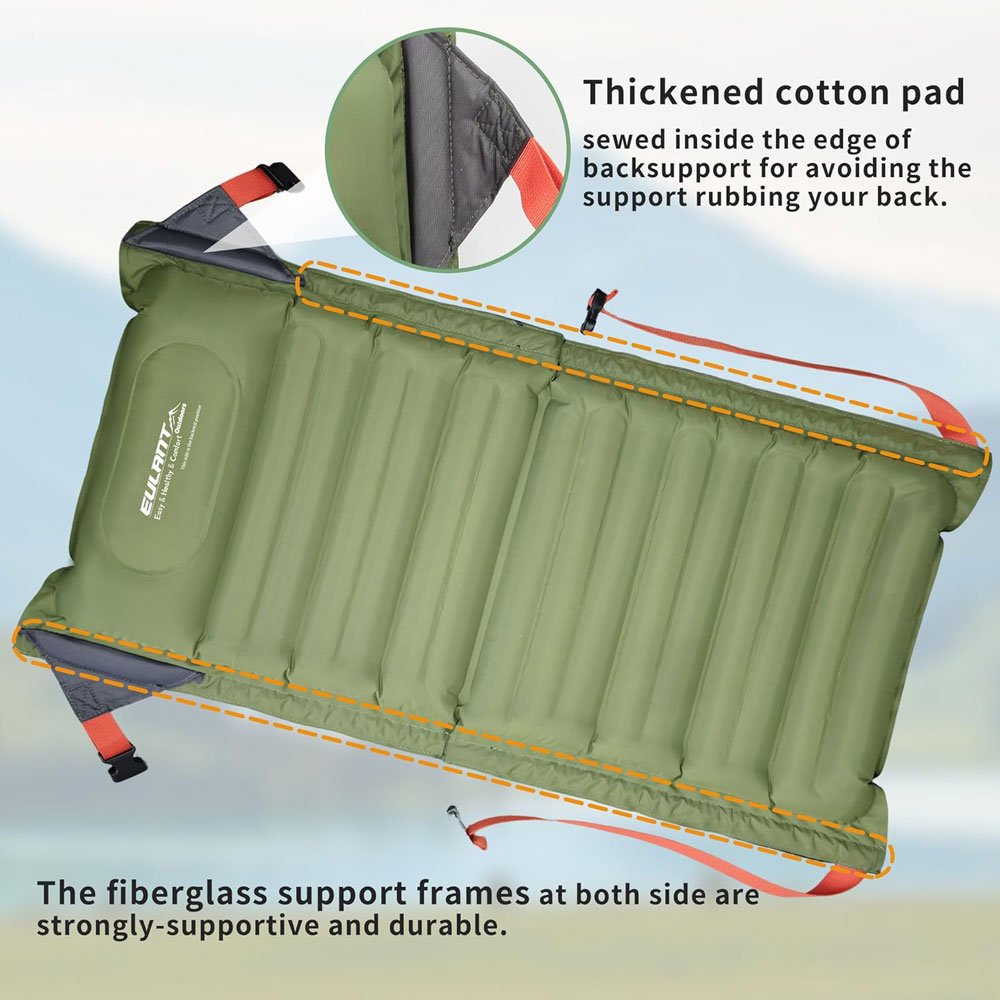
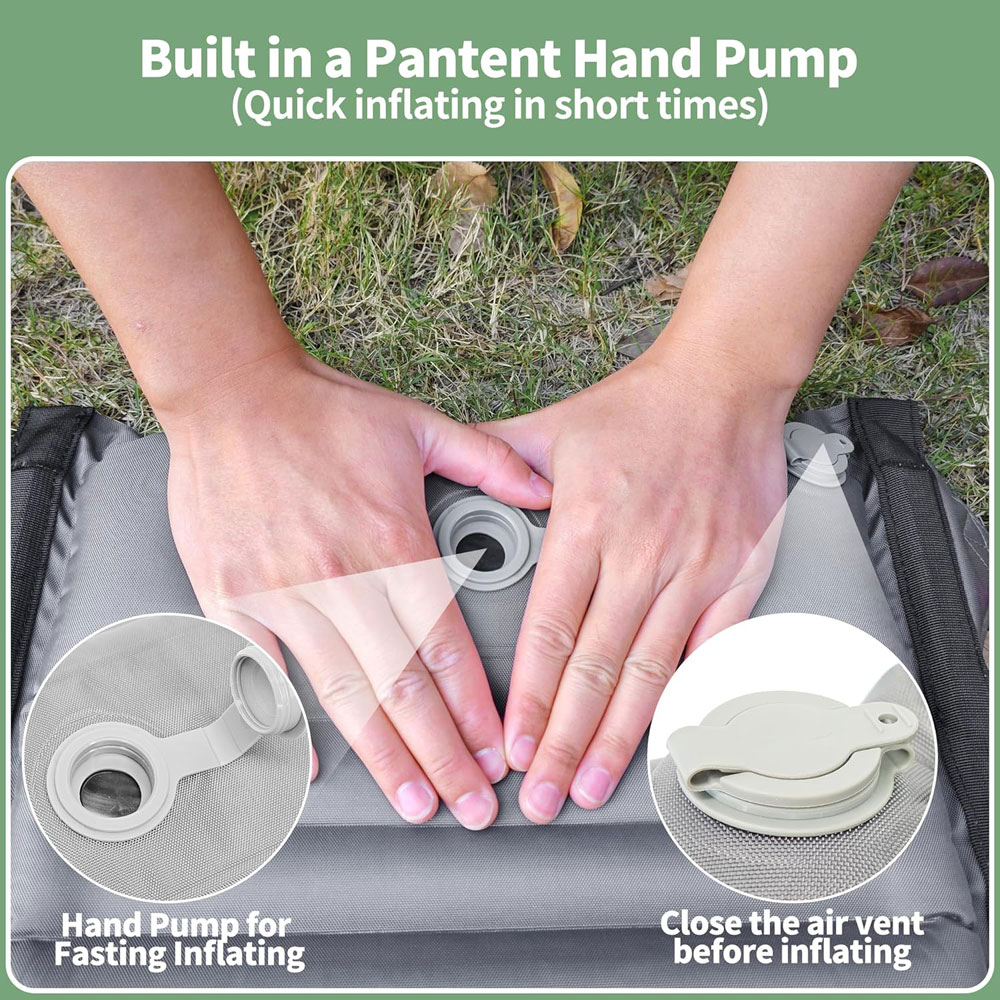
Quick verdict: The EULANT inflatable seat is a comfort-focused option for readers seeking back support at campsites, festivals, beaches, picnics and smoother rest stops, rather than a minimalist hill-walking pad.
|
|
Features and specs:
Pros:
Cons:
Avoid if: you want a simple mat for rough rocks, heather, thorns, muddy hillsides or fast day walks.
Why we chose it:
For me, the EULANT solves a different problem from a normal sit mat. A small foam pad is fine for a quick lunch stop, but this feels more like a portable low seat. I found the back support most useful when sitting for longer at camp, on the beach, at a picnic, at an outdoor event, or anywhere I wanted to sit upright rather than hunch over a tiny pad.
It is at its best on smoother ground, where comfort matters more than minimum weight. I would use it for campsite meals, family days out, festivals, shows, garden seating, beach breaks and relaxed outdoor stops where I know I will be sitting for a while. It gives you a more proper resting position than a flat sit mat, making it much more comfortable if you are reading, eating, watching something or simply taking a longer break.
The trade-off is that it is not the seat I would choose for rough summit lunches, wet moorland or fast hill walks, when I want the smallest, toughest thing in my pack. Because it is inflatable, I would be careful around sharp stones, thorns and rough ground. It is made of 40D and 420D nylon, which they claim makes it tear-resistant but not puncture-resistant. If I were using it at camp or an event where the ground looked stony or uneven, I would place a thin foam sit mat underneath it for extra puncture protection and a little more insulation. That makes the setup bulkier, but for comfort-led use it works well.
Quick verdict: The NEMO Chipper is the strongest eco- or reclaimed-foam option in this guide. It offers a lower-waste material story while remaining relevant to walking, travel, festivals and general outdoor seating.
|
|
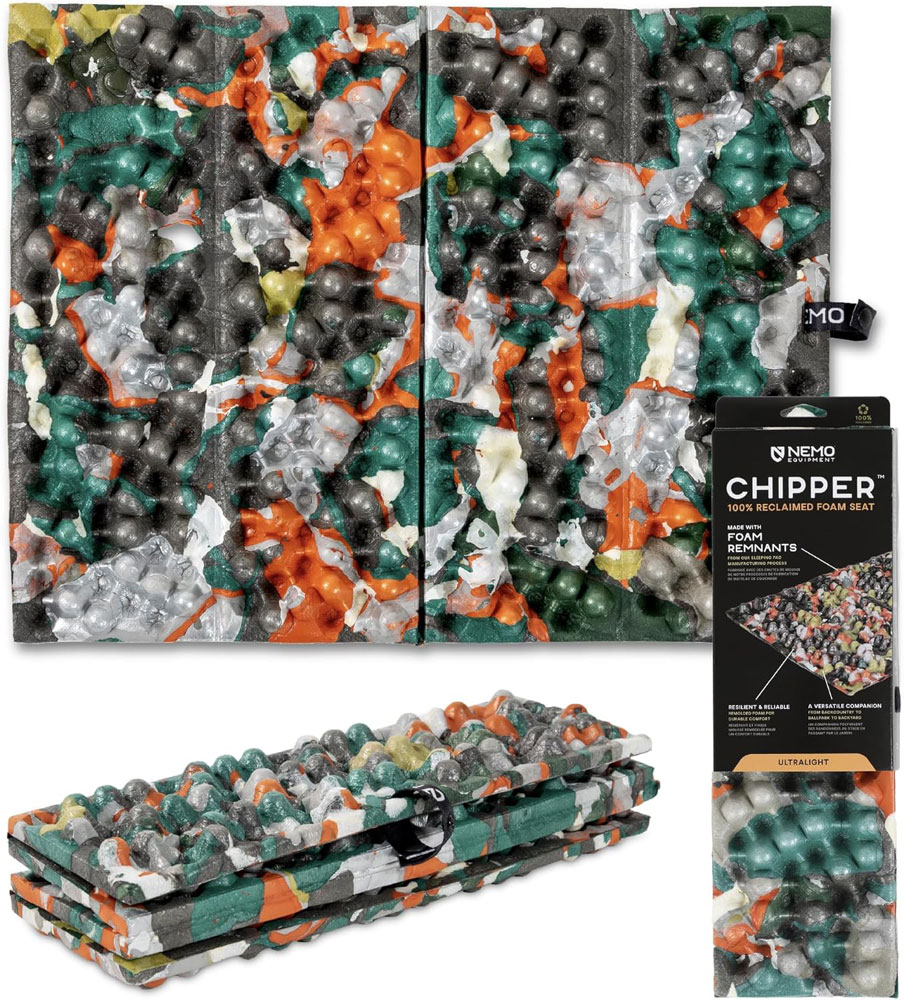
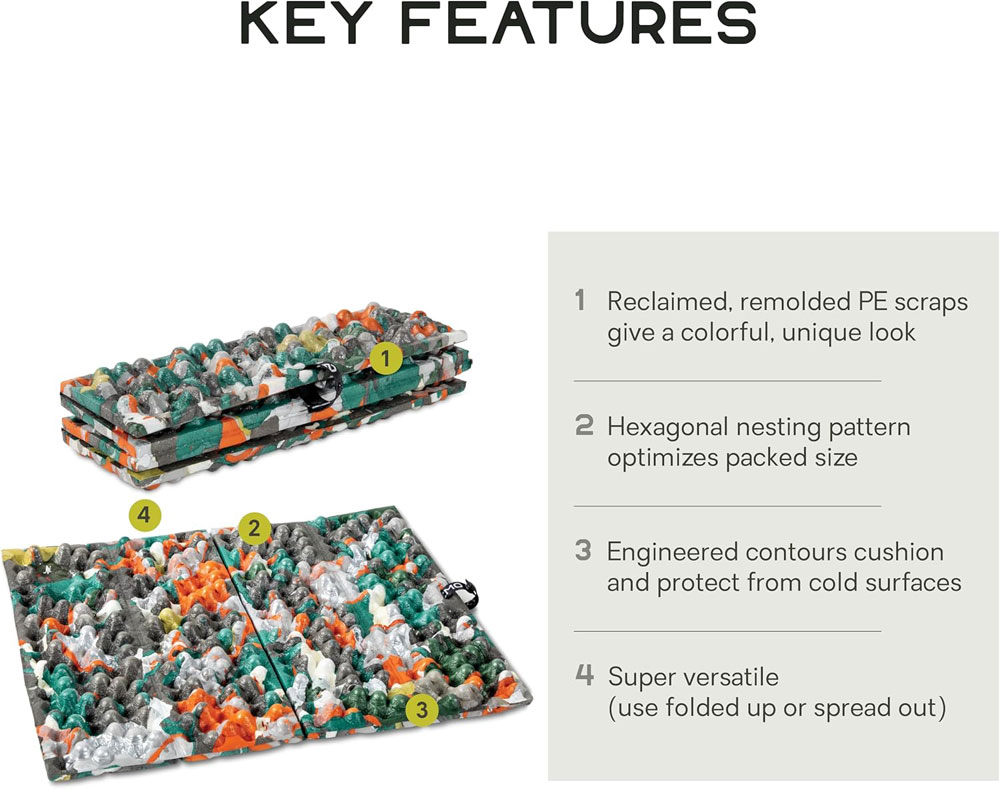
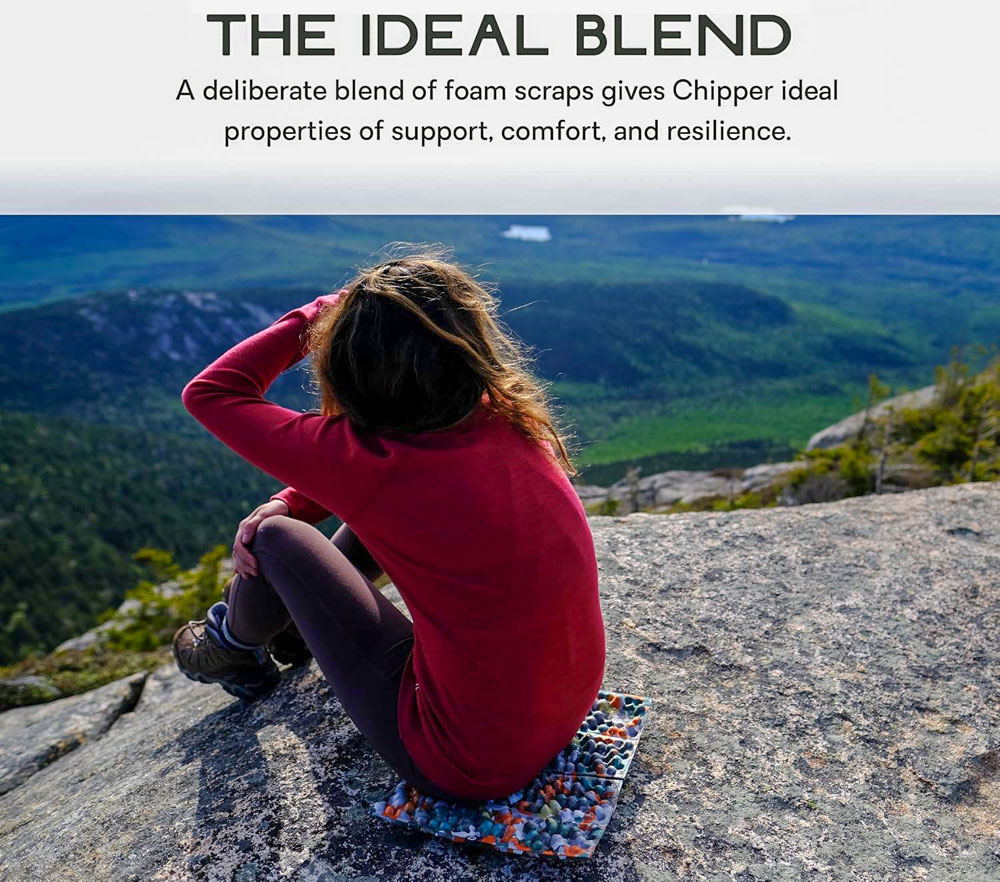
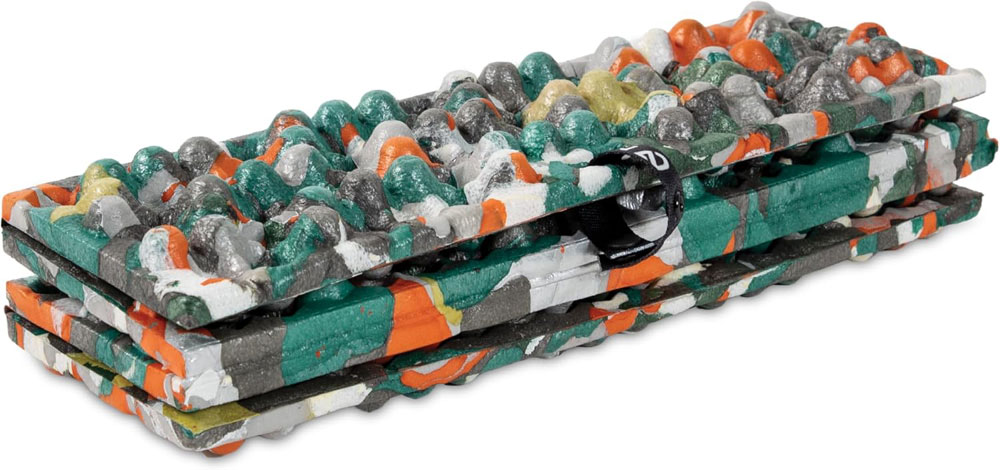
Features and specs:
Pros:
Cons:
Avoid if: you want the lightest possible sit mat or the additional comfort of an inflatable sit mat.
Why we chose it:
NEMO Chipper is not just another foam square. It offers buyers seeking lower-impact, reclaimed materials a more interesting option than a generic pad. That matters because some readers care about materials, waste and brand practices when buying outdoor gear.
It also remains practical. It is still closed-cell foam, so it avoids the biggest weakness of inflatable seats. For a damp UK bench, a festival field or a quick lunch stop, that simple foam's reliability is useful.
For rough-hill use, I would still reach for the Z Seat first, but the Chipper earns its place as the sustainability-led closed-cell foam alternative.
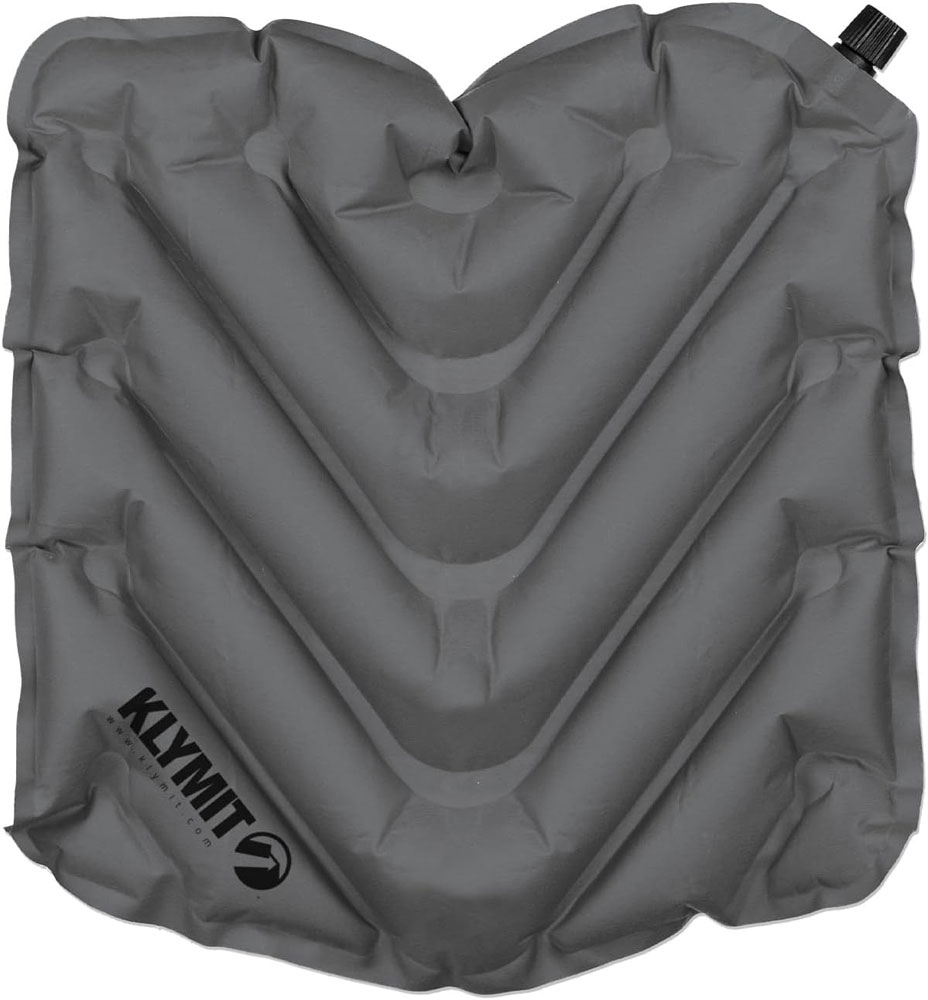
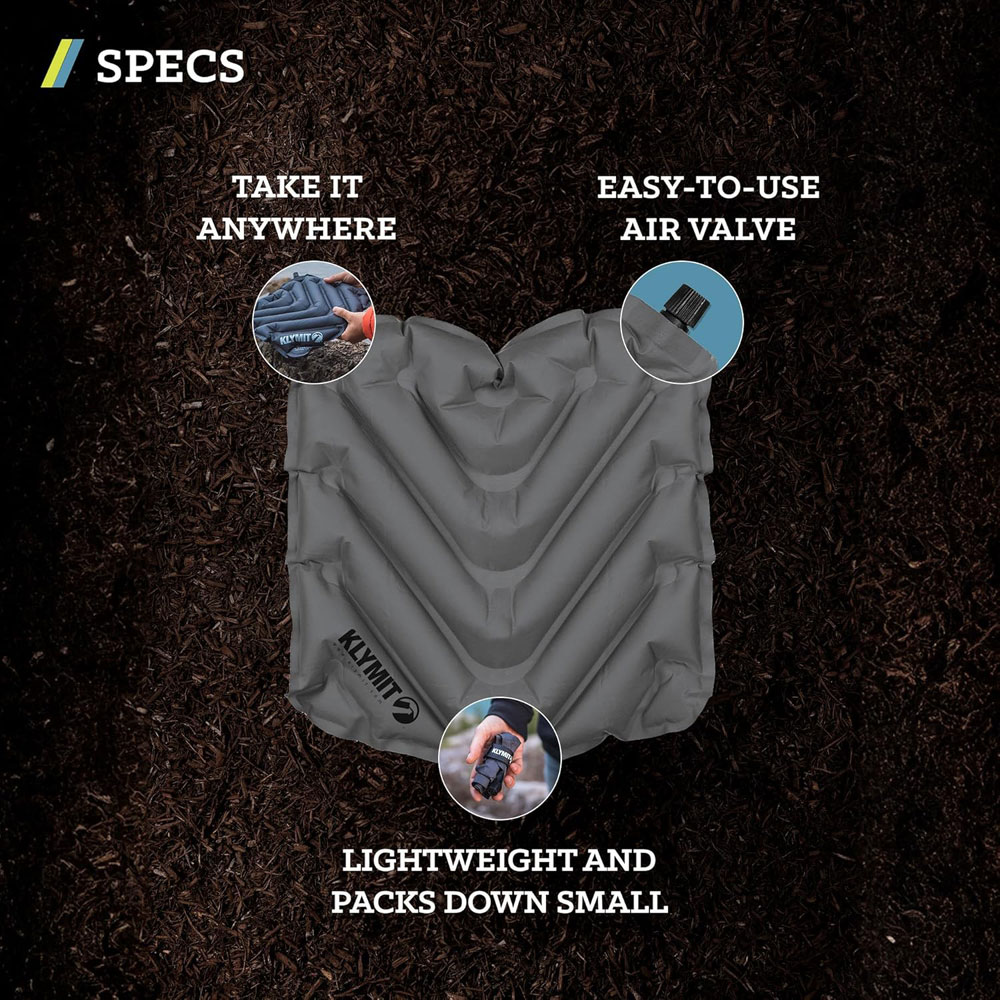
Quick verdict: The Klymit V Seat is light, packs down very small, and is useful for walks, camping, benches, festivals, stadium seats, and travel. It is not as carefree as closed-cell foam on sharp or rough ground, so it suits smoother stopping places or use with a thin foam mat underneath.
|
|
Features and specs:
Pros:
Cons:
Avoid if: you mainly sit on sharp rock, rough stone walls, thorny ground or heather and do not want to worry about punctures. A closed-cell foam sit mat is the safer choice for hillwalking on rough UK ground.
Why we chose it:
The Klymit V Seat is not the most rugged sit mat in the guide, but it packs down much smaller than most foam seats and still provides a proper air-cushioned layer between you and the ground, bench, or hard plastic seat.
The raised V-shaped air chambers help cradle you and distribute pressure more comfortably than a flat sheet of thin foam. In my experience, it inflates in just a few breaths and deflates easily afterwards, making it convenient for shows, concerts, camping, sports stadium seats, benches, dog walks, and any wooden, plastic, or metal chair where you want quick extra comfort.
The trade-off, as with anything inflatable, is care. It uses durable 75D polyester, but it is still an inflatable cushion, so I would not drag it across sharp rocks or rely on it as my only barrier on thorny ground. For rough hill stops, I would still reach for closed-cell foam first; for compact comfort on smoother ground, travel and events, the Klymit V Seat earns its place as the best inflatable sit mat.
Walks4all field note: For me, the Klymit V Seat makes most sense as a 'comfort I can keep in a pocket' option. I would take it for smoother ground, benches, travel, and events; for rough hill stops on rocks, I would still default to closed-cell foam or use a thin foam mat underneath to reduce the risk of punctures and add insulation.
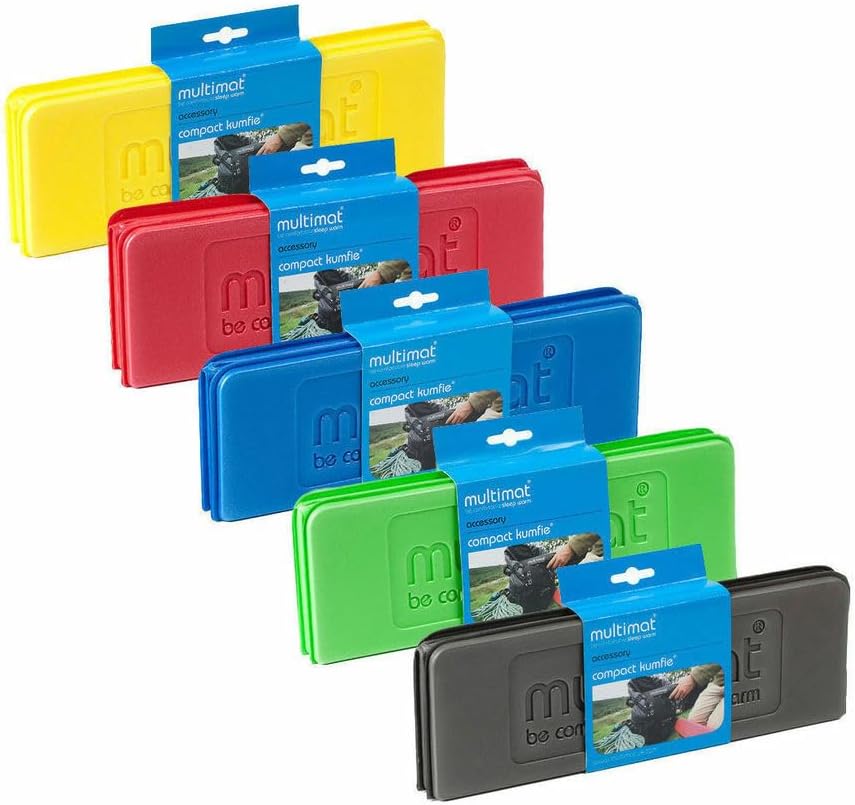
Quick verdict: The Multimat Compact Kumfie is the simplest ultralight sit mat here. It is not plush, but it is so light and easy to carry that it can live in a daypack for short breaks, add a protective barrier under inflatable sit mats, and serve as a thin cushion anywhere you want to sit.
|
|
 |
|
|
|
 |
|
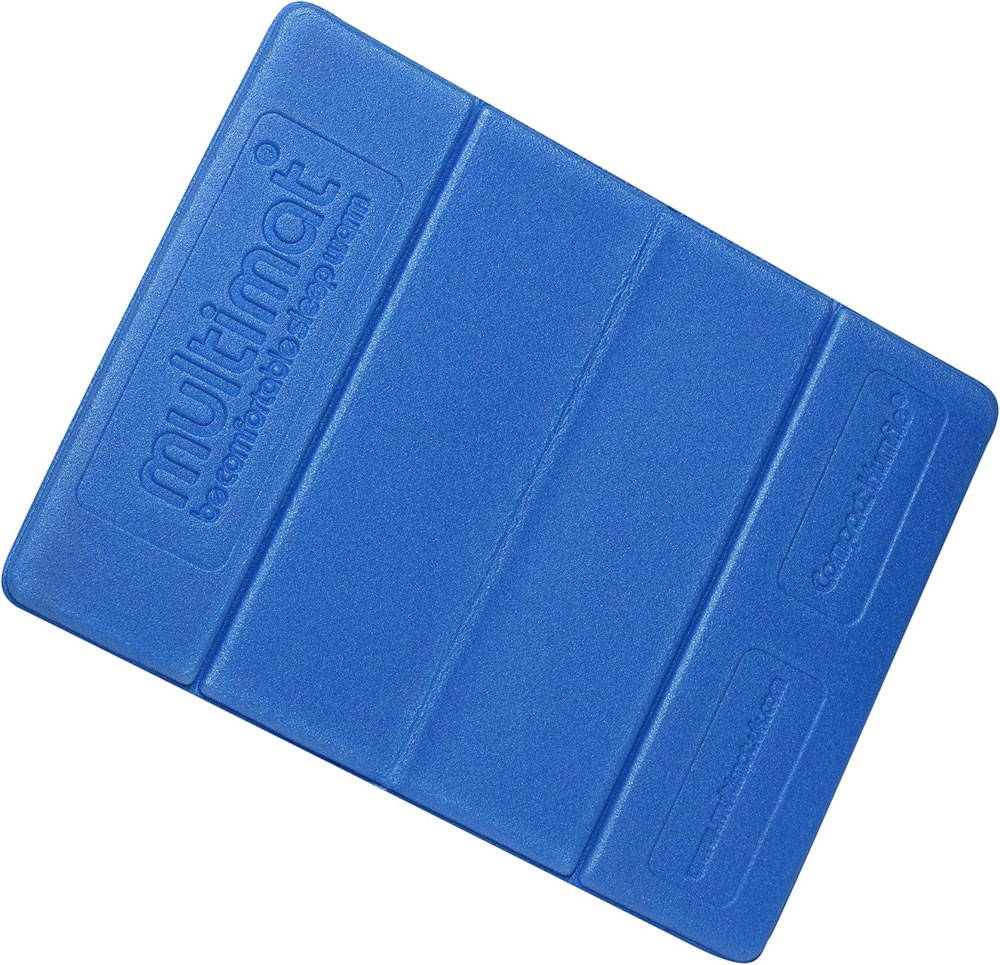
Features and specs:
Pros:
Cons:
Avoid if: you expect long lunches, hard, rocky stops, or winter sitting sessions. It is more of a barrier than a cushion.
Why we chose it:
The Multimat weighs so little that it can stay in a rucksack for walks where you are not even sure you will stop, which matters because the mat you carry is more useful than the plusher one left at home. On my scales it weighed only 29 g rather than the listed 33 g.
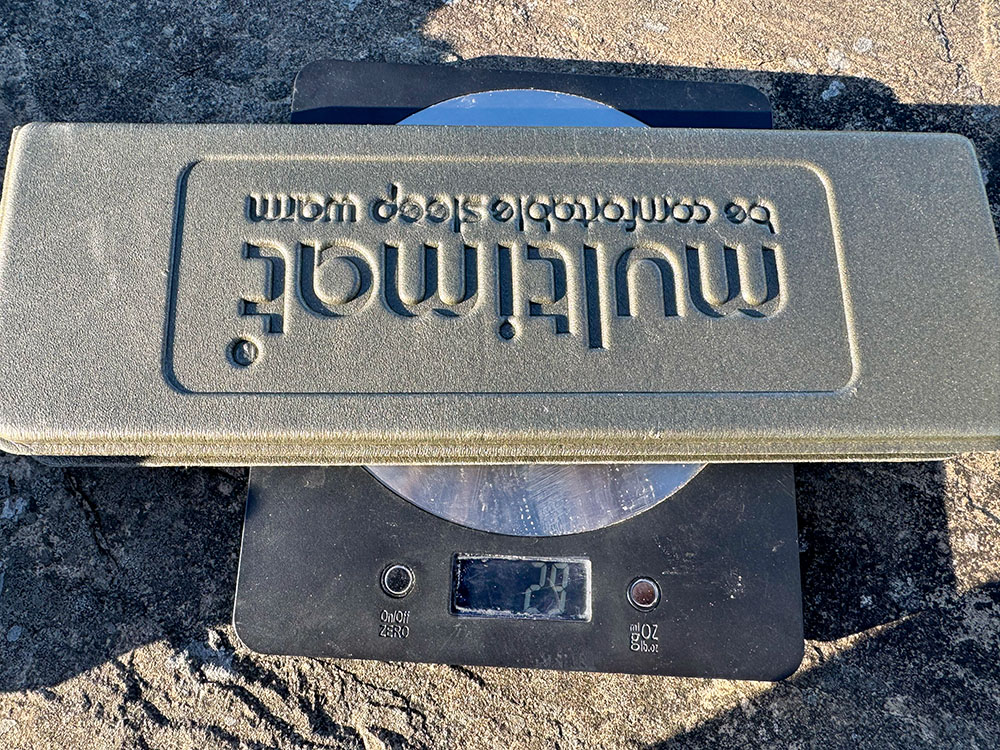
My original Multimat sample weighed just 29g, although current listed weights can vary by retailer or version.
Its thin foam still makes a real difference on wet grass, snow or damp stone by keeping moisture away and adding a small insulating layer. On stony ground, you will still feel the surface, but it is certainly better than sitting directly on bare rock.
This is the one I would carry when I expect only very brief stops, or when I do not plan to stop but want a backup. If I know I am stopping for longer, I will take the Z Seat or a comfort-focused option instead.
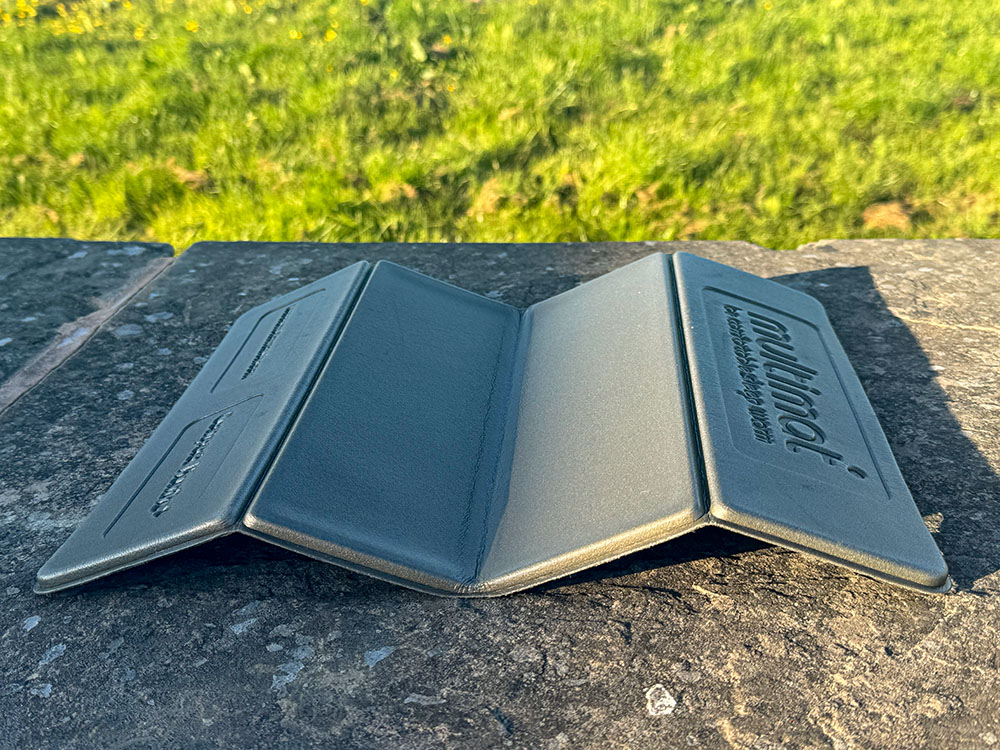
The Multimat uses very thin closed-cell foam, so it is more of a dry barrier than a deep cushion.
It also works well as a protective layer under an inflatable sit pad at camp. Put the foam down first, then the inflatable on top. This reduces the risk of punctures while adding a little extra insulation.
Walks4all field note: The Multimat is not the most comfortable sit mat, but it is one of the easiest to justify carrying.
Quick verdict: The Trinordic IXPE mat is a budget-friendly, folding foam alternative to the Therm-a-Rest Z Seat for walkers seeking a reflective, water-resistant sit pad without paying premium prices. It is useful, but it does not feel as tough as the strongest foam pads.
|
|
Features and specs:
Pros:
Cons:
Avoid if: you often sit on jagged rocks, stones, thorns, or rough winter ground. Spend more on a tougher foam pad if durability is your top priority.
Why we chose it:
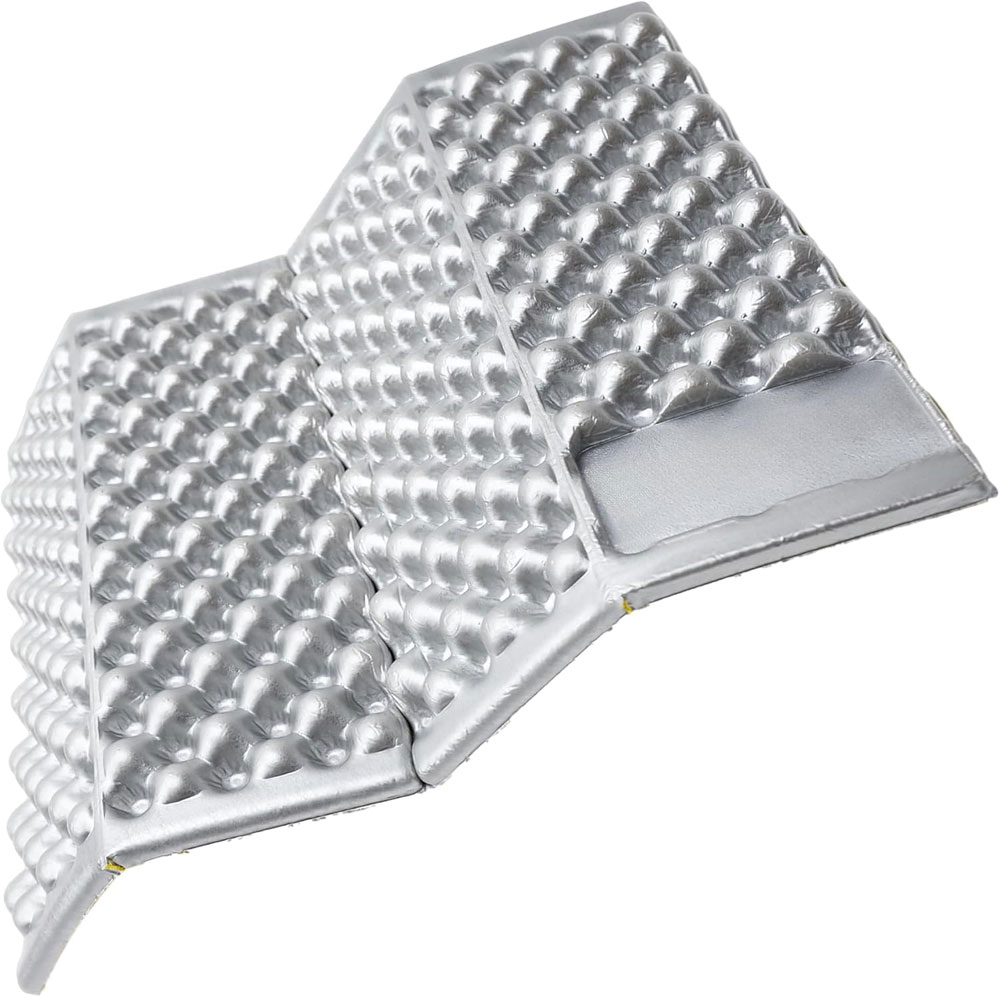
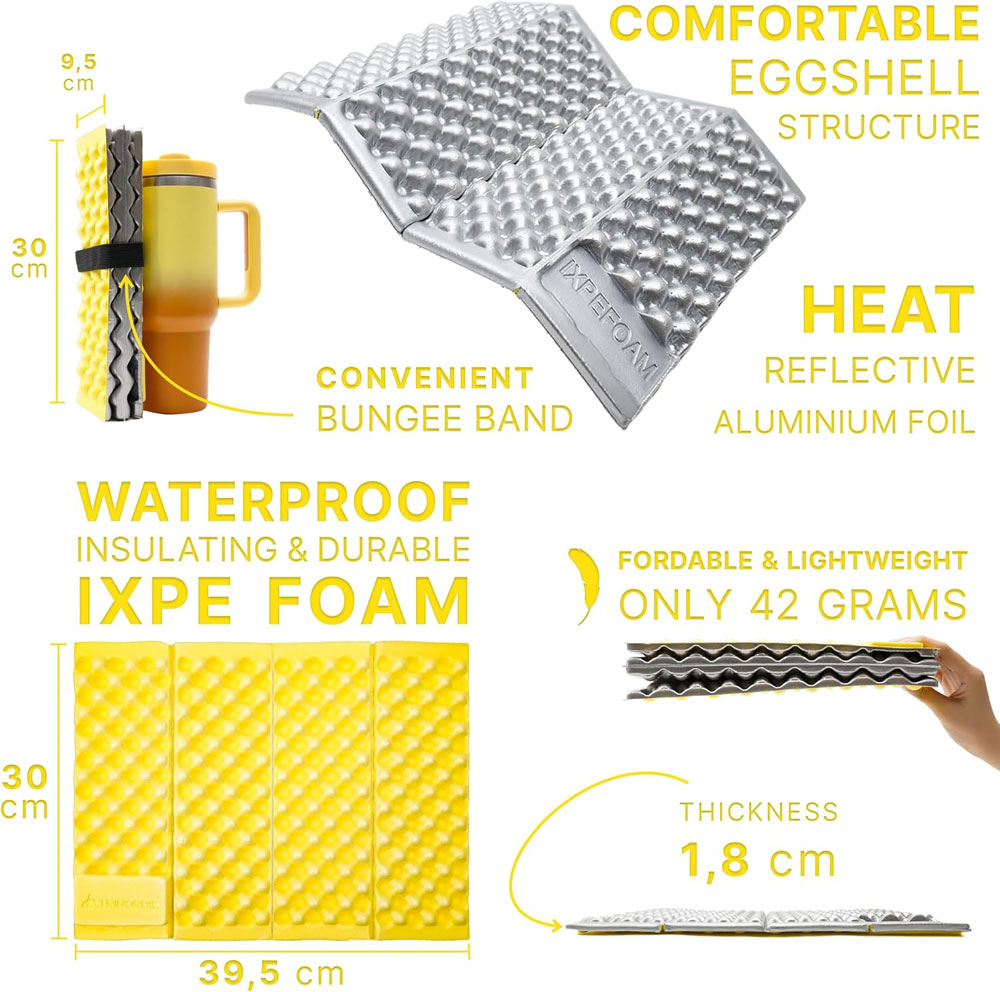
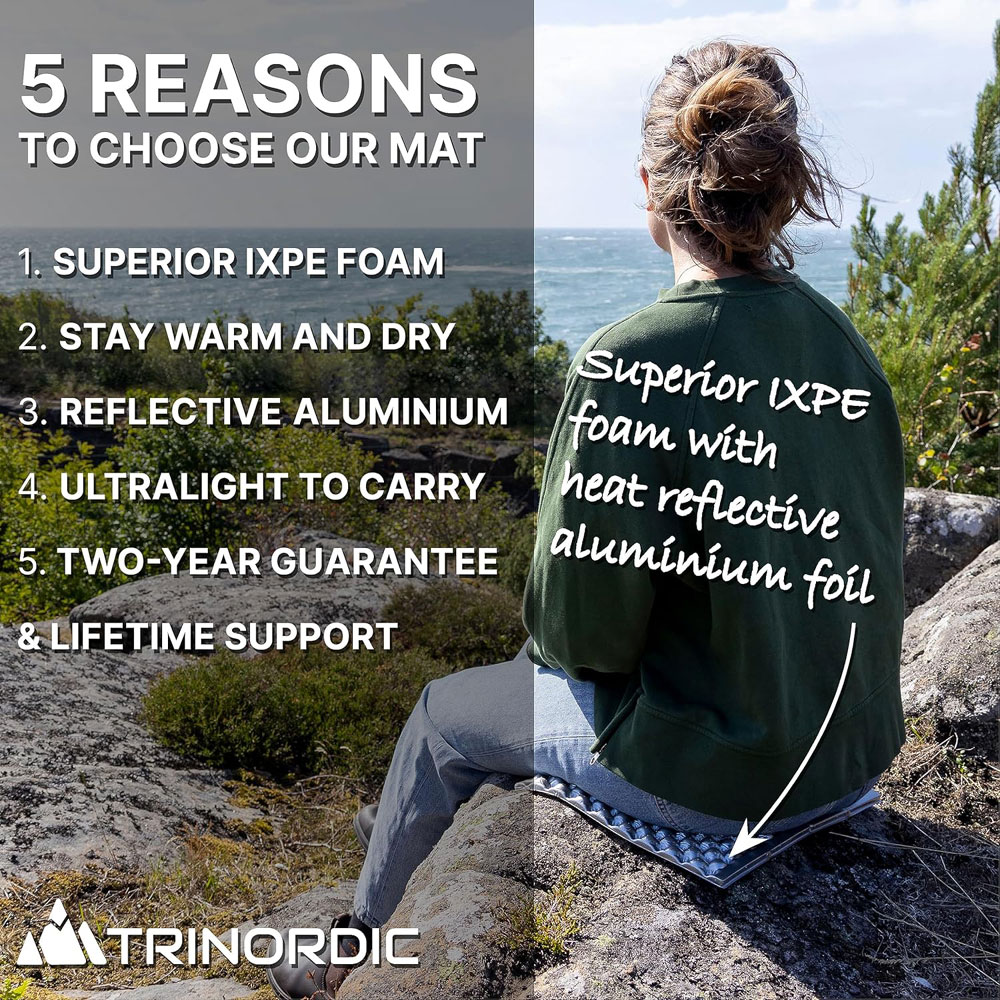
Unfolded, it measures 39.5 x 30 x 1.8 cm, and when folded, it is 30 x 9.5 x 4 cm. Its weight is a mere 42 g. The foil layer reflects body heat back to you, while the foam provides insulation from the ground. Constructed from waterproof and durable IXPE foam, it also features a bungee band to keep it securely folded.
Similar to the Z Seat, it features an eggshell structure that boosts comfort and improves insulation by utilising small pockets of air.
Compared with my Z Seat, my Therm-a-Rest Z Seat was slightly thicker, felt more 'well-built', and appeared more durable. I tested it on sharp, lumpy rocks and did get a very small tear in the Trinordic one.
Overall, if you're not planning to perch on sharp rocks, the Trinordic could be ideal for you if you're looking to save a few pennies and want something to keep your bottom warm and dry. Priced at around £10, it is just under half the cost of the Z Seat.
For smoother ground, festivals, short dog walks, picnics and occasional day walks, it can be a very sensible budget buy. For frequent stops on rocky hills, I would choose the tougher foam option.
Quick verdict: The Highlander Outdoor Sit Mat is more of a low-ground seat than a classic walking sit mat. It makes most sense for camping, beaches, picnics, festivals and outdoor events where back support is worth the extra bulk.
|
|
Features and specs:
Pros:
Cons:
Avoid if: you want something for a hillwalking rucksack. A flat foam sit mat is lighter, tougher and quicker to set up.
Why we chose it:
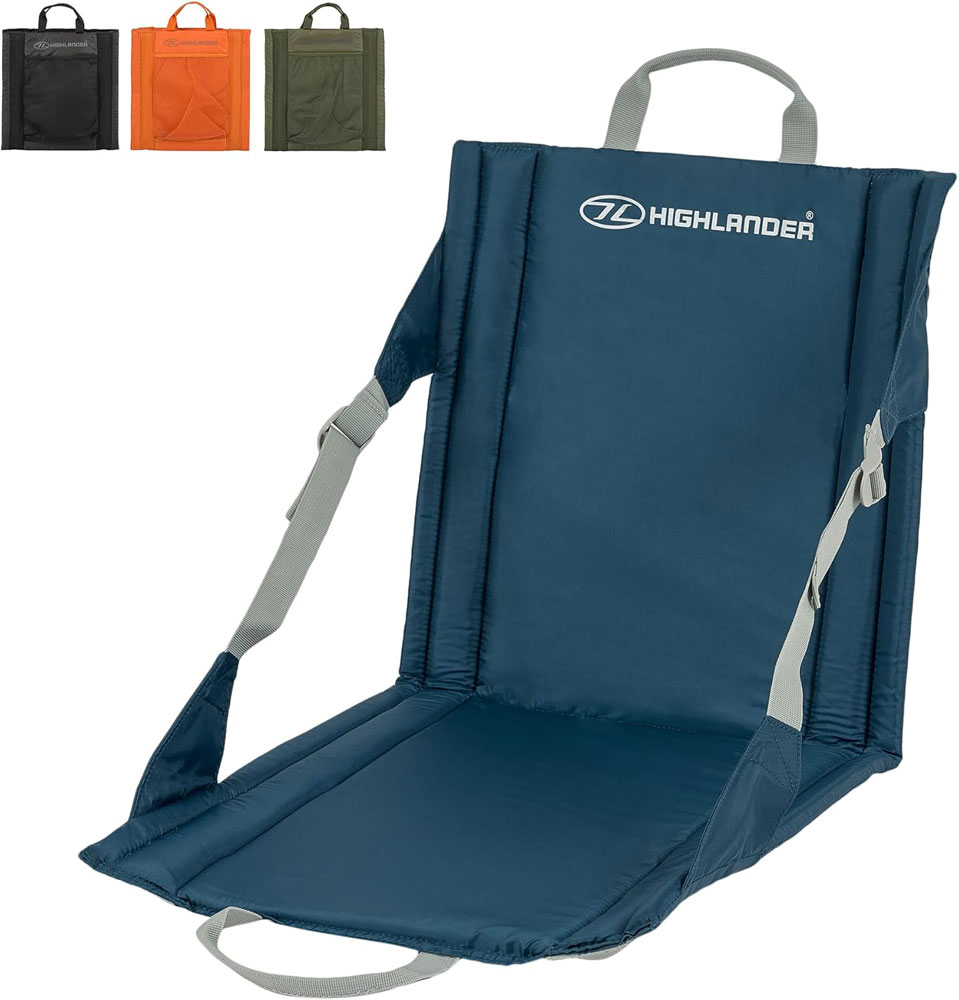
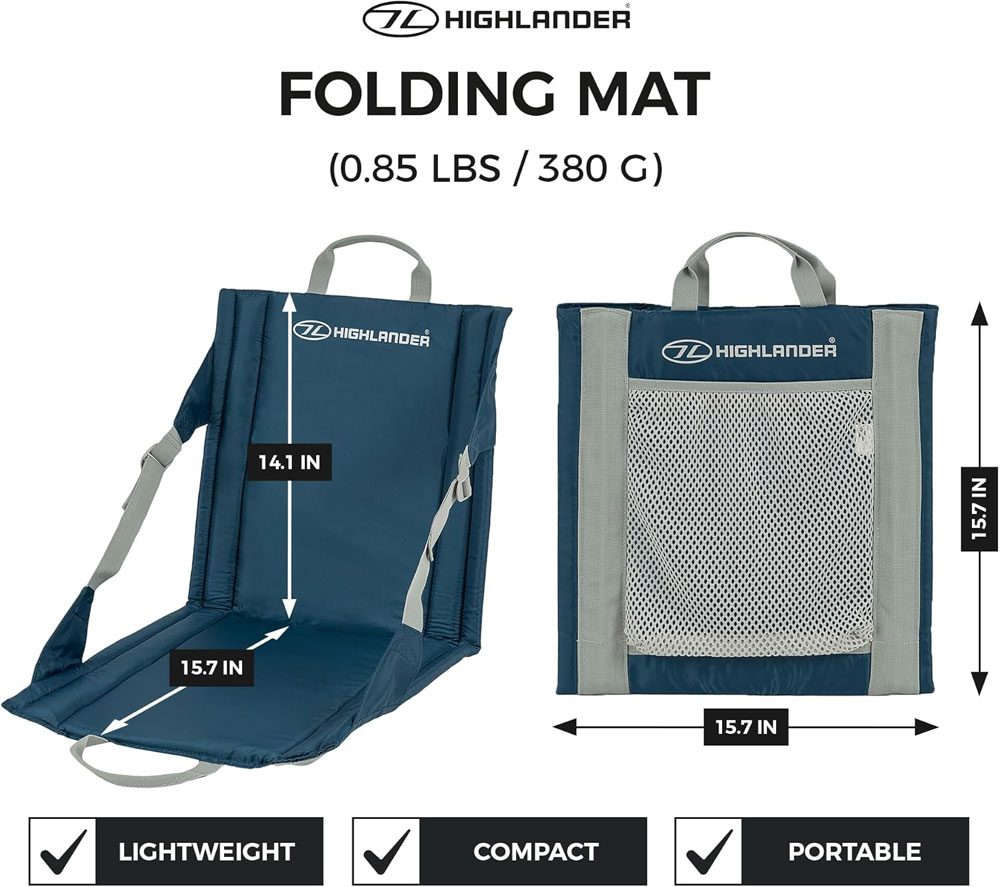
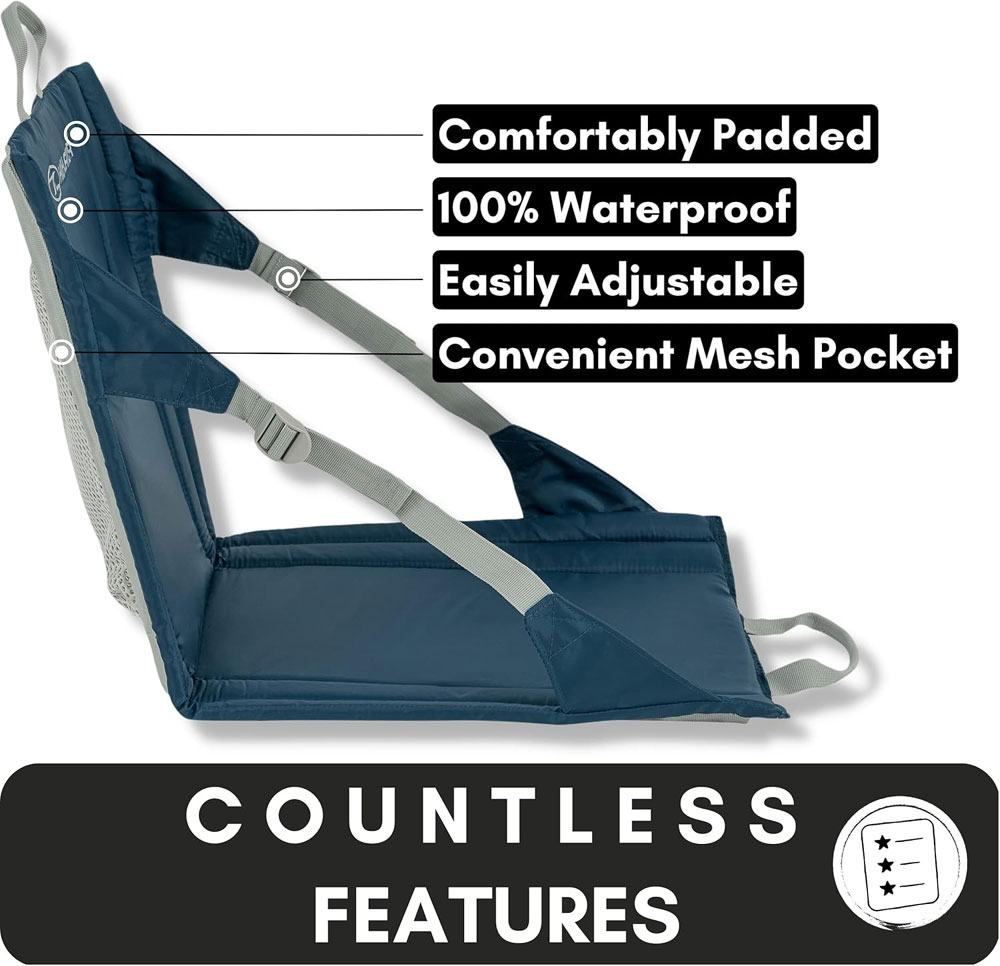
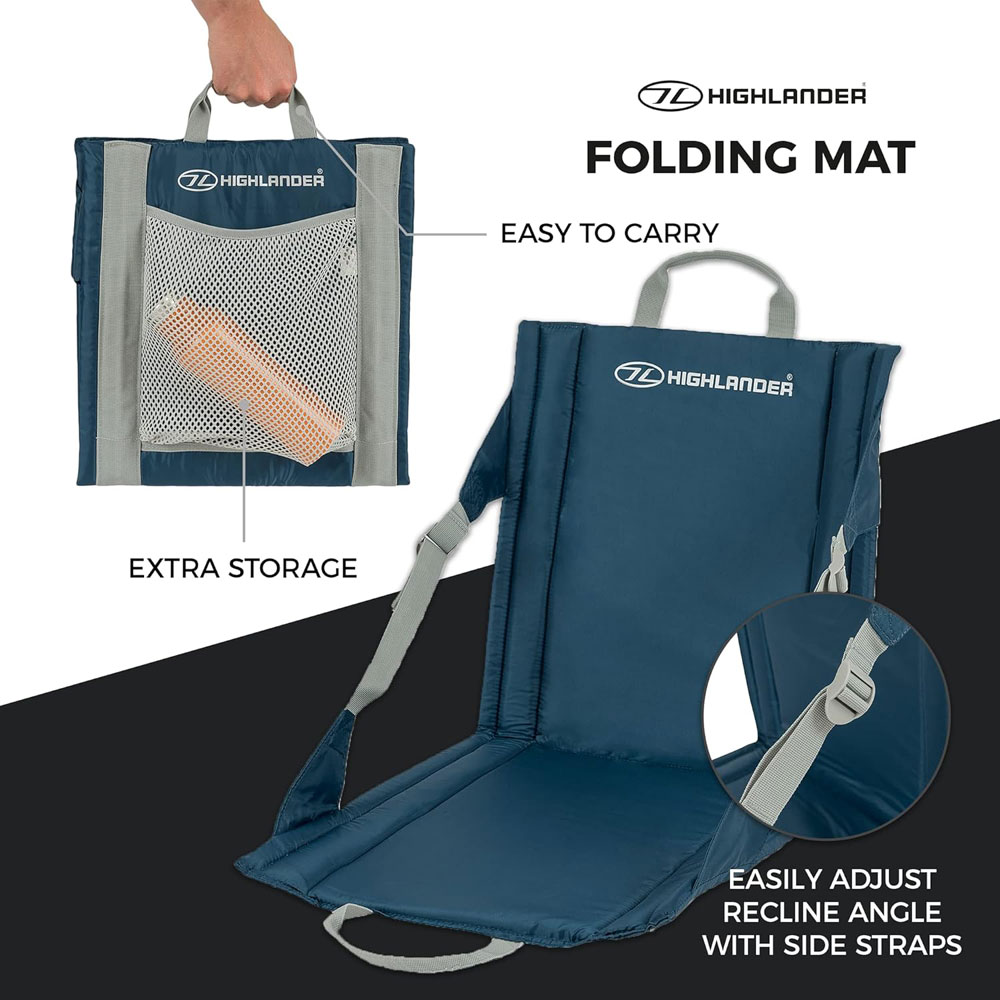
It comprises a padded seat panel and a simple fabric backrest frame. When unfolded, it becomes a small, low-backed stool that sits directly on the ground. It packs flat (40 x 40 x 4 cm) and includes straps to keep it securely closed. When unfolded, it provides a seat measuring 40 x 40 x 38 cm.
Along with the Eulant, it features semi-rigid back support, unlike the other seat pads here. Because it has a frame, it weighs 380 grams, more than the other seat pads on this list. Made from durable 210D Oxford polyester with a PE foam filling, it is puncture-resistant.
The seat itself offers some padding and features a waterproof coating and a wipe-clean surface. If you don't like the gap between the seat and the backrest often found in sports stadiums and theatres, you can place it on your seat and the backrest will fill that gap. Additionally, the seat includes a mesh pocket on the back.
Overall, this seat is suitable for someone who wants a backrest for a variety of occasions. However, due to its weight (though it isn't particularly heavy) and size, it may not be the best choice for day hikes.
For walking, though, this is a specialist choice. You could strap it to the outside of a rucksack for a short low-level walk, but it is not the mat I would choose for a normal hill day.
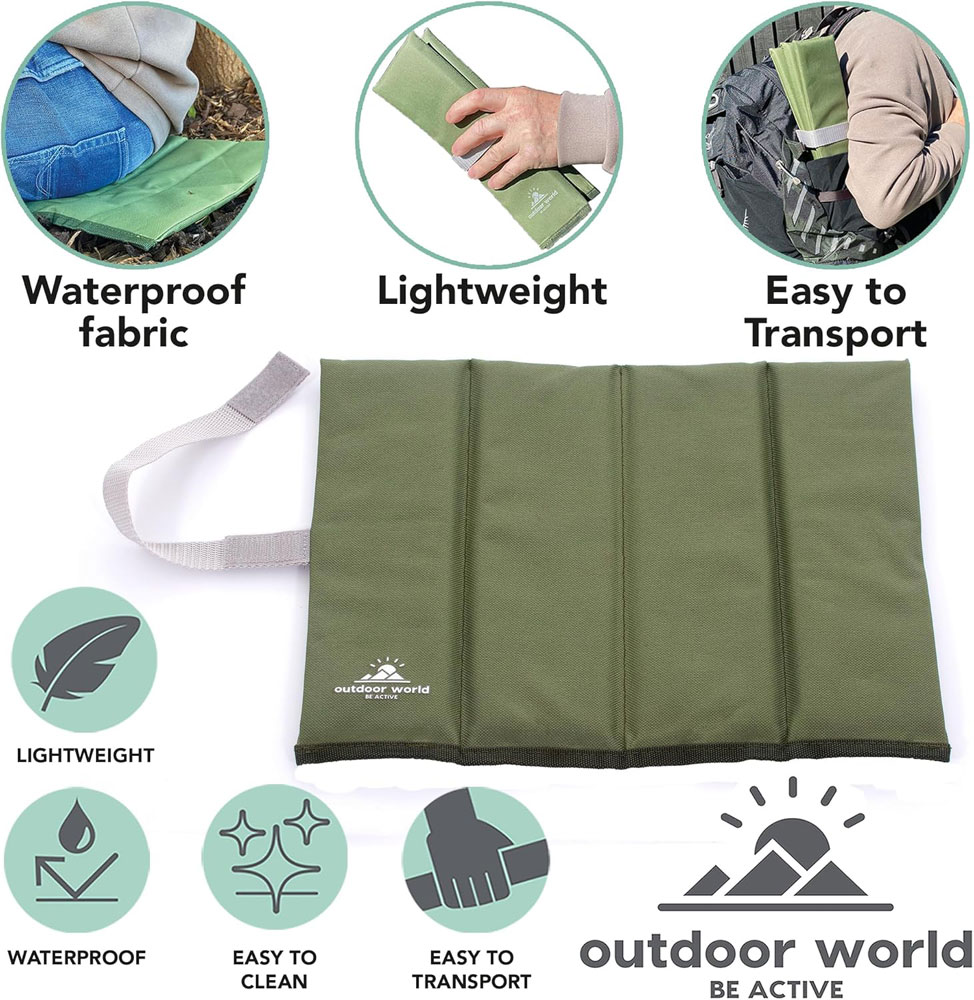
Quick verdict: The Outdoor World Folding Sit Mat is a good choice if you prefer a covered pad to sitting directly on bare foam. It is useful for wet benches, campsites, picnics, gardening, fishing and general outdoor use.
|
|
Features and specs:
Pros:
Cons:
Avoid if: you are counting grams for backpacking or want the fastest-drying bare foam pad.
Why we chose it:
Some people simply do not like sitting directly on foam, especially when a mat is used at parks, beaches, stadiums, campsites, picnics, festivals, or for gardening or fishing.
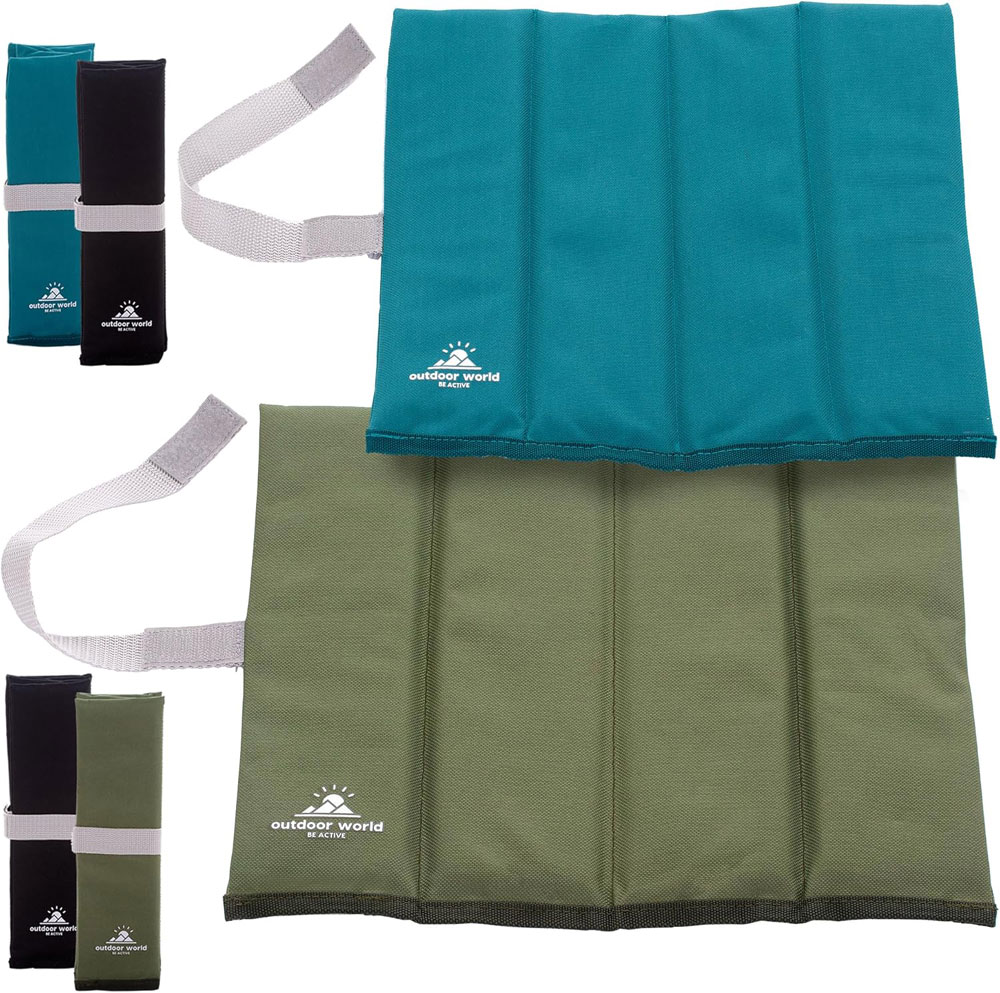
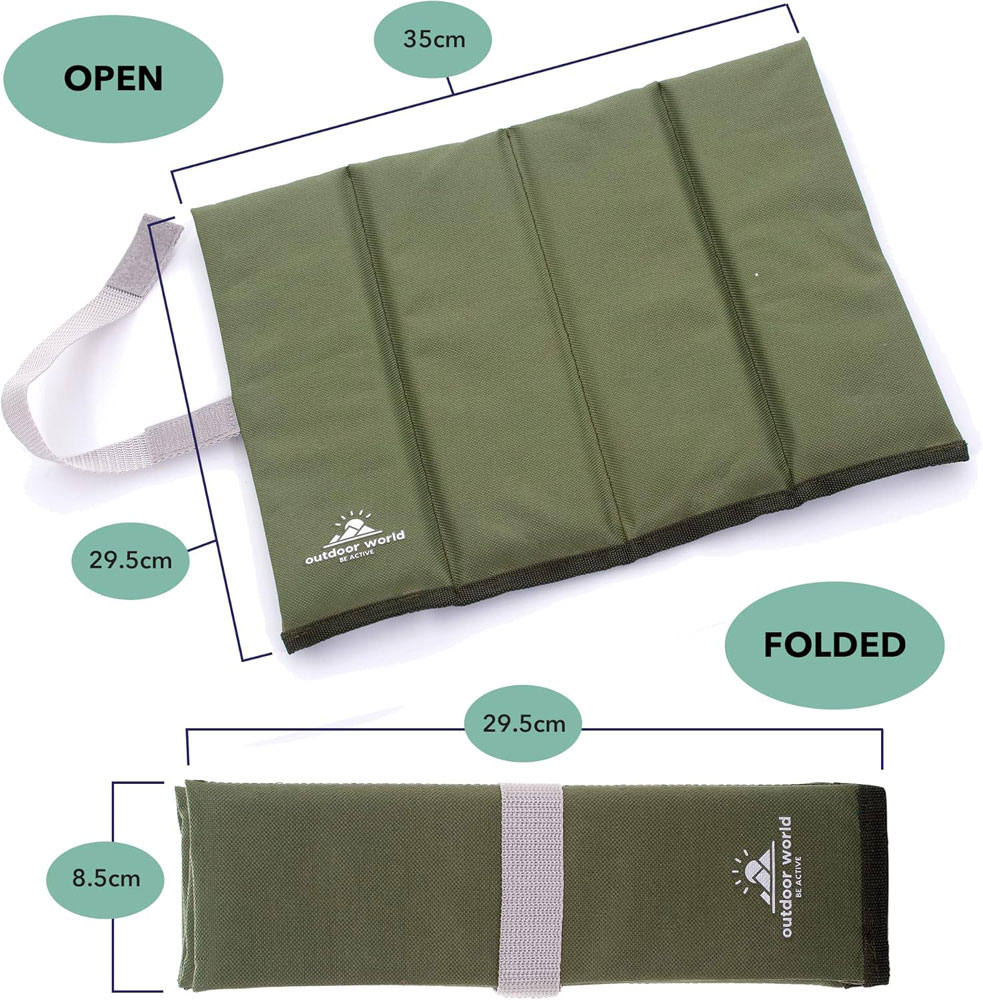
This folding padded seat from Outdoor World collapses flat to 29.5 x 8.5 x 5 cm and, when unfolded, measures 35 x 29.5 x 1.5 cm. The insulated foam protects against the cold ground, while the waterproof PU backing keeps you dry. For UK walking, the waterproof backing is one of its main selling points. Wet benches and damp grass are common, and a covered folding mat can feel more comfortable and tidy than a raw foam square.
The exterior is made from durable 600D polyester. While it isn't the thickest, at just 1.5cm, it still offers some protection from the ground. The trade-off is weight and drying time. Bare foam is usually quicker, lighter and more carefree. The Outdoor World style is best suited to a general-purpose outdoor cushion rather than a specialist hillwalking mat.
Quick verdict: The Klymit Pillow X Base is a clever dual-use option for backpackers who already want an inflatable pillow and only need an occasional seat. It is not a proper sit mat for cold, rough ground.
|
|
Features and specs:
Pros:
Cons:
Avoid if: you mainly want a sit mat. Buy a real sit mat and treat the Pillow X as a pillow.
Why we chose it:
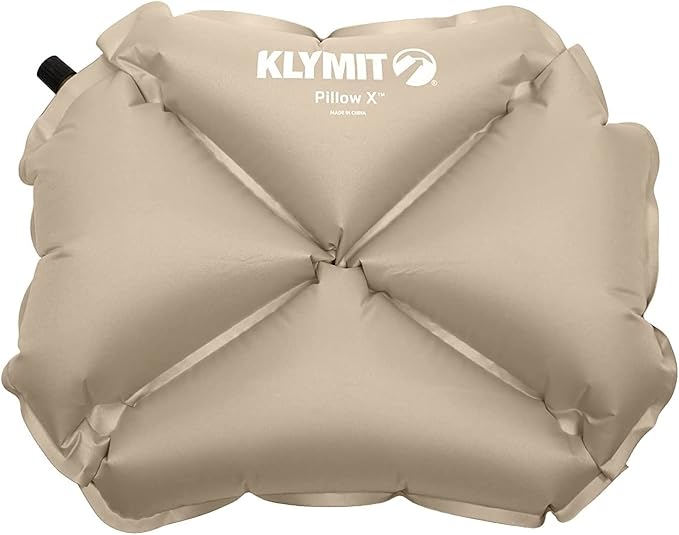
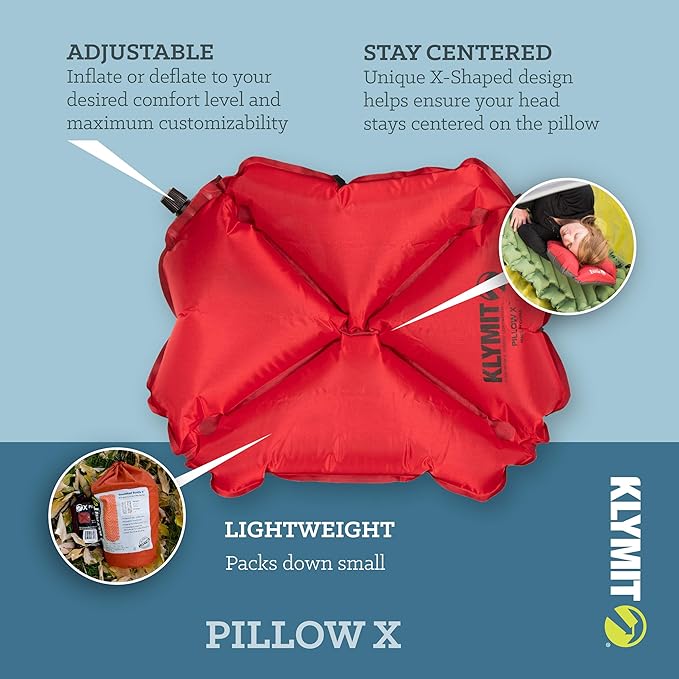
The Pillow X can be dual-purpose: for lightweight camping, using one inflatable item as a pillow at night and as an occasional seat cushion by day.
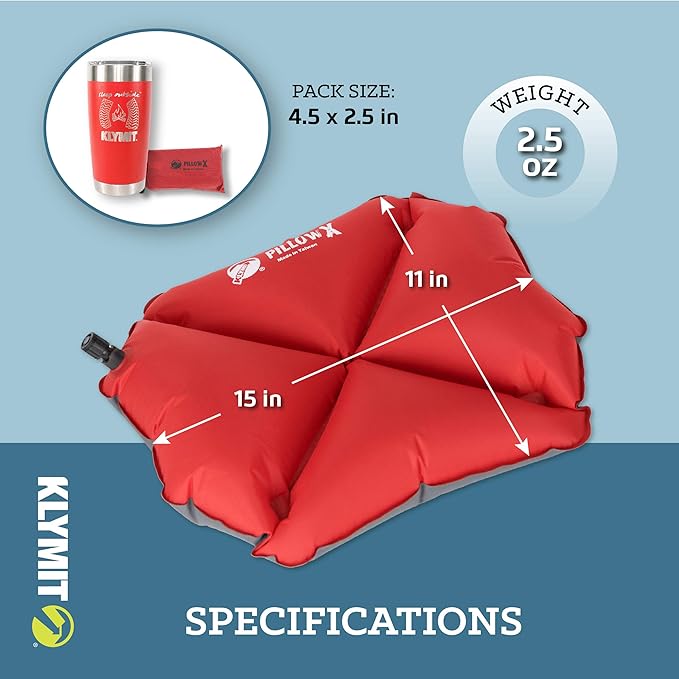
The design's original strength lies in its use as a pillow. It features a clever X-shaped design and, when fully inflated, measures 38 x 28 x 9 cm, cradling the head (or back) in small air chambers. A larger version is available for an extra 20 grams, measuring 43 x 30 x 11 cm.
It packs down to a compact 11 x 6 cm size and weighs just 71 grams. The fabric is Ripstop Nylon (30D top, 75D bottom) with a TPU coating for durability. You inflate it using a dual valve - just a few breaths, and it becomes firm. The air inside provides the only insulation.
Its X shape supported my neck when used that way and felt comfortable enough for occasional sitting, but the seating area is smaller, and there is no real insulation beyond the trapped air. Treat it as a pillow-first item that can act as a seat in a pinch: smooth ground, camp benches, ferries, train platforms, or a campsite picnic table.
The best sit mat is not always the thickest, most expensive or most technical option. For walking, the best choice is usually the mat that provides enough warmth and dryness without being so bulky that you leave it behind.
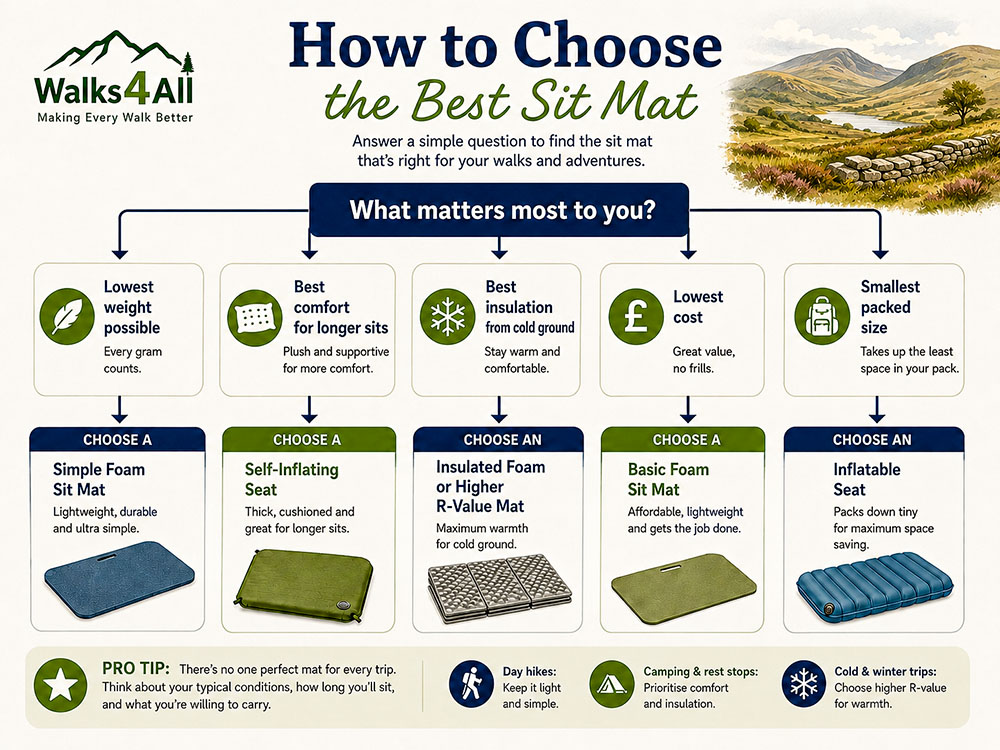
Start with what matters most - weight, comfort, insulation, cost or packed size - then choose the sit mat type that fits your walking style.
Think first about your main use: quick walking breaks, long lunch stops, wild camping, festivals, beach days, fishing, daily dog walks or travel. Then choose the type of mat that suits it.
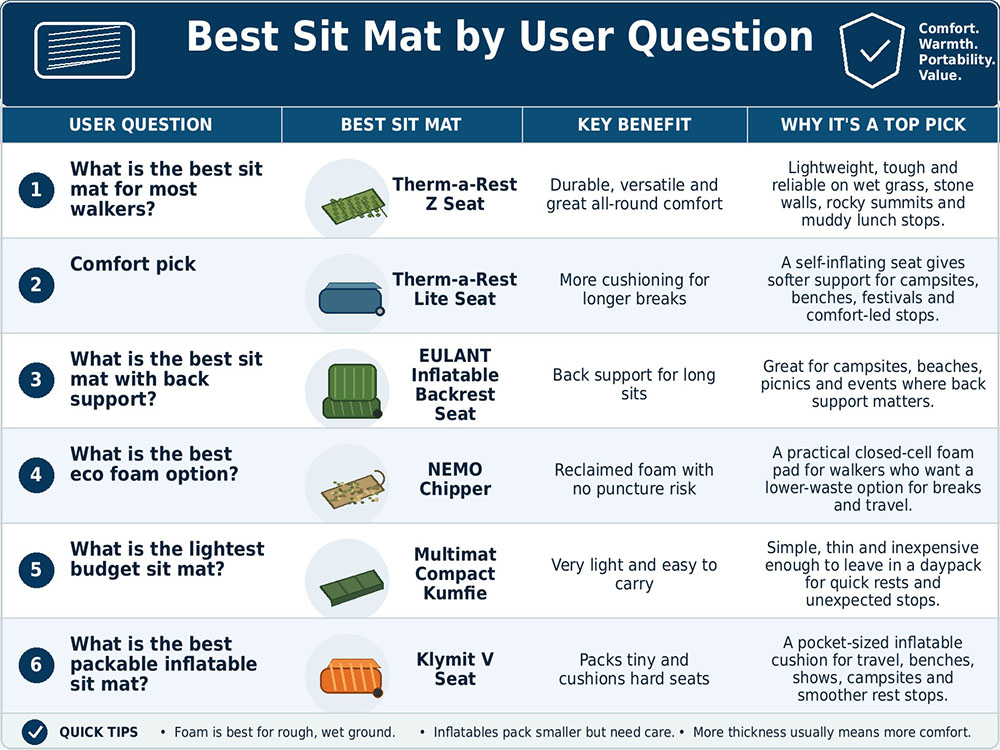
This question-led selector helps readers find the most suitable sit mat quickly without comparing every product in detail.
| Reader question | Best answer |
| What is the best sit mat for most UK walkers? | A closed-cell foam folding pad such as the Therm-a-Rest Z Seat, because it is lightweight, durable and quick to set up on wet or rough ground. |
| When should I choose a self-inflating comfort sit mat? | Choose a self-inflating mat when cushioning is more important than durability on rough ground, such as at long lunches, campsites, benches or festivals. |
| When should I choose an inflatable sit mat? | Choose the Klymit V Seat when you want tiny packed size and extra cushioning for smoother ground, benches, travel, shows, concerts and event seating. |
| What should I use on cold ground? | Choose closed-cell foam, a thicker foam pad or a mat with reliable insulation data if available, and prioritise thickness, coverage and low compression. |
| What is best for festivals and outdoor events? | A self-inflating, inflatable or backrest-style seat is usually more comfortable for long periods of sitting, while foam is lighter and simpler. |
| What is best for a very light daypack? | A thin closed-cell foam mat is the easiest to justify because it weighs very little and can live in the pack. |
| What is best for wet grass? | Closed-cell foam or a waterproof-backed mat, because these are easiest to wipe clean and do not absorb moisture. |
| What is the best option if I want back support? | Choose a backrest-style seat such as the EULANT for inflatable comfort or the Highlander for a more traditional low-ground seat. |
| What is the best lower-waste option? | The NEMO Chipper is the clearest reclaimed-foam choice in this guide. |
| What is best if I want one item for pillow and occasional sitting? | The Klymit Pillow X Base works as a pillow first and an occasional seat cushion second. |
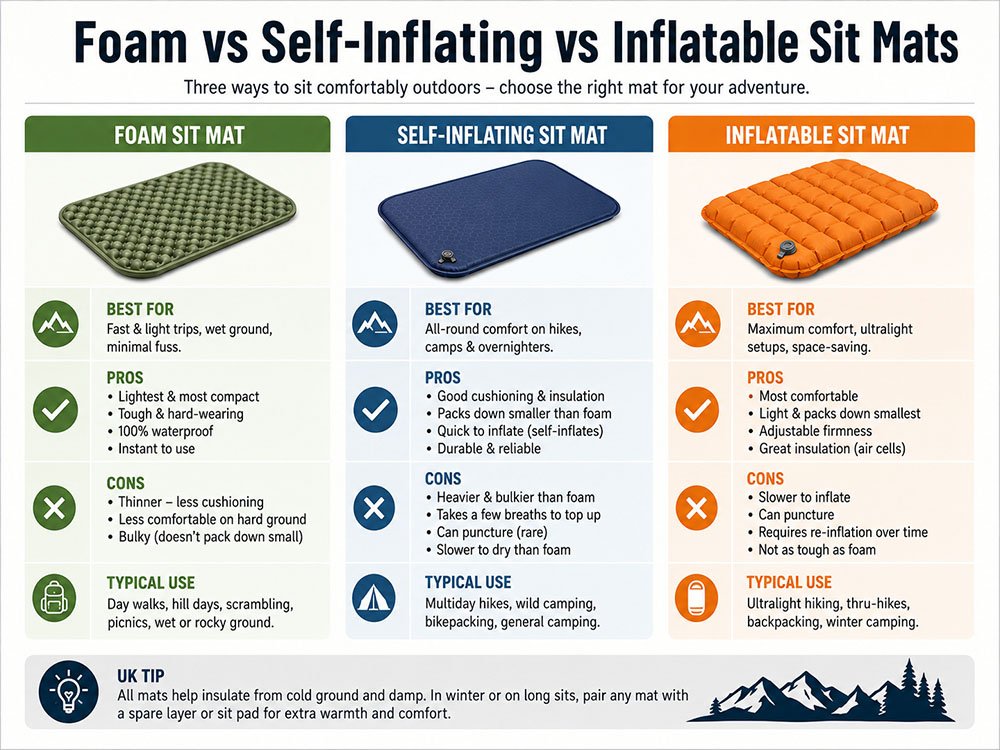
Foam mats are simple and tough, self-inflating seats add comfort, and inflatable sit pads pack small but need more care.
Most sit mats fall into a few practical categories. Closed-cell foam is the simplest and most reliable. Inflatable seats pack down small and feel soft. Self-inflating seats combine foam and air for cushioning. Covered and backrest-style seats add comfort for events and campsites but add bulk.
| Type | Best for | Strengths | Trade-offs | Best examples in this guide |
| Closed-cell foam | Hiking, backpacking, wet grass, rough ground | Reliable, lightweight, quick, no puncture risk, good damp-ground barrier | Less plush, can be bulky, thinner models offer limited comfort | Therm-a-Rest Z Seat, Multimat Compact Kumfie, Trinordic IXPE, NEMO Chipper |
| Inflatable sit mat | Travel, smoother ground, campsites, benches and compact packing | Small packed size, good cushioning, useful comfort for the weight | Puncture risk, needs inflation, less carefree on rough ground | Klymit V Seat |
| Self-inflating | Comfort-led stops, camping, benches, festivals | Softer, adjustable, warmer feel than thin foam | Can puncture, needs valve use, heavier than thin foam | Therm-a-Rest Lite Seat |
| Inflatable backrest seat | Festivals, beaches, picnics, campsites and gentler stops/td> | Back support and more chair-like comfort in a packable format | Bulkier, heavier, inflatable and less suitable for rough hill ground | EULANT Inflatable Portable Seat with Backrest |
| Backrest or hybrid seat/td> | Camping, beaches, picnics and outdoor event seating | Back support and longer-sit comfort | Bulkier, heavier, less useful for hillwalking | Highlander Outdoor Sit Mat |
| Covered foamtd> | Family camping, parks, damp benches and general outdoor use | Tidy, wipeable, often more pleasant than bare foam | Heavier than simple foam; fabric can hold dirt | Outdoor World Folding Sit Mat |
| Pillow-first dual use | Minimalist backpacking and travel | One item can serve as a pillow and occasional cushion | Not a proper sit mat for cold or rough ground/td> | Klymit Pillow X Base |
Closed-cell foam is the most reliable material for a sit mat for walking. The foam consists of sealed cells, so it does not soak up water like a sponge and cannot be punctured like an inflatable pad. It is usually lightweight, waterproof or highly water-resistant, and ready to use instantly.
The trade-off is comfort. Thin foam protects you from damp and cold far better than it cushions you against hard ground.
Besides the thin flat mats, some are designed with 'egg-crates'. Egg-crate or textured foam surfaces can trap small pockets of air, adding a little cushioning and insulation, but a foam pad will still feel firmer than a self-inflating seat.
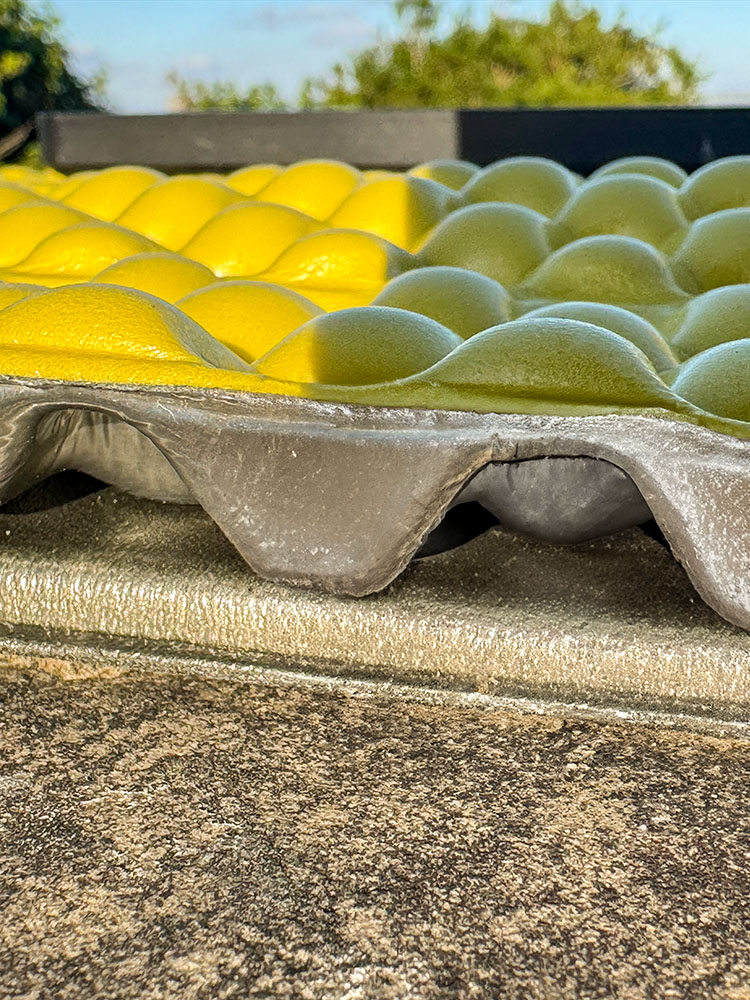
The Z Seat is much thicker than the Multimat when unfolded, which helps explain the difference in cushioning.
Best for: ultralight backpacking, day walks, general hiking, festival seating, wet grass, stony ground, and any stop where puncture risk is a concern.
Inflatable sit mats are like tiny air mattresses for sitting. They pack down very small and feel surprisingly plush once inflated. This makes them useful for travel, festivals, campsites and benches where you want extra cushioning without carrying a bulky chair.
The main weakness is durability. Even durable inflatable pads can leak or puncture if used on thorns, sharp stones or jagged rock. Most do not need a pump, but they do take time to inflate and deflate. Use them on smoother surfaces, or place a thin foam mat underneath for extra protection.
Self-inflating mats combine foam and air. They contain open-cell foam within a fabric shell with a valve. Open the valve, and the foam expands, drawing in air; you can then top it up by mouth to adjust firmness. They are usually warmer and softer than thin foam pads, but heavier and slower to pack away.
They are a good option for comfort-led walkers, campers, fishers and festival-goers who are happy to look after the valve and fabric. They are less carefree than closed-cell foam on rough hill ground.
Some products blur the line between a sit mat and a low camp seat. Backrest pads, covered folding pads and inflatable seats with support are useful for festivals, picnics, beaches and campsites. They prioritise seated comfort over minimal weight.
For normal hiking, these can feel like overkill to me. For event seating or family camping, they can be the right choice.
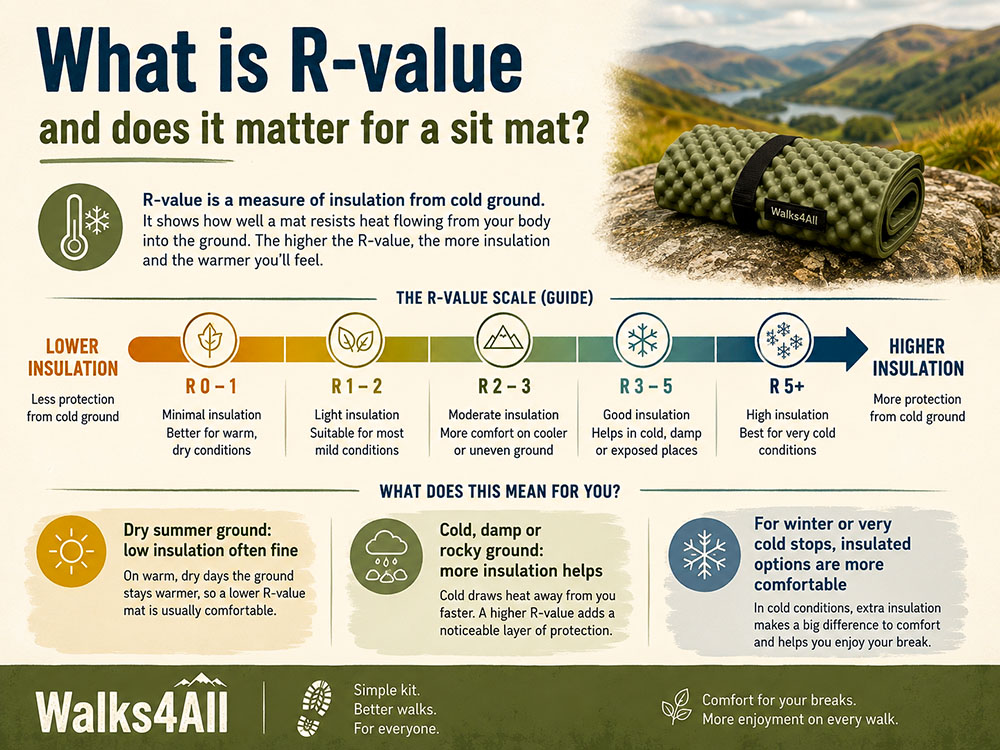
R-value helps explain how well a sit mat resists heat loss into the ground, which matters most on cold, damp or winter stops.
R-values measure thermal resistance, which is basically how well a material resists heat passing through it. For sleeping pads, higher R-values indicate better resistance to heat loss to the ground.
The primary comparison standard for sleeping pads is ASTM F3340, introduced to enable more consistent comparisons of sleeping pad R-values across brands. That is useful for sleeping mats, but sit mats are smaller and less standardised.
Many sit pads do not publish a formal R-value at all.
For sit mats, use the R-value to compare them. If a product provides a reliable R-value, it can help you compare warmth. If it does not, compare the material, thickness, coverage and compression. Foam is usually better on rough ground than inflatable air chambers, while insulated inflatable seats can be warm and comfortable if you protect them from punctures.
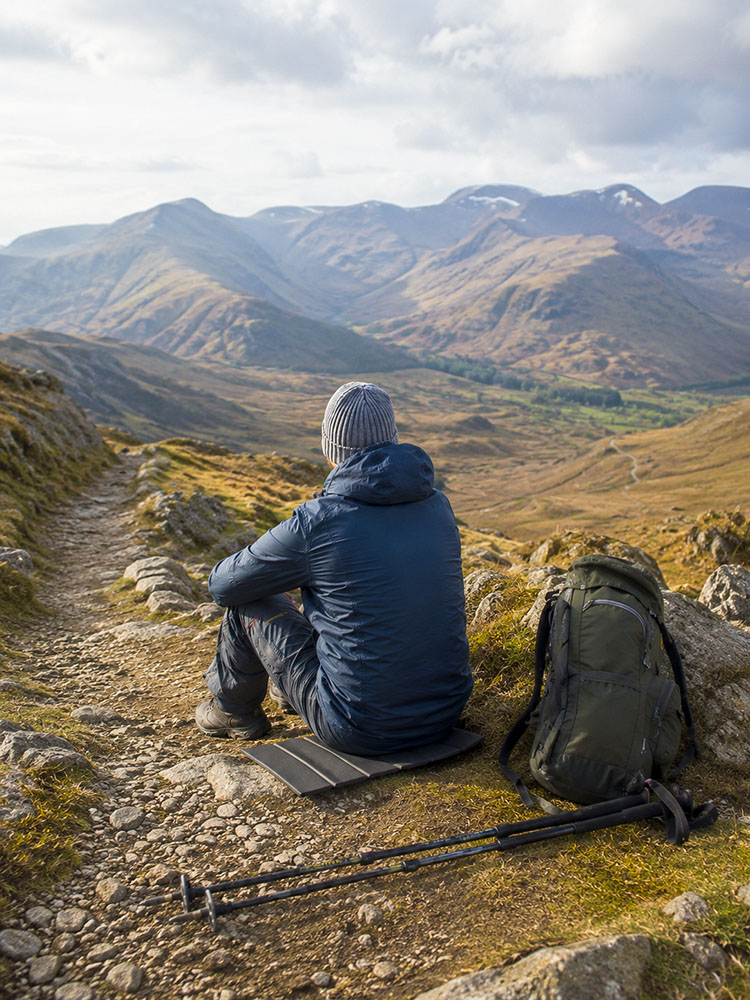
For longer routes, a light sit mat can be worth carrying because it makes short breaks easier and more comfortable.
Even a thin foam cushion can make sitting on snow, cold stone or wet grass feel much less chilly by creating a barrier between your body and the surface. However, a sit mat should not be treated as a substitute for warm clothing, winter planning or proper shelter.
Thickness helps, but it is not everything. A 2 cm textured foam pad usually feels better on cold rocks than a 6 mm flat mat. A 3.8 cm self-inflating seat or a thicker inflatable seat feels softer still, but may be less durable on rough ground.
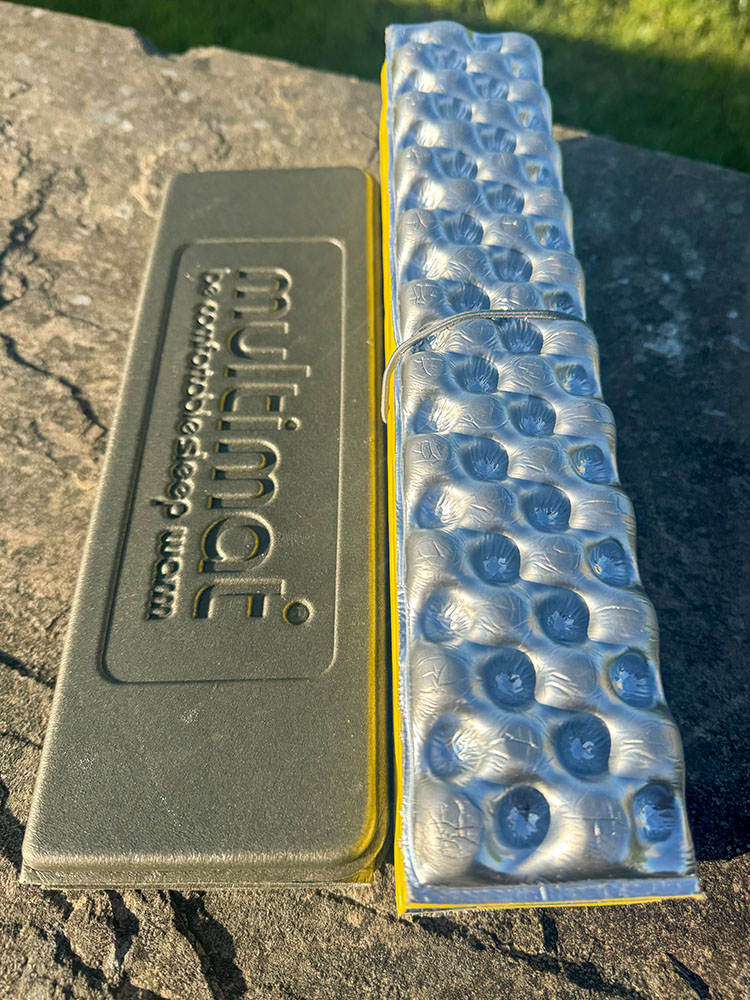
Folded side by side, the Multimat packs narrower while the Z Seat gives more cushioning.
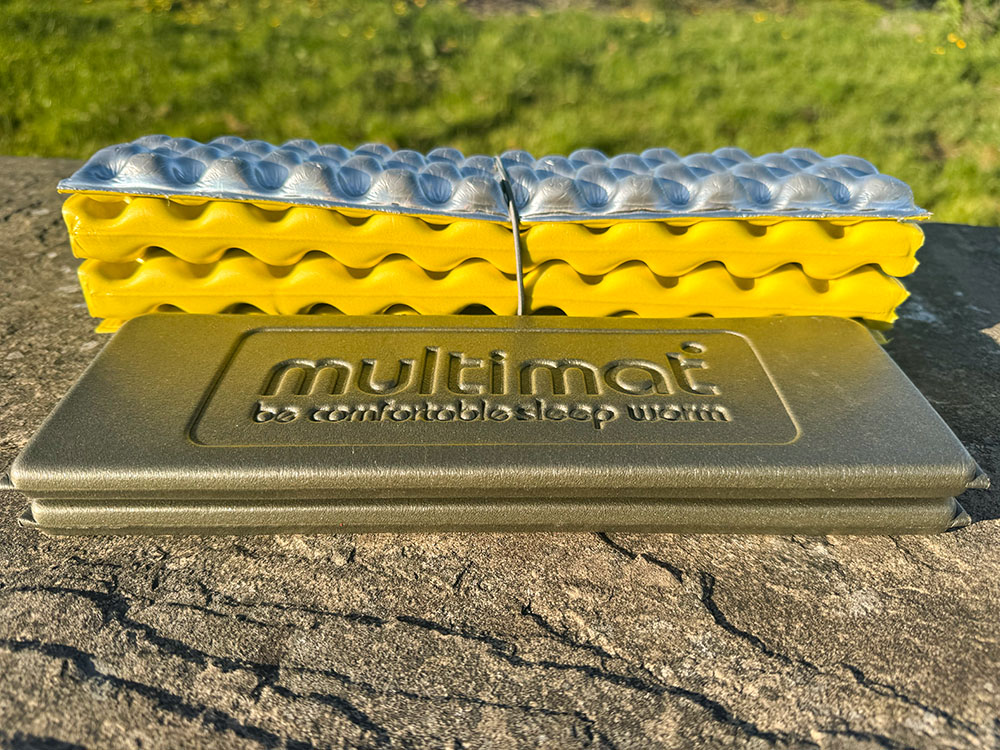
The Z Seat is bulkier when folded, but that extra depth is what gives it more comfort.
Comfort also depends on how pressure is distributed. Textured 'egg-crate' foam traps small pockets of air, providing cushioning and warmth. Chambered inflatable designs distribute pressure differently. Seating-comfort research is largely based on chairs, cushions and transport seating rather than on hiking sit mats, so it should be used carefully: cushion material, thickness and pressure distribution can affect comfort, but a sit mat should not be presented as a medical or injury-prevention product.
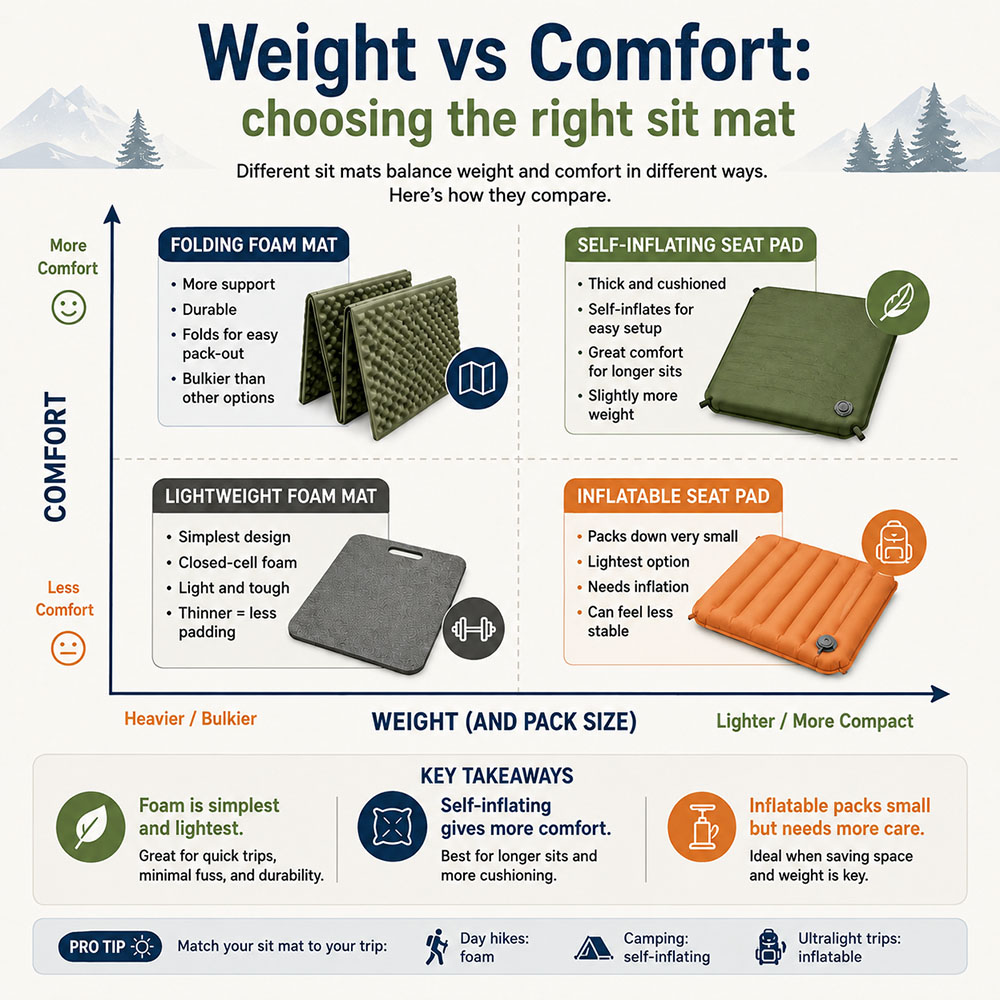
Every sit mat is a compromise: lighter options are easier to carry, while thicker or self-inflating options usually feel more comfortable.
For normal day walks, a sit mat weighing about 30120 g is easy to justify. At the light end, you get a simple damp barrier. At the heavier end, you get more comfort, coverage or fabric protection.
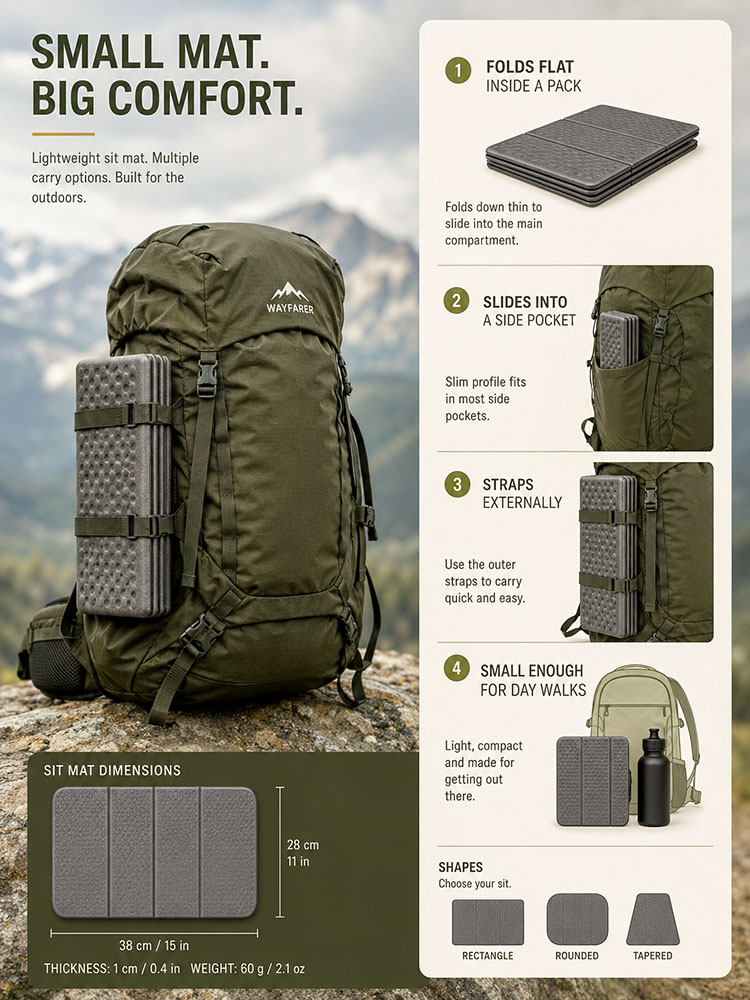
A useful sit mat should be easy to pack, easy to reach and small enough to carry without making your rucksack awkward.
Backrest mats and covered camping seats can weigh several hundred grams. That is fine for festivals, beaches and campsites, but it is usually overkill for hill walking.
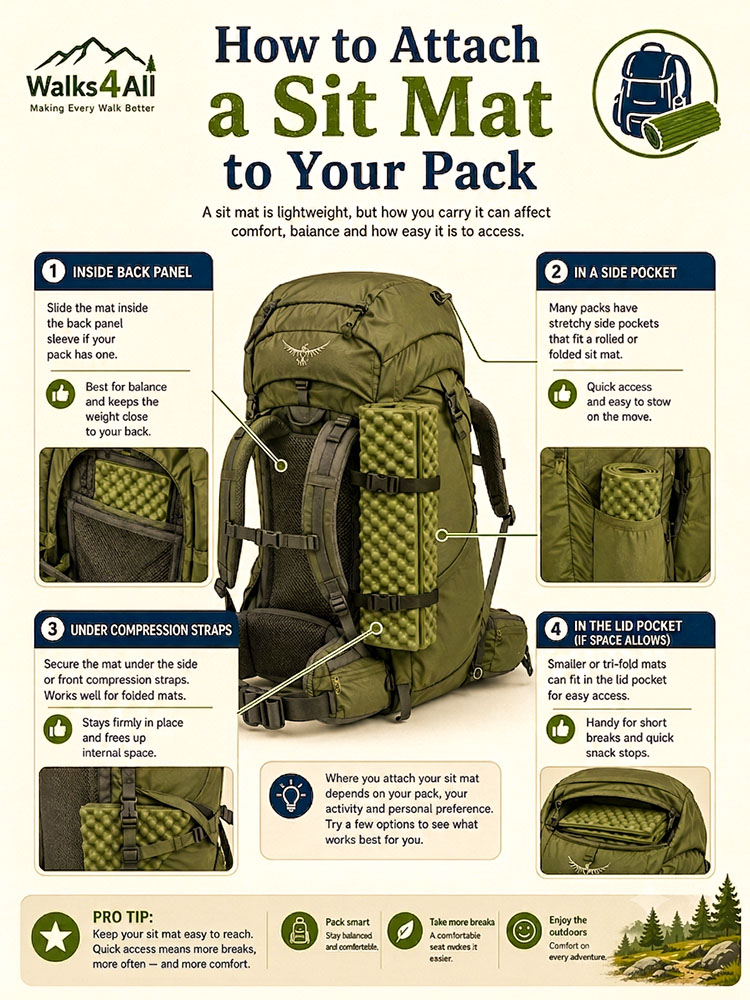
Keep a sit mat secure but accessible so it is easy to use on quick stops without unpacking the whole rucksack.
The best walking sit mat should be light enough to carry in your pack and easy enough to use at every stop.
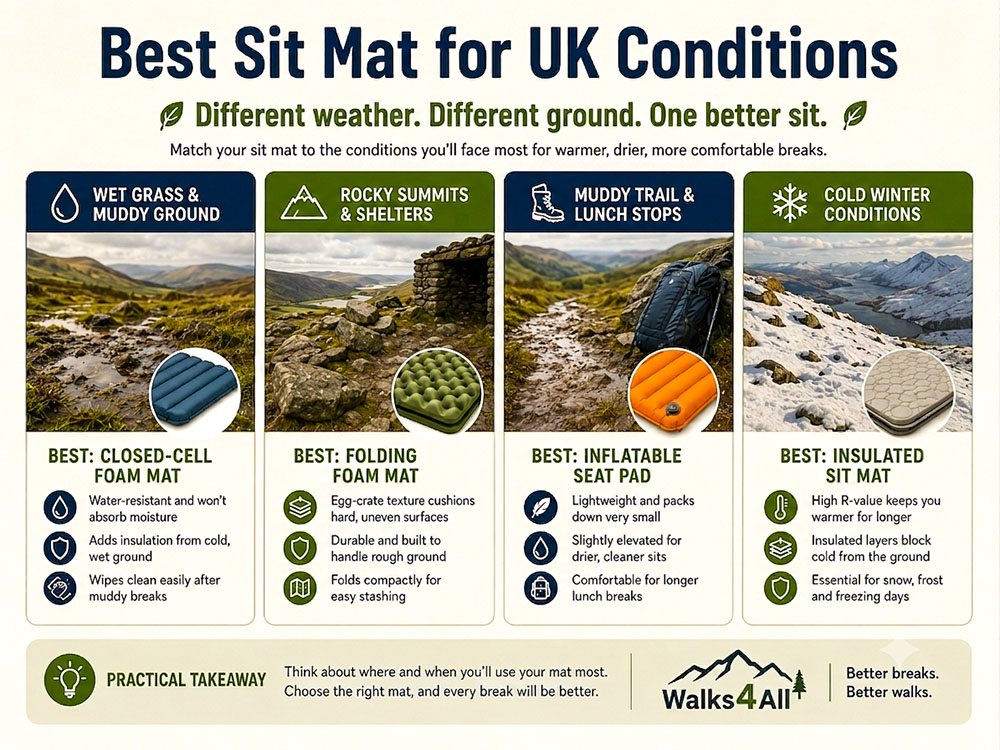
UK weather and terrain change quickly, so choose a sit mat that suits the ground you expect to sit on most often.
For UK use, a sit mat needs to cope with damp grass, wet stone, muddy paths, jagged rocks, heather, snow, cold wind and benches that are never quite dry. Closed-cell foam is the easiest material to rely on because it does not require a valve and does not absorb water like open-cell foam.

In cold weather, an insulated sit mat can make rest stops more comfortable by reducing heat loss into frozen or damp ground.
Inflatable and self-inflating options are still useful, but I would keep them away from thorns, sharp rocks, stove sparks and jagged stones. Put them on smoother surfaces, such as benches or on a tent porch, rather than directly on rough ground.
For me, sit mats are useful in far more situations than just summit lunches. The more ways you use one, the more worthwhile the small pack weight becomes.
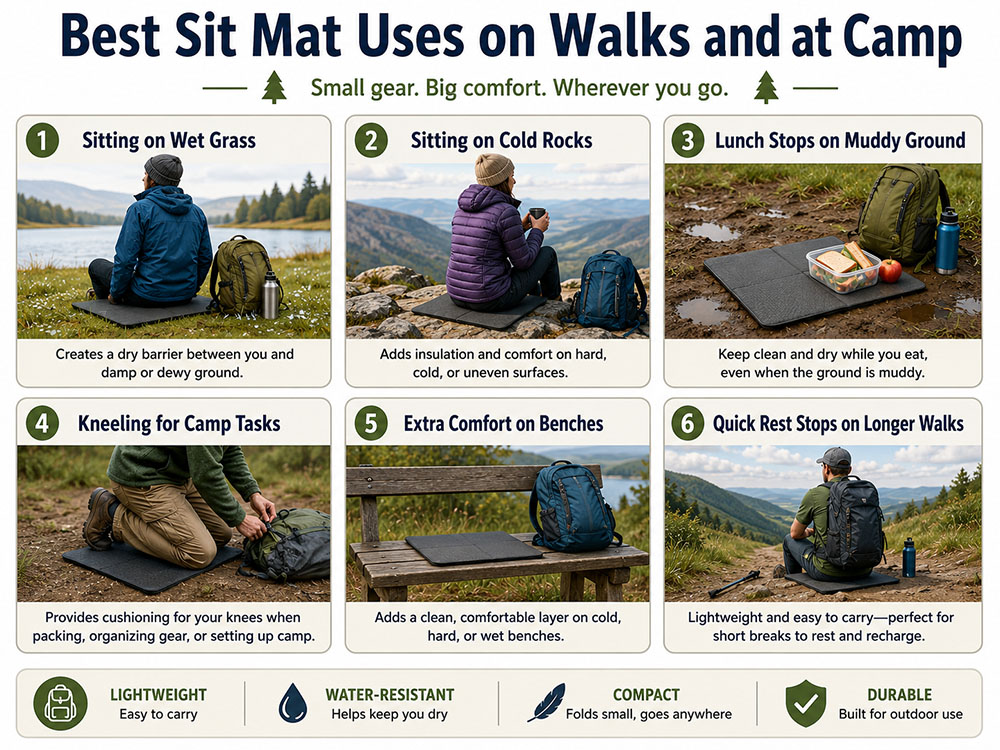
Sit mats are useful beyond sitting: they can add comfort for lunch stops, camp tasks, damp benches and short breaks on longer walks.
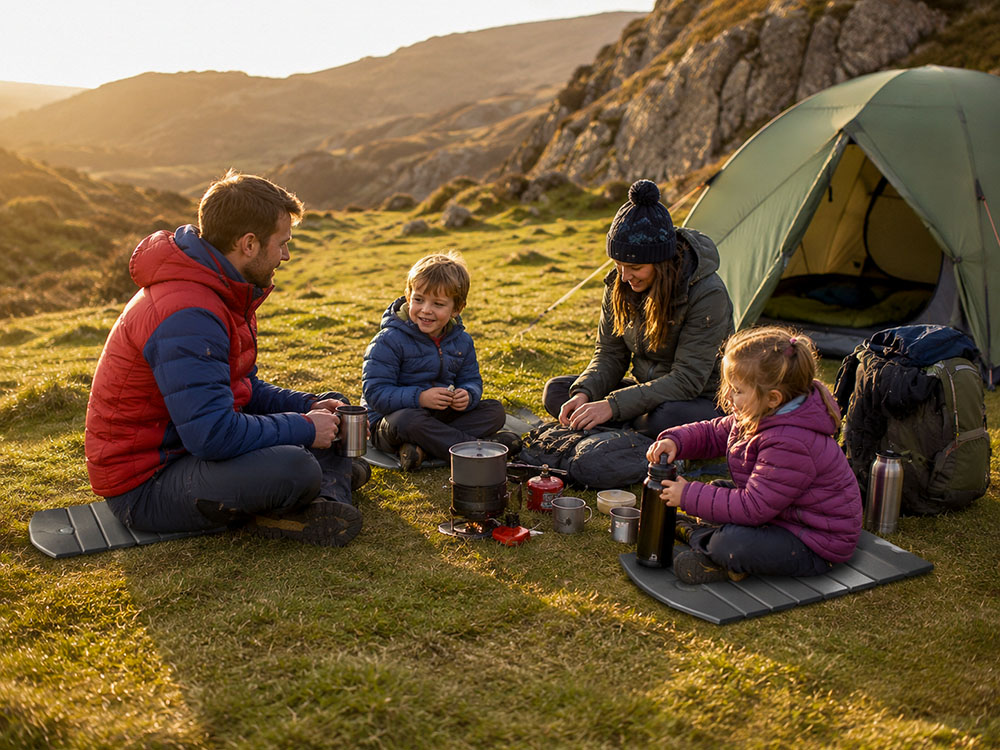
Sit mats are useful at camp for sitting, kneeling, organising kit and giving children a clean, defined place to sit.
Durability is often the first environmental benefit of a sit mat: a pad that lasts for years is better than one that fails quickly. Closed-cell foam, polyester, nylon and coated fabrics can all last well if they are chosen for the right use and properly maintained.
Some brands now use reclaimed or remoulded foam scraps, recycled packaging, or lower-waste production stories. These claims should be read carefully and kept to what the brand actually publishes, but they can help environmentally minded walkers choose a mat that aligns with their values and their pack.
A sit mat is not safety-critical in the same way as navigation, first aid or bad-weather clothing, but it can affect comfort and warmth during stops. In cold weather, sitting directly on wet or frozen ground can leave you feeling chilled quickly. A small insulating barrier helps, but it does not replace warm layers, food, movement and sensible route planning.
For rough ground, closed-cell foam is the most reliable. For inflatable and self-inflating pads, look after the valve, keep them away from sharp objects, and avoid placing them directly on thorns, broken rock, or stove sparks. If you want inflatable comfort on rough ground, place a thin foam sit mat underneath as a protective layer.
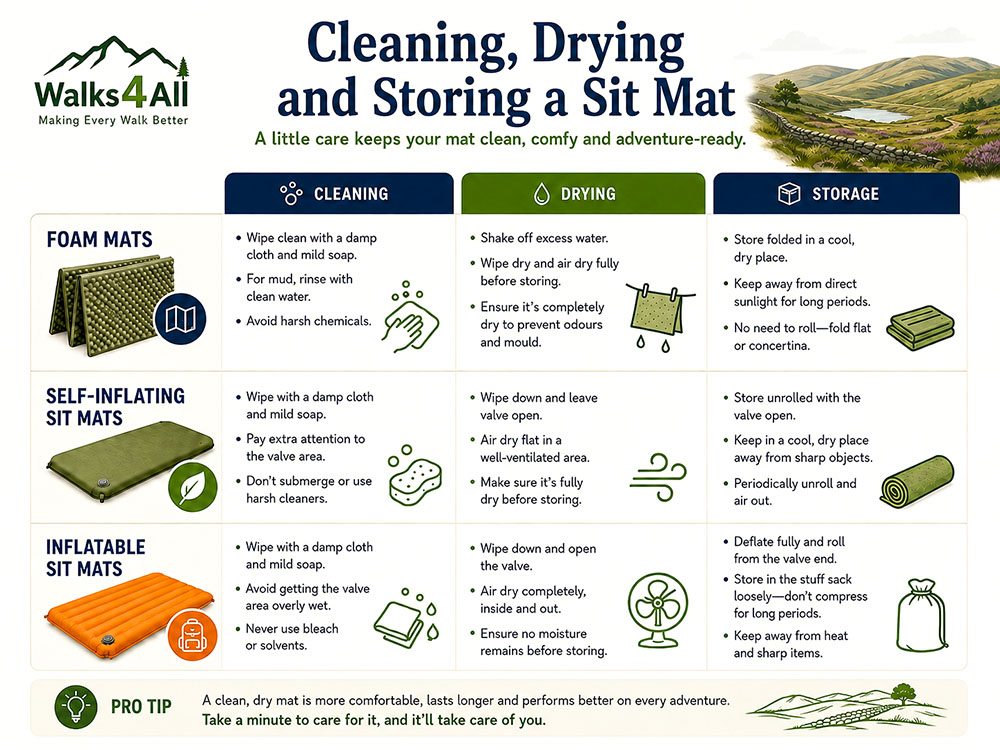
Drying a sit mat properly after muddy or wet walks helps prevent odours, mould and early wear.
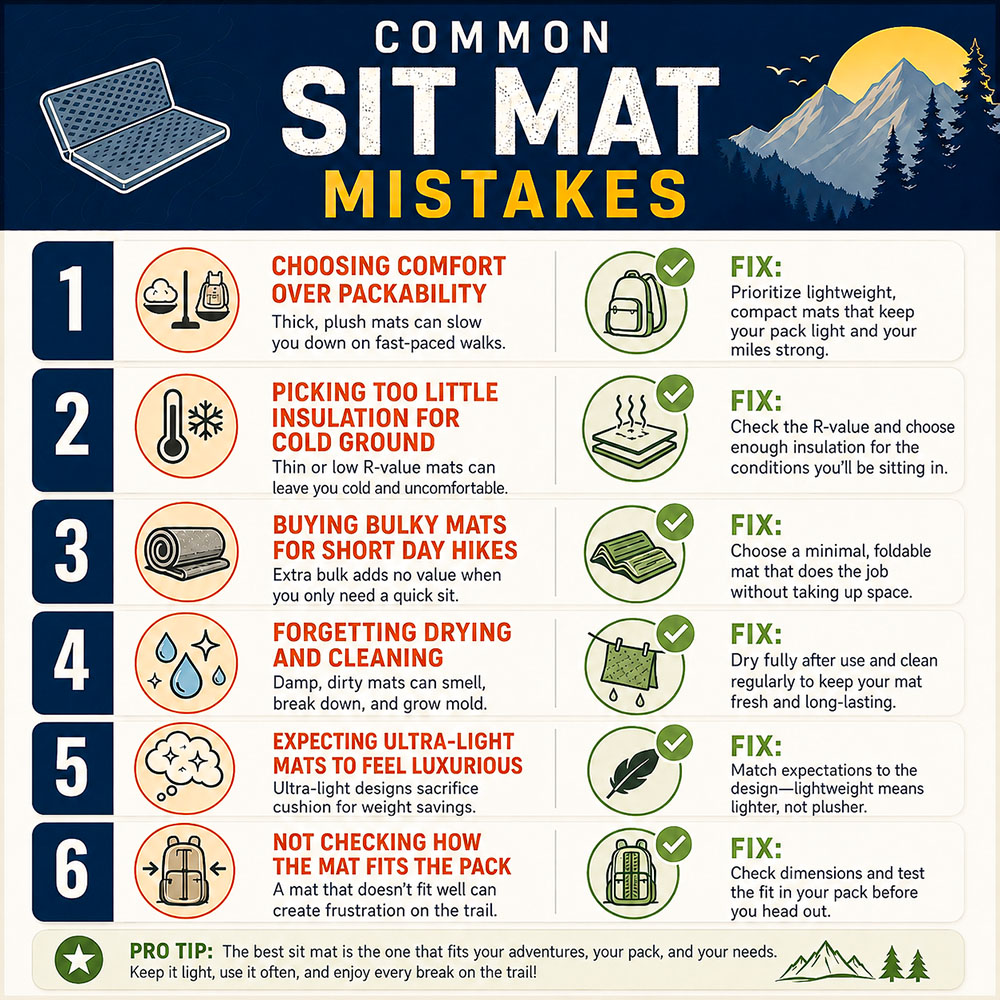
Avoid the common mistakes by matching your sit mat to your route, season, pack space and how long you usually stop.
The best sit mat for most UK walkers is a simple, durable closed-cell foam pad: it is lightweight, quick to use, water-resistant and reliable on mixed ground, where walking breaks usually occur. That is why a foam folding pad is the safest all-round recommendation for day walks, hill walking, backpacking, and wet-weather stops.
The right alternative depends on how you sit. Choose a self-inflating option if cushioning matters more than durability on rough ground; an inflatable backrest seat for campsite or festival comfort; an ultralight foam mat for brief, occasional stops; or a covered/backrest design for picnics, beaches and events. The best buying rule is simple: choose the sit mat you will actually carry, reach and use.
Shop the Walks4all Amazon kit list
We've grouped some of the products mentioned in this article into our Amazon Storefront for convenience. As an Amazon Associate, we earn from qualifying purchases at no additional cost to you.
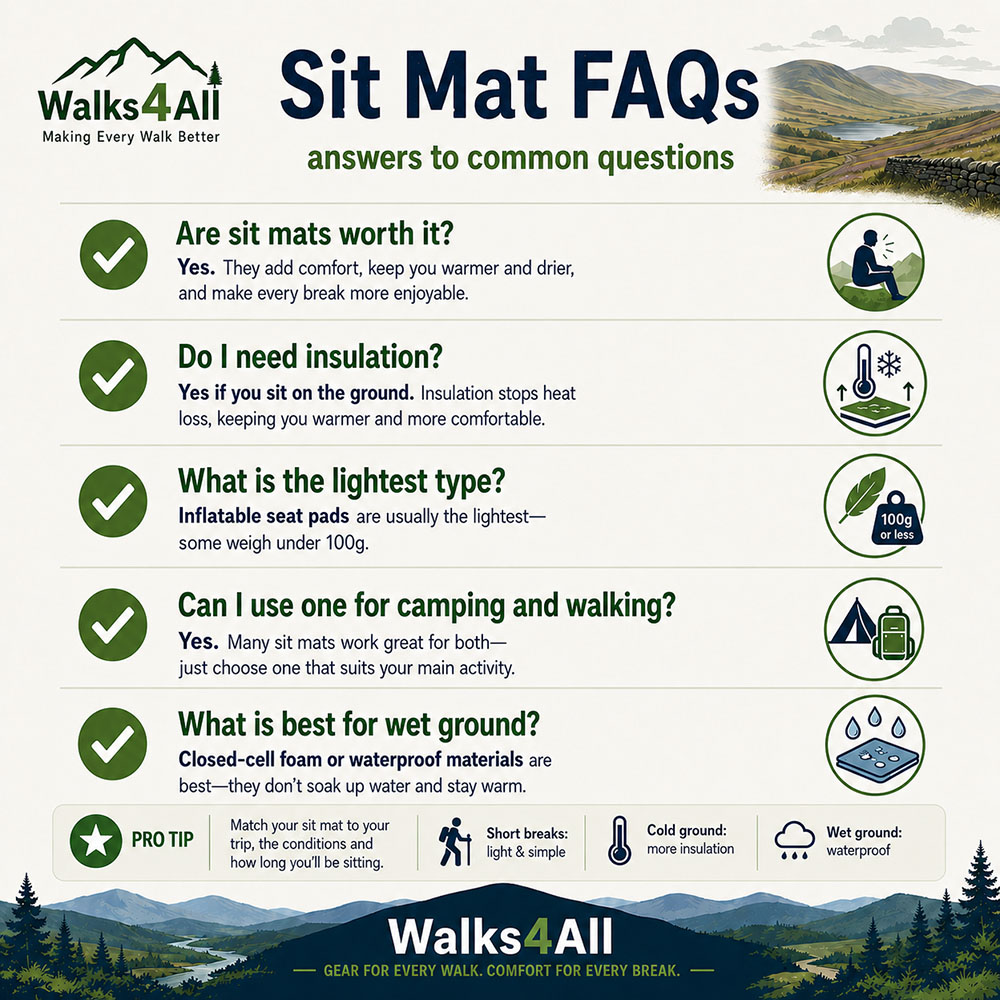
A sit mat is worth carrying for many walkers because it adds comfort, dryness and a little insulation at every stop.
The best sit mat for most UK walking is a closed-cell foam folding pad, as it is lightweight, durable, quick to set up, and reliable on wet or rough ground.
Closed-cell foam is popular because it is puncture-resistant, does not absorb water, works immediately, and performs well on stony paths, wet grass, and rocky ground.
Choose a self-inflating sit mat if you want more cushioning for longer stops, benches, campsites or festivals, and you are happy to protect it from sharp ground.
Foam is better for most walking because it is tougher and simpler. Inflatable sit mats are better when packed size and cushioning matter more than durability on rough ground.
Yes, a sit mat can reduce the cold from wet grass, stone, snow or benches by creating a barrier between you and the surface. It is not a substitute for warm clothing or winter planning.
Most closed-cell foam sit mats are water-resistant or practically waterproof, making them suitable for use on wet grass and benches. Covered mats depend on their fabric and backing, while inflatable mats depend on their outer fabric and seams.
Very thin foam sit mats can weigh around 30 g or less, but the trade-off is comfort. Lightweight folding foam mats usually offer the best balance for walking.
Self-inflating and inflatable seats are usually the most comfortable compact options. Backrest-style seats offer support but are bulkier and less suitable for hillwalking.
Carry a foam sit mat in an outside rucksack pocket, under the compression straps, or in a lid pocket for quick access. Keep inflatable seats inside the pack to protect them from sharp objects.
No, not if you need height, strong back support, or long-sitting comfort. A sit mat is lighter and simpler, whereas a camping chair is more comfortable but heavier and bulkier.
Yes, foam sit mats are useful for children on picnics, at campsites, and on family walks because they are lightweight and keep them off damp grass. Foam is usually safer and simpler than inflatable pads for toddlers because it cannot deflate.
You can use a folded jacket, a small pillow, a folded towel, part of a sleeping mat, a camp stool, or an emergency blanket. These can work in a pinch, but most are bulkier, less waterproof, or less convenient than a dedicated sit mat.
Yes. In snow, a closed-cell foam mat provides useful insulation and will not become waterlogged as the snow melts. On sand, it helps keep sand off your clothes and can be shaken clean afterwards.
Fold closed-cell foam mats along their seams, then tuck them into a pack pocket or under the straps. Fully deflate inflatable mats, roll them carefully, and keep the valve caps secure.
A foldable foam sit mat can serve as a small knee or stretching pad, but it is too small for a full yoga practice. Use a proper yoga mat if you need full-body support.
Wipe it with a damp cloth after use, rinse closed-cell foam if muddy, and leave it to dry completely before storing. Do not store damp fabric, self-inflating, or inflatable mats.
R-value measures resistance to heat transfer. It matters most when a product delivers a reliable value, but many sit mats do not. For sit mats, also compare foam type, thickness, coverage and compression.
Buy a backrest sit mat for campsites, festivals, beaches, picnics and events where comfort is more important than weight. For hiking, a flat foam mat is usually easier to carry.
June 2026