Health benefits of creatine monohydrate
By: Andrew Forrest - January 2026
Evidence-led guide to the health benefits of creatine monohydrate: strength and lean mass, healthy ageing, HIIT performance, brain and mood (emerging), dosing (3-5g/day) and safety. 100 studies, UK-focused, with practical takeaways.
Table of contents
- Introduction
- Health benefits of creatine
- Strength and power
- Muscle size and body composition
- High-intensity performance (sprints, HIIT, team sports)
- Recovery, soreness, inflammation and injury risk
- Healthy ageing: strength, function, staying independent
- Bone health (and muscle quality)
- Metabolic and vascular health
- Brain health, cognition and mental fatigue
- Mood and mental health
- Clinical conditions: neurodegenerative disease, muscular dystrophy, TBI, COPD, heart failure, joint pain, and dialysis cramps
- Evidence snapshot table
- Practical dosing and safety
- Frequently Asked Questions (FAQs) on the health benefits of creatine monohydrate
- References to the health benefits of creatine monohydrate
This page contains affiliate links. If you buy products or services via these links, we may earn a small commission at no cost to you. If you are thinking of buying, please use our links, as it helps support our website and YouTube channel.
Creatine monohydrate is also among the most widely researched supplements worldwide. Across healthy adults and several clinical groups, the
overall pattern is meaningful benefits for strength and training outcomes, generally good safety at recommended doses, and promising but
inconclusive evidence in areas such as brain health and mood.[1 ‑ 9]
Creatine is a naturally occurring compound found in foods (especially meat and fish) and produced by the body. It's stored mainly in your muscles
as phosphocreatine, where it helps recycle ATP (your cells' rapid 'energy currency') during short, intense efforts. That's why creatine is
closely linked to strength, power and repeated high-intensity performance.[1 ‑ 4] [9 ‑ 15]
Health & Wellness Disclaimer
The information in this article is intended for general education and wellbeing and covers creatine supplementation, including potential
benefits, dosing strategies, product selection, and safety considerations for generally healthy adults.
Creatine may not be suitable for everyone. If you have any medical conditions - especially kidney disease or reduced kidney function, high or
unexplained creatinine blood results, liver disease, hypertension, or any long-term condition - or if you are pregnant or breastfeeding, under
18, have a history of bipolar disorder, or are taking prescription medicines (particularly those that may affect kidney function), you should
speak to your GP, pharmacist, or another qualified healthcare professional before starting creatine or changing your supplement routine. If you
have been advised to limit protein, fluids, or certain supplements for medical reasons, do not start creatine without professional advice.
This article does not provide medical advice and should not be used as a substitute for professional healthcare. Supplements are not regulated
in the same way as medicines in the UK, and product quality can vary between brands. Always follow the manufacturer's directions, do not exceed
recommended doses, and stop use and seek medical advice if you experience concerning symptoms. If you develop urgent symptoms such as chest
pain, a severe allergic reaction, fainting, severe vomiting, or signs of acute illness, seek immediate medical attention by calling 999 or
attending A&E.
Introduction
Before we start, a couple of definitions:
- ATP: the molecule your cells use for immediate energy.
- Phosphocreatine: a 'rapid recharge' store that helps replenish ATP during hard efforts.[11] [12]
If you've ever felt overwhelmed by creatine marketing - HCl, buffered, 'advanced' blends, loading phases, timing hacks - you're not alone. Much
of what's marketed as 'new' is just packaging and hype around the same basic idea: topping up muscle creatine stores so you can do a bit more
quality work, recover a bit better between efforts, and build stronger training adaptations over time.
The goal of this guide is to strip it back to what the evidence actually supports and translate that into practical, UK-friendly advice you can
use whether you're lifting, hill training, hiking, or simply trying to stay strong as you age.[1] [2] [11]
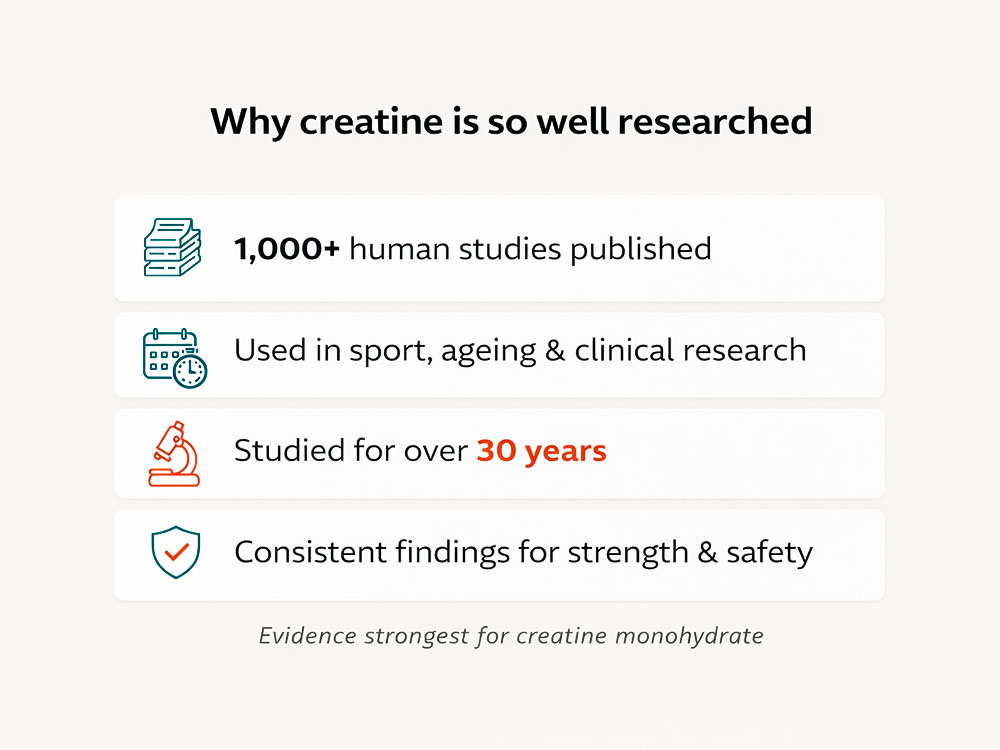
Creatine is also unusually well-studied compared with most supplements. There are hundreds of human trials, as well as many systematic reviews and
meta-analyses, covering performance, safety, and different populations. For this article, we prioritised the highest-quality evidence first
(position statements, systematic reviews and meta-analyses, and well-controlled trials), then added individual studies where they best explained
the 'why' behind the benefits (energy system, loading vs no loading, recovery, older adults, and cognition).
Where evidence is strong, we say so; where we believe it's still emerging (for example, certain brain and mood outcomes), we've kept the wording
careful and avoided overclaiming.[1] [2] [11] [19] [28] [37] [38]
Key takeaways
- Strength & power (★★★ very strong evidence): Creatine reliably enhances strength gains when combined with resistance training,
particularly for repeated sets and heavy compound lifts.[16 ‑ 33]
- Muscle size and body composition (★★★ very strong evidence): Expect slightly greater increases in fat-free mass with training (some
of this early gain can be water stored in muscle).[16 ‑ 24] [49]
- Repeated sprint / high-intensity performance (★★ strong evidence): Most useful for sports with bursts (football, rugby, hockey, HIIT),
where you need to repeat high-intensity efforts.[39 ‑ 47]
- Recovery & muscle damage (★★ strong evidence, mixed outcomes): Some studies show improved force recovery and a reduced
inflammatory response; others report no difference, depending on the protocol and muscle group.[48 ‑ 56]
- Healthy ageing (★★ strong evidence):
Older adults
can gain more strength and lean mass from resistance training with creatine; the greatest practical benefit is maintaining function and
independence.[23 ‑ 37] [70] [71]
- Metabolic & vascular markers (★ emerging): Early work suggests possible benefits for glucose control (when combined with
exercise) and vascular function, but this is not 'settled'.[57 ‑ 69]
- Brain, cognition & mental fatigue (★ emerging): Evidence is most convincing under stress (e.g., sleep deprivation) and in some
groups (e.g., those with low baseline creatine). Not a guaranteed 'brain booster'.[74 ‑ 80]
- Mood & mental health (★ emerging): Creatine has shown promise as an add-on for depression and bipolar depression, but this is a
'talk to your clinician' area, not self-treatment.[81 ‑ 85]
- Clinical conditions (★ emerging / mixed): Trials exist in neurological disease, muscle disorders, rehabilitation contexts, and more
- results vary by condition.[86 ‑ 100]
- Safety (★★★ very strong evidence in healthy adults): Large reviews and clinical trials support safety in healthy adults at typical
doses; caution is prudent in kidney disease and complex medical situations.[1 ‑ 6] [8] [9] [54 ‑ 62]
Health benefits of creatine
Strength and power
If you do resistance training,
creatine
is one of the most consistently effective 'works for most people' supplements. Across systematic reviews and meta-analyses, creatine plus
resistance training produces greater strength gains than resistance training alone.[16 ‑ 26]
For example, a 10-week trial in young women found that the creatine group improved strength and fat-free mass to a greater extent than the
placebo group.[27]
If you're new to the term, 1-RM is the maximum weight you can lift for a single repetition. This is a common way researchers measure changes in
strength in creatine studies.[16] [27]
A standout statistic (because it's very concrete): a 2024 systematic review and meta-analysis in adults under 50 reported that, compared with
placebo, creatine + resistance training produced, on average, ~4.4 kg greater improvement in the bench press and ~11.35 kg greater
improvement in the leg press.[17]
There's also consistent 'real gym' evidence that creatine helps you do a little more work in training. In trained lifters, creatine has been
shown to increase training intensity - for example, enabling a few extra repetitions at a given weight, thereby increasing total lifting volume
over time.[29 ‑ 32]
In collegiate American football players, creatine supplementation during off-season training has been linked to greater gains in lean mass and
larger improvements in combined lifting performance than with placebo.[31]
In practice, this is often what people feel:
- You maintain higher power output across repeated sets.[29 ‑ 32]
- You squeeze out an extra rep or two at a given load.[29 ‑ 32]
- You recover a little better after hard efforts.[11] [12] [39 ‑ 47]
Walks4all take:
If your goal is 'stronger legs for life' (stairs, hills, hiking, carrying shopping, staying steady as you age), creatine is a genuinely useful
tool - but it's a multiplier, not magic. The best results come when you train progressively, take creatine and eat enough protein.[16 ‑ 37]
Muscle size and body composition
Creatine is strongly associated with slightly greater gains in fat-free mass during resistance training programmes. Meta-analyses of body
composition and direct measures of hypertrophy support this overall direction of effect.[17 ‑ 24]
A meta-analysis of training trials has found that creatine users gain roughly 1 kg more lean mass on average than placebo during training
programmes (with the usual caveat that studies vary by protocol, dose, and participant).[18] [24]
A nuance that might matter for some is that you may see some early weight gain, which can be water stored within muscle (intracellular fluid) as
muscles load creatine. That's not 'bad weight' - it's part of how creatine works - but it's worth knowing so you don't panic when you see your
scales in week one.[49] [16]
There are also classic, practical trials that demonstrate meaningful changes over relatively short periods. For example, a controlled
training study found that creatine users gained more fat-free mass and improved strength compared with placebo during a structured resistance
programme.[28]
Creatine's effects on body composition may also include small improvements in fat mass or body fat percentage when combined with training,
likely because it supports higher-quality sessions (more reps, higher total work, and better power maintenance).[18] [29 ‑ 32]
Walks4all take:
Creatine is best thought of as a 'training quality' supplement. If you use it alongside sensible strength work (even just 2-3 sessions/week
alongside walking), it can help you build and maintain more lean tissue, upporting healthy ageing.[23 ‑ 37] [70] [71]
High-intensity performance (sprints, HIIT, team sports)
Creatine is most useful when your sport or training involves repeated bursts: sprints, hard surges, repeated jumps, tackles, hill repeats, and
HIIT intervals. Studies in football codes, swimming, sprinting, and repeated-sprint protocols show that creatine can improve performance or
reduce performance drop-off - although not every study finds a benefit (real-world protocols vary).[39 ‑ 47]
Beyond 'static strength', the key idea is this: creatine supports performance during high-intensity, repetitive work bouts, exactly the kind of
efforts limited by rapid ATP depletion.[11] [12] [39 ‑ 47]
This performance profile aligns with creatine's role in accelerating phosphocreatine resynthesis between bouts, which can improve short-term
recovery and enable you to repeat high-power efforts more effectively.[11] [12] [39 ‑ 47]
Where this tends to matter most:
- Repeated sprints with short rests (team sports, intervals).[39 ‑ 47]
- Short, explosive efforts repeated throughout a training session (hypertrophy and power work).[29 ‑ 32]
- Mixed workouts that alternate between heavy lifts and conditioning.[16] [17] [39 ‑ 47]
Walks4all take:
If you mainly walk at a comfortable pace, creatine won't suddenly turn walking into a sprint sport. But if you add hill sprints, stair work,
or strength training, creatine becomes much more relevant, because those efforts depend heavily on rapid energy turnover.[16] [39 ‑ 47]
Recovery, soreness, inflammation and injury risk
The recovery story is 'promising but mixed'.
Some studies suggest creatine may attenuate markers of muscle damage and inflammation after demanding exercise. For example, in certain
protocols, creatine has been associated with improved force recovery following eccentrically induced muscle damage.[51] [52] [53]
Other studies report little to no difference in soreness or in common markers of muscle damage, depending on the method of induction, the
muscle group tested, and the timing and dosing.[48 ‑ 56] [49] [50]
Interestingly, creatine may be particularly useful during periods of immobilisation or rehabilitative training. Creatine supplementation has
been shown to reduce losses during disuse and to enhance strength and hypertrophy during rehab training in a controlled setting.[33]
Walks4all take:
Creatine may aid recovery for some people - particularly when training volume is high, and you're trying to string together good sessions.
But it's not a replacement for the boring essentials: sleep, sensible progression, hydration, and enough protein.[48 ‑ 56]
Healthy ageing: strength, function, staying independent
Ageing is when
creatine becomes about much more than 'gym performance'.
As we age, we naturally lose muscle mass and, for many people, bone density, increasing the risk of frailty and reduced functional independence.
Creatine, especially when combined with resistance exercise, appears to counteract some age-related declines.[23 ‑ 27] [34 ‑ 37]
Older adults respond well to resistance training, and the evidence suggests that creatine can enhance gains in lean mass and strength when
combined with training. Multiple meta-analyses support this.[23 ‑ 27]
Controlled trials in older populations also show improvements in strength and functional capacity when creatine is combined with supervised
resistance training.[34 ‑ 37]
A key practical point: those improvements can translate into 'real-life' capacity, for example, getting up from a chair more easily, managing
stairs, and maintaining walking confidence as the years go by.[23 ‑ 27] [34 ‑ 37]
Walks4all take:
For a walking-focused audience, this is a big deal: strong hips, thighs, and calves are protective of mobility,
balance,
and confidence outdoors. Creatine plus basic strength training is one of the most evidence-backed combinations for staying capable as you get
older.[23 ‑ 37]
Bone health (and muscle quality)
Creatine is not a bone supplement in the way
vitamin D or
calcium are,
but there are indications that creatine combined with resistance training may support muscle quality and some bone-related outcomes in older
adults and postmenopausal women.[26] [27] [37] [38] [70] [71]
Walks4all take:
If you're post-menopause or concerned about bone health, the foundation remains: resistance training + adequate protein + appropriate medical
guidance. Creatine may be a useful add-on if you're training, but it's not a standalone bone-health strategy.[26] [27] [37] [38]
In type 2 diabetes, creatine has been tested as an adjunct to exercise training, with one trial showing beneficial effects on glycaemic control
in that context, and another supporting kidney safety in that population.[57] [58]
A practical way to think about this: creatine doesn't replace lifestyle basics, but by improving training capacity and supporting lean mass,
it may improve
glucose handling
when paired with exercise.[57]
Separately, early-stage studies in older adults suggest that creatine may influence vascular function markers (still emerging - interesting, not
definitive).[60 ‑ 69]
Walks4all take:
If you're managing blood sugar or cardiovascular risk, creatine is not first-line. Consider it a potential support tool alongside an exercise
programme, ideally with clinician oversight, especially in diabetes or heart disease.[57 ‑ 69]
Brain health, cognition and mental fatigue
Creatine's brain story is easiest to understand as 'brain energy support'. The brain also relies on creatine for energy, and human studies show
that brain creatine levels can rise with supplementation.[78]
Under conditions where brain energy demand is high (such as sleep deprivation) or when baseline creatine availability is lower, supplementation may
improve some aspects of cognitive performance.[74 ‑ 80]
For example, vegetarians often have lower baseline creatine intake from food, and trials in vegetarian participants have shown that creatine
supplementation improves performance on cognitive tasks.[74] [75]
Human trials also show benefits in certain sleep-deprivation contexts, including improvements in certain complex cognitive tasks and mood-related
outcomes.[76] [77] [79]
Walks4all take:
Creatine isn't a guaranteed focus pill, but if you're often sleep-deprived, stressed, or simply want a low-risk experiment grounded in human
data, creatine is one of the more plausible options. Just keep expectations realistic.[74 ‑ 80]
Mood and mental health
There is emerging evidence that creatine can help as an add-on to depression treatment, including trials in major depressive disorder and
bipolar depression. There is also a meta-analysis examining overall depressive symptoms.[81 ‑ 85]
A particularly interesting clinical signal: in an RCT in women with major depressive disorder, creatine used alongside an SSRI produced greater
improvements than SSRI + placebo, suggesting that creatine may augment response in some settings.[81]
Walks4all take:
This is not a DIY area. If you're dealing with depression or bipolar disorder, creatine should be considered only as a clinician-informed
adjunct (never a substitute for evidence-based care).[81 ‑ 85]
Clinical conditions: neurodegenerative disease, muscular dystrophy, TBI, COPD, heart failure, joint pain, and dialysis cramps
Creatine has been studied across a wide range of clinical settings:
- Parkinson's and Huntington's: large trials exist; results do not support creatine as a disease-modifying therapy in these conditions.[86] [87] [88]
- ALS: trials exist, generally showing no clear benefit.[89] [90]
- Muscular dystrophies: trials continue to assess functional and strength outcomes.[91] [92] [93]
- Traumatic brain injury (children): trials report improved outcomes in paediatric settings under specialist supervision.[94] [95]
- COPD rehabilitation: trials have tested creatine to support strength and rehabilitation capacity.[96] [97]
- Heart failure: a pilot RCT and a systematic review exist; evidence is still evolving.[98] [99] [100]
- Joint health (knee OA/RA): mixed trial outcomes - some evidence of benefit for symptoms/function, not consistent across studies.[65 ‑ 69]
- Dialysis cramps: creatine has been studied in haemodialysis-related cramping and function.[70] [71]
Walks4all take:
Creatine is not 'one supplement to treat everything'. However, it is unusually well-studied across conditions, which makes it worth discussing
with a clinician in some rehabilitation or disease contexts. For healthy people, the clearest and most reliable benefits remain muscle strength,
improved training quality, and support for healthy ageing.[1 ‑ 4] [16 ‑ 37] [86 ‑ 100]
Evidence snapshot table
| Health benefit |
What it means in real life |
Who it's most useful for |
Evidence strength |
Studies supporting this point |
| Strength & power |
Bigger strength gains (especially repeated sets and heavy lifts) |
Gym-goers; athletes; older adults doing resistance training |
★★★ |
[16 ‑ 35] |
| Lean mass / body composition |
Slightly more fat-free mass gain with training (some early water gain) |
Anyone lifting progressively; older adults combating sarcopenia |
★★★ |
[16 ‑ 24] [26 ‑ 37] [49] |
| High-intensity performance |
Better repeated sprint ability/less performance drop-off |
Team sports; HIIT; sprinters |
★★ |
[39 ‑ 47] |
| Recovery from hard training |
Faster recovery of force in some protocols; mixed for soreness/CK |
High training loads; tournaments; endurance + intervals |
★★ |
[48 ‑ 56] |
| Heat tolerance / hydration safety |
Doesn't worsen dehydration/heat response in controlled studies |
Hot climates; field sports |
★★ |
[49] [54] [55] |
| Healthy ageing |
Greater training response; helps preserve function |
50+; sarcopenia risk; 'I want to stay strong for walking & life' |
★★ |
[23 ‑ 37] [70] [71] |
| Bone & muscle quality |
Some signals for bone area/density + muscle quality in older adults |
Post-menopause; osteopenia risk (with training) |
★-★★ |
[26] [27] [37] [38] [70] [71] |
| Glucose control (with exercise) |
Better markers of glycaemic control alongside training |
Type 2 diabetes under medical guidance |
★-★★ |
[57] [58] |
| Vascular function markers |
Early pilot data suggests possible improvements |
Older adults; cardiometabolic risk (early-stage evidence) |
★ |
[60 ‑ 69] |
| Cognition under stress |
Better mental performance under sleep deprivation in some trials |
Sleep-deprived adults; possibly low baseline creatine |
★ |
[74 ‑ 80] |
| Depression / bipolar depression (adjunct) |
Symptom improvements as an add-on in some trials |
Clinician-supervised mental health treatment |
★ |
[81 ‑ 85] |
| Rehab/disuse atrophy |
Less loss during immobilisation + better rehab strength gains |
Injury rehab contexts |
★ |
[33] |
| Joint health (knee OA/RA) |
Mixed: some trials show symptom improvements; others no change |
People in physio / rehab programmes |
★ |
[65 ‑ 69] |
| Dialysis muscle cramps |
Reduced cramp incidence in haemodialysis settings |
Clinician-supervised dialysis populations |
★ |
[70] [71] |
Practical dosing and safety
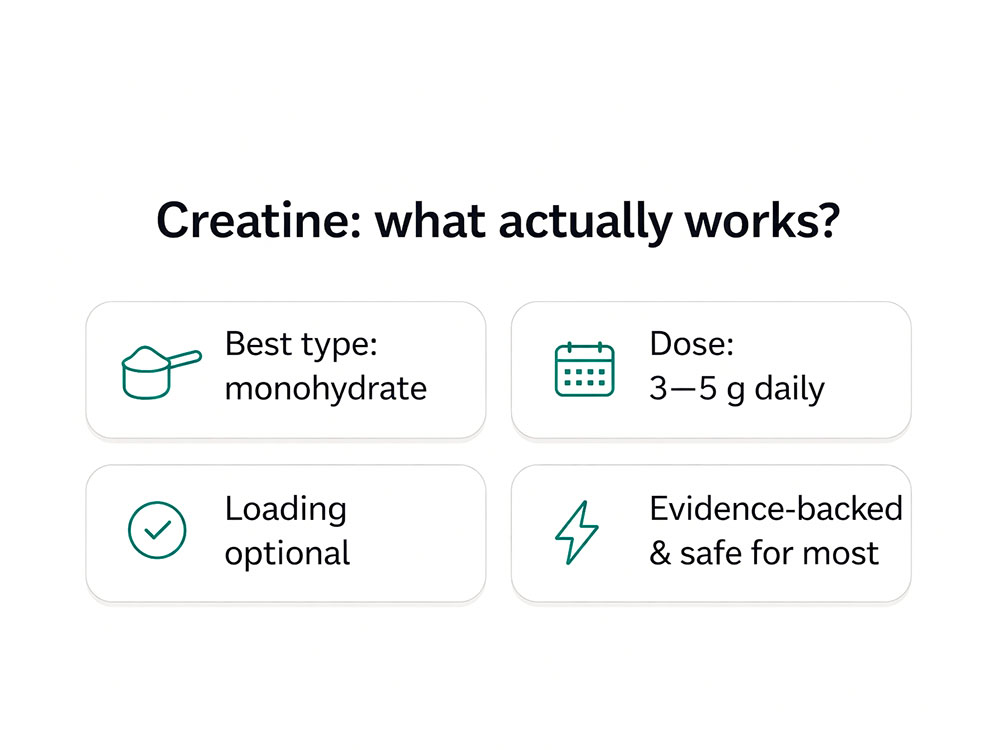
- Daily dose (simple approach): 3-5 g creatine monohydrate daily.[1 ‑ 6] [10 ‑ 15]
- Loading (optional): ~20 g/day split in 4 doses for 5-7 days, then 3-5 g/day. This saturates muscles faster but isn't required.[10 ‑ 13]
- Consistency matters more than timing: Daily use is the main thing; timing is secondary.[1 ‑ 4] [38]
- Expect known side effects: Mild GI upset in some people (often dose-related) and a small, temporary weight gain early on due to water
retention in the muscles.[16] [49]
- Safety: Human evidence supports safety in healthy adults at recommended doses, including studies of kidney function in specific
contexts. If you have kidney disease, are pregnant or breastfeeding, or are under specialist care, treat creatine as an 'ask first' before
using the supplement.[1 ‑ 9] [54 ‑ 62]
Creatine is one of the most extensively studied supplements in terms of safety, with trials ranging from days to multiple years.[1 ‑ 6] [8] [9]
Kidney function is a common concern because creatine can raise creatinine (a blood marker), but this does not automatically indicate kidney
damage in healthy people.[1 ‑ 6] [56] [57] [58]
Walks4all take:
Creatine monohydrate
is one of the few supplements we can recommend with cautious confidence when the goal is strength, power, preserving muscle with age, or
getting more out of resistance training. Keep it simple, keep it consistent, and pair it with a training plan you can stick to.[1 ‑ 6] [16 ‑ 37]
Frequently Asked Questions (FAQs) on the health benefits of creatine monohydrate
Does creatine have health benefits beyond those for muscle?
Yes. Human research supports benefits beyond muscle, including healthy ageing (strength and lean mass with training), emerging areas such
as cognition under sleep deprivation, and mood support as an adjunct in clinical care.[23 ‑ 37] [74 ‑ 85]
Is creatine safe to take every day?
For healthy adults, evidence supports daily use at recommended doses. If you have kidney disease or complex medical conditions, speak to
your clinician first.[1 ‑ 6] [56 ‑ 62]
Does creatine cause kidney damage?
In healthy people, the overall human evidence does not support kidney damage at recommended doses. Trials in type 2 diabetes and
high-protein contexts also report no impairment of kidney function in those settings.[1 ‑ 6] [56] [58] [62]
Will creatine make me gain weight?
Many people gain a small amount early on, largely from increased water stored within muscle. Over time, additional weight can also reflect
increased lean mass if training.[16 ‑ 24] [49]
Is creatine only for bodybuilders?
No. Older adults may benefit when creatine is combined with resistance training to preserve strength and function, supporting walking,
balance and independence.[23 ‑ 37]
Does creatine improve brain function?
Evidence is emerging. Some trials show improved cognitive performance during sleep deprivation and in groups with lower baseline creatine
intake.[74 ‑ 80]
Can creatine help with depression?
It's an emerging area. Some trials and a meta-analysis suggest benefits as an adjunct, but this should be clinician-guided rather than
self-treatment.[81 ‑ 85]
What's the best type of creatine to use?
Creatine monohydrate is the most studied form and the one supported by the strongest evidence base.[1 ‑ 4]
Do I need a loading phase?
No. Loading saturates stores faster, but daily doses of 3-5 g also work if you're consistent.[10 ‑ 13]
Can creatine help with recovery and soreness?
Sometimes results are mixed across protocols, but some trials show improved force recovery and reduced inflammation after demanding
exercise.[48 ‑ 56]
January 2026
Related reading:
Want to 'go deeper'?
We take evidence seriously at Walks4all. If you'd like to better understand how walking studies are designed, how results
should be interpreted, and what scientific terms mean, explore our guides on the following:
References to the health benefits of creatine monohydrate
- Kreider RB et al. (2017) - International Society of Sports Nutrition position stand: safety and efficacy of creatine supplementation in exercise, sport, and medicine. What the study shows: Consensus review supporting creatine monohydrate for strength/power and overall safety in healthy users at recommended doses. https://pubmed.ncbi.nlm.nih.gov/28615996/
- Buford TW et al. (2007) - International Society of Sports Nutrition position stand: creatine supplementation and exercise. What the study shows: Practical dosing/mechanisms and evidence that creatine improves high-intensity performance and strength training outcomes. https://pubmed.ncbi.nlm.nih.gov/17908288/
- Cooper R et al. (2012) - Creatine supplementation with specific view to exercise/sport performance: an update. What the study shows: Updated review of human trials; strongest benefits in repeated high-intensity performance and resistance training adaptations. https://pubmed.ncbi.nlm.nih.gov/22817979/
- Hall M, Trojian TH (2021) - Creatine Supplementation: An Update. What the study shows: Clinically oriented overview of benefits, dosing, and safety considerations across populations. https://pubmed.ncbi.nlm.nih.gov/34234088/
- Antonio J et al. (2021) - Common questions and misconceptions about creatine supplementation: what does the scientific evidence show? What the study shows: Addresses safety myths (kidneys, dehydration, cramps) and summarises efficacy and dosing evidence. https://pmc.ncbi.nlm.nih.gov/articles/PMC7871530/
- Antonio J et al. (2025) - Common questions and misconceptions about creatine supplementation (updated evidence). What the study shows: Updated synthesis reinforcing broad safety and efficacy of creatine monohydrate with current evidence. https://pubmed.ncbi.nlm.nih.gov/39720835/
- Rawson ES, Volek JS (2003) - Effects of creatine supplementation and resistance training on muscle strength and weightlifting performance. What the study shows: Review indicating creatine generally enhances strength gains and training capacity, with responder variability. https://pubmed.ncbi.nlm.nih.gov/14636102/
- Bird SP (2003) - Creatine supplementation and exercise performance: a brief review. What the study shows: Summary of mechanisms and performance evidence; strongest effects in repeated high-intensity efforts. https://pmc.ncbi.nlm.nih.gov/articles/PMC3963244/
- Kim HJ et al. (2011) - Studies on safety of creatine supplementation. What the study shows: Review of human safety data supporting safety in healthy individuals at typical intakes; clinical context matters. https://pubmed.ncbi.nlm.nih.gov/21399917/
- Harmon KK et al. (2021) - The Application of Creatine Supplementation in Medical Rehabilitation. What the study shows: Review of rehab applications including disuse atrophy, ageing, and select patient groups. https://pmc.ncbi.nlm.nih.gov/articles/PMC8230227/
- Harris RC et al. (1992) - Elevation of creatine in resting and exercised muscle of normal subjects by creatine supplementation. What the study shows: Demonstrates muscle creatine/phosphocreatine can be increased by supplementation, supporting loading/maintenance approaches. https://pubmed.ncbi.nlm.nih.gov/1327657/
- Hultman E et al. (1996) - Muscle creatine loading in men. What the study shows: Establishes effective loading protocols and variability in muscle creatine storage response. https://pubmed.ncbi.nlm.nih.gov/8828669/
- Green AL et al. (1996) - Carbohydrate ingestion augments skeletal muscle creatine accumulation during creatine supplementation in humans. What the study shows: Co-ingesting carbohydrate increases creatine retention/uptake into muscle. https://pubmed.ncbi.nlm.nih.gov/8944667/
- Steenge GR et al. (2000) - Protein- and carbohydrate-induced augmentation of whole body creatine retention in humans. What the study shows: Protein+carb co-ingestion enhances whole-body creatine retention compared with creatine alone. https://pubmed.ncbi.nlm.nih.gov/10956365/
- Syrotuik DG, Bell GJ (2004) - Acute creatine monohydrate supplementation: response variability. What the study shows: Describes responder/non-responder patterns linked to baseline muscle creatine and physiological differences. https://pubmed.ncbi.nlm.nih.gov/15320650/
- Powers ME et al. (2003) - Creatine supplementation increases total body water without altering fluid distribution. What the study shows: Increases total body water but does not appear to disrupt fluid distribution in ways that imply dehydration risk. https://pmc.ncbi.nlm.nih.gov/articles/PMC155510/
- Wang Z et al. (2024) - Creatine supplementation + resistance training and strength gains in adults <50: systematic review and meta-analysis. What the study shows: Creatine produced greater bench press and leg press strength gains vs placebo when combined with resistance training. https://pubmed.ncbi.nlm.nih.gov/39491426/
- Desai I et al. (2024) - Creatine supplementation and body composition in adults performing resistance training: systematic review and meta-analysis. What the study shows: Creatine with resistance training improves fat-free mass more than placebo overall. https://pubmed.ncbi.nlm.nih.gov/39074168/
- Burke R et al. (2023) - Creatine supplementation and direct measures of skeletal muscle hypertrophy: systematic review and meta-analysis. What the study shows: Creatine plus training leads to small but meaningful increases in muscle size vs training alone. https://pubmed.ncbi.nlm.nih.gov/37432300/
- Pashayee-Khamene F et al. (2024) - Creatine supplementation protocols (with/without training) and body composition: systematic review/meta-analysis. What the study shows: Benefits are most consistent when creatine is paired with training; protocol details influence outcomes. https://pubmed.ncbi.nlm.nih.gov/39042054/
- Ashtary-Larky D et al. (2025) - Creatine supplementation and resistance training (meta-analysis). What the study shows: Confirms creatine enhances fat-free mass outcomes when combined with resistance training; explores moderators. https://pmc.ncbi.nlm.nih.gov/articles/PMC12777911/
- Kazeminasab F et al. (2025) - Creatine supplementation and upper body strength: systematic review and meta-analysis. What the study shows: Overall improvements in upper-body strength measures, with variation by programme and population. https://www.mdpi.com/2072-6643/17/16/2748
- Zhang H et al. (2025) - Creatine supplementation and muscle strength gains: a meta-analysis. What the study shows: Supports strength benefits across multiple trial designs; effect sizes vary with protocol and population. https://peerj.com/articles/18797/
- Chilibeck PD et al. (2017) - Creatine supplementation during resistance training in older adults: meta-analysis. What the study shows: Older adults gain more lean mass and strength with creatine during resistance training vs placebo. https://pubmed.ncbi.nlm.nih.gov/29138605/
- Devries MC, Phillips SM (2014) - Creatine supplementation during resistance training in older adults: systematic review and meta-analysis. What the study shows: Reinforces benefits for strength and lean tissue; discusses ageing-related mechanisms. https://pubmed.ncbi.nlm.nih.gov/24576864/
- Sharifian G et al. (2025) - Creatine supplementation and exercise training outcomes in older adults: systematic review/meta-analysis. What the study shows: Creatine plus exercise improves some outcomes in older adults; heterogeneity exists. https://pmc.ncbi.nlm.nih.gov/articles/PMC12506341/
- Vandenberghe K et al. (1997) - Long-term creatine supplementation is beneficial to muscle performance during resistance training in women. What the study shows: Young women taking creatine with resistance training improved strength and lean mass more than placebo. https://pubmed.ncbi.nlm.nih.gov/9180410/
- Becque MD et al. (2000) - Creatine supplementation during resistance training increases muscle strength and body mass. What the study shows: Creatine improved strength and body mass outcomes vs placebo during resistance training. https://pubmed.ncbi.nlm.nih.gov/10701774/
- Volek JS et al. (1997) - Creatine supplementation enhances muscular performance during repeated sets of bench press and jump squat. What the study shows: Creatine improved repeated-set performance and power output over short-term supplementation. https://pubmed.ncbi.nlm.nih.gov/9216554/
- Volek JS et al. (2004) - Creatine supplementation and resistance training overreaching. What the study shows: Creatine helped support training adaptations during a short-term overreaching protocol. https://pubmed.ncbi.nlm.nih.gov/14685870/
- Kreider RB et al. (1998) - Creatine supplementation in NCAA football players. What the study shows: Improved body composition and performance measures when creatine was combined with training. https://pubmed.ncbi.nlm.nih.gov/9475647/
- Izquierdo M et al. (2002) - Creatine supplementation and performance outcomes in trained athletes. What the study shows: Improvements in power and repeated-effort capacity in trained participants. https://pubmed.ncbi.nlm.nih.gov/11828245/
- Hespel P et al. (2001) - Oral creatine supplementation facilitates rehabilitation of disuse atrophy and alters myogenic factors in humans. What the study shows: Creatine reduced losses during disuse and enhanced strength/hypertrophy during rehab training. https://pubmed.ncbi.nlm.nih.gov/11600695/
- Brose A et al. (2003) - Creatine supplementation enhances isometric strength and body composition in older adults. What the study shows: Older adults improved strength and fat-free mass more with creatine during resistance training. https://pubmed.ncbi.nlm.nih.gov/12560406/
- Chrusch MJ et al. (2001) - Creatine supplementation combined with resistance training in older men. What the study shows: Creatine + training improved strength and lean tissue outcomes in older men vs placebo. https://pubmed.ncbi.nlm.nih.gov/11740307/
- Pinto CL et al. (2016) - Low-dose creatine + resistance training in the elderly (12 weeks). What the study shows: Low-dose creatine with training increased lean mass in older adults. https://pmc.ncbi.nlm.nih.gov/articles/PMC4864174/
- Candow DG et al. (2021) - One year of resistance training + creatine in healthy older adults. What the study shows: Reports long-term training + creatine effects including muscle and bone-related measures. https://pubmed.ncbi.nlm.nih.gov/34107512/
- Chilibeck PD et al. (2023) - Creatine + resistance training for 2 years in postmenopausal women. What the study shows: Long-term trial exploring bone and muscle outcomes in postmenopausal women with creatine + training. https://pubmed.ncbi.nlm.nih.gov/37771163/
- Mujika I et al. (2000) - Creatine supplementation and repeated sprint performance in soccer players. What the study shows: Creatine improved repeated sprint performance metrics in footballers. https://pubmed.ncbi.nlm.nih.gov/10694141/
- Crisafulli DL et al. (2018) - Creatine-electrolyte supplementation and repeated sprint cycling performance. What the study shows: Improvements in repeated sprint performance outcomes in a cycling protocol. https://pubmed.ncbi.nlm.nih.gov/29743825/
- Skare OC et al. (2001) - Creatine supplementation improves sprint performance in trained sprinters. What the study shows: Sprint performance improvements in a sprinter cohort after supplementation. https://pubmed.ncbi.nlm.nih.gov/11252467/
- Grindstaff PD et al. (1997) - Creatine supplementation and sprint swimming performance. What the study shows: Examines repeated sprint swimming outcomes; results provide context for sport/protocol variation. https://pubmed.ncbi.nlm.nih.gov/9407259/
- Ahmun RP et al. (2005) - Creatine supplementation and repeated sprint ability in rugby-related protocols. What the study shows: Changes in repeated sprint performance measures with creatine supplementation. https://pubmed.ncbi.nlm.nih.gov/15705052/
- Mujika I et al. (1996) - Creatine supplementation and sprint swimming outcomes. What the study shows: Provides evidence that creatine effects can be sport/protocol dependent. https://pubmed.ncbi.nlm.nih.gov/8933496/
- Meixner B et al. (2025) - Creatine and sprint work output in cyclists. What the study shows: Creatine improved sprint work output in a cycling context. https://cdn.nutrition.org/article/S2475-2991%2825%2900020-4/fulltext
- Bogdanis GC et al. (2022) - Creatine supplementation and repeated sprint running performance. What the study shows: Tests creatine effects on repeated sprint running; useful for field sport translation. https://www.mdpi.com/2072-6643/14/6/1140
- Glaister M et al. (2022) - Creatine and repeated sprint ability: systematic review and meta-analysis. What the study shows: Overall repeated sprint benefits are supported, though heterogeneity between studies is noted. https://journals.humankinetics.com/abstract/journals/ijsnem/32/6/article-p491.xml
- Santos RV et al. (2004) - Creatine supplementation and inflammatory response after a 30-km race. What the study shows: Creatine reduced certain inflammatory markers after prolonged endurance exercise. https://pubmed.ncbi.nlm.nih.gov/15306159/
- Rawson ES et al. (2001) - Creatine supplementation and muscle damage from eccentric exercise. What the study shows: Examines damage and recovery metrics after eccentric work; helps explain mixed recovery results. https://pubmed.ncbi.nlm.nih.gov/11710402/
- Rawson ES et al. (2007) - Creatine supplementation and muscle recovery/damage outcomes. What the study shows: Additional evidence that recovery outcomes depend on protocol and muscles tested. https://pubmed.ncbi.nlm.nih.gov/18076246/
- Cooke MB et al. (2009) - Creatine supplementation enhances muscle force recovery after eccentrically-induced muscle damage. What the study shows: Creatine improved force recovery after eccentric damage in healthy individuals. https://pubmed.ncbi.nlm.nih.gov/19490606/
- McKinnon NB et al. (2012) - Creatine supplementation and eccentric muscle damage (mixed findings). What the study shows: Reports no clear reduction in damage/recovery in a specific elbow flexor protocol, illustrating why results vary. https://pmc.ncbi.nlm.nih.gov/articles/PMC3763311/
- Yamaguchi K et al. (2025) - Creatine monohydrate and recovery after eccentric-induced muscle damage. What the study shows: Reports improvements in recovery-related outcomes after eccentric damage compared with placebo. https://www.mdpi.com/2072-6643/17/11/1772
- Watson G et al. (2006) - Creatine use and exercise heat tolerance in dehydrated men. What the study shows: Creatine did not worsen hydration/thermoregulation outcomes in a dehydrated heat-exercise model. https://pmc.ncbi.nlm.nih.gov/articles/PMC1421496/
- Lopez RM et al. (2009) - Does creatine supplementation hinder exercise heat tolerance? What the study shows: Review summarising evidence on heat/dehydration concerns; overall does not support harm in controlled settings. https://pmc.ncbi.nlm.nih.gov/articles/PMC2657025/
- Lugaresi R et al. (2013) - Creatine + high-protein diet: kidney function trial. What the study shows: 12-week creatine protocol did not impair kidney function in resistance-trained individuals on a high-protein diet. https://pmc.ncbi.nlm.nih.gov/articles/PMC3661339/
- Gualano B et al. (2011) - Creatine in type 2 diabetes: randomized, double-blind, placebo-controlled trial. What the study shows: Creatine alongside exercise training showed beneficial effects on glycaemic control in type 2 diabetes. https://pubmed.ncbi.nlm.nih.gov/20881878/
- Gualano B et al. (2011) - Creatine supplementation does not impair kidney function in type 2 diabetic patients. What the study shows: Kidney safety trial in type 2 diabetes; no impairment reported vs placebo. https://pubmed.ncbi.nlm.nih.gov/20976468/
- van der Merwe J et al. (2009) - Creatine supplementation affects dihydrotestosterone-to-testosterone ratio in rugby players. What the study shows: Reports hormonal ratio changes in a short-term rugby player study; does not measure hair loss outcomes. https://pubmed.ncbi.nlm.nih.gov/19741313/
- Clarke H et al. (2024) - Creatine supplementation and vascular function in healthy older adults (pilot RCT). What the study shows: Early evidence exploring creatine effects on vascular outcomes in older adults. https://pubmed.ncbi.nlm.nih.gov/39796490/
- Aron et al. (2024) - Acute creatine monohydrate and vascular parameters in older men. What the study shows: Acute dosing study exploring vascular responses; supports emerging classification. https://pubmed.ncbi.nlm.nih.gov/39047868/
- Baker et al. (2025) - Creatine and microvascular blood flow/oxidative stress outcomes (human study). What the study shows: Reports microvascular-related outcomes that add to emerging evidence. https://pmc.ncbi.nlm.nih.gov/articles/PMC12152020/
- Deminice R et al. (2014) - Creatine supplementation and homocysteine response to acute exercise. What the study shows: Examines homocysteine-related responses relevant to cardiovascular biomarker discussions. https://pubmed.ncbi.nlm.nih.gov/24318038/
- Bereket-Yucel S et al. (2015) - Creatine supplementation and homocysteine/lipid markers. What the study shows: Evaluates cardiometabolic markers that contribute to emerging evidence. https://pubmed.ncbi.nlm.nih.gov/25853877/
- Neves Jr M et al. (2011) - Creatine supplementation in knee osteoarthritis: RCT. What the study shows: Investigates pain/function outcomes in knee OA; suggests potential benefit within rehab contexts. https://pubmed.ncbi.nlm.nih.gov/21311365/
- Cornish SM et al. (2018) - No effect of creatine monohydrate supplementation on inflammatory biomarkers in knee osteoarthritis (12 weeks). What the study shows: Reports no meaningful change in inflammatory biomarkers/KOOS in mild-moderate knee OA. https://www.sciencedirect.com/science/article/abs/pii/S0271531717307959
- Osama M et al. (2025) - Creatine supplementation + physical therapy/resistance training in knee osteoarthritis. What the study shows: Reports greater improvements in pain/function scores in the creatine group vs control in a short intervention. https://www.mdpi.com/2077-0383/14/23/8538
- Willer B et al. (2000) - Creatine supplementation in rheumatoid arthritis: muscle weakness/disease activity/ADL. What the study shows: Evaluates functional outcomes in RA; contributes to rehab-oriented evidence. https://pubmed.ncbi.nlm.nih.gov/10788538/
- Wilkinson TJ et al. (2016) - Creatine supplementation in rheumatoid arthritis (clinical trial). What the study shows: Tests creatine in RA; adds to mixed but clinically relevant evidence. https://pubmed.ncbi.nlm.nih.gov/26414681/
- Chang C-T et al. (2002) - Creatine monohydrate alleviates muscle cramps associated with haemodialysis. What the study shows: Reports reduced cramp incidence during haemodialysis with creatine vs placebo in a small trial. https://pubmed.ncbi.nlm.nih.gov/12401856/
- Bernales-Delmon W et al. (2025) - Oral creatine in haemodialysis patients: physical function outcomes. What the study shows: Investigates functional and symptom-related outcomes; supports potential use under specialist supervision. https://journals.plos.org/plosone/article?id=10.1371/journal.pone.0328757
- Peirano RI et al. (2011) - Topical creatine supplementation: does it improve signs of ageing skin? What the study shows: Clinical skin study suggesting topical creatine can improve certain signs of ageing skin. https://pubmed.ncbi.nlm.nih.gov/22151935/
- Zhen AX et al. (2004) - Topical creatine is a powerful agent for human skin (clinical outcomes). What the study shows: Reports benefits on skin appearance/quality metrics with topical creatine formulations. https://www.jaad.org/article/S0190-9622(03)03299-8/fulltext
- Rae C et al. (2003) - Creatine supplementation affects brain function in vegetarians. What the study shows: Improved aspects of cognitive performance (e.g., working memory/intelligence measures) in vegetarian participants. https://pubmed.ncbi.nlm.nih.gov/14561278/
- Benton D, Donohoe R (2011) - Creatine supplementation and working memory. What the study shows: Cognitive performance changes observed in tasks linked to working memory in a controlled setting. https://pubmed.ncbi.nlm.nih.gov/21118604/
- McMorris T et al. (2006) - Creatine supplementation and cognition under sleep deprivation. What the study shows: Reports cognitive/mental performance support during sleep deprivation conditions. https://pubmed.ncbi.nlm.nih.gov/16416332/
- McMorris T et al. (2007) - Creatine, sleep deprivation and cognitive performance (follow-up trial). What the study shows: Adds evidence that creatine may help certain cognitive tasks during sleep loss. https://pubmed.ncbi.nlm.nih.gov/17874738/
- Lyoo IK et al. (2003) - Brain creatine levels increase after creatine supplementation (MRS study). What the study shows: Demonstrates measurable increases in brain creatine with supplementation. https://pubmed.ncbi.nlm.nih.gov/12850248/
- Gordji-Nejad A et al. (2024) - Single-dose creatine and cognitive performance/brain physiology (sleep deprivation context). What the study shows: Reports improved cognition/brain measures in a controlled experimental setting. https://www.nature.com/articles/s41598-024-54249-9
- Candow DG et al. (2024) - Heads Up for creatine supplementation and potential applications in brain health (review). What the study shows: Summarises human and mechanistic work on creatine in brain health; highlights strongest signals and gaps. https://pmc.ncbi.nlm.nih.gov/articles/PMC10721691/
- Lyoo IK et al. (2012) - Creatine augmentation to an SSRI in major depressive disorder (trial). What the study shows: Creatine as an adjunct improved depressive symptoms vs placebo in a controlled setting. https://pubmed.ncbi.nlm.nih.gov/22864465/
- Toniolo RA et al. (2018) - Creatine in bipolar depression: proof-of-concept trial. What the study shows: Early evidence for symptom improvement; small study size supports emerging evidence classification. https://pubmed.ncbi.nlm.nih.gov/29177955/
- Amital D et al. (2006) - Creatine monohydrate augmentation in PTSD (open-label). What the study shows: Reports symptom changes in a small clinical cohort; needs replication in larger RCTs. https://pubmed.ncbi.nlm.nih.gov/16841637/
- Sherpa T et al. (2025) - Creatine supplementation as an adjuvant to cognitive behavioural therapy for depression. What the study shows: Investigates whether creatine adds benefit to CBT; contributes to adjunct-treatment evidence. https://www.sciencedirect.com/science/article/pii/S0165032724019731
- Eckert A et al. (2025) - Creatine supplementation as a treatment strategy for depressive symptoms: systematic review and meta-analysis. What the study shows: Aggregates human evidence and supports a cautious promising adjunct interpretation. https://www.cambridge.org/core/journals/british-journal-of-nutrition/article/creatine-supplementation-as-a-treatment-strategy-for-depressive-symptoms-systematic-review-and-metaanalysis/4B5F9DDB64FD5BC86AA9E0D4F2262193
- Kieburtz K et al. (2015) - Creatine and Parkinson disease progression (LS-1 trial). What the study shows: Large trial did not support creatine as a disease-modifying therapy for Parkinson's. https://pubmed.ncbi.nlm.nih.gov/25807037/
- Hersch SM et al. (2017) - Creatine in Huntington disease (CREST-E trial). What the study shows: Large RCT did not show clinical benefit; important for balanced discussion of neuroprotection claims. https://pubmed.ncbi.nlm.nih.gov/28456505/
- Rosas HD et al. (2014) - PRECREST trial in Huntington's disease. What the study shows: Explores feasibility/biomarker effects; informs dosing and future trial design in HD. https://pubmed.ncbi.nlm.nih.gov/25005218/
- Groeneveld GJ et al. (2003) - Creatine in ALS: randomized trial. What the study shows: Clinical trials in ALS did not provide strong evidence of meaningful benefit. https://pubmed.ncbi.nlm.nih.gov/14532312/
- Shefner JM et al. (2004) - Creatine as treatment for ALS: clinical trial. What the study shows: Adds to overall mixed/negative ALS evidence base for creatine. https://pubmed.ncbi.nlm.nih.gov/15037690/
- Tarnopolsky MA et al. (2004) - Creatine in Duchenne muscular dystrophy: clinical trial. What the study shows: Reports functional/strength-related outcomes; supports ongoing exploration in neuromuscular disease. https://pubmed.ncbi.nlm.nih.gov/15204914/
- Banerjee B et al. (2010) - Creatine in Duchenne muscular dystrophy: clinical trial. What the study shows: Additional trial evidence in DMD; results vary by outcome measured. https://pubmed.ncbi.nlm.nih.gov/20086328/
- Woodcock IR et al. (2025) - Creatine supplementation in children with facioscapulohumeral muscular dystrophy: RCT. What the study shows: Paediatric neuromuscular trial informing safety/feasibility and functional outcomes. https://pubmed.ncbi.nlm.nih.gov/40442178/
- Sakellaris G et al. (2006) - Creatine supplementation in children with traumatic brain injury. What the study shows: Reports improved outcomes in paediatric TBI in a specialist-supervised context. https://pubmed.ncbi.nlm.nih.gov/16567329/
- Sakellaris G et al. (2008) - Creatine and traumatic brain injury in children: follow-up/related trial. What the study shows: Additional paediatric TBI evidence supporting potential neuro-rehab relevance; replication needed. https://pubmed.ncbi.nlm.nih.gov/18974829/
- Fuld JP et al. (2005) - Creatine supplementation during pulmonary rehabilitation in COPD. What the study shows: Examines strength/rehab outcomes; informs use in clinical rehab settings. https://pubmed.ncbi.nlm.nih.gov/16126988/
- Deacon SJ et al. (2008) - Creatine supplementation and COPD rehabilitation: randomized trial. What the study shows: Adds clinical rehab evidence; outcomes vary across studies and rehab protocols. https://pubmed.ncbi.nlm.nih.gov/18469472/
- Lopez-Clemente C et al. (2025) - Creatine monohydrate supplementation in heart failure patients: pilot RCT. What the study shows: Early controlled evidence on safety/efficacy signals in heart failure; not definitive. https://pubmed.ncbi.nlm.nih.gov/39985998/
- Kamalanathan S et al. (2025) - Creatine supplementation in heart failure: systematic review. What the study shows: Summarises heart failure trials and supports an interesting-but-early interpretation. https://pubmed.ncbi.nlm.nih.gov/40126658/
- Horjus DL et al. (2011) - Creatine and creatine analogues in heart failure and myocardial infarction (review). What the study shows: Reviews clinical evidence for creatine-related interventions in cardiac contexts; highlights limited but ongoing interest. https://pmc.ncbi.nlm.nih.gov/articles/PMC6823205/