By using this website, you agree to our use of cookies (needed to provide our website’s features) and our Terms of Use.
By: Andrew Forrest - January 2026
A 10-minute walk after eating can reduce post-meal blood sugar spikes. Learn the best timing, pace, and what studies say about 10 vs 15 vs 30 minutes.
Yes, walking after meals can meaningfully reduce post-meal blood sugar spikes. The best part? The research suggests it doesn't have to be long or intense to work.
This page contains affiliate links. If you buy products or services via these links, we may earn a small commission at no cost to you. If you are thinking of buying, please use our links, as it helps support our website and YouTube channel.

A 10-minute walk after eating is one of the most practical 'small habits, big payoff' strategies for improving glucose control, especially after your largest meal, often dinner.

Key takeaway
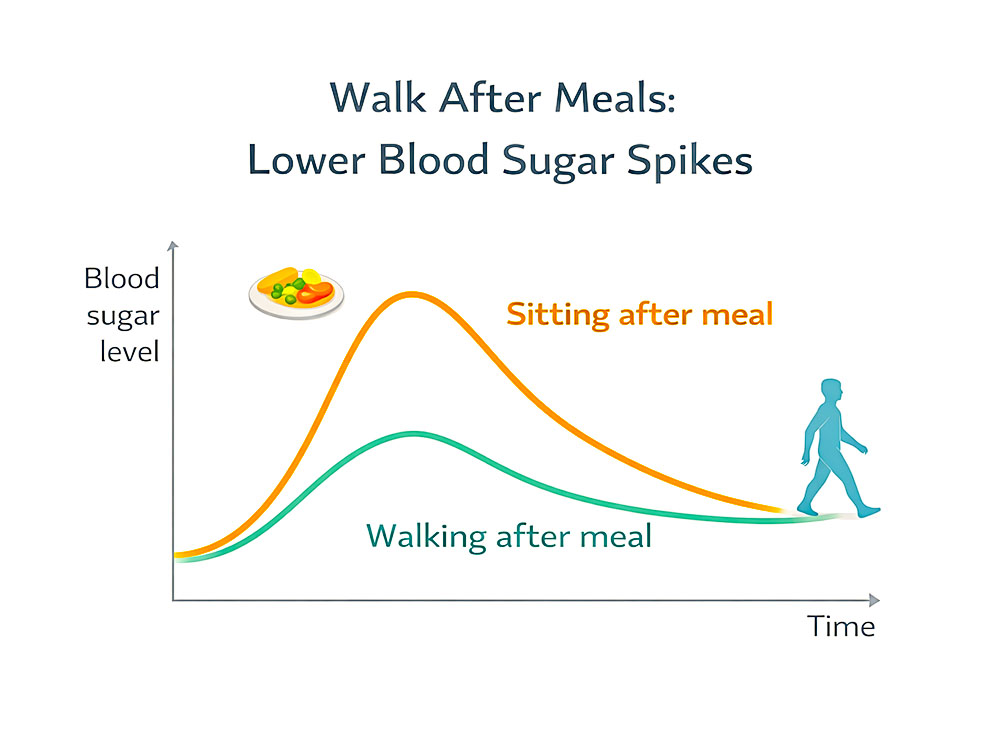
Walking after meals can lower post-meal blood sugar spikes. When you walk, your muscles use glucose for fuel and remove it from your
bloodstream, so the post-meal peak is smaller, and your body often needs less insulin to manage it.
Over time, lower insulin demand can lead to improved insulin sensitivity and a steadier appetite and energy for some people (which may support weight goals). If possible, start within 0-30 minutes after eating; 10-15 minutes is usually enough, especially after dinner.

Health & Wellness Disclaimer
The information in this article is intended for general education and wellbeing and focuses on walking and lifestyle habits that may support overall health, including post-meal movement and blood sugar management.
If you have any medical conditions that affect blood sugar regulation, circulation, balance, mobility, or cardiovascular health - such as diabetes (type 1 or type 2), prediabetes, insulin resistance, peripheral arterial disease, neuropathy, heart conditions, dizziness, or a history of falls - or if you are taking medications that affect blood glucose or insulin levels, consult your GP or healthcare professional before making changes to your activity levels or daily routine.
If you are new to exercise, returning to physical activity after a long break, or significantly increasing your walking frequency or duration, it is sensible to seek professional guidance to ensure your approach is safe and appropriate for your individual health circumstances.
The information provided is for general educational purposes only and should not be considered medical advice or a substitute for professional healthcare. If you experience concerning symptoms such as dizziness, fainting, chest pain, or signs of low blood sugar, seek immediate medical attention or call emergency services. Always consult your GP or a qualified healthcare provider for personalised medical advice, diagnosis, and treatment.
Yes. Across multiple studies, post-meal walking (and other light-to-moderate activity) reduces:

A particularly relevant study from 2025 found that a 10-minute walk immediately after glucose intake reduced 2-hour glucose exposure and peak glucose compared with resting, despite a longer 30-minute walk later not clearly improving peak glucose as much. That points to something important: timing matters.[2]
After you eat (especially carbohydrates), digestion breaks down food into glucose, which enters your bloodstream.

Your body responds by releasing insulin, a hormone that:
If you're insulin resistant (common with prediabetes, type 2 diabetes, a sedentary lifestyle, poor sleep, chronic stress, and abdominal fat gain), your muscles don't respond as well to insulin - so you may experience:
Repeated large post-meal spikes are linked to worse metabolic health over time, which is one reason postprandial (after-meal) glucose control is such a major focus in diabetes and cardiometabolic research.
Here's the 'why it works' in plain English:


No - 10 minutes isn't magic. It's a practical dose with robust evidence behind it. But research supports benefits from:

What matters most for glucose is usually:
Let's break down the evidence by duration.
If you can't do a full walk, don't quit - shorten it.

A well-known randomised crossover trial in overweight or obese adults found that interrupting sitting with 2-minute bouts of light- or moderate-intensity walking every 20 minutes significantly reduced postprandial glucose and insulin compared with uninterrupted sitting.[9]
There's also a systematic review/meta-analysis of interrupting prolonged sitting with standing and light-intensity walking that assessed cardiometabolic biomarkers (including postprandial measures in the included studies), supporting the general principle that breaking up sedentary time helps, with walking typically outperforming standing.[10]
Walks4all takeaway:
If you're busy at work, try 2-3 minutes of easy walking right after eating and a couple more times over the next hour.
Type 2 diabetes: 10 minutes after each meal beats '30 minutes sometime'
A randomised crossover study in adults with type 2 diabetes compared:
vs
Result: Post-meal walking reduced overall postprandial glucose exposure, and the benefit was particularly pronounced after the evening meal.[1]

That's huge in real life because many people:
Healthy adults: 10 minutes immediately after intake reduced peak glucose[2]
In 2025, a randomised crossover trial in healthy young adults compared:
Result: Both walking conditions reduced overall 2-hour glucose exposure, but the immediate 10-minute walk significantly lowered peak glucose compared with rest.[2]
Walks4all takeaway:
If your goal is to flatten the spike, don't wait too long.
Accumulating 10-minute walks across meals can match one longer walk
A 2020 randomised crossover study compared:
vs
vs
Result: The post-dinner glucose response improved similarly with either approach compared with no exercise.[4]
Walks4all takeaway:
If one long walk is hard, you can 'stack' shorter walks.
A classic controlled study in older adults at risk of impaired glucose tolerance found that three 15-minute post-meal walks improved 24-hour glycaemic control and were as effective as a single longer walk, especially helpful after the evening meal.[5]
In real-life type 2 diabetes care, a longer randomised crossover intervention (2017) found that 15 minutes of brisk walking after each meal improved glucose profiles and HbA1c more than a single longer daily walk taken pre-breakfast.[6]

In 2020, a smaller clinical study in type 2 diabetes using CGM found that 15 minutes of moderate-intensity walking 30 minutes after each meal improved glucose homeostasis measures.[7]
Walks4all takeaway:
If you want the 'most proven' upgrade from 10 minutes, go for 15 minutes after meals (or at least after dinner). Studies in older adults and
people with type 2 diabetes show that three short post-meal walks can improve overall day-to-day glucose control, sometimes matching or
exceeding the effect of one longer walk at a different time.
A 2009 study in people with type 2 diabetes compared walking before dinner with 15-20 minutes after dinner.
The post-dinner walk produced lower glucose at the end of exercise than the pre-dinner walk, supporting the idea that post-meal timing can be more effective at blunting the meal's glucose impact.[8]
Walks4all takeaway:
If you naturally prefer a slightly longer stroll, 15-20 minutes after dinner is a great target. Evidence in type 2 diabetes suggests that
walking after dinner can blunt the glucose impact of that meal more than walking before dinner, so if your main goal is smaller spikes,
prioritise the after-dinner timing.
Many studies use ~30 minutes because it aligns with standard activity guidelines. Yes - 30 minutes after meals can work well.

But what's interesting is how often shorter walks yield similar improvements when timed well.
A 2024 review of postprandial glycaemic management summarises evidence that 10-15 minutes can sometimes yield glucose benefits comparable to longer sessions, and that once you reach a “minimum effective dose,” timing may matter more than adding more minutes.[17]
Walks4all takeaway:
A 30-minute walk is fantastic - but don't let it become an excuse to do nothing. Research repeatedly shows that shorter walks soon after meals
can deliver a significant portion of the glucose benefit. If you can do 30, brilliant. If you can do 10-15, that's still a win - especially
when you start soon after eating.
If you want the most bang for your buck, this is the key section.
A 2023 systematic review with meta-analysis found:

Other timing-focused studies support the same concept: moving earlier in the glucose rise tends to blunt the spike more effectively.
Usually, no.
Many effective studies use light-to-moderate intensity:

Practical tip: If fast walking upsets your stomach after meals, slow it down. Consistency beats intensity here. When I used to run a little more, I could never do it within two hours of a meal because of this.

Potentially - but not because it's a fat-loss 'hack'.
Walking after meals may support weight loss through:

Walks4all takeaway:
Walking after meals can support weight loss as part of a system (diet, sleep, stress, total activity). It's not a standalone solution.
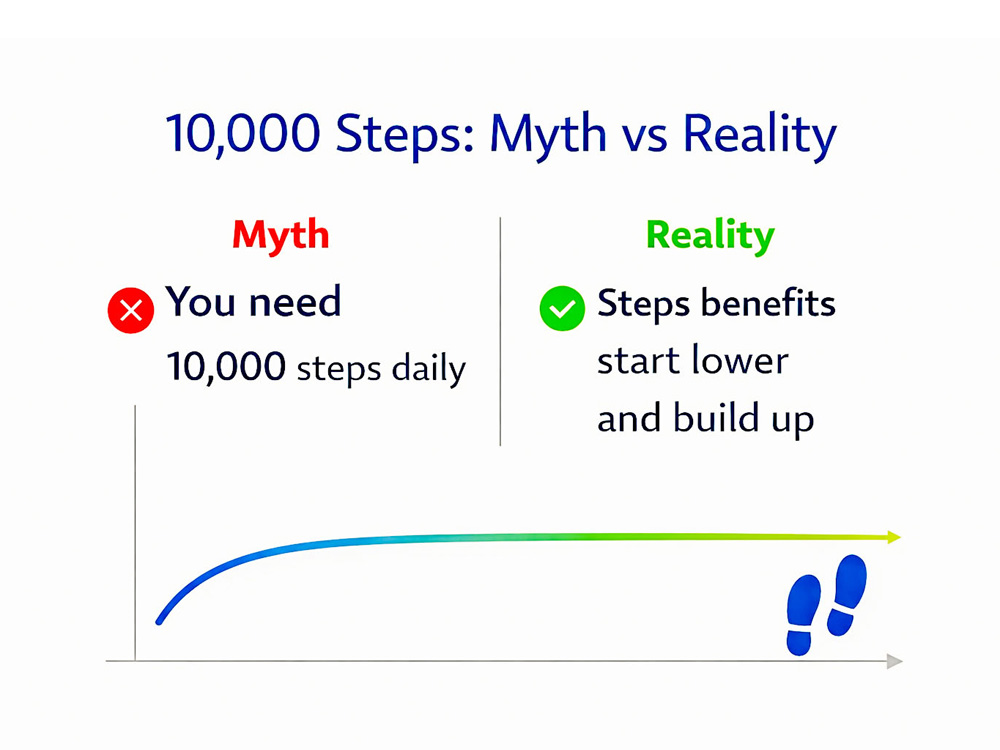
If you're also trying to build your daily step total, see our guide to 10,000 steps a day - what it really means and how to hit it.
Walking after meals is especially useful if you:

A 2025 study of sedentary office workers with prediabetes found that post-lunch exercise improved postprandial hyperglycaemia levels as measured by CGM.[14]


Even very short, repeated walking bouts have evidence behind them.[9] [10]
Aim to start within ~0-30 minutes after eating most days.[3]
Want a simple target to pair with this habit? Start here: How many steps a day do you actually need? (10,000 steps explained):
If walking after meals is new to you, make comfort the priority - especially as you get older. Our guide to foot health as you age covers what to look out for.
Still curious? Explore our guides to understanding health research, the limitations of walking studies, and our glossary of key terms.

When you move after eating, your muscles start using the sugar from that meal. That means you usually get a smaller blood-glucose spike, and your body often doesn't need to release as much insulin to deal with it. Over time, smoother post-meal numbers can mean better overall glucose control, steadier energy, and an easier time sticking to healthy eating.
Here's the key: For blunting the spike, timing (sooner) often beats duration (longer) - a short walk soon after a meal can outperform a longer walk later.
Yes - especially if you use insulin or medications that can cause hypoglycaemia. If you use glucose-lowering medication, consider monitoring (fingerstick or CGM) and discussing any changes with your clinician.
Many people can walk immediately after eating, especially at an easy pace. If you're prone to reflux or stomach discomfort, wait 10-15 minutes and keep the walk gentle.

It can. Even a few minutes of light walking can be useful, especially if it replaces sitting. Short post-meal movement can help your muscles use glucose and may reduce the spike's size.
If you do only one, make it after your biggest meal, which is often dinner. Adding a post-lunch walk can provide extra benefit if you're working on glucose control.
Often, yes, because it targets the rise in glucose as it occurs. Meta-analytic evidence suggests that post-meal exercise tends to reduce postprandial glucose more than pre-meal exercise, especially in the early post-meal window.[3]
It's a great strategy to try because it directly targets post-meal spikes. If you track your response (especially with a CGM), you can personalise the timing and duration.
For many people, yes - gentle walking can help gut motility. Keep the pace easy, and avoid hills immediately after big meals if you're prone to discomfort.
Yes, for blood sugar, the key is moving your muscles. If the treadmill or walking pad is what you'll do consistently, it counts. Walking outside may bring additional benefits.

HbA1c reflects your average glucose over ~2-3 months. Some research in type 2 diabetes suggests that short post-meal walks (e.g., ~15 minutes after each meal) can improve glucose profiles and may be associated with a lower HbA1c than a single longer daily walk at a different time.[6]
January 2026
We take evidence seriously at Walks4all. If you'd like to better understand how walking studies are designed, how results should be interpreted, and what scientific terms mean, explore our guides on the following: