By using this website, you agree to our use of cookies (needed to provide our website’s features) and our Terms of Use.
By: Andrew Forrest - August 2026

Each month, we review new walking-related health research and translate it into practical, easy-to-understand guidance for our wellness section, covering walking, fitness, health, longevity, weight management and everyday wellbeing.
This page contains affiliate links. As an Amazon Associate, we earn from qualifying Amazon purchases at no additional cost to you. We may also earn commissions from other retailers, again at no additional cost to you.
Disclaimer
This article is for general information only and does not constitute medical advice, diagnosis or treatment. Speak to your GP or another qualified healthcare professional before making major changes to your activity routine, particularly if you have a medical condition, are pregnant, are returning after illness or injury, or develop chest pain, severe breathlessness, dizziness or unusual pain.
July's clearest message is that walking need not be completed in one perfect session to count. Refreshed UK guidance says even small amounts of movement can help, while new studies suggest that the activity pattern may matter alongside total volume. It also brings new findings on cancer risk, back pain, central obesity and independence.
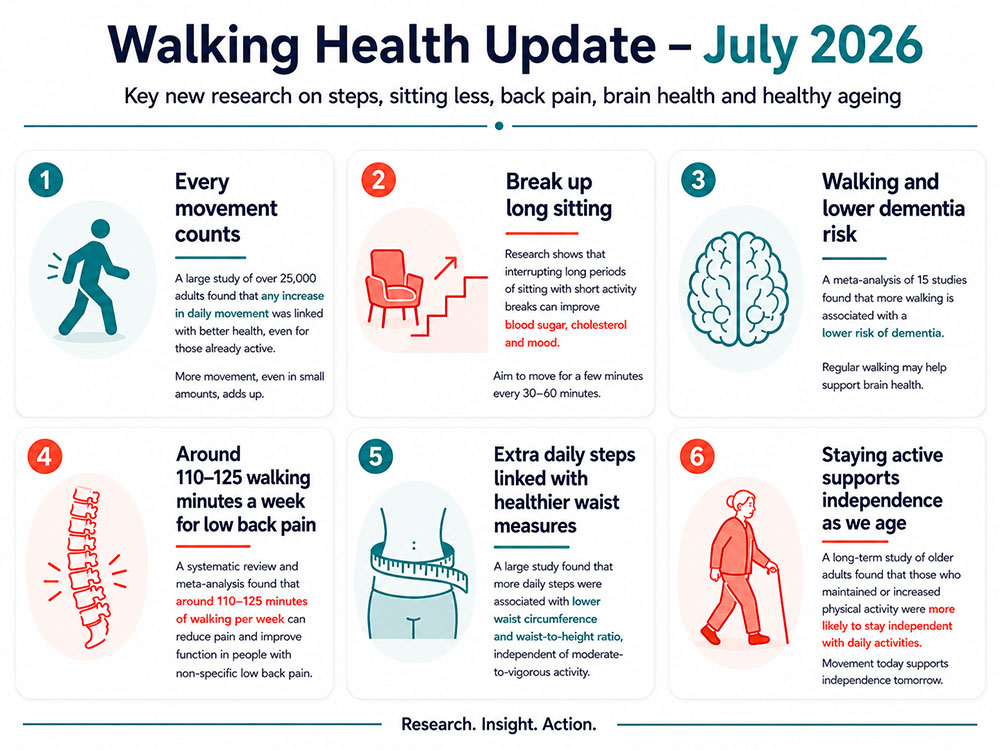
The July 2026 update brings together new evidence on movement patterns, shorter walking bouts and regular daily activity, with practical implications for heart health, back-pain management, weight, brain health and healthy ageing.
The main UK development was refreshed guidance from the UK Chief Medical Officers. The adult target remains at least 150 minutes of moderate activity a week, or 75 minutes of vigorous activity, with strength training on at least two days. The stronger message is that short bouts count, light activity has value, prolonged sitting should be interrupted, and the largest relative gains often come when an inactive person starts moving more. Walking to the shops, taking the stairs, gardening and other active household tasks can all contribute.[1]
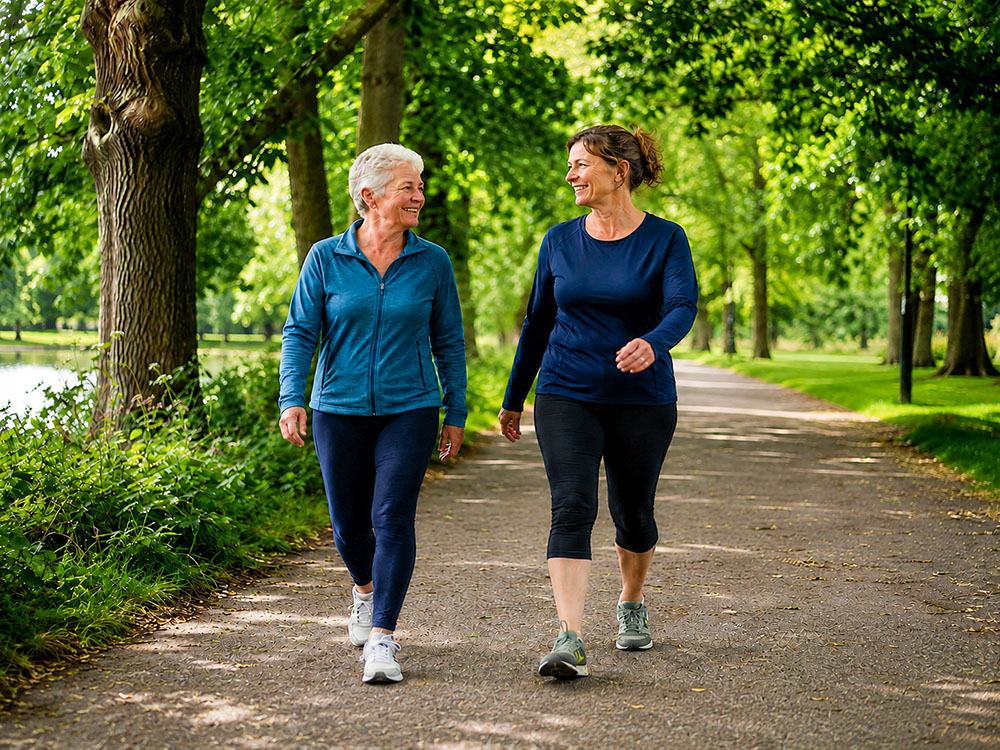
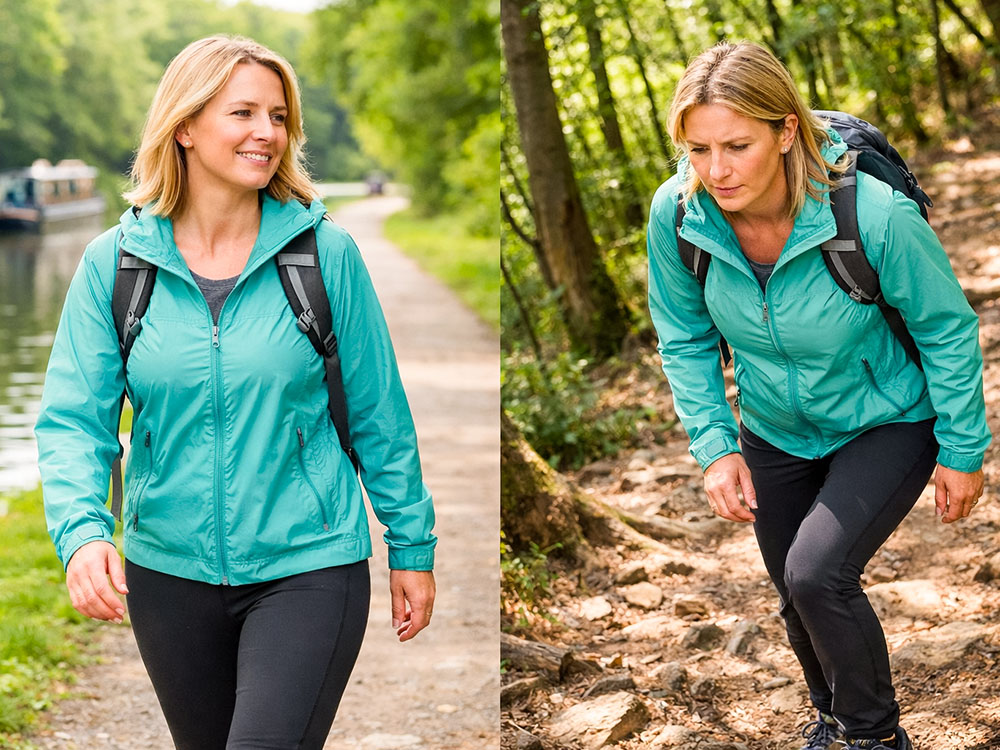
Regular walking can be social as well as physical; short, repeatable walks with a friend can make everyday movement easier to enjoy and sustain.
| Health area | Step range or activity signal | Main message |
| UK guidance | Short bouts count; 150 moderate minutes/week remains the target | The biggest gains often start when an inactive person begins moving more. |
| Heart health | Movement pattern, not a step threshold | Highly fragmented activity was linked with higher cardiovascular risk. |
| Sitting and cancer | Replace with 60 min light or 30 min moderate | Breaking up prolonged sedentary time was linked with lower cancer mortality. |
| Low back pain | About 112-125 walking min/week | A modest, repeatable dose produced the largest modelled average benefit. |
| Weight and waist | +1,000-step increments | More steps were linked with better central-obesity measures, especially with a healthier diet. |
| Healthy ageing | Regular aerobic activity plus strength and balance | UK data linked regular exercise with fewer everyday activity limitations. |
The refreshed guidance retains the 150-minute weekly target but places greater emphasis on light movement, short bouts, reducing sedentary time, and strength and balance throughout life. It also highlights the importance of muscle protection for people taking GLP-1 medicines for diabetes or weight management.[1]
The guidance does not set a step target. At 100 steps per minute, 150 brisk minutes would amount to about 15,000 purposeful steps over a week. This is not the same as 15,000 total steps, because ordinary daily movement is additional and pace varies.
Walks4all takeaway: Do not wait for a free hour. Five- and ten-minute walking 'snacks' count, and several short walks can build towards the weekly target.
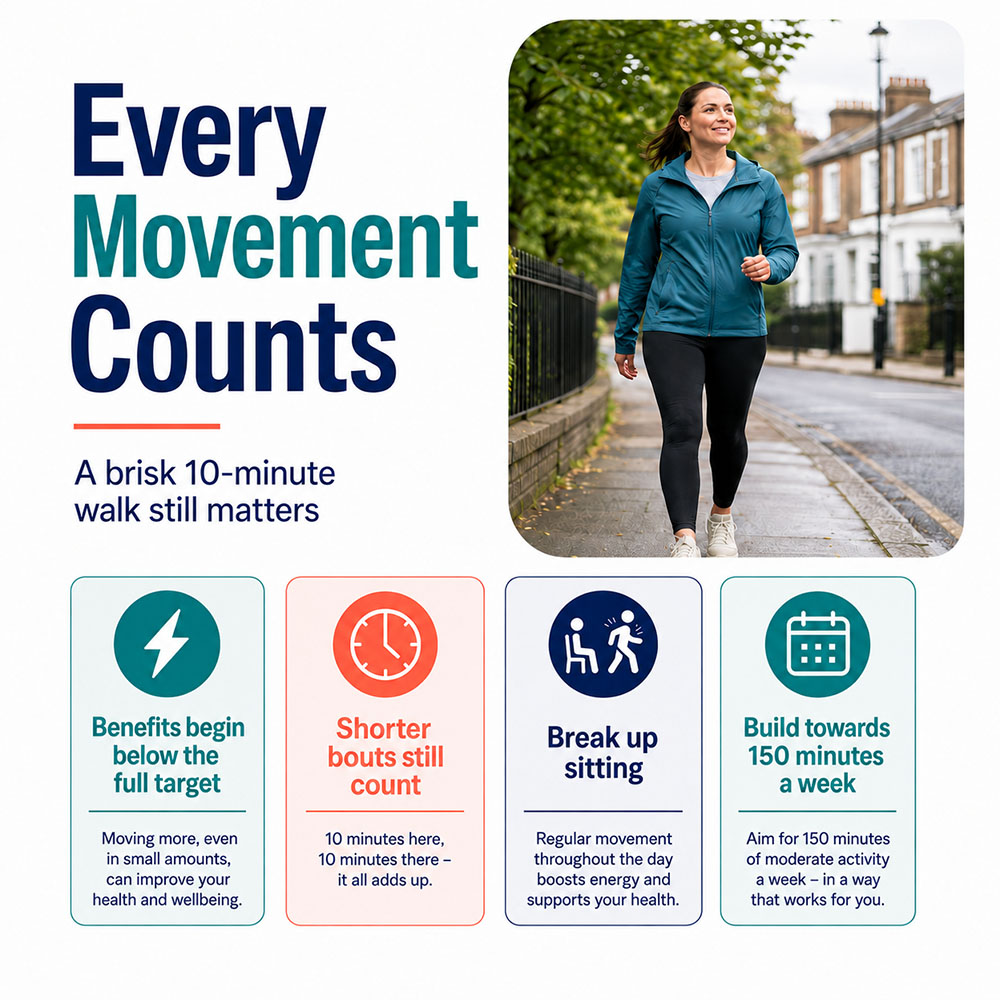
Updated UK guidance reinforces a flexible message: benefits begin below the full target, shorter bouts count, and regular movement can build towards 150 minutes of moderate activity each week.
A UK Biobank study followed 77,571 adults for a median of 7.7 years. It measured physical activity fragmentation, defined as how often someone switched from active to inactive. A higher active-to-inactive transition probability indicates that active periods tend to end quickly.[2]
Compared with the least fragmented quarter, the most fragmented quarter had a 47% higher relative risk of heart failure, a 27% higher risk of atrial fibrillation, an 18% higher risk of coronary heart disease, and a 23% higher risk of the combined cardiovascular outcome. A hazard ratio compares how often an outcome occurs over time; a value above 1 indicates a higher rate in the group under study. The associations remained after accounting for total activity volume.[2]
This was observational, so it cannot prove that fragmented movement caused heart disease. Ill health may itself lead to shorter activity bouts, and the paper did not specify a minimum duration for continuous walking.
Walks4all takeaway: Total movement matters, but including some sustained walking may be useful rather than relying entirely on very brief, stop-start activity.
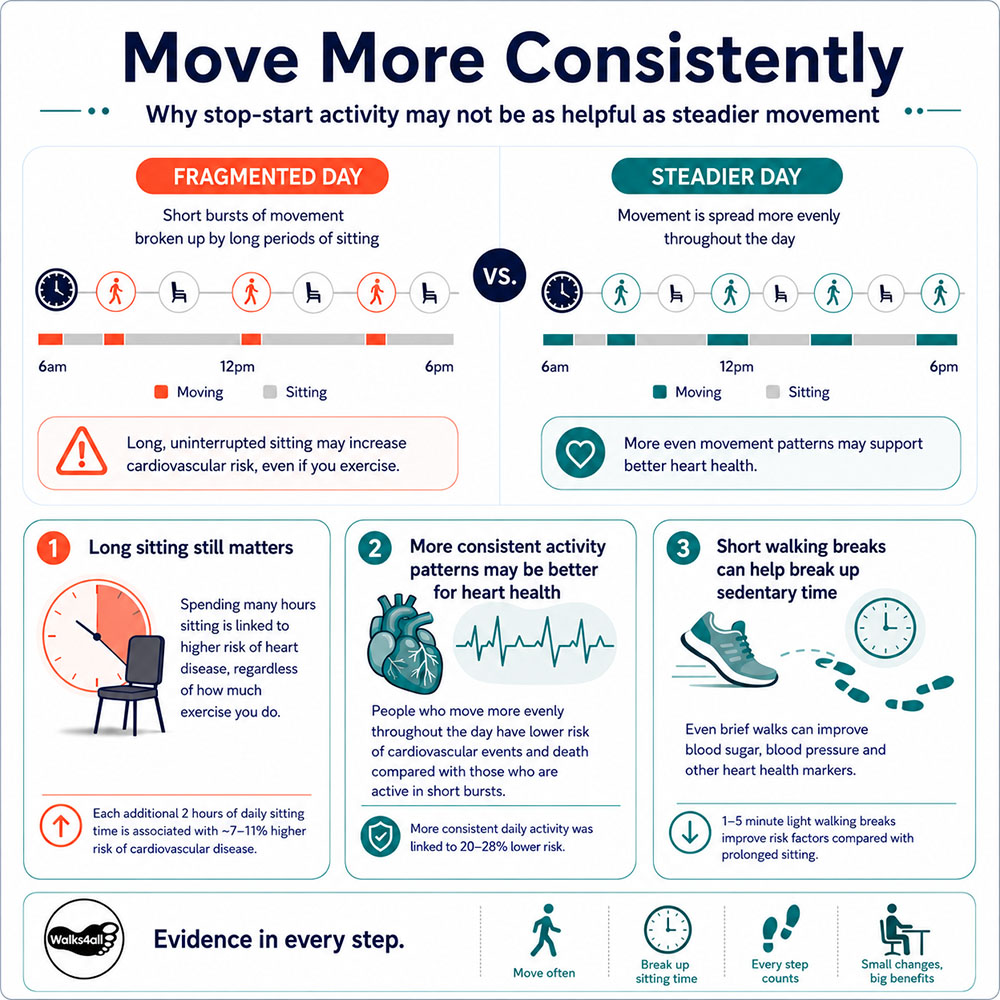
A July UK Biobank study suggests that movement pattern may matter alongside total activity, although the observational design cannot show that fragmented activity directly causes cardiovascular disease.
A PLOS Medicine study followed 91,292 UK Biobank participants for a median of 12.38 years. Each additional hour per day spent in prolonged sedentary periods was associated with a 9% higher relative risk of cancer death. Sedentary behaviour refers to waking time spent sitting, reclining or lying down with very low energy expenditure.[3]
Replacing one sedentary hour with light activity was associated with a 12% lower risk of cancer mortality. Replacing 30 minutes with moderate activity was associated with an 8% lower risk, while replacing five minutes with vigorous activity was associated with a 22% lower risk. Light activity was not limited to walking. If walking were used, rough equivalents would be about 4,800 easy steps for 60 minutes at 80 steps per minute, or 3,000 moderate steps for 30 minutes at 100 steps per minute.[3]
These are statistical estimates from an observational study, not guaranteed effects for an individual. The findings support reducing prolonged sitting but do not prove that a specific number of breaks prevents cancer.
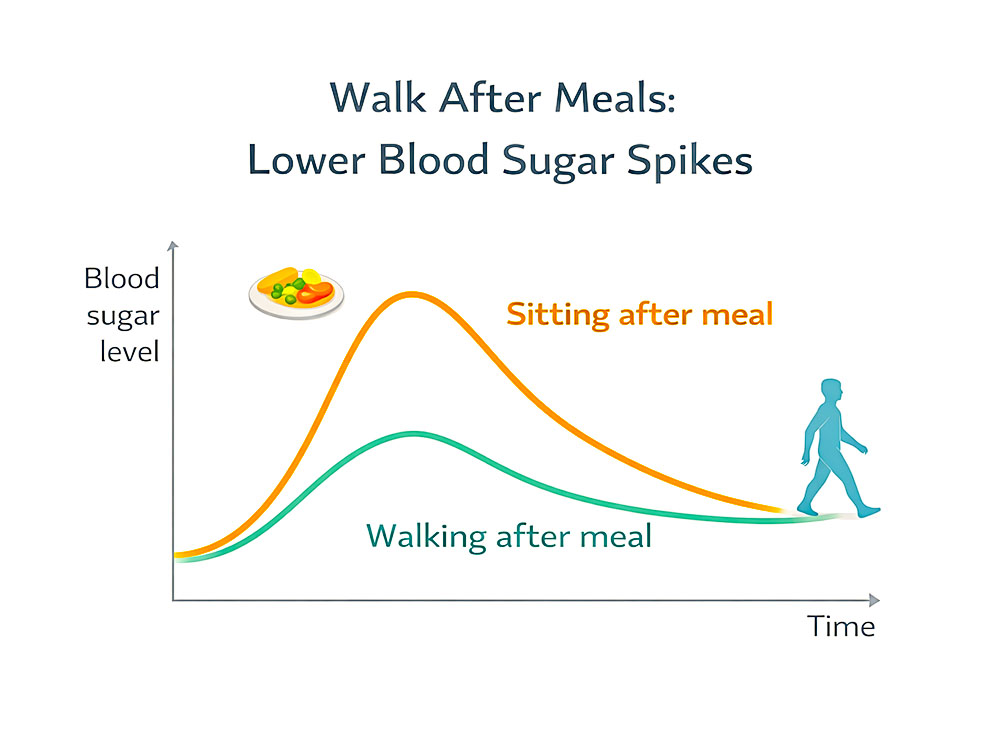
Walks4all takeaway: A gentle walk after a long spell of sitting is worthwhile. The useful habit is to interrupt sitting regularly, rather than saving every step for a later workout. We've covered this in our standing desks articles.
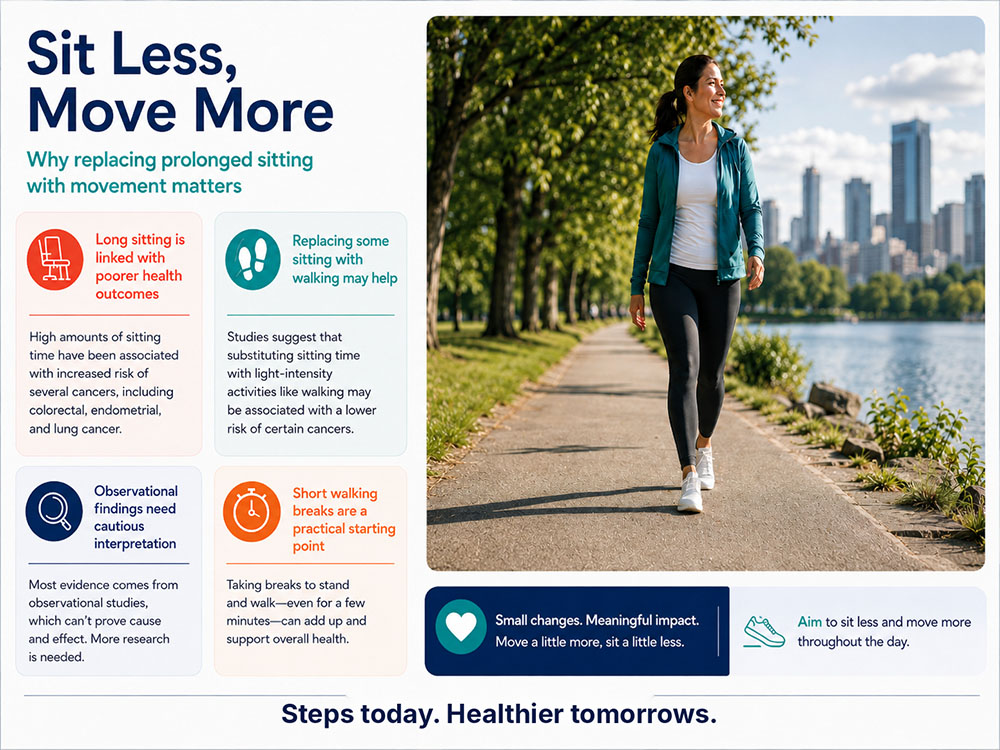
Replacing prolonged sitting with light activity, such as walking, was linked to lower health risks in observational research; brief walking breaks are a practical way to sit less without needing a long workout.
A systematic review combined 13 randomised controlled trials of walking programmes for chronic low back pain. Walking produced a moderate reduction in pain and disability. Evidence certainty was low for pain and moderate for disability, so the result is useful rather than definitive.[4]
The model found the greatest reduction in pain at 1,000 minutes of walking over an average of eight weeks, and the greatest reduction in disability at 900 minutes. This equates to about 125 and 112.5 minutes per week, respectively. At 100 steps per minute, the range is roughly 11,250 to 12,500 purposeful walking steps per week, or about 1,600 to 1,800 per day when averaged over seven days.[4]
The curve was U-shaped: benefit increased towards the middle range, but the available trials did not show that ever-higher doses produced ever-greater relief. This does not mean more walking is harmful. It means the clearest average benefit lay within a modest, repeatable range.
Walks4all takeaway: For persistent low back pain, roughly 16 to 18 minutes a day may be a more practical starting point than an ambitious target that cannot be sustained.
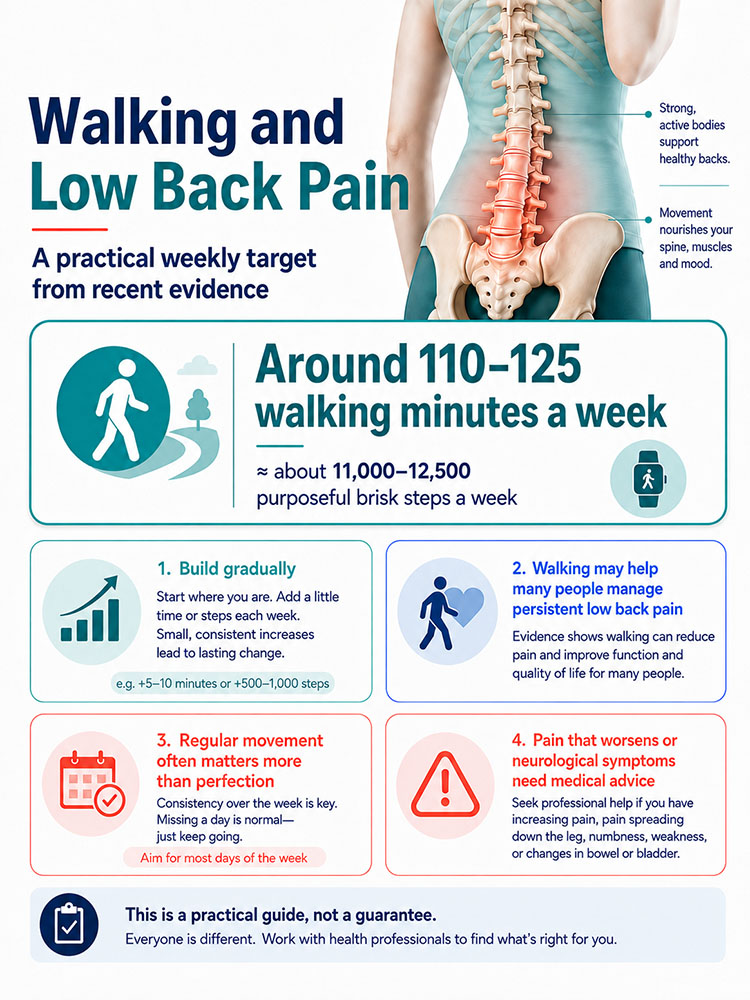
A July dose-response review found the largest modelled average benefit for chronic low back pain at roughly 112-125 minutes of walking per week, but the evidence was of low certainty and individual tolerance still matters.
Researchers analysed data from 3,503 people participating in a 100-day walking programme in China. The group was already active, with a median of 12,675 steps per day. Each additional 1,000 steps was associated with small improvements in three measures of central obesity and a 4% higher probability of short-term weight-loss success. These associations were stronger among those with higher-quality diets.[5]
Central obesity refers to fat carried around the waist and abdomen. The study used indices that combined waist, weight, height or body shape because body mass index does not indicate where fat is stored. The findings do not make 12,675 steps a universal target, and the design cannot prove that extra steps alone caused the changes.
Walks4all takeaway: Walking and food choices are partners, not rivals. Extra steps are most likely to support weight and waist health when paired with a sustainable, nutritious diet. We cover this in detail in our new book, Walking for Weight Loss, which will be on sale at the end of August 2026.
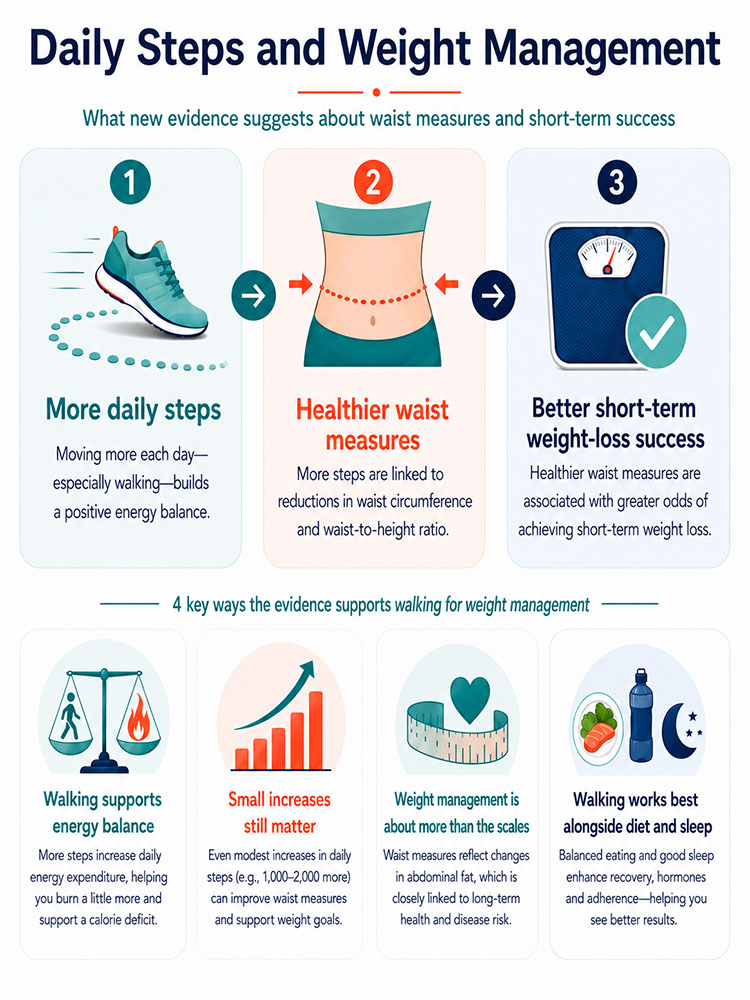
Extra steps may support healthier waist measurements, but walking works best alongside a sustainable diet, adequate sleep and habits that can be maintained over time.
A BMC Medicine study used 28,419 person-wave observations from adults aged 65 and over in the UK Household Longitudinal Study. It examined limitations in activities of daily living, such as washing and dressing, and in instrumental activities, such as shopping, cooking and managing everyday tasks.[6]
Moderate exercise frequency was associated with a 59.1% lower rate of basic daily-living limitations and a 59.4% lower rate of instrumental limitations than no exercise. Aerobic activity had the lowest predicted limitation counts, followed by mind-body and balance activities. This was a broader exercise study rather than a walking-only study, but walking is an accessible aerobic option for many older adults.[6]
A separate July study of 531 adults aged 70 and over found that increasing movement fragmentation was associated with worsening physical function in some groups. The researchers described fragmentation as a possible digital biomarker, meaning a measurable signal that may help identify decline rather than a proven cause of decline.[7]
Walks4all takeaway: Regular walking can support the aerobic side of an independence-focused routine, but strength and balance work also matter, especially as we age.
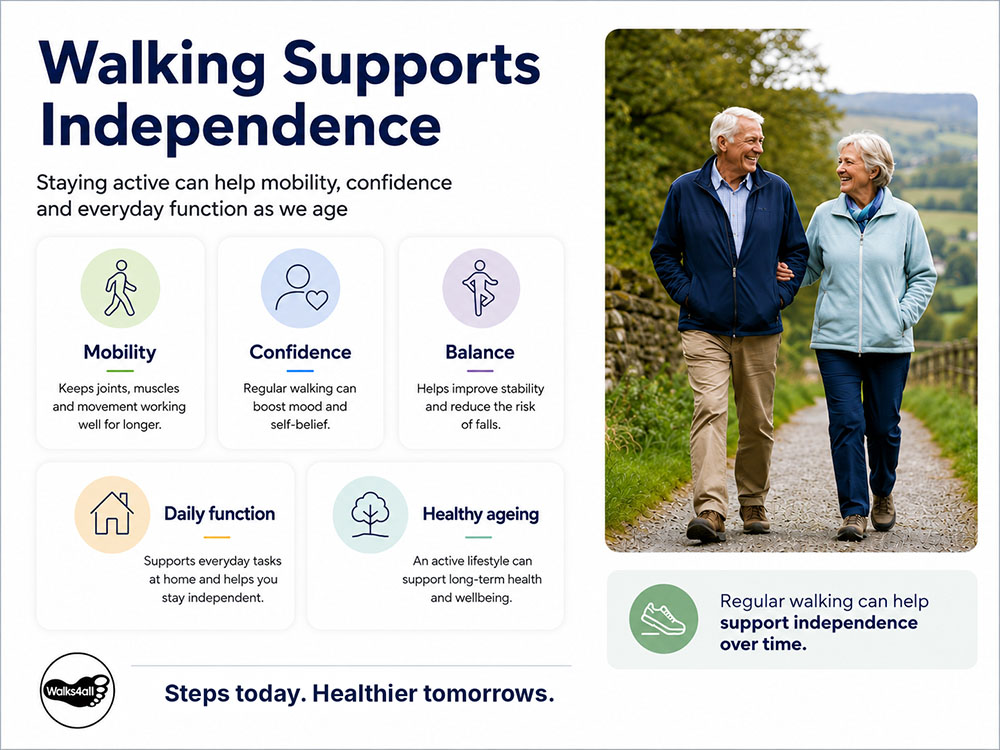
Regular walking can support mobility, confidence and day-to-day function as we age; strength and balance training remain important parts of an independence-focused routine.
A Neurology paper appeared in the 14 July issue but was published online in June. It studied 'super movers', people aged 80 and over whose gait speed was at least 1.5 standard deviations above the average for their age and sex. Across international cohorts, super movers had about half the risk of developing cognitive impairment over 3.4 to 5.4 years. They also showed slower cognitive decline and preservation of parts of the hippocampus, a brain area important for memory.[8]
The study does not necessarily prove that deliberately walking faster will halve the risk of dementia. Gait speed may reflect better cardiovascular health, muscle function, balance or underlying brain resilience.
Walks4all takeaway: Maintaining walking ability and a purposeful pace into later life is a positive health sign, but pace should be increased gradually and only when it feels safe.
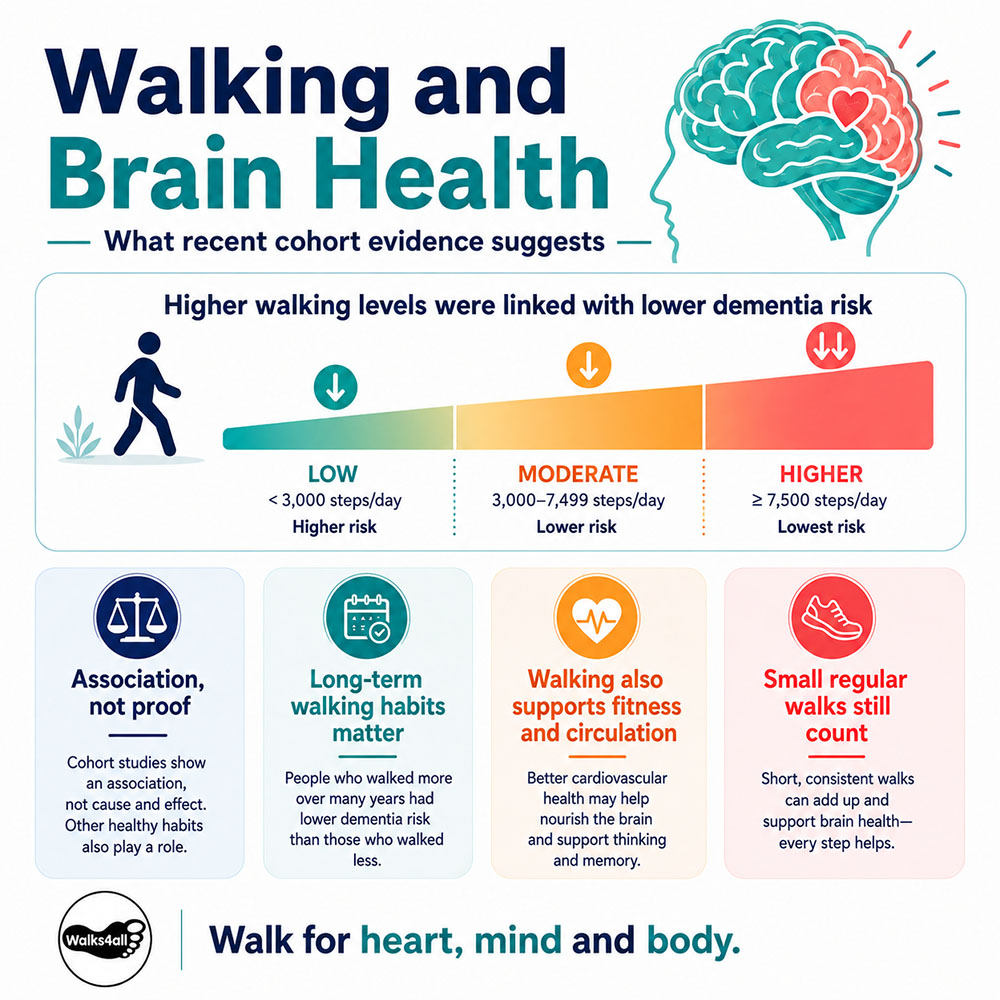
Higher walking levels were associated with lower dementia risk in cohort evidence, but this does not prove cause and effect; walking is part of a wider brain-health picture that includes sleep, diet and social connection.
Another review was published on 30 June and continued to be cited in July. It combined 17 randomised trials involving 1,493 people with hypertension. Brisk walking was associated with lower systolic and diastolic blood pressure. Dose modelling suggested the greatest average improvement at about 150 to 210 minutes of moderate brisk walking per week, often split into four or five 30- to 40-minute sessions, sustained for at least 12 weeks.[9]
At 100 steps per minute, this equates to about 15,000 to 21,000 purposeful, brisk steps per week. The trials differed in design and quality, so brisk walking should support, not replace, prescribed treatment and blood-pressure monitoring.
Walks4all takeaway: Brisk walking may help control blood pressure when it becomes a regular weekly habit, but medication should never be stopped or changed without clinical advice.
Start from your current baseline. Add a five- or ten-minute walk instead of setting an unrealistic target. If you sit for work, watching television or travelling, stand and move at least once an hour. Where comfortable and you have the time, include one longer, purposeful walk.
For chronic low back pain, build gradually towards about 112 to 125 minutes of walking per week if symptoms remain manageable. For general health, aim for 150 minutes of moderate activity per week, with strength and balance activities as well. For weight management, combine walking with food choices you can sustain.

A short walking break can interrupt a long period of sitting and add useful movement to a working day, even when there is no time for a longer walk.
Several strong July papers were observational. They can show links but cannot prove cause and effect. People who walk more or sit less may also differ in diet, sleep, income, health, or access to safe places to be active. Wearables were often used for a short measurement period, which may not fully represent long-term habits.
Step conversions are approximate. Easy walking was estimated at 80 steps per minute, and moderate or brisk walking at 100, unless a study reported cadence. Stride length, terrain, mobility and pace can affect the actual figure. Converted numbers refer to purposeful walking during the study dose, not necessarily total daily steps.
Even with these limitations, the overall direction of the evidence is hard to ignore. No single study is perfect or conclusive, but when research across diverse populations, methods and health outcomes repeatedly points to the benefits of regular movement, our confidence in the broader message grows. The UK Chief Medical Officers put it memorably: 'If physical activity were a drug, we would refer to it as a miracle cure'. Walking is not a cure-all and should not replace medical care, but it is one of the simplest and most accessible ways for many people to add more physical activity to everyday life. At Walks4all, we therefore look at the pattern across the evidence as a whole, rather than expecting any one study to provide the final answer.[1]
July's evidence supports a practical message rather than a perfect number. Small bouts count, prolonged sitting should be broken up, and regular walking can support goals ranging from back-pain management to independence in later life.
The sensible next step is one you can repeat: another ten minutes, one fewer uninterrupted hour in a chair, or a brisk section added to an ordinary walk. Build steadily and adapt the plan to your health and ability.
Yes. Updated UK guidance recognises that short bouts of activity and light movement can benefit health. Several short walks can contribute to the weekly target.[1]
No single step count suits everyone. July's health evidence on walking supports increasing activity from your own baseline and working towards the UK time-based guidance, rather than treating 10,000 steps as a pass-or-fail target.
August 2026
We take evidence seriously at Walks4all. If you'd like to better understand how walking studies are designed, how results should be interpreted, and what scientific terms mean, explore our guides on the following: