By using this website, you agree to our use of cookies (needed to provide our website’s features) and our Terms of Use.
By: Andrew Forrest - July 2026

Each month, we review new walking-related health research and translate it into practical, easy-to-understand guidance for our wellness section which covers walking, fitness, health, longevity, weight management, and everyday wellbeing.
This page contains affiliate links. As an Amazon Associate, we earn from qualifying Amazon purchases at no additional cost to you. We may also earn commissions from other retailers, again at no additional cost to you.
June's walking research brought a useful message for everyday walkers: you do not need an extreme exercise plan to benefit from movement. The strongest new evidence this month concerned cardiovascular health, sleep, older-adult fitness, blood pressure, balance, sitting breaks, knee osteoarthritis, and walking capacity in people with type 2 diabetes.
Some papers gave clear step targets, while others focused on walking time, intensity, or functional walking ability. Where time was reported, Walks4all has converted it into approximate steps using a practical range of around 100-120 steps per minute for moderate-to-brisk walking.
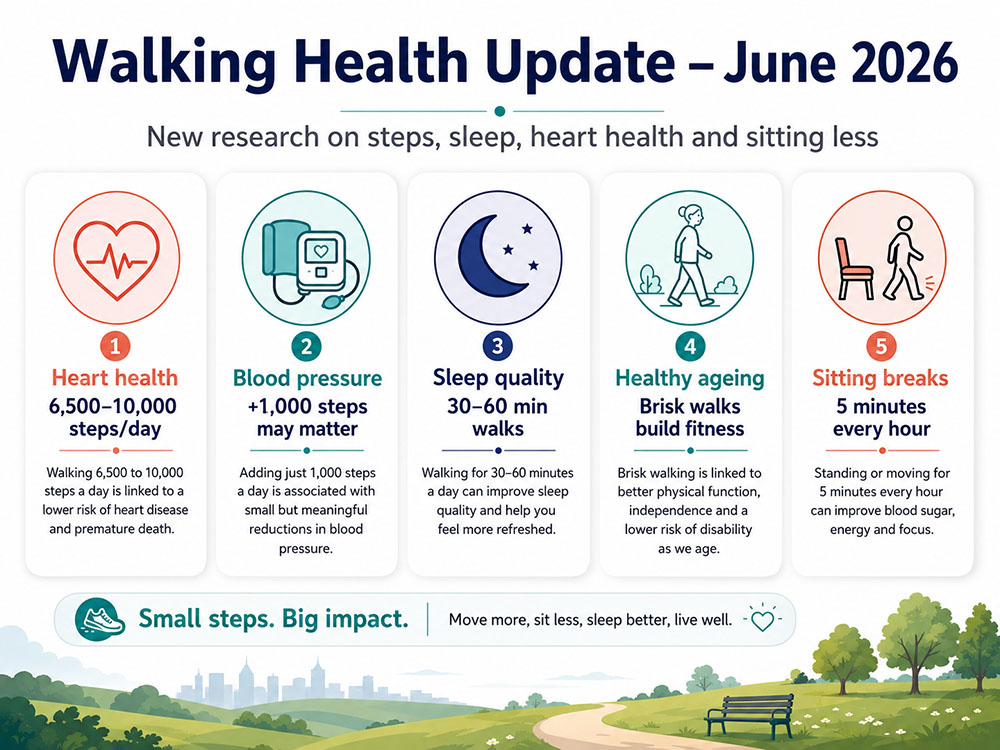
A quick visual overview of the June 2026 walking research update, highlighting the main evidence themes and practical step-based health messages.
Health & Wellbeing Disclaimer
This article is for general information only and does not constitute medical advice. If you have a heart condition, diabetes, pregnancy concerns, joint pain, breathlessness, dizziness, balance problems, or any symptoms that worry you, seek advice from a qualified healthcare professional before changing your activity routine.
Many people feel put off by the idea of needing a perfect exercise routine or a mythical 10,000-step target. Newer evidence is more flexible and, for most people, more encouraging. It suggests that the greatest relative gains often come when people move from very low activity to a modest level of regular activity.
June's research is useful because it answers common questions clearly: how many steps might benefit heart health, whether walking may support sleep, how brisk walking affects fitness and balance, and whether short walking breaks can reduce the effects of prolonged sitting. By bringing the findings together in one place, you can quickly see what changed this month, what still needs caution, and which practical actions are realistic for everyday life.
This also aligns with UK public health messaging. NHS walking guidance states that walking is simple, free, and one of the easiest ways to get more active, and that a brisk 10-minute daily walk can count towards the recommended 150 minutes of weekly activity.[9]
The National Institute for Health and Care Excellence ('NICE') guidance on walking and cycling also supports encouraging walking for travel and recreation, recognising that local environments, workplaces, schools and community programmes all influence whether people can incorporate walking into their daily lives.[10]
| Health area | Step range or activity signal | Main message |
| Cardiovascular disease and genetic risk | Low: under 6,500 steps/day; moderate: 6,500-12,499; high: 12,500+; benefits appeared strongest up to around 10,000 steps/day. | Higher daily step counts were associated with lower cardiovascular disease risk, including among people with higher inherited risk. |
| High blood pressure and cardiovascular events | +1,000 steps/day up to around 10,000 steps/day; higher stepping intensity also mattered. | Extra steps were linked with a lower risk of major cardiovascular events, heart failure and stroke in people with hypertension. |
| Sleep quality | 30-60 minutes, 3-5 times weekly, for 12-24 weeks; roughly 3,000-7,000 steps per session. | Structured walking may improve self-reported sleep quality, although the certainty of the evidence remains low. |
| Healthy ageing, fitness and balance | 35-60 minutes of brisk walking, 3 times a week; roughly 3,500-7,200 steps per session. | Brisk walking improved fitness, balance, strength, flexibility and life satisfaction in older women. |
| Cholesterol and metabolic health | Higher step counts; no clear daily step threshold. | Step counts were associated with lower total cholesterol in a UK cross-sectional study, but this does not prove that walking alone caused the difference. |
| Knee osteoarthritis | 25-minute walk-run pilot session; no daily step target. | A very small pilot study adds nuance but should be treated as early-stage research, rather than general advice. |
| Type 2 diabetes and peripheral arterial disease | Shuttle walk distance of 215 metres or less indicates lower walking capacity. | Functional walking capacity may help indicate vascular health and independence in people with type 2 diabetes. |
| Sitting breaks, mood and fatigue | 5-minute walking breaks every 30, 60 or 120 minutes; about 400-600 steps per break. | Short walking breaks reduced fatigue and low mood, with hourly breaks offering a practical balance. |
A new UK Biobank cohort study examined 84,286 adults without cardiovascular disease at baseline. Participants had both accelerometer-measured step counts and genetic risk information. Step counts were grouped into low, moderate and high: low was under 6,500 steps/day, moderate was 6,500-12,499 steps/day, and high was 12,500 steps/day or more.
Over a median follow-up of 7.9 years, 4,847 people developed cardiovascular disease, defined as coronary artery disease or ischaemic stroke. An ischaemic stroke is caused by a blockage in a blood vessel supplying the brain. The highest risk was observed in people with both high genetic risk and low step count, whereas higher step counts were associated with lower cardiovascular risk, particularly among those with moderate or high genetic risk.
The study also found an inverse dose-response pattern up to roughly 10,000 steps/day, meaning that as daily steps increased, cardiovascular risk tended to fall, with the benefit appearing to level off at higher step counts in some groups.[1]
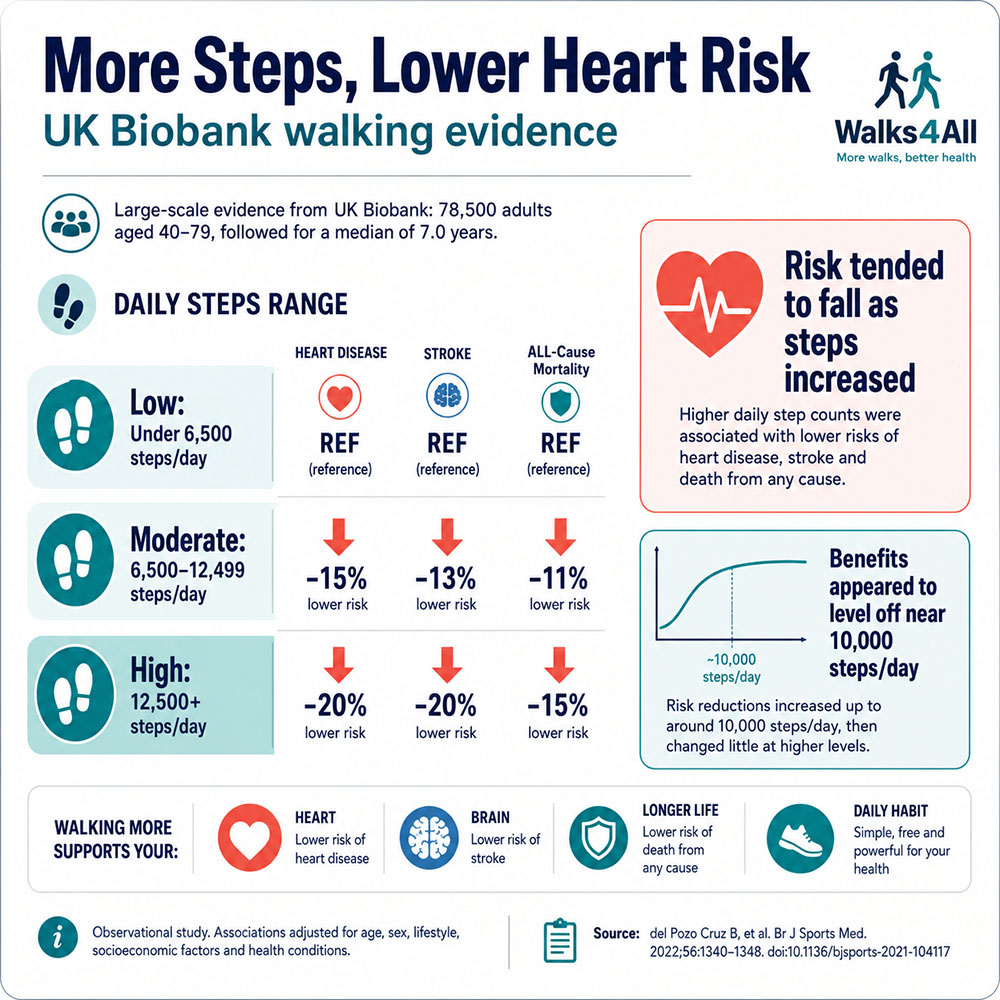
UK Biobank evidence suggests that higher daily step counts are associated with lower risks of heart disease and stroke, with benefits tending to plateau at higher step counts.
Walks4all takeaway
This is a strong UK-first study because it suggests that walking still matters, even for those with a higher inherited risk of heart disease
or stroke.
A UK Biobank publication on people with established hypertension examined the relationship between daily step count, stepping intensity and major adverse cardiovascular events.
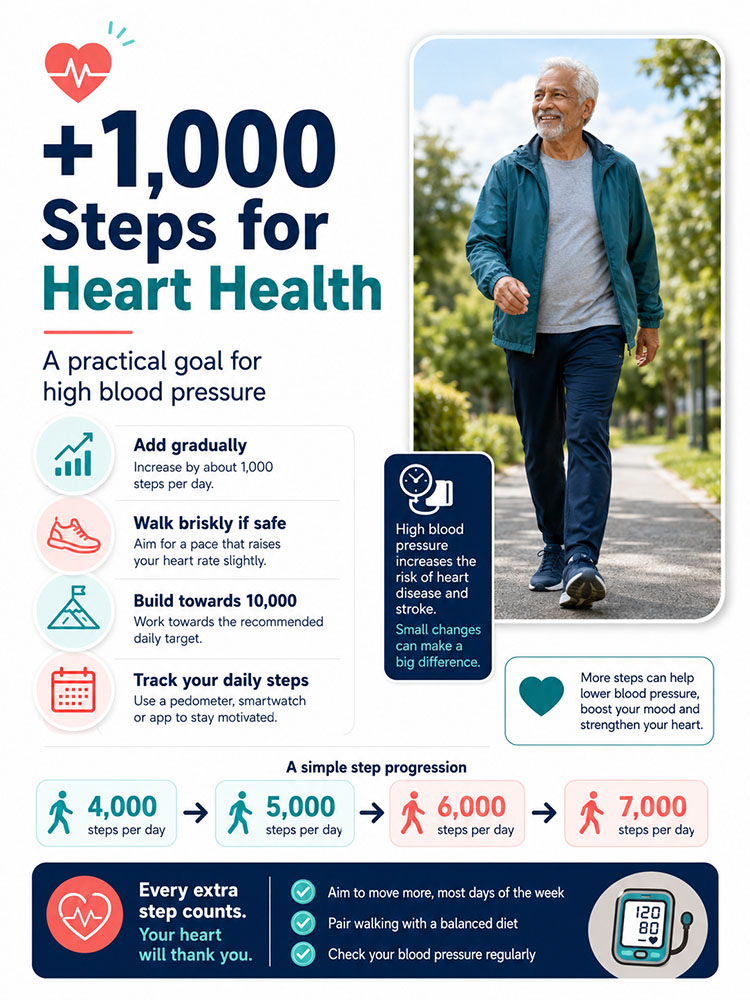
Adding about 1,000 steps per day can be a realistic way to gradually build activity, especially for readers starting from a lower baseline.
Hypertension means high blood pressure, while major adverse cardiovascular events is a medical term usually covering serious outcomes such as heart failure, heart attack and stroke. The study included 36,192 participants, with an average age of 64 and a 7.8-year follow-up period. Every additional 1,000 steps/day, up to 10,000 steps/day, was associated with a lower risk of major adverse cardiovascular events.
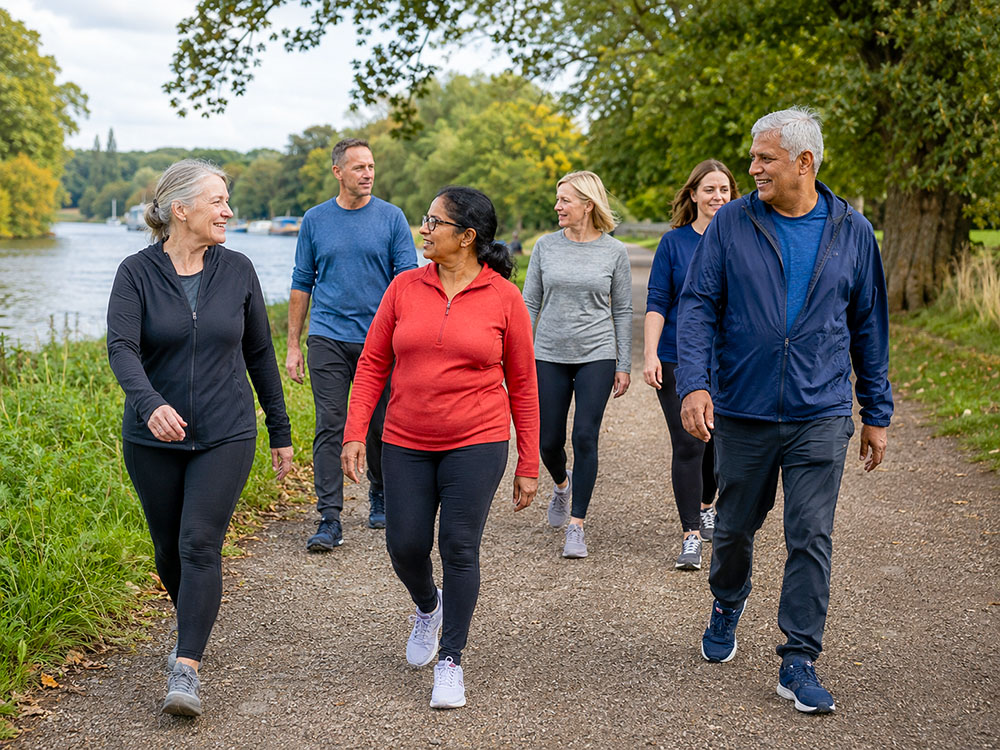
Regular walking remains one of the simplest ways to support heart health, brain health and everyday wellbeing as part of an active lifestyle.
The reported reductions were a 17.1% lower risk of major adverse cardiovascular events, a 22.4% lower risk of heart failure, and a 24.5% lower risk of stroke; the association for myocardial infarction (heart attack) was smaller and less certain. The authors also found that higher stepping intensity appeared important, suggesting that walking more briskly may confer additional benefit.[2]
Walks4all takeaway
For people with high blood pressure, a realistic goal may be to add steps gradually in 1,000-step increments per day, while making some of
those steps brisk if safe and comfortable.
A new Bayesian meta-analysis reviewed 21 randomised controlled trials involving 1,707 adults and 66 effect sizes. A meta-analysis synthesises results from multiple studies to estimate the overall pattern, while a Bayesian analysis uses probabilistic modelling to estimate the likelihood of an effect. A randomised controlled trial is a study in which participants are allocated to different groups, such as a walking group and a comparison group, to test whether the intervention makes a difference.
The review found that walking interventions improved subjective sleep quality. Subjective sleep quality refers to how people rate their own sleep, rather than only what a device in a sleep laboratory measures. The pooled effect was reported as Hedges' g of -0.76. Hedges' g is a statistical measure of the size of the difference between groups, adjusted to allow results from different studies to be compared. In this review, negative values favoured walking because the sleep scales were designed so that higher scores indicated worse sleep. A result of -0.76 suggests a medium-to-large improvement in self-reported sleep quality.
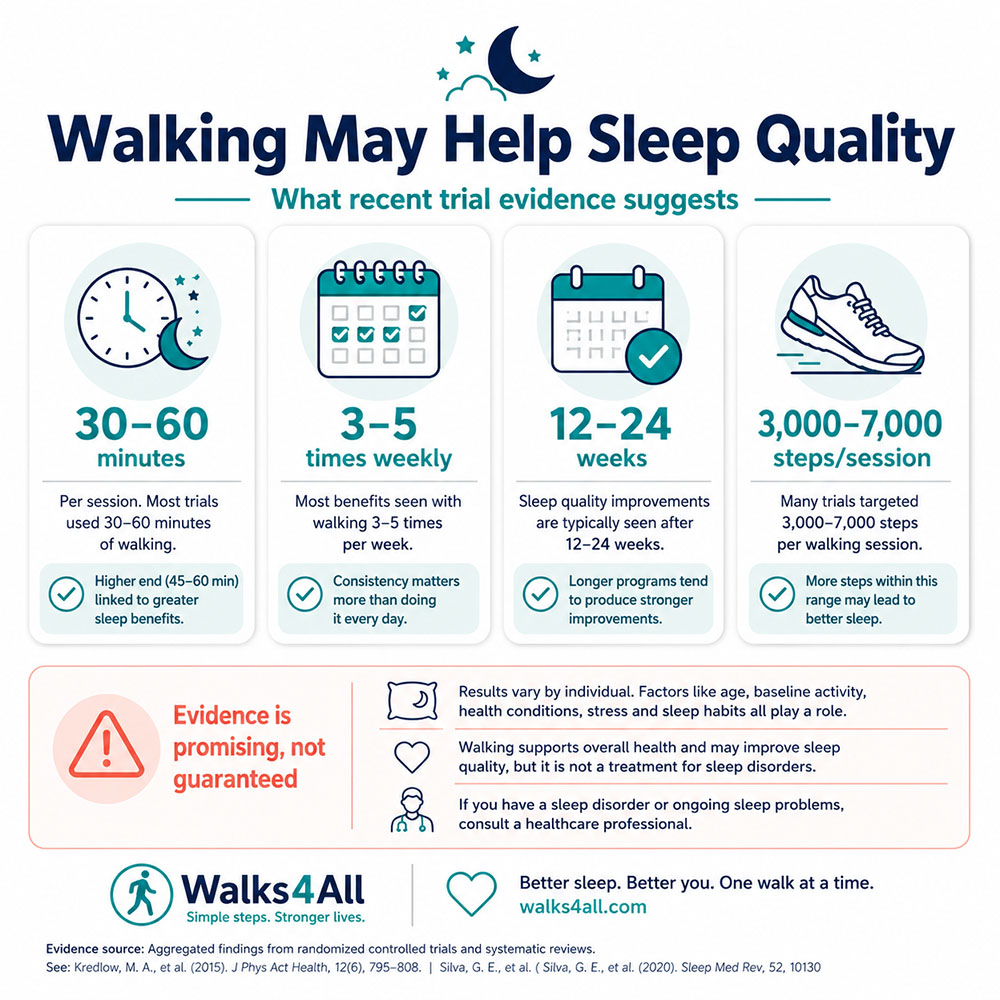
Recent trial evidence suggests that regular moderate walking may improve subjective sleep quality, although the evidence should still be interpreted with caution.
The review distilled the evidence into a practical prescription window: moderate-intensity walking three to five times per week, 30-60 minutes per session, for 12-24 weeks. The authors estimated this equates to roughly 3,000-7,000 steps per session, or 9,000-35,000 walking steps per week, depending on pace and session length. However, the certainty of the evidence was rated as very low, mainly because the included studies varied in quality and design. So, at present, the fairest message is that walking may help sleep quality rather than that it will definitely improve sleep.[3]
Walks4all takeaway
Walking appears to be a promising, low-cost way to support sleep, especially when done regularly, but the current evidence is stronger for
'may help' than for 'will improve sleep'.
A 12-week cluster-randomised controlled trial studied overweight older Chinese women aged 60-69. In a cluster-randomised trial, groups of people, rather than individual participants, are assigned to the intervention or comparison condition. The brisk-walking group completed three weekly walking sessions, each lasting 35-60 minutes. Using a rough conversion of 100-120 steps per minute, this equates to approximately 3,500-7,200 steps per session, or around 10,500-21,600 extra steps per week.
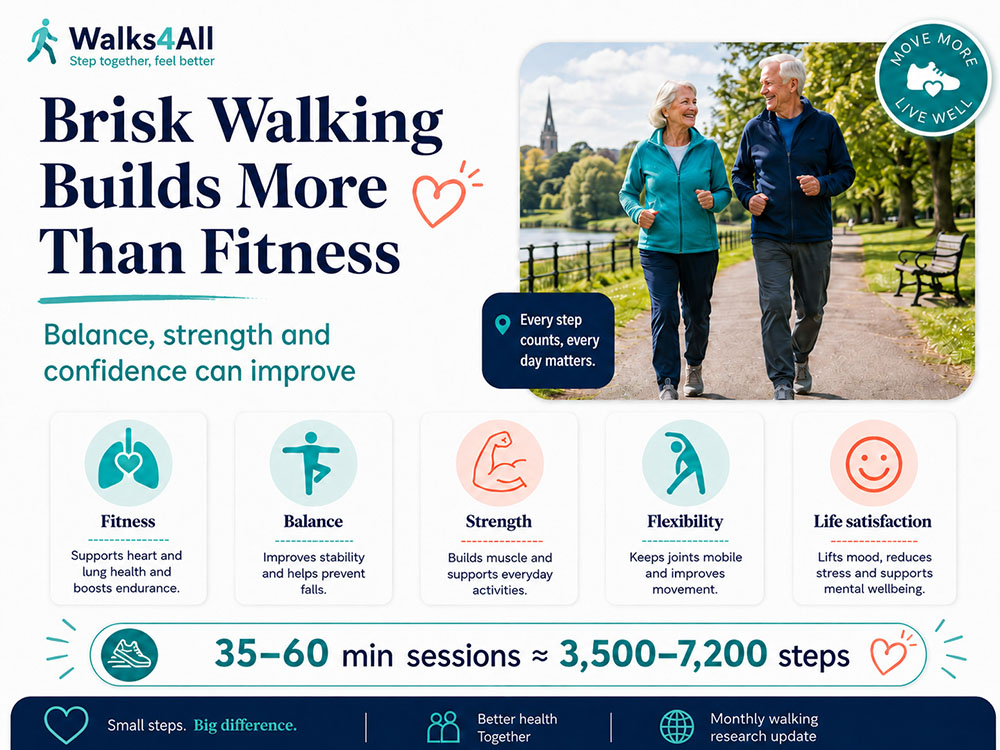
Brisk walking may support more than just fitness, including balance, strength, flexibility and confidence in everyday movement.
The trial found improvements in cardiorespiratory fitness, flexibility, muscular strength, muscular endurance, balance, and life satisfaction after 12 weeks. Cardiorespiratory fitness is how well the heart, lungs, and muscles work together during activity. Body composition did not improve significantly, an important reminder that the benefits of walking are not always visible on the scales.[4]
Walks4all takeaway
Walking should not be judged solely by weight loss, because fitness, balance, confidence and quality of life may improve even when body
composition changes little.
A UK cross-sectional study examined device-measured movement behaviours and cardiometabolic health among Sub-Saharan Africans living in the UK. Cross-sectional means the researchers looked at people at a single point in time, rather than following them over many years. The study included 75 participants and examined measures such as step count, sleep, physical activity, and cardiometabolic markers. Cardiometabolic health refers to measures related to heart and metabolic health, such as cholesterol, blood glucose, body size, and fitness.
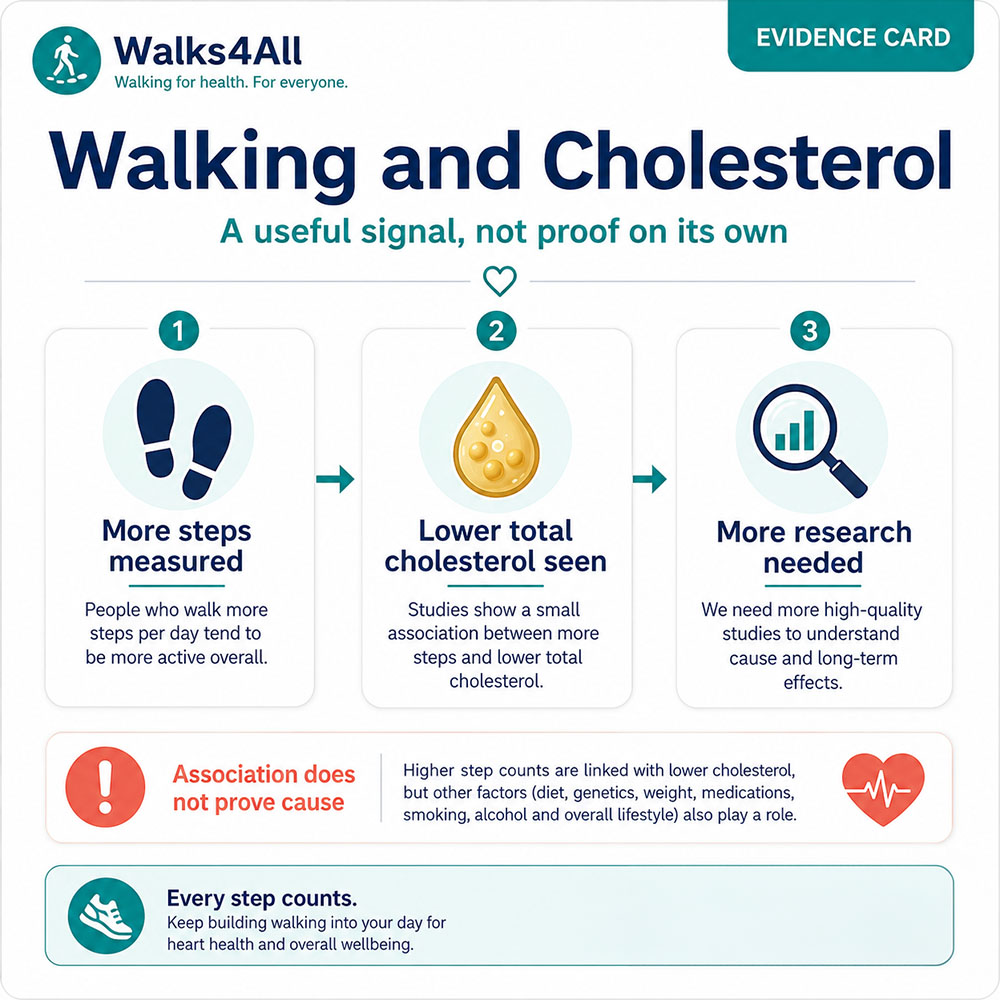
Walking and cholesterol research is encouraging, but observational findings should be treated as part of the broader evidence base rather than as proof on their own.
The study found that step counts were associated with lower total cholesterol, but most other relationships between movement behaviours and blood glucose or blood lipids were weak. Because this was cross-sectional, it cannot show whether walking caused the difference in cholesterol; it only shows that people with higher step counts tended to have lower total cholesterol at the time of measurement.[5]
Walks4all takeaway
This is an encouraging signal for walking and cholesterol, but people should view it as part of the broader body of evidence rather than as
proof that walking alone will lower cholesterol.
A small Frontiers in Sports and Active Living study examined the biological, biomechanical, and pain-sensitivity effects of adding short running intervals to a walking session among people with self-reported knee osteoarthritis. Osteoarthritis is a common joint condition in which cartilage and other joint tissues become painful, stiff, or less able to tolerate load. The study was very small, involving only eight participants, so it should not inform broad recommendations.
The study found that the walk-run session led to an immediate increase in COMP, a cartilage-related biomarker, after exercise, but it returned to near baseline by 30 minutes. A biomarker is a measurable sign in the body that may provide clues about tissue stress, inflammation or other biological processes. The study also reported no clear exercise-induced hypoalgesia, meaning the activity did not produce the temporary reduction in pain sensitivity that can sometimes occur after exercise.[6]
Walks4all takeaway
This should be treated as interesting early-stage research rather than general advice until much larger, well-controlled randomised trials are
completed; full double-blinding trials are rarely practical in walking or running studies because participants know which activity they are
performing.
A 2026 Diagnostics paper examined functional walking capacity as a screening indicator for peripheral arterial disease in people with type 2 diabetes. Peripheral arterial disease is a condition in which narrowed arteries reduce blood flow to the legs, causing pain, cramping, fatigue, or reduced walking ability.
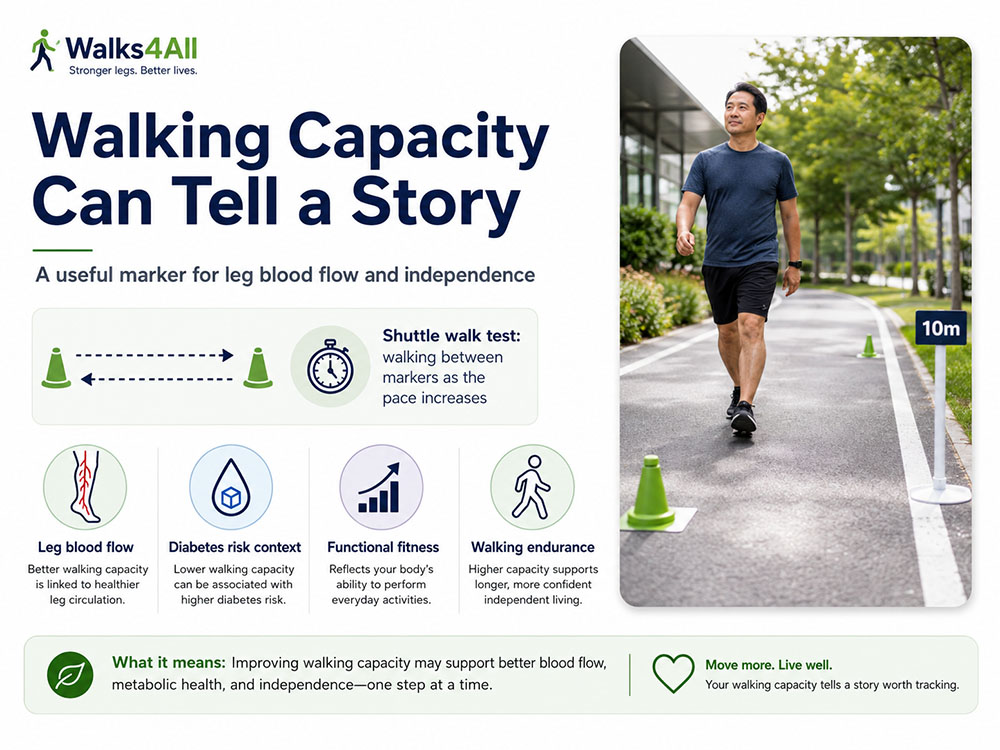
Walking capacity can be a useful marker of vascular health, leg blood flow and independence, particularly in research involving type 2 diabetes and peripheral arterial disease.
The study used an incremental shuttle walk test. This practical walking test requires a person to walk back and forth between two markers, usually 10 metres apart, at a gradually increasing pace. It measures how far someone can walk as the effort becomes progressively harder, providing a measure of real-world walking capacity and endurance.
The study reported that reduced walking capacity, defined as a shuttle walk distance of 215 metres or less, was significantly associated with peripheral arterial disease. Although this is not a daily step-count study, it is highly relevant because it shows that walking ability is a meaningful clinical marker of vascular health in a population with diabetes.[7]
Walks4all takeaway
This supports the idea that walking capacity is not just fitness data. It can also be a useful indicator of vascular health and functional
independence.
A large real-world study published in the British Journal of Sports Medicine examined the effects of short movement breaks during prolonged sitting. The study drew on data from 19,342 adults taking part in NPR's Body Electric Challenge. Nearly 60% of participants took 5-minute walking breaks at self-selected intervals of every 30, 60 or 120 minutes for 14 days, following a 7-day usual-routine period.

Short walking breaks during the working day can help reduce long sitting time and make movement easier to fit into a busy routine.
All three break frequencies were rated as feasible, acceptable and appropriate. Reported fatigue and low mood decreased, while good mood increased, with more frequent breaks generally producing greater benefits.
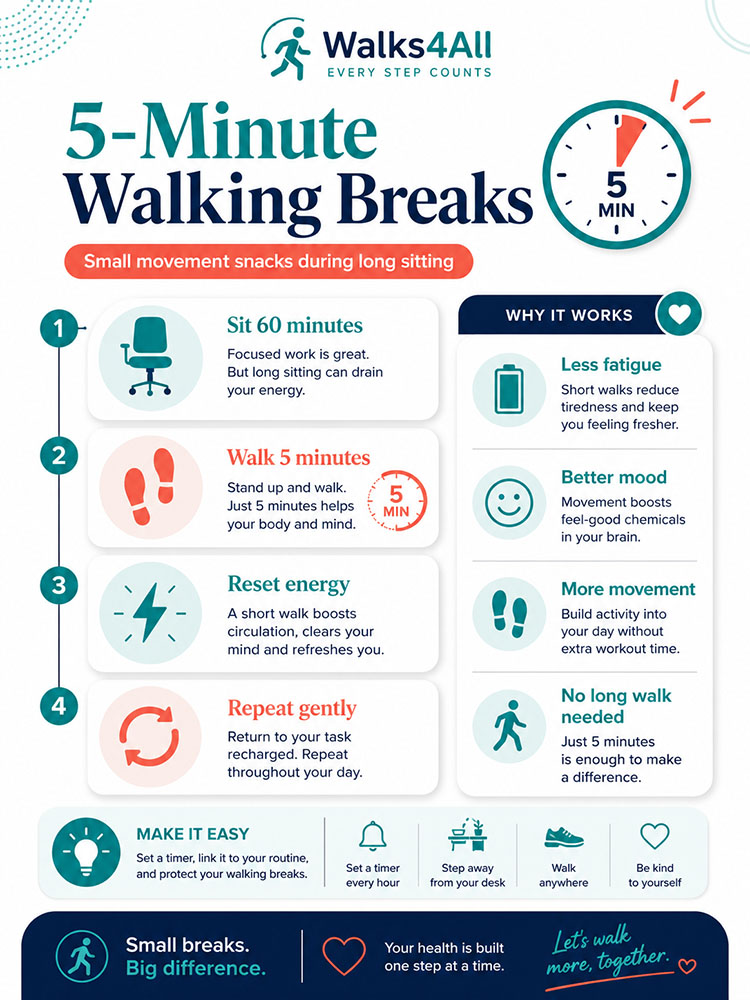
Five-minute walking breaks are a practical exercise snack: small, repeatable and easy to add during long periods of sitting.
However, the authors concluded that 5-minute breaks every hour offered the best balance between effectiveness and practicality, and that short breaks did not appear to undermine work performance. In step terms, a 5-minute walking break might be roughly 400-600 steps, depending on pace and stride length.[8]
Walks4all takeaway
This supports the “exercise snacks” message: short walking breaks may be one of the easiest ways to reduce sitting time and to feel better
during the day.
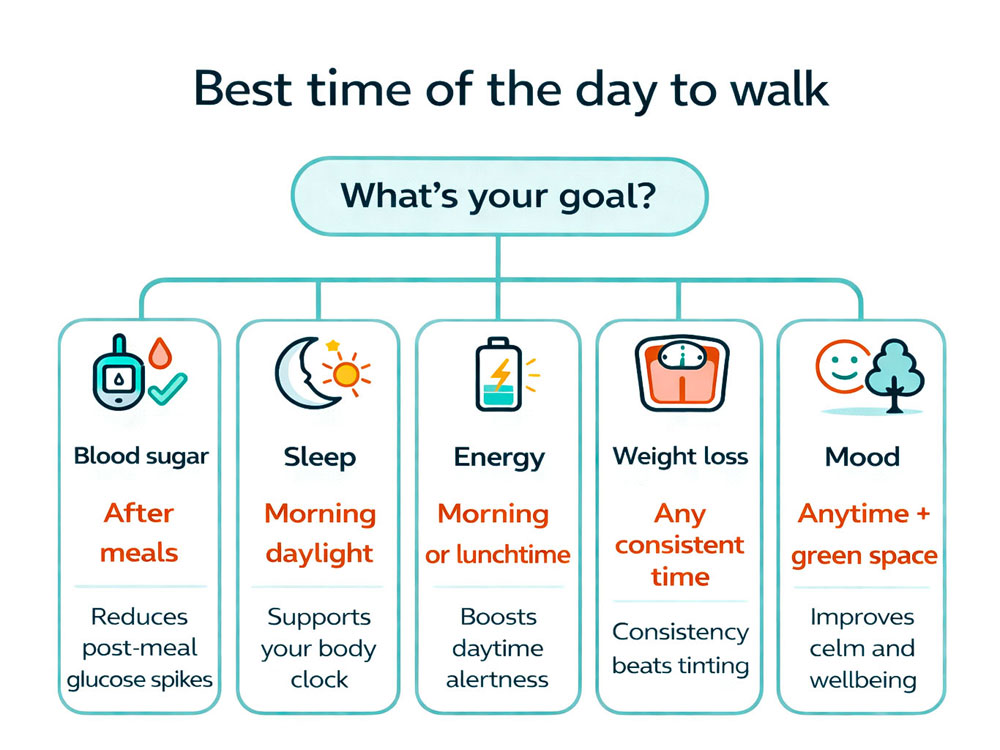
The June evidence points to a simple pattern: walk more, sit less, and make some of it brisk. For heart health, the clearest guidance from the new UK evidence is to aim for 6,500-10,000 steps/day, with added benefit in increasing by 1,000 steps/day at a time.
For sleep, the most practical, research-based recommendation is 30-60 minutes of moderate walking, three to five times per week. For older adults, brisk walking may improve balance, fitness, and life satisfaction, even without noticeable changes in body composition. For desk-based adults, a 5-minute walking break every hour may be a realistic way to improve mood and reduce fatigue.
As always, this does not mean everyone should chase the same number. A person currently taking 3,000 steps a day may gain more from reaching 4,000 than from feeling defeated by a 10,000-step target. Someone with high blood pressure, diabetes, pregnancy concerns, chest pain, dizziness, breathlessness, knee pain or balance problems should speak to a qualified healthcare professional before making major changes.
Walks4all overall takeaway
The latest evidence continues to support walking as a practical, low-cost health habit, but the best target is the one that safely moves you
forward from your current baseline.
July 2026
We take evidence seriously at Walks4all. If you'd like to better understand how walking studies are designed, how results should be interpreted, and what scientific terms mean, explore our guides on the following: