User | Login

Why foot health matters more as you age: Mobility, balance, fall prevention and staying independent for life

By: Andrew Forrest - January 2026

Why foot health matters more as you age

Your feet support every step you take. As we age, subtle changes in foot strength, structure, circulation, and sensation can quietly ripple outward, affecting balance, confidence, walking speed, joint health, and long‑term independence.

Table of contents 

This page contains affiliate links. If you buy products or services via these links, we may earn a small commission at no cost to you. If you are thinking of buying, please use our links, as it helps support our website and YouTube channel.

Foot problems are not inevitable. However, ignoring foot health makes age‑related decline more likely, especially for people who want to keep walking regularly into later life.

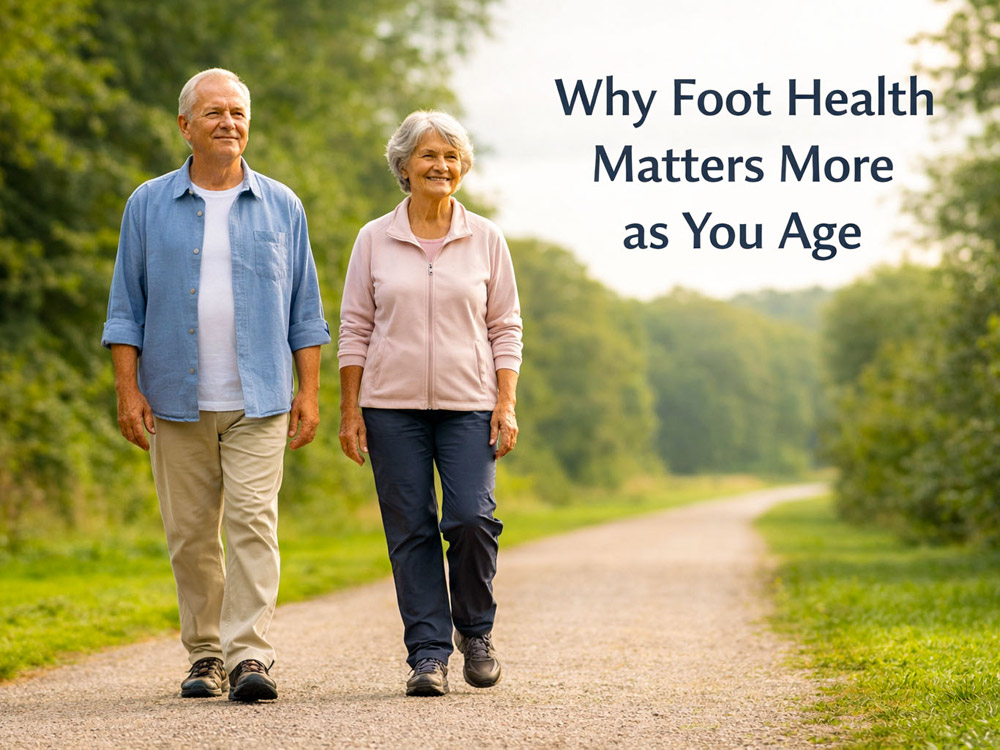
Older adults walking confidently on a UK park footpath wearing supportive shoes

Health & Wellness Disclaimer

The information in this article is intended for general education and wellbeing and is aimed at supporting safe, confident walking and foot health as we age.

If you have any medical conditions affecting circulation, sensation, balance or mobility - such as diabetes, peripheral arterial disease, neuropathy, arthritis, a history of falls, dizziness, or foot ulcers - or if you are recovering from injury or surgery, consult your GP, podiatrist or healthcare professional before making changes to your walking routine, footwear, or starting new foot or strength exercises.

If you are new to exercise, returning to physical activity after a long break, or increasing your activity levels significantly, it is sensible to check with a healthcare professional first to ensure your approach is appropriate for your individual health circumstances.

The information is intended for general educational purposes only and should not be regarded as medical advice or a substitute for professional healthcare. If you are experiencing a medical emergency or serious symptoms, seek immediate assistance from a qualified medical professional or contact emergency services. Always consult your GP or a healthcare provider for personalised medical guidance and treatment.

Feet are the foundation of healthy ageing

For walkers, those who spend hours each day on their feet, and everyday movers, looking after your feet is one of the highest‑return health investments you can make.

Close-up of older adult feet standing firmly on an outdoor path

How ageing changes the feet (and why it matters)

Ageing affects the feet in predictable, well-studied ways:

Infographic showing how feet change with age including muscle, joint and fat pad changes

Loss of cushioning and shock absorption

  • The natural fat pads under the heel and forefoot thin with age12.
  • This increases pressure on bones, joints and nerves2.
  • Linked to higher rates of heel pain, forefoot pain and callus formation2.
  • Studies using plantar pressure mapping show significant increases in peak foot pressure in older adults, even when walking at the same speed as younger adults2.

Comparison diagram showing thinning foot fat pads with ageing

Reduced muscle strength and toe power

  • Intrinsic foot muscles weaken over time34.
  • Toe grip strength declines3.
  • Push-off becomes less efficient3.
  • Research consistently shows that toe strength and foot muscle size are associated with balance, walking speed, and fall risk in older adults34.

Infographic explaining why toe strength is important for walking balance

Joint stiffness and arthritis

Older adult stretching calf and ankle before walking

  • Small joints in the foot and ankle are common sites of arthritis5.
  • Reduced range of motion affects gait smoothness5.
  • Compensation patterns increase strain on the knee, hip and back5.
  • Foot and ankle arthritis is strongly associated with reduced daily step counts and a slower walking pace514.

Diagram highlighting common arthritis locations in the ageing foot

Changes in arch shape and foot posture

  • Ligaments lose elasticity6.
  • Arches may flatten or stiffen6.
  • Foot width often increases with age6.
  • These changes affect shoe fit, pressure distribution and walking efficiency - often without people realising6.

Illustration showing how foot shape changes with age

Reduced circulation and sensation

  • Blood flow to the feet may decrease7.
  • Nerve sensitivity can decrease (especially with diabetes or vascular disease)718.
  • Small injuries are easier to miss and slower to heal18.
  • This is one reason regular foot checks become more important with age, even for active walkers18.

What you can do to slow, reduce or manage these changes

Ageing‑related changes can't be prevented entirely, but many can be slowed or managed. The goal is simple: keep feet strong, comfortable, well‑supported, and checked early - so walking remains easy and confident.

Maintain foot and toe strength

Foot muscles respond to training even later in life. Targeted foot and toe exercises can improve balance and walking stability in older adults151617.

Practical options include towel scrunches, toe presses (banded if tolerated), 'short‑foot' drills, and controlled heel raises.

Older adult performing toe-strengthening exercise at home

Keep walking - but manage load intelligently

Walking supports mobility and circulation, but persistent foot pain shouldn't be 'pushed through'. Pain can drive compensatory gait changes that increase injury and fall risk14.

A practical rule: little and often beats occasional long, painful walks.

Address footwear early

Ill-fitting or unsupportive footwear is a major, modifiable risk factor. Studies show links between poor footwear, foot pain and falls, and many older adults wear shoes that are too narrow or too short8910.

Comparison of poorly fitting shoes versus supportive walking footwear

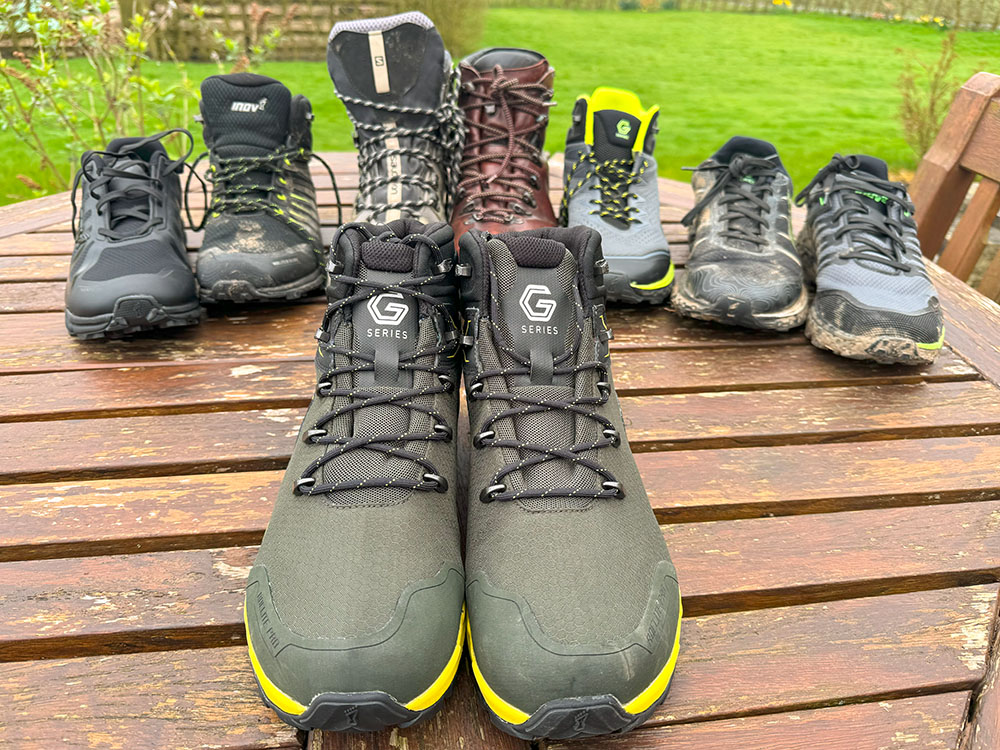
Helpful features include a roomy toe box, a firm heel counter, a stable sole, a low, broad heel, and good grip1019.

Checklist infographic showing footwear features that support ageing feet

Reduce pressure where cushioning is thinning

Cushioned footwear and appropriately fitted insoles can redistribute pressure and improve comfort in older adults1120.

Close-up of cushioned insoles being placed into walking shoes

Maintain ankle mobility and calf flexibility

Reduced ankle mobility is linked to altered gait and balance. Gentle calf stretching and ankle mobility exercises can help support stride and stability1221.

Older adult walking on varied terrain showing natural ankle movement

Routine foot care and checks

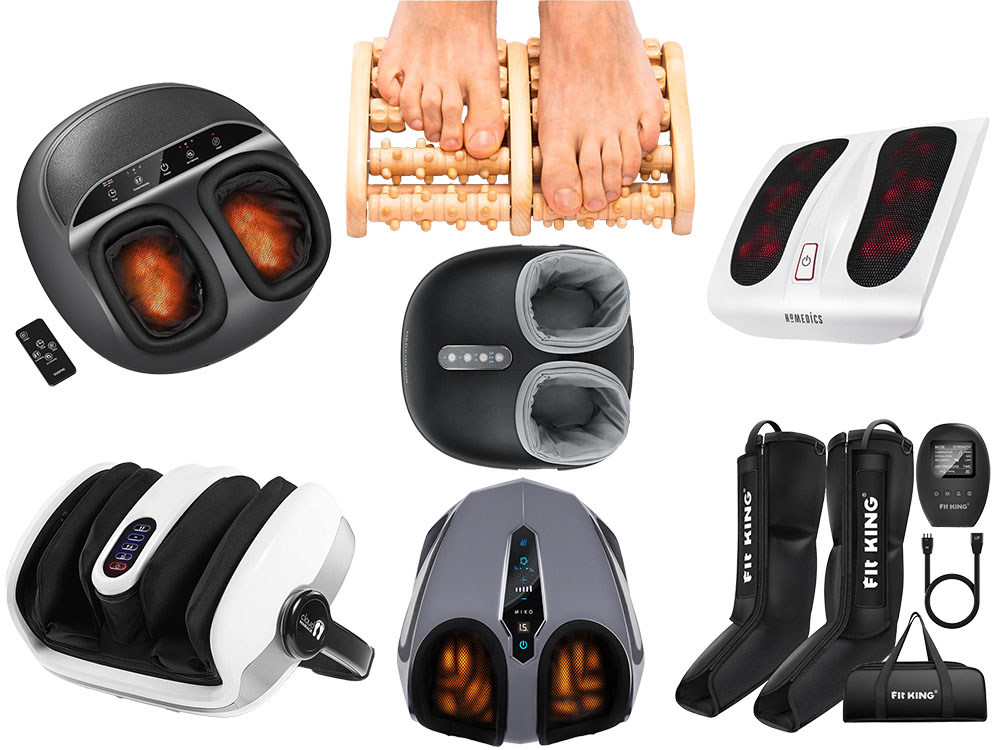
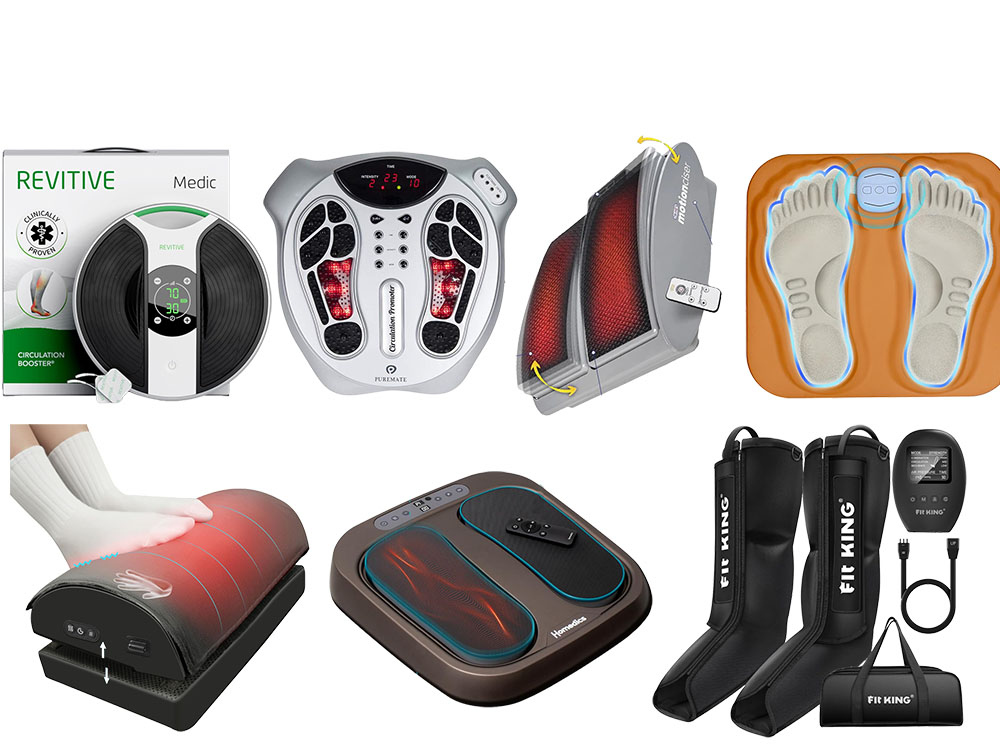
Routine foot care supports skin integrity and early detection of changes. The NHS advises regular foot care and checks of the feet, especially if you have reduced sensation or circulation issues18. You could even treat yourself to a foot massage.

Older adult inspecting their feet as part of routine foot care

Act early on new or persistent foot pain

Early assessment helps prevent small problems from becoming long‑term limitations. Delaying care can contribute to an inactivity spiral14.

Timeline showing benefits of early foot pain treatment

Falls are common and serious in later life. Around 1 in 3 adults over 65 fall each year, rising to around 1 in 2 over 808. Falls are also a leading cause of injury‑related hospital admissions among older adults9.

Diagram showing how foot problems increase fall risk

Foot pain, reduced strength, impaired sensation and unsuitable footwear can all increase the risk of falling by affecting gait and balance4710.

Older adult walking carefully on uneven ground showing balance challenge

Falls, recovery and mortality: why prevention matters

The consequences of a serious fall are often underestimated.

Infographic showing falls statistics in older adults

Hip fractures are particularly serious: studies commonly report 20-30% mortality within one year of hip fracture in older adults1112.

Older adult hesitating at a kerb due to fear of falling

Many survivors experience long‑term mobility loss. Pre‑existing strength and function strongly influence recovery after falls and fractures1322.

Older adult recovering in hospital after a fall

Infographic comparing recovery in active versus inactive older adults

Foot pain and the 'silent inactivity' spiral

Foot pain is a common reason people reduce their walking without realising it. Over time, this can reduce strength and balance, increasing the risk of falling and limiting independence214.

Diagram showing the foot pain and inactivity cycle

Walking protects foot health - when done wisely

Walking can help maintain joint mobility, circulation, balance and confidence. The key is to match walking load to foot capacity and address pain early rather than 'walk through it'.

Older adults walking together confidently on a countryside path

Footwear matters more with age than ever before

Because foot shape and tissue tolerance change with age, footwear fit and stability become more important. Reviewing footwear is one of the simplest ways to reduce discomfort and improve confidence outdoors610.

Our Walks4all take:

Protect your feet to protect your future walking. Foot health isn't about perfection - it's about keeping small issues small. As we age, recovery is slower, but outcomes are far better when strength, balance and walking habits are already in place. If you want to keep walking confidently into later life, your feet deserve as much attention as your heart, lungs or joints.

Foot health checklist for walkers over 40, 50 and beyond

Use this weekly or monthly. If two or more points are a concern, action is advised.

Printable foot health checklist for walkers over 40

✓ No persistent foot pain when walking
✓ Shoes fit comfortably with room for the toes
✓ Can rise onto the toes with control
✓ Ankles move freely without stiffness
✓ Skin intact, with no pressure sores or cracks
✓ Nails trimmed without pain
✓ Walking feels confident on uneven ground
✓ Any new pain assessed early

Older adult standing confidently with a fading trail of footprints behind them

Conclusion from Why Foot Health Matters More as You Age

Foot health matters more as you age because changes in strength, cushioning and sensation affect balance, fall risk and recovery. Maintaining healthy feet helps preserve walking ability, confidence and independence.

Age-related foot changes can often be slowed by staying active, maintaining foot strength, wearing supportive footwear and addressing pain early. These steps reduce the risk of falling and help preserve walking ability as you age.

Still curious? Explore our guides to understanding health research, the limitations of walking studies, and our glossary of key terms.

Frequently Asked Questions (FAQs) on why foot health matters more as you age

Does foot health really affect balance as you grow older?

Yes. Foot pain, reduced toe strength and reduced sensation can change gait and worsen balance, increasing the risk of falling4710.

Are falls really that common among people over 65?

Yes. Around one in three adults over 65 falls each year, and the risk increases with age8.

Can stronger feet reduce the risk of falling?

Yes. Foot and toe strengthening can improve balance and walking stability in older adults151617.

Do insoles help older feet?

Often, yes. Insoles can help redistribute pressure and improve comfort, especially when cushioning is reduced1120.

Is it normal to experience foot pain as you get older?

No. Foot pain is common, but it isn't something you have to accept - early assessment can prevent long-term limitations1418.

What's the single best footwear feature for ageing feet?

A stable, well-fitting shoe with a roomy toe box and good grip is a strong starting point1019.

References for why foot health matters more as you age

  1. Menz HB et al. Foot structure and function in older people. Journal of Foot and Ankle Research. 2012. https://jfootankleres.biomedcentral.com/articles/10.1186/1757-1146-5-3
  2. Mickle KJ et al. Plantar pressures, foot pain and ageing. Gait & Posture. 2012. https://pubmed.ncbi.nlm.nih.gov/20831725/
  3. Mickle KJ et al. Toe strength and balance in older adults. Journal of Gerontology. 2009. https://www.sciencedirect.com/science/article/abs/pii/S0268003309002010
  4. Spink MJ et al. Foot and ankle characteristics associated with falls. Journal of Foot and Ankle Research. 2011. https://pubmed.ncbi.nlm.nih.gov/21187207/
  5. Hill CL et al. Foot and ankle osteoarthritis and functional limitation. Arthritis Research & Therapy. 2008. https://arthritis-research.biomedcentral.com/articles/10.1186/ar2358
  6. Menz HB et al. Foot and ankle characteristics associated with impaired balance and functional ability in older people. 2005. https://pubmed.ncbi.nlm.nih.gov/16424286/
  7. Lord SR et al. Foot sensation, balance and falls. Gerontology. 2009. https://www.karger.com/Article/Abstract/213245
  8. World Health Organization. Falls - Fact Sheet. 2021. https://www.who.int/news-room/fact-sheets/detail/falls
  9. Public Health England. Falls and fracture prevention in older people. 2017. https://www.gov.uk/government/publications/falls-and-fractures-consensus-statement
  10. Koepsell TD et al. Footwear style and risk of falls in older adults. 2004. https://pubmed.ncbi.nlm.nih.gov/15341551/
  11. Schnell S et al. The 1-year mortality of patients treated in a hip fracture program for elders. 2010. https://pubmed.ncbi.nlm.nih.gov/23569656/
  12. Sterling DA et al. Mortality and functional outcome after hip fracture. Journal of Trauma. 2001. https://journals.lww.com/jtrauma/Abstract/2001/05000/Mortality_and_Functional_Outcome_after_Hip.15.aspx
  13. Binder EF et al. Effects of extended outpatient rehabilitation after hip fracture: a randomized controlled trial. 2004. https://pubmed.ncbi.nlm.nih.gov/15315998/
  14. Riskowski JL et al. Functional foot symmetry and its relation to lower extremity physical performance in older adults: The Framingham Foot Study. 2012. https://www.sciencedirect.com/science/article/abs/pii/S0021929012002382?via%3Dihub
  15. Menz HB et al. Foot muscle strength and balance in older adults. Journal of Foot and Ankle Research. 2013. https://jfootankleres.biomedcentral.com/articles/10.1186/1757-1146-6-2
  16. Goldmann JP et al. The potential of toe flexor muscles to enhance performance. 2013. https://pubmed.ncbi.nlm.nih.gov/23106289/
  17. Mickle KJ et al. Efficacy of a progressive resistance exercise program to increase toe flexor strength in older people. Clinical Biomechanics. 2016. https://www.sciencedirect.com/science/article/abs/pii/S0268003316301553
  18. NHS. Foot care. 2023. https://www.guysandstthomas.nhs.uk/health-information/falls/keeping-your-feet-healthy
  19. NICE. Falls in older people: assessing risk and prevention (CG161). 2025. https://www.nice.org.uk/guidance/ng249
  20. Spink MJ et al. Effectiveness of footwear and insoles in reducing foot pain. Arthritis Care & Research. 2011. https://onlinelibrary.wiley.com/doi/10.1002/acr.20526
  21. Paterson KL et al. Ankle mobility, gait and fall risk. Gait & Posture. 2016. https://www.sciencedirect.com/science/article/pii/S0966636216303425
  22. Gill TM et al. Pre-existing function and recovery after falls. JAMA. 2013. https://jamanetwork.com/journals/jamainternalmedicine/fullarticle/1729533

January 2026


Related reading: