By using this website, you agree to our use of cookies (needed to provide our website’s features) and our Terms of Use.
By: Andrew Forrest - November 2026

October 2026 walking research on pace, short activity bouts, cognition, bone health, frailty, sleep and rehabilitation.
This page contains affiliate links. As an Amazon Associate, we earn from qualifying Amazon purchases at no additional cost to you. We may also earn commissions from other retailers, again at no additional cost to you.
October 2026 brought useful new research on walking pace, very short activity bouts, spreading walking throughout the day, cognition, bone health, frailty, sleep and rehabilitation.
The main point isn’t that everyone should aim for the same speed or step count. Walking can be adapted in several useful ways: walk more when you can, add a purposeful stretch when comfortable, break up long periods of sitting, and build strength and balance alongside your walks.
Health & Wellness Disclaimer
This article is for general information only and does not constitute medical advice, diagnosis or treatment. Speak to your GP or another qualified healthcare professional before making major changes to your activity routine, particularly if you have a medical condition, are pregnant, are returning after illness or injury, or develop chest pain, severe breathlessness, dizziness or unusual pain.
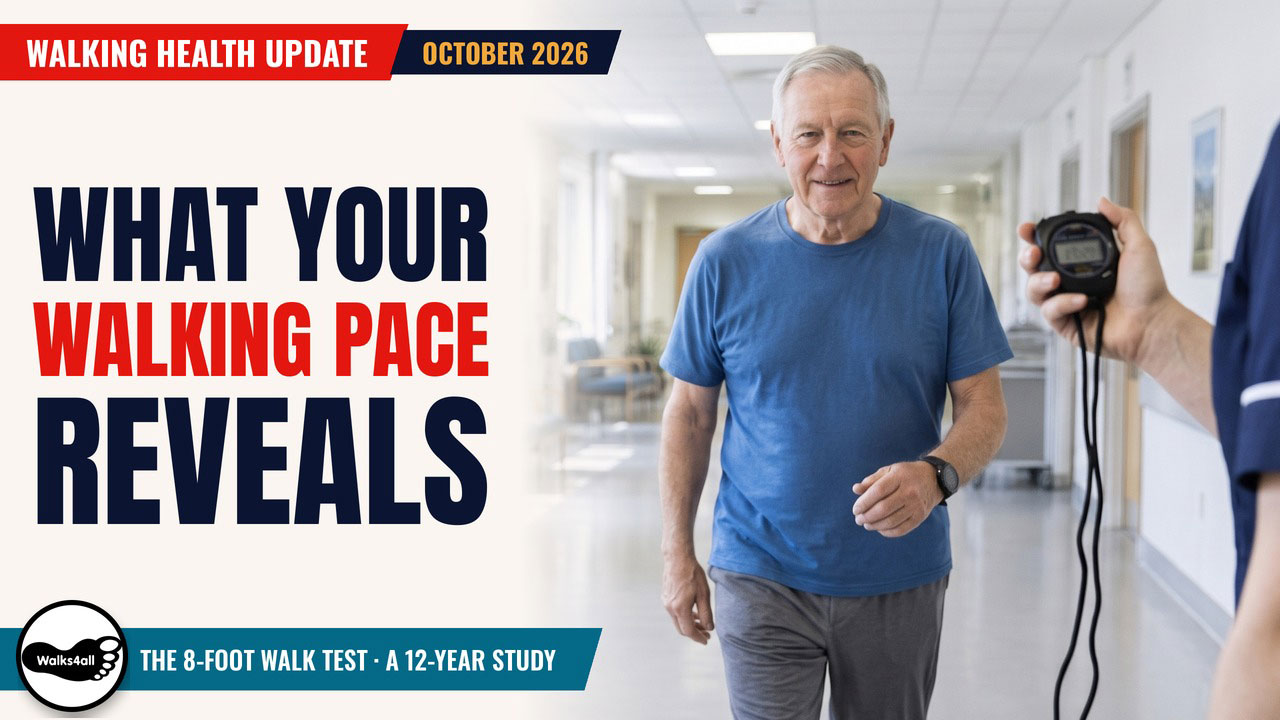
The clearest finding in October came from 4,067 participants in the UK Whitehall II study. A brief clinic-based walking-speed test and everyday walking cadence, measured with a wrist-worn accelerometer (a movement sensor), were similarly associated with later mortality. Faster walking was linked to lower risk, but because this was an observational study, walking pace may partly reflect existing health rather than cause the difference.[1]
Two other studies clarified the practical picture. In a small trial of office workers, about ten minutes a day of brief activity 'snacks', such as brisk walking and stair climbing, lowered blood pressure and perceived stress over 12 weeks. The study was first published online on 29 September and is included here as newly surfaced evidence, not as a new October publication. In a separate October trial, ten five-minute brisk walks spaced throughout the day reduced prolonged sitting, whereas one continuous 45-minute brisk walk did not. Both patterns increased activity and daily energy expenditure.[2] [3]
A daily step count is easy to understand, but it doesn't show how fast someone walks, how their movement is spread throughout the day, or whether they're also doing strength and balance exercises. October's evidence helps address some of these gaps without replacing the basics.
The UK Chief Medical Officers' guidance remains the practical anchor: adults should aim for at least 150 minutes of moderate activity per week or 75 minutes of vigorous activity, include muscle-strengthening activity on at least two days, and break up prolonged periods of inactivity. Older adults should also include balance activity. There is still no official UK daily step target.[17]
| Topic | Who / what | Main finding | How to read it / limitations |
| Walking pace | 4,067 UK adults; median follow-up 11.8 years | Clinic speed and free-living cadence were similarly associated with mortality | Observational health marker, not a pace prescription |
| Short activity bouts | 52 office workers; 12-week RCT | About 10 minutes/day of mixed brief bouts lowered blood pressure and stress | Published 29 September and newly surfaced in October; not walking-only |
| Spread-out vs continuous walking | 30 adults; 6-week RCT | Ten 5-minute brisk bouts reduced prolonged sitting; one 45-minute walk did not | Very small trial; weight findings preliminary |
| Cognition | 198-person step trial plus two reviews/trials | Modest cognitive signals; no evidence of a cure or universal dose | Results varied across measures and designs |
| Bone health | 3,529 women; prospective cohort | 7,000 steps on ≥3 days/week associated with less heel-ultrasound decline before menopause | No significant association after menopause; not a fracture trial |
| Frailty | 105-person supervised trial plus meta-analysis | Higher-intensity supervised walking improved frailty category; resistance evidence remained stronger overall | Do not copy supervised intensity into unsupervised advice |
| Sleep and setting | Small inpatient RCT; 21-study environmental review | Sleep improved in one specialist trial; nature did not add a clear immediate heart effect | Limited populations and outcomes |
Researchers followed 4,067 British civil servants for a median of 11.8 years. Participants completed a short 2.44-metre walk test and wore a wrist sensor for nine days. The sensor estimated their usual everyday cadence (steps per minute) and their cadence during faster walking.[1]
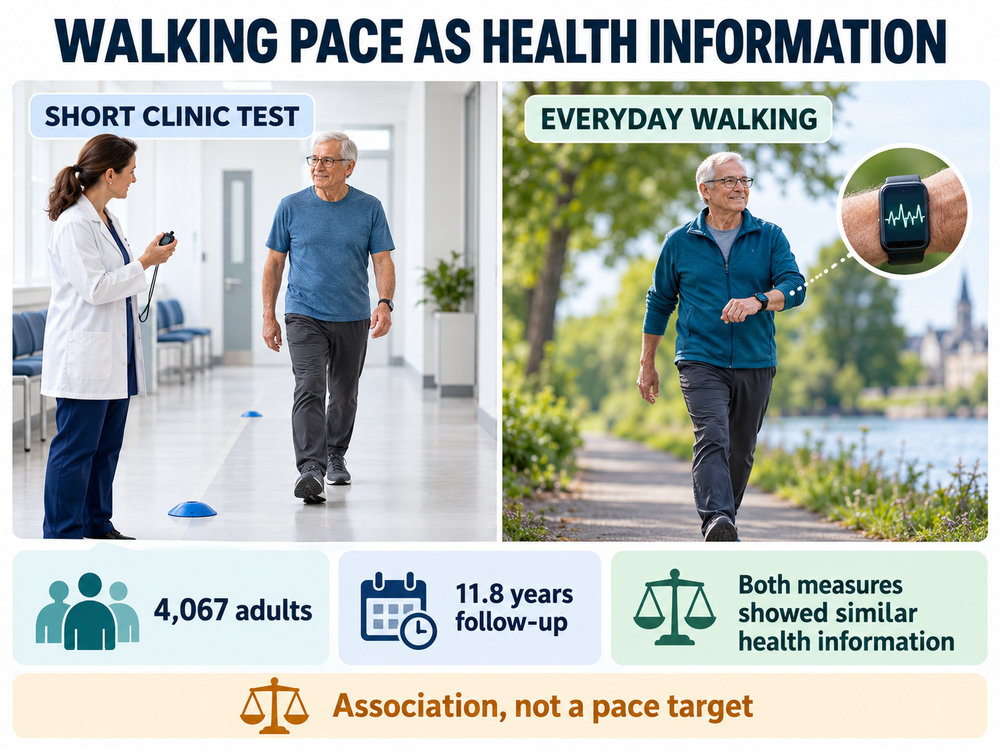
Clinic walking speed and everyday walking pace were both associated with later mortality among 4,067 mainly older adults. The study did not prove that deliberately walking faster changes risk.
Each standard-deviation increase in clinic walking speed was associated with a hazard ratio of 0.77 for all-cause mortality. A hazard ratio compares the rate at which an event occurs over time between groups; a value below 1 indicates a lower rate in the group being compared. The median free-living cadence and the faster end of everyday cadence produced broadly similar estimates.[1]
The study doesn't show that forcing yourself to walk faster will make you live longer. Illness, pain, frailty, and fitness all affect walking pace. Its practical value is that walking speed can provide useful health information, especially when someone's usual pace changes noticeably.
Walks4all Takeaway: Gradually build up your walking and include a purposeful section when it suits your health and comfort. Do not force a pace that causes pain, dizziness or unusual breathlessness.
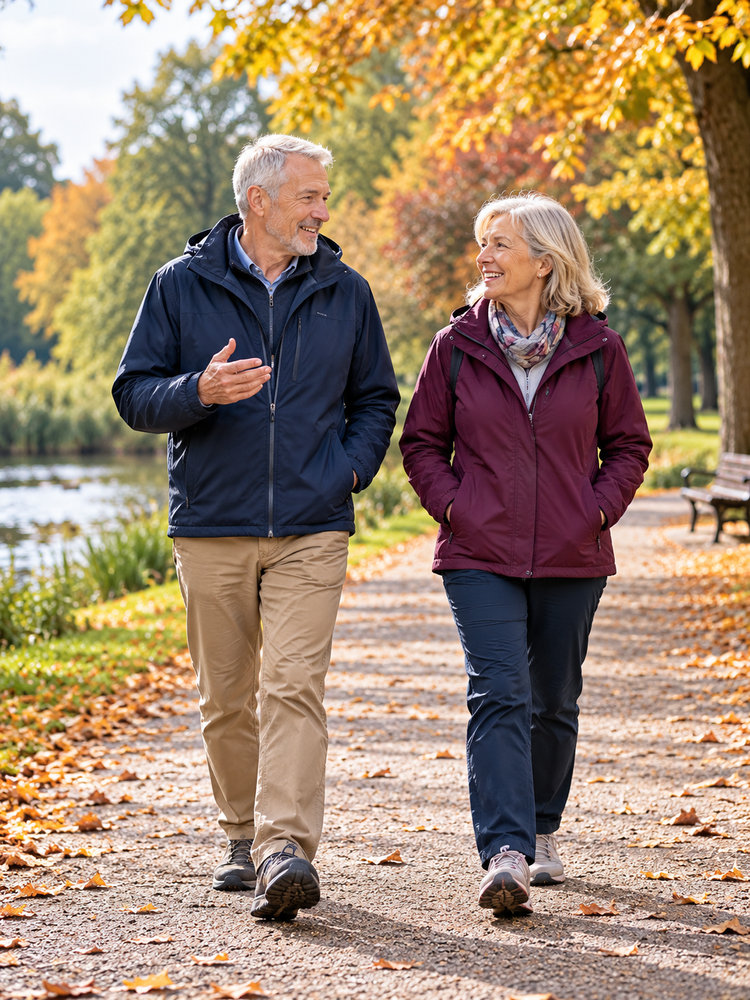
A comfortable, purposeful section can add moderate activity to an ordinary walk, but slower walking still counts and may suit your health and mobility better.
The exercise-snack trial included 52 office workers. The intervention group completed three to six bouts per day, each lasting one to three minutes, totalling about ten minutes per day. Activities included stair climbing, brisk walking, squats, push-ups and stretching, so the programme was not limited to walking. After 12 weeks, systolic blood pressure fell by 4.6 mmHg, diastolic pressure by 2.4 mmHg and perceived stress by 2.5 points in the intervention group; body mass index remained unchanged.[2]
Another randomised trial assigned 30 adults with overweight or obesity to either one 45-minute brisk walk or ten five-minute brisk walks each hour, five days a week for six weeks. At about 100–120 steps per minute, a 45-minute walk amounts to roughly 4,500–5,400 steps, while each five-minute bout adds about 500–600 steps. Both approaches increased moderate-to-vigorous activity and daily energy expenditure, but only the spread-out pattern reduced prolonged sitting. The continuous-walk group also showed small increases in body and fat mass relative to the spread-out group, although the study was too small to draw firm conclusions about weight management.[3]
Walks4all Takeaway: Longer walks and short movement breaks serve different purposes. Keep the walk you enjoy, but also look for small opportunities to interrupt sitting.
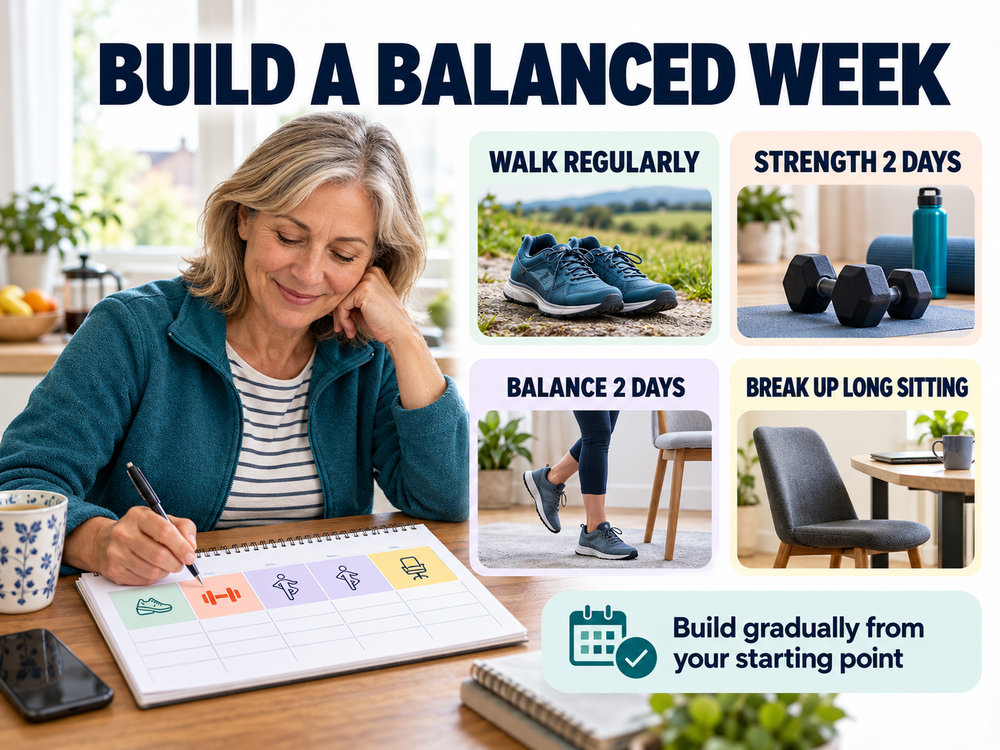
Current UK guidance recommends walking as part of a wider weekly routine: regular activity, strength training on two days, balance work for older adults and less prolonged sitting.
A 12-month trial in Poland offers one of the clearest tests of a step target for people with mild cognitive impairment. Among 198 adults aged 50–70, those in the intervention group aimed to take at least 10,000 steps per day and logged a median of 1,728 more steps daily than controls. They showed modest improvement on the Montreal Cognitive Assessment and one working-memory measure, but brain volume, blood markers, and most broader cognitive outcomes did not differ. The clinical importance of these changes remains uncertain.[4]
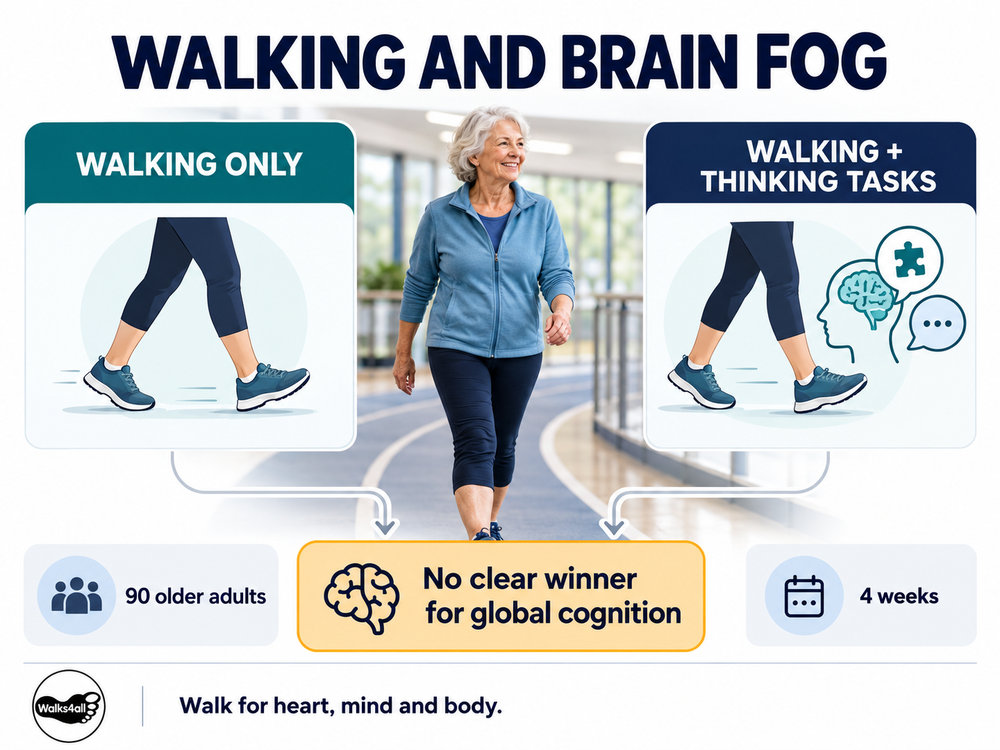
Among 90 older adults with subjective brain fog, adding cognitive tasks to supervised walking did not improve global cognition more than walking alone after four weeks.
In a separate four-week trial involving 90 older adults with subjective brain fog, supervised walking improved some measures in both groups. However, adding simultaneous mental tasks did not improve global cognition beyond walking alone. Because the trial lacked an inactive control group, it cannot determine how much of the improvement was due to walking itself.[5]
A new network meta-analysis of 38 trials found that moderate exercise, about 300–1,000 MET-minutes per week, was associated with the most reliable improvements in executive function among older adults with mild cognitive impairment. At roughly 3.5 METs, this is equivalent to about 90–285 minutes of moderate walking per week, or approximately 9,000–28,500 purposeful steps at 100 steps per minute. Walking-based aerobic exercise showed relatively consistent effects on cognitive flexibility and inhibitory control. However, the evidence was of low to moderate certainty, so treat these estimates as a general guideline, not a personal prescription.[6]
Walks4all Takeaway: Walking can support a brain-healthy routine, but no study here establishes a step count that prevents or treats dementia.
A Japanese cohort followed 3,529 women for an average of about three and a half years. Among premenopausal women, reaching 7,000 steps on at least three days a week was associated with a lower risk of decline in a heel-ultrasound measure. Walking that amount on one or two days was not clearly associated with the outcome, and no significant association was observed after menopause.[7]
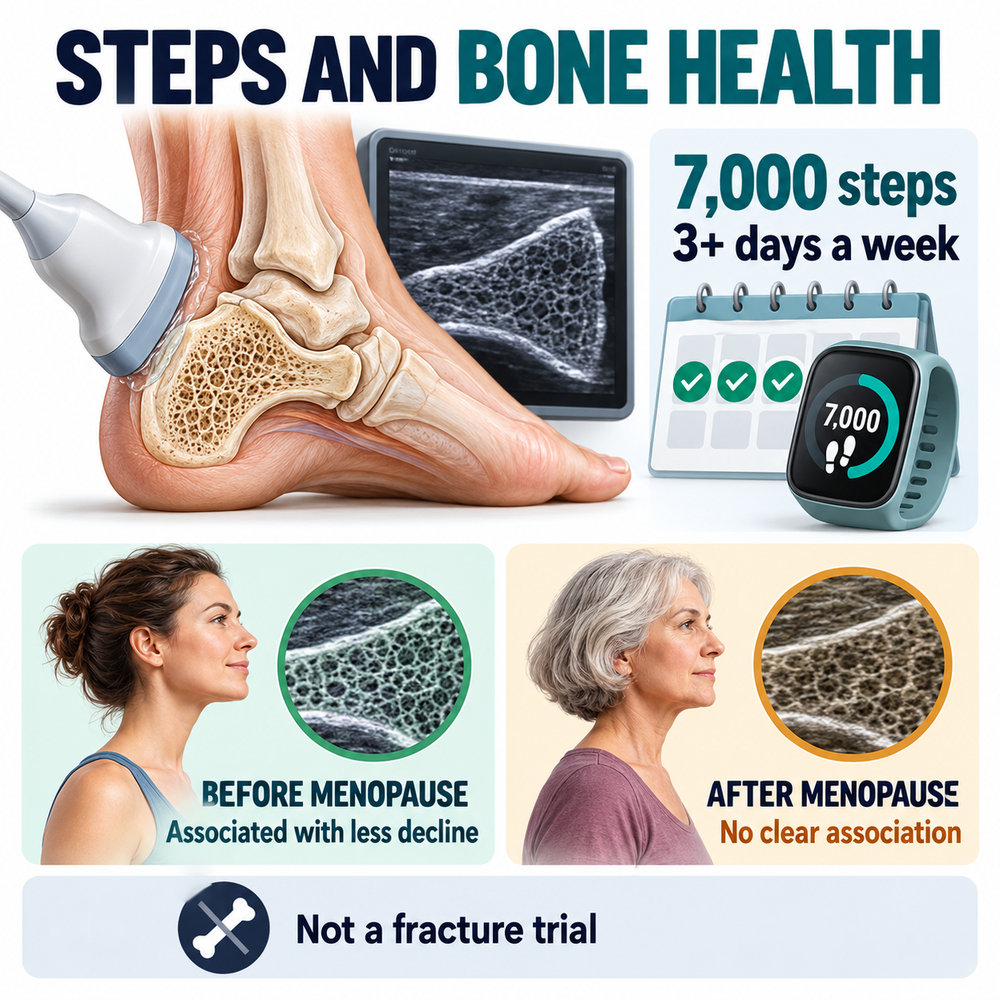
Reaching 7,000 steps on at least three days per week was associated with less decline in a heel-ultrasound measure before menopause, but not after. This was not a fracture-prevention trial.
This was not a fracture trial, and heel ultrasound is not equivalent to a clinical bone-density scan. Walking is a useful weight-bearing activity, but after the menopause, bone health may also require resistance and impact exercise, adequate nutrition, and individualised medical treatment where appropriate.
Walks4all Takeaway: Walking can fit within a bone-health plan, but strength, impact where appropriate, nutrition and medical advice matter, especially after menopause.
A trial in 14 US retirement communities compared supervised walking at about 70% of maximum heart rate with casual walking below 60%. Participants exercised for 45 minutes, three times a week, over 16 weeks. Of the 105 people included in the analysis, 69.6% in the higher-intensity group improved by at least one frailty category, compared with 46.4% in the casual-walking group. The higher-intensity group also made greater gains in walking speed and six-minute walking distance.[8]
The sleep study used supervised outdoor walking in a specialist inpatient setting, so its results should not be treated as a general prescription for insomnia.
That result needs a counterweight. An October systematic review pooled 13 comparisons involving 1,361 participants. Resistance training showed a statistically significant reduction in frailty scores, whereas estimates for walking and Tai Chi were imprecise and not statistically significant. The review did not include direct head-to-head comparisons demonstrating that resistance training was superior to walking, but it reinforces the case for combining walking with strength training.[9]
Walks4all Takeaway: For frailty, walking and strength are partners. Higher-intensity walking should be supervised or individually prescribed when health status or fall risk makes it unsafe to experiment alone.
In a small Iranian trial, 62 older psychiatric inpatients were allocated to routine care or to routine care plus 30-minute supervised outdoor walks three times a week for four weeks. Complete data were available for 55 participants. Reported sleep improved more in the walking group, but the effect was unusually large, so the planned analysis was replaced with a post hoc change-score analysis. This is promising specialist evidence, not a general four-week cure for insomnia.[10]
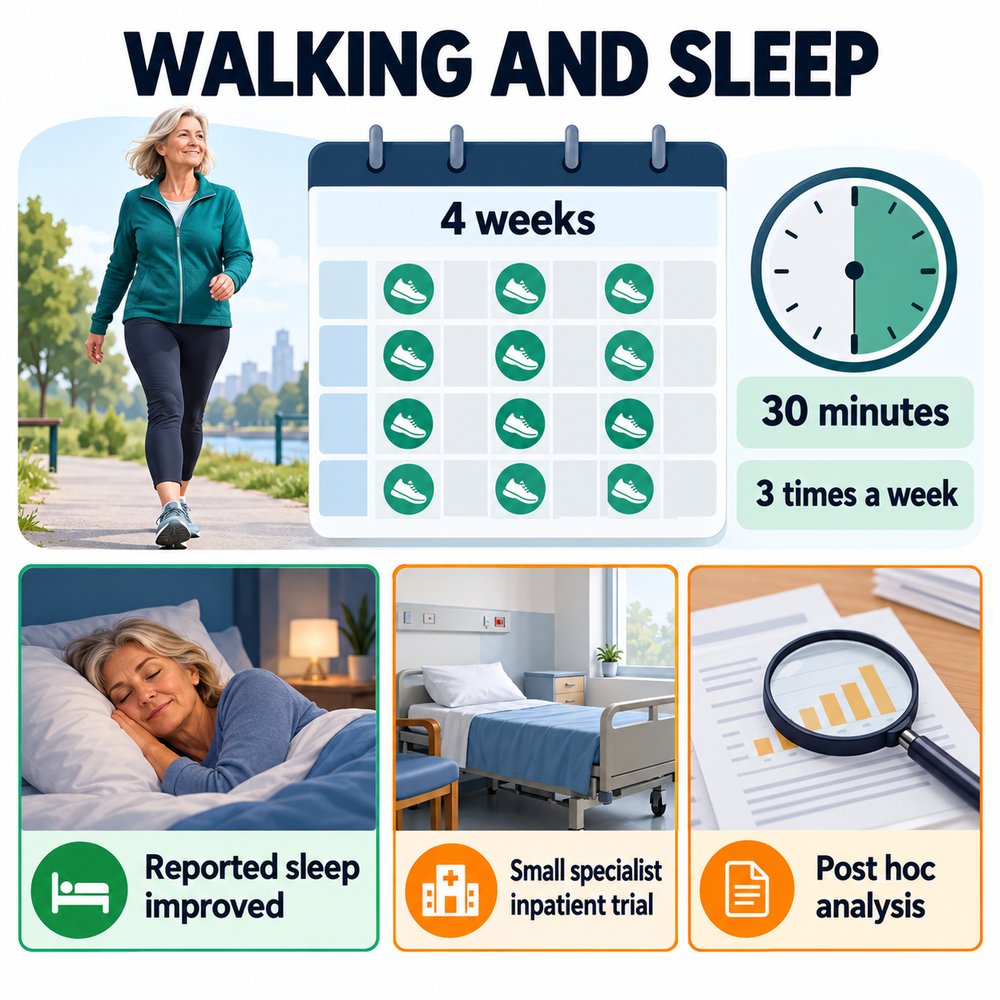
Reported sleep improved after 30-minute supervised walks three times a week for four weeks, but the trial was small, specialist and used a post hoc analysis.
A review of 21 field studies found no clear average difference in immediate heart rate, blood pressure, or heart-rate variability after a single walk in a natural setting compared with a similar urban walk. But that doesn't make green walks pointless: the review did not examine enjoyment, mood, social contact, air quality, long-term adherence, or long-term health.[11]
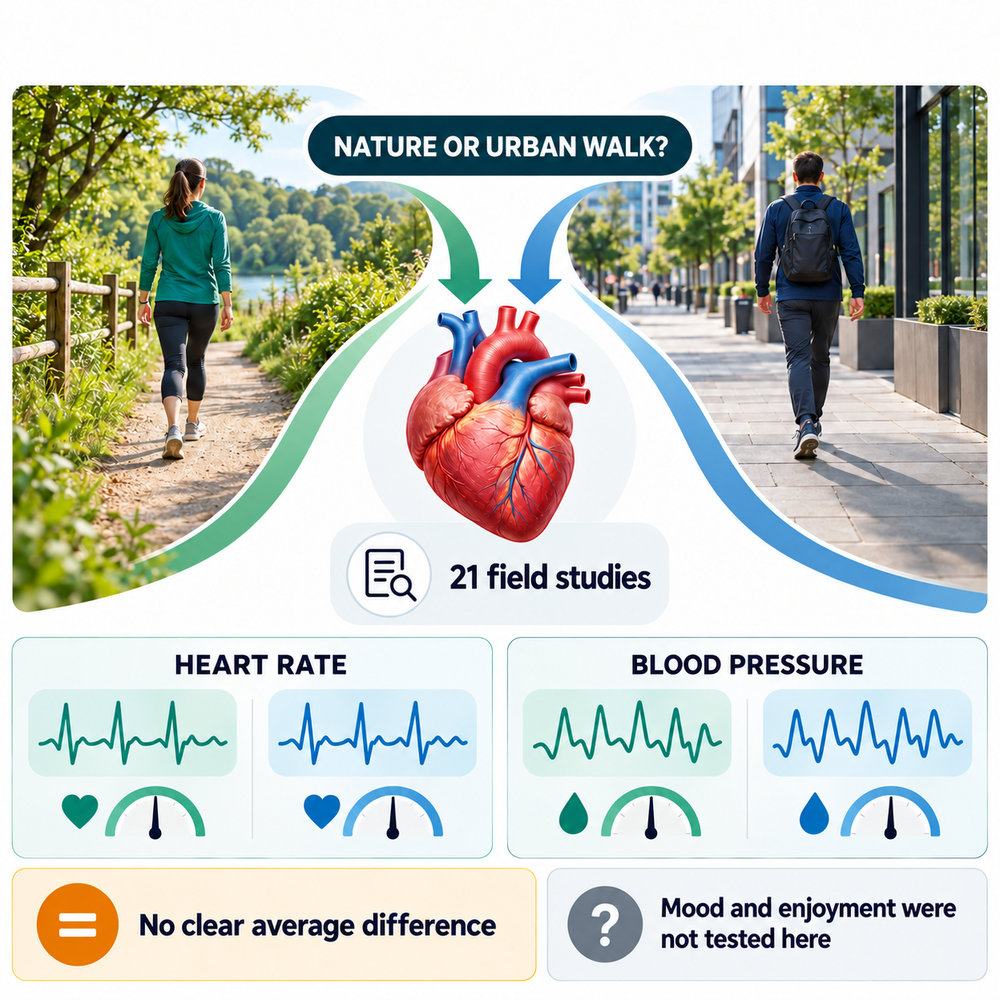
Across 21 field studies, natural and urban walks showed no clear average difference in immediate heart rate or blood pressure. Mood, enjoyment and long-term health were separate questions.
Walks4all Takeaway: Choose a safe and enjoyable place to walk. Nature may improve mood and motivation even though this review found no additional immediate effect on the heart.
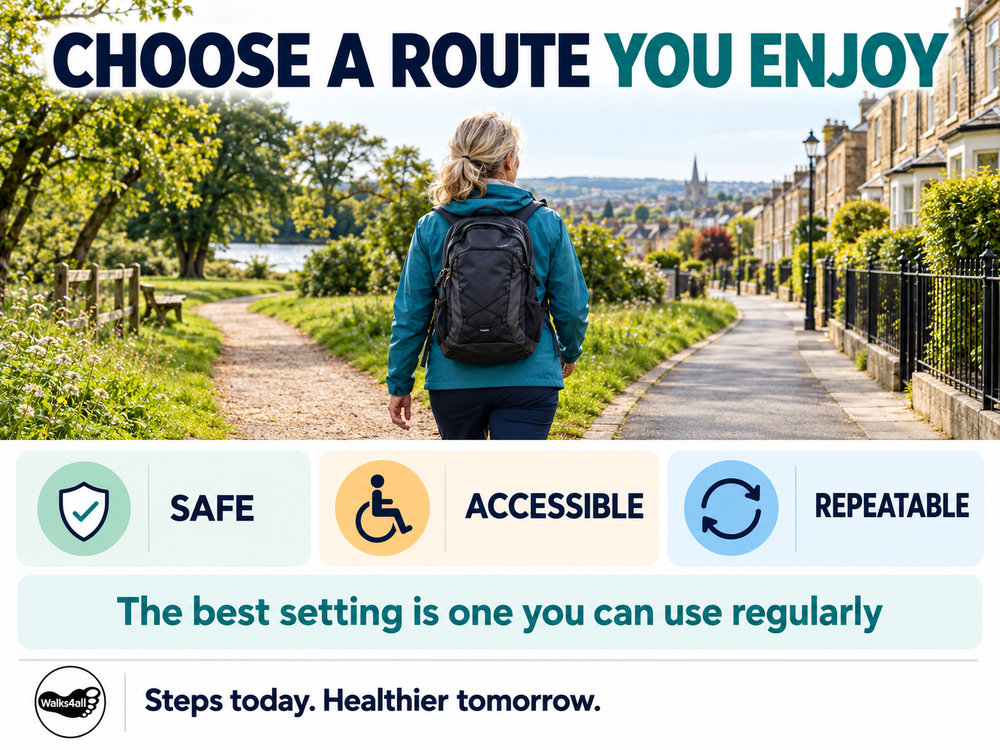
The October review found no additional immediate effect on heart rate or blood pressure from nature, but a safe, enjoyable route may still make walking easier to repeat.
Several other studies provide useful context. A review of 18 randomised trials involving 1,720 breast-cancer survivors found that home-based programmes combining walking or other aerobic activity with resistance training and support moderately improved physical function. The effects on quality of life and psychological outcomes were less certain.[12]
In a telephone-delivered Walk With Ease trial, adults with arthritis benefited even when their baseline function was poorer; baseline function did not clearly affect changes in step count.[13]
A 45-person trial found that treadmill walking improved gait, pain and depressive symptoms in chronic mechanical low back pain, with additional gains from partial body-weight support and vertical traction. It was published online in October for a 2027 issue and remains preliminary.[14]
A review of 27 studies found that exercise training reduced the energy required to walk a given distance in healthy adults. The effects were less clear after stroke, and the review included several types of training, not just ordinary walking.[15]
A review published online in July synthesised five randomised walking trials involving 483 adults with type 2 diabetes, and reported an average HbA1c reduction of 0.48 percentage points. HbA1c reflects average blood sugar over roughly two to three months. This is useful background evidence rather than a new finding in October.[16]
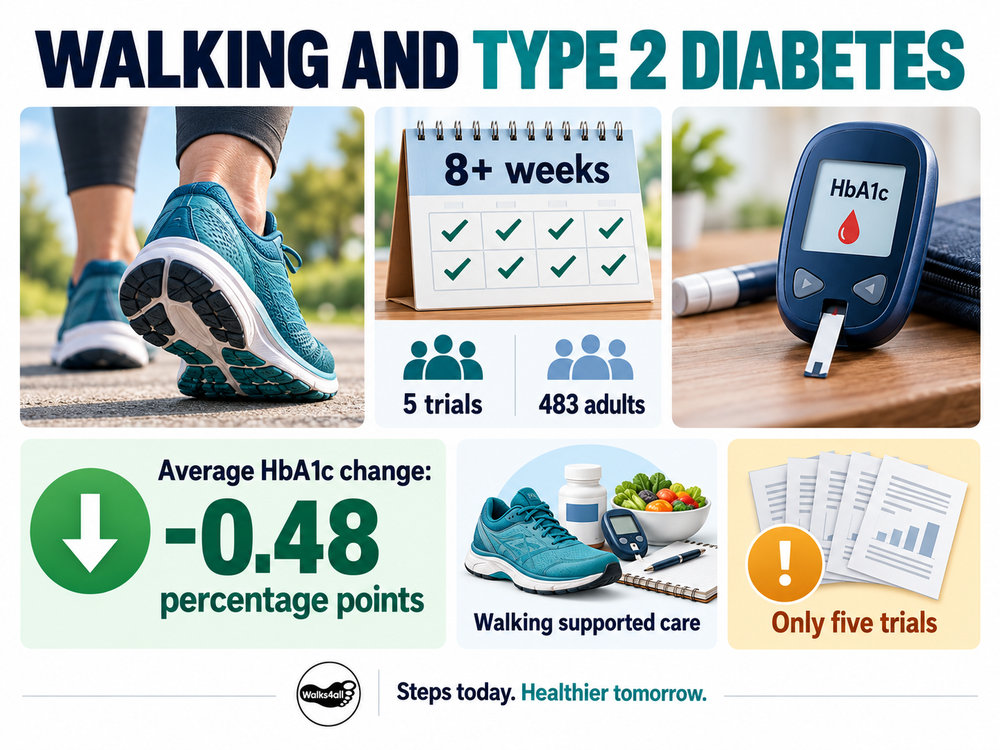
Across five small trials, walking programmes lasting at least eight weeks reduced average HbA1c. Walking supported diabetes care and did not replace medication, monitoring or dietary advice.
Walks4all Takeaway: Walking can support diabetes care, but it does not replace medication, monitoring, nutrition or foot care.
The pace and bone papers were observational. The short-bout and low-back-pain trials were small. The cognition evidence combines one long trial, short trials and indirect network comparisons. The sleep study involved a specialist inpatient population. Supervised frailty results should not be extrapolated to unsupervised hard walking for people with heart symptoms, severe frailty or frequent falls.
No single study establishes a universal pace, step target or treatment dose. Results from programmes that combine walking with strength training, stair climbing, diet or other forms of exercise also cannot tell us how much of the effect is attributable to walking alone.
Despite these limitations, the overall direction of the evidence so far this year is hard to ignore. No single study is perfect or conclusive, but when research across diverse populations, methods and health outcomes repeatedly points to the benefits of regular movement, our confidence in the broader message and in walking increases.
The UK Chief Medical Officers put it memorably in July saying: 'If physical activity were a drug, we would refer to it as a miracle cure'. Walking is not a cure-all and should not replace medical care, but it is one of the simplest and most accessible ways for many people to add more physical activity to everyday life. At Walks4all, we therefore look at the overall pattern of the evidence, rather than expecting any single study to provide the final answer.
October's evidence offers more options rather than a new universal rule. Pace may be useful health information; brief bouts can interrupt sedentary time; and spreading walking throughout the day can change movement patterns even when total walking time stays the same.
The safest practical message remains the same: build gradually, make some walking purposeful when comfortable, break up long periods of sitting, and maintain strength and balance alongside your steps.
No. Around 100 steps per minute is a useful research shorthand for moderate walking, not a mandatory pace. The effort should suit your health, fitness, medication, terrain and symptoms.
In a small six-week trial, both patterns increased activity and energy expenditure, while the spread-out pattern reduced prolonged sitting. Longer studies are needed before concluding that the patterns are equivalent for weight or disease outcomes.[3]
A 12-month trial in people with mild cognitive impairment found modest gains in one global score and one working-memory measure among those walking 10,000 steps, but most cognitive, brain and blood measures did not change. It is encouraging, not a cure or a universal target.[4]
November 2026
We take evidence seriously at Walks4all. If you'd like to better understand how walking studies are designed, how results should be interpreted, and what scientific terms mean, explore our guides on the following: