By using this website, you agree to our use of cookies (needed to provide our website’s features) and our Terms of Use.
By: Andrew Forrest - October 2026

September 2026 walking research on steps, pace, diabetes, mood, bones, frailty and stroke recovery, with practical takeaways and evidence limits.
This page contains affiliate links. As an Amazon Associate, we earn from qualifying Amazon purchases at no additional cost to you. We may also earn commissions from other retailers, again at no additional cost to you.
Health & Wellness Disclaimer
This article is for general information only and does not constitute medical advice, diagnosis or treatment. Speak to your GP or another qualified healthcare professional before making major changes to your activity routine, particularly if you have a medical condition, are pregnant, are returning after illness or injury, or develop chest pain, severe breathlessness, dizziness or unusual pain.
A study involving 64,743 UK Biobank participants examined how daily steps and walking pace relate to subsequent mortality. The lowest all-cause death rate was found among those walking 7,500 to 10,000 steps, though benefits were also seen at even lower step numbers. However, it does not define a universal goal or prove cause and effect.[1]
The September findings also include updates on diabetes, mood, bones, frailty, and stroke recovery. Each area's activities and outcomes need to be interpreted separately, with supervision where appropriate.[6 ‑ 12]
Build volume gradually if speed is difficult, or make existing steps more purposeful if a large target feels unrealistic.
Current UK Chief Medical Officers' guidance remains a useful foundation: any activity is better than none; aim for at least 150 minutes of moderate activity or 75 minutes of vigorous activity each week; and include strength training. Older adults should also include balance training. These September papers do not replace that guidance.[5]
| Topic | Useful findings | Important limit |
| Steps and pace | Higher daily step counts and a faster walking pace were both associated with a lower risk of death. | Observational, no universal target[1] |
| Diabetes | More demanding everyday activity was linked with lower type 2 diabetes risk; walking support helped some people at increased risk take more steps. | Mixed activity; responses varied[6] [7] |
| Mood | Walking was associated with lower depression risk; a short trial of walking goals and daily encouragement also improved mood in students. | Cohort and student trial answer different questions[8] [9] |
| Bones | Brisk walking and jogging, analysed together, showed improvements in bone density in middle-aged and older adults. | Combined category; certainty varied[10] |
| Later life | More older adults became less physically frail after supervised, more demanding walking than after casual walking. | Small trial; attrition means participant loss[12] |
| Stroke | After stroke, exercise that worked the heart and lungs improved fitness and produced small gains in walking speed. | Walking change modest; tailored rehabilitation[11] |
Researchers used wrist-worn movement sensors to track daily steps and peak 30-minute cadence, defined as steps per minute. Researchers calculated peak cadence as the average of the 30 highest-cadence minutes, which did not need to be consecutive. This was not based on a continuous 30-minute exercise session.[1]
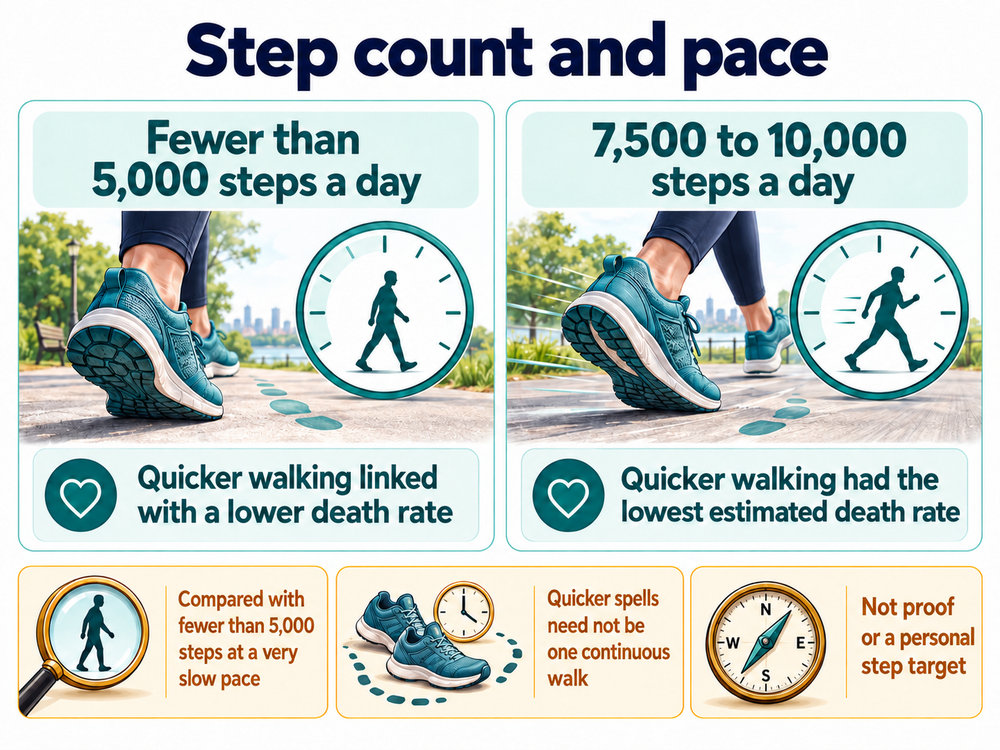
Daily steps and faster walking were linked to lower death rates than the very-slow, under-5,000-step comparison. The study did not prove cause and effect or establish personal step targets.
There were 1,697 deaths. Compared to the very-low-cadence group that took fewer than 5,000 steps, those who also took fewer than 5,000 steps but maintained a peak cadence of approximately 80 steps per minute had a hazard ratio of 0.72. This signifies a 28% reduction in long-term mortality risk, as hazard ratios measure the rate at which an outcome occurs.
The lowest estimate was in the 7,500 to 10,000-step group, at around 100 steps per minute, with a hazard ratio of 0.57. Healthier people may find it easier to walk more or faster, and statistical adjustment cannot eliminate all differences between groups. These figures describe associations, not a guaranteed personal benefit.[1]

You can gradually increase walking time or add a comfortable, purposeful section to suit your health and ability.
Our guide to 10,000 steps explains why that familiar number needs context.
Walks4all takeaway: Build up steps or pace gradually from your own starting point.
A UK Biobank cohort tracked 22,857 people who reported no leisure-time exercise. Greater moderate and vigorous incidental activity, defined as movement accumulated during daily life, was associated with a lower incidence of type 2 diabetes over about 7.8 years. This included activities beyond just walking.[6]
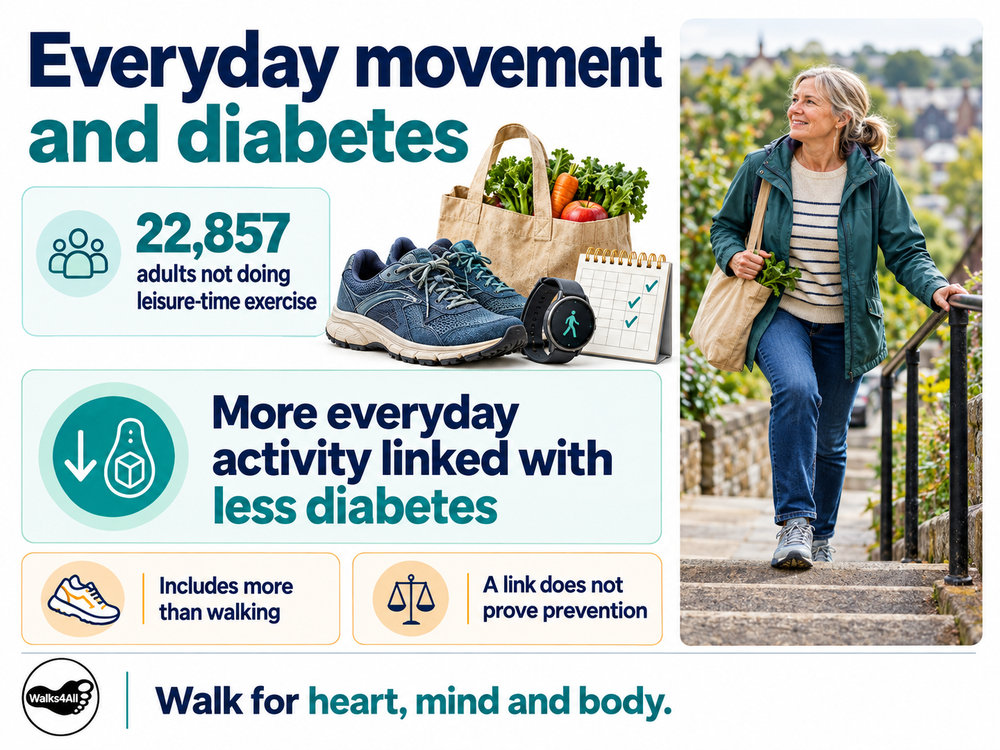
More everyday activity was linked with fewer new cases of type 2 diabetes. The activity included more than walking, and the study did not prove prevention.
At the median moderate-activity level of 23.7 minutes daily, the hazard ratio was 0.67 compared with no moderate activity. At 4.75 minutes of vigorous activity, it was 0.62 compared with none. The findings support paying attention to everyday movement, but neither prove prevention nor provide a walking-only dose. Converting vigorous mixed activity into a few hundred steps would be misleading.[6]
A Leicester-led analysis pooled three randomised trials involving 2,150 people at increased risk of diabetes. Randomisation allocates participants to groups by chance. The programmes combined walking support, pedometers, education and goal setting. Among people with two forms of prediabetes (blood sugar above normal but below diabetes levels), the intervention difference was about 808 extra steps per day; another subgroup averaged 523 extra steps. Responses were smaller or uncertain in others.[7]
The programmes helped some groups increase walking. The results do not show that walking alone produced every benefit, or that everybody will respond alike. Our walking-after-meals guide addresses the separate question of short-term blood sugar responses.
Walks4all takeaway: Use achievable walking goals and support suited to your circumstances.
A UK Biobank study of 160,358 adults recorded 5,363 diagnoses of depression over roughly ten years of follow-up. Walking participation was associated with a hazard ratio of 0.84, a 16% lower rate than non-participation after adjustment. People reporting a greater variety of activities also had a lower risk.[8]
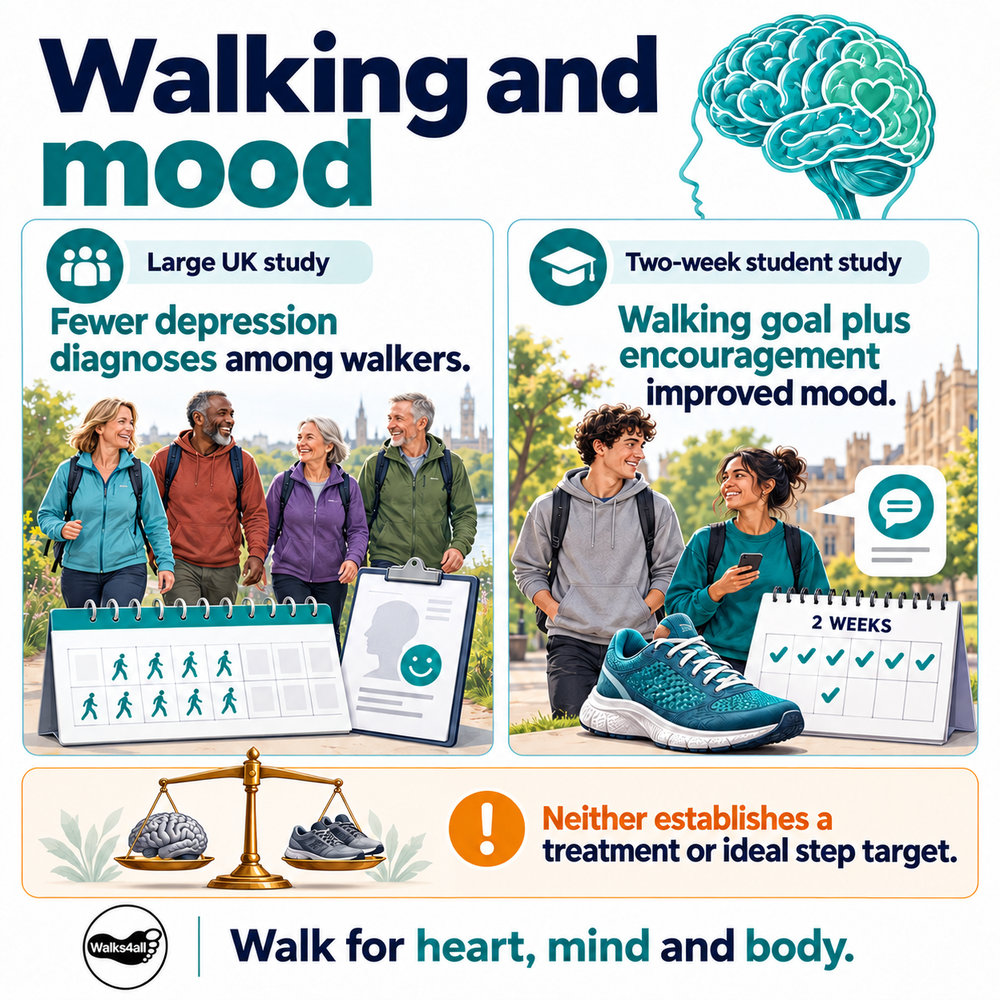
A large UK study and a short student experiment provide different evidence about walking and mood. Neither establishes a best daily step count or walking as depression treatment.
The paper's 150- to 300-minute finding concerned overall moderate physical activity, not a proven walking dose. People who walk may differ in health, social contact and other habits, so the study cannot establish that walking alone prevented depression.[8]
A separate 14-day experiment with 195 university students tested a 10,000-step goal with daily encouragement against a waiting-list group. It increased step counts, reduced negative mood and reduced reported everyday mental errors. Those results are encouraging, though the trial was short and involved students. It did not establish 10,000 as an optimal target or walking as a treatment for depression.[9]
Walks4all takeaway: A regular walk can support a routine alongside appropriate mental health care.
A 12-week Korean trial randomised 174 adults, with 141 participants included in the reported analyses. Personalised messages did not improve overall step-goal achievement, which was 87% in both groups. They reduced repeated two-week periods of missed goals by about one-third. A reminder may help you get back on track after missed days, even when average step counts do not rise.[2]
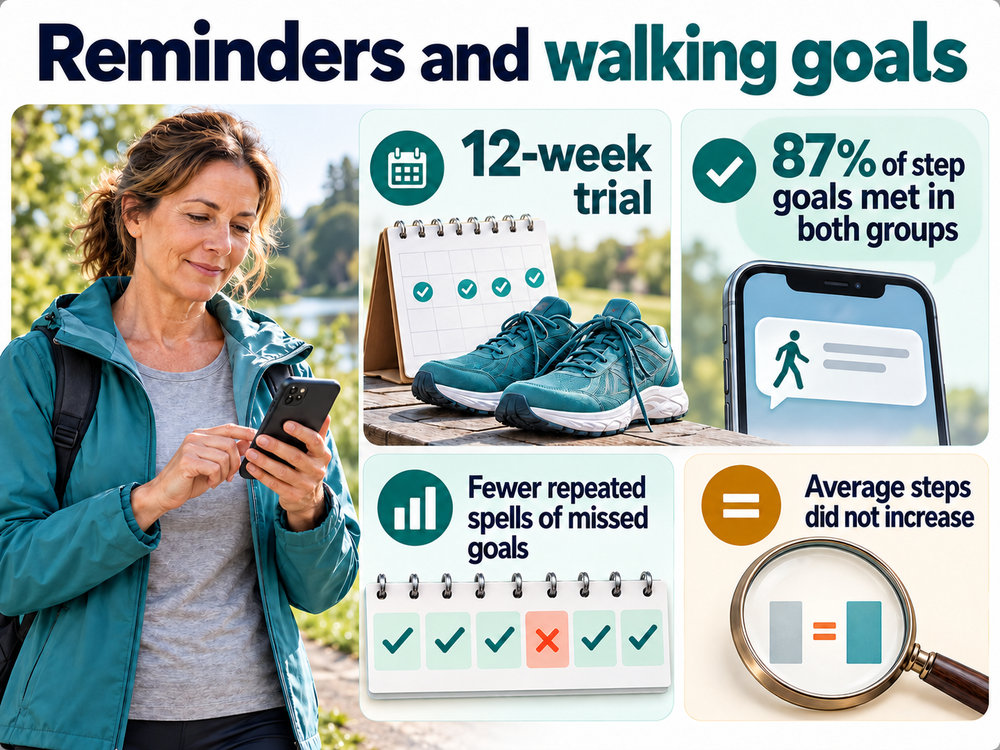
Both groups met 87% of step goals. Personalised messages reduced repeated spells of missed goals without increasing average steps.
Walks4all takeaway: Use reminders to resume after missed days.
A BMJ review synthesised 124 randomised trials involving 18,429 adults aged 40 and over. The combined brisk-walking-or-jogging category improved bone mineral density, a measure of bone strength, at the spine, femoral neck and total hip. The certainty of the evidence for these findings was low to moderate.[10]
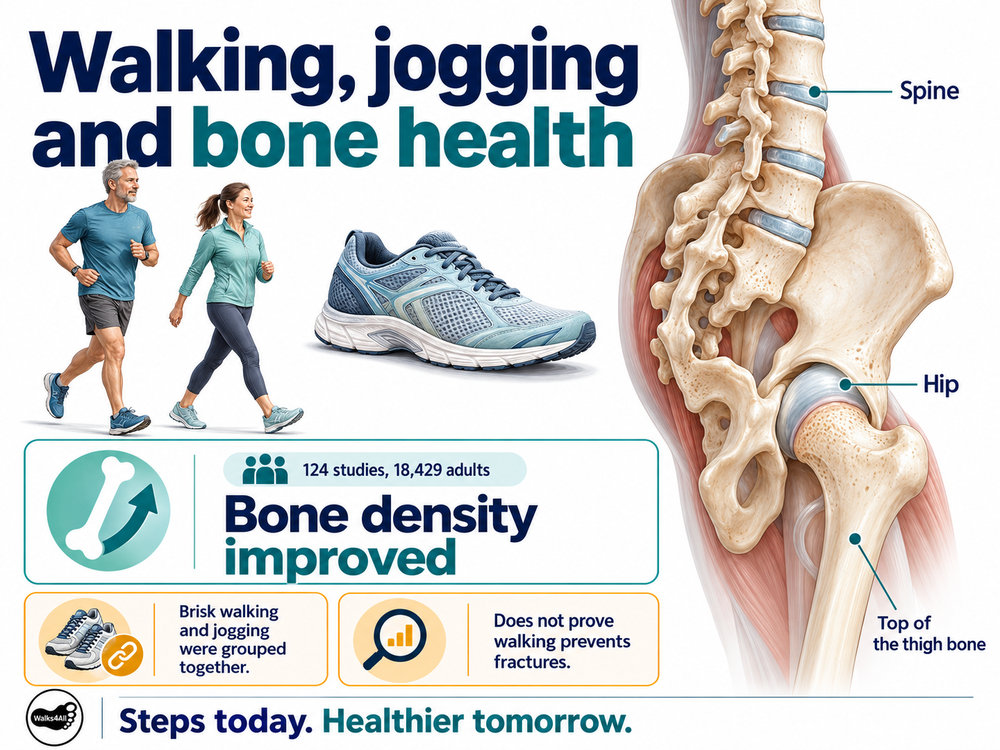
The review found improved bone density in a category combining brisk walking and jogging. It does not establish that walking alone prevents fractures.
Because the review grouped walking and jogging together, those gains cannot be attributed solely to walking. The review also does not justify a promise that a particular walking dose prevents fractures. Its dose analysis is a research estimate, not a precise personal threshold. Walking can complement strength and balance work; anyone with osteoporosis or a history of fractures needs an activity plan suited to their circumstances.[5] [10]
Walks4all takeaway: Include strength and balance training alongside walking.
Frailty is characterised by reduced physical reserve and increased susceptibility to illness or falls. A 16-week trial across 14 retirement communities compared supervised, more strenuous walking to casual walking, with sessions lasting 45 minutes three times weekly. The study recruited 165 adults, but included only 105 in the final analysis.[12]
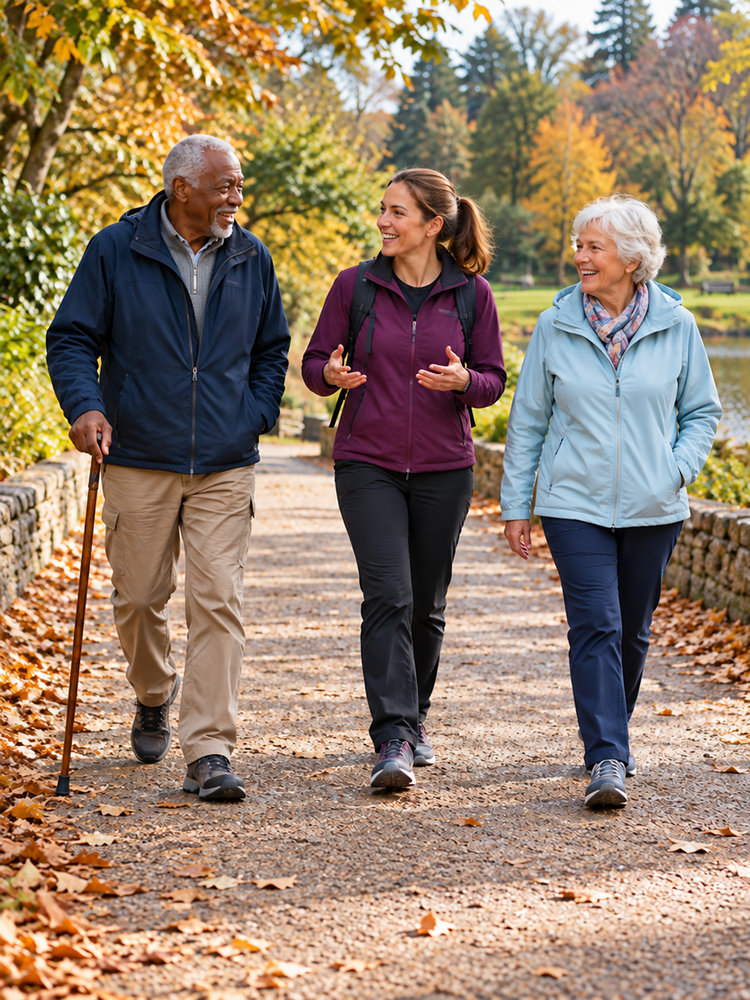
The frailty trial tested supervised programmes; suitable assessment matters before increasing intensity.
Of the 102 individuals with frailty, 69.6% in the higher-intensity group improved by at least one frailty category, compared with 46.4% in the casual group. Improvements were also seen in walking speed and six-minute walk distance. These findings suggest benefits from supervised programmes, but the small sample size and attrition limit confidence. The study does not confirm a lasting reversal of frailty nor support replicating the heart-rate target without professional guidance.
Walks4all takeaway: Frailty programmes require assessment and appropriate supervision.
A Cochrane review of 53 trials involving 2,672 people found that aerobic training, which works the heart and lungs, improved fitness after stroke. Programmes included walking and other activities. The average improvement in walking speed was about 0.08 metres per second, below the review's cited 0.13-metre-per-second threshold for a clinically important change. Most participants could already walk.[11]
The evidence supports tailored rehabilitation, but uncertainty remains about whether greater benefits can be achieved and about preventing further strokes. Anyone recovering from a stroke should follow their rehabilitation team's plan rather than adopt a brisk-walking target from a general article.[11]
Walks4all takeaway: Follow your rehabilitation team’s activity plan.
A cohort of 1,718 people linked greater self-reported walking after colorectal cancer surgery with lower odds of fatigue at six and twelve months. The walking estimates were odds ratios of 0.78 and 0.74. Odds are not the same as risk, and recovery itself may determine how much someone can walk.[13]
This is an encouraging association for recovery research, not proof that walking treats cancer-related fatigue. Agree on activity during treatment or recovery with the cancer care team.
Walks4all takeaway: Agree with your cancer care team on the activity during recovery.
A Duke University study tested 30-minute treadmill walks at three speeds in healthy participants. COMP and MMP-3, two cartilage-related blood biomarkers, increased more at faster speeds and decreased during recovery. Biomarkers indicate biological processes; they do not automatically tell us whether a joint is healthier or damaged. The indexed abstract does not provide a participant number.[3]
The study measured short-term responses rather than pain, function or osteoarthritis progression. It provides no new speed restriction and no evidence that faster walking treats osteoarthritis.[3]
Walks4all takeaway: Avoid changing your pace based on biomarkers alone.
ReacStep tested specialist reactive-stepping training in 88 older adults. It improved maximum step length and the speed of selecting a recovery step, but did not significantly reduce laboratory or daily-life falls over the following year. It was not ordinary walking. Better performance on a test does not necessarily translate into fewer real-world falls.[xxx]
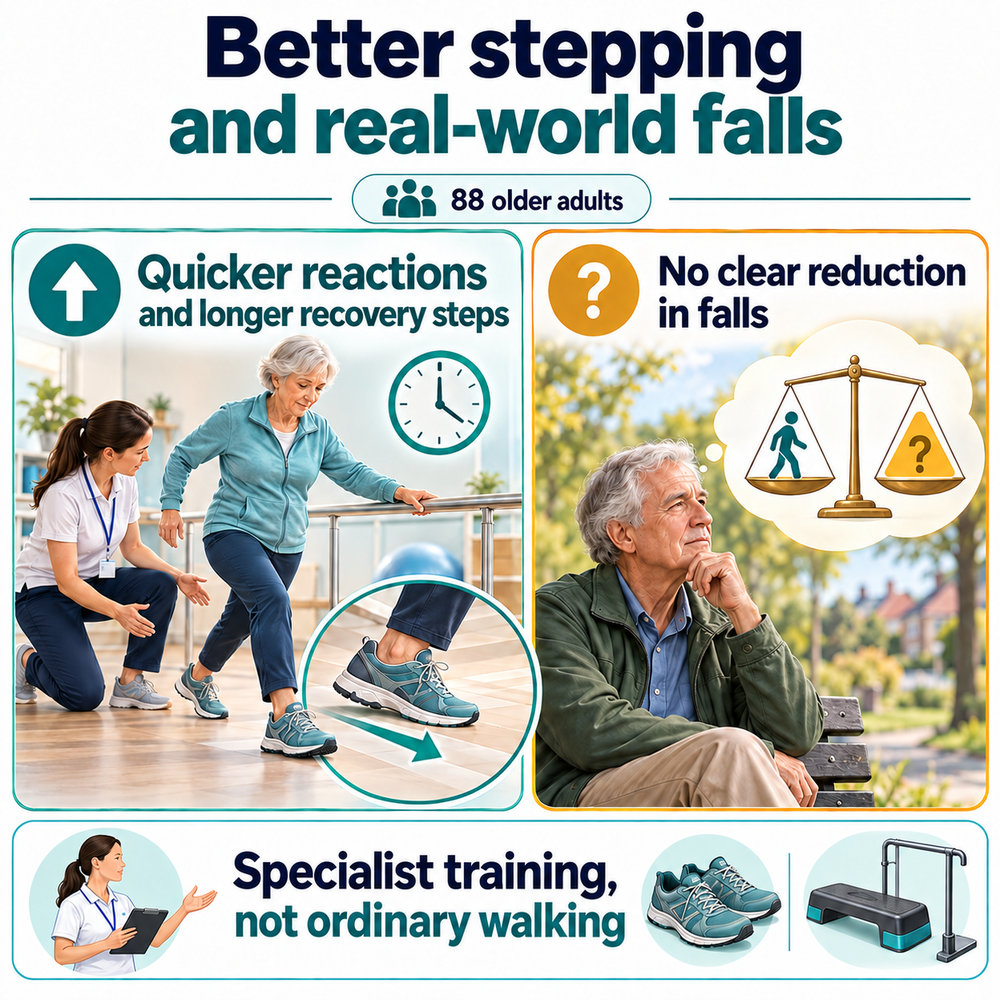
Specialist stepping practice improved recovery steps and reactions, but the study found no clear reduction in falls.
Walks4all takeaway: Keep specific balance and strength work in the picture.
Start with the walking you already do. An achievable extra few hundred steps or a short, purposeful section may be easier to sustain than a sudden, large target. Use the talk test: moderate walking makes you breathe faster while still allowing conversation. Age, fitness, health and terrain affect how hard a pace feels.
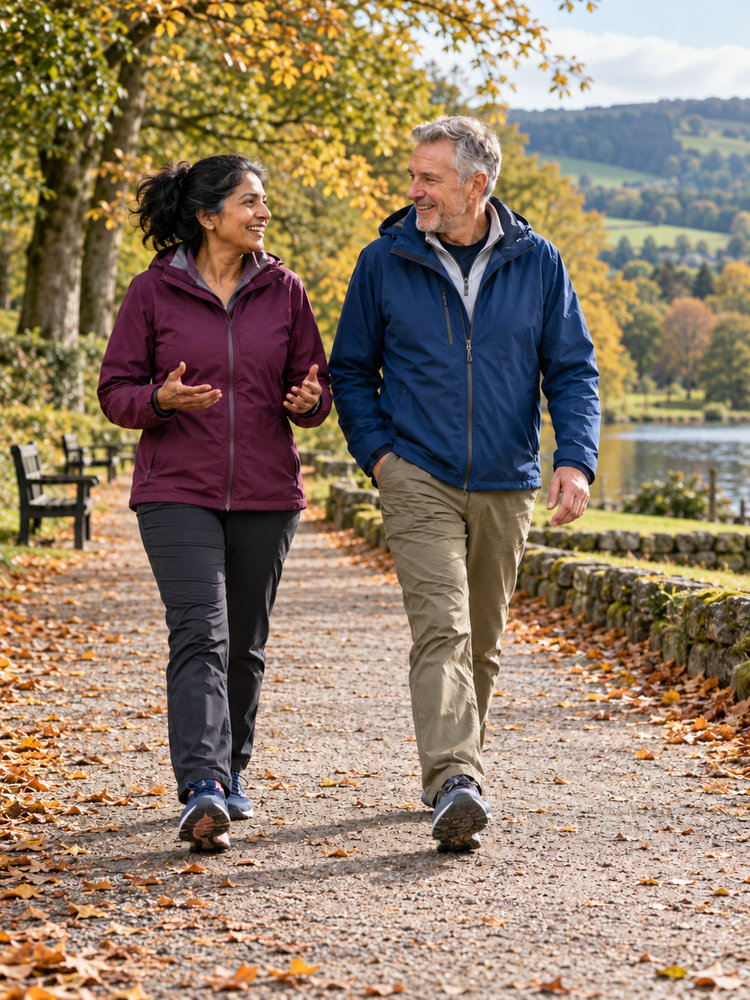
Walk at an effort that suits your breathing and comfort rather than forcing a fixed walking speed.
Keep the weekly picture in view. UK guidance still includes strength activity on at least two days, balance work for older adults, and breaking up prolonged inactivity. If you spent all 150 moderate minutes walking at an assumed 100 steps per minute, that would be roughly 15,000 purposeful steps per week. This is an illustration, not an official step target.[5]
For a condition-specific programme, follow your clinician’s or physiotherapist's advice. Increase gradually, and stop and seek help immediately if you experience chest pain, unusual breathlessness or dizziness. General health information cannot replace an individual treatment or rehabilitation plan.
Several large studies used overlapping UK Biobank populations, so they are not fully independent confirmations. Observational associations remain vulnerable to the possibility that healthier people are more active. Small trials, short follow-up, attrition and combined exercise categories limit other findings. Reviews cannot turn weak underlying trials into certain answers.
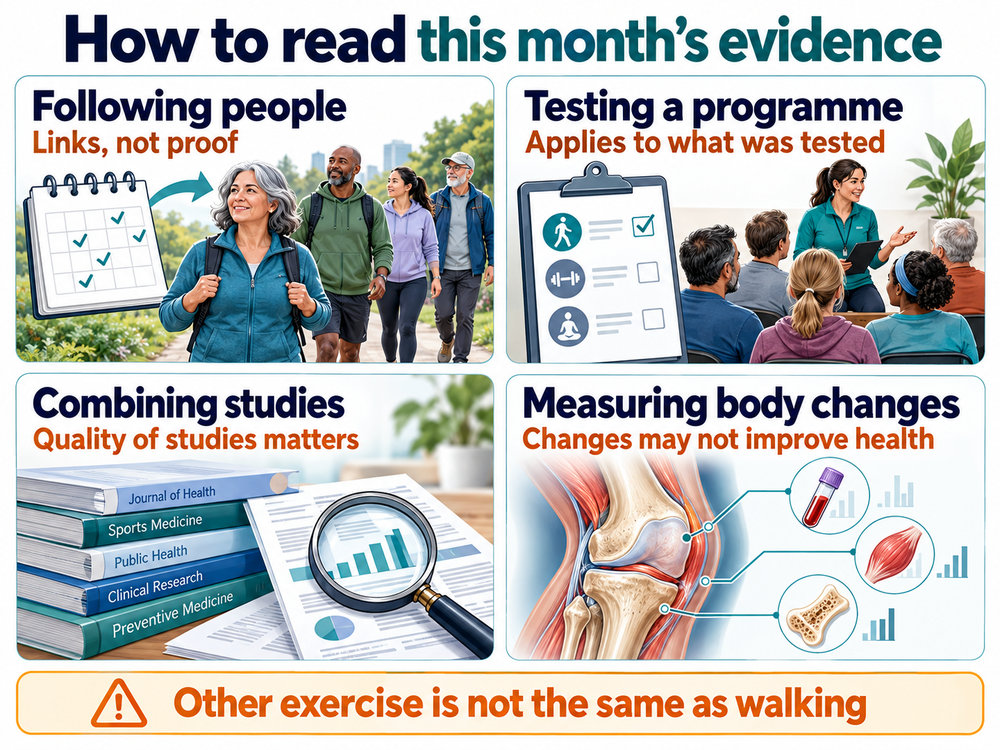
What a study can tell us depends on its design, the activity tested and the outcomes measured.
The distinction between activity types matters. Incidental activity, jogging, reactive stepping and supervised rehabilitation should not all be described as ordinary walking. Nor should findings on bone density, biomarkers or step counts be turned into promises of fracture, joint damage or disease prevention.
Build on where you are, make some walking purposeful if comfortable and safe, and keep strength and balance in the picture. September offers useful reasons to support the habit while leaving room for health, ability and personal circumstances.
No. The mortality study's lowest estimate was in the 7,500 to 10,000-step group, but it did not establish a universal threshold. Associations were also observed at lower step counts.[1]
It is a rough guide, not a rule. Use breathing and the talk test, and take into account your health, fitness and terrain.
October 2026
We take evidence seriously at Walks4all. If you'd like to better understand how walking studies are designed, how results should be interpreted, and what scientific terms mean, explore our guides on the following: