By using this website, you agree to our use of cookies (needed to provide our website’s features) and our Terms of Use.
By: Andrew Forrest - September 2026

August's walking research highlights the value of short movement breaks, adds nuance to dementia evidence, and strengthens the case for everyday steps in cardiovascular health and healthy ageing.
This page contains affiliate links. As an Amazon Associate, we earn from qualifying Amazon purchases at no additional cost to you. We may also earn commissions from other retailers, again at no additional cost to you.
Walking research rarely arrives as a single dramatic study that changes everything overnight. More often, useful evidence accumulates in smaller pieces: a controlled experiment showing what happens after a meal, a large cohort following people for years, or a review that brings together dozens of earlier studies.
August produced a good mix of all three. The clearest new walking-specific result concerns breaking up sitting with very short walks, while newer dementia research reminds us why a good evidence review should include results that complicate the story as well as those that support it.
Disclaimer
This article is for general information only and does not constitute medical advice, diagnosis or treatment. Speak to your GP or another qualified healthcare professional before making major changes to your activity routine, particularly if you have a medical condition, are pregnant, are returning after illness or injury, or develop chest pain, severe breathlessness, dizziness or unusual pain.
The most practical finding this month is simple: in a small, controlled study, getting up for 2 minutes of light walking every 30 minutes, or for 4 minutes after 50 minutes of sitting, improved the immediate blood-sugar and insulin response after eating compared with remaining seated. At an assumed easy cadence of 80 steps per minute, that is roughly 160 steps for a 2-minute break or 320 steps for a 4-minute break. The study does not tell us that these tiny walks prevent diabetes, but it does support the idea that breaking up a sedentary day can matter.[1]
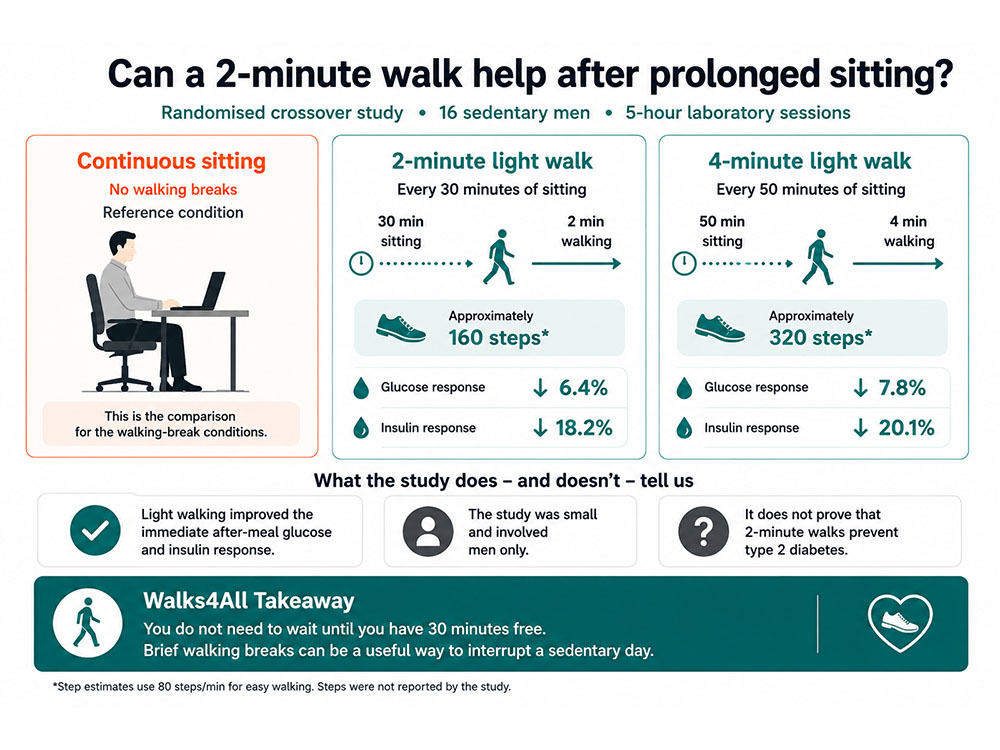
A small randomised crossover study found that brief light-walking breaks improved the immediate glucose and insulin response after eating compared with prolonged sitting.
Elsewhere, August brought a much larger but less walking-specific dementia meta-analysis, a useful walking trial in women undergoing breast-cancer treatment, a small study linking depression to lower day-to-day walking, and several important 2026 papers that resurfaced in this month's search.[3 ‑ 9]
A common issue with health advice is that the targets often seem out of touch with daily routines. While 'Do 150 minutes a week' is sound guidance in the UK, it doesn't clarify what someone who has been sitting at a desk for three hours should do at 11:30 a.m. on a Tuesday.
This month's sitting-break research gives us a practical answer: getting up and walking briefly is worthwhile, even if the walk is nowhere near long enough to count as a conventional workout.
This aligns with the updated UK Chief Medical Officers' guidance, which highlights that some activity is better than none, even short bouts count, and sitting for long periods should be broken up when possible. Adults should still target at least 150 minutes of moderate activity weekly, like brisk walking, along with strength training, but even brief activity is beneficial.[10]
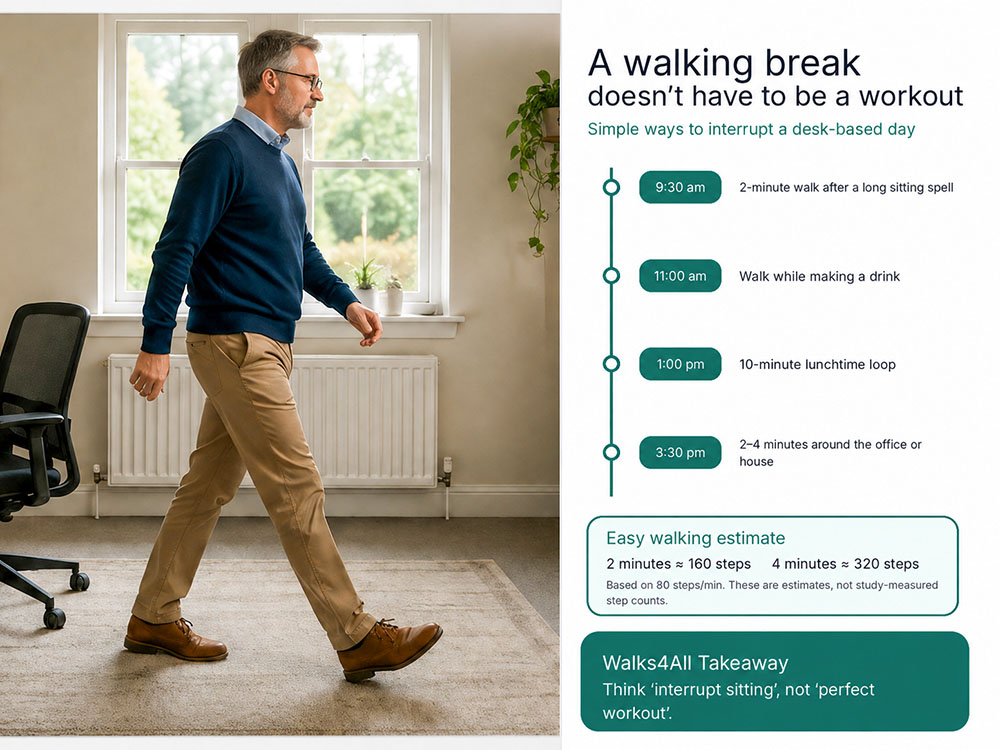
Short bouts of walking can interrupt prolonged sitting and fit naturally around drinks, meetings and lunch.
| Finding | What was studied | What it means in practice |
| Short walking breaks and blood sugar | 16 sedentary men in a randomised crossover study | 2- or 4-minute light walks improved the immediate glucose and insulin responses after eating |
| Activity breaks overall | Meta-analysis of 15 crossover studies | Supports breaking up prolonged sitting; not all interventions were walking |
| Physical activity and dementia | 74 studies, 4.2m+ participants | Leisure-time activity was associated with a lower risk of dementia, but certainty remained low |
| Walking and dementia specifically | 5,074 older Japanese adults | Walking was not significantly associated with a lower incidence of dementia in this particular cohort |
| Walking during breast-cancer treatment | 320 women in a multicentre RCT | The programme increased activity but did not reduce aromatase-inhibitor-related joint/muscle symptoms |
| Steps and cardiovascular risk | 84,286 UK Biobank participants | Higher step counts were associated with lower CVD risk, with gains levelling off at about 10,000 steps in some genetic-risk groups |
| Walking and healthy ageing | 46 longitudinal studies | Each additional 1,000 steps per day was associated with lower mortality in the pooled older-adult analysis |
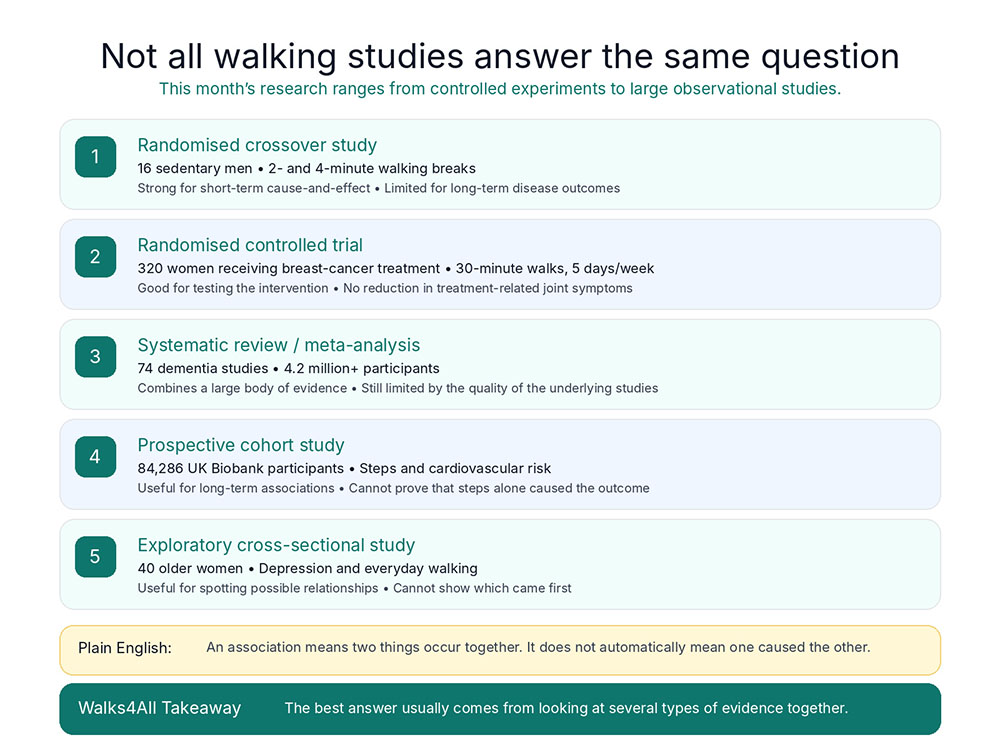
Different study designs answer different questions, so health claims should reflect whether research shows causation, association or an early signal.
Researchers in South Korea studied 16 sedentary men, each of whom completed three five-hour laboratory sessions. In one session, they sat for the full five hours. In another, they took four-minute light walking breaks after every 50 minutes of sitting. The third session involved two-minute walking breaks after every 30 minutes of sitting. The walking was intentionally light, at 40-50% of their estimated maximum heart rate.[1]
Compared with uninterrupted sitting, the four-minute protocol reduced total post-meal glucose exposure by 7.8%, and the two-minute protocol by 6.4%. Insulin exposure fell by 20.1% and 18.2%, respectively. Most blood-lipid responses did not improve significantly, although fat oxidation increased. Crucially, the two walking patterns did not differ significantly.[1]
'Postprandial' simply means after eating. The result therefore reflects the body's short-term response to a meal, not whether these men later developed diabetes or cardiovascular disease.
Using our standard easy-walking conversion of 80 steps per minute, a two-minute break is approximately 160 steps and a four-minute break approximately 320 steps. These are estimates, not measured step counts from the trial.
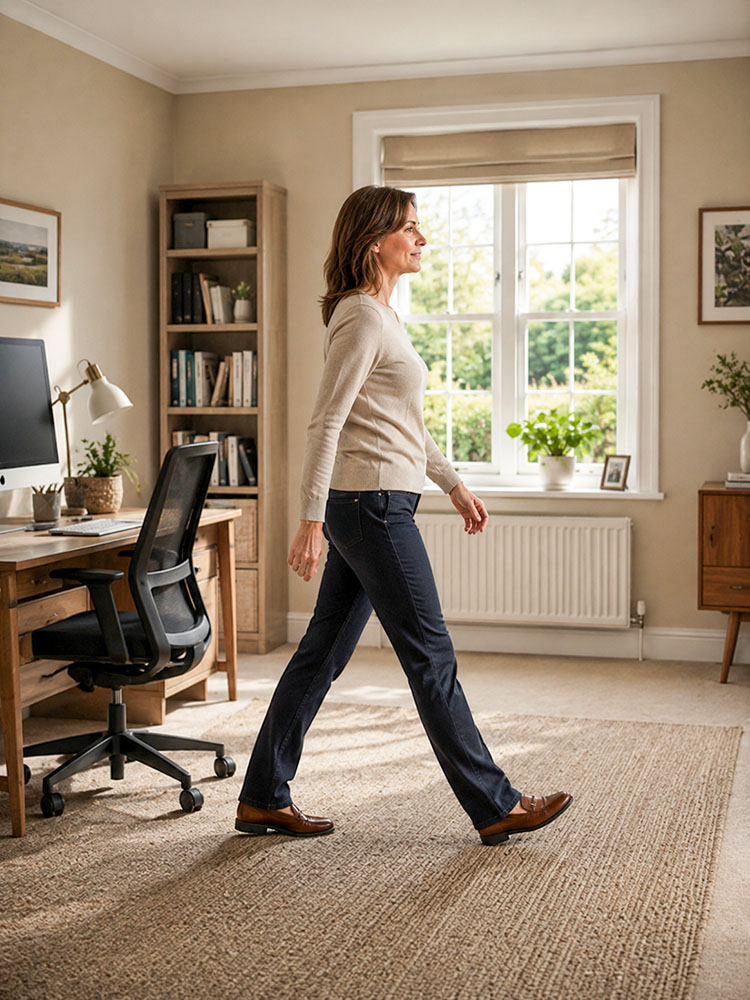
A short walk away from the desk is an achievable way to break up prolonged sitting during the working day.
Another paper combined data from 15 randomised crossover studies on short activity breaks, showing decreases in post-meal glucose and insulin levels and a modest reduction in triglycerides. Since not all interventions involved walking, the review should not be interpreted as testing walking exclusively. Nevertheless, it supports the wider conclusion that regularly breaking up extended sitting with movement can enhance immediate metabolic outcomes.
Walks4all takeaway: If you spend much of your day sitting, don't assume a walk must last 20 or 30 minutes to be worthwhile. A couple of minutes on your feet can be a useful break. Longer, brisk walks still matter for weekly aerobic activity; shorter walks offer a different benefit.
A comprehensive new review and meta-analysis (a statistical analysis that combines results from several studies) analysed the link between physical activity and dementia across 74 studies with 4,227,297 participants. It found that higher levels of overall physical activity correlated with a 20% reduction in relative risk of all-cause dementia. Leisure-time activities were linked to a 24% lower risk, while occupational and commuting activities showed the opposite association.[3]
That sounds compelling, but several factors warrant caution. The studies were overwhelmingly observational, statistical heterogeneity was very high, and the authors rated certainty across activity domains as very low to low. 'Leisure physical activity' can also include walking, cycling, swimming and sport, so it cannot be converted directly into a daily walking target.
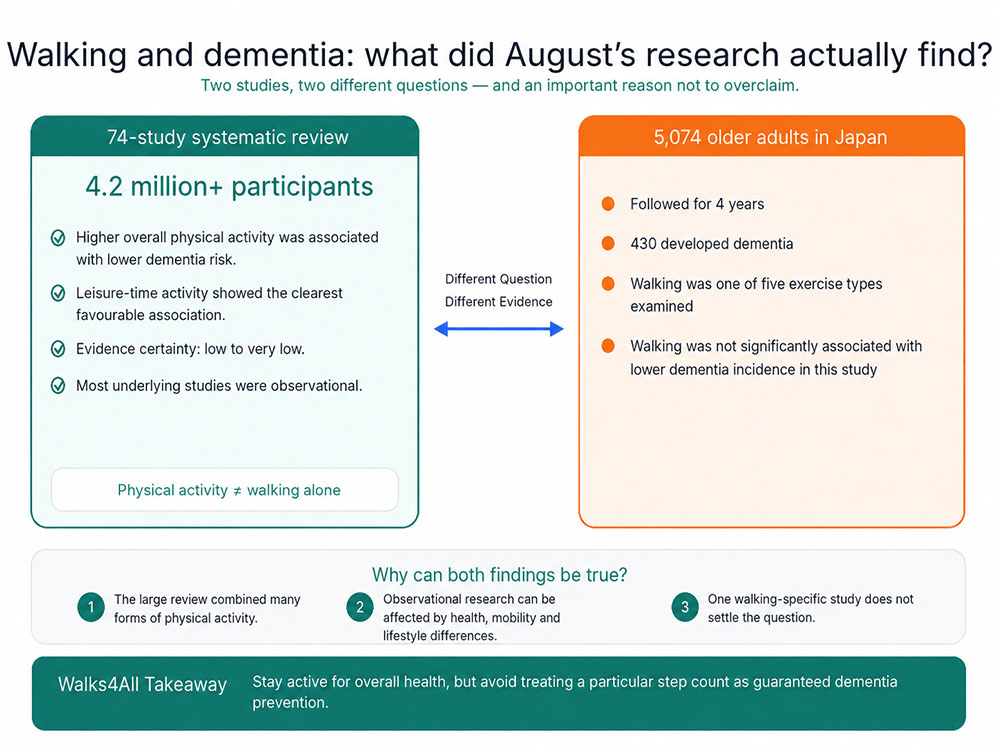
Broad physical activity evidence and walking-specific research do not always answer the same question, so dementia claims need cautious interpretation.
August also reported on a smaller prospective Japanese study involving specific exercise types. Over four years, 5,074 older adults were tracked, with 430 developing dementia. The study analysed activities such as walking, callisthenics, Japanese croquet, golf, and strength training, which had enough participants for meaningful results. Japanese croquet and strength training were notably linked to a reduced risk of dementia, while walking showed no significant association.[4]
This does not overturn the wider body of evidence on walking activity and brain health. It does show why 'walking prevents dementia' would be too strong based on this study. People who walk regularly can differ from those who do not in their health, income, social contact, mobility, neighbourhood, and many other ways, which may indirectly affect dementia risk.
Walks4all takeaway: Walking remains a sensible part of an active lifestyle, but dementia risk is too complex to be reduced to a promised number of steps. The strongest August message is to stay physically active rather than treat walking as a guaranteed dementia-preventive treatment.
The WISE trial is particularly interesting because it tested a clear walking prescription. 320 women with early-stage breast cancer who were starting aromatase-inhibitor endocrine therapy (a hormone-blocking breast cancer treatment that lowers oestrogen) were randomly assigned to either usual physical-activity advice or a home-based walking programme.[5]
The walking target was 30 minutes of continuous outdoor walking at about 100 steps per minute on five days each week. That equates to about 3,000 purposeful brisk steps per session and around 15,000 per week.
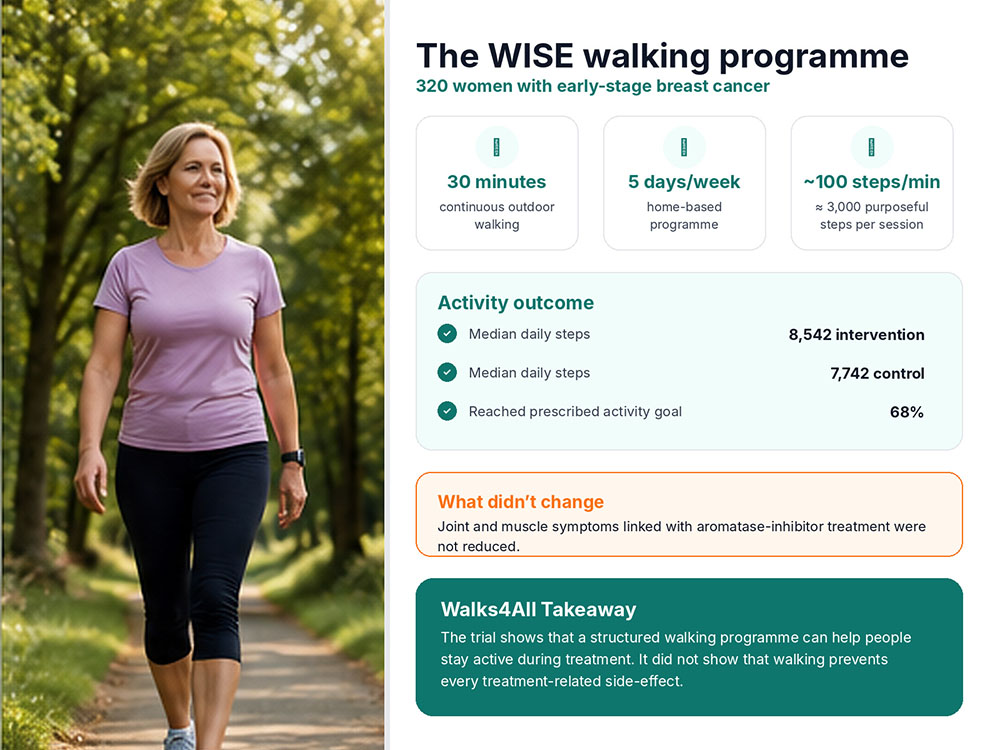
The WISE trial helped women remain active during aromatase-inhibitor treatment, although the walking programme did not reduce treatment-related joint and muscle symptoms.
Adherence was encouraging: 94% completed the 24-week intervention, and 68% reached the prescribed activity goal. The median daily step count was 8,542 in the intervention group versus 7,742 in the control group. Higher activity levels persisted into follow-up.[5]
However, the trial's clinical symptom result was negative. Aromatase inhibitor-related joint and muscle symptoms occurred in 58.2% of the intervention group and 56.2% of controls, and reported pain levels did not differ.[5]
That distinction matters. The study supports the feasibility of helping women remain active during treatment, but it does not show that this particular programme prevents treatment-related joint pain, nor was it a trial assessing breast-cancer recurrence or survival.
Walks4all takeaway: For people undergoing cancer treatment, walking may be a manageable way to stay active, but the programme should not be marketed as a treatment for every side-effect. Individual advice from the oncology team remains important, and should be sought before starting an exercise programme.
A UK Biobank analysis published earlier this year resurfaced in August when the official UK Biobank record was updated. It included 84,286 people without cardiovascular disease at baseline and followed them for a median of 7.9 years.[6]
Researchers compared daily step counts with genetic susceptibility to coronary artery disease and ischaemic stroke. They grouped step counts into three categories: fewer than 6,500, 6,500-12,499, and 12,500 or more steps per day.
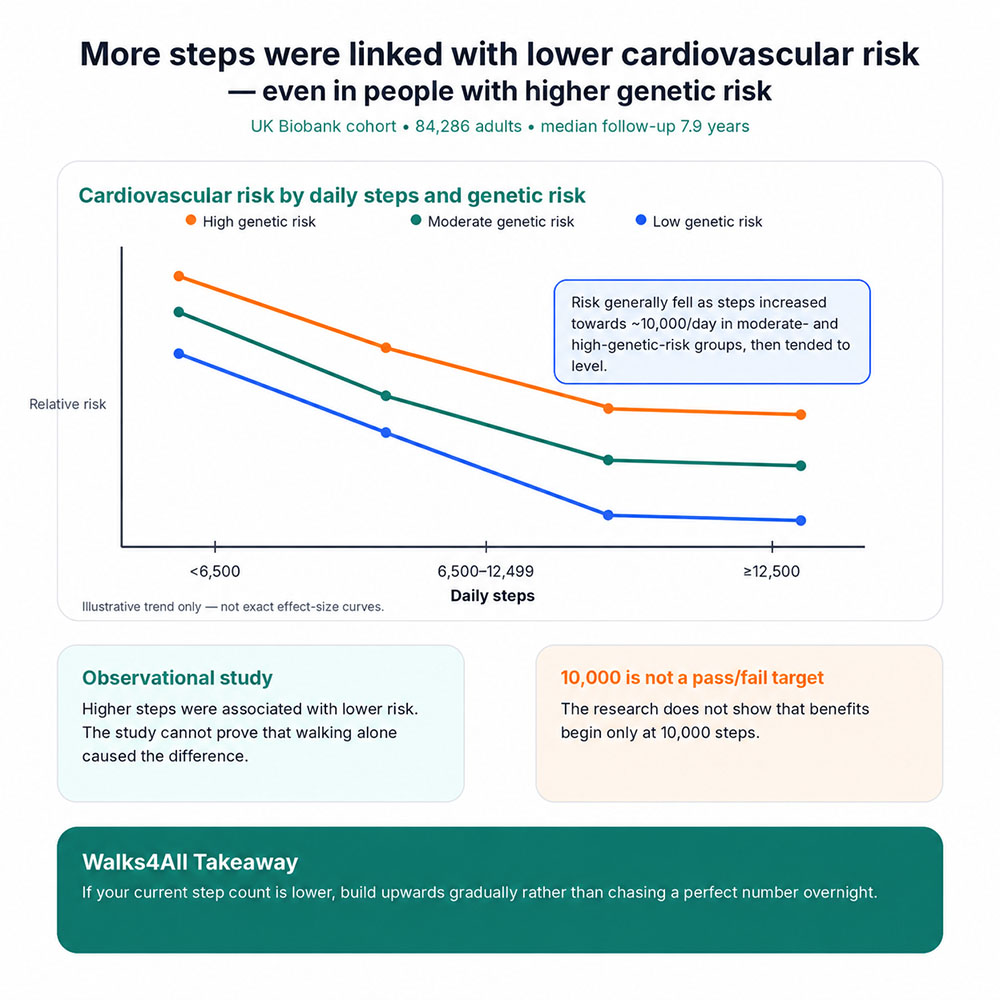
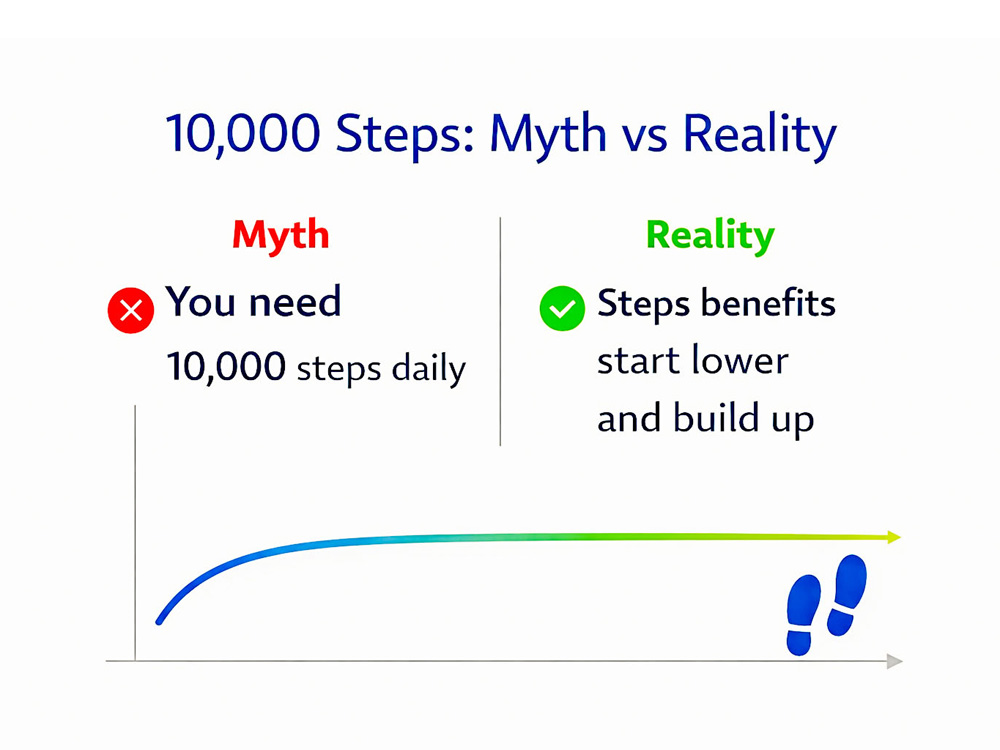
Cardiovascular risk generally fell as daily steps increased, but the observational study does not make 10,000 steps a pass-or-fail target.
The highest cardiovascular risk was observed in people with both high genetic risk and low step counts. Among those with moderate or high inherited risk, cardiovascular risk generally decreased as step counts increased towards about 10,000 a day, before the curve levelled.[6]
This does not mean 10,000 steps is a magic threshold, and it certainly does not mean walking erases genetic risk. The study was observational. It does suggest that inherited risk and daily movement are not mutually exclusive parts of the picture.
Walks4all takeaway: Family history is not a reason to give up on everyday activity. Build more walking into the day at a level you can sustain, rather than treating 10,000 steps as a pass-or-fail test.
A systematic review of 46 longitudinal studies examined habitual walking among community-dwelling adults aged 65 and over. Across the three studies pooled for the step-count mortality analysis, the study-level median was approximately 5,694 steps per day. Each additional 1,000 steps per day was associated with a 13% lower risk of all-cause mortality.[7]
There are important caveats. Only three studies contributed to the pooled mortality estimate. Heterogeneity (the extent to which the study results differed from each other) was substantial, and the studies were observational. Studies measured walking differently, and some did not fully adjust for other physical activity or socioeconomic differences.
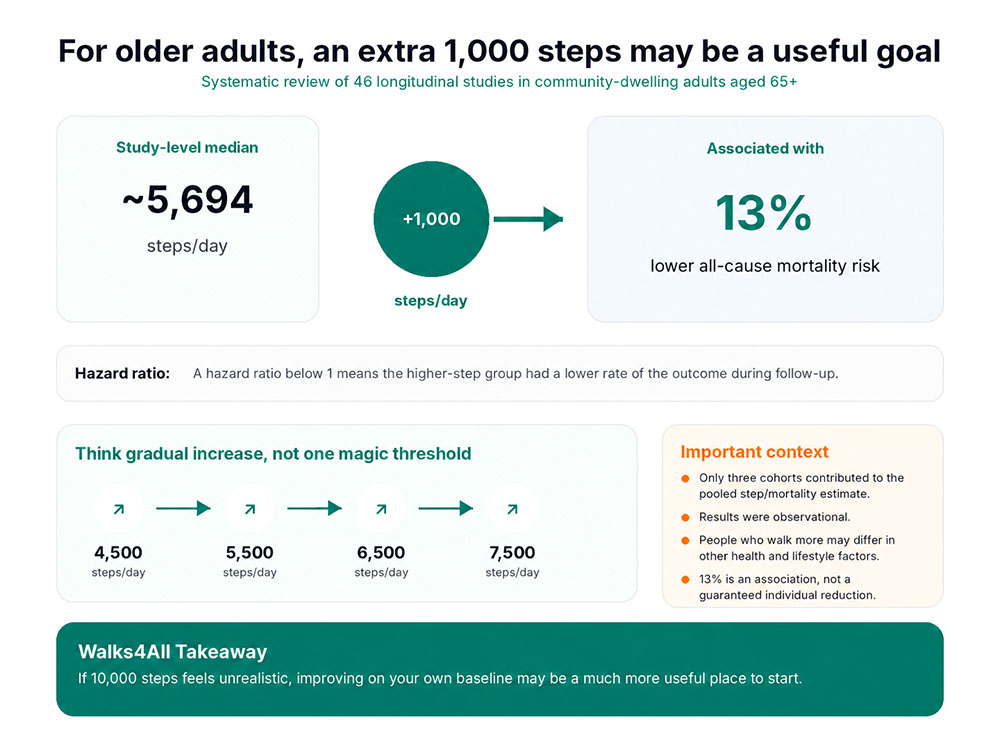
Healthy-ageing research suggests that improving on your own daily step baseline may be more useful than chasing one universal target.
Even so, this is useful because, as with other studies, it shifts the conversation away from the idea that health gains only begin once somebody reaches a very high step count.
Walks4all takeaway: If you are older or currently inactive, an extra 1,000 steps can be a more realistic goal than chasing an arbitrary perfect total. In the research, it is an association, not a guarantee, but modest increases are worth taking seriously.
An exploratory study compared 20 older women with diagnosed major depressive disorder with 20 comparison participants. Over three monitored weekdays, the depression group recorded an average of 2,795 instrumented-leg steps, compared with 4,749, and less intermediate- and higher-cadence walking.[8]
Because this was cross-sectional, it cannot tell us whether depression led to less walking, whether lower activity contributed to depression, or whether other differences explain both. The groups also came through different recruitment routes.
Walks4all takeaway: This is a 'may be connected' finding, not evidence that prescribing a particular number of steps treats major depression.
If you sit for long periods, try using natural breaks in the day: walk while the kettle boils, take a quick walk after a meeting, use the stairs, or add two to four minutes of walking before settling back at your desk.
For your main aerobic activity, the UK guidance remains a useful benchmark: aim for 150 minutes a week of moderate activity, such as brisk walking, while remembering that anything is better than nothing and that shorter bouts still count.[10]
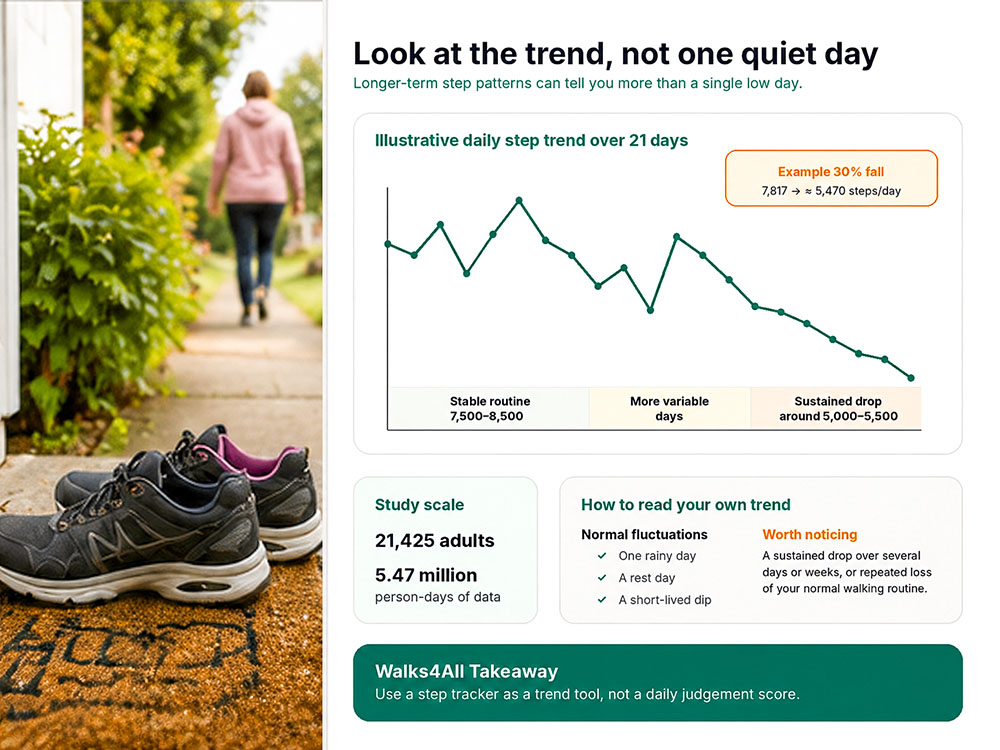
Longer-term step trends can reveal a changing walking routine more clearly than one rainy day, rest day or short-lived dip.
If you track steps, watch the trend over weeks rather than a single unusual day. An August study of 21,425 adults found that increasingly erratic step patterns could precede a sustained decline in activity. Participants averaged 7,817 steps a day, so a 30% decline meant roughly 2,350 fewer steps a day. This is behavioural research, not evidence that a temporary fall in steps itself causes illness, but it is a useful reminder to notice when a routine is beginning to unravel.[9]
Several of the strongest papers were observational. A link between higher activity and better health cannot, by itself, prove cause and effect, because people who walk more may differ in many other ways. Step counts also aren't perfectly interchangeable across devices, and some studies still rely partly or entirely on self-reported activity.
The controlled walking-break study avoids many of those problems but involved only 16 men and measured effects over five hours. It tells us considerably more about what happens to glucose and insulin after a single prolonged sitting period than about what happens to somebody's health over ten years. Strong evidence already backs this point for after-meal walks.
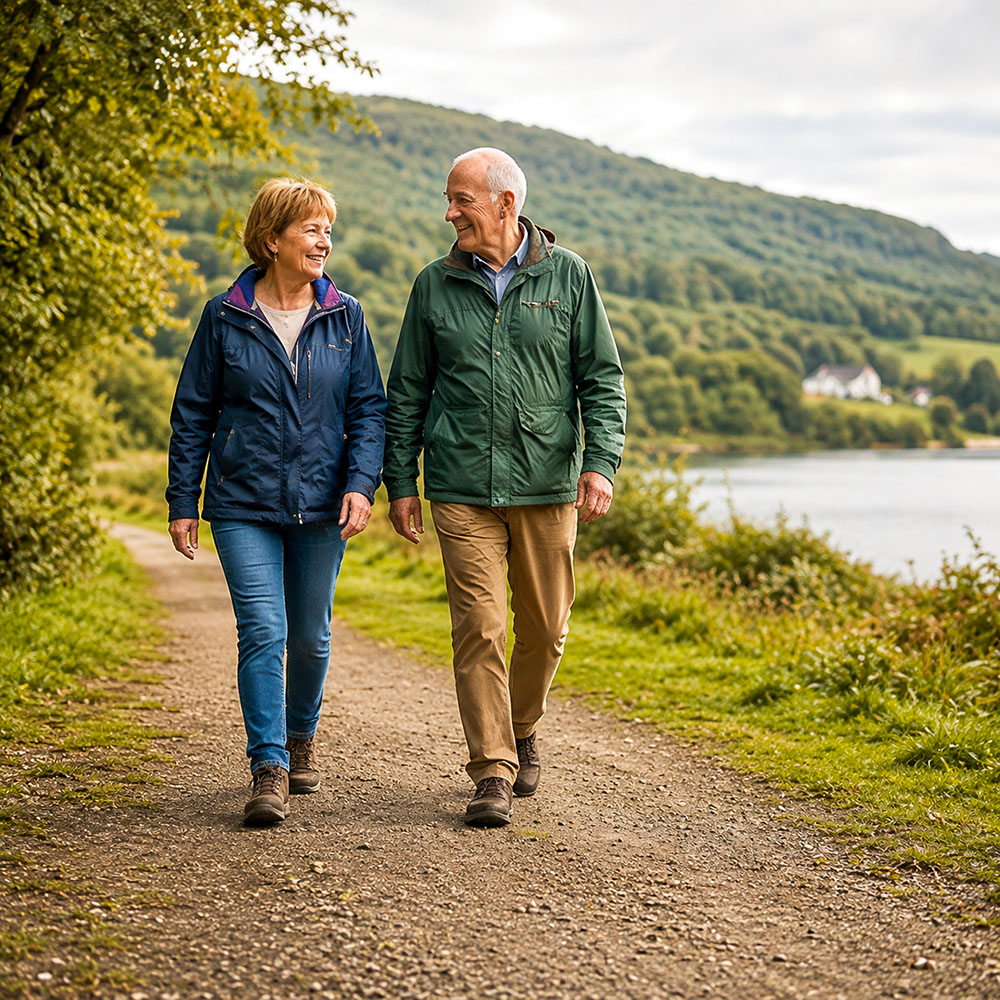
Regular, sociable walking on accessible paths can support an active routine as we get older without every walk needing to be long or strenuous.
No single study provides the final answer. Taken together, evidence from diverse populations, study designs and health outcomes repeatedly nudges us towards the value of being less sedentary and more active. The refreshed UK Chief Medical Officers' guidance reflects the same broad conclusion: some activity is better than none, and benefits increase with activity. That does not make walking a cure-all, and it should never replace appropriate medical care.[10]
August's research does not give us a new magic step number. That is probably a good thing.
The most useful finding is more practical: brief light walks can interrupt prolonged sitting and improve the immediate metabolic response to a meal. The wider evidence continues to support regular activity for healthy ageing and cardiovascular health, while the dementia and breast-cancer papers remind us to keep our wording measured and to report null results as carefully as positive ones.
Even with these limitations, the overall direction of the evidence so far this year is hard to ignore. No single study is perfect or conclusive, but when research across diverse populations, methods and health outcomes repeatedly points to the benefits of regular movement, our confidence in the broader message grows.
The UK Chief Medical Officers put it memorably: 'If physical activity were a drug, we would refer to it as a miracle cure'. Walking is not a cure-all and should not replace medical care, but it is one of the simplest and most accessible ways for many people to add more physical activity to everyday life. At Walks4all, we therefore look at the pattern across the evidence as a whole, rather than expecting any one study to provide the final answer.[10]
For most walkers, the practical message remains the same: sit less when you can, walk often, include some brisk walking, build gradually, and choose a routine you can maintain.
They count as movement, and the new controlled study found measurable short-term metabolic benefits from two-minute light-walking breaks. That does not mean two minutes replaces your broader weekly activity.
At the 100-steps-per-minute cadence used in the WISE breast-cancer trial, 30 minutes was approximately 3,000 steps. Cadence varies between people, so don't treat this as an exact universal conversion.[5]
September 2026
We take evidence seriously at Walks4all. If you'd like to better understand how walking studies are designed, how results should be interpreted, and what scientific terms mean, explore our guides on the following: