By using this website, you agree to our use of cookies (needed to provide our website’s features) and our Terms of Use.
By: Andrew Forrest - September 2026
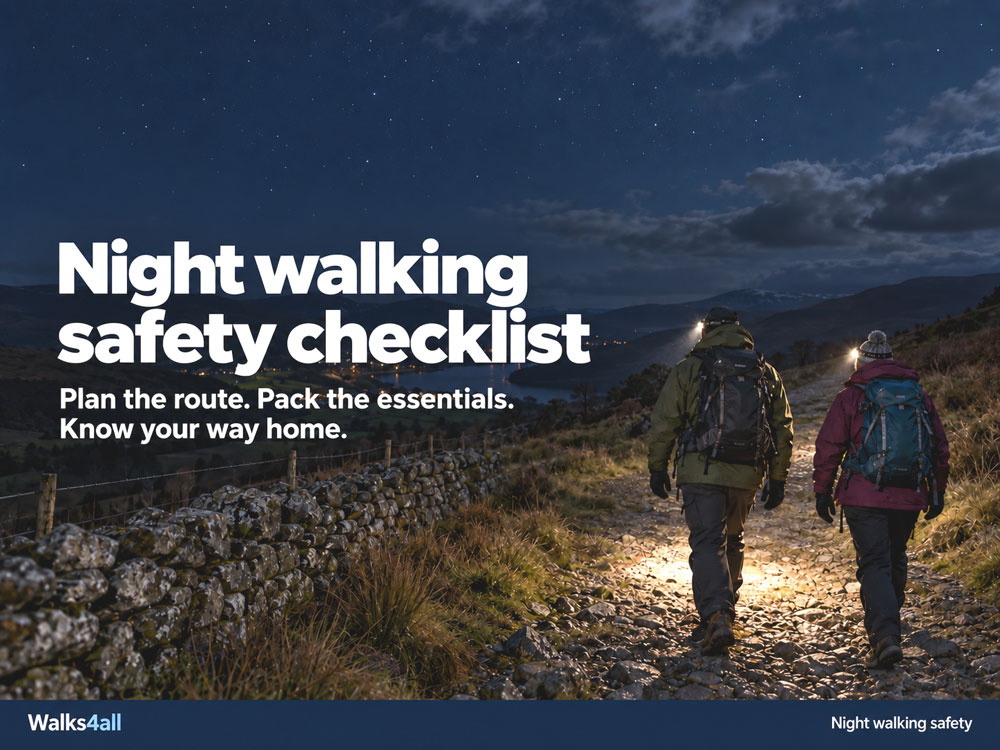
Planning a walk after dark? Use this UK night walking checklist for route timing, head torches, navigation, road visibility and what to do if you lose the path.
This page contains affiliate links. As an Amazon Associate, we earn from qualifying Amazon purchases at no additional cost to you. We may also earn commissions from other retailers, again at no additional cost to you.
For your first walk after dark, choose a short route you know in daylight and check the weather before you leave. Tell someone where you are going and when you expect to return. Take a charged main head torch, a separate backup light, suitable layers, a map and compass you know how to use, and a charged phone. Set a time to turn back if the walk is taking longer than expected. Mountain Rescue England and Wales recommends two torches and spare batteries for night walking.[1]
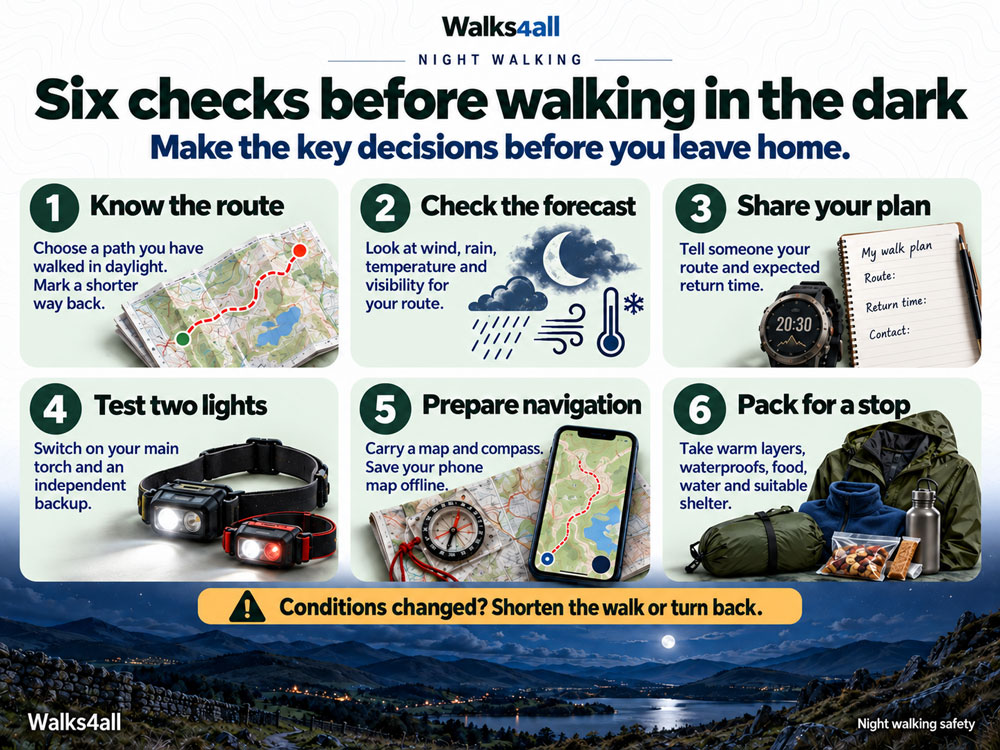
Before a night walk, check the route and forecast, share your plan, test two lights and pack navigation and kit for an unplanned stop.
A clear path beside a village or through familiar woodland is a better starting point than a remote ridgeline. Walk the route in daylight first. Note junctions, stream crossings, steep edges, and places where the path splits. Mountain Rescue gives the same advice for deliberate night walks and recommends going in company, if possible. If you go alone, leave your route and expected return time with someone.[1]
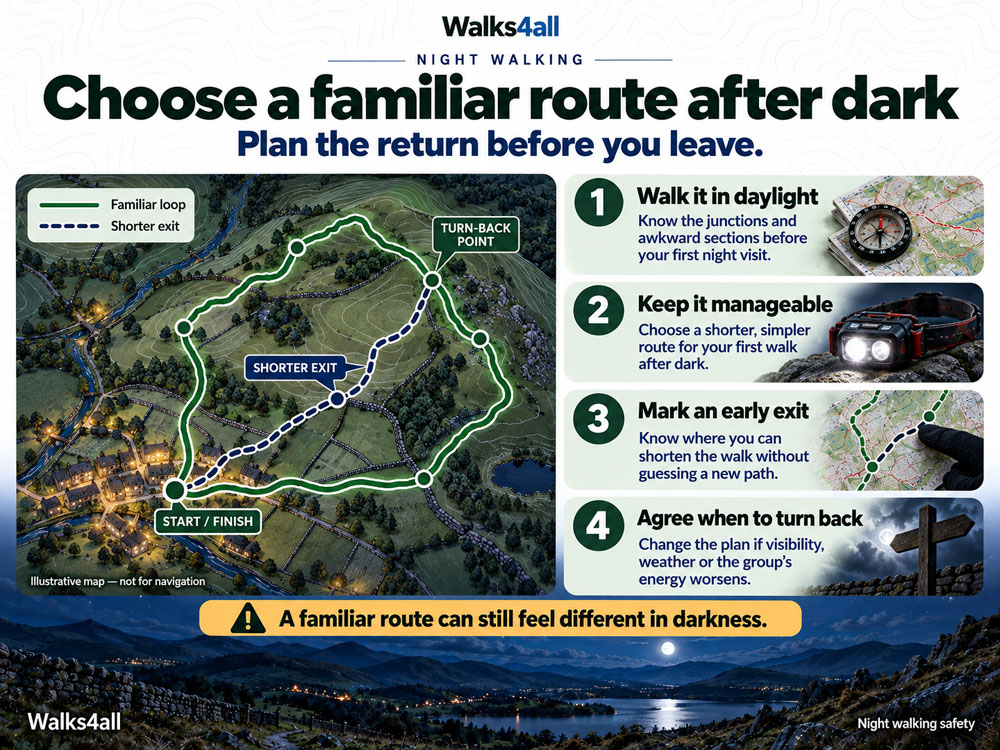
Walk the route in daylight first and identify a shorter way back. The map illustrates route planning and is not for navigation.
Allow more time than the distance suggests. Darkness can make a junction harder to recognise, and a wet descent often takes longer than the climb. Decide on a turn-back point before you leave. If the forecast worsens, choose a shorter route or leave the night walk for another evening. For hills, consult a Met Office mountain forecast, not just the weather icon for the nearest town.[1] [2]
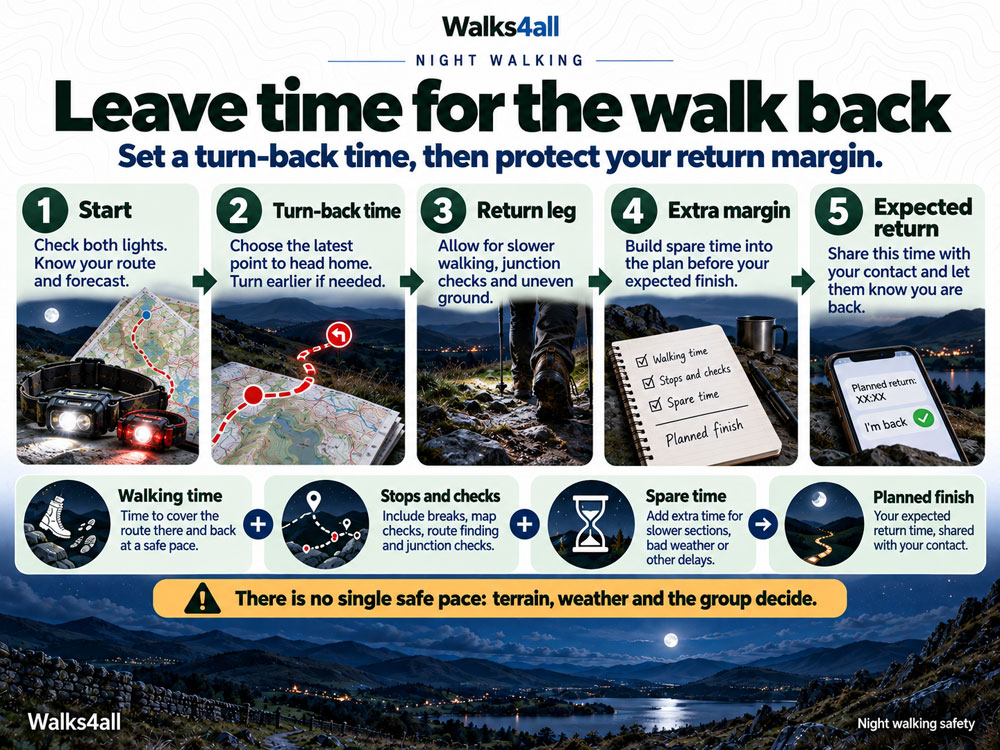
Set a turn-back time before leaving. Allow for the return, slower ground, navigation checks and stops rather than relying on distance alone.
Our 37 hiking safety tips cover the wider route, weather and emergency planning checks.
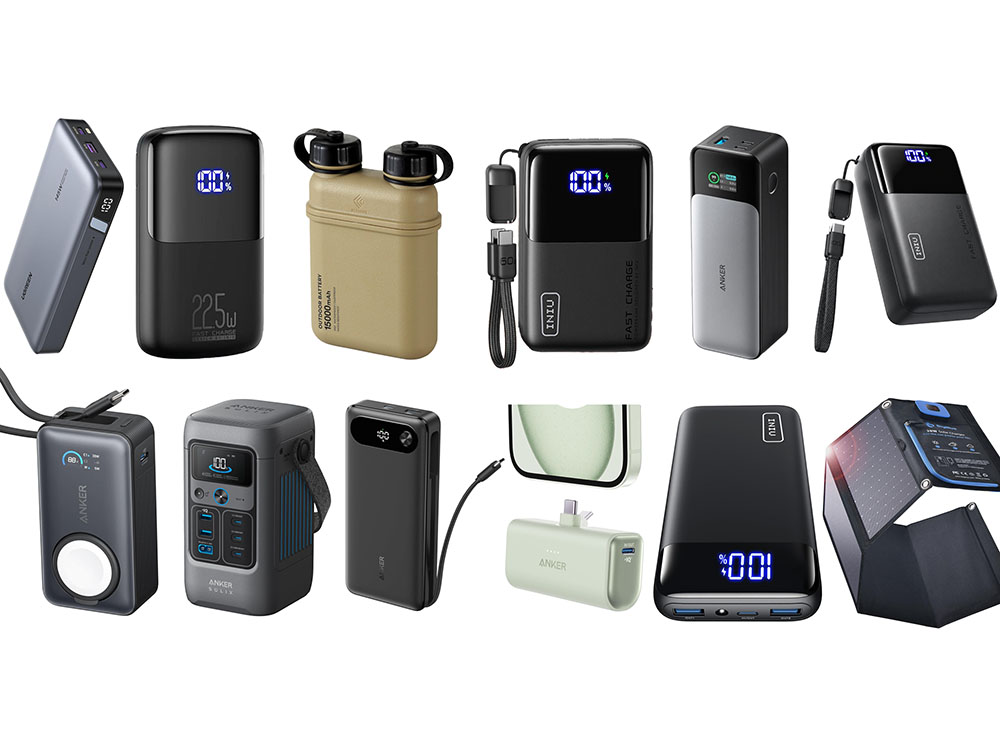
Put your main head torch on at home. Check its charge or batteries, the medium setting you expect to use for walking, and the tilt-and-lock button. Then switch on the second light. A small spare lamp is only helpful if it works and you can find it without your main beam. Pack the right spare cells or battery pack for the model you are carrying.[1] I always take a small power pack to charge it en route if needed.
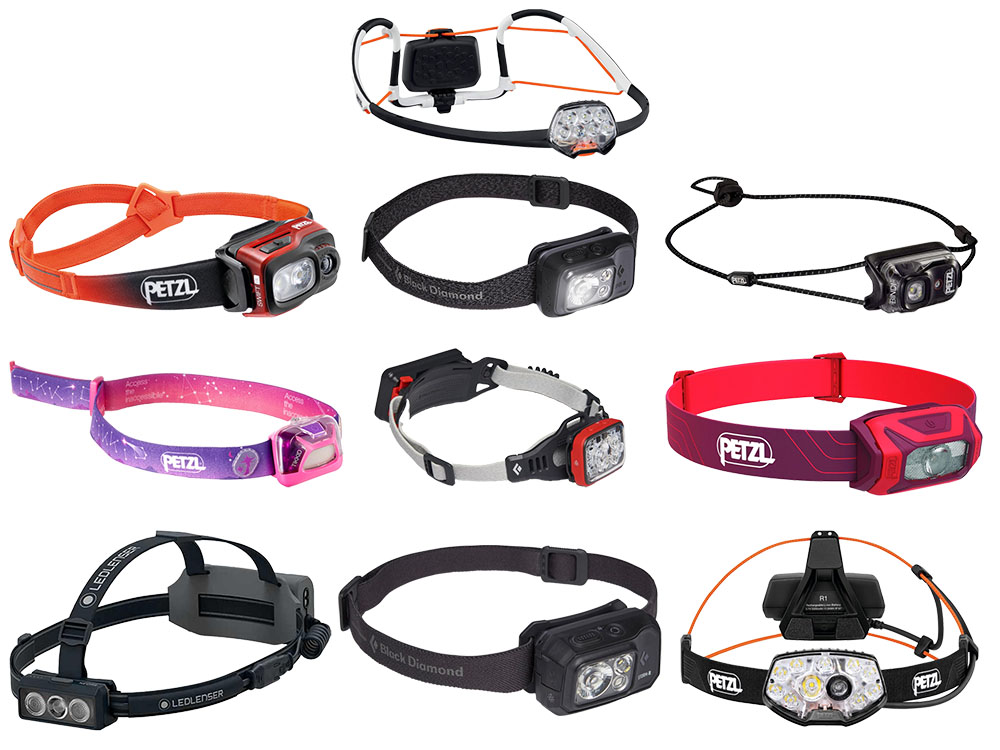
Choose the lamp for the ground underfoot and the hours you expect to use it. A brief high-output boost is helpful for checking a distant junction, but it is a poor way to estimate all-night runtime. Our head torch buying guide compares lamps for walking, wet weather and backup use; the companion battery-runtime guide explains the figures on the box.
Download your route for offline use and charge your phone, but take a map and compass if the route requires navigation. Practise using them in daylight first. If you are unsure about night navigation, go with an experienced group or take a course rather than learning on exposed ground. Carrying warm spare layers, food, a charged phone and shelter for mountain night walks.
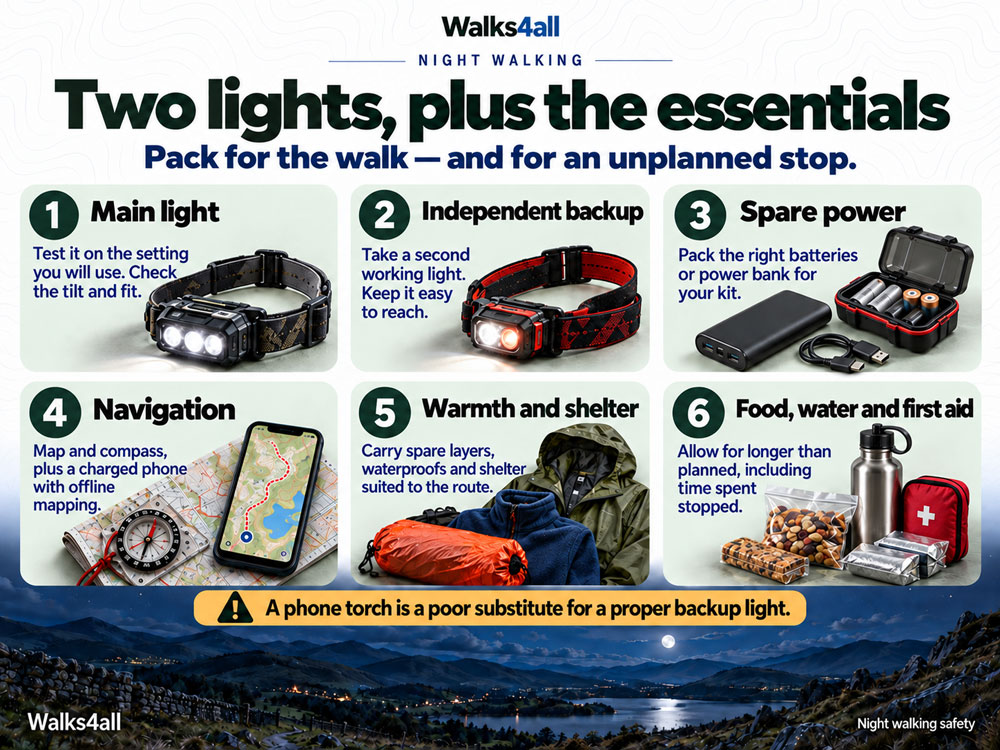
Carry a working main head torch and an independent backup, plus suitable spare power, navigation, warm layers and supplies for the route.
Keep the items you might need quickly near the top of your bag: a spare torch, a warm layer, a whistle, and a first-aid kit. Our compass guide helps you choose the right tool, but familiarity with your map and route matters more than any particular model.
Give yourself time to adjust to the torchlight. Slow down on uneven ground and keep the beam on the path ahead.
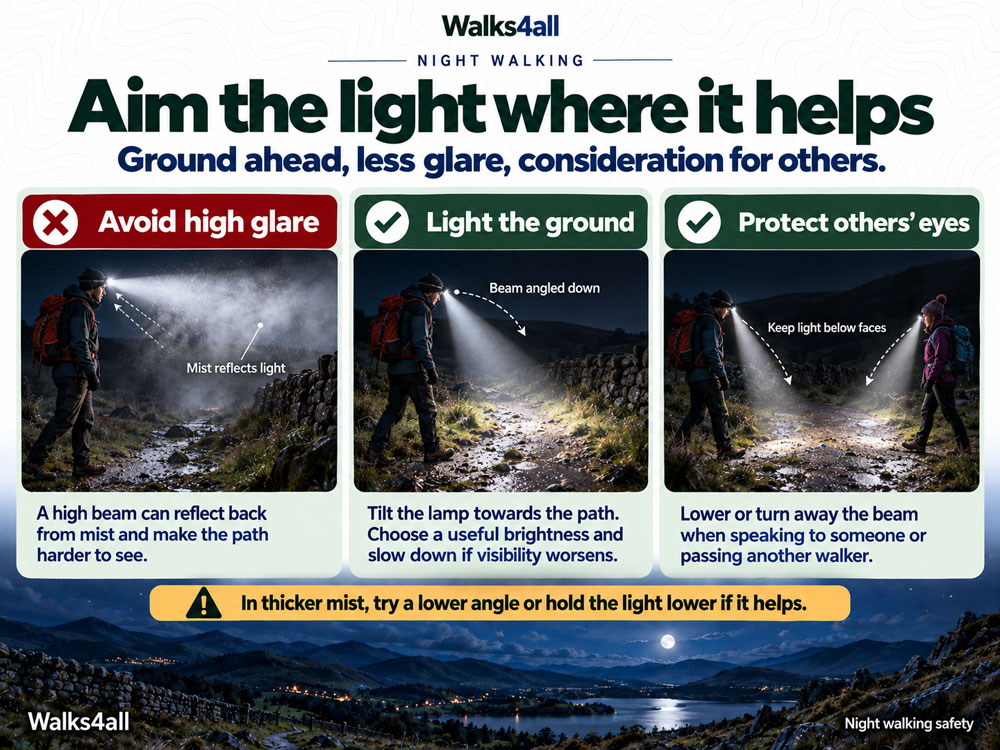
Aim the beam toward the ground ahead, and lower or turn it away when speaking to others. A lower beam can also help reduce glare in mist.
In mist, rain or snow, a high beam can reflect glare back at you. We suggest aiming it lower, or holding the torch in your hand if that helps you see the ground. Avoid shining a bright beam into a companion's face or towards a house.
Stop somewhere safe rather than walking further on a guess. Keep the group together, add a layer of clothing before you get cold, and identify your last known location on the map. Retrace your route only if you can do so safely and with confidence.
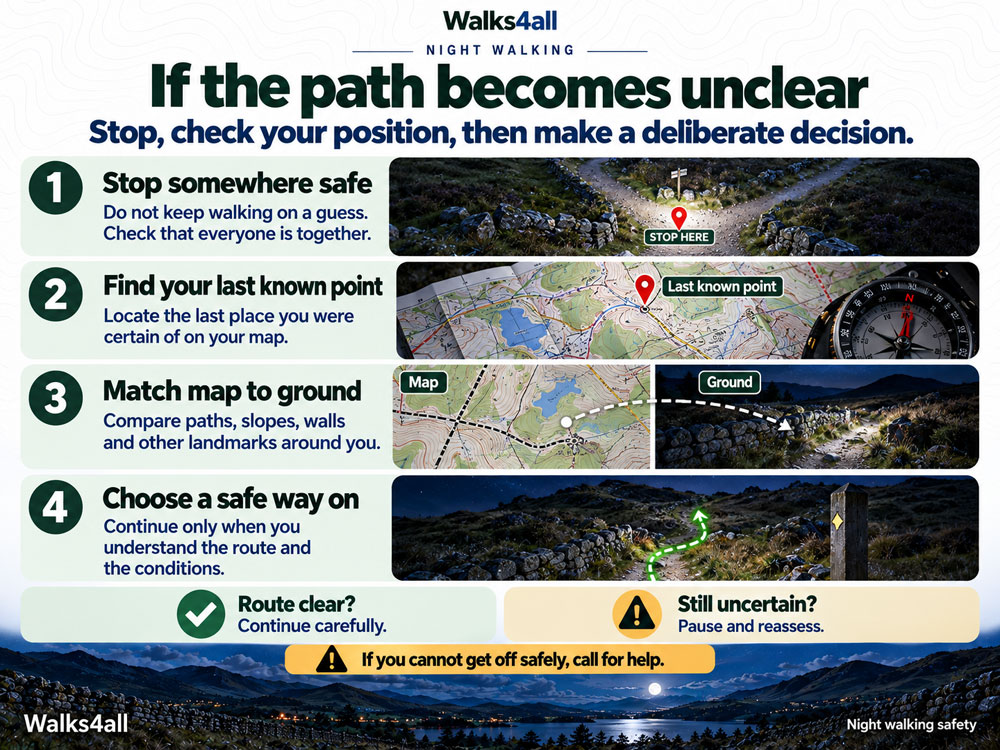
Stop somewhere safe, find your last definite position and match the map to the ground. Continue only when you understand the route and conditions.
If the route includes an unlit road, use a pavement where available and follow the Highway Code when walking or crossing roads. Wear reflective clothing after dark. A red rear light is useful, but it does not replace reflective clothing or careful navigation at bends and crossings.[3]
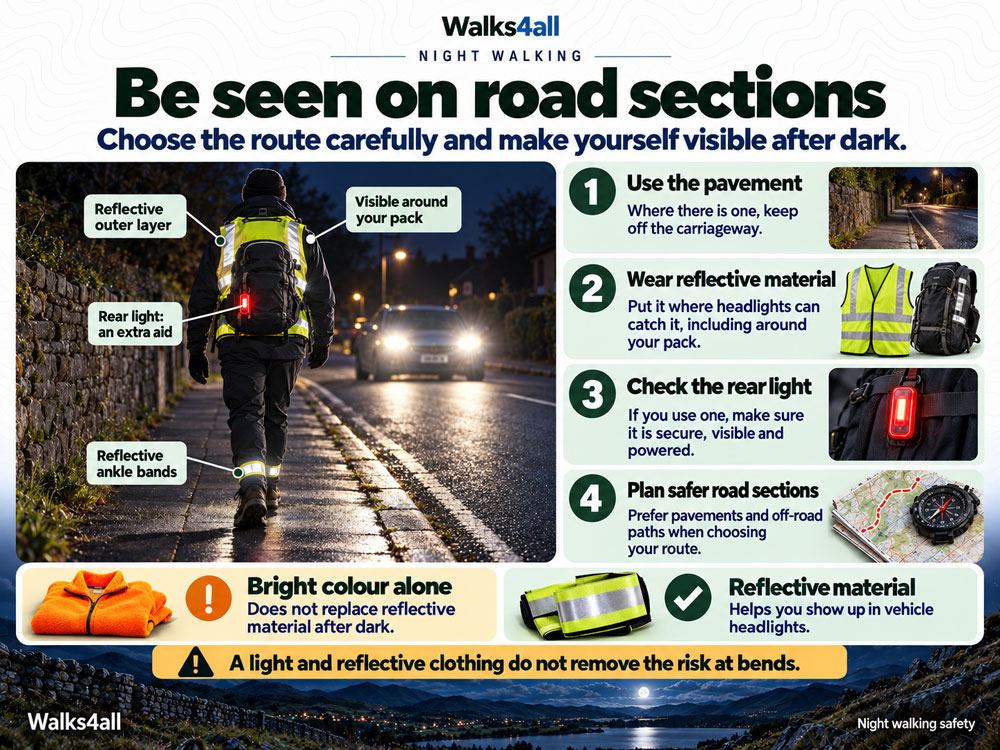
Use a pavement where available and wear reflective material after dark. A rear light can help, but does not replace reflective clothing or care on roads.
If someone is injured, you are in danger, or you cannot safely get off the hill, call 999 or 112 and ask for Police, then Mountain Rescue.
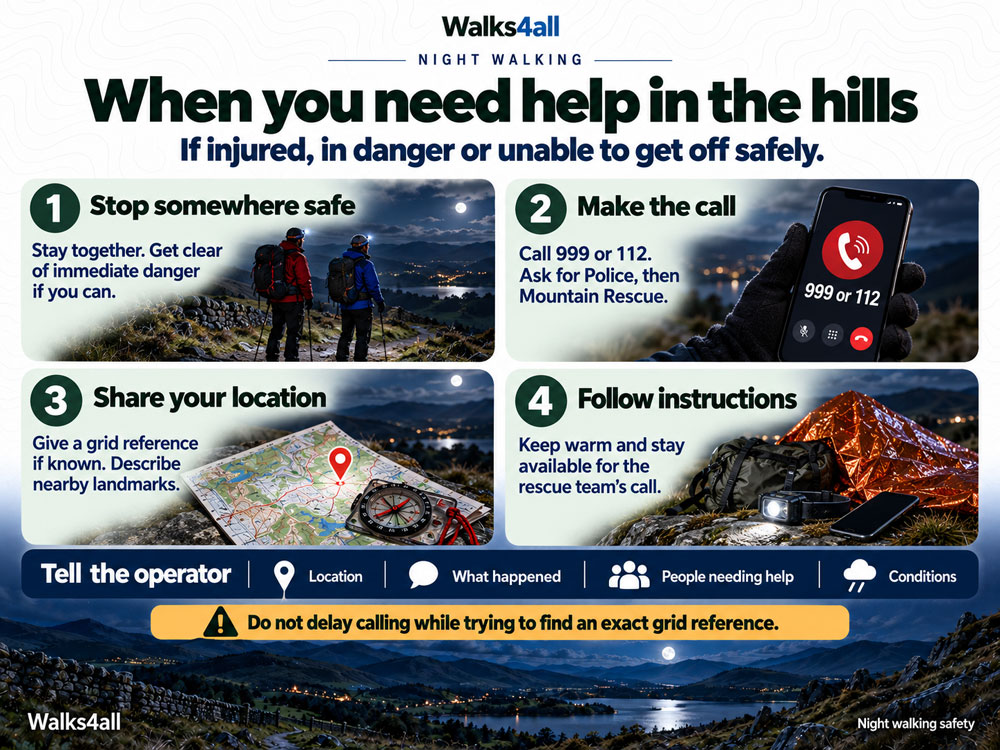
If injured, in danger or unable to get off the hill safely, call 999 or 112 and ask for Police, then Mountain Rescue. Do not delay calling to find an exact grid reference.
Provide your location or grid reference, if you have one, and follow the instructions you receive.[4]
Run through these checks before leaving, while you still have time to change the route or find a missing piece of kit.
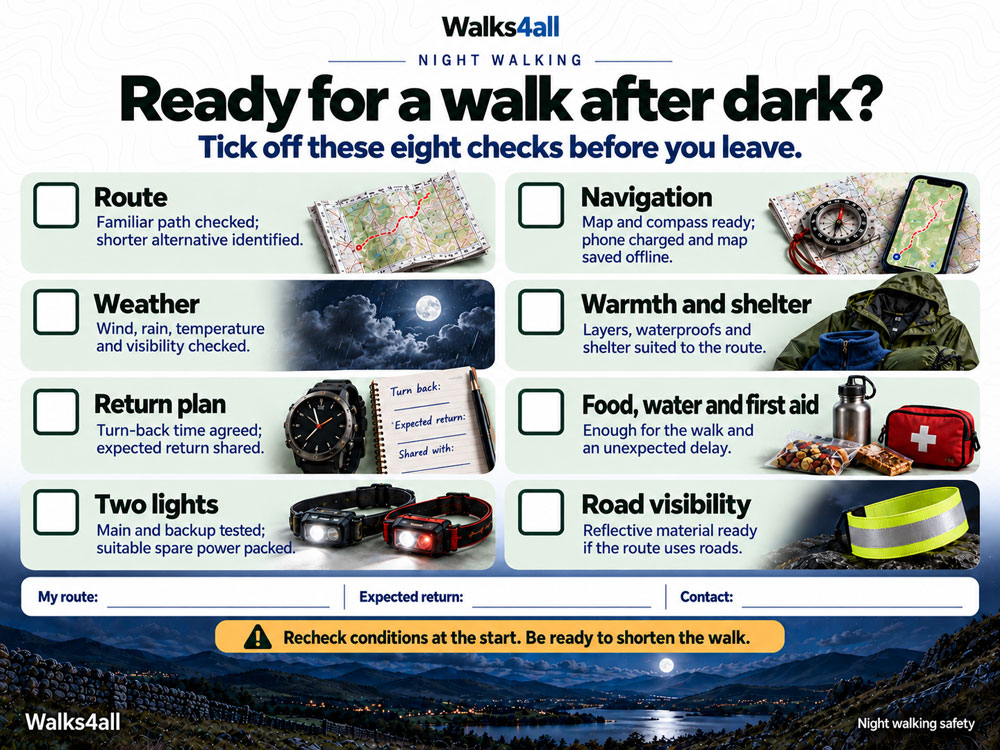
Use this night-walking checklist before leaving, then recheck conditions at the start. Be ready to shorten the walk if the weather or the group’s needs change.
Make your first after-dark walk an easy one. A familiar loop lets you get used to your light, pace and navigation without spending the evening trying to find the next junction. Check both torches before you leave, keep an eye on the time, and turn back while you still have a comfortable margin.
It depends on the route, conditions and your experience. Mountain Rescue recommends going with company on deliberate night walks. If you do go alone, choose familiar terrain and let someone know the route and expected return time.[1]
Yes, take two independent lights for a night walk in the hills. The spare can be smaller, but it must have enough useful light to help you get back if the main lamp fails. Carry suitable spare power too.[1]
A phone light can help briefly in an emergency, but it takes up a hand and drains the charge you may need for navigation or a call. Carry a proper head torch and a separate backup for a remote route.[1]
Stop at a safe spot, determine your last known position, and avoid moving onto steep ground on a guess. If you cannot get off safely or there is an emergency in the hills, call 999 or 112, ask for Police, then Mountain Rescue.[4]
September 2026